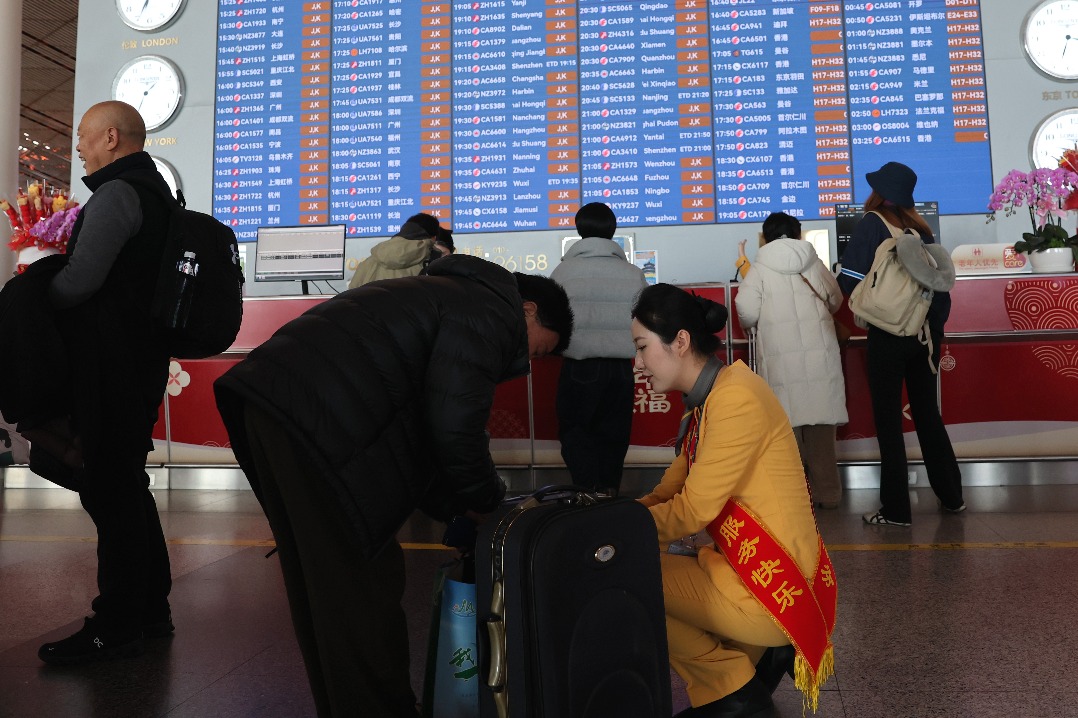
China’s civil aviation network has activated comprehensive operational measures as the nation’s massive Spring Festival travel migration (chunyun) commenced on February 2, 2026. This year’s extended nine-day holiday period—the longest in recorded history—has triggered unprecedented demand for air transportation, testing the capacity of the country’s aviation infrastructure.
According to the Civil Aviation Administration of China (CAAC), the opening day witnessed approximately 19,080 scheduled flights transporting an estimated 2.19 million passengers. Major aviation hubs including Guangzhou Baiyun, Shanghai Pudong, Shenzhen Bao’an, Beijing Capital, and Chengdu Tianfu airports reported particularly heavy traffic volumes, with robust demand on routes connecting Shanghai, Hangzhou, Guangzhou, Shenzhen, and Beijing.
The extended holiday period has fundamentally altered travel patterns, stimulating long-distance journeys and prolonging the pre-festival peak travel window. Aviation authorities project daily flight operations could approach 20,000 in the week preceding the Spring Festival, while the holiday period itself (excluding New Year’s Eve and the first day) is expected to maintain a daily average of approximately 19,500 flights—representing a substantial increase of roughly 1,000 flights daily compared to 2025 levels.
Throughout the entire 40-day travel period spanning February 2 to March 13, China’s aviation sector anticipates processing approximately 95 million passenger journeys. This translates to a daily average of 19,400 flights and 2.38 million passenger trips, demonstrating the immense scale of this annual population movement.
Airlines have implemented significant capacity expansion strategies to accommodate surging demand. Air China revealed plans to operate over 70,000 passenger flights during the chunyun period, marking a year-on-year increase exceeding 10%. The carrier has strategically focused additional capacity on trunk routes connecting major urban clusters and popular tourist destinations. Notably, the airline has deployed all nine of its domestically manufactured C919 aircraft for Spring Festival services, showcasing China’s growing aviation manufacturing capabilities.
Air traffic management authorities have enhanced coordination protocols to ensure operational efficiency. The North China Air Traffic Management Bureau forecasts that Beijing’s Capital and Daxing airports will collectively handle 88,800 takeoffs and landings throughout the travel rush. Refined traffic flow management measures have been implemented to optimize efficiency during peak operational periods.
At Beijing Capital International Airport—projected to process 7.89 million passengers during the 40-day period, representing a 1.5% increase from 2025—authorities have adjusted staffing patterns at critical passenger service points and strengthened coordination with municipal transportation authorities. These measures aim to ensure seamless air-rail connections and ground transportation integration. The airport has also introduced specialized assistance programs catering to elderly passengers, children, and family groups traveling together.
With the travel rush gaining momentum, aviation authorities confirm that cross-sector coordination between airlines, airports, and air traffic control systems has been fully activated to manage peak passenger flows. Through expanded capacity, refined operational procedures, and high-intensity operations at key transportation hubs, China’s civil aviation network is positioned to navigate the world’s largest annual human migration event with emphasis on safety, efficiency, and service reliability.