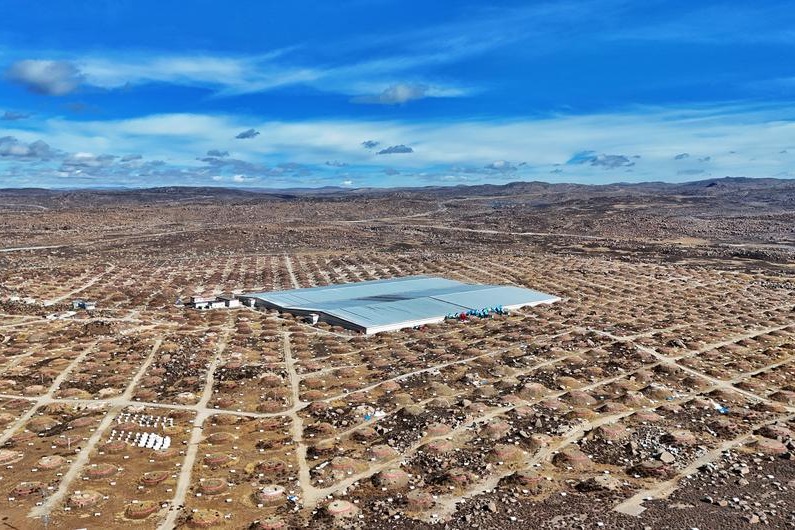
Nestled on the towering peaks of Haizi Mountain in Daocheng, Sichuan Province, China’s Large High Altitude Air Shower Observatory (LHAASO) stands as a beacon of scientific innovation. At an average altitude of over 4,400 meters, this sprawling 1.36-square-kilometer facility is unraveling the secrets of the universe by capturing cosmic rays—subatomic particles that journey from the depths of space. Recently, LHAASO made a groundbreaking discovery, providing crucial evidence that black holes, through their interaction with companion stars, act as powerful particle accelerators and may be key to the production of high-energy cosmic rays in the Milky Way. Nearby, the Daocheng Solar Radio Telescope, the world’s largest circular array of its kind, enhances space weather forecasting accuracy by tracking solar activity with unparalleled precision. The region’s unique atmospheric conditions—thin, stable air and minimal light pollution—make it an ideal hub for deep-space exploration. Since its inception in 2016, LHAASO has evolved into a global scientific platform, fostering international collaboration with partners from France, Russia, Thailand, and Pakistan. Its most notable achievement came in October 2022, when it detected the brightest gamma-ray burst in recorded history, a feat unmatched by other global detectors. As construction continues on additional facilities, including a 2.5-meter-wide-field solar telescope, Daocheng is cementing its status as a frontier for astrophysical research and a testament to China’s growing leadership in big science projects.