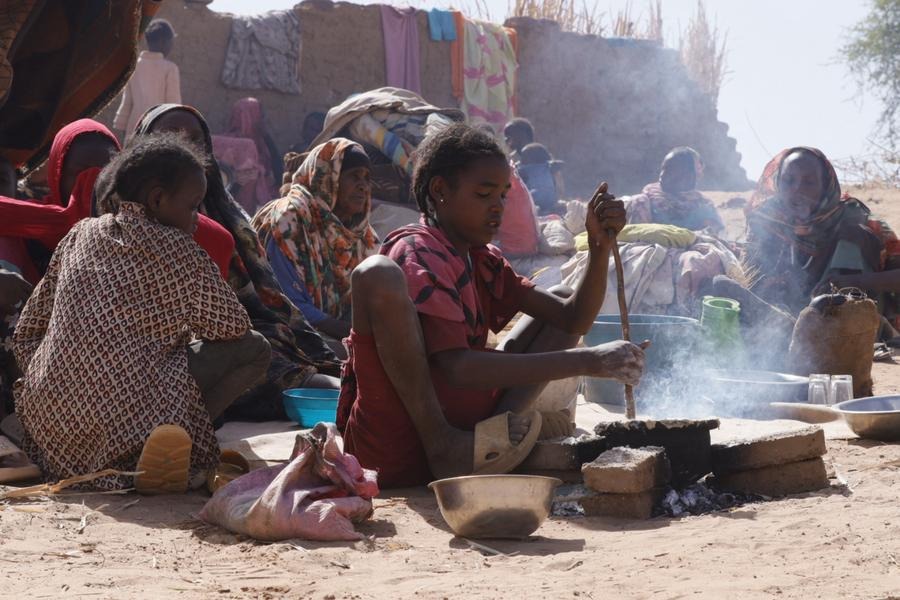
The humanitarian crisis in Sudan’s North Darfur region has deepened as violence escalates following the capture of the state capital, El Fasher, by the Rapid Support Forces. According to the United Nations Office for the Coordination of Humanitarian Affairs (OCHA), multiple air and drone strikes were reported in El Fasher, Tina, and Wana Mountain on Sunday, exacerbating the already dire situation. Local sources have cited civilian casualties, though OCHA has been unable to verify these reports due to restricted access and communication challenges in the affected areas. The World Health Organization (WHO) Director-General, Tedros Adhanom Ghebreyesus, condemned the recent attack on the Kernoi Pediatric and Maternity Hospital in North Darfur, which resulted in at least four deaths and three injuries. He emphasized the urgent need to halt attacks on healthcare facilities globally. Despite the perilous conditions, the UN and its partners are delivering critical aid, including therapeutic feeding and vitamin supplementation programs, while also ensuring safe deliveries and emergency care for pregnant women through mobile clinics. Meanwhile, the security situation in Sudan’s Kordofan region has also deteriorated, with at least 40 civilians killed and dozens injured in an attack on a funeral gathering in El Obeid, the capital of North Kordofan state. OCHA has reiterated its call for an immediate cessation of hostilities and for all parties to protect civilians and adhere to international humanitarian law.
分类: world
-
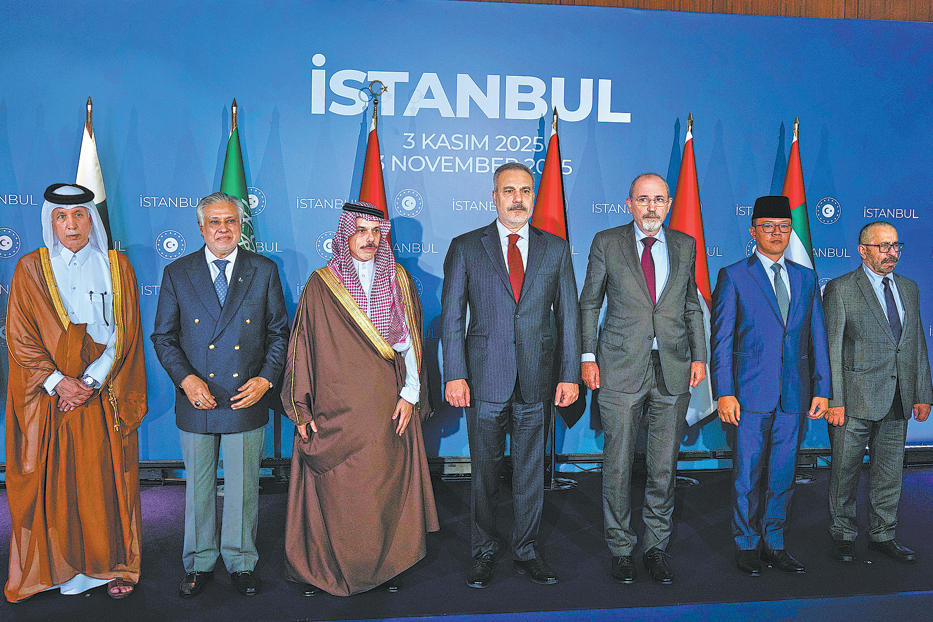
Istanbul gathering discusses Gaza peace force
Foreign ministers from seven Arab and Muslim-majority nations convened in Istanbul on Monday to deliberate on the establishment of an international peace force as part of a Gaza ceasefire agreement. Hosted by Turkish Foreign Minister Hakan Fidan, the meeting included representatives from the United Arab Emirates, Indonesia, Qatar, Pakistan, Saudi Arabia, and Jordan. The ministers unanimously affirmed their support for Palestinian self-governance, emphasizing that ‘Palestine should be governed and secured by Palestinians.’ Fidan criticized Israel for repeated truce violations and the blockade of humanitarian aid, stressing the collective desire to prevent a resurgence of violence in Gaza and to advance the two-state solution. Despite a U.S.-brokered ceasefire in effect since October 10, reports indicate that Israeli airstrikes have continued, resulting in civilian casualties. Jordanian Foreign Minister Ayman Safadi, speaking at the Manama Dialogue in Bahrain, advocated for a UN-mandated stabilization force, though Jordan ruled out deploying its own troops. Meanwhile, the U.S. circulated a draft UN Security Council resolution proposing an international force in Gaza for at least two years, with potential extensions. Qatari Emir Sheikh Tamim bin Hamad Al Thani urged intensified global efforts to aid Palestinian reconstruction. Analysts view the Istanbul meeting as a continuation of diplomatic efforts initiated during the UN General Assembly, with a focus on creating a temporary international task force to stabilize Gaza while ensuring Palestinian autonomy.
-

Pope Leo calls for ‘deep reflection’ about treatment of detained migrants in the United States
In a press conference held outside the papal retreat at Castel Gandolfo, Pope Leo XIV addressed pressing global issues, emphasizing the need for “deep reflection” on the treatment of migrants detained in the United States. The Chicago-born pontiff highlighted the plight of individuals who have lived peacefully for years but are now profoundly affected by current policies. He stressed that spiritual rights of detainees must be upheld, urging authorities to grant pastoral workers access to these individuals, many of whom have been separated from their families. Leo referenced scripture, posing the critical question: “How did you receive the foreigner?” as a call to action for compassionate treatment of migrants. On the topic of U.S. military strikes against suspected drug traffickers off Venezuela’s coast, the Pope expressed concern over escalating tensions, advocating for dialogue over conflict. Regarding the fragile ceasefire in the Middle East, Leo acknowledged the complexity of the situation, particularly in addressing Israeli settler attacks on Palestinians in the West Bank. He emphasized the need for justice and collaboration to ensure the rights of all peoples. The Pope’s upcoming engagements include a meeting with Palestinian President Mahmoud Abbas and his first papal visit to Turkey and Lebanon later this month.
-

Prosecutors in Asia seize yachts, luxury cars and cash from man accused of running cyberscams
In a coordinated international effort, prosecutors in Taiwan, Hong Kong, and Singapore have seized hundreds of millions of dollars in assets linked to Chen Zhi, a Cambodian businessman accused by the U.S. of leading a global cyber-scam syndicate. The crackdown follows an October 14 indictment by U.S. authorities, which charged Chen with wire fraud conspiracy and money laundering conspiracy, alongside the seizure of $14 billion in cryptocurrency. Chen, founder of Cambodia’s Prince Holding Group, allegedly orchestrated a vast network of scams spanning multiple countries, including the U.S., the U.K., and Palau. The U.S. and U.K. governments have jointly sanctioned Chen and his collaborators, while investigations into his operations continue to expand. Singaporean authorities seized over $114 million in financial assets, a yacht, and luxury liquor on October 30. Taiwanese prosecutors confiscated $150 million in assets, including 26 luxury cars and 11 upscale apartments in Taipei, while Hong Kong police announced the seizure of $353 million in cash, stocks, and other funds. U.K. authorities also targeted Chen’s assets, seizing a $15.6 million mansion and a $130 million office building. Chen, a Chinese national with Cambodian citizenship, has close ties to Cambodia’s political elite, having served as an adviser to Prime Minister Hun Manet and former Prime Minister Hun Sen. Despite his prominent status, prosecutors allege that the bulk of his wealth stems from fraudulent activities, including the notorious ‘pig butchering’ scam, which reportedly generated $30 million daily. The Prince Holding Group has yet to respond to requests for comment.
-

‘My skin was peeling’ – the African women tricked into making Russian drones
Adau, a 23-year-old from South Sudan, thought she was embarking on a life-changing opportunity when she signed up for the Alabuga Start programme in Russia. Promised professional training in logistics, catering, and hospitality, she was instead thrust into the harsh reality of working in a drone factory in the Alabuga Special Economic Zone in Tatarstan. Adau’s story is not unique; the programme, which targets young women from Africa, Latin America, and Southeast Asia, has been accused of deceptive recruitment practices and exploiting workers in dangerous conditions.
-
As world leaders enter climate talks, people in poverty have the most at stake
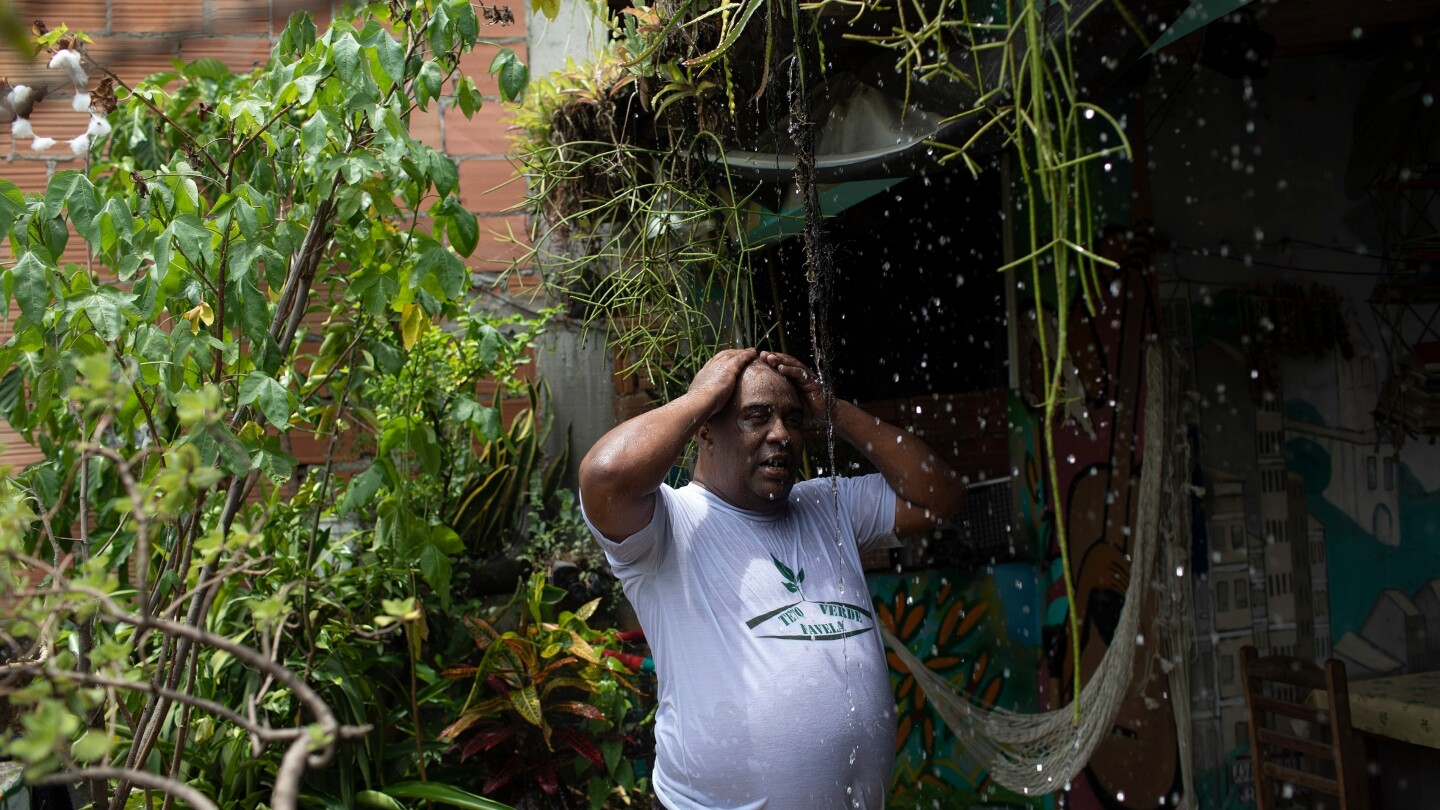
In the Arara neighborhood of northern Rio de Janeiro, summer heatwaves are becoming increasingly severe, leaving residents like Luis Cassiano, a 30-year resident, deeply concerned. Despite having air conditioning, Cassiano often cannot rely on it due to frequent power outages caused by an overloaded system. His green roof, installed a decade ago, provides some relief, keeping his home up to 15 degrees Celsius cooler than his neighbors’. However, the relentless heat remains a significant challenge. ‘The sun in the summer nowadays is scary,’ Cassiano remarked. As world leaders gather in Brazil for climate talks, the plight of communities like Arara underscores the urgent need for action. Poorer areas are more vulnerable to extreme weather and less equipped to cope with its impacts. Effective climate solutions require not only pledges to reduce emissions but also the political will and financial resources to implement them. The United Nations estimates that 1.1 billion people worldwide live in acute poverty, making climate adaptation a critical issue. The choice of Belem, a relatively poor city, to host these talks has been praised for highlighting the intersection of climate change and poverty. Inger Andersen, executive director of the U.N. Environment Programme, noted that Belem represents the reality for the majority of the global population affected by climate change. Even in wealthy countries, the poor face significant climate risks. A U.N. Development Programme report found that 82% of people living in poverty in highly developed countries are exposed to climate hazards such as extreme heat, drought, floods, and air pollution. Carter Brandon, a senior fellow at the World Resources Institute, emphasized that poverty exacerbates vulnerability to climate change, as those affected often lack the resources to relocate or rebuild after disasters. Agriculture is particularly at risk, with crop yields expected to decline significantly in poorer countries. Heriberto Tapia of the UNDP highlighted Africa as a major concern, with over 500 million people in poverty relying on agriculture for their livelihoods. Ismahane Elouafi of CGIAR noted that while technology could help, many farmers cannot afford it. Despite the urgency, some experts are skeptical that COP30 will deliver the necessary funding. Brazilian officials hope that hosting the talks in Belem will remind negotiators of the daily struggles faced by millions due to climate change. However, Kimberly Marion Suiseeya of Duke University expressed doubts about the likelihood of rapid action emerging from the conference. Pedro Conceição of the UNDP stressed that poverty reduction and climate action are interconnected, rejecting the notion that they are separate issues. Bill Gates has called for a shift in focus from emissions reduction to alleviating human suffering, particularly in poor countries. Conceição argued that climate change is not a distant problem but a present reality that must be addressed alongside poverty.
-
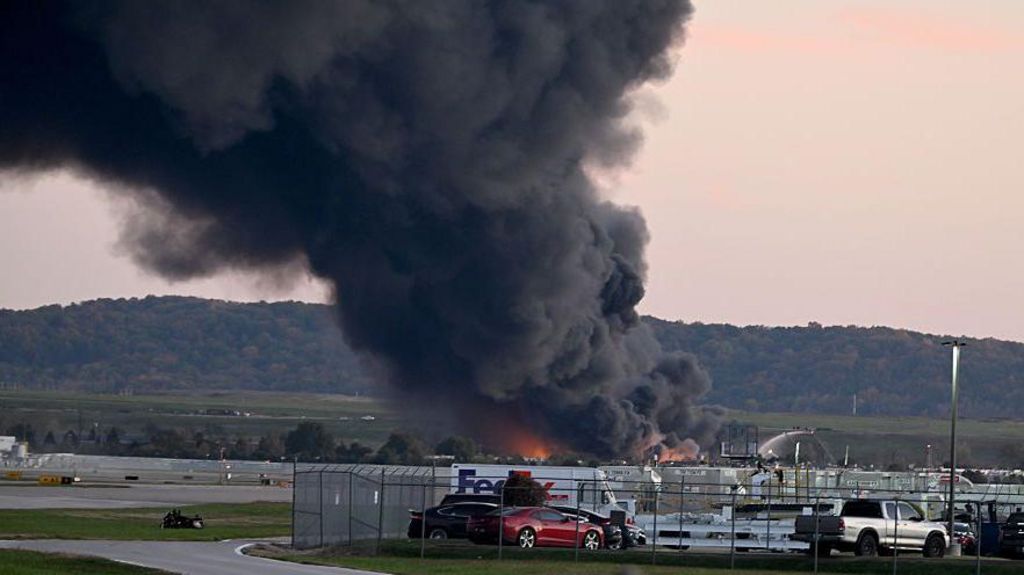
What we know about deadly Kentucky cargo plane crash
A catastrophic cargo plane crash at Louisville International Airport on Tuesday evening has resulted in at least seven fatalities, with fears that the death toll may rise. The UPS-operated flight 2976, an MD-11F aircraft, veered off the runway during takeoff at approximately 17:15 local time, igniting a massive fire that engulfed nearby buildings. The incident has triggered a large-scale emergency response to contain the blaze and mitigate further risks. Kentucky Governor Andy Beshear confirmed that two businesses, Kentucky Petroleum Recycling and Grade A Auto Parts, were directly impacted by the crash. Unverified footage shows the plane already ablaze as it skidded off the runway. The fire spread rapidly, prompting authorities to issue shelter-in-place orders for residents within a one-mile radius due to concerns over air pollution and potential explosions. All airport operations have been suspended indefinitely. Officials have reported eleven injuries so far, with the number expected to increase. The cause of the crash remains under investigation, though the substantial fuel load on the aircraft, which was en route to Hawaii, likely exacerbated the fire. Louisville Fire Department Chief Brian O’Neal described the scene as “very dangerous” due to the spilled fuel. Searches are ongoing to locate two missing workers from the auto parts business, and it remains unclear how many customers were present at the time of the crash. The MD-11F, a triple-engine cargo plane, has been in service for 34 years. Authorities have assured the public that the aircraft was not carrying hazardous materials.
-
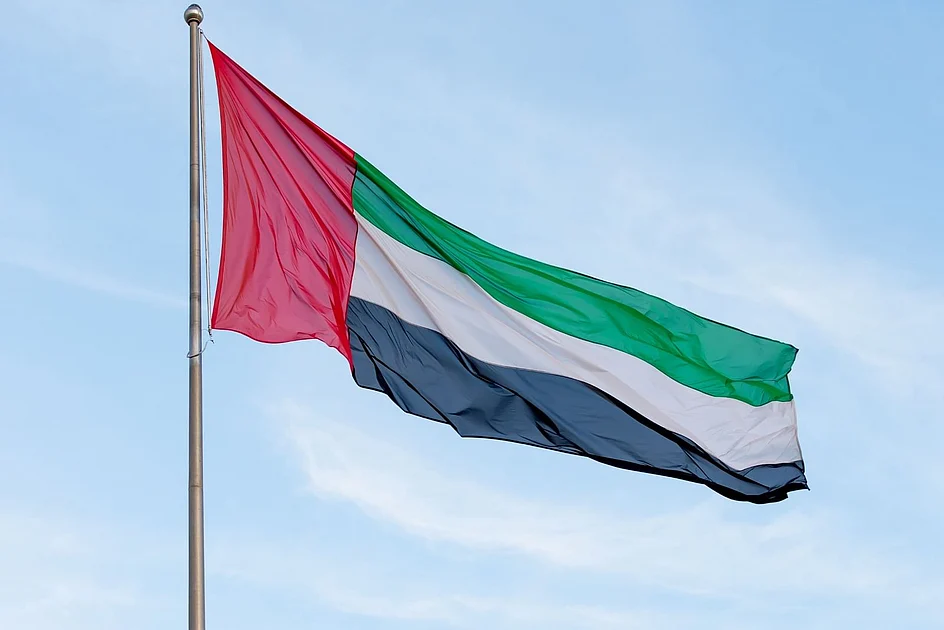
UAE expresses solidarity with Mexico over deadly store fire
The United Arab Emirates (UAE) has extended its heartfelt condolences and solidarity to Mexico in the wake of a catastrophic store fire in Hermosillo, the capital of the northern state of Sonora. The blaze, which erupted unexpectedly, claimed the lives of dozens and left many others injured. In an official statement, the UAE’s Ministry of Foreign Affairs (MoFA) conveyed its profound sympathy to the bereaved families, the Mexican people, and the government. The ministry also expressed hopes for the swift recovery of those injured in the tragic incident. This gesture of solidarity underscores the UAE’s commitment to fostering international cooperation and empathy during times of crisis. The fire has drawn global attention, highlighting the urgent need for enhanced safety measures in public spaces to prevent such disasters in the future.
-
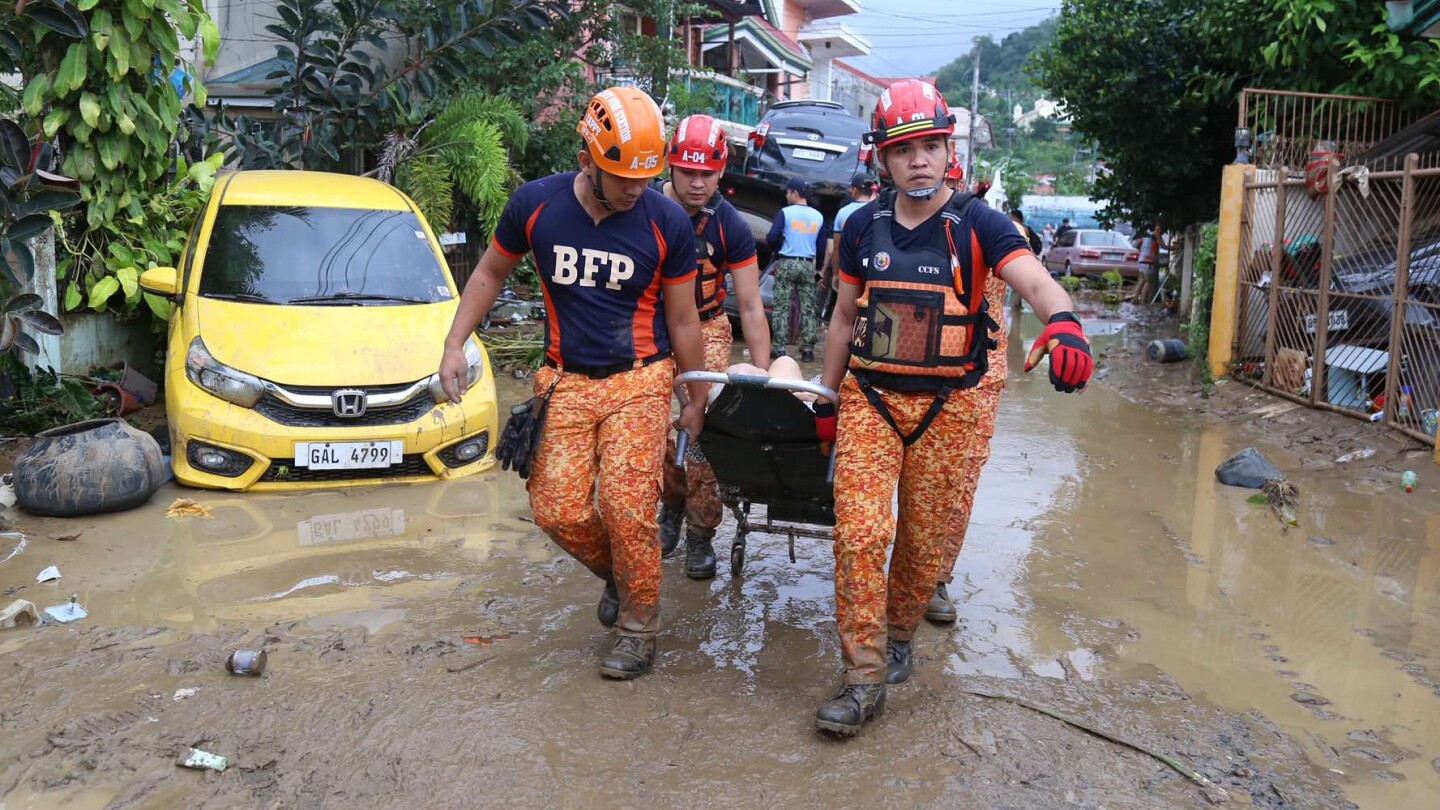
Typhoon Kalmaegi leaves 52 dead, mainly in Philippine province still recovering from deadly quake
Typhoon Kalmaegi has wreaked havoc in the central Philippines, claiming at least 52 lives and leaving 13 others missing, officials reported on Wednesday. The storm triggered widespread flooding, trapping residents on rooftops and sweeping away vehicles in Cebu province, an area still recovering from a recent deadly earthquake. The disaster has compounded the challenges for a region already grappling with the aftermath of natural calamities.
In a separate tragic incident, six individuals lost their lives when a Philippine air force helicopter crashed in Agusan del Sur province on Tuesday. The aircraft was en route to deliver humanitarian aid to areas affected by Kalmaegi. The military has yet to disclose the cause of the crash.
As of early Wednesday, Kalmaegi was located over the coastal waters of Linapacan in Palawan province, packing sustained winds of 120 kph (75 mph) and gusts reaching 150 kph (93 mph). The typhoon is expected to move into the South China Sea later in the day.
Cebu, a densely populated province with over 2.4 million residents, bore the brunt of the storm. Flash floods caused rivers and waterways to overflow, engulfing residential areas and forcing desperate residents to seek refuge on their roofs. The Philippine Red Cross reported receiving numerous distress calls, but rescue operations were delayed until floodwaters receded to ensure the safety of emergency personnel.
In response to the crisis, Cebu declared a state of calamity, enabling authorities to expedite emergency funding. The province is still recovering from a 6.9 magnitude earthquake on September 30, which claimed 79 lives and displaced thousands.
Other fatalities were reported in Southern Leyte and Bohol provinces, where an elderly villager drowned in floodwaters and another resident was struck by a fallen tree. Before Kalmaegi’s landfall, over 387,000 people evacuated from eastern and central provinces, heeding warnings of torrential rains, destructive winds, and storm surges up to three meters (nearly 10 feet) high.
The typhoon disrupted transportation, grounding interisland ferries and fishing boats, stranding over 3,500 passengers and cargo truck drivers at nearly 100 seaports. Additionally, 186 domestic flights were canceled.
The Philippines, one of the world’s most disaster-prone countries, faces approximately 20 typhoons and storms annually, alongside frequent earthquakes and volcanic activity. The resilience of its people continues to be tested as they confront the dual challenges of recovery and preparedness in the face of relentless natural disasters.
-
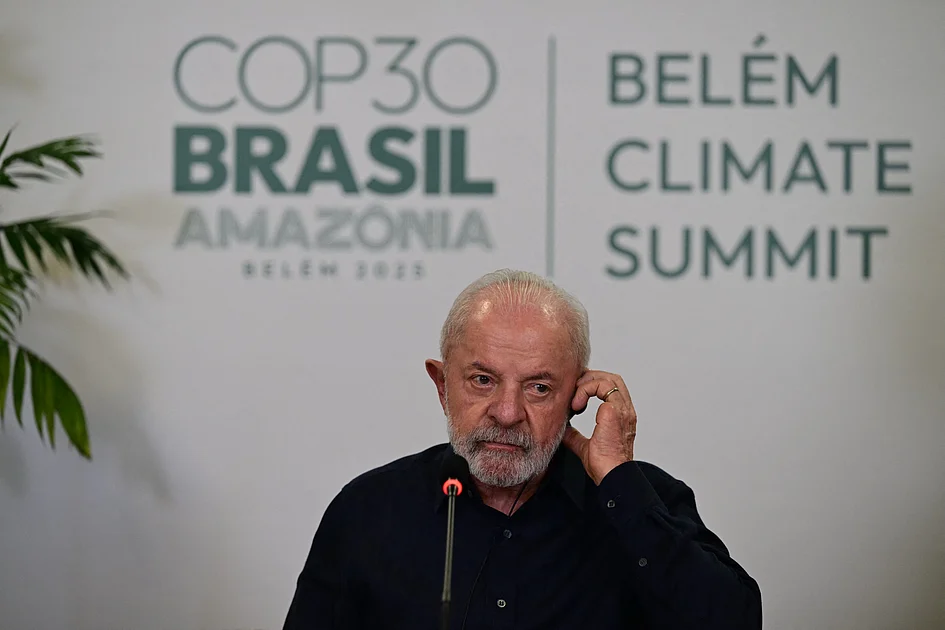
World on track to dangerous warming as emissions hit record high: UN
The United Nations has issued a stark warning that the world is on track to surpass the critical 1.5°C warming threshold within years, with planet-warming emissions reaching a new record high in 2024. Despite a wave of national commitments to reduce heat-trapping pollution, these efforts are insufficient to prevent devastating climate impacts, according to the UN Environment Programme (UNEP). The latest Emissions Gap report reveals that current pledges would limit global warming to between 2.3°C and 2.5°C by 2100—far above the safer 1.5°C target. Scientists emphasize that exceeding this threshold risks catastrophic consequences, including more intense hurricanes, floods, and irreversible climate tipping points. The report, released ahead of the COP30 climate summit in Brazil, underscores the urgent need for unprecedented emissions cuts. UN Secretary-General Antonio Guterres called for minimizing the overshoot of 1.5°C, urging major polluters to accelerate their efforts. However, the latest round of carbon-cutting targets has barely made progress, with only one-third of countries meeting the 2035 emissions reduction deadline. The report also highlights the disproportionate role of G20 economies, which account for 75% of global emissions, and the limited impact of recent climate pledges. With Earth projected to warm by 2.8°C under current policies, COP30 faces the challenge of reigniting global climate action amid geopolitical tensions and missed targets.