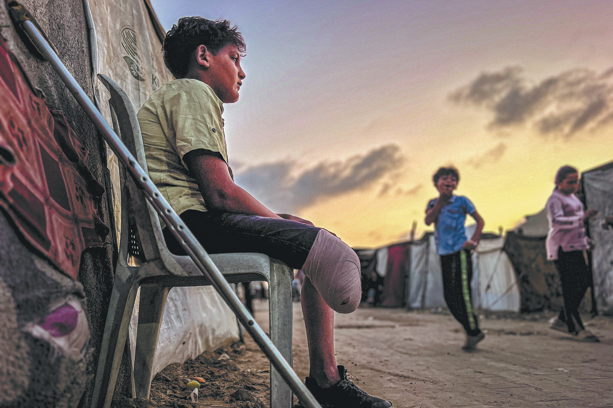
A month into the Gaza ceasefire agreement, relative calm has been restored to the region. However, experts warn that the second phase of negotiations, which involves critical issues such as Hamas’ disarmament and Israeli withdrawal, faces significant challenges. A prolonged deadlock could reignite conflict, jeopardizing the fragile peace established since October 10 after over two years of intense fighting. The first phase of the ceasefire, focused on humanitarian aid and the exchange of hostages and prisoners, has shown tangible results. Hamas has released 20 living hostages and the remains of 24 others, while Israel has returned the bodies of approximately 300 Palestinians. Humanitarian aid has also improved, with over 37,000 metric tons of supplies transported into Gaza by the UN and its partners. Despite these achievements, the truce remains precarious, with both sides accusing each other of violations and sporadic skirmishes continuing. According to the Gaza health authorities, at least 245 Palestinians have been killed since the ceasefire began. Analysts, including Niu Xinchun of the China-Arab Research Institute and Shu Meng of Shanghai International Studies University, highlight mutual suspicion, internal divisions, and fundamental disagreements on core issues as major obstacles to advancing negotiations. Israeli Prime Minister Benjamin Netanyahu has vowed to disarm Hamas and demilitarize Gaza, while Hamas views concessions as an existential threat. The US-proposed 20-point plan, which outlines the second phase of negotiations, has been criticized for failing to address Hamas’ demands and lacking a credible path toward a two-state solution. Experts argue that without addressing these underlying issues, the ceasefire’s future remains uncertain.
分类: world
-
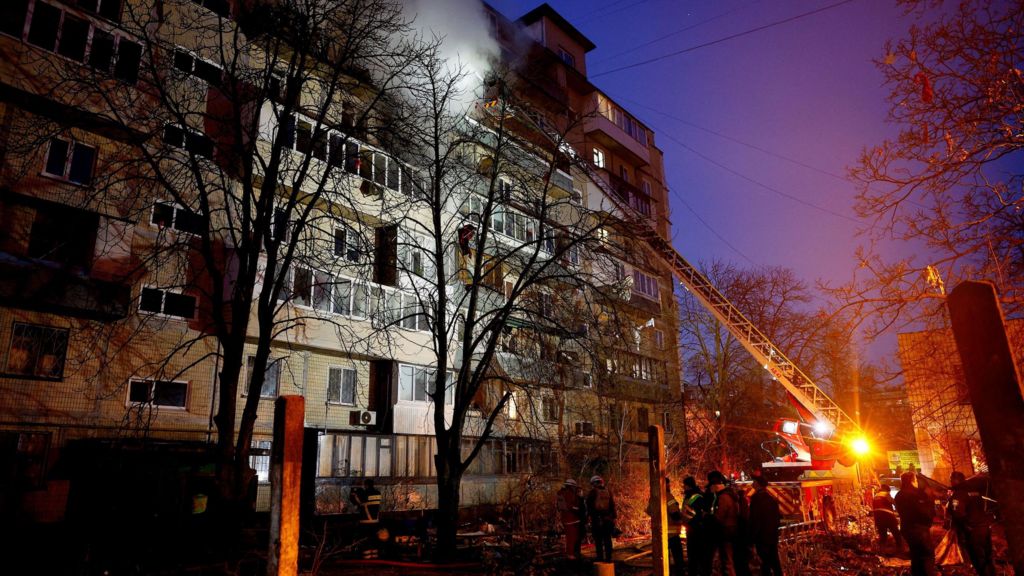
Three killed in ‘massive’ Russian strikes on Kyiv, officials say
A devastating wave of Russian drone and missile strikes has left Kyiv in chaos, with three fatalities and at least 26 injuries reported by Ukrainian officials. Mayor Vitaliy Klitschko described the assault as ‘massive,’ noting widespread explosions and fires in residential areas across the city. The attacks also severely damaged Kyiv’s energy infrastructure, leaving parts of the northeast without heating. Ukraine’s air force confirmed that several other regions, including Sumy, were targeted as well. Russia’s defense ministry claimed to have intercepted 216 Ukrainian drones aimed at its industrial facilities, which disrupted air travel. Tymur Tkachenko, head of Kyiv’s military administration, reported that residential buildings in nearly every district were hit, urging residents to seek shelter just after midnight local time. Emergency services revealed that falling debris and fires damaged high-rise apartments, a hospital, a school, and administrative buildings. Over 40 people were rescued, including 14 from a fire in Desnayanskyi district, where one person died. Another individual was pulled from rubble in the same building. Medical teams were deployed to all fire sites, with nine hospitalized, including one man in critical condition. Klitschko also warned of potential disruptions to the city’s electricity and water supplies due to damage to the heating network. These strikes follow a similar Russian offensive less than a week ago that killed six and damaged residential and energy infrastructure. Russia claims its attacks on energy targets are aimed at weakening Ukraine’s military. Ukrainian President Volodymyr Zelensky has called for stricter Western sanctions on Russian energy, particularly after the US granted Hungary an exemption. US President Donald Trump initially imposed sanctions on Russian oil after ceasefire talks with Russian President Vladimir Putin stalled.
-

Watch: Seal jumps aboard photographer’s boat to escape orcas
In a remarkable encounter off the coast, wildlife photographer Charvet Drucker witnessed a dramatic escape as a seal leapt onto her boat to evade a pursuing pod of orcas. Drucker, who was capturing images of the orcas, found herself in the midst of a life-and-death chase when the seal sought refuge on her vessel. The incident highlights the intense predator-prey dynamics in marine ecosystems. Orcas, known for their intelligence and hunting prowess, often target seals as part of their diet. This unexpected interaction provided Drucker with a rare opportunity to document the seal’s desperate bid for survival. The event underscores the unpredictable nature of wildlife photography and the delicate balance of marine life. Drucker’s experience serves as a reminder of the raw and unfiltered realities of the natural world.
-

Rubio says Israeli settler violence in West Bank could undermine Gaza peace deal
In a rare move, US Secretary of State Marco Rubio has publicly criticized the escalating violence by Israeli settlers in the occupied West Bank. Speaking from Hamilton International Airport in Canada following a G7 foreign ministers’ meeting, Rubio highlighted the strong condemnations issued by Israeli President Isaac Herzog and senior military officials regarding recent settler attacks. These attacks, which included arson and property destruction in Beit Lid and Deir Sharaf, also saw settlers targeting Israeli military and police forces sent to quell the violence. Several Palestinians were injured, and significant damage was inflicted on their land and property. Israeli President Herzog described the incidents as ‘shocking and serious,’ urging decisive action to eradicate such violence. Army Chief Eyal Zamir and Major General Avi Bluth also condemned the attacks, with Bluth labeling the settlers as an ‘anarchist fringe’ that hinders military counterterrorism efforts. Despite these official condemnations, settler violence has surged to near-daily occurrences since the October 7, 2023, Hamas-led attacks on southern Israel and the subsequent war on Gaza, which the United Nations has recognized as a genocide. The Israeli military has faced accusations of complicity in these attacks. The UN Office for the Coordination of Humanitarian Affairs recorded 264 settler violence incidents in October alone—the highest monthly figure since records began in 2006. This year, around 1,500 settler attacks have been documented. While the Biden administration has imposed sanctions on some Israeli settlers and settlement-related entities, the Trump administration had lifted these sanctions in January. Rubio emphasized the US administration’s commitment to preventing West Bank violence from undermining the Gaza peace deal. The G7 ministers also expressed concern over the deteriorating security situation in the West Bank, condemning extremist settler violence and urging all parties to refrain from actions that could jeopardize a two-state solution. Israeli settler violence persisted on Thursday, with settlers setting fire to a mosque in Deir Istiya and vandalizing walls with racist graffiti, while also using bulldozers to expand a new settlement outpost on Jabal al-Najma in Qaryut. Israeli settlements are illegal under international law.
-
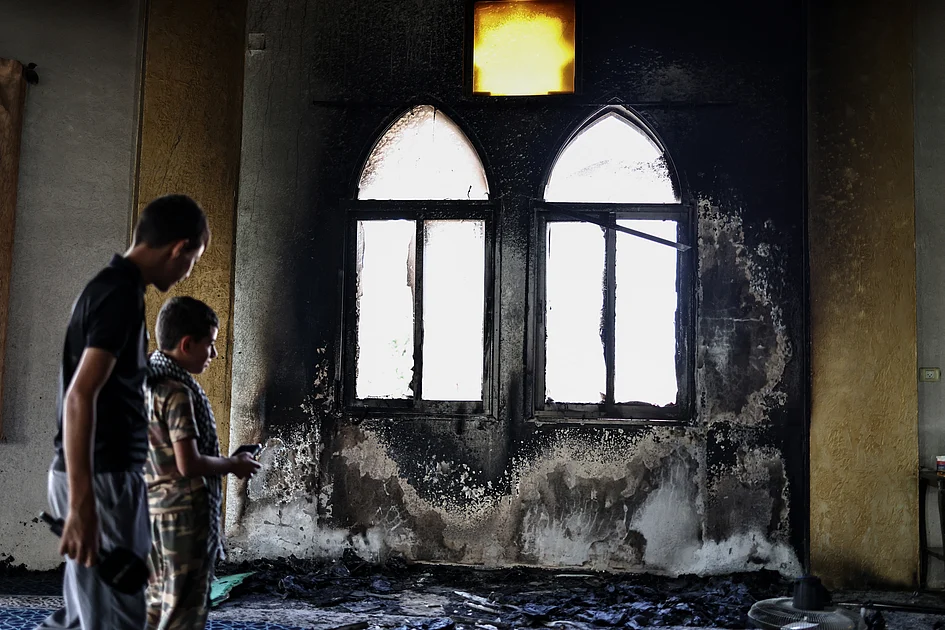
Israeli troops kill two Palestinians in West Bank; settlers set mosque ablaze
In a troubling escalation of violence in the occupied West Bank, Israeli troops killed two Palestinians on Thursday, labeling them as suspected militants. Concurrently, Palestinian officials accused Israeli settlers of setting fire to a mosque in the region. The Israeli military stated that the two individuals were eliminated while allegedly planning a terror attack near the community of Karmei Zur, though no further details were provided. Palestinian authorities also remained silent on specifics. Meanwhile, the Palestinian foreign ministry in Ramallah condemned the arson attack on the Hajja Hamida mosque near Deir Istiya, describing it as a violation of religious sanctity and a manifestation of deep-seated racism among settlers. Photographs from the scene revealed charred copies of the Koran and smoke-damaged walls, with graffiti also defacing the mosque. This incident followed a pledge by Israeli army chief Lieutenant General Eyal Zamir to curb settler violence, which he labeled as contradictory to Israeli values and a diversion from military missions. Despite his assurances, settler violence has surged, with October 2025 marking the worst month since records began in 2006, according to the UN. The ongoing conflict has claimed the lives of over 1,000 Palestinians and 43 Israelis in the West Bank since the Gaza war erupted in October 2023.
-

Russia attacks Kyiv with fires, injuries, and ongoing strikes reported
In a devastating early morning assault on Friday, Russia launched a large-scale attack on Kyiv, Ukraine’s capital, resulting in widespread destruction and multiple injuries. Mayor Vitali Klitschko reported that at least 11 people were wounded, with five requiring hospitalization, including a critically injured man and a pregnant woman. The city’s air defense systems were activated as powerful explosions echoed across Kyiv, prompting officials to urge residents to remain in shelters until the air raid alert was lifted. The attack caused significant damage across several districts, with debris igniting fires in residential areas, educational facilities, and medical centers. In the Darnytskyi district, debris struck a residential building and an educational facility, while in the Dniprovskyi district, three apartment buildings and a private home were damaged. Similar incidents were reported in the Podilskyi, Shevchenkivskyi, Holosiivskyi, Desnianskyi, Solomianskyi, and Sviatoshynskyi districts, where fires broke out in both residential and nonresidential structures. Additionally, the Kyiv region suffered damage to critical infrastructure and private homes, with at least one civilian hospitalized for thermal burns. The attack occurred amid warnings from European Union officials about the need for Ukraine to address corruption, though they reaffirmed their commitment to providing aid to support Ukraine’s defense against Russia’s ongoing invasion.
-
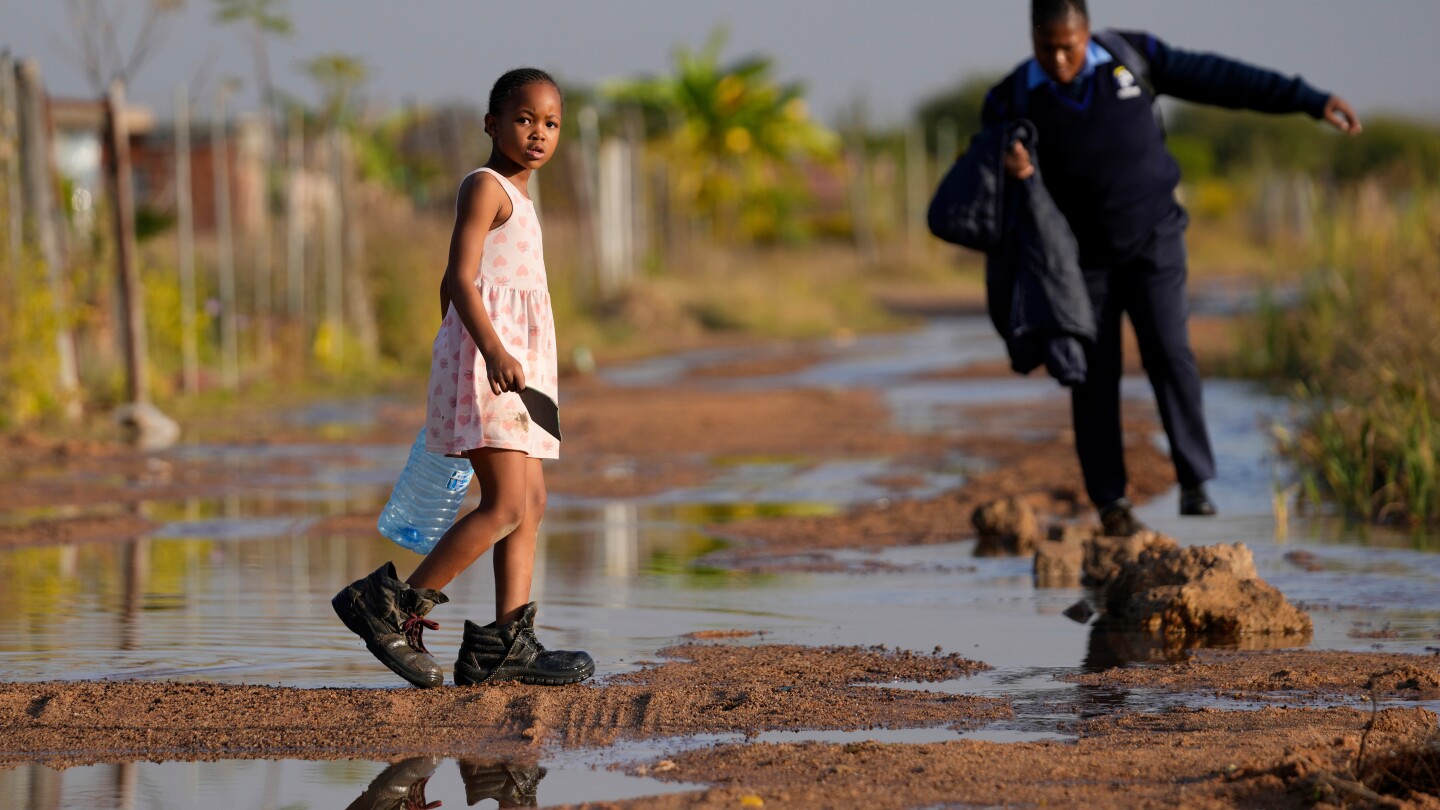
Top economists call on world leaders to set up an international panel on inequality
CAPE TOWN, South Africa — In a significant move, hundreds of prominent economists and experts, including former U.S. Treasury Secretary Janet Yellen, have issued a compelling call for the establishment of an independent international panel to address income and wealth inequality. This appeal was made in an open letter released on Friday, just ahead of the Group of 20 (G20) summit scheduled for November 22-23 in South Africa. The summit is expected to feature a groundbreaking report on global inequality, chaired by Nobel Prize-winning economist Joseph Stiglitz, which will be presented to world leaders. The report, published earlier this month, highlights a dual crisis of inequality and climate change, warning of increased political instability, conflicts, and a decline in democratic trust. It reveals that between 2000 and 2024, the wealthiest 1% captured 41% of all new global wealth, while 2.3 billion people—approximately one in four globally—face moderate or severe food insecurity, a figure that has surged by 335 million since 2019. The report advocates for the creation of an International Panel on Inequality, modeled after the U.N.’s Intergovernmental Panel on Climate Change, to guide governments in addressing this pressing issue. The letter, signed by Nobel laureates and former senior officials from the World Bank and International Monetary Fund, emphasizes that extreme wealth concentration undermines democratic governance, erodes societal trust, and fuels political polarization. South Africa, the G20 host and the world’s most unequal country according to the World Bank, has prioritized global inequality as a key summit agenda item.
-

Canadian boycott of US travel shows no sign of slowing
Kristy Gammon, a Nova Scotia resident, used to travel to the United States regularly, enjoying ski trips in Lake Placid, New York, and attending Baltimore Orioles baseball games with her husband. However, those trips have come to an abrupt halt. This year, Gammon avoided even passing through the US on her way to Ontario, opting for a longer 18-hour drive instead. Her decision reflects a growing trend among Canadians, who are increasingly boycotting the US in protest of President Donald Trump’s policies and trade actions targeting Canada. Gammon, 62, is not alone. Many of her Canadian friends have also stopped visiting the US, citing concerns over the administration’s international behavior, treatment of citizens, and strained relations with allies like Canada. This sentiment has translated into a significant decline in Canadian travel to the US. October marked the 10th consecutive month of reduced visits, with air travel dropping nearly 24% and car travel falling over 30% compared to the same period last year, according to Canada’s statistics office. The US Travel Association reported a 3.2% overall decline in international spending, driven largely by fewer Canadian visitors. Historically, Canadians accounted for about a quarter of all international visitors to the US, spending over $20 billion annually. However, Trump’s imposition of tariffs on Canadian goods, including a 35% levy on certain products, has fueled tensions and prompted Canadians to rethink their travel plans. Trade talks between the two nations were further derailed last month after Trump expressed anger over an anti-tariff advertisement featuring Ronald Reagan, sponsored by Ontario. Meanwhile, his public remarks about making Canada the “51st state” have only deepened Canadian frustrations. Some US tourist destinations, like Kalispell, Montana, have attempted to lure Canadians back with initiatives like the “Canadian Welcome Pass,” offering discounts and deals. However, these efforts have yet to reverse the trend. On the flip side, Canada’s domestic tourism industry has benefited, with record-breaking revenues of C$59 billion from May to August 2025, a 6% increase from the previous year. Even Canadian snowbirds—retirees who traditionally winter in warmer US states like Florida—are staying home, with only 10% planning US trips this year, a 66% drop from last year. Gammon and her friends have even sold their Florida winter homes, signaling a profound shift in attitudes. While Gammon misses her US travels, she remains committed to her boycott for the remainder of Trump’s presidency, unless significant changes occur. ‘Who knows what could change between now and three years,’ she said. ‘But it would have to be pretty significant changes for us personally to change our minds.’
-
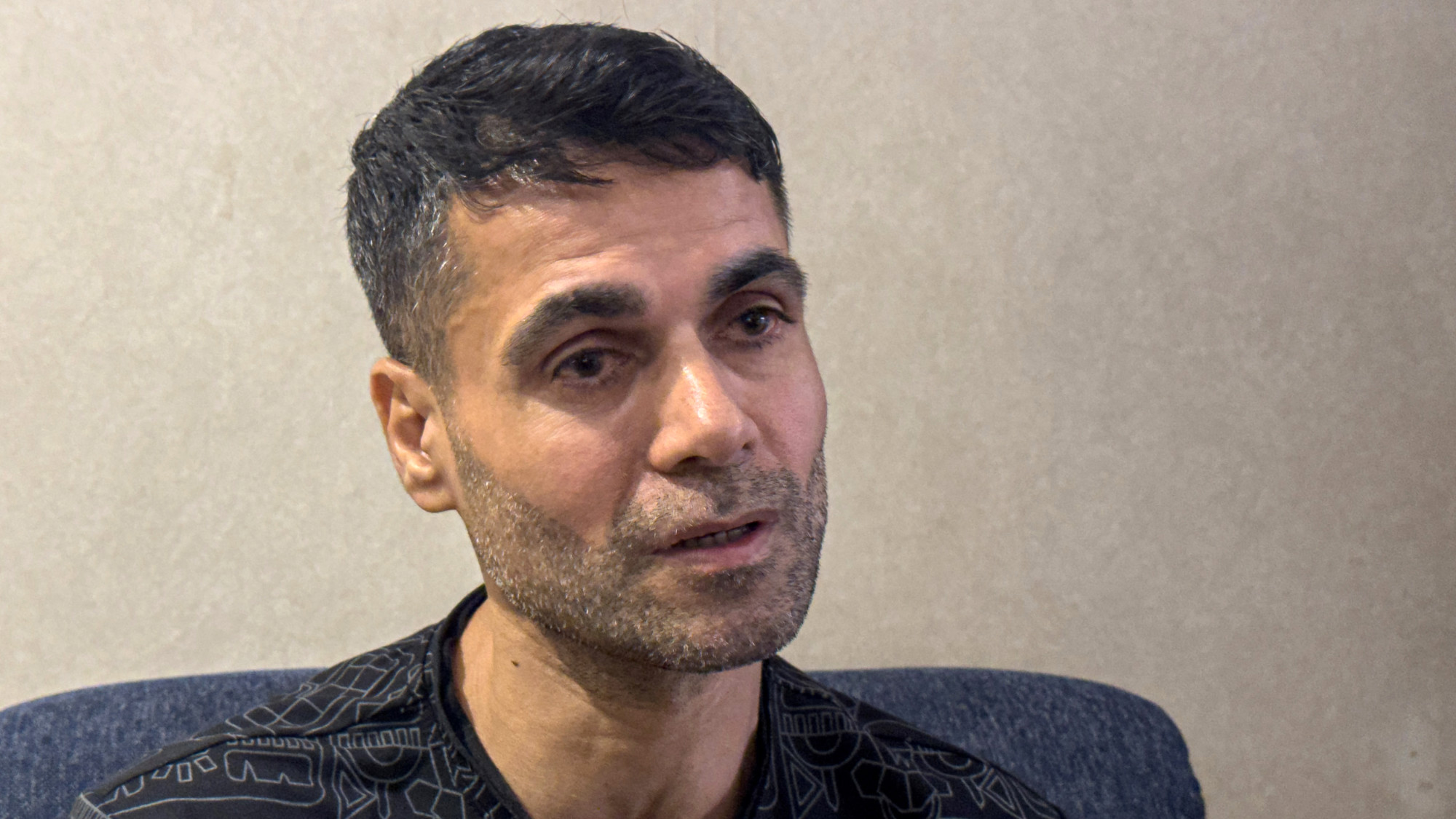
Jailbreak, freedom, exile: Life of Mahmoud al-Arda, architect of daring Israeli prison escape
Mahmoud al-Arda, a 50-year-old Palestinian, has spent much of his life in Israeli prisons, enduring harsh conditions and solitary confinement. His journey began in 1992 when he was first arrested during the First Intifada at just 16 years old. Over the years, Arda became a symbol of resistance, rejecting the legitimacy of Israel’s occupation courts and viewing his escape attempts as acts of defiance. On September 6, 2021, he led a daring breakout from Gilboa Prison, tunneling out with five other inmates using spoons. Although recaptured within days, his story made international headlines. Arda was eventually released in October 2023 as part of a prisoner exchange between Hamas and Israel, but he was deported to Egypt, where he remains in exile. Despite his physical freedom, Arda describes exile as a “curse” and yearns to return to his homeland. His life in prison was marked by relentless abuse, including torture and medical neglect, yet he found solace in reading and collective resistance. Arda’s story highlights the broader struggles of Palestinian prisoners and the systemic abuses they face. He remains steadfast in his commitment to the Palestinian cause, vowing to continue resisting Israel’s occupation.
-

Building an effective global communication discussed at Hunan forum
A pivotal forum on international communication was held during the 2025 China New Media Conference in Changsha, Hunan province, on Thursday. Titled ‘Media Bridges Across Mountains and Seas,’ the event brought together officials, media experts, and platform representatives to deliberate on constructing a robust global communication ecosystem in the New Era. The forum, one of seven parallel sessions at the conference, aimed to foster industry consensus and drive cultural innovation by integrating China’s rich heritage with cutting-edge advancements in information technology. Organizers emphasized the importance of leveraging media as a bridge to enhance mutual understanding and cooperation across borders. The discussions highlighted the role of new media in shaping global narratives and the need for collaborative efforts to address communication challenges in an increasingly interconnected world. The event underscored China’s commitment to promoting cultural exchange and technological innovation as key pillars of its global communication strategy.