分类: world

  • Tornado hits area north of Paris, leaving one person dead

    Tornado hits area north of Paris, leaving one person dead

    A devastating tornado swept through the Val d’Oise region, located just north of Paris, on Monday, resulting in one fatality and leaving multiple individuals with severe injuries. French Interior Minister Laurent Nunez confirmed the tragic incident, emphasizing that he is closely overseeing the ongoing situation. The sudden and violent weather event has caused significant disruption and damage in the affected area, prompting emergency response teams to mobilize swiftly. The tornado’s impact has raised concerns about the increasing frequency and intensity of extreme weather phenomena in the region. Authorities are now focused on providing immediate assistance to the injured and assessing the extent of the destruction. This incident serves as a stark reminder of the unpredictable and destructive power of natural disasters, urging communities to remain vigilant and prepared.

  • Gaza’s civil defence says four killed by Israeli fire on October 20

    Gaza’s civil defence says four killed by Israeli fire on October 20

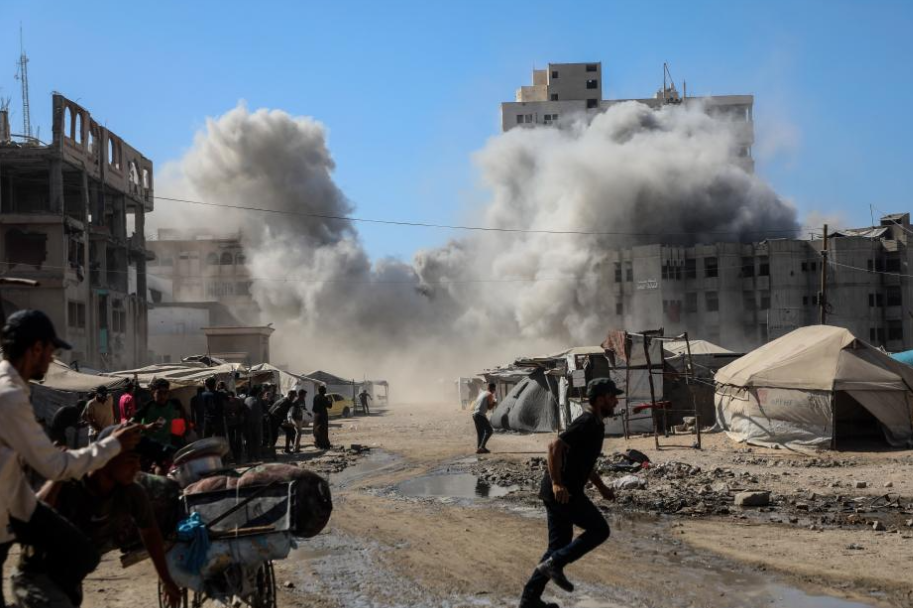
    Four individuals were killed by Israeli forces in Gaza City on October 20, according to Gaza’s civil defence agency. The incident occurred as the victims were returning to inspect their homes in the Al-Shaaf area, east of the Al-Tuffah neighborhood. Mahmud Bassal, a spokesman for the rescue service, confirmed the deaths, attributing them to Israeli gunfire. The rescue service operates under the authority of Hamas. Israel’s military stated that it had targeted militants who crossed the so-called ‘Yellow Line’ and approached troops in the Shujaiya neighborhood, adjacent to Al-Tuffah. The Yellow Line marks the boundary behind which Israeli troops remain stationed under the ceasefire agreement with Hamas. This incident is one of several since a fragile US-brokered ceasefire began on October 10, with the Hamas-run health ministry reporting a total of 80 fatalities. On Sunday, the Israeli military struck dozens of Hamas positions across Gaza following the deaths of two soldiers in combat, accusing Hamas of violating the truce. Hamas denied any involvement in the attack, with one official accusing Israel of fabricating reasons to resume hostilities. Since the ceasefire began, hundreds of thousands of Palestinians have returned to northern Gaza, often finding their homes reduced to rubble.

  • Madagascar president names civilian PM after takeover

    Madagascar president names civilian PM after takeover

    Madagascar’s newly inaugurated president, Army Colonel Michael Randrianirina, has appointed Herintsalama Rajaonarivelo as the country’s civilian prime minister, signaling a shift toward a civilian-led government following a military takeover last week. The move comes after weeks of escalating protests against former President Andry Rajoelina, who was impeached for desertion of duty and subsequently fled the country. Randrianirina, who assumed office on Friday, emphasized his commitment to constitutional adherence and collaboration with all sectors of the nation. Rajaonarivelo, a prominent figure in the private sector and former chairman of the Malagasy bank BNI, was chosen for his expertise and international connections, which are expected to bolster Madagascar’s global partnerships. Randrianirina also pledged sweeping reforms and new elections in the poverty-stricken nation, where chronic power outages had fueled public discontent. The military’s intervention, led by Randrianirina’s CAPSAT unit, marked a turning point in the uprising, as it condemned the violence against protesters by Rajoelina’s security forces. Rajoelina’s supporters have criticized the transition, despite its endorsement by the constitutional court. Reports indicate that the ousted leader was evacuated to Dubai via a French military plane.

  • Kabul must rein in militants for ceasefire to hold, says Pakistan

    Kabul must rein in militants for ceasefire to hold, says Pakistan

    The success of a recent ceasefire agreement between Pakistan and Afghanistan hinges on the Afghan Taliban’s ability to curb militant activities along their shared border, Pakistan’s Defence Minister Khawaja Muhammad Asif stated on Monday. The agreement, brokered in Doha over the weekend, followed intense border clashes that resulted in numerous casualties, marking the worst violence since the Taliban’s rise to power in 2021. Asif emphasized that any breach of the accord, particularly incursions from Afghanistan, would render the ceasefire void. The minister accused the Pakistani Taliban, operating from Afghan soil, of collaborating with the ruling Afghan Taliban to launch attacks on Pakistan. Kabul, however, denies harboring militants and accuses Pakistan of sheltering Islamic State-linked groups to destabilize Afghanistan. Taliban spokesperson Zabihullah Mujahid reiterated Afghanistan’s commitment to preventing its territory from being used against other nations. The next round of talks, scheduled for October 25 in Istanbul, aims to establish mechanisms for enforcing the agreement. Qatar and Turkey, who mediated the initial talks, stressed the importance of follow-up meetings to ensure the ceasefire’s sustainability.

  • Israel dropped 153 tonnes of bombs on Gaza in one day: Netanyahu

    Israel dropped 153 tonnes of bombs on Gaza in one day: Netanyahu

    In a dramatic escalation of hostilities, Israel unleashed a massive aerial assault on Gaza, dropping 153 tonnes of bombs in a single day, according to Prime Minister Benjamin Netanyahu. The strikes were reportedly in retaliation for an alleged ceasefire violation by Hamas, the Palestinian militant group. Netanyahu, addressing the Knesset, emphasized Israel’s dual approach of strength and diplomacy, stating, ‘One of our hands holds a weapon, the other hand is stretched out for peace.’ He further asserted that peace is achievable only with the strong, not the weak, and highlighted Israel’s current unprecedented strength. The recent violence follows the killing of two Israeli soldiers in an attack attributed to Hamas, which the group has denied. Amidst the turmoil, Netanyahu met with US envoys Steve Witkoff and Jared Kushner to discuss regional developments and the fragile US-brokered ceasefire. US Vice President JD Vance is also scheduled to visit Israel to address security challenges and diplomatic opportunities. Vance has urged Gulf Arab nations to establish a security framework to disarm Hamas, a key component of the US-led Gaza peace initiative.

  • Who is Marwan Barghouti and why won’t Israel release him?

    Who is Marwan Barghouti and why won’t Israel release him?

    The recent ceasefire negotiations between Israel and Palestinian factions have resulted in the release of nearly 2,000 Palestinian prisoners in exchange for 20 Israeli hostages. However, one name was conspicuously absent from the prisoner list: Marwan Barghouti, a prominent Fatah leader and Israel’s most high-profile Palestinian detainee. Barghouti, often regarded as a unifying figure in Palestinian society, has been imprisoned since 2002, serving five life sentences for his alleged involvement in attacks during the Second Intifada. His absence from the deal underscores his symbolic importance and the complexities surrounding his potential release. Born in 1959 in the West Bank village of Kobar, Barghouti’s political consciousness was shaped by the Israeli occupation and his early experiences with Israeli forces. Joining Fatah in his teens, he quickly rose through the ranks, becoming a key figure in the Palestinian resistance. Despite his imprisonment, Barghouti remains a potent symbol of Palestinian unity and resistance, with many viewing him as a potential leader capable of bridging divides within Palestinian society. His continued incarceration, marked by harsh conditions and alleged abuses, has drawn international condemnation and calls for his release. Barghouti’s case highlights the broader struggle for Palestinian rights and the ongoing tensions in the Israeli-Palestinian conflict. As the region grapples with the aftermath of the recent ceasefire, Barghouti’s fate remains a contentious issue, emblematic of the deeper political and humanitarian challenges at play.

  • Bogota to present Shanghai Award, a first for South America

    Bogota to present Shanghai Award, a first for South America

    In a historic first for South America, Bogota, Colombia, has been chosen as the host city for the third Global Award for Sustainable Development in Cities, also known as the Shanghai Award. The ceremony will take place on October 31, coinciding with World Cities Day. This prestigious award, jointly presented by the UN Human Settlements Programme (UN-Habitat) and the Shanghai government, honors cities worldwide for their innovative efforts and achievements in advancing the United Nations 2030 Agenda for Sustainable Development and the New Urban Agenda. Liu Qianwei, Chief Engineer of the Shanghai Municipal Commission of Housing, Urban-rural Development and Management, highlighted the significance of this year’s event during a recent press briefing. He noted that the award evaluates cities based on a comprehensive set of criteria, including economic vitality, urban prosperity, ecological construction, green development, urban safety, resilience development, and capacity building for sustainable development. Last year’s winners included Agadir in Morocco, Thiruvananthapuram in India, Doha in Qatar, Iztapalapa in Mexico, and Melbourne in Australia. The inaugural award in 2023 recognized Brisbane in Australia, Fuzhou in China, George Town in Malaysia, Kampala in Uganda, and Salvador in Brazil. Liu emphasized that the Shanghai Award’s global reach continues to expand, with last year’s ceremony held in Egypt, marking its first presentation outside of China. This year’s event in Bogota further underscores the growing international influence of China’s urban sustainable development practices and highlights the ongoing collaboration between China and the UN in this critical field.

  • How the war in Gaza fuelled a wave of settler violence against West Bank Palestinians

    How the war in Gaza fuelled a wave of settler violence against West Bank Palestinians

    As Israeli and Hamas negotiators continue to deliberate over the final details of US President Donald Trump’s peace plan, the predominantly Christian village of Taybeh in the West Bank faces escalating violence and forced displacement. Villagers, while relieved by the progress in peace talks, are grappling with more immediate and dire concerns. October, traditionally the olive harvesting season, has become a time of terror for residents who risk settler assaults when venturing onto their lands. Gates installed at the village entrance allow the Israeli army to cut off access instantly, further isolating the community. Youssef Moussa, a 64-year-old Bedouin man, recounted a harrowing attack by a settler militia that left him unconscious with two broken ribs and his wife beaten. The settlers ransacked his home, stealing 7,000 dinars ($9,870) and 85 sheep, which represent his livelihood. The violence extends beyond Taybeh, with armed settlers, often accompanied by soldiers, attacking Palestinian farmers across the West Bank. In Turmus Ayya, northeast of Ramallah, masked men assaulted an elderly woman and a foreign volunteer, set vehicles on fire, and stole the harvest. Similar incidents have been reported near Nablus, Ramallah, and Bethlehem. Jamal Juma, a peace activist based in Ramallah, describes the perpetrators as “fascist militias” funded and armed by the state, operating with impunity under the Netanyahu government. Bezalel Smotrich, Netanyahu’s finance minister and a key figure in the coalition government, is a self-proclaimed fascist and the de facto governor of the West Bank. His relentless land seizure program aims to eradicate Palestinian communities, a goal that has already seen significant progress. Smotrich’s plan to annex 82 percent of the West Bank, referred to as Judea and Samaria, would render the two-state solution impossible. The international community, including the US and European nations, has expressed concern over these developments, but on the ground, the violence continues unabated. Taybeh, one of the few Christian-majority villages in the West Bank, has attracted international attention, including visits from US Ambassador Mike Huckabee and US senators Chris Van Hollen and Jeff Merkley. However, these visits have done little to deter the ongoing attacks. The plight of Taybeh is emblematic of a broader Israeli policy of forced displacement, which human rights groups like Balasan and B’Tselem argue constitutes a war crime under international law. Despite the humanitarian and cultural destruction, the international community’s response has been insufficient, and the omission of these issues from Trump’s peace plan raises questions about the feasibility of long-term peace in the region.

  • France: Louvre shut for second day; police hunt thieves after daylight heist

    France: Louvre shut for second day; police hunt thieves after daylight heist

    The Louvre Museum in Paris remained closed for a second consecutive day on Monday as authorities intensified their search for masked thieves responsible for a brazen daylight heist. The audacious robbery, which took place on Sunday, saw the thieves steal nine pieces of priceless jewelry, including the crown of Empress Eugenie, adorned with 1,354 diamonds and 56 emeralds. The crown was dropped and damaged during the escape, highlighting the chaotic nature of the crime. According to officials, the thieves executed the robbery in just seven minutes, using a truck equipped with an extendable ladder to access the museum’s Apollo Gallery through a window. The stolen items, which include a diamond-and-emerald necklace gifted by Napoleon I to his wife, Empress Marie-Louise, and a diadem belonging to Empress Eugenie, are considered irreplaceable. The heist has reignited concerns over the security of France’s cultural institutions, with Interior Minister Laurent Nunez calling for enhanced protection measures. Justice Minister Gerald Darmanin admitted to significant lapses in security, describing the incident as a national embarrassment. This marks the first theft from the Louvre since 1998, when a painting by Camille Corot was stolen and never recovered. The museum, home to iconic works like the Mona Lisa, may remain closed until Wednesday, disrupting the plans of thousands of visitors. The robbery underscores a troubling trend of museum thefts in France, with several high-profile incidents reported in recent months.

  • Record number of Israelis leaving and not returning since 2020, Knesset report says

    Record number of Israelis leaving and not returning since 2020, Knesset report says

    Israel is facing an unprecedented wave of emigration, with record numbers of citizens leaving the country since 2020. A report by the Knesset’s Research and Information Center (RIC) reveals that between 2020 and 2024, approximately 145,900 more Israelis departed for the long term than returned. This alarming trend has sparked concern among policymakers, who fear the implications of a declining Jewish population in the state. The exodus has been particularly pronounced in recent years, with 59,400 Israelis leaving in 2022 and 82,800 in 2023—a surge partly attributed to the onset of the Gaza war in October 2023. Cities like Tel Aviv, Haifa, Netanya, and Jerusalem have seen significant numbers of residents departing. The report was prepared for a session of the Knesset Committee for Immigration, Absorption and Diaspora Affairs, where MP Gilad Kariv described the situation as a ‘tsunami.’ Kariv emphasized that the trend threatens the resilience of Israeli society and is a direct result of government actions that have fractured society and neglected civilian concerns. He called for urgent intervention from Prime Minister Benjamin Netanyahu to address the issue, warning that the current government’s priorities are exacerbating the problem and undermining Zionist values.