分类: world

  • Murdered Kenyan’s friends want UK soldier to face justice

    Murdered Kenyan’s friends want UK soldier to face justice

    More than a decade after the tragic murder of 21-year-old Agnes Wanjiru in Kenya, a Kenyan court has issued an arrest warrant for a British national suspected of the crime. If extradited, this would mark the first instance of a serving or former British soldier being tried abroad for the murder of a civilian. Agnes, a young mother, was killed in March 2012, and her body was discovered in a septic tank near the Lions Court Hotel in Nanyuki, Kenya. The case has drawn significant attention due to allegations of a cover-up by the British Army. Agnes’s friends recall the night she went missing, describing her interactions with British soldiers at a local bar. Despite initial assumptions of a consensual arrangement, Agnes was later found stabbed to death. The Kenyan judge concluded in 2019 that British soldiers were responsible for her murder. Recent investigations have revealed ongoing misconduct by British soldiers in Kenya, including transactional sex with vulnerable women. In April 2025, UK Defence Secretary John Healey met with Agnes’s family, offering condolences and pledging support for justice. The issuance of the arrest warrant in September 2025 is seen as a significant step toward accountability, though legal hurdles remain. Agnes’s family and friends continue to seek justice, emphasizing the need for financial security for her now-teenage daughter.

  • Israel’s genocide in Gaza: Whatever happened to South Africa’s case at the ICJ?

    Israel’s genocide in Gaza: Whatever happened to South Africa’s case at the ICJ?

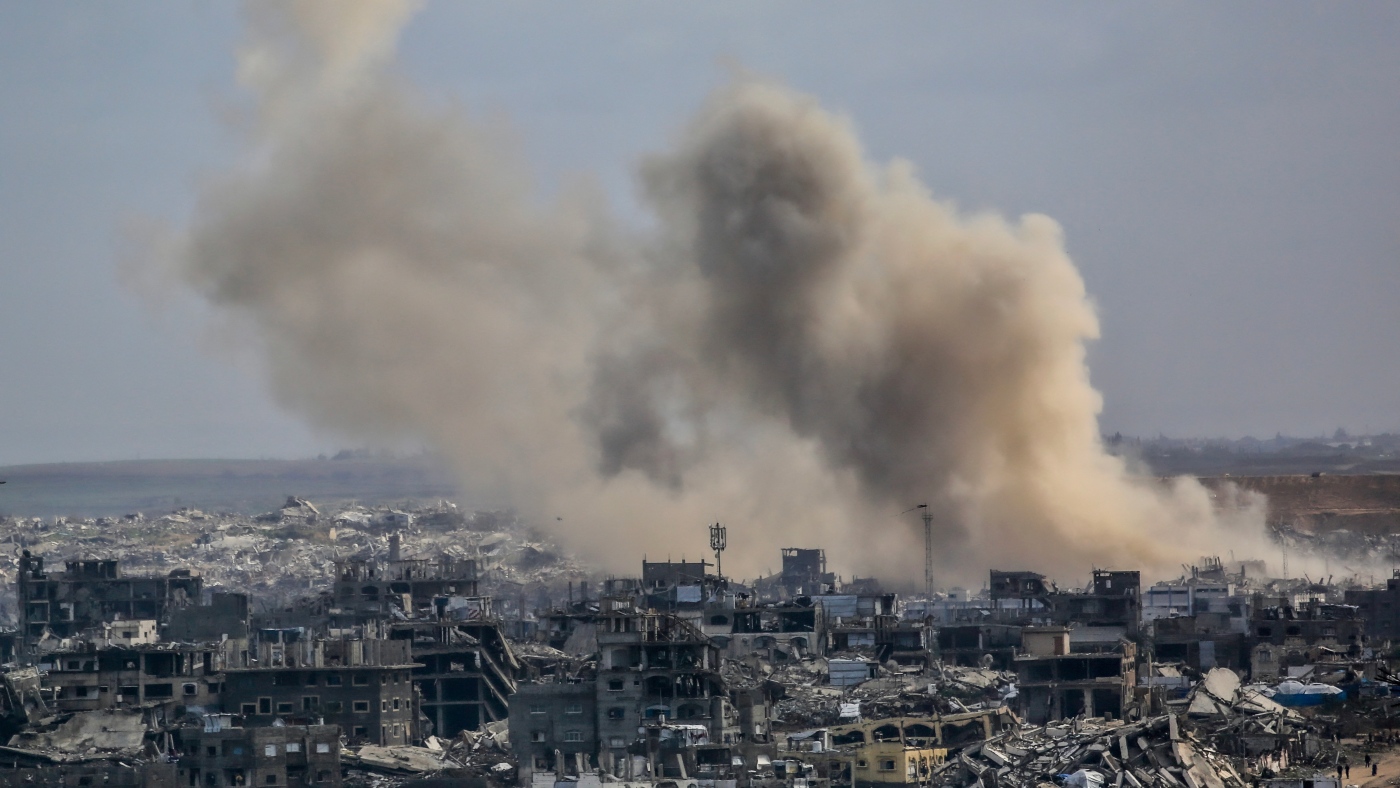
    In December 2023, South Africa brought a landmark case before the International Court of Justice (ICJ), accusing Israel of genocide in its military operations in Gaza. This marked the first time Israel’s actions were formally challenged on the global stage since the war began on October 7, 2023. The case has since become one of the most significant legal disputes in recent history, drawing widespread international attention. However, nearly two years later, the ICJ has yet to deliver a final judgment, with the process expected to extend into 2027 or beyond. The case has been characterized by its complexity, with multiple provisional measures issued against Israel, though compliance has been minimal. The death toll in Gaza has surged to over 66,000, according to the Gaza Health Ministry, underscoring the urgency of the situation. South Africa has pursued a multifaceted strategy, including diplomatic efforts and the formation of the Hague Group, to hold Israel accountable. Meanwhile, a recent UN commission of inquiry concluded that Israel has committed genocide in Gaza, further intensifying the legal and political stakes. The ICJ’s eventual ruling, while legally binding, faces enforcement challenges, particularly given the likelihood of a US veto in the UN Security Council. The case’s outcome could have profound implications for international law, Israel’s global standing, and the pursuit of justice for Palestinian victims.

  • Significant rise in civilian killings in Sudan conflict this year, says UN human rights office

    Significant rise in civilian killings in Sudan conflict this year, says UN human rights office

    The United Nations Human Rights Office has raised alarm over a sharp increase in civilian fatalities in Sudan during the first half of 2025, attributing the surge to escalating ethnic violence. Speaking at a press briefing in Geneva on Friday, Li Fung, a representative from the Office of the High Commissioner for Human Rights (OHCHR) in Sudan, described the situation as dire, stating, ‘Every day we are receiving more reports of horrors on the ground.’ According to a newly released report by the OHCHR, at least 3,384 civilians lost their lives between January and June, with the majority of the killings occurring in the Darfur region. The report underscores the urgent need for international attention and intervention to address the growing humanitarian crisis in the country. The UN has called for immediate action to protect civilians and prevent further loss of life.

  • From Sudan to Ukraine: Why Colombian mercenaries keep fighting foreign wars

    From Sudan to Ukraine: Why Colombian mercenaries keep fighting foreign wars

    In the desolate plains of Sudan, where a brutal civil war has left the nation in ruins, a small convoy of makeshift militarized vehicles gathers. Amidst the chaos, the sounds of vallenato—traditional Colombian folk music—echo from a car radio, a stark reminder of the presence of Colombian mercenaries in this distant conflict. Their involvement has recently come under intense scrutiny after Sudan lodged a formal complaint with the UN Security Council, accusing the United Arab Emirates (UAE) of financing and deploying these mercenaries to fight alongside the Rapid Support Forces (RSF), a paramilitary group opposing the Sudanese military. The UAE has denied these allegations.

  • Feathers fly in dispute over Ambani zoo’s pursuit of rare parrot

    Feathers fly in dispute over Ambani zoo’s pursuit of rare parrot

    In a complex international saga involving conservation, diplomacy, and wildlife trade, the transfer of 26 Spix’s macaws to a private zoo in India has sparked global scrutiny. The birds, declared extinct in the wild in 2019, were part of a captive-breeding program in Brazil before being sent to the Vantara animal rescue and rehabilitation center in Gujarat, India, in 2023. The facility, operated by the philanthropic arm of the Ambani family, Asia’s wealthiest, has faced questions over the legality and ethics of the transfer. While Indian investigators cleared Vantara of wrongdoing, Brazil and European officials remain concerned. Brazil claims it did not consent to the transfer and has raised the issue at CITES (Convention on International Trade in Endangered Species of Wild Fauna and Flora) meetings. Germany, which initially approved the transfer, later rejected further shipments after consulting with Brazilian authorities. Vantara, which houses over 2,000 species, insists the transfer was lawful and non-commercial, aimed at conservation breeding. The controversy highlights the challenges of balancing conservation efforts with international wildlife trade regulations. As discussions continue, the fate of these rare birds remains a focal point of global conservation debates.

  • British couple held for months by Taliban released from prison

    British couple held for months by Taliban released from prison

    An elderly British couple, Peter Reynolds, 80, and his wife Barbie, 76, who had been detained by the Taliban in Afghanistan for nearly eight months, have finally been released. The couple, who had lived in Afghanistan for almost two decades, were apprehended on February 1 while traveling home. Their release was secured through Qatari mediation, according to an official familiar with the case. During the final stages of negotiations, the couple was transferred from Kabul’s central prison to a larger facility. A Qatari official confirmed that the couple will first travel to Qatar for medical evaluations before returning to the UK, despite their long-term residence in Afghanistan’s Bamiyan province. The release comes after months of relentless public advocacy by their family. Just six days prior to their release, Faye Hall, an American woman who had been detained with them but was released two months into her captivity, shared with the BBC that the couple’s health had severely deteriorated in prison, stating they were ‘literally dying’ and that ‘time is running out.’

  • Fans, food and fast feet: Africa’s top shots

    Fans, food and fast feet: Africa’s top shots

    This week, Africa showcased a vibrant tapestry of cultural, culinary, and athletic achievements, capturing the world’s attention. In Lagos, Nigeria, Comic Con Africa brought together enthusiasts of gaming, comics, and animation. Among the attendees was 23-year-old Toni Olaguniu, who dressed as Mother Miranda from *Resident Evil*, and 24-year-old Toby Adekunle, who embodied Ekko from *League of Legends*. The event, held annually in cities worldwide, celebrates the creativity and passion of super-fans. Meanwhile, Nigerian chef Hilda Baci and her team made headlines by creating the world’s largest vat of jollof rice, weighing nearly nine tonnes, a testament to West Africa’s culinary prowess. In Paris, Ivorian cuisine took center stage at the Gastronomic Village, where over 60 countries showcased their culinary heritage. On the athletic front, Ethiopia’s Sembo Almayew set a personal best in the 3000m steeplechase in Japan, while Kenya’s Beatrice Chebet triumphed in the 10,000m race at the World Athletics Championships. In Malawi, political fervor gripped the nation as supporters of the governing MCP rallied ahead of the presidential election, with both the president and the main opposition leader claiming victory despite delayed official results. Elsewhere, Nigerian artist Nnenna Okoreon displayed her eco-conscious artwork, *Between Earth and Sky*, at London’s Kew Gardens, highlighting the intersection of plants, textiles, and sustainability. In Mogadishu, Somalia, 17-year-old Zakaria Mohamed demonstrated community spirit by caring for pigeons in his neighborhood. Finally, Beninese music icon Angélique Kidjo captivated audiences with a powerful performance at the Vatican, reaffirming her status as a global cultural ambassador. These stories underscore Africa’s dynamic contributions to global culture, sports, and innovation.

  • Second migrant removed to France after court bid fails

    Second migrant removed to France after court bid fails

    An Eritrean man has been deported from the UK to France under the government’s ‘one in, one out’ migration agreement, marking the second such removal since the policy was introduced. The man, whose identity remains undisclosed, was escorted by Home Office officials on an Air France flight from Heathrow to Paris. This action follows a failed last-minute court appeal to delay his departure, with the presiding judge ruling there was no legal justification to halt the process. The ‘one in, one out’ scheme, a year-long pilot agreement between the UK and France, aims to deter illegal small boat crossings by returning migrants to France while allowing asylum seekers with strong cases to enter the UK in exchange. The first deportation under this policy involved an Indian national, who was returned to France earlier this month. The Eritrean man, who arrived in the UK via a small boat in August, had claimed to be a victim of human trafficking. However, the judge noted inconsistencies in his account, leading to the decision to proceed with his removal. The Home Office has confirmed that more flights are planned, though ongoing legal challenges may affect their execution. Since the scheme began in August, approximately 5,590 migrants have reached the UK, with around 100 currently detained in immigration removal centers near Heathrow.

  • Historic tunnel created under the Alps to connect Italy and Austria

    Historic tunnel created under the Alps to connect Italy and Austria

    In a landmark achievement for European infrastructure, workers on Thursday breached the final layer of rock in the construction of the Brenner Base Tunnel, a monumental project set to become the world’s longest underground rail connection. This tunnel, linking Austria and Italy, is a cornerstone of the European Union’s strategy to reduce road freight traffic, lower pollution, and enhance cross-border trade. Italian Prime Minister Giorgia Meloni hailed the event as a “decisive step” in building one of the continent’s most ambitious infrastructure projects, calling it a historic milestone for Italy, Austria, and Europe as a whole. Scheduled to open in 2032—16 years behind schedule—the tunnel will span 55 kilometers (34 miles) and, when connected to an existing underground link to Innsbruck, extend to 64 kilometers. It promises to slash travel times between Fortezza, Italy, and Innsbruck, Austria, from 80 minutes to under 25 minutes. The Brenner Pass, one of Europe’s busiest freight routes, currently sees over 2.5 million trucks and 50 million tonnes of goods annually, contributing to severe congestion and environmental strain. The tunnel aims to shift 70% of trans-Alpine freight traffic from roads to rail, reversing the current imbalance. However, the project’s full potential could be hindered by Germany’s delay in finalizing crucial northern access routes to the tunnel, which are essential for maximizing its impact on reducing road traffic through the Alps. With a budget now exceeding 8.5 billion euros ($10 billion), the Brenner Base Tunnel represents a significant investment in Europe’s sustainable transportation future.

  • US, Israel criticise UN staff over Gaza war stance amid protests, documents show

    US, Israel criticise UN staff over Gaza war stance amid protests, documents show

    In a poignant demonstration of solidarity, hundreds of United Nations staff gathered outside the European headquarters in Geneva on September 18, 2025, to denounce the killings of their colleagues in Gaza since the onset of the Israel-Hamas conflict in October 2023. The protest, marked by placards reading ‘Peace for Gaza’ and ‘Not a Target,’ also featured the laying of 370 white roses—a somber tribute to each UN aid worker lost in the nearly two-year war. Nathalie Meynet, president of the UN refugee agency staff council, emphasized the urgency of the protest, stating, ‘Enough is enough. We cannot kill our colleagues in Gaza with such impunity.’

    The event, however, has sparked significant controversy. Both the United States and Israel have lodged formal complaints with UN leadership, accusing the organization of breaching its principle of impartiality. In a letter dated September 10, Israel’s ambassador to the UN in Geneva, Daniel Meron, criticized the protest as politically charged and called for disciplinary action against participants. Similarly, US Charge d’Affaires Tressa Finerty condemned the event, labeling it a ‘grave violation of the UN’s principle of neutrality’ and alleging systemic anti-Israel bias within the organization.

    Amid these tensions, UN management has reiterated the importance of neutrality. A confidential memo issued on September 17 reminded staff to avoid activities perceived as political, warning of potential risks to the organization’s integrity. Despite these directives, many UN employees remain outraged by the scale of the losses and the perceived failure to uphold humanitarian law. Yousra Ahmed, a UN staff worker at the protest, asserted, ‘It’s not a question of neutrality. I’m just outraged that the rules of the United Nations and humanitarian law are not being applied.’

    The protest and subsequent backlash underscore the deepening rift between the UN and its largest funder, the US, which has previously disengaged from the UN Human Rights Council over allegations of anti-Israel bias. With over 543 aid workers killed in Gaza, including 373 UN staff members, the conflict has exacted an unprecedented toll on the organization’s humanitarian efforts. As the UN grapples with these challenges, the balance between neutrality and advocacy remains a contentious issue.