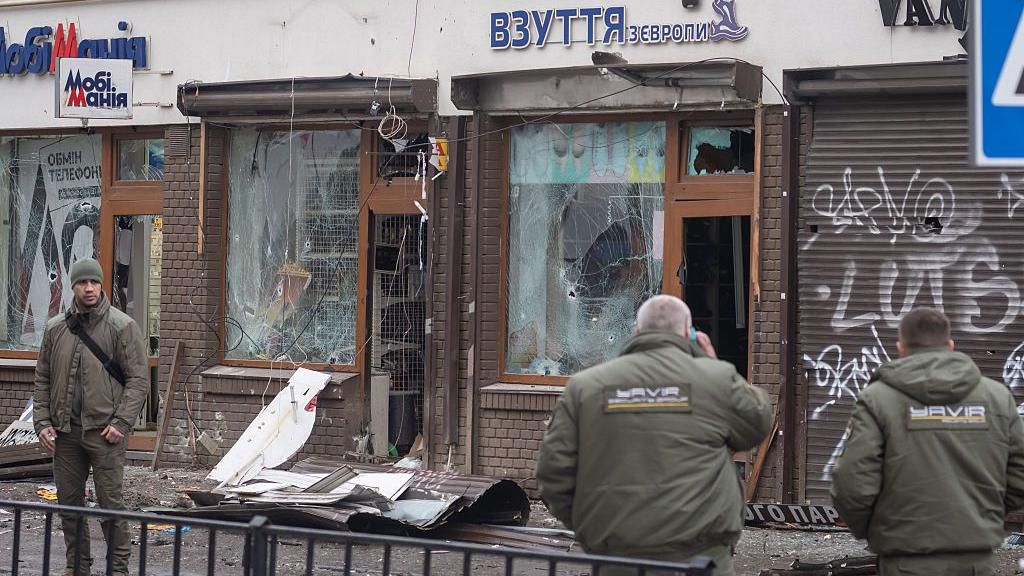
Dhaka, the capital of Bangladesh, has been shaken by a series of petrol bomb attacks targeting key locations, including a building associated with interim leader Muhammad Yunus. Police reported that seven crude petrol bombs were detonated on Monday, though no injuries were sustained. A 28-year-old man, identified as a member of the student wing of the outlawed Awami League, has been arrested in connection with the attacks. The Awami League, the former ruling party of ousted leader Sheikh Hasina, was removed from power in a violent uprising in August 2024. The suspect is currently under interrogation for multiple incidents, including petrol bomb attacks on St Mary’s Cathedral and a Catholic school in Dhaka over the weekend. Early Monday, additional petrol bombs targeted the offices of Grameen Bank, founded by Nobel Prize-winning Yunus, as well as properties linked to Yunus’ cabinet member Farida Akhtar, two buses, and a hospital. These incidents have escalated tensions in Bangladesh as political parties prepare for the first elections since Hasina’s fall, scheduled for February 2026. Security forces have launched a citywide manhunt to apprehend all individuals involved in these violent acts. The election campaigns, which began in early November, have already been marred by violence, including a fatal shooting at a campaign rally last week. Bangladesh continues to grapple with political unrest, with police offering rewards for the surrender of over 1,300 firearms looted during last year’s turmoil.
分类: world
-

‘Genocide stopped only in media’: Gaza endures daily bombings a month into truce
Despite the implementation of a ceasefire in Gaza a month ago, the lives of many Palestinians, including Manar Jendiya, remain fraught with danger and uncertainty. Originally from Gaza City, Jendiya has been displaced in Deir al-Balah since the truce began on October 11. Her neighborhood, Shujaiya, remains under Israeli control, and two weeks into the agreement, Israeli forces bombed the area where she was staying, forcing her to flee once again. Tragically, one of these attacks claimed the life of her sister, who had been caring for her children alone after her husband was killed earlier in the conflict.
Jendiya’s story is emblematic of the broader suffering in Gaza, where many residents feel that Israel’s two-year campaign of violence continues unabated. Daily explosions demolish homes, and shelling and gunfire persist, claiming lives and causing injuries. Essential supplies like food and medicine remain scarce due to the ongoing Israeli siege. Jendiya poignantly remarked, ‘The genocide has only stopped in the media. But for us, it’s still ongoing.’
Since the ceasefire began, Israeli forces have killed at least 242 Palestinians, including dozens of children, in clear violation of the agreement. The Rafah crossing, crucial for evacuating the severely wounded to Egypt, remains closed, and only a fraction of the agreed-upon aid trucks are allowed through daily. Most carry non-essential items, leaving critical supplies in short supply.
Adding to the psychological toll, Israeli drones hover over Gaza, broadcasting threatening messages and playing disturbing sounds late at night. Anas Moeen, a 30-year-old resident, described the drones as a deliberate tactic to spread panic and anxiety. ‘They are addressing civilians with messages like ‘hand over the bodies of captives’ and ‘respect the ceasefire’, but as civilians, this is not our responsibility,’ he said. ‘What we understand from these messages is that the army can reach us at any moment, that the war isn’t over, and we could be the next target whenever the drone operator decides.’
The situation on the ground remains dire, with Israeli military vehicles positioned just two kilometers from central Gaza City. Moeen described the constant routine of air raids, artillery shelling, and gunfire as ‘hysterical,’ with soldiers sometimes keeping their fingers on the trigger for extended periods. Despite the ceasefire, the threat of renewed war looms large, leaving Gaza’s residents in a state of perpetual fear and uncertainty.
-

Israeli settlers torch factories and farmland in massive West Bank arson raid
In a disturbing escalation of violence, Israeli settlers launched a coordinated arson attack on Palestinian communities in the occupied West Bank on Tuesday, November 12, 2025. The assault targeted an industrial area east of Tulkarm, near Beit Lid, where masked settlers set fire to a dairy factory, surrounding farmland, multiple buildings, and trucks. The flames spread to a nearby nomadic Palestinian community, destroying their tents. At least four Palestinians were injured as settlers hurled rocks at those attempting to resist the attack. Israeli forces reportedly accompanied and protected the settlers during the assault, further exacerbating tensions.
This incident is part of a broader surge in settler violence that has intensified since October 2023, with a sharp increase in attacks during the olive harvest season—a critical source of income for thousands of Palestinian families. According to the Colonization and Wall Resistance Commission, over 2,350 attacks were recorded in October 2025 alone, with 1,584 directly carried out by the Israeli army. These assaults include physical violence, the uprooting of olive trees, the burning of fields, and the obstruction of farmers’ access to their land.
In addition to the arson attack, settlers fenced off Palestinian land in the northern Jordan Valley, preventing farmers from working and undermining their livelihoods. Meanwhile, in occupied East Jerusalem, over 200 settlers entered the courtyards of Al-Aqsa Mosque under Israeli police protection, performing Talmudic prayers and rituals while barring Muslim worshippers from entering.
The violence extends beyond property destruction. On Sunday, November 10, settlers attacked a Palestinian community in al-Ara’ara, north of Jerusalem, injuring at least seven people and torching livestock sheds. Similar incidents occurred in Mount Sabih, south of Nablus, where masked settlers armed with clubs assaulted farmers, journalists, and foreign activists during the olive harvest. Among the injured were Reuters photographer Raneen Sawafta, Al Jazeera correspondent Mohammed al-Atrash, and photographer Louay Saeed.
UN bodies and international human rights organizations have condemned the escalating violence. Ajith Sunghay, head of the UN Human Rights Office in Palestine, warned that the attacks aim to sever Palestinians’ connection to their land, facilitate illegal settlement expansion, and dispossess communities. He emphasized the cultural and economic significance of olive cultivation, which represents livelihood, lineage, and resilience for Palestinians.
The international community continues to call for accountability, as most settlers involved in such attacks are rarely prosecuted. The ongoing violence underscores the urgent need for intervention to protect Palestinian lives and livelihoods in the occupied West Bank.
-

Thailand suspends Cambodia deal after landmine injures troops
Thailand has suspended a peace agreement with Cambodia following a landmine explosion that injured two Thai soldiers near the border. The incident occurred in Sisaket province, leaving one soldier with severe leg injuries and another with chest pains due to the blast’s pressure. The peace deal, brokered under the oversight of former US President Donald Trump, aimed to end hostilities after border clashes in July that resulted in at least 43 deaths and displaced over 300,000 civilians on both sides. Thai government spokesman Siripong Angkasakulkiat announced that Bangkok would halt the implementation of the joint declaration signed in Kuala Lumpur in October, which included plans for mine-clearing operations, the withdrawal of heavy weapons, and the release of 18 detained Cambodian soldiers. Thai Prime Minister Anutin Charnvirakul expressed concerns that the security threat had not diminished as anticipated. Cambodian authorities have yet to comment on the incident but have previously denied allegations of planting new landmines. Despite the truce holding since July 29, both nations have accused each other of ceasefire violations, and analysts suggest a lasting resolution to the century-old border dispute remains uncertain.
-

At least eight killed after car explodes near Delhi’s Red Fort
A devastating car explosion near the Red Fort in Delhi has claimed the lives of at least eight people and left 19 others injured, according to authorities. The incident occurred at approximately 18:52 local time (13:52 GMT) when a slow-moving Hyundai i20 stopped at a red light before exploding, causing significant damage to nearby vehicles. Delhi Police Commissioner Satish Golcha confirmed the details, while Sanjay Tyagi, the city police spokesperson, stated that all possible causes are being investigated. The blast took place near a metro station close to the Red Fort, a historic Mughal fortress and a major tourist attraction. Prime Minister Narendra Modi expressed his condolences to the victims’ families, while opposition leader Rahul Gandhi described the incident as “extremely heartbreaking.” Federal Home Minister Amit Shah revealed that teams from the National Security Guard and the National Investigation Agency, along with forensic experts, are conducting a thorough investigation. Security has been heightened in sensitive areas, including Uttar Pradesh, which borders Delhi and is home to iconic sites like the Taj Mahal. Eyewitnesses described the scene as chaotic, with locals attempting to aid the injured amidst the wreckage.
-

Verified videos show aftermath of explosion in Delhi
A devastating car explosion near Delhi’s iconic Red Fort has resulted in the tragic loss of eight lives, according to local police authorities. Verified videos circulating online depict the harrowing aftermath of the incident, showcasing the extent of the destruction and the chaos that ensued. The explosion, which occurred in close proximity to one of India’s most historic landmarks, has sent shockwaves through the community and raised urgent questions about security measures in the area. Authorities are currently investigating the cause of the blast, with initial reports suggesting it may have been an act of sabotage. Emergency services were quick to respond, but the severity of the explosion left little chance for survival for those directly affected. The incident has prompted calls for heightened vigilance and a thorough review of safety protocols in public spaces across the city.
-

Fight fake news and defeat climate deniers, Brazil’s Lula tells UN talks
Brazilian President Luiz Inácio Lula da Silva delivered a passionate address at the opening of the COP30 climate conference in Belém, Brazil, urging the world to combat climate denialism and misinformation. Speaking to thousands of delegates gathered in the Amazonian city, President Lula emphasized the need for truth and scientific evidence in the face of ‘fake news and misrepresentation.’ While not explicitly naming former U.S. President Donald Trump, Lula criticized leaders who ‘control the algorithms, sew hatred, and spread fear,’ referencing Trump’s past dismissal of climate change as a ‘con job.’ The conference, held in a politically charged environment, began without the participation of senior U.S. officials, highlighting the ongoing tension between the U.S. and global climate efforts. President Lula unveiled Brazil’s ambitious Tropical Forest Forever Facility (TFFF), aiming to raise $125 billion for global forest protection, though fundraising has faced challenges, including the UK’s last-minute withdrawal of public funding. The conference also grapples with competing interests, such as the Alliance of Small Island States’ (AOSIS) call to prioritize limiting global temperature rise to 1.5°C, a goal the UN now deems increasingly unattainable. UN Climate Chief Simon Stiell warned of the economic consequences of climate inaction, urging nations to move beyond ‘squabbling’ and focus on collective progress.
-

Thailand court orders extradition to China of alleged online gambling kingpin
In a significant legal development, Thailand’s appeals court has greenlit the extradition of She Zhijiang, a Chinese national accused of orchestrating one of the largest transnational cybercrime networks in Asia. The ruling, issued on Monday, mandates that She be transferred to China within 90 days. She, who was arrested in Bangkok in August 2022 on a 2014 warrant from Chinese authorities, faces allegations of operating over 200 illegal online gambling platforms and being linked to illicit gambling networks and casinos in Myanmar. His legal team’s challenge to the constitutionality of Thailand’s extradition law was dismissed last month, paving the way for this decision. She’s prominence in the region stems from his involvement in the Yatai New City project in Myanmar’s Shwe Kokko city, a hub notorious for cyber scams and human trafficking. A 2024 UN report highlighted his extensive business portfolio across Southeast Asia, spanning real estate, construction, entertainment, and blockchain technology. The U.S. and British governments have also imposed sanctions on She for his alleged criminal activities. This case underscores the growing challenge of cybercrime in Southeast Asia, where weak law enforcement has allowed such operations to thrive, particularly in Cambodia and Myanmar.
-

Rescuers searching for missing migrants after boat sinks off Malaysia recover 5 more bodies
In a tragic turn of events, Malaysian rescuers have recovered five more bodies from the waters off northern Langkawi island, bringing the death toll to 12 after a boat carrying migrants from Myanmar capsized last week. The bodies, including those of two men, two women, and a boy, were found near the Thailand border, according to the Malaysian Maritime Enforcement Agency. First Admiral Romli Mustafa stated that approximately 70 people were on board the ill-fated vessel, based on survivors’ accounts. So far, 13 individuals have been rescued, leaving dozens still unaccounted for. Officials revealed that the migrants were part of a larger group of around 300 people who departed from Buthidaung in Myanmar’s Rakhine state. Upon nearing Malaysia, the passengers were reportedly divided into three smaller boats, one of which sank near Tarutao island in southern Thailand last Thursday. The exact timing and location of the incident remain unclear, and the fate of the other two boats is still unknown. Malaysian rescuers, aided by air surveillance, expanded their search area on Monday and will continue their efforts on Tuesday. Authorities have identified some of the survivors as Rohingya Muslims, a persecuted minority in Myanmar. Malaysia, with its predominantly Malay Muslim population, has historically been a destination for Rohingya seeking refuge. However, the country has recently tightened its borders, turning away boats carrying refugees to prevent a mass influx. Currently, around 117,670 Rohingya are registered with the U.N.’s refugee agency in Malaysia, constituting 59% of the country’s total refugee population.
-

Intense fighting in central Sudan displaces 2,000 people in just days, a UN agency says
The ongoing civil war in Sudan has intensified, with recent clashes in central regions displacing approximately 2,000 people over the past three days, according to the United Nations’ International Organization for Migration (IOM). The conflict, which has ravaged the nation for over two years, has claimed tens of thousands of lives and displaced millions. The latest wave of displacement occurred in the Bara area of North Kordofan province, where residents fled escalating violence between the Sudanese army and the paramilitary Rapid Support Forces (RSF). Kordofan and Darfur have emerged as the epicenters of the conflict, with the RSF recently capturing the strategic city of el-Fasher in Darfur, resulting in hundreds of deaths and forcing tens of thousands into overcrowded camps. Reports from aid groups and UN officials highlight atrocities committed by the RSF, including mass killings and the destruction of evidence. The war, which began in 2023 following a breakdown in relations between the military and RSF, has displaced 12 million people and killed at least 40,000, though aid organizations suggest the actual death toll is significantly higher. In late October, RSF attacks in Bara killed at least 47 civilians, including women and children. Meanwhile, the RSF has reportedly advanced into Babanusa in West Kordofan, prompting further displacement. Satellite images analyzed by the Yale School of Public Health’s Humanitarian Research Lab suggest the RSF has been burning bodies in el-Fasher to conceal evidence of their crimes. The humanitarian crisis continues to deepen, with no end to the conflict in sight.