分类: world

  • Protests erupt in breakaway region of Somaliland after Israeli recognition

    Protests erupt in breakaway region of Somaliland after Israeli recognition

    The self-declared republic of Somaliland has become the epicenter of escalating regional tensions following Israel’s unprecedented decision to formally recognize its sovereignty. The announcement by Israeli Prime Minister Benjamin Netanyahu on Friday marked the first such international recognition for the breakaway region since it declared independence from Somalia in 1991.

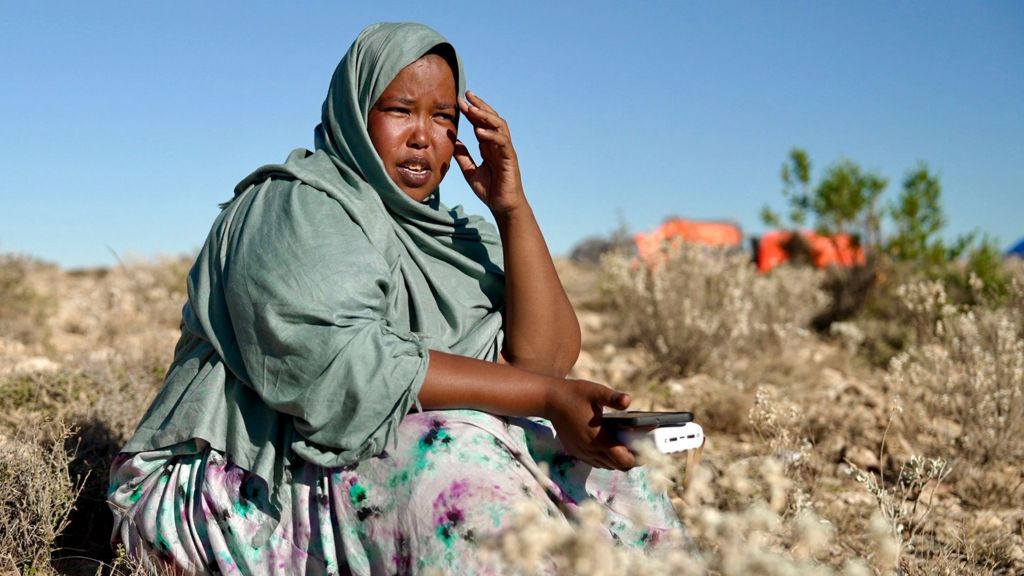
    Immediate protests erupted across multiple locations, with demonstrators in Boroma—approximately 50 kilometers west of Somaliland’s capital Hargeisa—flooding the streets waving Palestinian flags and chanting anti-Israel slogans. Social media footage captured large crowds vocally supporting Palestinian liberation while rejecting separatist movements within their own territory.

    The diplomatic move prompted swift condemnation from the Somali government in Mogadishu, which denounced the recognition as a violation of international law and an affront to its territorial integrity. President Hassan Sheikh Mohamud urgently called upon the international community to reject what he termed a “dangerous precedent” that threatens regional stability.

    Israeli officials announced intentions to pursue immediate cooperation with Somaliland across agriculture, health, technology, and economic sectors. However, the timing and motivations behind the recognition remain unclear, particularly given earlier reports that both Israel and the U.S. had approached Somaliland regarding potential resettlement of Palestinians from Gaza.

    The recognition has drawn criticism from multiple international players including Saudi Arabia, Turkey, Pakistan, and Egypt—the latter emphasizing its full support for Somalia’s sovereignty. The East African governing body IGAD issued a statement affirming that unilateral recognition contradicts UN and African Union charters.

    Security concerns have intensified with al-Shabab militants vowing to combat any Israeli presence in Somaliland, while Yemen’s Houthi movement declared the territory a legitimate target should Israel establish operations there. Regional analysts warn the recognition could provide militant groups with renewed recruitment justification and potentially destabilize the strategically important Horn of Africa.

  • Turkey: Islamic State militants and police officers killed in clash

    Turkey: Islamic State militants and police officers killed in clash

    A prolonged firefight between Turkish security forces and suspected Islamic State (IS) militants in a residential area resulted in nine fatalities, including three police officers and six alleged terrorists, according to an official statement from Interior Minister Ali Yerlikaya. The operation, characterized as part of Turkey’s sustained counterterrorism campaign, unfolded early Monday morning.

    Police units initiated a targeted raid on a residence intelligence indicated was harboring IS fighters. The situation escalated violently when the occupants opened fire on the approaching officers, leading to an intense exchange of gunfire that persisted for nearly eight hours, as confirmed by a Reuters eyewitness. The confrontation also left at least eight police officers and one security guard wounded.

    In a humanitarian intervention amidst the violence, authorities successfully evacuated five women and six children from the besieged property.

    This deadly incident is the latest in a series of security operations. Just days prior, on Christmas Day, Turkish authorities detained 115 individuals across Istanbul in a sweeping crackdown on a suspected IS cell allegedly plotting attacks against New Year’s celebrations. Those raids, spanning 124 locations, yielded firearms, ammunition, and purported organizational documents, with arrests focusing on individuals accused of financing IS activities and disseminating its propaganda.

    Turkey’s protracted struggle against the Islamic State, designated a terrorist organization in 2013, is deeply influenced by its extensive border with Syria, where the group retains a presence. This geographical reality has positioned Turkey as a primary target for IS operations, a vulnerability tragically highlighted by a 2017 New Year’s Eve attack in Istanbul that killed 39 people. Official Turkish statistics report approximately 19,000 arrests for alleged IS affiliations over the past decade.

    The regional counterterrorism landscape has seen heightened activity. Recent Turkish operations occurred shortly after U.S. forces executed extensive airstrikes on IS targets in Syria, a retaliatory measure for the killing of two American soldiers and an interpreter in Palmyra on December 13th. U.S. President Donald Trump stated that Syrian President Ahmed al-Sharaa endorsed the U.S. response. The new Syrian government has pledged cooperation with U.S. and European allies to combat remaining IS elements. Despite the group’s military defeat and the collapse of its so-called caliphate, remnants persist, attempting to destabilize the post-Assad administration. In a parallel development, Syria’s Interior Ministry announced the arrest of a prominent IS figure on Wednesday, followed by a raid near Damascus the next day that resulted in the death of a senior IS commander.

  • Wooden ship: India’s navy sails into history with ocean voyage

    Wooden ship: India’s navy sails into history with ocean voyage

    In an extraordinary fusion of historical preservation and maritime diplomacy, the Indian Navy has launched a unique oceanic expedition using a traditionally crafted wooden vessel named ‘Kaundinya.’ This 20-meter-long ship, constructed using ancient fifth-century shipbuilding techniques, features a hull sewn together with coconut coir rope instead of modern nails and fasteners. The vessel set sail from Porbandar, Gujarat, on Monday, embarking on a 1,400-kilometer journey to Muscat, Oman, that is expected to take approximately two weeks.

    The Kaundinya represents a significant departure from India’s contemporary naval fleet of steel aircraft carriers and advanced warships. Steering is accomplished through giant oars rather than a rudder, while two fixed square sails harness seasonal monsoon winds that historically facilitated trade across the Indian Ocean. The vessel’s design and construction pay homage to India’s rich maritime legacy, evoking an era when Indian mariners established trade routes with the Roman Empire, Middle Eastern civilizations, Africa, and East Asian territories including Thailand, Indonesia, China, and Japan.

    Vice Admiral Krishna Swaminathan emphasized the profound strategic and cultural importance of the voyage during the launch ceremony. ‘This expedition reconnects the past with the present,’ he stated. ‘We are not only retracing ancient pathways of trade, navigation, and cultural exchange but also reaffirming India’s position as a natural maritime bridge across the Indian Ocean.’ The project aims to resurrect and celebrate traditional Indian maritime concepts and capabilities that have been largely forgotten in the modern era.

    The undertaking required exceptional dedication to historical accuracy, with builders deliberately avoiding modern construction shortcuts. The 18-member crew has already completed preliminary coastal navigation along India’s western shoreline from Karnataka to Gujarat, preparing for the challenging open-water crossing to the Arabian Peninsula.

    Oman’s ambassador to India, Issa Saleh Alshibani, highlighted the symbolic significance of the voyage, noting that ‘the monsoon winds that once guided traditional ships between our ports also carried a shared understanding that prosperity grows when we remain connected, open, and cooperative.’ The expedition serves as a powerful reminder that the Indian Ocean has historically functioned as a bridge for commerce, ideas, and cultural exchange rather than a barrier between nations.

  • Turkey plans offshore energy exploration deal with Syria in 2026

    Turkey plans offshore energy exploration deal with Syria in 2026

    Turkey is advancing its strategic energy partnership with Syria, with plans to formalize a significant offshore exploration agreement in 2026. Energy Minister Alparslan Bayraktar announced the initiative during an interview with Turkish digital news platform GDH on Monday, revealing that this future pact would focus on assessing potential energy resources in maritime territories along the Syrian coastline.

    This development builds upon a comprehensive framework agreement signed earlier this year, establishing a foundation for bilateral energy cooperation between Ankara and Damascus. Minister Bayraktar clarified that the 2026 agreement would enable seismic research activities to evaluate the region’s resource potential, though he emphasized that this does not automatically guarantee subsequent drilling operations.

    The Turkish-Syrian energy collaboration has accelerated remarkably since December 2024, transforming Turkey into a key energy player in Syria following the stabilization of President Bashar al-Assad’s government. The partnership reached a milestone on May 29, 2025, with the signing of a major agreement encompassing natural gas, electricity, mining, and petroleum sectors, with provisions for technical coordination, information exchange, and joint investment initiatives.

    Notable projects already underway include a natural gas pipeline connecting Kilis and Aleppo, completed in June 2025, which will enable Turkey to supply Syria with two billion cubic meters of natural gas annually. This infrastructure is projected to generate approximately 1,300 megawatts of electricity capacity.

    Further enhancing energy integration, both nations are constructing a 400-kilovolt high-voltage transmission line to connect their power grids, scheduled for operation by early 2026 with capacity to support 500 MW of electricity imports.

    The partnership extends to substantial private sector involvement, evidenced by a $7 billion strategic cooperation agreement between Turkey’s Kalyon Holding and Cengiz Holding, Qatar’s UCC, and American company Power International. This consortium plans to develop natural gas combined-cycle power plants totaling 4,000 MW capacity across multiple Syrian locations, complemented by a 1,000-MW solar power plant in the Vidyan al-Rabi region.

    This expanding energy alliance may raise concerns among regional neighbors, particularly Greece and Cyprus, who might view these developments as potentially leading to the establishment of an exclusive economic zone that could heighten tensions in the Eastern Mediterranean.

  • Bondi Beach attack hero says wanted to protect ‘innocent people’

    Bondi Beach attack hero says wanted to protect ‘innocent people’

    In a remarkable display of courage amidst tragedy, Syrian-born fruit seller Ahmed al Ahmed has been recognized as a national hero for his actions during the deadly Bondi Beach terrorist attack. The Sydney resident, who emigrated from Syria in 2007, single-handedly disarmed one of the two assailants during their December 14 rampage that claimed 15 lives and injured dozens at a Hanukkah celebration.

    Speaking exclusively to CBS News in an interview published Monday, Ahmed recounted the pivotal moment when he instinctively rushed toward the gunfire. “My target was just to take the gun from him, and to stop him from killing a human being’s life and not killing innocent people,” the father of two stated, demonstrating extraordinary composure despite sustaining multiple gunshot wounds during the confrontation.

    The attack, described by authorities as an antisemitic terrorist act, was carried out by father and son Sajid and Naveed Akram. Sajid, a 50-year-old Indian national who entered Australia in 1998, was fatally shot by police during the incident. His 24-year-old son Naveed, an Australian-born citizen, remains in custody facing numerous charges including terrorism and 15 counts of murder.

    Ahmed’s heroic actions unfolded as he was simply getting coffee at the beach. Surveillance footage captured the moment he strategically maneuvered between parked vehicles before tackling the assailant from behind. “I jumped on the gunman’s back, holding him with my right hand,” Ahmed recalled, adding that he demanded the attacker relinquish his weapon.

    The emotional toll remains evident as Ahmed expressed both pride and sorrow: “I know I saved lots, but I feel sorry for the lost.” His physical recovery has involved multiple surgeries to address shoulder injuries sustained during the struggle.

    In recognition of his bravery, the Australian government has expedited visa processing for Ahmed’s family members. Home Affairs Minister Tony Burke commended Ahmed’s actions, stating: “Ahmed has shown the courage and values we want in Australia.”

    The hero’s uncle Mohammed, speaking from the family’s hometown of Al-Nayrab, Syria, expressed profound pride: “His act is a source of pride for us and for Syria.” This sentiment echoes across Australia where Ahmed’s selfless intervention has become a symbol of hope and unity against violence.

  • Palestinians ‘drowning’ as rain and wind uproot more Gaza tents

    Palestinians ‘drowning’ as rain and wind uproot more Gaza tents

    Severe winter weather has plunged Gaza into unprecedented humanitarian crisis as torrential rains and gale-force winds ravage the besieged territory. The catastrophic conditions have claimed multiple young lives and destroyed tens of thousands of makeshift shelters, compounding the devastation wrought by two years of conflict.

    Tragic fatalities continue to mount amid the extreme weather. Two-month-old Arkan Firas Musleh succumbed to hypothermia on Monday, while seven-year-old Atta Mai drowned after falling into a flooded well near Gaza City. Since the rainy season began earlier this month, at least three children have died from exposure and 17 others perished in structural collapses triggered by severe storms.

    The Shelter Cluster reports over 42,000 tents and temporary shelters suffered damage between December 10-17 alone, displacing approximately 250,000 vulnerable individuals. Civil defense spokesperson Mahmoud Basal revealed that 90% of tents have been either swept away or inundated by floodwaters, while more than 110 residential buildings have experienced partial collapses.

    Amro Akram, a 20-year-old displaced in Khan Younis, described the unbearable conditions: ‘We are drowning. The sound of children suffering in the rain is unbearable. A person feels powerless to help.’ After his own tent was destroyed earlier this month, Akram sought refuge in his sister’s shelter, which also flooded on Monday.

    The humanitarian crisis is intensified by Israel’s blockade, which has restricted vital supplies. The Gaza-based Government Media Office alleges Israel has failed to meet its ceasefire agreement obligations, allowing only approximately 20,000 trucks entry since October instead of the mandated 48,000. This shortage has created critical deficits in food, medicine, water, and fuel, paralyzing hospitals, bakeries, and sanitation facilities.

    The UN Relief and Works Agency characterized the situation as ‘man-made’ despite the natural origin of Storm Byron, noting that ‘months of war and displacement have forced people in Gaza to live amid collapsing ruins.’ With nearly 90% of Gaza’s infrastructure already destroyed during the conflict and 71,000 Palestinians killed, the territory now faces what officials describe as ‘a slow death’ from compounded humanitarian failures.

  • Russia opens rebuilt Mariupol theater more than 3 years after Moscow airstrike killed hundreds there

    Russia opens rebuilt Mariupol theater more than 3 years after Moscow airstrike killed hundreds there

    The Donetsk Academic Regional Drama Theater in Russian-occupied Mariupol has officially reopened with a gala concert, more than three years after its destruction by a Russian airstrike that killed approximately 600 civilians. The March 2022 bombing occurred while hundreds of residents sought shelter within the building, which had been visibly marked with the word “children” to alert aircraft.

    Russian state media showcased the renovated theater’s marble pillars and staircases, with performers in traditional kokoshnik headdresses celebrating the reconstruction. Moscow-installed authorities, including Denis Pushilin of the Donetsk region and St. Petersburg Governor Alexander Beglov, attended the opening ceremony. Workers from St. Petersburg, which became Mariupol’s twin city after Russia’s complete capture in May 2022, participated in the rebuilding effort.

    This reopening occurs amidst ongoing controversy regarding the theater’s destruction. Moscow previously claimed Ukrainian forces demolished the building, but an Associated Press investigation confirmed Russian responsibility for the attack that killed nearly twice the initial government estimates. The city’s Ukrainian council, now operating from exile, condemned the reconstruction as “singing and dancing on bones” and accused Russia of using cultural restoration to conceal war crimes and advance Russification policies.

    The Donetsk region remains a critical battleground in the ongoing conflict, with its status representing a major obstacle in peace negotiations. Russia’s illegal annexation of the region in 2022 continues to be internationally contested as fighting persists across the territory.

  • South Korea president vows to reveal truth on anniversary of deadly Jeju Air crash

    South Korea president vows to reveal truth on anniversary of deadly Jeju Air crash

    On the first anniversary of South Korea’s deadliest aviation disaster, President Lee Jae Myung issued a formal apology and committed to uncovering the complete truth behind the Jeju Air tragedy that claimed 179 lives. The catastrophic incident occurred on December 29, 2024, when Flight 501 crash-landed at Muan International Airport, erupting into flames after impacting an embankment at runway’s end. Only two survivors emerged from the wreckage of the aircraft carrying 181 people.

    President Lee acknowledged systemic failures in national safety protocols, stating, ‘As president who bears the responsibility to protect lives and safety, I offer my deepest apologies. This disaster revealed the systematic problems and limitations of our society.’ He emphasized that ‘real change and action’ rather than ‘perfunctory promises or empty words’ were necessary moving forward.

    Despite a preliminary January report from the Aviation and Railway Accident Investigation Board citing bird strikes affecting both engines, critical questions remain unanswered. Investigations have been delayed regarding potential safety lapses, runway design deficiencies at Muan International, and the pilots’ final actions before impact.

    Victims’ families continue demanding accountability as parliamentary reviews advance plans to overhaul the accident investigation board to ensure greater independence and technical expertise. Memorial services are scheduled at the crash site in southwestern South Korea, where relatives will commemorate the tragedy that has prompted nationwide scrutiny of aviation safety standards.

  • At least 16 killed after fire rages through Indonesia retirement home

    At least 16 killed after fire rages through Indonesia retirement home

    A devastating fire at the Werdha Damai retirement home in Manado, Indonesia, has resulted in the tragic loss of at least 16 lives, with three additional individuals sustaining burn injuries. The catastrophic incident occurred on Sulawesi island, with the inferno finally being contained by late Sunday evening after hours of firefighting efforts.

    Local police official Alamsyah P. Hasibuan confirmed the casualty figures through state news agency Antara, noting that authorities are actively investigating the origin and cause of the deadly blaze. Visual documentation from Metro TV news channel captured the horrifying scene as flames engulfed the facility, illuminating the night sky with an ominous orange glow while residents attempted to assist elderly occupants in escaping the burning structure.

    Jimmy Rotinsulu, head of Manado’s fire department, revealed to Metro TV that the majority of residents, who were predominantly senior citizens, found themselves trapped within the building as the fire rapidly spread through the facility. The combination of limited mobility among elderly residents and the rapid progression of the fire created particularly challenging rescue conditions for emergency responders.

    The tragedy has raised serious questions about fire safety protocols and emergency preparedness in Indonesia’s care facilities for vulnerable populations. As recovery efforts continue, local authorities face mounting pressure to implement enhanced safety measures and conduct comprehensive reviews of similar institutions across the region to prevent future catastrophes of this nature.

  • At least 13 killed, 98 injured after train derails in Mexico

    At least 13 killed, 98 injured after train derails in Mexico

    A catastrophic train derailment in southern Mexico has resulted in substantial casualties, with authorities confirming at least 13 fatalities and 98 injuries. The incident occurred on Sunday when an Interoceanic Train carrying 250 people veered off the tracks near Nizanda in Oaxaca state.

    According to the Mexican Navy’s official report, the train was transporting 241 passengers and 9 crew members at the time of the accident. Medical authorities have classified 139 individuals as out of immediate danger, while 36 injured passengers required urgent medical attention. President Claudia Sheinbaum confirmed via social media platform X that five of the injured remain in critical condition.

    The Mexican government has initiated a comprehensive response, with senior officials dispatched to the accident site to coordinate rescue operations and provide support to affected families. Oaxaca Governor Salomon Jara Cruz expressed official condolences while emphasizing coordinated relief efforts between state and federal agencies.

    Mexico’s Attorney General’s Office has opened a formal investigation into the causes of the derailment. Attorney General Ernestina Godoy Ramos announced the probe through official channels, indicating the seriousness with which authorities are treating the incident.

    The Interoceanic Train service, inaugurated in 2023 under former President Andres Manuel Lopez Obrador, represents a cornerstone of the ambitious Interoceanic Corridor project. This strategic infrastructure initiative was designed to modernize rail transportation across the Isthmus of Tehuantepec, connecting the Pacific port of Salina Cruz with Coatzacoalcos on the Gulf Coast.

    The broader development project aims to transform the region into a competitive trade corridor capable of rivaling the Panama Canal through extensive modernization of ports, railways, and industrial infrastructure. The train service constitutes a critical component of Mexico’s national strategy to expand passenger and freight rail capacity while stimulating economic development in the historically underserved southern regions.