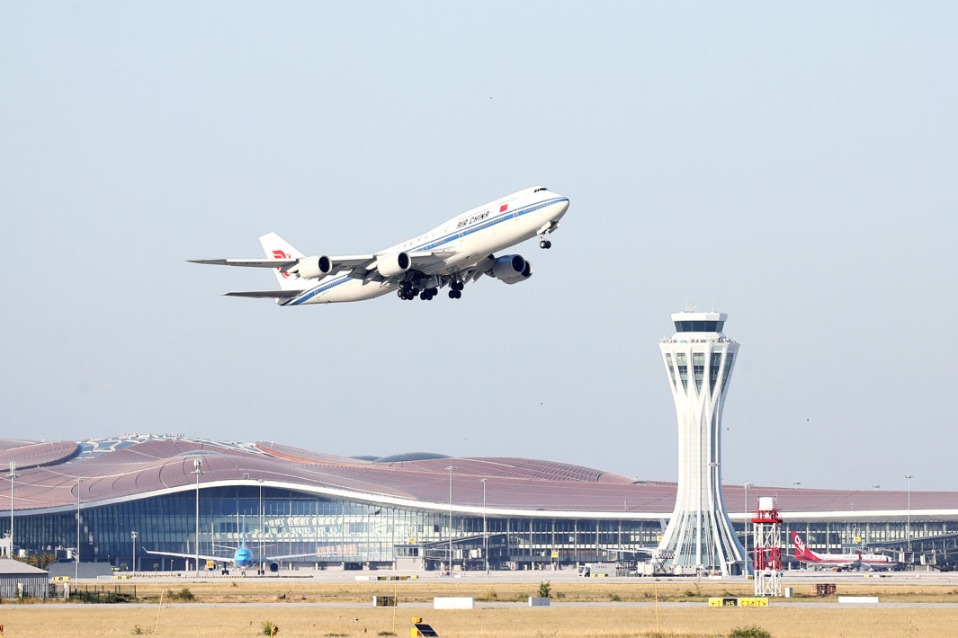
Major Chinese airlines have strongly opposed a recent US proposal to prohibit them from using Russian airspace for round-trip flights between China and the United States. The proposed ban, which could be enforced as early as November, has sparked significant backlash from the aviation industry and raised concerns about its broader implications. The US claims that Chinese carriers gain an unfair cost advantage over US airlines, which are barred from Russian airspace due to existing restrictions. In response, seven Chinese airlines, including Air China, China Eastern Airlines, and China Southern Airlines, have formally requested an extension of the comment period from two to seven business days to assess the impact and prepare a comprehensive response. Industry experts warn that the ban would disrupt travel for thousands of passengers, increase airfares, and force travelers to opt for longer connecting flights via hubs like Hong Kong, Japan, or South Korea. Qi Qi, a senior civil aviation analyst, criticized the US demand as unreasonable and unprofessional, emphasizing the need for rational and practical solutions. The proposal comes amid escalating tensions in US-China trade and economic relations. Chinese Foreign Ministry spokesman Lin Jian highlighted that the restrictions would harm people-to-people exchanges and ultimately damage US interests. As of September, Chinese airlines operated 50.73% of direct China-US flights, with US carriers accounting for the remaining 49.27%. Analysts argue that rerouting flights would increase travel time and costs, negatively impacting business and trade exchanges between the two nations. Lin Zhijie, an independent aviation analyst, suggested that Chinese airlines should be granted reciprocal rights to operate stopover routes via Tokyo, similar to US carriers.
分类: world
-

Revivals and farewells: Africa’s top shots
This week, the African continent witnessed a vibrant tapestry of cultural events, political shifts, and historic milestones. In Lagos, Nigeria, the Innovate Dance Company captivated audiences with a groundbreaking performance, showcasing the city’s thriving arts scene. Meanwhile, Ethiopian model Awar Odhiang turned heads on a U.S. catwalk, adorned in a celestial headdress that blended tradition with modernity. Nairobi, Kenya, became a hub for sustainable fashion as designers like Morgan Azedy showcased upcycled creations at the Wasteland Gikomba Fashion event, highlighting the growing trend of eco-conscious design. Madagascar experienced a dramatic political upheaval as weeks of youth-led protests culminated in a coup d’état, leading to the installation of a new military leader. The nation’s capital, Antananarivo, echoed with the triumphant sounds of marching bands during street rallies. In Kenya, the death of opposition leader Raila Odinga at 80 sparked widespread mourning, with thousands gathering to honor his legacy. Lagos also hosted the Fela Kuti Afrobeat Rebellion exhibition, celebrating the iconic musician’s enduring influence. Cape Verde made history as its football team qualified for their first World Cup, igniting jubilation among supporters of the small Atlantic nation. Cameroon’s presidential election saw millions casting their votes, though unofficial claims of victory by Issa Tchiroma Bakary stirred controversy. In Mali, the annual replastering of the 14th-century Djinguereber Mosque, a UNESCO World Heritage site, continued a centuries-old tradition. Burkina Faso’s Grand Mosque of Bobo-Dioulasso, built over 130 years ago, stood as a testament to the region’s rich architectural heritage. South Africa debated renaming the world-famous Kruger National Park, sparking discussions about identity and history. These events, captured through powerful imagery, reflect the diversity and dynamism of Africa.
-
Pakistan PM says ‘ball in Afghan Taliban’s court’ for permanent ceasefire
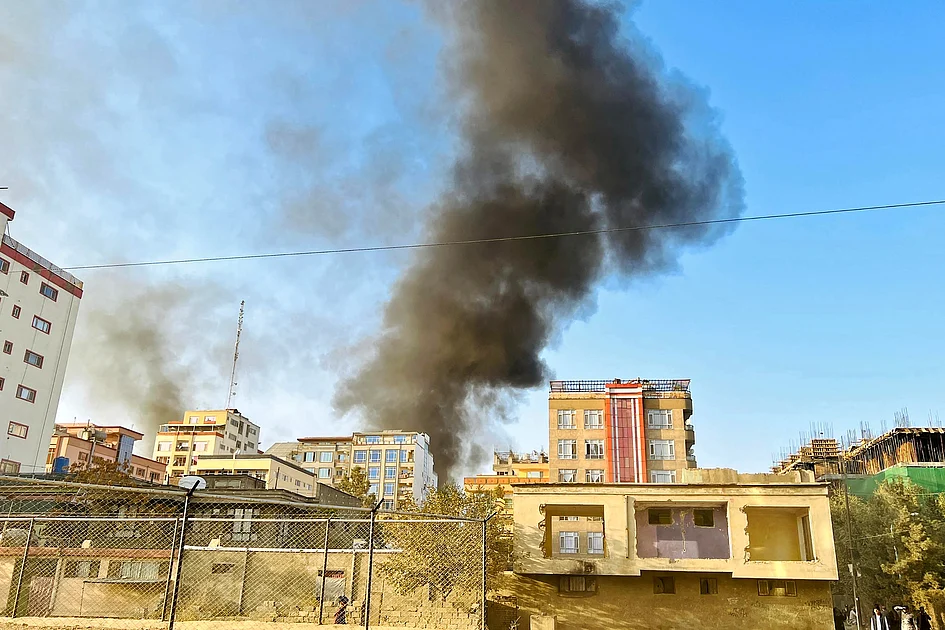
Pakistan’s Prime Minister Shehbaz Sharif declared on Thursday that the responsibility for establishing a permanent ceasefire now lies with the Afghan Taliban, following a temporary 48-hour truce aimed at de-escalating recent cross-border violence. Sharif emphasized that Pakistan is prepared to engage in dialogue if the Taliban addresses Islamabad’s concerns within the stipulated timeframe. He reiterated Pakistan’s demand for the elimination of Pakistani Taliban militants and stressed that Afghan territory must not be used as a base for planning attacks against Pakistan. The temporary ceasefire, which began at 6 pm Islamabad time on Wednesday, was implemented after a week of intense clashes along the Pakistan-Afghanistan border, resulting in significant casualties on both sides. Pakistan has accused Afghanistan of harboring the Tehreek-e-Taliban (TTP) and its affiliates, a claim Kabul denies. Tensions escalated further last week when explosions rocked Afghan territory, including the capital, with Taliban officials blaming Pakistan for the attacks. The violence coincided with a rare diplomatic visit by Afghanistan’s foreign minister to India, Pakistan’s regional rival. In response to the border skirmishes, Afghan Taliban forces launched an offensive, prompting Pakistan to vow retaliation. Islamabad has repeatedly urged the Taliban to prevent militant groups from using Afghan soil for cross-border attacks since the Taliban’s return to power in 2021.
-
‘Everything turned to ash’: Gazans return to razed homes
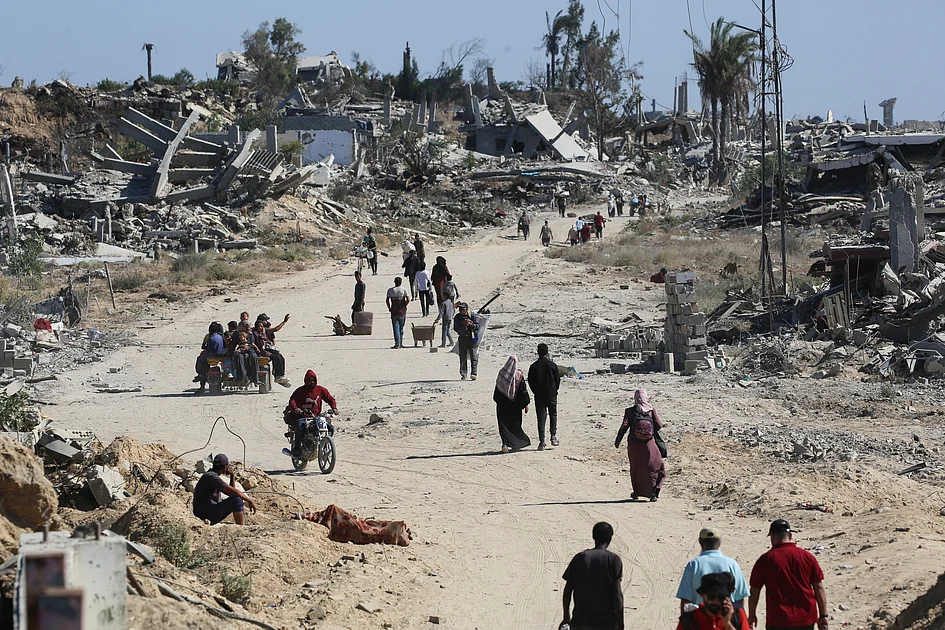
As a fragile ceasefire takes hold in Gaza, displaced residents are returning to their homes only to find them obliterated. The streets of Gaza City, once bustling with life, are now eerily empty, lined with heaps of concrete that were once apartment buildings. Many structures have completely collapsed, leaving families to confront the harsh reality of their losses. Amid the ruins, individuals like Hossam Majed, 31, are salvaging what little remains of their belongings, including essential items like a large water tank. Majed has set up a makeshift shelter to guard his possessions from potential thieves, but the challenges are immense. ‘Even food is more expensive than in the south because it’s scarce. There’s no electricity, no water, no internet,’ he lamented. Umm Rami Lubbad, who fled to southern Gaza for safety, returned to find her home reduced to rubble. ‘My heart nearly stopped when I saw the house reduced to rubble,’ she said. Now, she and her children are effectively homeless, sleeping in the streets or relying on neighbors for shelter during artillery shelling. Ahmad al-Abbasi, who fled south during the bombings, returned to find his five-storey building completely destroyed. ‘We came back north hoping to find our homes and rebuild our lives. As you can see… Gaza has turned into a ghost town,’ he said. Mustafa Mahram, another resident, found his three-storey house reduced to ashes. ‘Everything’s gone, turned to ashes… There’s no way to live here,’ he lamented. The residents are now struggling to rebuild their lives with limited resources, hoping for aid and the eventual delivery of tents to provide some semblance of shelter.
-
Why Pakistan and the Taliban are at war with each other
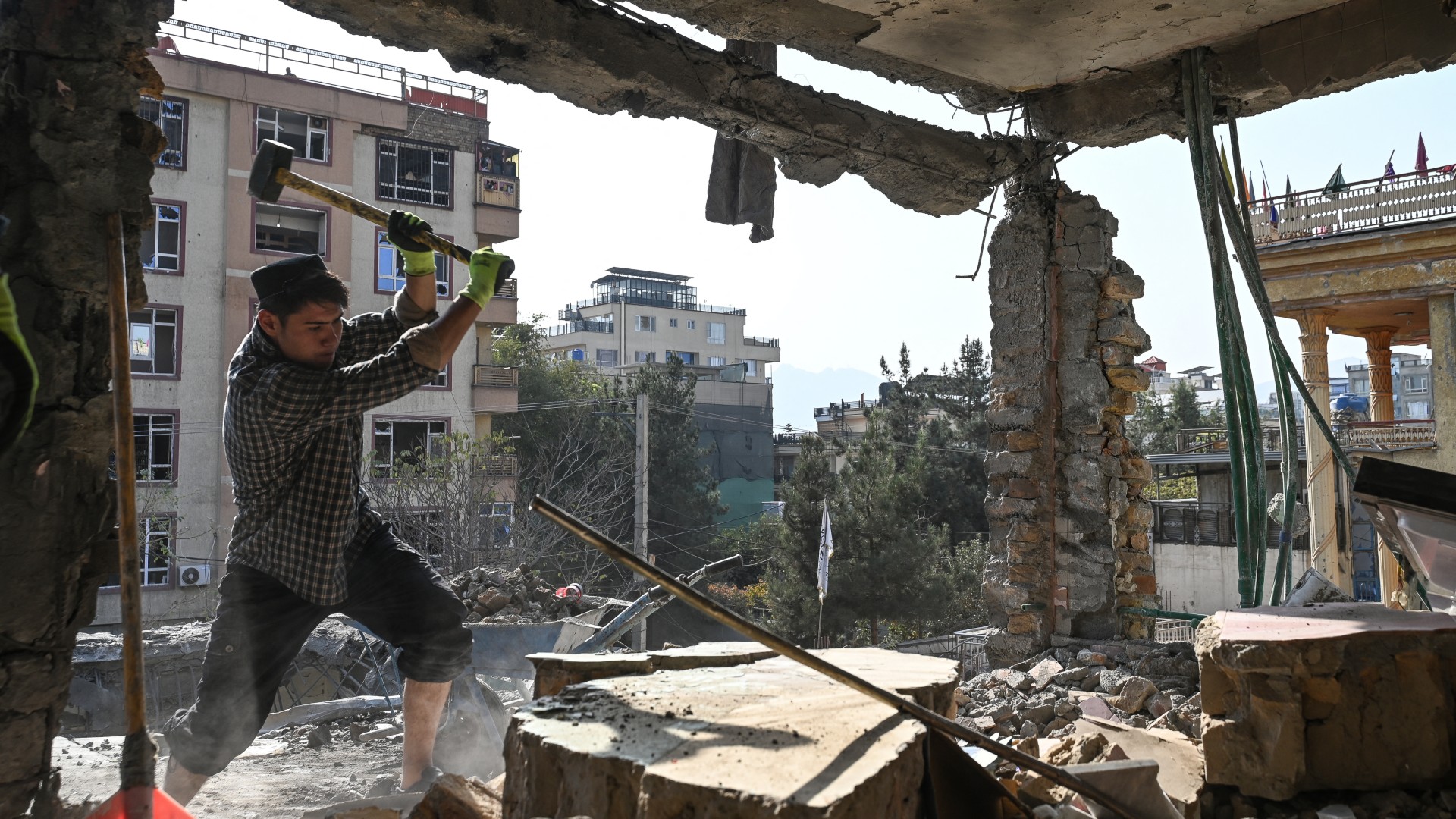
A 48-hour ceasefire between the Taliban administration and Pakistan has brought a temporary lull to one of the world’s most volatile borders, the 2,640-kilometre Durand Line. While the truce offers a brief respite from the intense fighting that has claimed dozens of lives on both sides, it is widely seen as a fragile pause rather than a step toward lasting peace. Witnesses describe the recent violence as unprecedented, with skirmishes escalating into full-scale warfare. The conflict underscores deeper systemic issues, particularly the resurgence of militancy in Pakistan, which analysts link to the Taliban’s return to power in Afghanistan in 2021. Pakistan now faces a security nightmare, with the Taliban accused of sheltering the Tehrik-e-Taliban Pakistan (TTP), a banned militant group responsible for hundreds of attacks. The Global Terrorism Index ranks Pakistan as the world’s second most terrorism-affected country, highlighting the severity of the crisis. The Taliban’s victory has emboldened various militant groups, including the TTP, Islamic State Khorasan Province (ISKP), and Baloch separatists, leading to a surge in terrorist attacks. Despite Pakistan’s military campaigns and diplomatic efforts, the situation remains dire. The Taliban administration faces a policy dilemma: curbing the TTP risks internal dissent, while inaction fuels cross-border violence. Pakistan has shifted from cautious diplomacy to coercive measures, including air strikes in Afghanistan and the expulsion of undocumented Afghans. The ceasefire, brokered by Qatar and Saudi Arabia, offers a temporary reprieve, but analysts warn that without structural changes, the border will remain a powder keg. The fall of Kabul in 2021, once celebrated in Pakistan as a strategic victory, has become the source of its most complex security crisis in decades.
-
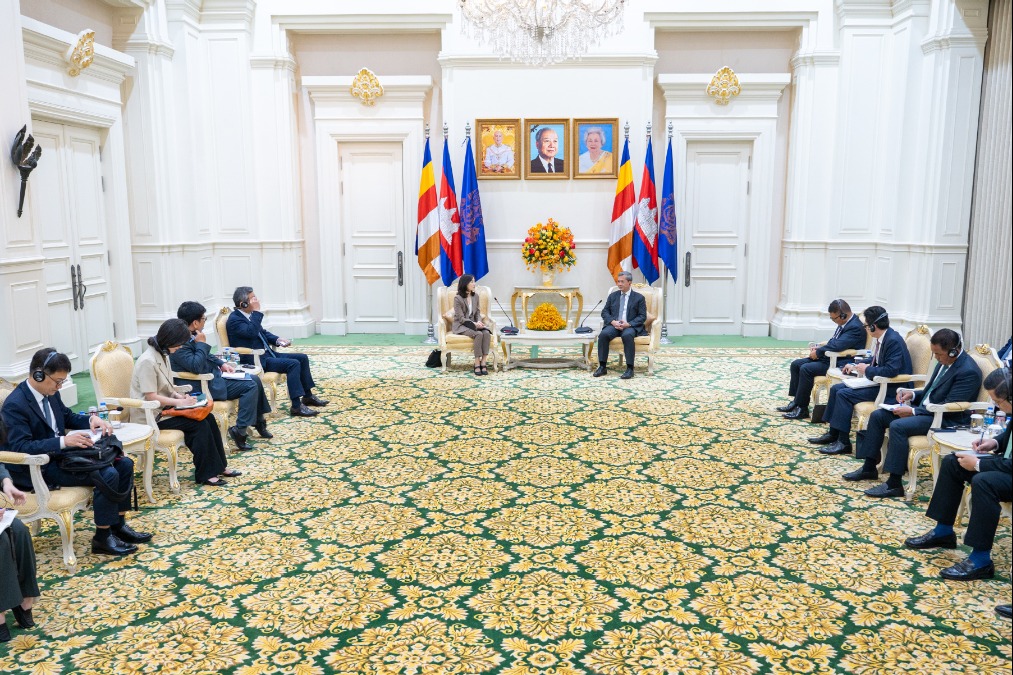
Cambodia to repatriate 59 South Korean nationals: national police
In a significant development, Cambodia’s National Police announced on Thursday that 59 South Korean nationals, including four women, will be repatriated to their home country on Friday. According to an official press release, these individuals were either rescued by Cambodian authorities or detained for involvement in various criminal activities. The repatriation process is being coordinated in collaboration with the South Korean Embassy in Cambodia. This move comes amidst reports from South Korean media, citing the South Korean Foreign Ministry, which indicated that approximately 80 South Korean nationals in Cambodia remained unaccounted for as of August. The Cambodian authorities have confirmed that they are actively conducting search and investigation operations to locate these missing individuals. This repatriation highlights the ongoing efforts by both nations to address issues of safety and legal compliance among their citizens abroad.
-

Soaked in Blood: How Gaza’s aid sites became death traps for starving Palestinians
In the early hours of a quiet morning in southern Gaza, the tranquility was shattered by the deafening roar of machine-gun fire, followed by an eerie silence. Ameen Sameer Khalifa, a 30-year-old man who had become the sole provider for his family after Israel’s military campaign in Gaza, lay flat on the ground, hiding from the chaos. His voice trembled as he whispered, ‘We’re dying for a piece of bread. God is sufficient for us, and He is the best disposer of affairs.’
On June 1, Ameen left his makeshift tent and ventured to a Gaza Humanitarian Foundation (GHF) food distribution center in Rafah, hoping to secure sustenance for his family. That day, he returned empty-handed. Two days later, he tried again. This time, instead of bringing home a box of flour, oil, and lentils, his body was riddled with bullets. Around him, scores of Palestinians screamed for help, seeking safety from the relentless violence.
A new documentary titled *Soaked In Blood*, produced by Middle East Eye, meticulously reconstructs the events leading to Ameen’s death. The investigation, utilizing forensic audio analysis, satellite imagery, and eyewitness accounts, reveals that Ameen was likely killed by a FN MAG 7.62mm machine gun mounted on an Israeli tank stationed near the ruins of the Muawiya Mosque in Rafah. The evidence suggests a deliberate targeting of civilians heading toward aid sites.
‘If I could have put him in a cage beside me and never let him go, I would have,’ lamented Ameen’s mother, Fadwa. ‘They take the tallest, the strongest, the most beautiful. They shoot them like prey. Why execute someone for bread?’
For decades, Israel has imposed strict controls on Gaza, restricting access to food, fuel, and medicine in an effort to weaken Hamas, which won the enclave’s last legislative elections in 2006. Dov Weisglass, an adviser to former Israeli Prime Minister Ehud Olmert, once described the strategy as ‘putting the Palestinians on a diet, but not to make them die of hunger.’ The blockade was so meticulously planned that the Israeli military even calculated the minimum caloric intake required to prevent malnutrition among Palestinians.
However, after the October 7, 2023, attacks on southern Israel, the situation escalated dramatically. Crossings were sealed entirely, and aid convoys were attacked by vengeful Israeli youth. The United Nations warned that Gaza was being ‘pushed toward famine by design.’ Palestinians resorted to boiling animal feed to survive, while air strikes and quadcopters targeted parents queuing for hours in search of baby formula.
Amid the widespread starvation, the GHF, a controversial organization backed by the United States and Israel, took over aid distribution in Gaza in May. Since then, the United Nations reports that over 1,300 Palestinians have been killed while attempting to access food. Gaza’s health ministry has documented at least 2,531 Palestinian deaths related to aid access since May 2025, with 743 killed and 4,891 injured at or near GHF sites since July. Many of these deaths were reportedly caused by Israeli soldiers or U.S. security contractors hired by the GHF, often acting under direct orders.
Despite the peril, thousands of Palestinians continued to brave the GHF sites daily, desperate for any food that could ensure their survival. A ceasefire was finally reached on October 9, 2025, offering a temporary respite from the violence.
The GHF has denied allegations of civilian deaths at their sites, dismissing UN figures as ‘false and misleading.’ Meanwhile, Israel’s war on Gaza has resulted in over 245,000 Palestinian casualties, the majority of whom are civilians. The conflict began on October 7, 2023, when Hamas launched a surprise attack on Israel, citing decades of occupation, increased violations against Al-Aqsa Mosque, the 16-year blockade on Gaza, and the mistreatment of Palestinian prisoners.
Recent reports based on Israeli military intelligence data indicate that more than 80% of those killed through May 2025 were civilians. Tragically, Mohamed Salama, the director of photography for the MEE documentary, was killed in a triple-tap Israeli strike on the Nasser Medical Complex after the investigation was completed.
Middle East Eye, known for its independent and comprehensive coverage of the Middle East, North Africa, and beyond, continues to shed light on the human cost of this devastating conflict. The documentary *Soaked In Blood* will be available for viewing on October 17, 2025, at 14:00 GMT.
-
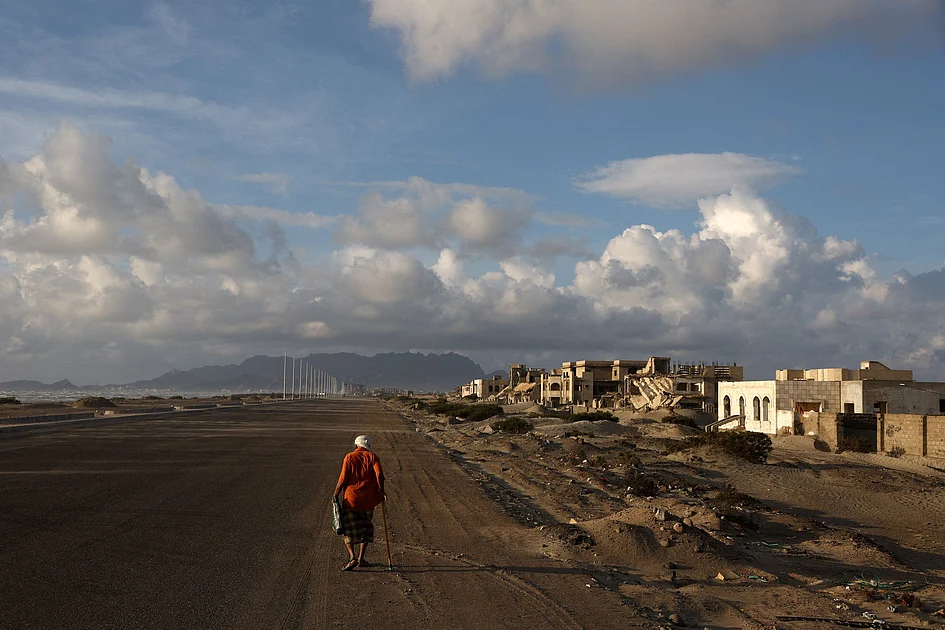
Yemen’s Houthis say chief of staff Muhammad al-Ghamari was killed
Yemen’s Houthi movement revealed on Thursday that their Chief of Staff, Muhammad Abd Al-Karim al-Ghamari, a prominent military figure within the Iran-backed group, was killed while performing his duties. The Houthis stopped short of directly accusing Israel of his death but emphasized that their conflict with Israel remains unresolved. They vowed that Israel would face “deterrent punishment” for its alleged crimes. The Houthis have previously launched missile attacks toward Israel, claiming solidarity with Palestinians in Gaza, most of which were intercepted. In response, Israel has conducted strikes on Houthi-controlled regions in Yemen. The death of al-Ghamari marks a significant moment in the ongoing tensions between the Houthis and Israel, further complicating the geopolitical landscape in the Middle East.
-

Venezuelan fishermen in fear after US strikes on boats in the Caribbean
In the shadow of escalating US-Venezuela tensions, Venezuelan fishermen like Wilder Fernández face an unprecedented threat. For 13 years, Fernández has fished the waters north of Lake Maracaibo, but now he fears his livelihood could turn deadly. The US military presence in the Caribbean, part of an operation targeting alleged ‘narco-terrorists’ linked to the Venezuelan government, has cast a pall over the region. Since September 2, US strikes on ‘narco-boats’ have killed at least 27 people, though no evidence of drug smuggling has been presented. Experts argue these actions may violate international law. President Donald Trump has further heightened tensions by considering strikes on Venezuelan soil and authorizing CIA covert operations. For fishermen like Fernández, the risk of being caught in the crossfire is a daily concern. His wife urges him to quit, but with few alternatives, he feels trapped. The fear extends across Venezuela’s fishing communities. Jennifer Nava, spokeswoman for the Council of Fishermen in El Bajo, warns that the industry’s decline could push fishermen into the arms of drug traffickers. Usbaldo Albornoz, a veteran fisherman, reports that his crew refuses to work, fearing US strikes. Despite the fear, some fishermen, like José Luzardo, remain defiant. In late September, hundreds protested the US military deployment, pledging to defend their homeland. The Venezuelan government has mobilized militias, with over 16,000 fishermen joining the call. As tensions mount, the fishing industry—already struggling with piracy, oil spills, and declining earnings—faces an uncertain future. The US claims its actions are self-defense, but for Venezuela’s fishermen, the stakes are life and death.
-
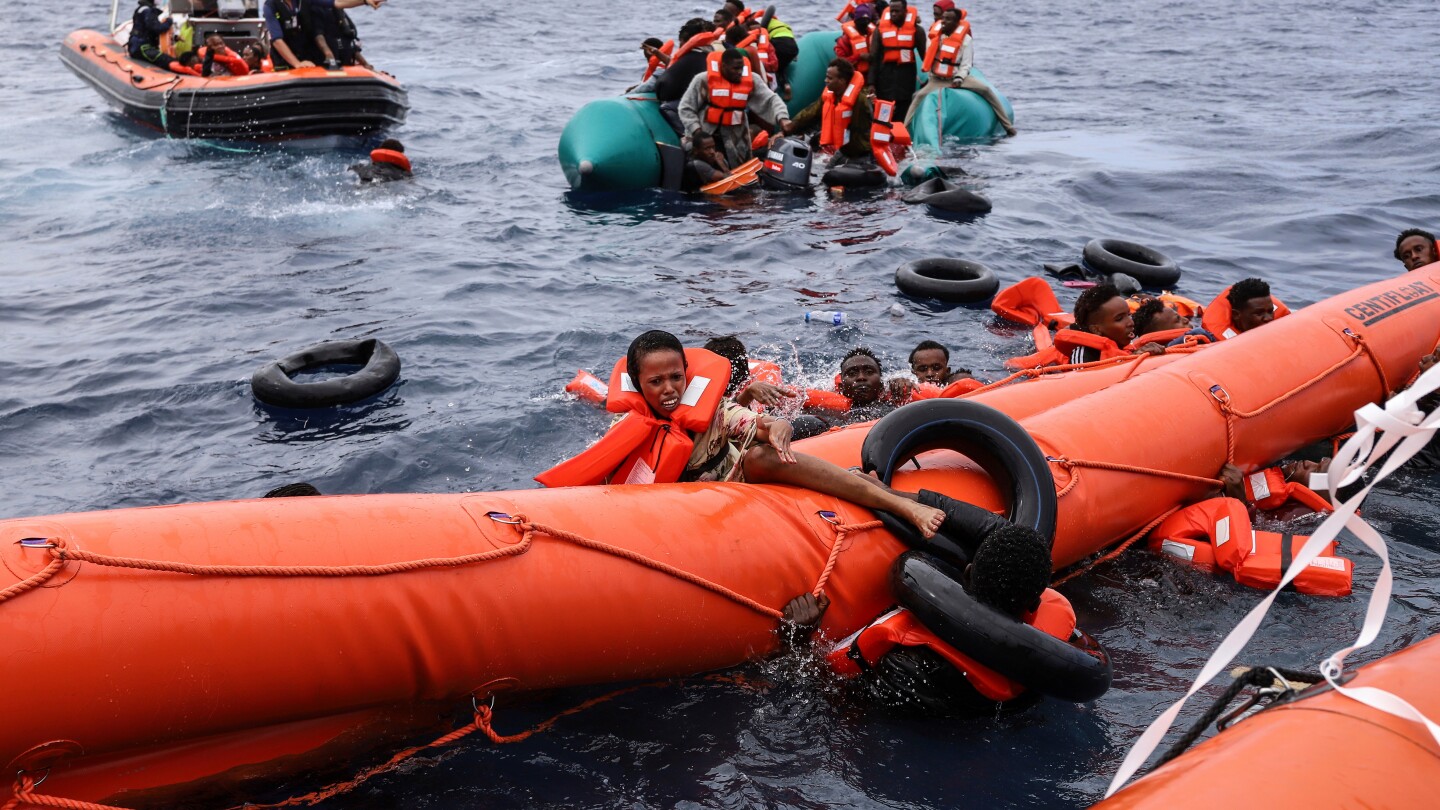
Lawyers ask ICC to investigate 122 European officials for crimes against humanity in Mediterranean
The European Union’s collaboration with Libya on migration policies has come under intense scrutiny following a legal filing at the International Criminal Court (ICC). Human rights lawyers Omer Shatz and Juan Branco submitted a 700-page dossier on Thursday, naming 122 European leaders, including French President Emmanuel Macron and former German Chancellor Angela Merkel, as co-perpetrators in crimes against humanity involving migrants in the Mediterranean Sea. The filing accuses these leaders of policies that led to the interception, detention, torture, and death of tens of thousands of asylum seekers. The case builds on a 2019 ICC investigation into EU migration practices, which initially did not name specific individuals. The lawyers’ extensive six-year investigation included interviews with over 70 senior European officials and access to confidential documents. They argue that European leaders, alongside Libyan actors, are responsible for the deaths of 25,000 migrants and abuses against 150,000 survivors. The EU has defended its cooperation with Libya, emphasizing efforts to combat human trafficking and protect migrants. However, human rights groups and a recent U.N.-backed investigation have criticized the EU’s support for Libyan forces, citing their role in migrant abuses. The ICC filing marks a significant escalation in holding European leaders accountable for their migration policies.