分类: world

  • Iran and China denounce US kidnapping of Maduro

    Iran and China denounce US kidnapping of Maduro

    A coordinated US military operation to apprehend Venezuelan President Nicolas Maduro has triggered international condemnation and raised serious questions about violations of international law. According to reports, US special forces conducted a raid in Caracas early Saturday, capturing Maduro while American fighter jets targeted key Venezuelan military installations.

    US authorities announced that President Maduro would face drug trafficking charges in American courts. President Donald Trump declared the United States would assume control over Venezuela’s governance for the foreseeable future, promising American corporations would gain access to the country’s vast oil reserves. “We’re going to be taking out a tremendous amount of wealth out of the ground,” Trump told reporters, echoing previous statements made in 2023 about Venezuela’s oil resources.

    The operation has drawn sharp criticism from Venezuela’s allies and beyond. Iran’s Foreign Ministry spokesperson Esmail Baghaei condemned the action as “illegal” during a weekly press conference, stating that “claims that another country can run Venezuela are unacceptable to any nation” and represent “a return to colonial-era thinking.” Baghaei further suggested that oil interests rather than democratic principles motivated the intervention.

    China, which had just hours before the operation hosted a delegation meeting with Maduro in Caracas, demanded immediate release of the Venezuelan leader and characterized the incursion as a violation of international law. The US assault has received mixed reactions globally, with most South American nations including Brazil, Colombia and Chile condemning the action, while some European countries welcomed Maduro’s removal despite questioning its legality.

    Domestically, US Democratic lawmakers joined in criticizing the attack as “illegal.” The situation has additional implications for Iran, where Trump issued simultaneous threats regarding ongoing anti-government demonstrations, warning that Iran would be hit “very hard” if protesters are killed.

  • Israel says ban on Gaza media access should stay: Court document

    Israel says ban on Gaza media access should stay: Court document

    Israeli authorities have formally advocated for the continuation of a ban prohibiting international media from independently entering Gaza, according to a government submission to the Supreme Court. The document, filed by the public prosecutor and obtained by AFP, argues that unrestricted journalist access poses unacceptable security risks, a stance supported by the nation’s defense establishment.

    The policy, instituted following the October 2023 outbreak of war triggered by a Hamas attack on Israel, has prevented foreign reporters from freely documenting conditions within the devastated territory. Currently, Israel permits only a limited number of journalists to enter on a strictly case-by-case basis, requiring them to be embedded with military escorts.

    This access restriction prompted legal challenge from the Foreign Press Association (FPA), which represents hundreds of international journalists operating in Israel and the Palestinian territories. The FPA filed a petition in 2024 demanding immediate and unhindered media access to Gaza. The Supreme Court has granted multiple extensions for the government to formulate a plan, with a final deadline set for January 4 after a hearing last month.

    In its Sunday filing, the government contended that the precarious security situation justifies the ongoing ban. Officials highlighted that the ceasefire, enacted on October 10, remains fragile and is regularly threatened. Supporting this claim, Gaza’s health ministry reports that at least 420 Palestinians have been killed by Israeli forces since the truce began. Conversely, the Israeli military states that three of its soldiers have been killed by militants in the same period.

    A further complication cited is the ongoing operation to recover the remains of Ran Gvili, the last hostage still in Gaza. Gvili was killed during the initial Hamas attack, and his body was taken into the territory. While all other 250 hostages seized that day have been returned, the government submission suggests that allowing journalists free movement could potentially disrupt the sensitive search operation.

    The Supreme Court is now expected to deliberate on the matter, though a timeline for its final ruling remains uncertain.

  • Anne Frank’s step-sister and Holocaust survivor Eva Schloss dies

    Anne Frank’s step-sister and Holocaust survivor Eva Schloss dies

    Eva Schloss, the esteemed Auschwitz survivor who became Anne Frank’s step-sister and dedicated her life to Holocaust education, has passed away at age 96. Her foundation confirmed her peaceful death in London on January 3rd.

    Born Eva Geiringer in Austria in 1929, Schloss experienced the Nazi annexation of her homeland as a child. Her Jewish family fled successively to Belgium and eventually Amsterdam, where they settled opposite the Frank family residence. She and Anne Frank, being the same age, frequently played together during their childhood.

    In 1942, both families were forced into hiding to escape Nazi persecution. Tragically, Schloss’s family was betrayed by a Nazi sympathizer two years later. On her fifteenth birthday, she was arrested alongside her mother Elfriede, father Erich, and brother Heinz. They were transported to the Auschwitz extermination camp in May 1944.

    While imprisoned, Schloss maintained contact with her mother but was permanently separated from her father and brother, both of whom perished in the camps. Anne Frank similarly died in the Bergen-Belsen concentration camp in 1945.

    Following Auschwitz’s liberation by Soviet forces in 1945, Schloss and her mother returned to the Netherlands. There they encountered Otto Frank, Anne’s father and a widower after his own Auschwitz imprisonment. Otto encouraged Schloss to pursue photography, leading her to study in London where she met future husband Zvi Schloss.

    In a significant familial development, Eva’s mother Elfriede married Otto Frank in 1953, formally making Eva Anne Frank’s step-sister. Eva and Zvi obtained British citizenship and raised three daughters together. Remarkably, Schloss reclaimed her Austrian citizenship in 2021 at age 92.

    Schloss co-founded the Anne Frank Trust UK in 1990, through which she tirelessly combated prejudice and educated generations about Holocaust atrocities. Her extraordinary commitment earned her Membership of the Order of the British Empire (MBE) in 2013.

    British royalty expressed profound condolences, with King Charles III and Queen Camilla noting they were “greatly saddened” and describing themselves as “privileged and proud to have known her.” Gillian Walnes, vice president of the Anne Frank Trust UK, highlighted Schloss’s relentless advocacy: “Into her 90s, she spoke with tireless passion, often giving several talks a day, including in prisons and schools.”

    Schloss authored several books and shared her testimony worldwide, ensuring the lessons of history remain vividly alive for future generations.

  • ‘I can’t walk anymore’: Afghans freeze to death on route to Iran

    ‘I can’t walk anymore’: Afghans freeze to death on route to Iran

    A severe humanitarian catastrophe is unfolding along Afghanistan’s mountainous border with Iran, where subzero temperatures are claiming the lives of desperate migrants attempting illegal crossings in search of economic survival. The International Organization for Migration reports that Iran and Pakistan have collectively repatriated approximately five million Afghan nationals since September 2023, abruptly increasing Afghanistan’s population by 10% and exacerbating an already critical resource shortage.

    Tragic evidence of this crisis emerged last month when at least 18 Afghan migrants perished during attempted border crossings from Herat province, where temperatures hovered around -3°C (27°F). Among the victims was 15-year-old Habibullah, whose family described his desperate circumstances before his fatal journey. “He was forced to go, to bring food for the family,” explained his mother Mah Jan, clutching her son’s photograph in their Ghunjan village home lacking electricity, water, and adequate heating.

    The UN estimates approximately half of Afghanistan’s population will require humanitarian assistance this year, with earthquakes, drought, and economic collapse creating unbearable conditions. Despite the known dangers, migrants continue to risk illegal routes through “very dangerous” crossing points, according to Mutya Izora Maskun, IOM’s deputy head in Afghanistan, who cited “economy, job insecurity, food insecurity, constrained access to services” as primary drivers.

    Iranian border guard commander Majid Shoja confirmed that approximately 1,600 Afghan migrants were rescued from mountain areas in recent days, while Afghan authorities reported 347 individuals were apprehended attempting illegal crossings during December’s final week. The Taliban government claims to have implemented “serious steps to fight the smugglers,” according to interior ministry spokesman Abdul Mateen Qani, but the flow of desperate migrants continues unabated.

    Survivors recount harrowing journeys through treacherous conditions. Yunus, who accompanied his stepbrother Abdul Majeed Haidari on a mid-December crossing attempt, described how the 25-year-old father succumbed to exhaustion while seeking medication for his one-year-old son’s heart condition. “I can’t walk anymore,” were Haidari’s final words before his death, despite efforts by fellow travelers and eventual transportation to an Iranian hospital.

    With legal migration channels severely limited despite shared language and greater employment opportunities in Iran, Afghanistan’s deputy labor minister Abdul Manan Omari acknowledged the necessity to “do more” in facilitating work permits for migrants, as families face impossible choices between starvation and lethal border crossings.

  • Misleading videos claim to show celebrations inside Venezuela

    Misleading videos claim to show celebrations inside Venezuela

    A series of misleading videos circulating on social media platforms have been definitively exposed as fraudulent by BBC Verify. These videos falsely purported to show Venezuelan citizens celebrating the potential U.S. seizure of their controversial president, Nicolás Maduro.

    The investigation revealed that the clips were not recent recordings from Venezuela but were, in fact, repurposed and decontextualized footage from unrelated events. One video, which allegedly showed jubilant crowds, was actually archival content from a public celebration following a national soccer victory. Another clip, presented as evidence of anti-Maduro sentiment, was traced back to a completely different country’s political rally that occurred years prior.

    This disinformation campaign appears strategically timed to exploit existing geopolitical tensions between the United States and Venezuela. By fabricating a narrative of popular support for foreign intervention, the creators aimed to influence international perception and domestic morale. BBC Verify’s forensic analysis, including reverse image searches, metadata examination, and geographical verification, provided irrefutable evidence of manipulation.

    The dissemination of such fabricated content highlights the ongoing challenges in combating digital misinformation, particularly concerning nations subject to intense international scrutiny and economic sanctions. The incident underscores the critical importance of media literacy and verification processes in the contemporary information landscape.

  • Over 200 Filipinos burn US flags, condemn capture of Venezuelan President Maduro

    Over 200 Filipinos burn US flags, condemn capture of Venezuelan President Maduro

    MANILA – More than 200 activists assembled outside the US Embassy in Manila on Monday, staging a vehement protest against recent American military operations in Venezuela. The demonstration, organized by the Bagong Alyansang Makabayan alliance, featured the burning of US flags and strong condemnations of what participants labeled ‘US imperialist aggression’ and a ‘state-sponsored abduction’ of Venezuelan President Nicolás Maduro.

    Protesters carried banners reading ‘¡Manos fuera de Venezuela!’ (Hands off Venezuela!) and denounced Saturday’s US airstrikes on Venezuelan cities as violations of international law. The Philippines-Bolivarian Venezuela Friendship Association (PBVFA) characterized the military actions as ‘a show of brazen brutality by US imperialism’ that represents ‘the worst forms of oppression.’

    The rally garnered support from multiple sectors, including Gabriela, an alliance of women’s organizations that rejected US claims labeling Venezuela a terrorist state. Gabriela representatives asserted that Venezuela’s vast oil reserves—estimated at 300 billion barrels—represent the true motivation behind US aggression, stating the country ‘refuses US economic and political control.’

    Philippine political leaders joined the criticism, with Congressman Antonio Tinio leading the march and Rep. Leila de Lima warning that the US action ‘throws the global order back to a barbaric ‘might makes right’ regime.’ Cardinal Pablo Virgilio David, former president of the Catholic Bishops’ Conference, emphasized via social media that international law clearly prohibits the use of force against sovereign states, regardless of political disagreements.

    The Philippine Department of Foreign Affairs issued a separate statement urging both nations to ‘resolve disputes through peaceful means’ and exercise restraint to prevent further escalation. The Manila protest reflects growing international concern over the weekend’s military developments and their implications for global sovereignty norms.

  • 83 still in hospital after Swiss fire tragedy

    83 still in hospital after Swiss fire tragedy

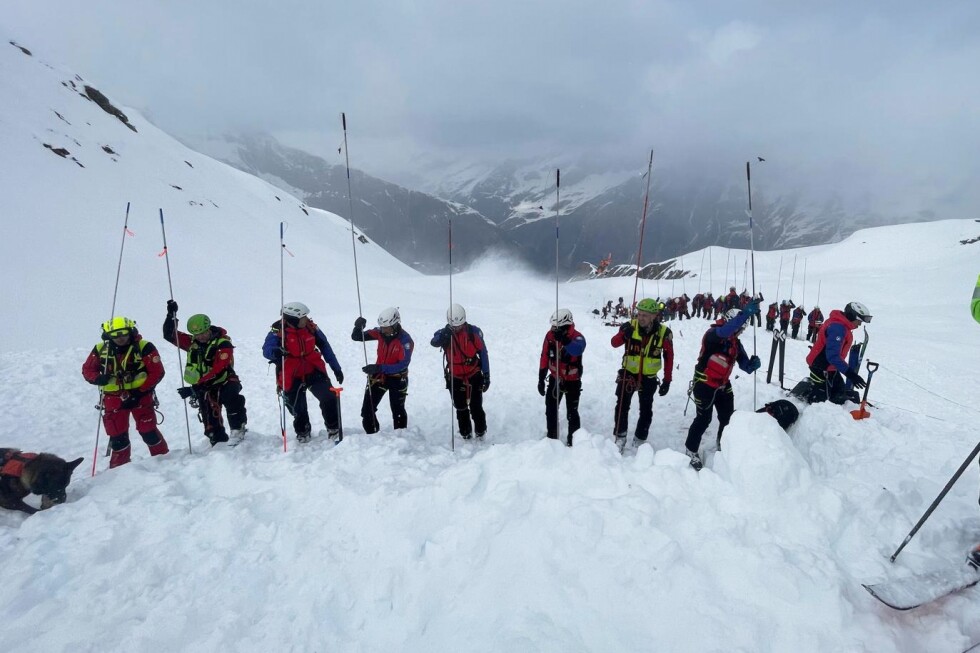
    Swiss authorities continue to investigate the catastrophic New Year’s Eve blaze at Le Constellation bar in Crans-Montana that claimed 40 lives and injured 116 people. As of Monday, 83 victims remain hospitalized with severe injuries, while the process of identifying all casualties has been completed.

    The tragedy unfolded in the early hours of Thursday when celebratory sparklers attached to champagne bottles ignited sound insulation foam in the basement ceiling of the popular Alpine establishment. The incident has exposed significant safety violations, including the presence of 26 teenagers among the deceased—eight of whom were under 16, directly contravening local laws prohibiting minors from alcohol-serving venues after 10:00 pm without guardian supervision.

    International repercussions continue as five Italian teenagers, including three 16-year-old boys and two girls aged 15 and 16, were repatriated via military aircraft from Sion Airport. Italian Ambassador Gian Lorenzo Cornado, present during the solemn ceremony, stated unequivocally that ‘this tragedy could have been avoided through prevention and common sense,’ citing ‘numerous shortcomings in safety and prevention’ at the venue.

    The victims represented 19 nationalities, with Swiss nationals comprising the majority of those killed and injured. The deceased included 19 foreign passport holders: nine French and six Italian citizens among them. Those injured encompassed 23 French, 11 Italian, four Serbian, and two Polish nationals, with additional casualties from Australia, Belgium, Bosnia-Herzegovina, Congo-Brazzaville, Czech Republic, Finland, Luxembourg, Philippines, and Portugal.

    The most critically injured have been transferred to specialized burn centers across Switzerland and internationally. Meanwhile, emotional tributes continue to grow outside the destroyed establishment, where flowers, candles, and messages of sympathy create a makeshift memorial.

    Switzerland has declared Friday a national day of mourning, with church bells scheduled to toll across the country at 2:00 pm (1300 GMT) followed by a moment of silence. French President Emmanuel Macron is expected to attend commemorative ceremonies honoring the victims.

  • Indian woman found dead in US; embassy extends consular support

    Indian woman found dead in US; embassy extends consular support

    Authorities in Columbia, Maryland, have launched an international investigation following the tragic discovery of 27-year-old Indian national Nikitha Godishala deceased in her apartment. The case has triggered coordinated efforts between U.S. and Indian authorities as the prime suspect, identified as Godishala’s former boyfriend, has reportedly fled the United States.

    According to Howard County Police Department, the suspect initially reported Godishala missing earlier this week before departing the country shortly thereafter. Investigators have obtained arrest warrants charging the individual with first and second-degree murder, initiating coordination with federal agencies for potential international apprehension.

    The Indian Embassy in Washington has confirmed active engagement with both local authorities and Godishala’s family, providing comprehensive consular assistance including documentation support and legal coordination. In an official statement, embassy officials emphasized their commitment to monitoring investigative developments while maintaining communication with relevant agencies.

    Godishala, described by community members as a young professional pursuing educational and career opportunities in the United States, had established connections within the Indian diaspora community. The incident has sparked renewed concerns regarding the safety of Indian nationals abroad, prompting embassy officials to issue advisories encouraging vigilance among Indian citizens in the U.S.

    Local authorities have characterized the investigation as ongoing, emphasizing the importance of interjurisdictional cooperation given the international dimensions of the case. Police officials noted that consular coordination will remain essential throughout judicial proceedings, with updates to be provided in accordance with established legal protocols and investigative requirements.

    The victim’s family has requested privacy during this difficult period as legal processes unfold. Both U.S. and Indian authorities have reaffirmed their commitment to pursuing justice through proper legal channels, underscoring the importance of bilateral cooperation in addressing transnational criminal matters.

  • Vatican claims a Holy Year success with 33 million pilgrims

    Vatican claims a Holy Year success with 33 million pilgrims

    The Vatican has officially concluded its 2025 Holy Year celebrations, reporting unprecedented participation from over 33 million pilgrims while revealing a lighthearted architectural disagreement with Roman authorities as the only notable contention. Pope Leo XIV ceremonially sealed the Holy Door of St. Peter’s Basilica on Tuesday, marking the end of a rare Jubilee that commenced under his predecessor Pope Francis and concluded under his leadership—a historical occurrence last witnessed in 1700.

    The Holy Year, a centuries-old tradition occurring every quarter-century, invites the faithful to pilgrimage to Rome for spiritual renewal and indulgences. For the Eternal City, the event triggered an infrastructural transformation with approximately €4 billion in public funding allocated to modernize urban facilities and address long-standing neglect.

    Archbishop Rino Fisichella, the Vatican’s Jubilee coordinator, acknowledged the participation figure of 33,475,369 represented an estimate potentially including duplicate counts. The calculation methodology combined official event registrations, volunteer tallies at basilicas, and CCTV data from St. Peter’s, which recorded 25,000-30,000 daily crossings at the Holy Door. This exceeded Roma Tre University’s initial projection of 31.7 million pilgrims.

    A notable surge in attendance followed the papal transition in April, when Pope Francis passed away and Pope Leo XIV assumed leadership. This unique circumstance made the 2025 Jubilee only the second in history to span two pontificates, echoing the 1700 Jubilee that began under Innocent XII and concluded under Clement XI.

    Despite overall harmonious collaboration, a stylistic disagreement emerged regarding the contemporary stone fountains installed at the newly pedestrianized Piazza Pia—the Jubilee’s flagship urban project at Via della Conciliazione’s terminus. While Rome Mayor Roberto Gualtieri championed the design, Archbishop Fisichella expressed reservations about their compatibility with the Baroque magnificence of St. Peter’s and the fascist-era architecture lining the boulevard. The archbishop humorously noted having to ‘back down’ on the aesthetic disagreement since the piazza resides on Italian territory, though he admitted the fountains had grown on him despite initially comparing them to ‘foot baths.’

    The tradition of Jubilee-inspired urban renewal dates to 1300, with historical projects including the Sistine Chapel (1475) and the Vatican garage (2000). Of the 117 planned infrastructure initiatives, 110 reached completion, substantially modernizing Rome’s public spaces and transportation networks.

  • The Global Mayors Dialogue · Harbin opens Tuesday

    The Global Mayors Dialogue · Harbin opens Tuesday

    The northeastern Chinese city of Harbin inaugurated the Global Mayors Dialogue on Tuesday, transforming its winter landscape into a platform for international cooperation and cultural exchange. The event brings together municipal leaders from across the world to foster dialogue and collaboration against the backdrop of Harbin’s renowned winter attractions.

    The city has deployed its characteristic warmth and hospitality to welcome international delegates, showcasing traditional delicacies like sugar-coated haws and century-old Modern brand ice lollipops alongside breathtaking ice sculptures that illuminate the streets. The carefully curated atmosphere combines cultural heritage with modern diplomatic engagement, creating a unique environment for cross-border municipal cooperation.

    This gathering represents significant soft power diplomacy through urban governance exchange, allowing mayors to share best practices in city management, sustainable development, and cultural preservation. The timing during Harbin’s peak winter season highlights how cities can leverage their unique seasonal characteristics to promote international dialogue and economic opportunity.

    The dialogue occurs alongside several other significant international developments, including climate action discussions, European diplomatic initiatives, and Middle Eastern security matters, positioning urban governance as an essential component of global cooperation frameworks. The event demonstrates how city-to-city diplomacy complements traditional state-level interactions in addressing common challenges.