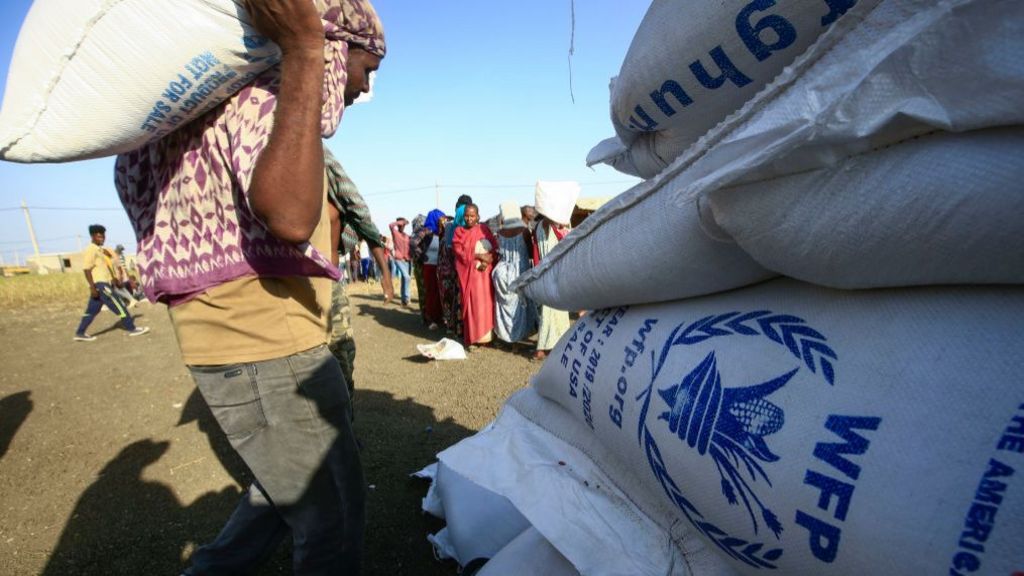
Sudan’s military government has ordered the expulsion of two senior officials from the United Nations’ World Food Programme (WFP) amidst a deepening humanitarian crisis fueled by a brutal civil war that began in April 2023. The WFP confirmed that its Sudan operation directors were declared ‘personae non grata’ and given 72 hours to leave the country without any explanation. This decision follows the recent capture of the strategic city of el-Fasher in Darfur by the paramilitary Rapid Support Forces (RSF) after an 18-month siege, which included a severe food blockade. The WFP described the expulsions as occurring at a ‘pivotal time,’ with over 24 million Sudanese facing acute food insecurity—the highest level of need in the country’s history. While the military government has not provided a reason for the expulsions, it has previously accused aid organizations of violating local laws and disseminating misleading reports on famine conditions. Despite the expulsion, the government stated that its cooperation with the WFP would continue, according to the state news agency Suna. The WFP is currently in discussions with Sudanese authorities to address the situation. The conflict between the Sudanese army and the RSF has intensified, with the RSF’s capture of el-Fasher raising fears for the safety of approximately 250,000 residents, many from non-Arab communities. Reports of atrocities, including mass killings, have surged since the city fell. Escaped residents have described dire conditions, including looting and indiscriminate violence. The RSF has denied targeting civilians, but allegations of ethnic violence persist, with local activists and international researchers accusing the group of executing wounded individuals at el-Fasher’s Saudi Hospital. The international community, including the European Union and African Union, has expressed grave concern, with many drawing parallels to the Darfur genocide of 2003-2020. Sudanese-American poet Emtithal Mahmoud, who has family in el-Fasher, warned that the current violence resembles a ‘genocide,’ amplified by the RSF’s use of social media to broadcast their actions. The situation in Sudan remains critical, with the conflict and famine threatening to push the country further into chaos.
分类: world
-
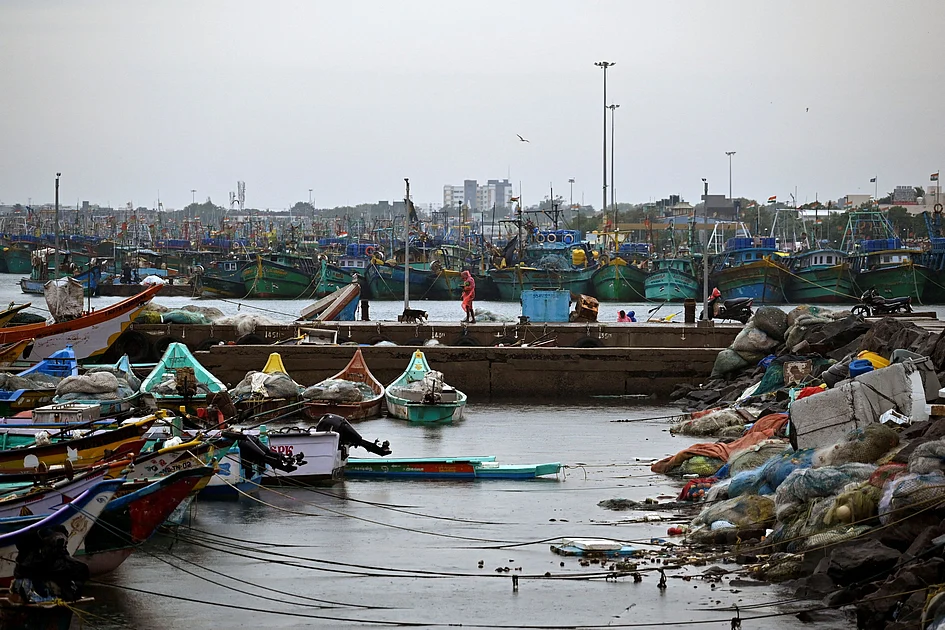
One killed as Cyclone Montha lashes India’s east coast
Cyclone Montha wreaked havoc along India’s eastern coastline, resulting in the tragic death of a 48-year-old woman in Andhra Pradesh. The victim succumbed after a palm tree collapsed on her amidst the storm’s ferocious winds and torrential rains. The cyclone, which made landfall around midnight, has inflicted significant damage across the region, including the destruction of crops spanning over 38,000 hectares and the toppling of numerous power lines and utility poles. Local authorities are actively engaged in restoring electricity to affected areas and clearing debris from roads. The Indian Meteorological Department has issued warnings of extremely heavy rainfall and wind gusts reaching up to 90 kmph in the coastal states of Andhra Pradesh, Odisha, Telangana, and West Bengal. Although the cyclone is anticipated to weaken into a deep depression later in the day, its impact has been far-reaching. Unusual weather patterns triggered by the cyclone have also led to unseasonal heavy snowfall on the Tibetan side of Mount Everest, prompting authorities to suspend visitor access to the iconic peak. Rescue operations, as captured in videos from ANI, depict personnel diligently working to mitigate the storm’s aftermath amidst ongoing rainfall.
-
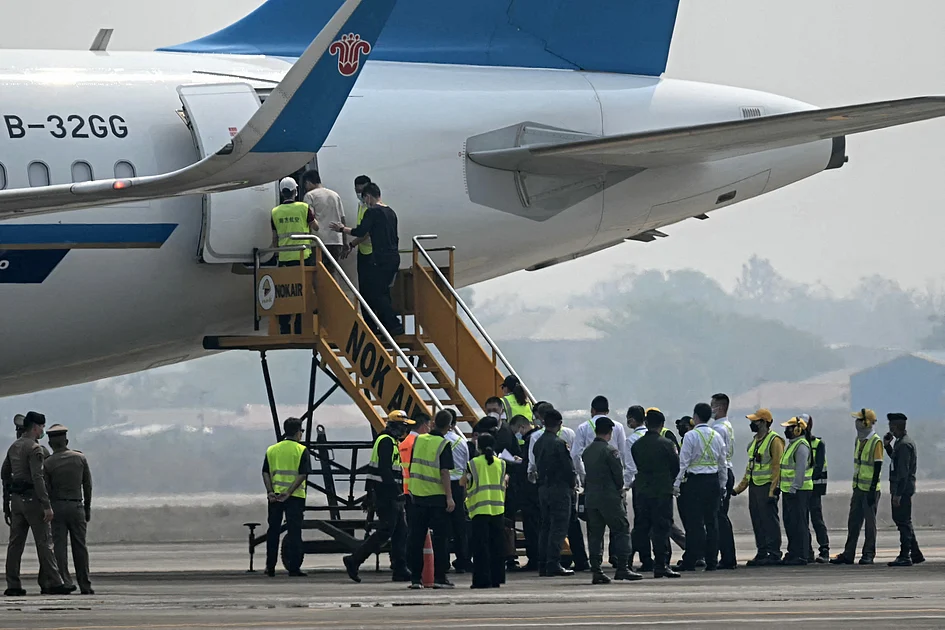
India to repatriate 500 nationals who fled Myanmar scam centre, Thai PM says
India is set to repatriate approximately 500 of its nationals who escaped a notorious cybercrime hub in Myanmar and sought refuge in Thailand, according to Thai Prime Minister Anutin Charnvirakul. The announcement came on Wednesday, following a military raid by Myanmar forces on the KK Park compound, a well-known center for transnational cyber scams. The operation, which began last week, forced hundreds of foreign workers, including Indians, to flee across the border into the Thai town of Mae Sot. Over 1,500 individuals from 28 countries are currently being sheltered by Thai authorities. Prime Minister Anutin stated that the Indian ambassador will collaborate with Thai immigration officials to expedite the legal verification process for the repatriation. An Indian aircraft is expected to land directly in Mae Sot to transport the victims back home. This marks the second such operation this year, as India previously repatriated thousands of its citizens from similar scam centers along the Thai-Myanmar border. The KK Park compound, operated primarily by Chinese criminal gangs and guarded by Myanmar-aligned militia groups, has long been a hub for online fraud and human trafficking. The United Nations estimates that billions of dollars have been generated from these illegal activities, with hundreds of thousands of people coerced into working in these centers since the COVID-19 pandemic.
-
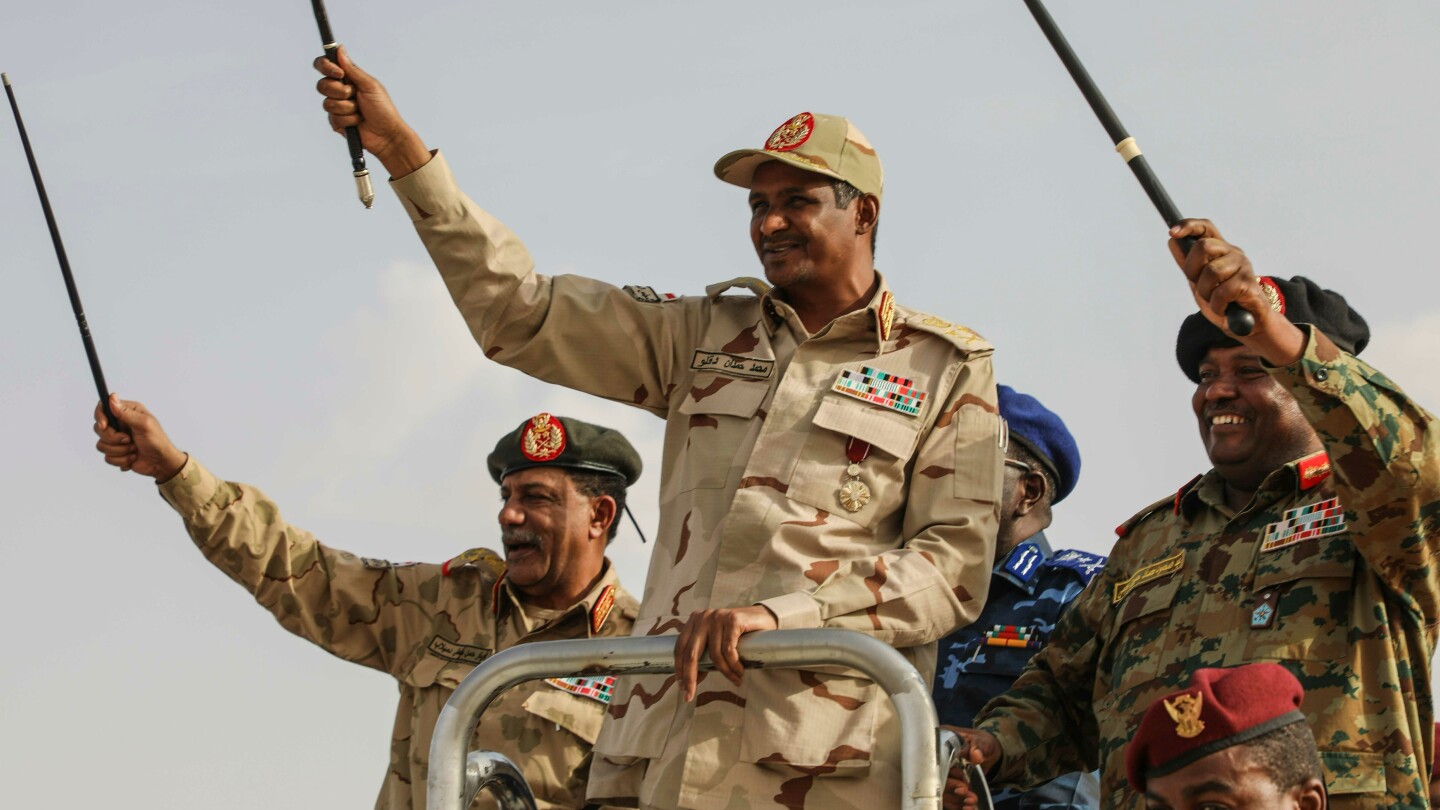
Sudan war takes a turn as paramilitary force captures Darfur, threatening to split the country
Sudan’s protracted two-year civil war has entered a perilous new chapter as the Rapid Support Forces (RSF), a powerful paramilitary group, has seized complete control of the Darfur region. This development follows the RSF’s expulsion of the Sudanese army from its final stronghold in the area, marking a significant shift in the conflict’s dynamics. The ongoing war has already claimed over 40,000 lives and displaced more than 14 million people, creating the world’s most severe humanitarian crisis. The capture of el-Fasher, the capital of North Darfur, has intensified fears that Sudan, Africa’s third-largest nation, may face fragmentation, echoing the secession of South Sudan in 2011. The RSF, led by General Mohammed Hamdan Dagalo, has roots in the Janjaweed militia, notorious for its role in the Darfur genocide during the early 2000s. Dagalo, also known as Hemedti, has emerged as a central figure in Sudanese politics, leveraging his family’s wealth from gold mining and livestock to build a formidable force. The RSF’s rise has been marred by allegations of human rights abuses, including mass displacement, torture, and extrajudicial killings. The group’s expansion has been bolstered by regional alliances, particularly with Gulf states like the UAE, which has been accused of providing support despite denials. As the RSF consolidates its grip on Darfur, the prospect of Sudan’s disintegration looms large, with Dagalo announcing plans to establish a rival government in the territories under his control. The conflict, marked by indiscriminate violence and widespread suffering, shows no signs of abating, leaving the nation’s future in jeopardy.
-
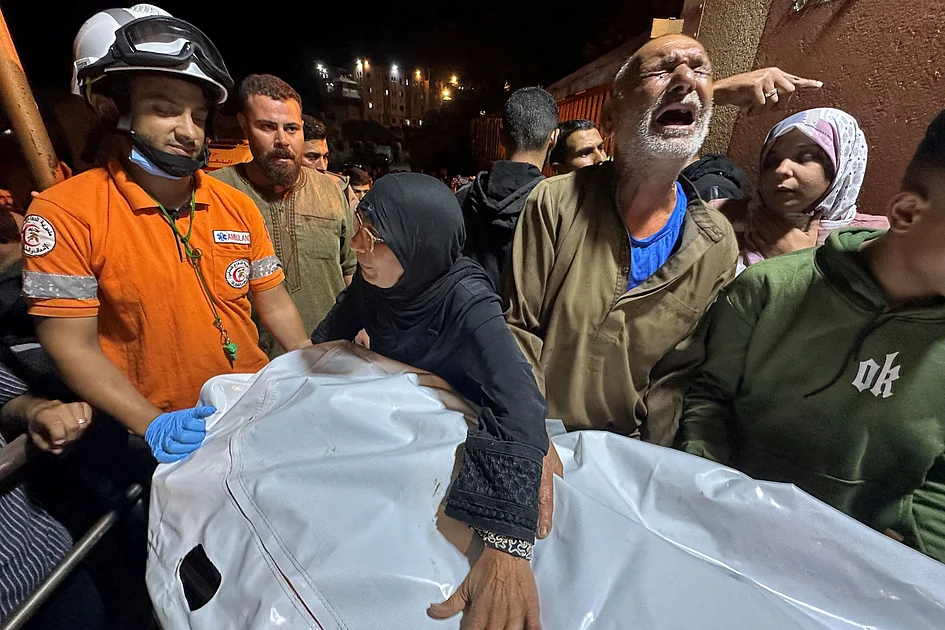
Trump defends Israel’s strikes on Gaza, says ‘should hit back’ if soldiers are killed
US President Donald Trump has defended Israel’s recent air strikes on Gaza, stating that Israel ‘should hit back’ if its soldiers are killed. The strikes, which resulted in at least 38 fatalities according to Gaza’s civil defence agency, were ordered by Israeli Prime Minister Benjamin Netanyahu after Hamas was accused of violating the fragile ceasefire. Hamas, however, denied the allegations and reaffirmed its commitment to the US-brokered truce. Trump emphasized that ‘nothing was going to jeopardise’ the ceasefire, even as tensions escalated. The conflict, which began with Hamas’s October 2023 attack on Israel, has already claimed thousands of lives. Despite the ceasefire, the situation remains precarious, with both sides accusing each other of breaching the agreement. The return of hostages’ bodies has become a contentious issue, with Hamas claiming it needs more time to locate the remains buried under Gaza’s war-torn landscape. Meanwhile, US Vice President JD Vance expressed confidence that the ceasefire would hold, despite the ongoing ‘skirmishes.’ On the ground, Gaza residents fear a resurgence of violence, with one local stating, ‘We want to rest. I believe the war will come back.’
-

At least 30 killed in Israeli strikes, Gaza civil defence tells AFP
In a tragic escalation of violence, Israeli air strikes in the Gaza Strip have resulted in the deaths of at least 30 people, with dozens more injured, according to Gaza’s civil defence agency. The attacks, which occurred despite an ongoing ceasefire, have left rescue teams scrambling to recover victims from the rubble. Mahmud Basal, a spokesman for the agency, confirmed the casualties to AFP, emphasizing the ongoing efforts to assist the wounded and retrieve the deceased. Israel has justified its actions by accusing Hamas of attacking its troops and breaching the ceasefire agreement. This latest surge in hostilities underscores the fragile nature of the truce and raises concerns about the potential for further violence in the region.
-
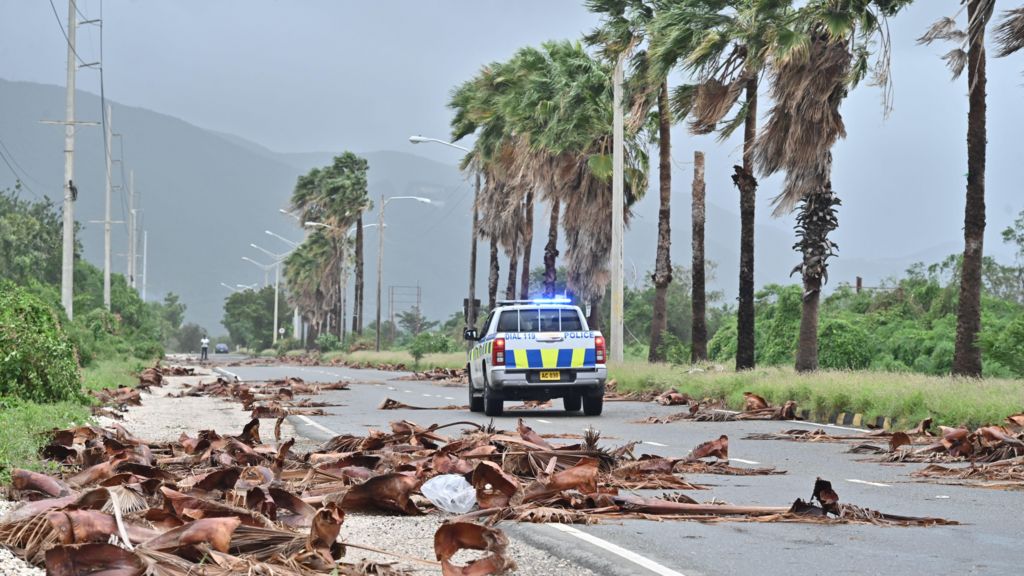
Jamaicans wake to devastation as hurricane causes floods, power cuts and splits city in two
Jamaica is grappling with unprecedented devastation in the wake of Hurricane Melissa, the most powerful storm to hit the island in modern history. With sustained winds reaching 298 km/h (185 mph), the Category 5 hurricane left a trail of destruction, submerging vast areas, destroying homes, and crippling infrastructure. Approximately three-quarters of the island is without power, and western regions are inundated with floodwaters. Prime Minister Andrew Holness declared Jamaica a ‘disaster area,’ emphasizing the widespread damage to hospitals, schools, and businesses. Although no fatalities have been confirmed, officials fear significant loss of life. Rescue operations are underway, but communication breakdowns and hazardous conditions are hampering efforts. The storm’s rapid intensification, fueled by abnormally warm Caribbean waters, underscores the growing impact of climate change. As Jamaica begins to assess the full extent of the damage, the nation faces a long and arduous recovery process.
-
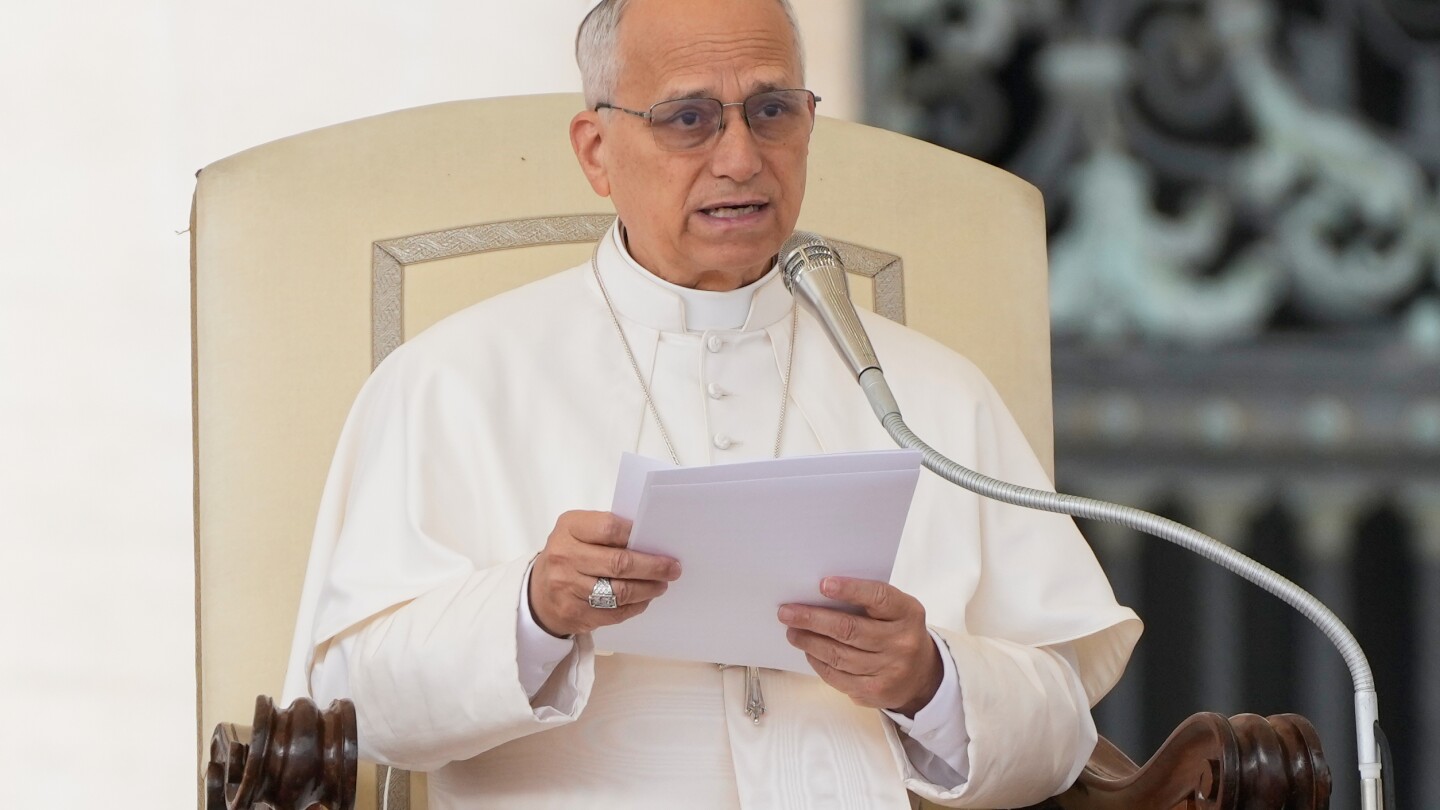
Pope condemns antisemitism and vows to fight it as tensions rise over Israel’s war in Gaza
In a significant address during his Wednesday general audience, Pope Leo XIV acknowledged the misunderstandings and conflicts that have arisen between Catholics and Jews amid Israel’s war in Gaza. However, he firmly reiterated the Catholic Church’s unwavering condemnation of antisemitism and its commitment to combating it, rooted in the Gospel-mandated friendship with the Jewish people. The Pope’s remarks coincided with the 60th anniversary of the landmark Vatican document “Nostra Aetate,” which revolutionized the Church’s relationship with Judaism. The declaration, Latin for “In Our Time,” denounced antisemitism in all forms and repudiated the centuries-old “deicide” charge that blamed Jews collectively for Christ’s death. This historic document marked a turning point in the Church’s reckoning with its role in perpetuating antisemitism, particularly in the context of the Holocaust. Speaking to a diverse audience that included Jewish leaders and representatives of other faiths, Pope Leo emphasized the importance of continuing dialogue despite current challenges. He noted that while political circumstances and injustices have strained relations, the Church remains steadfast in its friendship with the Jewish people. The anniversary comes amid a surge in antisemitism globally, particularly in the wake of Israel’s military actions in Gaza following the October 7, 2023, Hamas attacks. In the United States alone, the Anti-Defamation League reported a record high of 9,354 antisemitic incidents last year, with 58% linked to Israel. The war has also tested the Vatican’s relationship with the Jewish community, with Pope Francis facing criticism for comments perceived as equating Hamas’s actions with Israel’s military response. While Francis called for the release of hostages and condemned violence, his remarks on Israel’s conduct sparked controversy. Pope Leo, however, has sought to bridge divides, meeting with Jewish leaders during his installation in May and reaffirming the Church’s commitment to dialogue. Rabbi Noam Marans of the American Jewish Committee praised the Pope’s acknowledgment of the challenges, calling it a significant step forward. He urged the Vatican to leverage its moral authority to combat antisemitism more vigorously, emphasizing the critical need for solidarity in these turbulent times.
-

Global cooperation urged on disasters
In the face of escalating natural disasters exacerbated by climate change, global experts convened at the 2nd International Conference on Climate Change and Disaster Risk in Beijing, urging strengthened international collaboration. The conference highlighted the urgent need for knowledge sharing, capacity building, and technological innovation to address increasingly severe and complex disaster scenarios. Philippe Gourbesville, President of the International Association for Hydro-Environment Engineering and Research, emphasized the cascading effects of emerging risks, which often lead to interconnected disasters threatening human safety and infrastructure. He called for enhanced observation systems, including comprehensive sensor networks in vulnerable regions, and the revision of engineering practices to adapt to new challenges. Martin Manuhwa, Chair of the Committee on Engineering Capacity Building at the World Federation of Engineering Organizations, echoed these sentiments, stressing the critical role of engineering in geoscience to ensure the resilience of buildings and transport networks. He also highlighted the potential of artificial intelligence in disaster classification and identification, while noting the persistent challenges posed by the unpredictability of extreme events. Manuhwa underscored the need for collaboration, particularly under the Belt and Road Initiative, to address the lack of disaster preparedness in Africa and other developing regions. Wang Fawu, a professor at Tongji University and UNESCO Chairholder on Geoenvironmental Disaster Reduction, emphasized the importance of public education in disaster prevention, enabling communities to respond effectively to early warnings. Anne-Sophie Stevance of the International Science Council highlighted the necessity of learning from diverse regional contexts to build a robust global knowledge base. The conference concluded with a unified call for multidisciplinary, cross-boundary cooperation to mitigate the growing risks posed by climate-driven disasters.
-
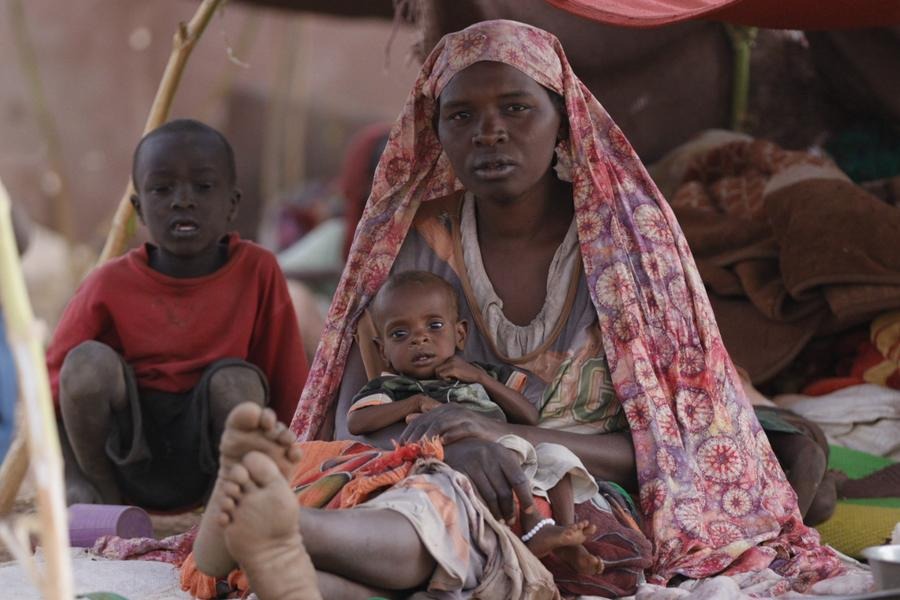
UN, humanitarian partners condemn attacks on civilians in Sudan’s El Fasher
The United Nations and its humanitarian partners have issued a stern condemnation of the escalating violence against civilians in El Fasher, the capital of Sudan’s North Darfur state. The UN Office for the Coordination of Humanitarian Affairs (OCHA) reported that the Rapid Support Forces (RSF) have been implicated in severe attacks on civilians, civilian infrastructure, and humanitarian workers. These violations include summary executions, house-to-house raids, and obstacles preventing civilians from reaching safety. Sexual violence, particularly against women and girls, continues to be reported, and local aid responders are at grave risk, with some detained or killed. The Office of the United Nations High Commissioner for Human Rights has documented approximately 1,850 civilian deaths in North Darfur, with an estimated 1,350 occurring in El Fasher from the beginning of the year to October 20. However, this figure is believed to underrepresent the actual number of conflict-related deaths due to challenges in telecommunications and access on the ground. Humanitarian workers are operating under extreme danger to assist those fleeing toward Tawila and surrounding areas. The UN Refugee Agency (UNHCR) is providing life-saving assistance and essential services to displaced families, including shelter, basic necessities, and cash assistance. However, access to El Fasher remains blocked, and humanitarian capacity is rapidly shrinking as needs soar. The humanitarian community in Sudan is calling for urgent action to protect civilians and humanitarian workers, guarantee safe passage and humanitarian access to people trapped in El Fasher, ensure accountability for all violations of international humanitarian law, and scale up funding to sustain life-saving operations. The United Nations and its humanitarian partners remain committed to scaling up their life-saving support across Darfur and re-establishing their presence on the ground. OCHA also reported that fighting has intensified in Sudan’s North Kordofan state, emphasizing that civilians must be protected wherever they are and allowed to flee safely and with dignity. The office urged all parties to immediately halt hostilities, respect their obligations under international humanitarian law, and enable safe, sustained humanitarian access.