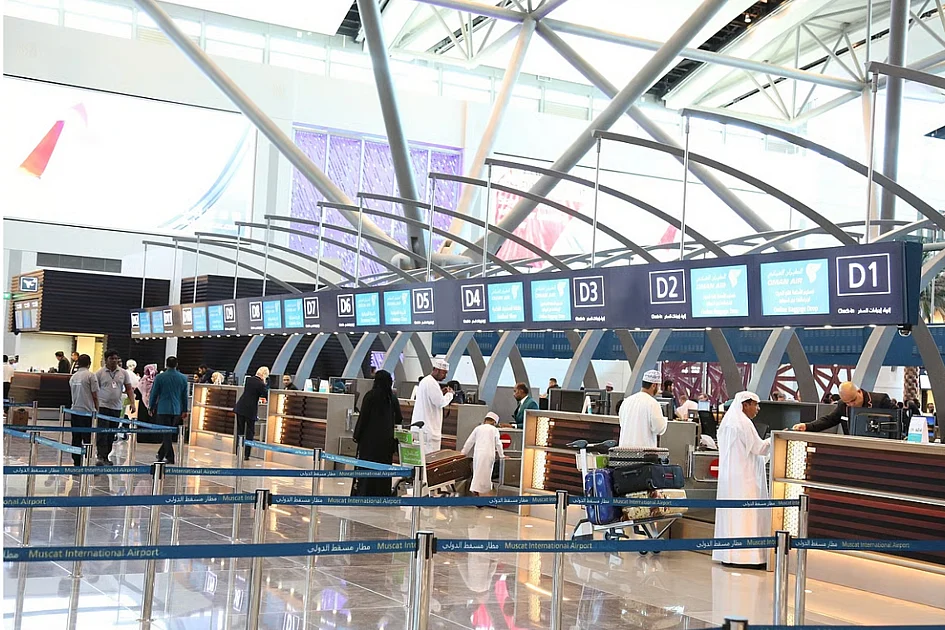
Oman Airports has achieved a groundbreaking milestone by becoming the first airport operator globally to fully deploy WiFi 7 technology across its facilities. This advanced upgrade, developed in collaboration with Huawei, promises passengers ultra-fast internet speeds, enhanced security, and a seamless digital experience tailored to the needs of modern travelers. The implementation of WiFi 7 marks a significant leap in airport connectivity, offering gigabit-plus performance, quick downloads, and smooth streaming on compatible devices. This innovation is particularly timely as Gulf states prepare to introduce the GCC’s new ‘one-stop’ travel system, which will streamline immigration and security checks for Gulf citizens by processing all formalities at the departure airport. WiFi 7’s capabilities, including the ability to utilize the 6GHz, 5GHz, and 2.4GHz bands simultaneously, ensure reduced latency, congestion-free peak hours, and reliable connections for biometric systems and e-gates. With stronger encryption and higher bandwidth, WiFi 7 also facilitates the secure and rapid transfer of passenger data, essential for the new travel model. Oman’s adoption of this technology positions its airports as future-proofed hubs, ready to handle the increased network demands of the region’s evolving aviation landscape.
分类: technology
-

Czech Republic plans $19 billion nuclear expansion to double output and end fossil fuel reliance
The Czech Republic is forging ahead with an ambitious nuclear energy expansion, spearheaded by the $19 billion Dukovany project. The initiative, which includes the construction of two new reactors, aims to at least double the country’s nuclear output and solidify its position as one of Europe’s most nuclear-dependent nations. South Korea’s KHNP has been selected over France’s EDF to lead the construction, with each reactor boasting a capacity of over 1,000 megawatts. These new units, expected to be operational by the late 2030s, will complement Dukovany’s existing four reactors, which have been in service since the 1980s. Additionally, the deal includes an option for KHNP to build two more reactors at the Temelín plant, which currently houses two 1,000-megawatt reactors. The expansion is part of a broader strategy to transition away from fossil fuels, meet low-emission targets, and address the growing demand for electricity driven by data centers and electric vehicles. Petr Závodský, CEO of the Dukovany project, predicts that nuclear energy will account for 50-60% of the Czech Republic’s energy mix by 2050. The project has received a significant boost from the European Union, which has classified nuclear energy as environmentally sustainable, paving the way for financing. However, the initiative faces opposition from environmental groups like Friends of the Earth, which argue that the funds could be better spent on improving the energy industry. Austria, a neighboring country, remains skeptical of nuclear energy and has already rejected the Czech Republic’s plan for small modular reactors.
-

Meet UAE-based researcher who was among 255 students to win Google fellowship
Muhammad Maaz, a researcher based in the United Arab Emirates (UAE), has achieved a groundbreaking milestone by becoming the first Gulf region recipient of the prestigious Google PhD Fellowship in Machine Perception. The announcement came as a surprise to Maaz, who was engrossed in coding when he received the news from Professor Ian Reid, Chair of Computer Vision at the Mohamed bin Zayed University of Artificial Intelligence (MBZUAI).
The Google PhD Fellowship, now in its 16th year, is a highly competitive program that selects 255 PhD students globally from thousands of nominees across 35 countries and 12 research domains. Each university can nominate only four students, making the selection process exceptionally rigorous. The fellowship offers an annual stipend of $85,000, mentorship from Google Research, and access to a global network of researchers.
Maaz’s achievement is particularly significant as it challenges the narrative of regional brain drain, where talented researchers often leave the Middle East for opportunities abroad. Instead, Maaz chose to pursue his research in Abu Dhabi, highlighting the growing potential of the UAE as a hub for cutting-edge research and innovation.
His work focuses on developing multimodal large language models that enable machines to not only see but also understand and communicate about what they observe. “Imagine ChatGPT, but for videos,” Maaz explained. “You could upload a clip, ask questions about what’s happening, or request summaries and insights.” These advancements could revolutionize applications ranging from automated video analysis and surveillance to educational tools and accessibility features for visually impaired individuals.
Maaz attributes his success to the supportive environment at MBZUAI, where professors manage small research groups, providing direct guidance that is often challenging to achieve in larger institutions. “The support system here allows researchers to work without distraction,” he said. MBZUAI, founded in 2019, has a highly selective acceptance rate of 5%, enrolling 403 students this year from over 8,000 applicants.
Maaz’s achievement is not just a personal milestone but also a testament to the UAE’s vision and commitment to fostering innovation and research. “This achievement wouldn’t have been possible without the vision of the UAE’s leadership and the environment MBZUAI has created,” he said. “The best way I can give back is by making the most of these opportunities and striving to produce research that makes the region proud.”
-

UAE: Parents can set kids’ spending limit, restrict buying categories via new app
A groundbreaking app in the UAE is transforming how parents teach their children about financial responsibility while also addressing financial exclusion for the unbanked population. Botim Money, a platform already popular for money management, has introduced customizable controls that allow parents to set spending limits, restrict purchase categories, and provide access to prepaid, multi-currency wallets for their children. This innovative feature turns everyday transactions into valuable lessons in financial literacy. Dr. Tariq Bin Hendi, CEO of Astra Tech, Botim’s parent company, emphasized that the app empowers parents to monitor and guide their children’s spending habits, fostering long-term financial discipline. Additionally, the app enables parents to build a credit history for their children, a feature set to roll out in future updates. This is particularly significant as many young adults struggle to access banking services due to a lack of credit history. Beyond family use, Botim is also tackling financial exclusion among the UAE’s blue-collar workforce. By offering virtual IBANs, remittance services, and borrowing options, the app provides millions of unbanked individuals with access to essential financial tools. Dr. Tariq highlighted that over 4 million people in the UAE are unbanked or underbanked, and Botim aims to integrate them into the financial ecosystem. The app’s long-term vision includes embedding AI-powered financial education directly into the platform, offering interactive lessons in multiple languages to enhance users’ understanding of budgeting, savings, and responsible borrowing. Botim is shifting its focus from being a super app to specializing in consumer finance, a strategy that has already tripled user engagement. With plans for international expansion, the company remains committed to making financial access and education more accessible, safer, and smarter for underserved populations.
-

US and UK warn of major e-visa data breach in Somalia
A significant cybersecurity incident has rocked Somalia’s electronic visa system, potentially exposing sensitive personal information of tens of thousands of applicants, including US citizens. The US Embassy in Somalia issued a stark warning on Thursday, citing credible reports that unidentified hackers had infiltrated the government’s e-visa platform. The breach, which remains ongoing, has reportedly compromised data such as names, photographs, dates of birth, marital statuses, home addresses, and email contacts. The UK has also advised travelers to weigh the risks before applying for an e-visa to Somalia, emphasizing the potential dangers of submitting personal information to the compromised system. Somali authorities have yet to comment on the breach, but the government has quietly transitioned its visa services from evisa.gov.so to etas.gov.so without providing an official explanation. The US Embassy noted that while it cannot confirm individual involvement in the breach, all applicants who have used the e-visa system may be affected. The incident has further strained tensions between Somalia and the self-declared republic of Somaliland, which has refused to recognize Somalia’s e-visa system. Somaliland’s Foreign Minister warned that the system is unsafe, raising concerns that personal data could fall into the hands of extremist groups. The dispute has left some travelers stranded at airports, as airlines refuse to board passengers without Somalia’s e-visa approval. Meanwhile, Somaliland’s Civil Aviation Minister has asserted that airlines must now obtain clearance from Hargeisa before entering its airspace, a directive that has already led to several aircraft being rerouted. The Somalia Civil Aviation Authority, however, maintains sole control over the nation’s airspace and has warned that non-compliance with its directives could result in serious legal consequences.
-

Apple CEO Tim Cook to step down as soon as next year: Financial Times
Apple Inc. is accelerating its succession planning as CEO Tim Cook prepares to step down as early as next year, according to a report by the Financial Times. The tech giant is unlikely to announce a new CEO before its next earnings report in late January, which coincides with the crucial holiday season. John Ternus, Apple’s Senior Vice President of Hardware Engineering, is widely regarded as the frontrunner to succeed Cook, sources familiar with the matter revealed. The company’s board and senior executives have reportedly intensified discussions to ensure a smooth transition after Cook’s 14-year tenure. Cook assumed the CEO role in 2011, following the resignation of Apple co-founder Steve Jobs, who revolutionized the tech industry. Apple’s leadership change comes at a pivotal moment as the company continues to innovate in a competitive global market.
-

CNS Sichuan sets off on maiden sea trial
China’s first Type 076 amphibious assault ship, the CNS Sichuan, embarked on its inaugural sea trial on Friday, marking a significant milestone in the nation’s naval capabilities. The vessel departed from Hudong-Zhonghua Shipbuilding in Shanghai at approximately 9 a.m., as announced by the People’s Liberation Army Navy (PLAN). This trial aims to evaluate the ship’s electric and propulsion systems, following the completion of mooring tests and hardware installations. The CNS Sichuan, with a hull code of 51, is the lead ship in the Type 076 class, boasting a displacement of over 40,000 metric tons. It features a dual-island superstructure, a first for Chinese naval vessels, designed to enhance aviation operations. The ship is equipped with an electromagnetic catapult, enabling it to launch fixed-wing aircraft and drones, a capability previously seen only on the CNS Fujian aircraft carrier. Upon commissioning, the CNS Sichuan will support a range of missions, including amphibious landings, airstrikes, and airborne operations. A senior shipbuilding industry researcher noted that the maiden voyage is primarily to test the ship’s self-propulsion and system reliability, with future trials planned to assess the electromagnetic catapult’s performance. The PLAN currently operates four Type 075 amphibious assault ships, each capable of carrying helicopters, landing craft, and armored vehicles.
-
From florist to drone maker: How the weapon became so mainstream
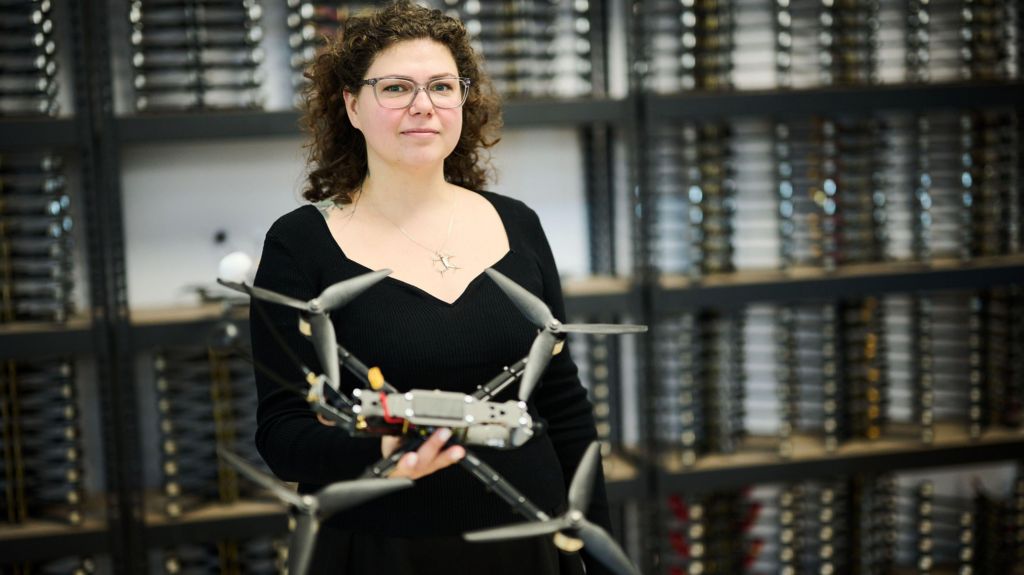
The ongoing conflict in Ukraine has been dubbed the world’s ‘first drone war,’ catalyzing a surge in military drone production both within and beyond the country’s borders. Among the many individuals contributing to this transformation is Kseniia Kalmus, a former floral artist who now dedicates her skills to manufacturing drones for the Ukrainian army. Before Russia’s invasion in February 2022, Kalmus co-owned a flower shop in Kyiv and showcased her floral arrangements across Europe. However, the war prompted a dramatic shift in her life. ‘It was just an obvious decision for me,’ Kalmus told the BBC from Kyiv. ‘I just wanted to help my country, help my people, and the military.’ Initially, she raised funds to purchase essential supplies for soldiers, but as the conflict evolved, the demand shifted to first-person view (FPV) drones. Recognizing this need, Kalmus began producing drones herself, and today, she and her team manufacture hundreds of these devices monthly. These small, plastic-framed quadcopters, originally designed for aerial photography, have been repurposed into lethal weapons by attaching small bombs. The widespread use of drones in Ukraine has not only revolutionized warfare but also spurred a global counter-drone industry. Companies like DroneShield and Munin Dynamics are developing technologies to detect and neutralize drones, while nations worldwide are investing heavily in drone defense systems. Experts predict that artificial intelligence will drive the next major advancements in drone technology, potentially leading to fully autonomous systems. Despite the challenges, Kalmus remains committed to her new role. ‘I miss flowers very much and that previous life, of course,’ she said. ‘But this is a question of existence. We just fight for our country, for our existence, for our culture.’
-

AI that predicts future? UAE’s MBZUAI develops tech that anticipates ‘what’s next’
In a groundbreaking development, the Mohamed bin Zayed University of Artificial Intelligence (MBZUAI) in Abu Dhabi has introduced PAN, an advanced AI model capable of predicting future events while maintaining human-like consistency in its responses. Unlike existing systems such as OpenAI’s Sora and Google’s Veo, which often produce visually stunning but temporally inconsistent video clips, PAN excels in preserving scene structure and object continuity over extended sequences. This innovation marks a significant leap in AI technology, addressing a critical gap in current video generation models. PAN operates through a two-stage process: first, it creates an internal representation of the environment by recognizing objects, motion, and relationships over time. Second, it translates this understanding into coherent video outputs, updating them dynamically as instructions evolve. This approach ensures stability and realism, making PAN particularly valuable for applications in robotics, autonomous systems, and industrial planning. Developed collaboratively by MBZUAI teams in Abu Dhabi, Paris, and Silicon Valley, PAN is part of a broader initiative to reduce reliance on imported technology. The model and its technical documentation are freely accessible at panworld.ai, positioning the UAE as a leader in open AI research. PAN’s ability to anticipate outcomes and understand the physical world’s dynamics represents a significant step toward AI systems that can reason and predict with genuine accuracy.
-
GMU’s Thumbay College of Management & AI in Healthcare launches UAE’s first Thumbay AI Clinic
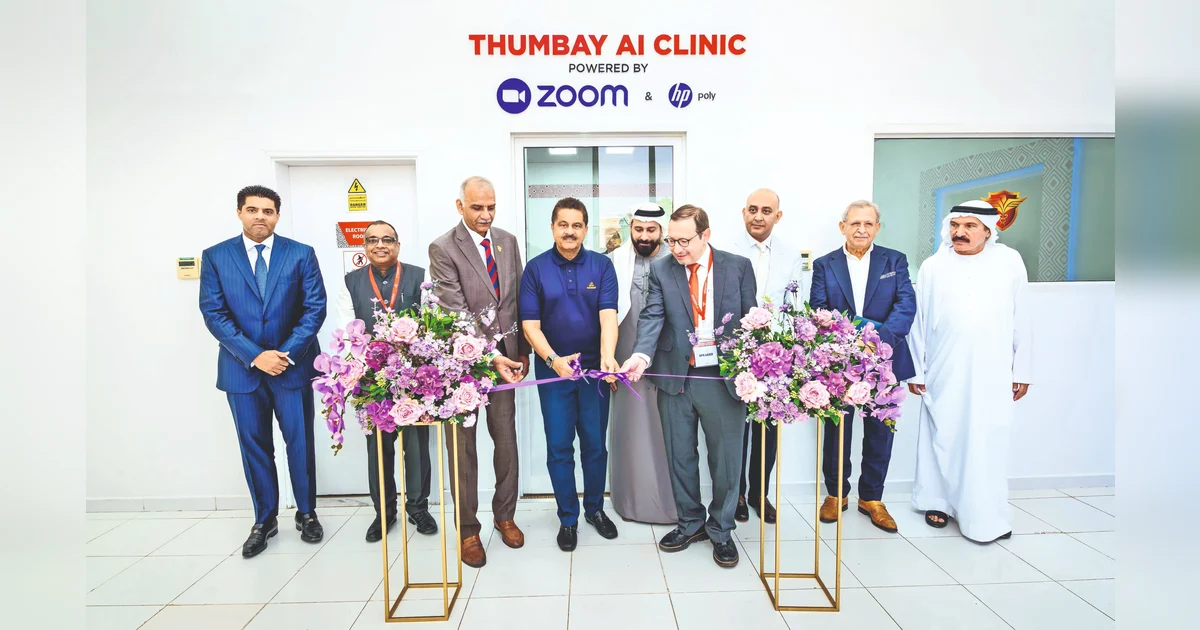
Gulf Medical University (GMU), a leading private medical institution in the region, has unveiled the Thumbay AI Clinic, a pioneering initiative aimed at revolutionizing healthcare education and clinical practice through artificial intelligence (AI). Officially inaugurated by Dr. Thumbay Moideen, founder president of Thumbay Group, the clinic represents a significant milestone in the digital transformation of healthcare. The facility, powered by Zoom’s AI Companion and HP | Poly’s advanced technologies, introduces cutting-edge features such as AI-generated clinical notes, automated meeting summaries, and context-aware collaboration tools. These innovations are designed to enhance precision, efficiency, and patient outcomes while ensuring secure, HIPAA-compliant hybrid care models. The Thumbay AI Clinic serves as a hands-on innovation hub, enabling students, faculty, and healthcare professionals to explore AI’s role in diagnostics, telemedicine, and collaborative care. Dr. Moideen emphasized that the clinic embodies GMU’s mission to prepare future healthcare leaders for an AI-driven world, stating, ‘The future of healthcare lies at the intersection of knowledge, compassion, and technology.’ Professor Manda Venkatramana, vice-chancellor of GMU, highlighted the clinic’s transformative impact on education and research, noting that it creates intelligent ecosystems that mirror real-world healthcare dynamics. This initiative underscores GMU’s commitment to integrating technology into healthcare learning, fostering professionals who excel in both clinical expertise and digital fluency.