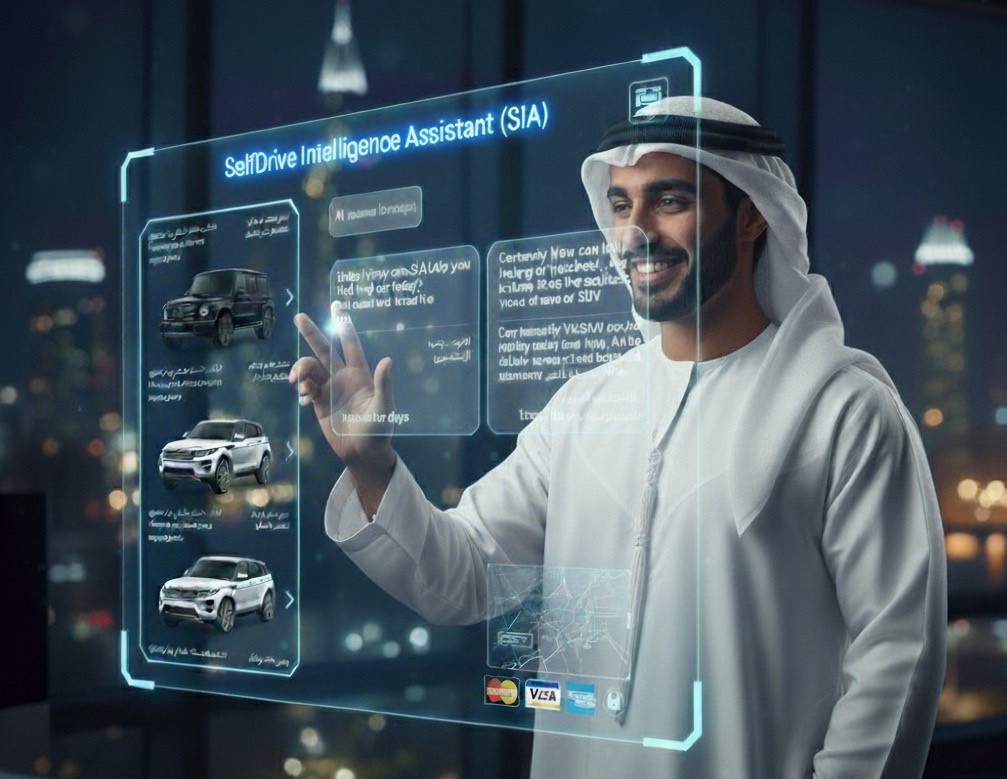
SelfDrive Mobility, a leading UAE-based smart mobility innovator, has unveiled the SelfDrive Intelligence Assistant (SIA), the region’s first commercially launched conversational AI system for car rentals. This groundbreaking technology, accessible via the SelfDrive website and mobile app, supports over 40 languages and offers an intuitive, human-like booking experience. SIA transforms the traditionally complex car rental process into a seamless, conversational interaction, allowing users to search, compare, and book vehicles effortlessly in their preferred language. The system’s advanced capabilities include contextual understanding, adaptive recommendations, and real-time personalization, ensuring a faster, smarter, and more personalized experience for users. Soham Shah, founder and CEO of SelfDrive Mobility, emphasized that SIA bridges the gap between AI efficiency and human-centric service, automating routine tasks while enabling customer agents to focus on higher-value interactions. The launch aligns with the UAE’s national AI vision, positioning the country as a global leader in intelligent technology adoption. Since its soft launch, SelfDrive has seen a 25% increase in AI-driven bookings, reflecting strong consumer trust and enthusiasm. To celebrate the official launch, SelfDrive is offering exclusive discounts, including Dh100 off monthly rentals and Dh50 off daily or weekly bookings. SIA is now live and ready to revolutionize the car rental experience at www.selfdrive.ae.
分类: technology
-

Artificial intelligence sparks debate at COP30 climate talks in Brazil
At the U.N. climate talks in Belem, Brazil, artificial intelligence (AI) has emerged as a double-edged sword in the fight against global warming. Known as COP30, the conference has become a battleground for debates on AI’s potential to both combat and exacerbate climate change. Tech companies and several nations are championing AI as a transformative tool, capable of enhancing electrical grid efficiency, aiding farmers in weather prediction, tracking marine species, and designing resilient infrastructure. However, climate activists are raising alarms over AI’s environmental toll, particularly its escalating demand for electricity and water to power data centers and search operations. They argue that unchecked AI growth could derail global efforts to meet the 2015 Paris Agreement targets. Jean Su, energy justice director at the Center for Biological Diversity, labeled AI as ‘a completely unregulated beast,’ while Adam Elman, Google’s sustainability director, hailed it as ‘a real enabler.’ The conference featured at least 24 AI-related sessions, including discussions on AI-driven energy sharing between cities, forest crime prediction, and an award for an AI project addressing water scarcity in Laos. Despite its promise, AI’s environmental impact remains a pressing concern. Data centers, essential for AI operations, consume vast amounts of electricity and water, contributing significantly to emissions. The International Energy Agency reported that data centers accounted for 1.5% of global electricity consumption in 2024, with their energy use growing at 12% annually since 2017. Environmental groups at COP30 are advocating for stricter regulations, such as mandatory renewable energy use in data centers and public interest assessments for new facilities. As AI continues to evolve, its role in climate change remains a contentious issue, balancing immense potential with significant risks.
-

How AI turns horror scenes into viral ‘nightmare fragrance’
Artificial Intelligence (AI) is now making waves in the fragrance industry, transforming the way scents are created and experienced. From crafting spine-chilling ‘nightmare fragrances’ inspired by horror scenes to enabling consumers to design personalized perfumes, AI is redefining the boundaries of olfactory innovation. This groundbreaking shift is particularly significant in Dubai, a global hub for fragrances, where the next iconic Arabian oud might be co-created by AI. Alex Wiltschko, Founder and CEO of Osmo, recently highlighted these advancements at the Dubai Business Forum – USA Edition in New York City. Osmo’s Olfactory Intelligence (OI) platform, which originated from Google Brain, allows brands and consumers to design fragrances digitally. Wiltschko explained how AI can interpret sensory inputs, such as movie scripts, to create unique scents. For instance, Osmo developed a viral ‘nightmare fragrance’ for a horror film, combining notes of mildew, metallic edges, and blood. Wiltschko’s journey into the world of scent began in his Texas childhood, where he became fascinated by the transformative power of fragrances. His dual passions for coding and neuroscience eventually led him to pioneer AI-driven scent technology. Today, AI-designed fragrances are already available in stores, including a vibrant electric-guitar-inspired scent created for Seattle’s Museum of Pop Culture. Wiltschko’s vision is to democratize perfume design, empowering individuals and brands to craft bespoke scents. This innovation marks a new era in the fragrance industry, blending art, science, and technology.
-

EU to assess whether Amazon and Microsoft cloud businesses need extra scrutiny
European Union regulators are intensifying their examination of Amazon Web Services (AWS) and Microsoft Azure, contemplating whether these cloud computing giants should be classified as ‘gatekeepers’ under the EU’s Digital Markets Act (DMA). The DMA, a comprehensive regulatory framework, aims to curb the market dominance of major tech companies by imposing strict operational guidelines and penalties for non-compliance. Gatekeepers are subject to additional obligations, and the EU has already designated other segments of Amazon and Microsoft, such as Amazon Marketplace and LinkedIn, under this classification. However, applying the gatekeeper label to cloud services presents unique challenges, as it is partly based on user numbers, which are less straightforward to measure in the cloud computing sector. The European Commission is investigating whether AWS and Azure serve as critical intermediaries between businesses and consumers, despite not meeting the traditional thresholds. Market research indicates that these providers hold significant market power, influencing both business and consumer landscapes. The recent AWS outage, which disrupted internet services for hours, underscored the critical reliance of digital services, including artificial intelligence, on cloud computing platforms. AWS has expressed confidence that the European Commission will recognize the dynamic and competitive nature of the cloud sector, emphasizing the risks of stifling innovation and increasing costs for European companies. Microsoft has also highlighted the innovative and competitive environment of Europe’s cloud industry, pledging to cooperate with the Commission’s inquiry.
-

AI should be used to inject more vitality into city culture, experts say
At the 2025 World Conference on City Culture held in Shanghai’s Hongkou district from November 14 to 16, experts emphasized the transformative potential of artificial intelligence (AI) in reshaping urban cultural landscapes. Against the backdrop of AI’s rapid proliferation, they called for innovative approaches to infuse city culture with renewed vitality. The conference highlighted how AI technologies are fostering new cultural ecosystems by integrating sectors such as tourism, business, and sports, thereby creating robust consumption engines. AI is also revolutionizing the production and delivery of culture, enabling creative expressions that transcend traditional time and space constraints. Emerging models like digitalized tourism and smart technology-based industries are providing deeper, more detailed insights into city culture. Hongkou district, a focal point of these advancements, has seen significant economic growth during the 14th Five-Year Plan period (2021-25), with its GDP surpassing 150 billion yuan ($21 billion) by the end of 2024. The value of technology service providers in the district has surged ninefold since 2020, underscoring AI’s pivotal role in driving development.
-
Autonomous vehicles charting new path
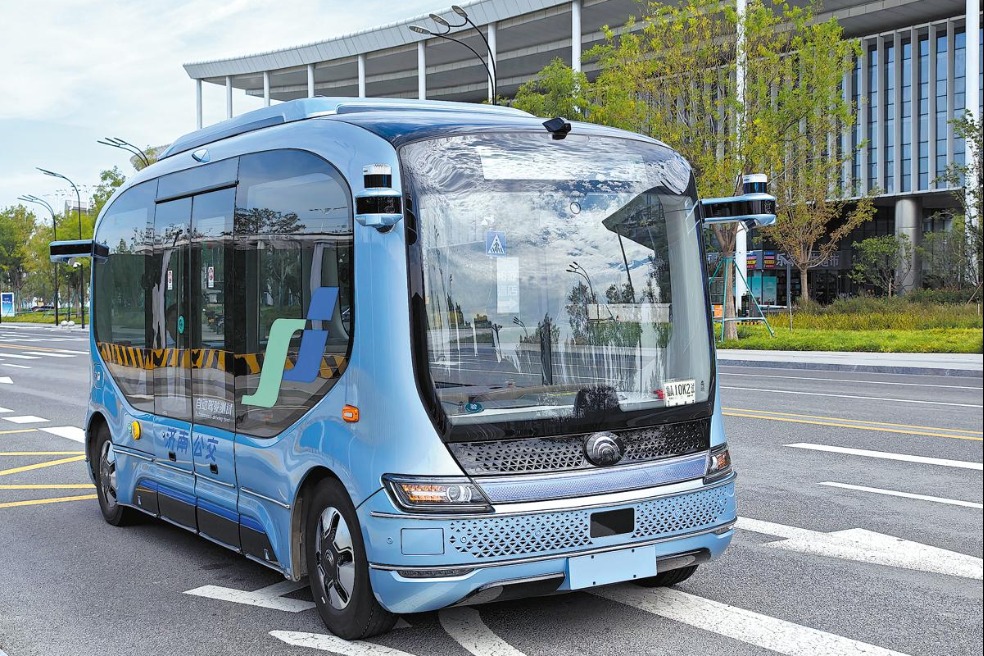
A transformative shift is underway in Jinan, the capital of Shandong province, as autonomous vehicles take to the streets, marking a significant leap in China’s smart transportation ambitions. Ding Pingshun, a seasoned bus driver with 22 years of experience, now finds himself in a new role as a safety officer for self-driving buses. ‘It’s quite a change from driving manned buses to monitoring autonomous ones,’ Ding remarked as he observed a self-driving bus navigating Huanghe Avenue in Jinan’s autonomous driving demonstration area. This bus, part of a pilot initiative by Jinan Public Transport Group, has been rigorously tested on a 6.4-kilometer route since June 2025. The route, which includes traffic lights, pedestrian crossings, and complex maneuvers like U-turns and lane changes, is monitored by an onboard system that provides real-time alerts based on proximity to nearby objects. Measuring 5.5 meters in length, the bus is equipped with nine seats and relies entirely on Chinese-made components, from its body to its control software. Advanced sensors, including HD cameras, lidar, and radar, enable the vehicle to navigate independently. ‘The bus has performed exceptionally well, making decisions to detour or stop when encountering obstacles,’ Ding noted, emphasizing his role as a monitor rather than an active driver. The test route is open to the public, with eight slots available for weekend reservations, allowing families to experience this futuristic mode of transportation. Beyond road tests, the project integrates smart infrastructure, such as a low-carbon green charging station where the bus autonomously parks at a V2G charger. A robotic arm, developed by State Grid’s Jinan power supply company, inserts the plug in about 40 seconds, showcasing the seamless automation of the system. Wang Shuai, deputy station head, explained, ‘Our self-developed arm uses pure vision recognition to identify vehicles and enable smart charging, significantly boosting efficiency.’ Similar initiatives are spreading across China. In Guangzhou, 19 autonomous minibuses began operating on five routes on November 3, 2025, in preparation for the 15th National Games. In Chengdu, six-meter-long self-driving buses were tested in May, alongside the release of a white paper on integrated vehicle-road-cloud systems. In Wuhan, robotaxis crossed the Yangtze River via bridges last year, launching commercial inter-river services. Experts predict 2025 to be a pivotal year for smart city-vehicle synergy under the ‘vehicle-road-cloud integration’ framework, with a rise in functional autonomous vehicles such as logistics and sanitation trucks, reshaping urban landscapes.
-

US lawmakers, citing security issues, want TP-Link routers banned
A bipartisan group of US lawmakers has called on the Commerce Department to investigate and potentially ban the sale of TP-Link Technologies’ networking products by the end of November, citing significant national security risks. In a formal letter to Commerce Secretary Howard Lutnick, the legislators expressed concerns that TP-Link’s routers and internet-connected cameras, produced by a company with alleged ties to the Chinese Communist Party (CCP), could be exploited for espionage against US military personnel, critical infrastructure, and households. They emphasized the rapid expansion of TP-Link’s market share in internet-connected security cameras and the potential for CCP-linked entities to misuse these devices for surveillance, blackmail, or extortion. The lawmakers urged the Commerce Department to assess the risks and determine whether existing information and communications-technology security measures are adequate. They also requested recommendations on adding TP-Link to the Federal Communications Commission’s Covered List, conducting a broader study on CCP-linked camera manufacturers, and issuing public advisories through the FBI and Department of Homeland Security. This potential ban could mark the largest removal of Chinese telecommunications equipment from the US market since the 2019 crackdown on Huawei. TP-Link has denied the allegations, asserting its commitment to providing secure products and resolving concerns through measures like onshoring development functions and enhancing cybersecurity. The company also highlighted its restructuring efforts, including the establishment of TP-Link Systems in California, which operates independently from its China-based counterpart. The controversy follows a multi-agency investigation into TP-Link’s routers, which dominate 65% of the US home and small-business market, amid evidence of their involvement in cyber campaigns traced to China-backed threat actors.
-

The Egyptian green tech firm looking to cut energy bills
In a groundbreaking move towards sustainable energy solutions, the Egyptian green technology company Saving System has unveiled a cutting-edge device designed to significantly reduce electricity consumption for businesses. This innovative technology promises to help companies slash their energy bills while contributing to environmental conservation. The device, developed after extensive research and testing, targets inefficiencies in energy usage, offering a practical and cost-effective solution for industries grappling with rising energy costs. As global attention shifts towards renewable energy and carbon footprint reduction, Saving System’s invention positions Egypt as a key player in the green tech revolution. The company’s initiative aligns with international efforts to combat climate change and promote sustainable development. Industry experts have lauded the innovation, noting its potential to transform energy management practices across various sectors. With energy efficiency becoming a critical concern worldwide, Saving System’s device could pave the way for a more sustainable and economically viable future.
-

Dubai: Nol Pay app users can now renew expiring cards, extend validity of travel passes
Dubai’s Roads and Transport Authority (RTA) has unveiled a significant upgrade to the Nol Pay app, introducing a suite of new features designed to enhance user convenience and efficiency. The updated app now allows users to renew expiring cards, extend the validity of travel passes, and manage family members’ Nol cards with ease. Proactive notifications remind users to top up low balances, while instant top-ups and real-time balance enquiries ensure seamless transactions. Additionally, users can schedule automatic top-ups for family cards at predefined intervals and purchase travel passes instantly. The app also supports digitized Nol cards on Samsung and Huawei devices, enabling payments across public transport and retail outlets with a simple tap—without opening the app. This upgrade is part of RTA’s broader initiative to integrate Account Based Ticketing (ABT) technology, aligning the app’s interface with the unified digital ecosystem of RTA. By the end of 2024, over 33,000 digital cards had been sold, marking a 460% increase from the previous year, while app downloads surged to 1.5 million, reflecting a 150% year-on-year growth.
-
Dubai flying taxi: RTA to offer free rides to select passengers next year
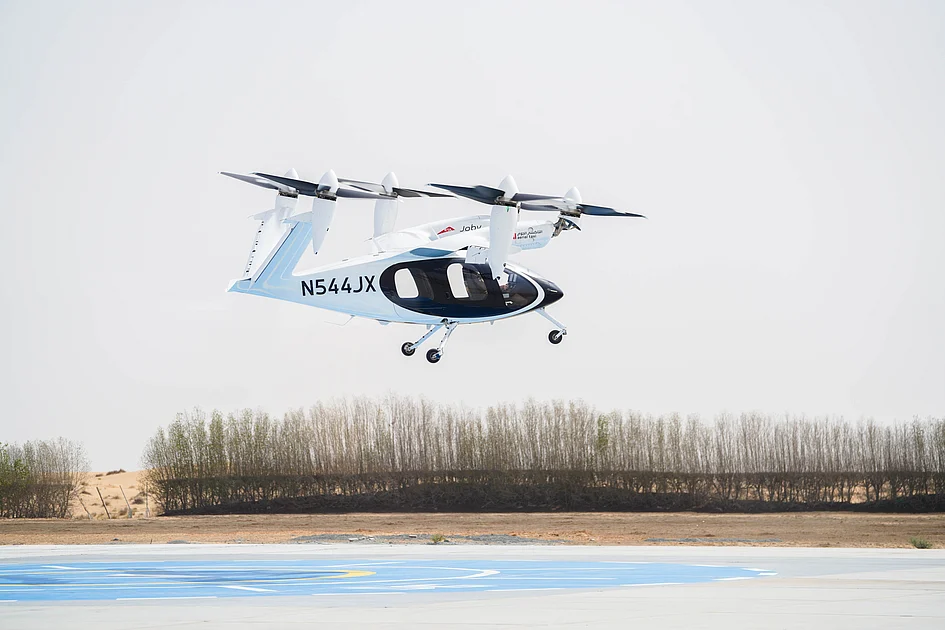
Dubai is gearing up to revolutionize urban mobility with its innovative flying taxi service, set to launch commercially by the end of 2026. During the Dubai Airshow 2025, attendees caught a glimpse of the electric-powered aerial taxi, which is expected to begin trial operations in the first quarter of 2026. The Roads and Transport Authority (RTA) plans to offer free rides to select passengers, including government officials and corporate representatives, to gather feedback and refine the service. The trial phase will focus on a limited number of passengers, with no charges imposed, paving the way for a full-scale commercial rollout later in the year. Last week, RTA and Joby, the flying taxi operator, successfully completed a manned test flight between the Margham desert area and Al Maktoum International Airport, covering 65 kilometers in just 17 minutes—a journey that typically takes 50 minutes by car. The RTA is also collaborating with major developers like Emaar Properties and Wasl Asset Management Group to construct vertiports across the city, including near Dubai International Airport, Palm Jumeirah, and Dubai Marina. These vertiports will feature advanced facilities such as charging stations, take-off and landing pads, and air-conditioned passenger areas. Additionally, RTA is exploring the potential of utilizing existing helipads to enhance the accessibility and integration of the flying taxi service with Dubai’s public transport network. Mattar Al Tayer, RTA’s Director General, emphasized that this initiative underscores Dubai’s commitment to becoming a global leader in sustainable and innovative urban mobility solutions.