
A 35-year-old Russian national, suspected of orchestrating cyberattacks on U.S. and European government agencies, has been arrested in Phuket, Thailand, following a tip from the FBI. The suspect, identified as Denis Obrezko from Stavropol, entered Thailand on October 30 and was apprehended earlier this month at his hotel. Thai authorities seized laptops, mobile phones, and digital wallets during the arrest, with FBI officials present. Obrezko is now detained pending a potential extradition to the United States. Russian state media confirmed the arrest, and his relatives are reportedly planning to contest the extradition. The U.S. Department of Justice and State Department have declined to comment on the case. Russian diplomats have visited Obrezko in custody, and the Russian consulate in Phuket acknowledged the arrest but provided no further details. The extradition process is underway, though its duration remains uncertain.
分类: technology
-
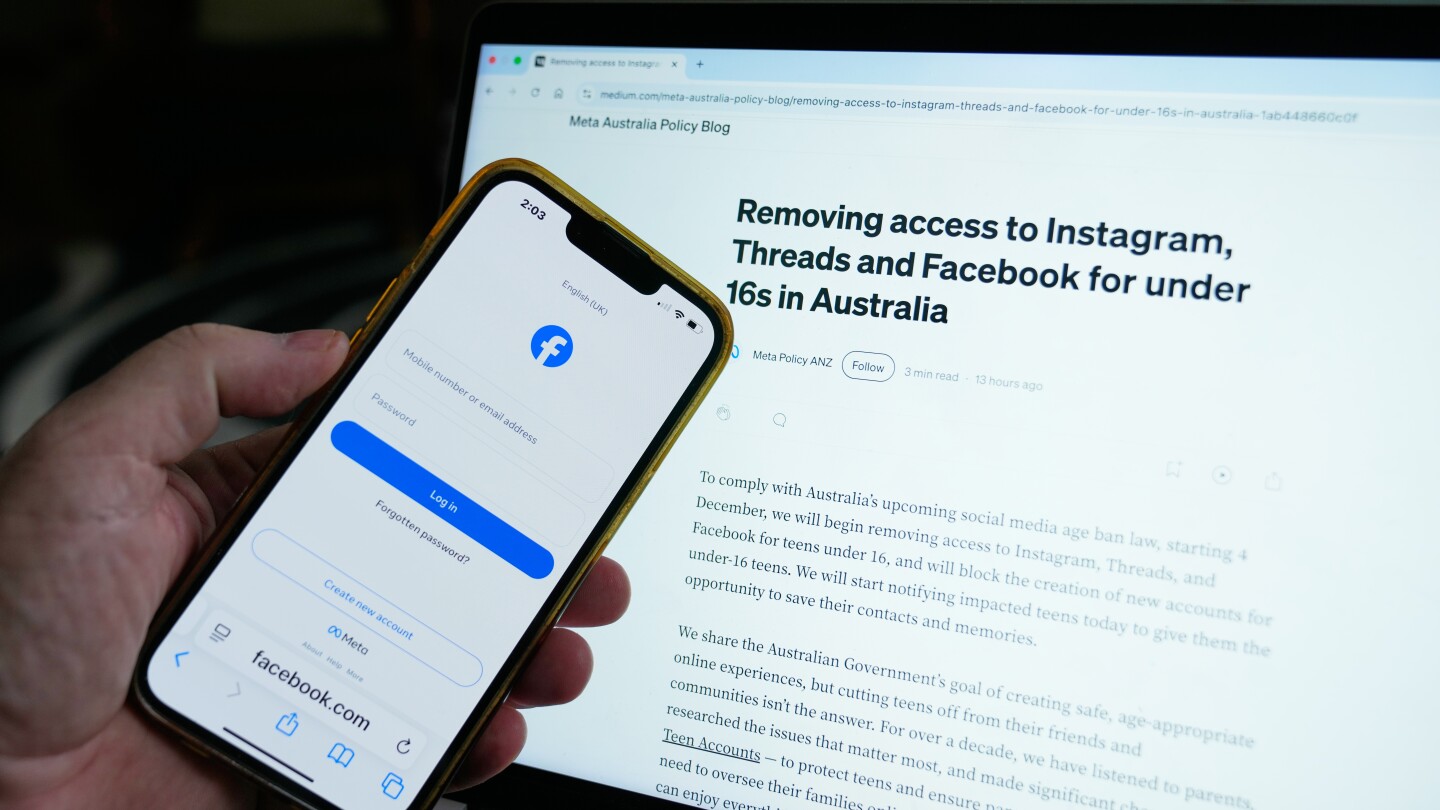
Meta alerts young Australians to download their data before a social media ban
In a landmark move, Meta has begun notifying thousands of young Australians to download their digital histories and delete their accounts from Facebook, Instagram, and Threads. This action precedes the enforcement of Australia’s pioneering social media ban on accounts of children under 16, set to take effect on December 10. The Australian government recently mandated that major platforms, including Meta’s trio, Snapchat, TikTok, X, and YouTube, implement measures to exclude users below the age of 16. Meta, headquartered in California, has emerged as the first tech giant to outline its compliance strategy. Starting December 4, suspected underage users will be denied access, with Meta issuing warnings via SMS and email. The company has advised young users to utilize the notice period to save their data and update contact details for future account recovery. Meta estimates that 350,000 Australians aged 13-15 are on Instagram, with an additional 150,000 on Facebook. For those mistakenly flagged, Meta offers age verification through Yoti, requiring government-issued IDs or a ‘video selfie.’ However, experts like Terry Flew of Sydney University caution that facial-recognition technology has a failure rate of at least 5%. The government has warned platforms against imposing blanket age verification, emphasizing that they already possess sufficient data to identify underage users. Non-compliance could result in fines up to AUD 50 million (USD 32 million). Meta’s Antigone Davis advocates for a standardized, privacy-preserving age verification system at the OS/app store level, arguing it would offer more comprehensive protection. Meanwhile, Dany Elachi of the Heaps Up Alliance, a parents’ group that lobbied for the ban, urges parents to help their children reallocate time previously spent on social media. Despite some reservations about the legislation’s implementation, Elachi supports the principle that children under 16 are better off engaging with the real world.
-

Gulf cybersecurity spend to top Dh120 billion by 2030
The Gulf region is poised to witness a significant surge in cybersecurity investments, with spending projected to surpass Dh120 billion by 2030. This growth is driven by the rapid adoption of artificial intelligence (AI), sovereign cloud strategies, and hyperscale data infrastructure, according to a recent report by Grand View Research titled ‘Cyber Resilience in the Gulf: Where Technology Meets Sovereign Risk (2025 Edition).’ The UAE and Saudi Arabia are at the forefront of this transformation, with both nations accelerating their digital agendas under the ‘We the UAE 2031’ vision and Vision 2030 programs, respectively. The report highlights that the region’s ambitious infrastructure projects, including national data centers, AI clusters, and cloud corridors, are fueling unprecedented investments in cyber resilience and data sovereignty. The UAE’s AI-driven security market alone is expected to grow more than fourfold, exceeding Dh19.6 billion by 2030. Swayam Dash, Managing Director of Grand View Research, emphasized that cyber resilience has evolved from a technical discipline to a sovereign capability, crucial for sustaining growth, attracting capital, and maintaining public trust. The UAE and Saudi Arabia, which together account for over 60% of the region’s cybersecurity expenditure, are embedding digital protection into national policies. The UAE is focusing on AI-driven threat intelligence, zero-trust frameworks, and sovereign cloud ecosystems, while Saudi Arabia’s National Cybersecurity Authority (NCA) and SDAIA are prioritizing data protection across industrial and infrastructure projects. The report also notes a shift in the region’s cybersecurity approach, from network defense to institutionalized resilience through policy, collaboration, and redundancy. Key initiatives include the ADGM Cyber Risk Management Framework (2025), Saudi Central Bank’s cyber stress-testing regime, and cross-border CERT intelligence sharing. As the line between cyber disruption and economic disruption narrows, digital resilience is increasingly viewed as a form of sovereign credit, with Gulf banks incorporating cyber metrics into ESG disclosures and regulators considering system uptime a proxy for fiscal stability. Dash concluded that the Gulf’s next global advantage will stem not from faster networks but from networks that never fail.
-

Johnson Controls’ new building automation system sets new industry standard
Johnson Controls has introduced Metasys 15.0, a cutting-edge building automation system designed to revolutionize energy management and operational efficiency in mission-critical environments. This latest iteration of the company’s flagship open building automation system offers unparalleled scalability, built-in resiliency, and real-time energy intelligence, empowering facility managers to optimize building performance, ensure compliance, and accelerate decarbonization efforts.
-
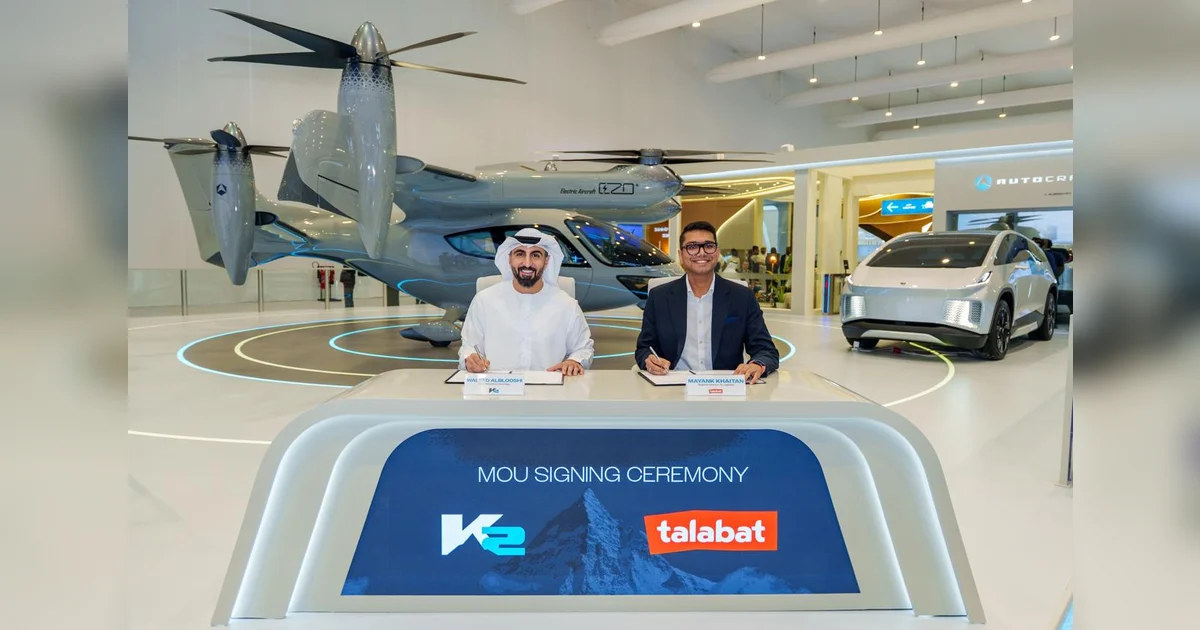
UAE: Talabat, K2 sign agreement on commercial drone delivery service
In a groundbreaking move, Talabat, the leading on-demand delivery platform in the MENA region, has joined forces with K2, a trailblazer in advanced technology, to launch a commercial drone delivery service for food and groceries. This collaboration, formalized through a Memorandum of Understanding (MoU), aims to revolutionize urban logistics by enhancing delivery efficiency, reducing carbon emissions, and optimizing operations. The initiative underscores both companies’ dedication to innovation, sustainability, and community impact. The partnership will focus on developing and testing a drone-to-station delivery model, designed to address the challenges of high-demand urban areas. Mayank Khaitan, Director of Logistics at Talabat, emphasized the company’s commitment to leveraging cutting-edge technology to create smarter, safer, and more efficient delivery systems. Waleed AlBlooshi, Vice President of Strategy at K2, highlighted the significance of integrating drone delivery into Abu Dhabi’s smart-city ecosystem, transforming autonomy from a concept into a practical service that enhances daily life. This pilot project aligns with the UAE’s vision for intelligent mobility and future-ready logistics, marking a significant step toward redefining last-mile delivery across the region.
-

6-second entry: Dubai to extend ‘red carpet’ biometric service to arrivals in 2 months
Dubai International Airport is set to revolutionize the arrival experience with the expansion of its ‘Red Carpet’ biometric service to Terminal 3 within the next two months. This innovative system, already operational for departures, enables passengers to breeze through passport control in as little as six seconds, leveraging real-time biometric data processing. Majed Al Joker, Chief Operating Officer at Dubai Airports, highlighted the service’s ability to handle groups of up to ten passengers simultaneously, significantly enhancing efficiency and reducing wait times. The Red Carpet corridor eliminates the need for physical travel documents, offering a seamless and contactless journey. Al Joker emphasized the airport’s commitment to integrating advanced technologies, including artificial intelligence, to optimize operations and decision-making processes. He also noted the airport’s record-breaking passenger numbers, projecting over 95.2 million travelers by year-end. Additionally, Al Joker discussed the growth of Al Maktoum International Airport and the upcoming launch of a new terminal designed to meet future demands. The Dubai Airshow 2025 served as a platform for showcasing next-generation aviation innovations, including electric and vertical take-off aircraft, underscoring Dubai’s leadership in sustainable aviation solutions.
-

China’s role in technology advancement and ASEAN ties highlighted at summit
The Global Chinese Economic and Technology Summit 2025 (GCET 2025), held in Kuala Lumpur on November 19, 2025, underscored China’s critical role in advancing global digitalization and sustainable development, particularly through its partnerships with Malaysia and ASEAN member states. The event, themed ‘Global Leadership and Partnership in the Age of Digital and Green Transformation,’ drew over 400 participants, including policymakers, diplomats, and business leaders, to deliberate on future economic and technological trends.
Malaysian Deputy Prime Minister Ahmad Zahid Hamidi emphasized Malaysia’s strategic position as the ASEAN 2025 chair, stating, ‘The countries that act fastest will lead the next decade.’ He highlighted China’s enduring status as Malaysia’s top trading partner for 16 consecutive years, with bilateral trade surpassing 200 billion ringgit ($48.2 billion) by May 2025. Zahid identified the digital economy, green transition, and the global Chinese diaspora as key drivers of ASEAN’s future growth, particularly in areas like artificial intelligence, smart manufacturing, and green technology.
KSI Strategic Institute for Asia Pacific President Michael Yeoh echoed the importance of preparing for a new economy shaped by digitalization, green energy, and shared prosperity, especially amid rising geopolitical tensions. The summit served as a platform to foster collaboration and dialogue, reinforcing China’s leadership in technological innovation and its commitment to sustainable development within the ASEAN region.
-

China’s new C919 is given a Dubai debut
China’s domestically developed C919 aircraft marked its international debut at the 19th Dubai Airshow, signaling a significant milestone in the country’s aviation industry. The event, held on November 19, 2025, highlighted the aircraft’s growing global appeal and its potential to compete in international markets. Sameer Alhashmi, CEO of Arzana Aviation Consultancy, emphasized the C919’s promising prospects, particularly in regions like Africa, where demand for modern and efficient aircraft is on the rise. The C919, a narrow-body jet designed to rival established models from Boeing and Airbus, represents China’s ambitious push to establish itself as a major player in the global aviation sector. Its presence at the Dubai Airshow underscores China’s commitment to innovation and its strategic efforts to expand its footprint in the aerospace industry. The event also served as a platform for China to showcase its technological advancements and foster international partnerships. As the C919 gains traction, it could reshape the competitive landscape of the aviation market, offering a new alternative to airlines worldwide.
-
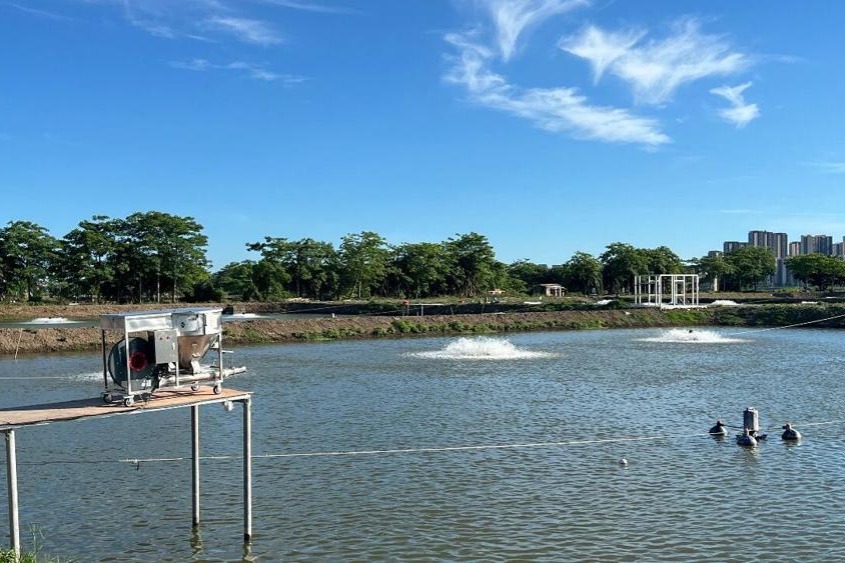
University licenses smart fish feeding system for 20 million
Huazhong Agricultural University, located in Wuhan, Hubei province, has unveiled a groundbreaking smart fish feeding system developed by its College of Fisheries. This innovative technology is designed to enhance efficiency and minimize waste in the aquaculture industry, addressing critical challenges faced by fish farmers. The university recently signed a 20-year technology licensing agreement with Sheng Ya Environment, granting the company exclusive rights to the system in exchange for 20 million yuan ($2.8 million). The smart feeding system leverages advanced algorithms and sensors to optimize feeding schedules and quantities, ensuring that fish receive the right amount of nutrition while reducing environmental impact. This development marks a significant step forward in the integration of technology into traditional industries, potentially transforming aquaculture practices globally. The licensing deal underscores the growing demand for sustainable solutions in food production and highlights the university’s commitment to fostering innovation and collaboration between academia and industry.
-

After UAE, Archer to launch flying taxi service in Saudi Arabia
Archer Aviation, the pioneering company set to introduce flying taxi services in the UAE next year, has announced its expansion into Saudi Arabia. The agreement, signed at the Dubai Airshow 2025, involves collaboration with The Helicopter Company (THC), a subsidiary of Saudi Arabia’s Public Investment Fund (PIF), and Red Sea Global (RSG), the developer behind regenerative tourism projects like The Red Sea and Amaala. The partnership aims to develop, test, and potentially integrate Archer’s Midnight eVTOL (electric vertical takeoff and landing) aircraft into RSG’s operations. The initial phase will focus on creating a structured sandbox environment to conduct real-world test flights, assessing aircraft performance, operational feasibility, regulatory compliance, passenger acceptance, and ecosystem readiness. Additionally, the collaboration will explore advanced aerial technologies, long-term strategic partnerships for large-scale deployment, and regional innovation in next-generation aviation systems. Upon completing the sandbox program, the parties will evaluate the results and consider further steps to scale eVTOL services. Archer’s CEO, Adam Goldstein, expressed enthusiasm about transforming travel within Saudi Arabia and setting a regional benchmark for aviation. THC’s CEO, Captain Arnaud Martinez, highlighted eVTOL’s potential as the future of urban transportation, while RSG’s CEO, John Pagano, emphasized the alignment of eVTOL integration with their vision for regenerative tourism.