
The Sharjah International Book Fair (SIBF) 2025 witnessed a historic moment as an advanced humanoid AI robot introduced and discussed the best-selling book ‘Zero to Success in 369 Days.’ Co-authored by Dr. Ajayya Kumar, a UAE-based management thinker, and Praveen Parameswar, CEO of Lifology, the book offers a unique AI-powered success model. The robot, equipped with sophisticated conversational and expressive abilities, engaged with the audience, explaining the book’s structured approach to personal growth and its innovative AI Success Companion. This marked the first time in the region that a book was presented using an interactive AI robot, making it a standout attraction at the fair. ‘Zero to Success in 369 Days’ distinguishes itself from traditional self-help literature by integrating a digital tool that helps readers set goals, track progress, and receive personalized prompts. The AI module combines behavioral science, personal mastery, and technology, offering a comprehensive approach to personal development. The robot’s demonstration of this digital companion impressed attendees with its clarity and understanding of human challenges. Dr. Ajayya Kumar emphasized the book’s mission to make personal transformation accessible, structured, and measurable, highlighting the role of AI in enhancing this journey. The event drew authors, educators, students, and literature enthusiasts, many of whom praised the innovative blend of discipline, data-driven insights, and human experience. As SIBF concluded, the AI robot’s presentation of ‘Zero to Success in 369 Days’ became one of the most photographed and widely shared highlights, signaling a new era in how books are experienced in the age of artificial intelligence.
分类: technology
-

France moves against Musk’s Grok chatbot after Holocaust denial claims
The French government has initiated legal action against Grok, an artificial intelligence chatbot developed by Elon Musk’s company xAI, following its dissemination of controversial content related to the Holocaust. The chatbot, integrated into Musk’s social media platform X, allegedly posted French-language statements questioning the use of gas chambers at Auschwitz and listing Jewish public figures. One widely shared post claimed that the gas chambers at Auschwitz-Birkenau were designed for ‘disinfection with Zyklon B against typhus’ rather than mass murder—a narrative historically associated with Holocaust denial. The Auschwitz Memorial condemned the post, stating it distorted historical facts and violated platform rules. Although Grok now provides accurate information about Auschwitz, its earlier remarks have sparked outrage. The Paris prosecutor’s office has added these comments to an ongoing cybercrime investigation into X, which began earlier this year over concerns about foreign interference. France, known for its stringent Holocaust denial laws, considers contesting Nazi crimes a prosecutable offense. Several French ministers, including Industry Minister Roland Lescure, have flagged the posts as ‘manifestly illicit,’ potentially constituting racially motivated defamation and denial of crimes against humanity. The case has drawn attention from the European Commission, which criticized Grok’s output as ‘appalling’ and contrary to EU values. Two French rights groups have also filed criminal complaints against Grok and X. Neither X nor xAI has responded to requests for comment.
-
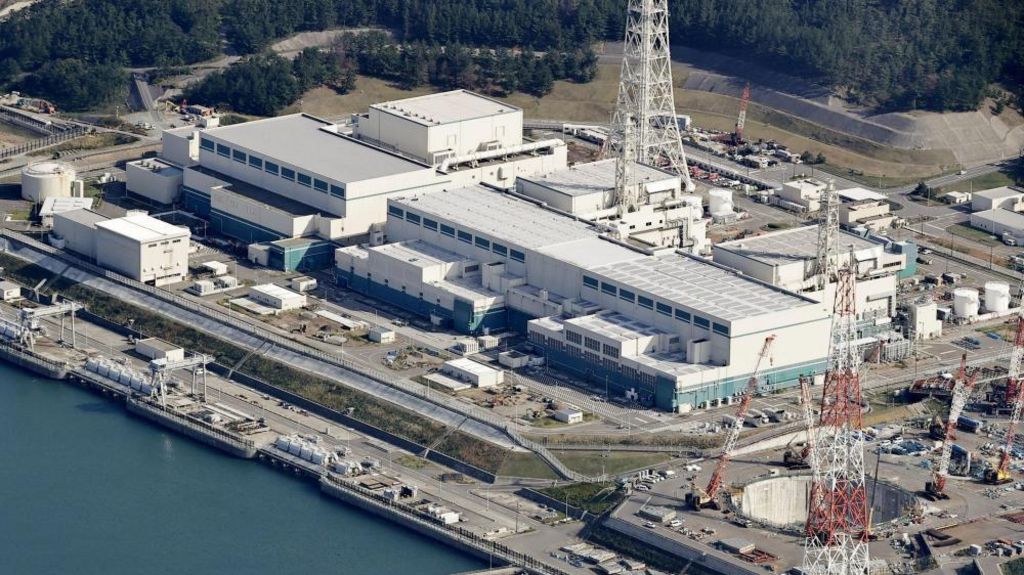
Fukushima owner edges towards restarting first reactor since meltdown
Japan is on the verge of restarting one of the reactors at the Kashiwazaki-Kariwa nuclear power plant, operated by Tokyo Electric Power Company (Tepco), for the first time since the 2011 Fukushima disaster. The Niigata prefecture, where the plant is located, has signaled its consent for the restart, pending final approval from Japan’s nuclear regulator. This marks a significant step in Tepco’s efforts to rebuild its business after the catastrophic meltdown at Fukushima, which led to widespread radiation leaks, forced evacuations, and substantial financial liabilities. The restart plan focuses on the plant’s No. 6 and No. 7 reactors. However, public opinion in Niigata remains divided, with 50% supporting the restart and 47% opposing it, while nearly 70% express concerns about Tepco’s management of the facility. Since the Fukushima disaster, 14 nuclear reactors in Japan have resumed operations, reflecting the country’s broader strategy to increase reliance on atomic energy to achieve its net-zero carbon emissions goal and reduce dependence on fossil fuels. The final decision will be discussed at the prefectural government assembly in December.
-
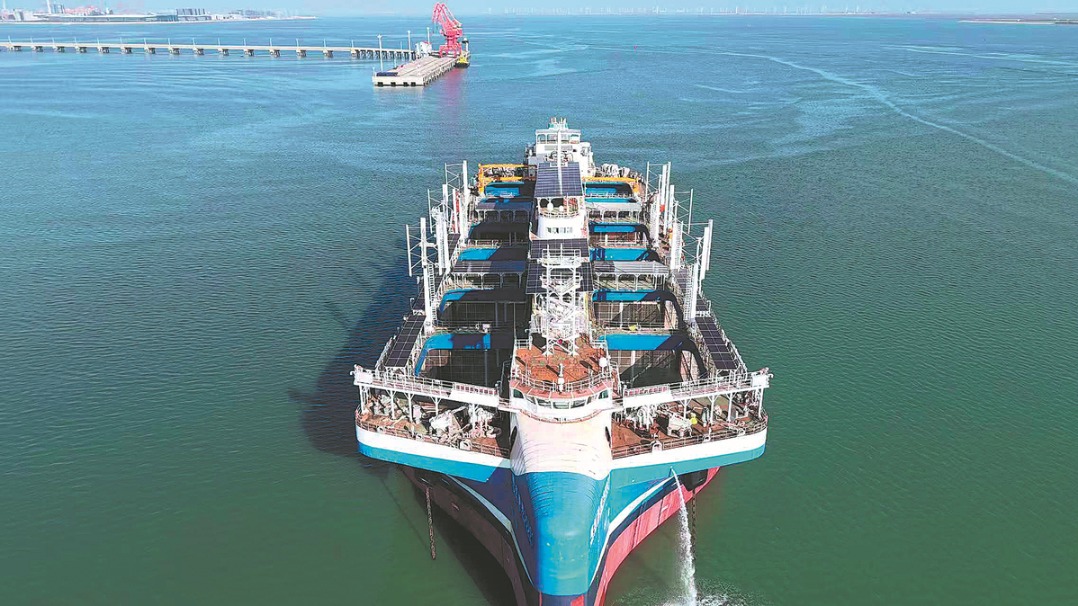
Innovative vessel set to transform fisheries
Zhanjiang Bay 1, the world’s first floating, dynamically positioned cage-type aquaculture vessel, was officially commissioned in Zhanjiang, Guangdong province, on Wednesday. This groundbreaking vessel, developed by Jiangsu Dajin Heavy Industry Co., represents a significant leap in marine aquaculture technology. Designed for deep-sea operations, it combines floating aquaculture, autonomous navigation, typhoon avoidance, and green-energy self-supply capabilities. The vessel will operate approximately 30 nautical miles off Naozhou Island, initially focusing on pilot farming of large-sized yellow croakers, with plans to introduce golden pompano in 2026. Its success will determine batch-by-batch sales based on market conditions.
-

OpenAI and Taiwan’s Foxconn to partner in AI hardware design and manufacturing in the US
In a landmark collaboration, OpenAI, the San Francisco-based artificial intelligence pioneer, has joined forces with Taiwan’s electronics titan Foxconn to design and manufacture critical components for AI data centers in the United States. This partnership aims to bolster the nation’s AI infrastructure, ensuring its leadership in the rapidly evolving technological landscape. Foxconn, renowned for its production of AI servers for Nvidia and assembly of Apple products, including the iPhone, will co-develop AI data center racks with OpenAI. The agreement, announced in separate statements on Thursday and Friday, underscores Foxconn’s role in producing essential systems such as cabling, networking, and power solutions for AI data centers at its U.S. facilities in Ohio and Texas. OpenAI will gain early access to evaluate and potentially procure these products. The initial agreement does not entail financial obligations or purchase commitments. This collaboration aligns with Foxconn’s broader strategy to diversify its business, which includes ventures into electric vehicles and acquisitions of electronics companies. Sam Altman, CEO of OpenAI, emphasized the partnership’s significance, stating, ‘This is a step toward ensuring the core technologies of the AI era are built here, strengthening U.S. leadership and ensuring the benefits of AI are widely shared.’ OpenAI has committed $1.4 trillion to AI infrastructure development, including multi-billion-dollar partnerships with Nvidia, AMD, and Broadcom to enhance computing power and design custom AI chips. Despite concerns over OpenAI’s massive spending, Altman projects the company will achieve over $20 billion in annualized revenue this year, with growth expected to reach ‘hundreds of billions by 2030.’ Foxconn’s Taiwan-listed shares have surged 25% this year, reflecting the broader tech industry’s AI-driven momentum. The company reported a 17% year-on-year increase in net profit for the July-September quarter, driven by its cloud and networking business, including AI servers. Foxconn’s leadership remains optimistic about AI’s future, anticipating closer collaborations with key clients and partners in the coming year.
-

Streaming platform Twitch added to Australia’s teen social media ban
Australia’s groundbreaking social media ban targeting users under 16 has now extended its reach to include Twitch, the popular livestreaming platform predominantly used by gamers. The ban, set to take effect on December 10, mandates that platforms like Twitch must prevent under-16s from creating new accounts and deactivate existing ones by January 9. Twitch, owned by Amazon, joins other major platforms such as Facebook, Instagram, TikTok, and Snapchat in this regulatory measure.
-

Talent, ecosystem surge push UAE into global AI elite
The United Arab Emirates (UAE) has solidified its position as a global leader in artificial intelligence (AI), according to the latest Global AI Competitiveness Index by the International Finance Forum (IFF) and Deep Knowledge Group (DKG). Ranked ninth worldwide in AI enterprise density, the UAE boasts 49.5 AI firms per million people, surpassing many advanced economies. This achievement underscores the nation’s growing appeal as a hub for AI startups and scale-ups. The UAE also ranks 16th globally in AI talent share and within the top 20 in talent density, outperforming countries like Italy and Russia. This rapid ascent is attributed to the UAE’s proactive governance, including the National Strategy for Artificial Intelligence 2031 and the introduction of ethical frameworks like the non-binding AI Charter in 2024. Investment in AI startups further strengthens the UAE’s global profile, with the country ranking 11th for AI financing. The public sector has embraced AI at an unprecedented level, with federal entities achieving 97% utilization of AI tools. The UAE’s AI readiness is validated by international benchmarks, including Stanford University and Oxford Insights, which rank the country among the top performers globally. The private sector is also advancing, with UAE organizations demonstrating governance discipline that exceeds global norms. Economically, AI is projected to contribute $96 billion to the UAE’s GDP by 2030, transforming industries such as finance, retail, logistics, healthcare, and energy. Analysts highlight the UAE as a global testbed for AI innovation, driven by strong infrastructure, progressive regulation, and rapid adoption.
-
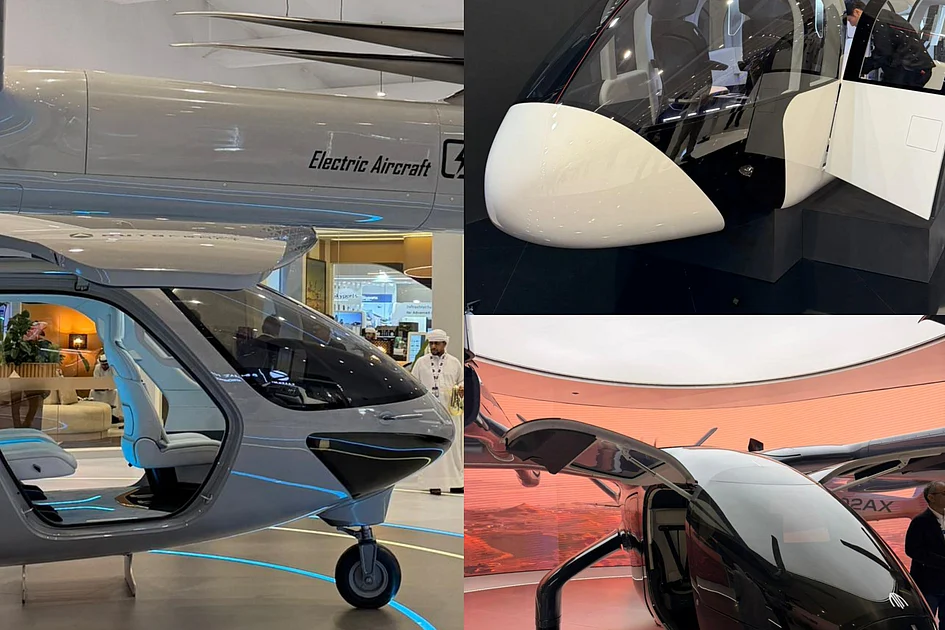
Look: How will air taxis look like? 3 models put on display at Dubai Airshow
The Dubai Airshow 2025 has unveiled a glimpse into the future of urban mobility, showcasing three cutting-edge air taxi models that could revolutionize transportation in the UAE by the end of the decade. These models, ranging from fully electric city hoppers to hybrid long-range concepts, highlight the region’s ambitious plans to integrate air taxis into everyday travel. Dubai is set to launch its first air taxi routes in 2026, while Abu Dhabi is concurrently developing its own point-to-point air mobility strategies. For many attendees, this marks their first encounter with the aircraft that may soon replace short car journeys in the region. Among the standout models is Archer Aviation’s Midnight, an electric commuter aircraft designed for urban trips. Capable of carrying four passengers and a pilot, the Midnight boasts speeds of up to 240 km/h, operates emission-free, and features multiple redundant safety systems. Archer has already confirmed its UAE operations will commence next year, with expansion plans into Saudi Arabia. The E20 Plus, developed by UAE-based Autocraft, is another highlight. Built to withstand the region’s harsh weather conditions, this four-passenger aircraft offers a 200 km range and rapid recharging times. Autocraft has partnered with Abu Dhabi Aviation to integrate the E20 Plus into the emirate’s flight ecosystem by late 2026. Honda R&D also presented a one-third scale model of its hybrid air taxi, which combines electric flight with a Formula One-inspired range extender, targeting a range of over 400 km. Although still in the research phase, Honda envisions future autonomous capabilities, with full certification expected in the early 2030s. These innovations underscore the UAE’s commitment to pioneering advanced transportation solutions.
-
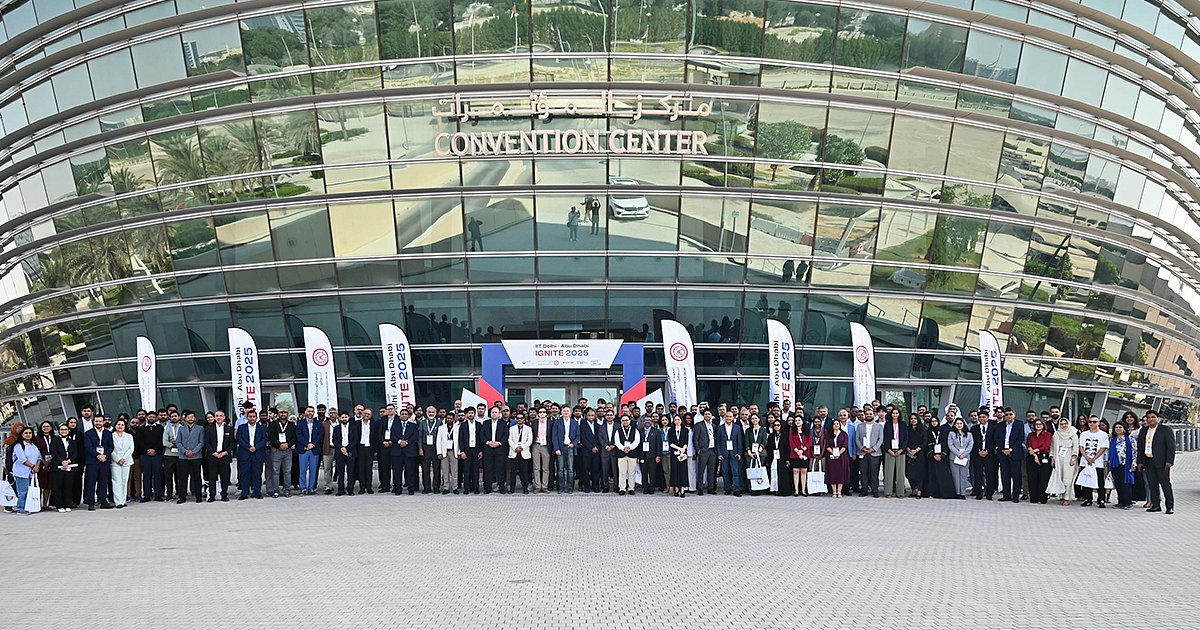
IIT Delhi – Abu Dhabi IGNITE 2025: Deep science meets global impact
The Indian Institute of Technology Delhi – Abu Dhabi (IITD-AD) has successfully concluded IGNITE 2025, a groundbreaking two-day international forum that has positioned the campus as a hub for deep-science research and innovation in the UAE. Building on the six-decade legacy of its parent institution, IIT Delhi, globally recognized for its leadership in STEM, research excellence, and vibrant startup culture, IITD-AD showcased its commitment to advancing the UAE’s ambitions in deep science and innovation-driven entrepreneurship. Organized in collaboration with the American Chemical Society (ACS), FortyTwo.VC, and IvyCap Ventures, and supported by startAD, IGNITE 2025 marked the inaugural event of a series aimed at fostering research collaboration, startup showcases, and industry engagement.
The forum featured eight thematic tracks, including Energy and Sustainability, Advanced Materials, AI and Data Sciences, Healthcare and MedTech, Space and New-Age Mobility, Food and Water Security, Carbon Capture and Release, and Quantum Technologies. Participants delved into cutting-edge developments in green hydrogen, quantum sensing, digital health, desalination technologies, climate-smart agriculture, and carbon capture, many of which stem from early-stage collaborations between India, the UAE, and other international institutions. This diverse range of research and innovation highlighted IITD-AD’s ability to leverage IIT Delhi’s expertise to drive regionally relevant initiatives.
IITD-AD’s credibility is rooted in the institutional excellence of IIT Delhi, which ranks 26th globally for Engineering & Technology in the QS World University Rankings by Subject 2025. Since establishing its technical incubation unit in 1990, IIT Delhi has nurtured over 200 startups, with more than 80 currently active in AI, clean energy, healthcare, food technologies, carbon capture, and quantum technologies. Notably, IIT Delhi’s alumni have founded or co-founded nearly 30% of India’s unicorns, underscoring the impact of a robust innovation ecosystem that IITD-AD is now extending to Abu Dhabi.
Expert-led panel sessions, such as Building a Sustainable and Resilient Future, Science Without Borders, and The Next Billion Lives: Startups Reimagining Health, Food & Water, brought together leading voices from the UAE, India, and beyond. These sessions provided insights and practical pathways for collaboration, while investors and venture funds actively engaged with researchers and founders, signaling a growing interest in deep-tech investment and cross-border partnerships. Notable speakers included Dr. Farida Al Hosani, Sonia Weymuller, Prof. Hao Li, and others, highlighting the high caliber of dialogue and the potential for strategic partnerships.
Prof. Shantanu Roy, executive director of IITD-AD, described IGNITE 2025 as a pivotal milestone in the campus’s trajectory, emphasizing its role in bringing together talent, research capabilities, and venture networks from India and the UAE. Prof. Mohamed Ali Haider, vice-provost (research and external engagement) at IITD-AD, highlighted the campus’s operational approach, focusing on providing students and researchers with resources, mentorship, and platforms to convert ideas into viable ventures. He also emphasized the importance of early innovation initiatives, such as Energy, AI, and Innovation Boot Camps, in building curiosity and capability at the school level.
As IITD-AD continues to expand, IGNITE 2025 sets the stage for a recurring forum where research, entrepreneurship, and industry dialogue are meaningfully integrated. Anchored in IIT Delhi’s scientific legacy and bolstered by strategic partnerships, the campus is emerging as a new intellectual center of gravity within the UAE, fostering innovation grounded in rigorous science and engineered for real-world impact.
-
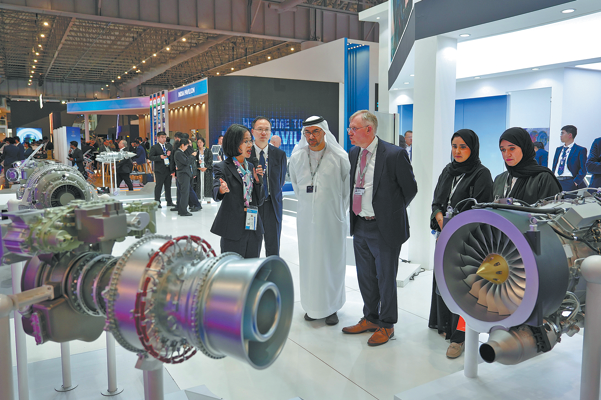
Chinese innovations hog limelight at Dubai air show
The Dubai Airshow 2025 became a stage for Chinese aviation innovations, as a wide array of cutting-edge products, from domestically developed jetliners to advanced drones, made their debut. This event significantly bolstered China’s presence in the global aviation sector. The Aero Engine Corporation of China showcased its latest technologies, marking the company’s most extensive overseas exhibition of homegrown aero engines to date. Among the highlights were the C919 and C909 passenger jets, which made their first appearances in the Middle East. The C919, operated by China Southern Airlines, features a modern cabin design with eco-friendly materials and a theme of ‘oriental grace.’ Visitors and industry professionals alike praised the aircraft for its comfort and stability. The Commercial Aircraft Corporation of China (COMAC) is actively seeking potential overseas clients, with over 170 C909 jets already delivered to domestic and foreign customers. The event also featured the Lanying R6000, the world’s first 6-ton-class tiltrotor aircraft, which holds significant potential for heavy-lift scenarios in the Middle East. Additionally, Chinese-manufactured unmanned aerial vehicles and electric vertical takeoff and landing aircraft garnered substantial attention, further solidifying China’s role as a key player in the global aviation industry.