
BSH Home Appliances is pioneering a new era of home living by seamlessly integrating artificial intelligence (AI) and Home Connect technology across its brand portfolio. This innovative approach is redefining how individuals interact with their homes, offering smarter, more personalised experiences that enhance comfort and convenience. At the forefront of this transformation is Siemens, one of BSH’s leading brands, which is leveraging AI to elevate lifestyle and well-being while fostering meaningful relationships and environmental sustainability.
分类: technology
-

Malaysia to ban social media for children under 16 next year
Malaysia has announced plans to prohibit individuals under the age of 16 from accessing social media platforms starting in 2026, aligning itself with global efforts to impose stricter digital age restrictions for minors. Communications Minister Fahmi Fadzil revealed that the Cabinet has approved this initiative as part of a comprehensive strategy to protect young people from online risks such as cyberbullying, scams, and sexual exploitation. The government is currently examining age verification methods, including the potential use of electronic checks linked to identity cards or passports, though the exact enforcement timeline remains unspecified. Fadzil emphasized the importance of collaboration between the government, regulatory bodies, and parents to ensure a safe digital environment for children and families. This move follows Malaysia’s recent mandate requiring major social media platforms with over 8 million users to obtain licenses and implement age verification and content-safety measures. Australia, which recently enacted the world’s first social media ban for children under 16, has set a precedent for such measures, with other countries like Denmark and Norway also exploring similar restrictions. The global trend reflects growing concerns about the adverse effects of social media on young users.
-

China’s mountainous Guizhou set to launch regular low-altitude drone logistics route
The southwestern Chinese province of Guizhou is poised to launch its first regular low-altitude drone logistics route this year, marking a significant advancement in regional transportation. This initiative follows a successful trial flight of a domestically developed electric vertical takeoff and landing (eVTOL) aircraft, which transported emergency medicines and agricultural products across 118 kilometers in just 40 minutes. The journey, which typically takes over two hours by traditional ground transport through Guizhou’s challenging karst landscape, demonstrates the potential of drone technology to revolutionize logistics in mountainous areas. The V2000CG CarryAll, developed by Shanghai-based AutoFlight, is the only eVTOL globally with a maximum takeoff weight exceeding 1 tonne to have obtained all three required Chinese aviation certificates. With a payload capacity of up to 400 kg and a maximum cruising speed of 200 km per hour, this aircraft is set to enhance Guizhou’s low-altitude economy, support rural revitalization, and modernize logistics. The province plans to expand the route’s applications to include passenger tourism and commuter transport in the future. China’s low-altitude economy is experiencing rapid growth, with its market value projected to soar from 500 billion yuan in 2023 to 3.5 trillion yuan by 2035.
-

Touch base for Hong Kong’s space economy
Hong Kong is emerging as a pivotal hub for the burgeoning space economy, leveraging its unique position as a global superconnector and its robust legal framework. The recent successful yet delayed return of the Shenzhou XX mission crew, due to space debris, has underscored the urgent need for advanced legal and regulatory mechanisms to address the complexities of space commercialization.
-

Platforms face stringent new privacy rules
China has unveiled a comprehensive set of draft regulations aimed at bolstering personal information protection and ensuring the secure handling of data by large online platforms. Released jointly by the Cyberspace Administration of China (CAC) and the Ministry of Public Security, the draft seeks to enhance individual rights and foster the sustainable growth of the platform economy. Key provisions mandate that personal data collected and generated within China must be stored domestically. Any cross-border data transfers must adhere to stringent national security protocols. Platforms are required to implement robust technical and managerial safeguards to mitigate risks associated with unauthorized overseas data transfers. Additionally, the draft emphasizes the need for data centers to meet national security standards and be located within China. Service providers must offer users accessible methods to manage their personal information, including options to access, correct, supplement, delete, or transfer their data. In cases of severe lapses in data protection—such as repeated violations or large-scale breaches affecting over a million individuals—platforms may face compliance audits and risk assessments conducted by third-party experts. The draft also encourages the adoption of advanced technologies like national network identity authentication and data labeling to elevate data security. Public feedback on the draft is being accepted until December 22, with authorities committed to responding to complaints within 15 working days. The CAC and Ministry of Public Security have underscored the importance of maintaining confidentiality for all parties involved in handling sensitive information.
-
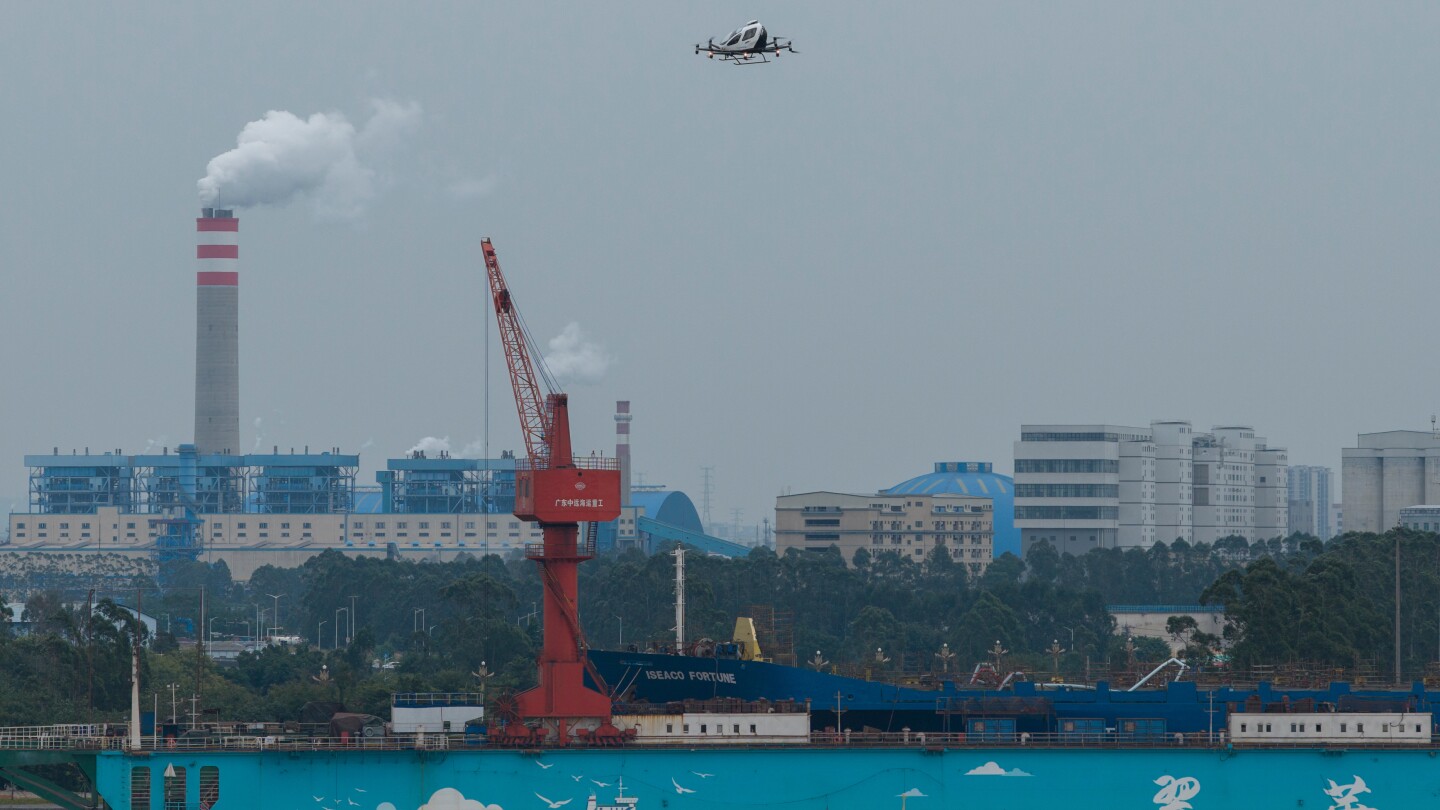
Takeoff of China’s flying taxis hits turbulence
In the bustling innovation zones of Guangzhou and Shenzhen, China’s technological prowess is taking to the skies. EHang, a leading flying taxi manufacturer, recently showcased its unmanned, oval-shaped craft hovering over a riverside area, resembling a scene straight out of a sci-fi movie. Meanwhile, in Shenzhen, food-delivery drones have become a daily convenience and a tourist attraction, despite their higher costs. Polish tourist Karolina Trzciańska marveled at the novelty of receiving her bubble tea via drone, calling it a ‘super fun’ experience.
-

UAE women leaders back AI as key to gender equality amid regional push for inclusion
Women leaders in the United Arab Emirates (UAE) are increasingly viewing artificial intelligence (AI) as a pivotal force in advancing gender equality within the technology sector. Despite persistent structural challenges, a recent survey by Cloudera reveals that 91% of female IT leaders in the UAE anticipate achieving gender parity in AI leadership within the next five years. This optimism underscores the transformative potential of AI in fostering a more inclusive tech landscape. The survey highlights that 88% of respondents believe AI will play a crucial role in promoting gender balance, while an equal percentage are confident that women will significantly influence future AI strategies and governance. However, concerns remain. Nearly half (46%) of the respondents expressed worries about the scarcity of women in senior AI roles, and 44% fear that underrepresentation could lead to biases being embedded into AI systems. Additionally, 52% identified limited opportunities at the top as a major hurdle, and 84% emphasized the need for organizations to provide targeted AI training for women. Eman Gammoh, Head of AI at Arab Bank, remarked, ‘Women are not only participating; we are key drivers, fundamentally shaping the future of AI strategy and governance.’ Manasi Vartek, Chief AI Architect at Cloudera, stressed the importance of a unified data foundation and targeted training for women to ensure trustworthy AI. The UAE’s efforts align with broader regional initiatives. The UAE Gender Balance Council has achieved significant milestones, with women constituting 70% of university graduates and 56% of STEM graduates at public universities. Saudi Arabia has also surpassed its Vision 2030 target for female labor force participation, reaching 36.3% in early 2025. Corporate strategies are evolving, with 78% of Middle Eastern women business leaders expressing confidence in growth, though nearly half seek clearer AI and ESG strategies. Programs like She Leads 2025 are equipping women entrepreneurs across the Middle East and North Africa (MENA) with AI skills and leadership training, fostering a regional network for inclusive innovation. Despite these advancements, two-thirds of respondents believe gender equality is often treated as a ‘tick-box exercise,’ and 64% cite limited access to upskilling as a critical bottleneck. The Middle East’s tech ambitions are clear, with women increasingly at the forefront of this transformation. However, as AI reshapes industries, the question remains whether structural reforms will keep pace with technological advancements.
-

Dubai’s Secure.com secures $4.5m to launch AI agents amid soaring cyber threats
Dubai-based cybersecurity startup Secure.com has secured $4.5 million in funding from Disrupt.com to accelerate the deployment of its AI-driven Digital Security Teammate (DST) platform. This innovative solution aims to address the critical talent shortage in the cybersecurity industry, which has reached a crisis level with 4.8 million unfilled roles globally. The funding comes at a time when global cybercrime damages have surged to $10.5 trillion, according to Cybersecurity Ventures, and the Middle East faces an average breach cost of $7.29 million per incident. Despite these alarming figures, only half of affected companies in the region plan to increase their security budgets. Secure.com’s DST platform is designed to alleviate the operational pressures on security teams by acting as virtual colleagues embedded within existing security systems. These AI agents investigate alerts, triage incidents, and handle compliance tasks, reducing noise by 60% and saving thousands of analyst hours annually. Early deployments in finance, healthcare, and tech sectors have demonstrated significant improvements, including 70% faster threat detection and 50% quicker resolution times. The platform’s affordability, starting at $2,500 per month, makes enterprise-grade cybersecurity accessible to mid-market organizations with limited resources. Secure.com’s initiative aligns with the Middle East’s broader strategy to position itself as a hub for next-generation technologies and global cybersecurity standards. Uzair Gadit, CEO of Secure.com, emphasized the urgency of leveraging AI to combat the escalating cyber threat landscape, stating, ‘You cannot hire your way out of a $10.5 trillion threat. You need leverage. Digital Security Teammates deliver that leverage—today.’
-

Charging your phone in public transport? 79% of UAE travellers risk cyber theft
The UAE Cyber Security Council has issued a stark warning to the public about the dangers of using untrusted charging ports, particularly in public transport settings. According to the Council, a staggering 79% of travellers in the UAE unknowingly put their personal data at risk by charging their devices at unsecured public stations. These ports can harbor malicious software or hidden systems that exploit media transfer protocols, enabling cybercriminals to access personal data through ‘juice jacking’ attacks. The Council emphasized that such practices can lead to data theft, password breaches, or the covert installation of harmful software on mobile devices. Additionally, 68% of companies have reportedly suffered attacks originating from untrusted charging ports, resulting in significant data breaches and compromised digital infrastructure. To mitigate these risks, the Council has advised travellers to carry personal chargers, avoid public charging stations, and reject any data-transfer requests during charging. Other preventive measures include enabling two-factor authentication, using biometric login features, and regularly reviewing app permissions. The Council also highlighted the importance of verifying the safety of installed applications, as some may contain malicious software capable of enabling financial fraud or stealing sensitive information. As part of its ongoing efforts to enhance cybersecurity awareness, the UAE Cyber Security Council has launched the Cyber Pulse initiative, a weekly campaign aimed at educating the public on safe digital practices and countering cyber threats. This initiative is a key component of the UAE’s broader strategy to create a secure cyberspace, foster trust in the digital ecosystem, and ensure the safety and privacy of all users.
-

In Ukraine’s ‘kill-zone’, robots are a lifeline to troops trapped on perilous eastern front
In the ongoing conflict in eastern Ukraine, the Fifth Brigade of the Ukrainian army has deployed unmanned ground vehicles (UGVs) to deliver critical supplies to troops on the frontline in Pokrovsk and Myrnograd. These robotic devices, often referred to as ‘land drones,’ have become indispensable in a region where Russian forces are aggressively targeting supply routes. The UGVs, resembling mini tanks without turrets, are small, agile, and capable of navigating narrow paths, making them ideal for transporting food, ammunition, and fuel to soldiers in perilous conditions.