Tetra Pak Arabia has unveiled its cutting-edge automation and digital solutions portfolio, Tetra Pak® Factory OS™, at Gulfood Manufacturing 2025 in Dubai. This innovative ecosystem aims to transform traditional food and beverage (F&B) production facilities into intelligent, energy-efficient, and AI-ready factories across the Middle East. The launch comes as the region’s F&B sector is projected to grow at a 6.5% compound annual growth rate (CAGR) from 2025 to 2031. Middle Eastern producers face significant challenges, including rising energy costs, water scarcity, cyber threats, talent shortages, and supply chain disruptions. Tetra Pak® Factory OS™ addresses these issues by integrating equipment and systems, converting fragmented data into real-time insights, and enhancing operational efficiency. The modular platform supports scalable growth, enabling producers to start small and expand as needed. Powered by advanced technologies such as edge computing, cloud connectivity, and robust cybersecurity, the system offers real-time performance visibility, predictive intelligence, and seamless AI integration. Konstantin Kolesnik, Managing Director of Tetra Pak Arabia Area, emphasized the platform’s role in reducing import dependency, strengthening food security, and unlocking economic value. Leading regional producers, including Al Rabie, National Food Products Company (NFPC), and National Dairy (Hayatna), are already leveraging Tetra Pak’s solutions to modernize operations. Tetra Pak® Factory OS™ is now globally available and showcased at Gulfood Manufacturing 2025, Booth A2-42, Hall 2.
分类: technology
-

AVEVA highlights the role of industrial intelligence in enabling net-zero energy at ADIPEC 2025
AVEVA, a global leader in industrial software, is set to make a significant impact at ADIPEC 2025, scheduled to take place in Abu Dhabi from November 3-6, 2025. The company will highlight its CONNECT platform, an advanced industrial intelligence solution powered by AI, designed to revolutionize the energy sector. CONNECT aims to unify data, provide actionable insights, and enhance operational agility, aligning with the UAE’s ambitious Net Zero 2050 strategy.
At the event, AVEVA will utilize augmented and virtual reality to demonstrate how CONNECT supports every phase of the industrial lifecycle—from design and construction to operation, maintenance, and optimization. The platform empowers organizations to innovate, improve performance, and achieve sustainability goals in an increasingly digital and competitive landscape.
The UAE’s commitment to transitioning to a low-carbon economy and diversifying its energy mix is underscored by initiatives like the UAE Net Zero 2050 Strategy. AVEVA’s solutions are tailored to help energy companies integrate engineering, operations, and performance seamlessly, enabling them to execute projects more efficiently, enhance asset reliability, and make measurable progress toward net-zero objectives.
Jesus Hernandez, Senior Vice President of EMEA at AVEVA, emphasized the role of technology in this transition: ‘Our tools, from digital twins to AI-driven analytics, are helping companies optimize operations, improve asset reliability, and advance toward net-zero goals. We’re excited to engage with regional customers and partners at ADIPEC to showcase how our solutions can navigate this complex transformation while boosting performance and agility.’
Nayef Bou Chaaya, Vice President for the Middle East, Africa, and Turkey at AVEVA, highlighted the challenges facing the energy sector: ‘Organizations are grappling with project execution, CAPEX efficiency, unplanned downtime, and operational inefficiencies. There’s also growing pressure to meet sustainability targets, particularly in emissions tracking and reporting. At ADIPEC, we’ll demonstrate how Industrial Intelligence-as-a-Service can unlock efficiency, sustainability, and growth by combining AI, data, and human expertise.’
Visitors to Hall 4, Stand 4410 will have the opportunity to experience CONNECT firsthand. The platform, featuring the world’s largest industrial software ecosystem and an intelligent digital twin, integrates insights across the industrial landscape. Live demonstrations will illustrate how organizations can enhance performance, advance sustainability, and maximize return on investment.
-

OpenAI clarifies ChatGPT’s limits after viral claims about legal, medical advice
OpenAI has recently clarified the boundaries of its AI chatbot, ChatGPT, following widespread claims on social media and in various media outlets that the platform had ceased offering legal, medical, and financial advice. The company emphasized that while ChatGPT can provide explanations and general information, it is not designed to offer personalized advice or recommendations in these critical fields. This clarification aligns with OpenAI’s ongoing efforts to refine its policies, balancing user freedom with safety and accountability. The discussion gained traction after media outlet Nexta shared a post on X, stating that ChatGPT had been officially labeled an ‘educational tool’ and would no longer provide specific guidance on treatment, legal issues, or financial matters. OpenAI’s Usage Policies page, last updated on October 29, explicitly prohibits the provision of tailored advice in licensed fields without the involvement of a licensed professional. Karan Singhal, OpenAI’s head of health AI, addressed the confusion on X, stating that this was not a new change and that ChatGPT has always been a resource for understanding legal and health information, not a substitute for professional advice. OpenAI’s policies also restrict the automation of high-stakes decisions in sensitive areas without human review, including legal, medical, financial, housing, employment, and insurance matters. While no major lawsuits have emerged over ChatGPT’s advice, experts believe this clarification underscores the risks of AI in regulated fields. OpenAI’s stance also reflects a broader industry shift toward regulated and accountable AI use, as legal scrutiny on AI deepens. The company is already facing lawsuits from authors, publishers, and media organizations alleging unauthorized use of copyrighted material to train AI models. Experts continue to call for stronger AI regulation, arguing that clear frameworks are essential to prevent misuse in sensitive areas like healthcare, law, and finance. For users, the update reinforces that ChatGPT should be treated as an information aid, not a professional adviser. For regulators and businesses, it marks another step in the industry’s move toward clearer boundaries, as global conversations around AI safety, liability, and governance continue to evolve.
-

Dubai Holding and Palantir launch Aither to drive AI transformation Across UAE
In a groundbreaking initiative to propel artificial intelligence (AI) adoption across the United Arab Emirates (UAE), Dubai Holding and Palantir Technologies have jointly launched Aither, a transformative venture designed to revolutionize both public and private sectors through advanced AI solutions. The announcement was made during a high-profile signing ceremony in Dubai, attended by Sheikh Ahmed bin Saeed Al Maktoum, Chairman of Dubai Holding, and Mohamed bin Hadi Al Hussaini, Minister of State for Financial Affairs. The agreement was formalized by Amit Kaushal, Group CEO of Dubai Holding, and Noam Perski, Executive Vice President at Palantir.
Aither represents Palantir’s first joint venture in the UAE and solidifies an 18-month collaboration between the two entities. Since early 2024, Dubai Holding has been integrating Palantir’s AI and data platforms across its diverse portfolio, which includes real estate, hospitality, finance, and infrastructure. This partnership has already yielded significant improvements in operational efficiency, decision-making speed, and data visibility.
Amit Kaushal emphasized that Aither is more than a technological initiative; it is a national platform aimed at institutionalizing AI excellence. “We are extending proven capabilities to the wider market, supporting Dubai’s digital ambitions and the UAE’s goal to accelerate economic diversification,” he stated. The venture aligns with the Dubai Economic Agenda D33, which seeks to generate Dh100 billion annually through digital transformation. Aither will act as a catalyst for this vision by providing scalable AI solutions to strategic sectors, enabling organizations to unlock new value streams and enhance competitiveness.
Palantir CEO Alex Karp expressed pride in the partnership, highlighting the potential to empower UAE institutions with Palantir’s world-leading AI capabilities. Beyond technology deployment, Aither will focus on localizing the economic value of Palantir’s platforms. This includes knowledge transfer, talent development, and the establishment of governance frameworks to ensure responsible AI implementation across industries.
Dubai Holding’s extensive portfolio, which includes real estate, hospitality, entertainment, media, and investments, provides a strong foundation for Aither’s operations. Brands such as Nakheel, Meraas, and Jumeirah have already benefited from AI-driven enhancements, setting a precedent for broader adoption. The joint venture underscores Dubai’s leadership in deploying secure, sovereign, and high-impact AI applications. By combining Palantir’s cutting-edge software with Dubai Holding’s market insight, Aither is poised to become a cornerstone of the UAE’s digital transformation strategy.
-

Paris prosecutor’s office investigates TikTok over youth suicide content
The Paris prosecutor’s office has initiated an investigation into TikTok, following allegations that the platform facilitates the dissemination of content promoting suicide and that its algorithms may be influencing vulnerable young individuals towards self-harm. This development comes in the wake of a lawsuit filed by several French families, a parliamentary inquiry into TikTok’s psychological impact on children, and reports from Amnesty International and the French Senate highlighting similar concerns. The investigation will scrutinize content that promotes suicide and assess whether TikTok has complied with its obligations to report such violations to the authorities. TikTok has denied the allegations, emphasizing its commitment to teen safety through numerous pre-set features and the removal of 90% of violative videos before they are viewed. The Paris police cybercrime brigade will explore potential crimes, including the promotion of methods for self-harm and illicit transactions linked to organized crime. Convictions could result in significant prison sentences and fines. This case follows a lawsuit last year by seven French families, two of whom lost children, accusing TikTok of inadequate content moderation and exposing minors to harmful material. One mother, Stephanie Mistre, discovered that TikTok’s algorithm had repeatedly shown her deceased daughter, Marie Le Tiec, videos encouraging suicide. TikTok and other social media platforms are increasingly under global scrutiny for their role in inciting violence and bullying, particularly among younger users.
-

Xpeng’s flying car factory begins trial operations in Guangzhou
Xpeng AeroHT, a subsidiary of the Chinese electric vehicle giant Xpeng, has initiated trial operations at its groundbreaking flying car manufacturing facility in Guangzhou, Guangdong province. The factory, located in Huangpu district—a burgeoning hub for science and technology—marks a significant milestone in the development of the low-altitude economy. The first product to emerge from the production line is the innovative Land Aircraft Carrier, a hybrid vehicle designed for both road and air travel. The facility boasts an initial annual production capacity of 5,000 units, with plans to double this output in the future. At full capacity, the factory will produce one aircraft every 30 minutes. The Huangpu district government has lauded the facility as the world’s first mass production line for flying cars. The initial batch of vehicles will undergo rigorous test flights to validate performance and craftsmanship, paving the way for commercial deliveries next year. The factory’s assembly line, which includes advanced processes such as composite material integration, power systems, connection, painting, and final assembly, sets a new benchmark for the industry. The Land Aircraft Carrier features a three-axle, six-wheel design with 6×6 all-wheel drive and rear-wheel steering, ensuring superior off-road capabilities. Its compact design allows it to fit into standard parking spaces and underground garages, enhancing its practicality. The factory is expected to bolster the Guangdong-Hong Kong-Macao Greater Bay Area’s industrial cluster and strengthen China’s position in the global low-altitude economy. This development underscores China’s commitment to innovation and its ambition to lead in emerging technologies.
-

Nothing surprising in China’s innovative rise
China’s rapid advancements in high-tech fields such as artificial intelligence, quantum computing, electric vehicles, and green energy have caught many Western observers by surprise. Long perceived as a nation of imitators, China is now increasingly recognized as a formidable innovator. However, this narrative overlooks a rich history of Chinese ingenuity that dates back millennia. From the Zhou and Qin dynasties to the flourishing eras of the Han, Tang, Song, and Ming, China consistently stood at the forefront of global innovation. The current technological resurgence is not a sudden awakening but a revival of a tradition interrupted by colonialism and internal strife. Historically, Chinese innovations—ranging from paper, printing, the compass, and gunpowder to advanced hydraulic engineering and metallurgical techniques—have profoundly shaped global civilization. British historian Joseph Needham documented China’s leadership in applied technologies for centuries, even without an Industrial Revolution in the Western sense. Today, China’s innovation ecosystem is thriving, evidenced by its entry into the Global Innovation Index’s Top 10 in 2025 and its dominance in global patent filings, particularly in generative AI. This resurgence challenges the Western-centric narrative of innovation and underscores China’s role as a civilizational innovator returning to its historical prominence.
-

Chinese medical team performs remote 5G robotic eye surgery over 4,000 km away
In a groundbreaking medical feat, a Chinese surgical team has successfully performed a remote robotic eye surgery spanning over 4,000 kilometers, leveraging advanced 5G technology. The procedure, a retinal injection, was conducted on Sunday by surgeons in Guangzhou, who remotely controlled a robotic arm at a hospital in Urumqi, Xinjiang Uygur Autonomous Region. This marks a significant advancement in using technology to address the disparity in medical resources between China’s developed coastal cities and its remote regions. The surgery, executed with micron-level precision, involved guiding a microscopic needle to the retina, piercing it to a predetermined depth, and administering medication. The entire process was completed in under seven minutes, with the 5G network ensuring seamless communication and the robotic arm operating without tremor. Retinal sub-injection is a highly delicate technique used to treat vision-threatening conditions like submacular hemorrhage. Dr. Lin Haotian, the project lead from Sun Yat-sen University’s Zhongshan Ophthalmic Center, hailed the surgery as a pivotal step in transitioning remote high-precision ophthalmic surgery from feasibility to practicality in China. This achievement underscores the potential of 5G and robotics in revolutionizing healthcare delivery, particularly in underserved areas.
-

Microsoft receives licence to export thousands of AI chips to UAE
Microsoft has announced a groundbreaking development in its collaboration with the United Arab Emirates (UAE), securing approval to export tens of thousands of advanced Nvidia AI chips to the Gulf state. This move paves the way for a significant $7.9 billion investment in data centers, cloud computing, and AI projects over the next four years. The export licenses, approved during both the Trump and Biden administrations, allow Microsoft to ship the equivalent of 60,400 Nvidia A100 chips, each costing upwards of $9,000, to the UAE. These chips, designed for artificial intelligence, machine learning, and data center analytics, are manufactured primarily in Taiwan by the Taiwan Semiconductor Manufacturing Company (TSMC).
Microsoft’s investment strategy in the UAE includes a $1.5 billion equity stake in G42, an AI company managed by the UAE’s national security advisor, Sheikh Tahnoon bin Zayed al-Nahyan. Between 2023 and 2025, Microsoft plans to spend over $7.3 billion in the UAE, with an additional $7.9 billion allocated from 2026 to 2029. This includes $5.5 billion for expanding AI and cloud infrastructure and $2.4 billion for local operating expenses.
The agreement aligns with a US model where American tech companies build and manage data centers in Gulf states, ensuring controlled access to advanced technology. While the original US-UAE agreement envisioned exporting 500,000 of Nvidia’s most advanced AI chips annually starting in 2025, including 100,000 directly to G42, no such direct imports have been announced yet.
Microsoft’s ability to secure these export licenses underscores its commitment to meeting stringent cybersecurity and national security requirements. The company has already accumulated the equivalent of 21,500 Nvidia A100 GPUs in the UAE during the Biden administration. This development highlights the UAE’s growing role as a hub for AI innovation, competing with Saudi Arabia for access to cutting-edge AI chips and leveraging its abundant, low-cost energy to attract global tech investments.
-

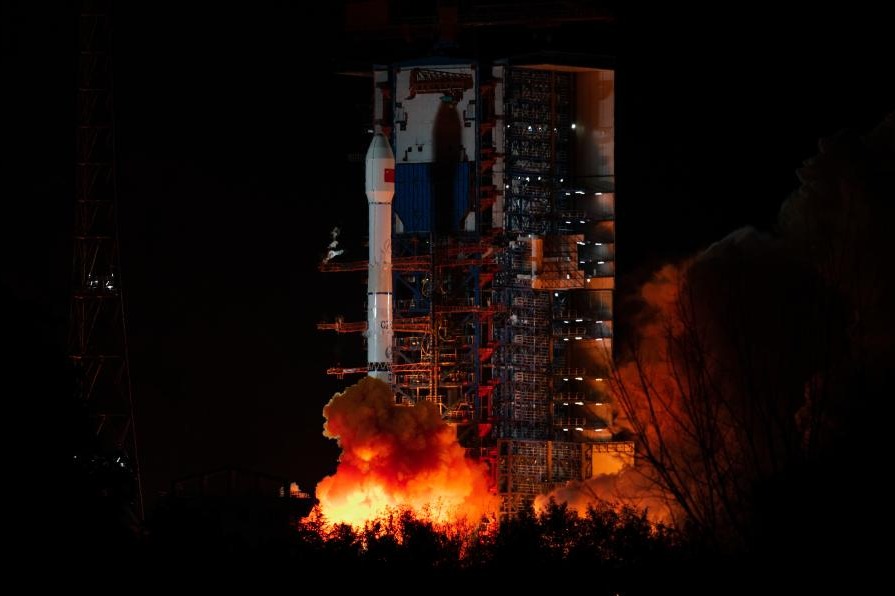
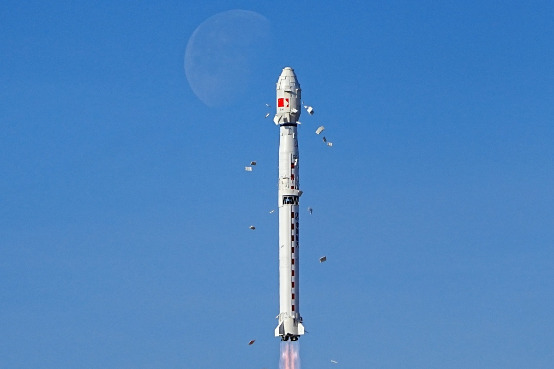
China and the US race to the Moon – but first, Musk vs. Bezos
The United States and China are engaged in a high-stakes competition to return humans to the Moon, marking the first such endeavor in over 50 years. However, a new twist has emerged within the US space industry: a rivalry between American companies vying to develop the lunar lander that could secure victory for the nation in this renewed space race. At the center of this contest are two billionaire titans, Elon Musk and Jeff Bezos, whose companies, SpaceX and Blue Origin, are now locked in a battle for NASA’s Artemis III mission contract. SpaceX, initially awarded the $4.4 billion contract in April 2021, has faced delays and technical challenges with its Starship vehicle, prompting NASA’s acting chief, Sean Duffy, to open the contract to competitors. Despite SpaceX’s progress, including 11 test flights since April 2023, concerns over launch safety and orbital refueling technologies have raised doubts about its ability to meet the 2027 mission deadline. Meanwhile, China’s ambitious plan to land astronauts on the Moon by 2030 has heightened pressure on the US to accelerate its efforts. Blue Origin and Lockheed Martin have emerged as potential contenders, with Blue Origin exploring modifications to its Mark 1 lander and Lockheed Martin assembling a consortium to develop a lander based on Apollo-era designs. The competition has also sparked a public feud between Musk and Duffy, further complicating NASA’s leadership and strategic direction. As the race to the Moon heats up, the outcome of this contest will not only shape the future of space exploration but also determine which nation—and which company—will lead humanity’s next giant leap.