分类: technology

  • New rocket set to debut soon, launch six satellites

    New rocket set to debut soon, launch six satellites

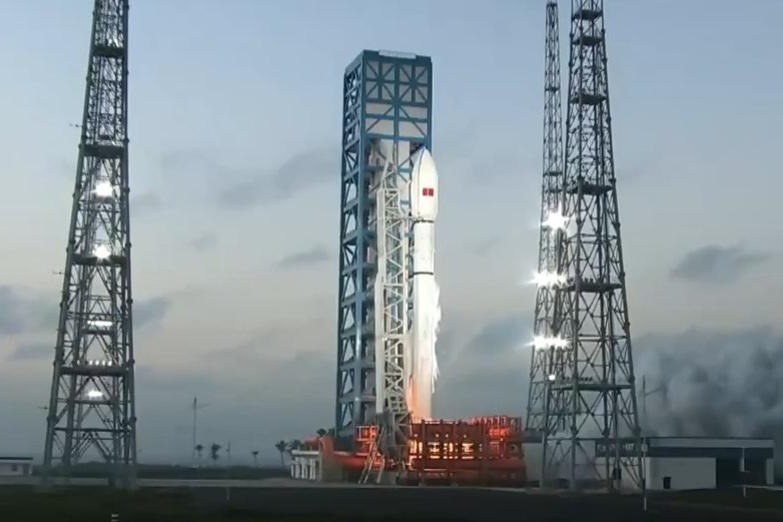
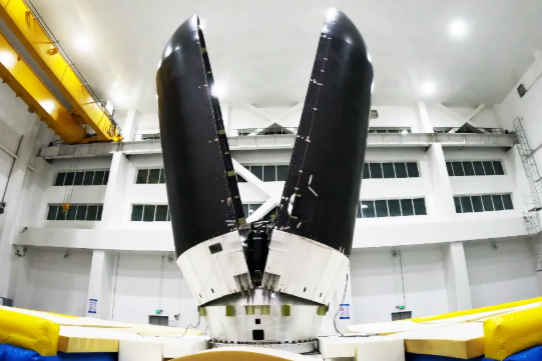
    Chinese commercial space company Galactic Energy is poised to launch its new-generation Ceres-2 solid-propellant carrier rocket on its inaugural mission within days, according to industry sources. The launch operation will be conducted from the Jiuquan Satellite Launch Center in Inner Mongolia Autonomous Region, marking a significant milestone for China’s private aerospace sector.

    The maiden flight will serve dual purposes: validating the rocket’s overall design and performance capabilities while deploying six commercial satellites and two experimental payloads with a combined mass exceeding one metric ton. The Ceres-2 represents a substantial advancement in China’s commercial launch vehicle technology, featuring a three-stage solid-propellant core complemented by a liquid-fueled upper stage.

    With a total weight of 100 tons, the new rocket demonstrates impressive payload capacity, capable of delivering 1.6 tons to low-Earth orbit (500 km altitude) or 1.3 tons to sun-synchronous orbit (500 km altitude). The manufacturer highlights its exceptional carrying efficiency and operational flexibility, supporting both land-based and maritime launch platforms.

    The rocket’s development involved manufacturing and functional testing across multiple facilities in Ziyang, Sichuan Province and Haiyang, Shandong Province. Galactic Energy ranks among China’s pioneering private enterprises achieving orbital capability with indigenous rocket technology. The company’s leadership team brings extensive experience from state-owned aerospace giants including China Aerospace Science and Technology Corporation.

    This launch continues the success trajectory established by Galactic Energy’s Ceres-1 model, which completed its debut flight in November 2020. The earlier variant has achieved 20 successful orbital missions out of 22 attempts, deploying 85 commercial satellites to date. The Ceres-1 stands at 20 meters with 1.4-meter diameter, capable of delivering 300kg payloads to sun-synchronous orbit.

    The Ceres-2 debut coincides with increased activity among Chinese commercial rocket developers, with LandSpace recently introducing its ZQ-3 model and Space Pioneer preparing its TL-3 rocket for imminent first flight, signaling robust competition and innovation within China’s burgeoning private space industry.

  • China aims for twin-track use of Nvidia H200 amid back door fears

    China aims for twin-track use of Nvidia H200 amid back door fears

    China is demonstrating a notable shift in its position regarding Nvidia’s H200 graphics processing units (GPUs), moving from initial skepticism to a pragmatic governance strategy. This strategic recalibration follows the Trump administration’s December 8 announcement permitting Nvidia to export H200 products to China under specific national security conditions, a decision reportedly communicated directly to Chinese President Xi Jinping during a November 24 phone conversation.

    The initial Chinese response to potential H200 exports, characterized by warnings of ‘sugar-coated bullets’ that might undermine domestic chip development, has evolved into a more nuanced ‘twin track’ approach. This strategy allows Chinese firms to utilize H200 chips for AI model training—which demands high-performance processing capabilities—while employing domestic chips for inference tasks requiring less computational power but greater energy efficiency.

    Chinese technology giants including ByteDance and Alibaba have expressed significant interest in acquiring H200 chips, with industry sources indicating potential orders approaching 100,000 units. The appeal lies not only in the H200’s substantial performance advantage over previous options but also in Nvidia’s deeply entrenched CUDA ecosystem, which offers a comprehensive development environment that domestic alternatives cannot yet replicate.

    Despite this openness to foreign technology, Chinese commentators emphasize the continued importance of developing domestic capabilities. Columnist Tangyipao notes that while the H200 can help alleviate computing power bottlenecks, China must remain vigilant against technological lock-in and continue advancing its indigenous chip industry, particularly through products like Huawei’s Ascend processors.

    Security concerns regarding potential ‘back doors’ in Nvidia’s technology have been partially addressed through the company’s December 10 announcement of a software-based monitoring tool designed for GPU management rather than control. Nvidia explicitly stated its chips contain no hardware tracking technology, kill switches, or back doors—though some Chinese analysts call for independent verification of these claims.

    This balanced approach reflects China’s historical development philosophy of ‘walking on two legs,’ advocating for simultaneous advancement across multiple sectors without becoming overly dependent on any single technology or approach.

  • PLAN’s big underwater drones push undersea power toward US shores

    PLAN’s big underwater drones push undersea power toward US shores

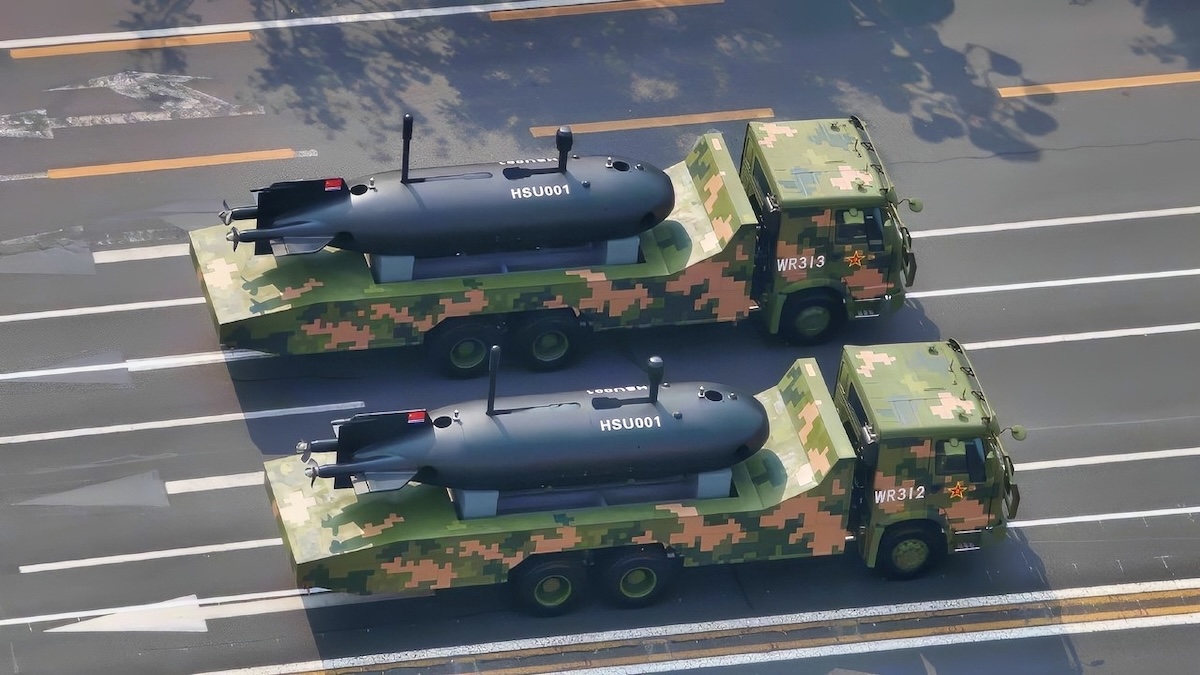
    China’s testing of colossal uncrewed underwater vehicles (UUVs) represents a transformative development in maritime warfare with far-reaching implications for global security. Recent reports indicate Beijing is conducting secret trials of two distinct extra-extra-large UUV (XXLUUV) models in the South China Sea, with these systems comparable in size to conventional submarines.

    According to naval analysts, these diesel-electric powered drones possess operational ranges exceeding 18,500 kilometers and can carry diverse payloads including torpedoes, sea mines, and smaller underwater vehicles. Their design incorporates advanced battery banks and diesel generators, enabling extended submerged transit capabilities that could potentially bypass existing anti-submarine defenses across the Pacific theater.

    The strategic implications are profound. These autonomous systems could execute minelaying operations, port blockades, or critical infrastructure attacks at unprecedented ranges. Particularly vulnerable are undersea communications cables, with Taiwan’s 24 internet cables representing a primary target that could paralyze the island’s banking, emergency services, and critical infrastructure during potential conflict scenarios.

    Beyond Taiwan, the Trans-Pacific Cable network connecting Japan, Guam, and Hawaii faces similar vulnerabilities. The modular nature of these XXLUUVs allows for specialized equipment, including cable-cutting tools capable of operating at 4,000-meter depths using diamond-coated grinding technology.

    Additionally, these systems threaten US underwater sensor networks like the ‘Fish Hook’ array designed to detect Chinese submarine movements through the First Island Chain. Neutralizing these sensors would enable Chinese naval forces greater freedom of movement into the open Pacific.

    The Indian Ocean represents another strategic theater where these drones could operate, potentially securing China’s sea lines of communication and supporting alternative trade routes bypassing the vulnerable Malacca Strait. This expansion could bring China into direct competition with India and other regional powers.

    While theoretically capable of nuclear delivery missions similar to Russia’s Poseidon system, analysts question the strategic value of such applications given their slow transit times compared to ballistic missiles. China’s existing nuclear arsenal, including DF-41 ICBMs capable of reaching the US mainland in approximately 30 minutes, provides more credible deterrent options.

    The scale of production and existence of competing designs suggest these are not mere research projects but part of a serious procurement program that could fundamentally alter the strategic balance across the Pacific and Indian Oceans.

  • Qingdao Port integrates clean energy with China’s first hydrogen-electric tugboat

    Qingdao Port integrates clean energy with China’s first hydrogen-electric tugboat

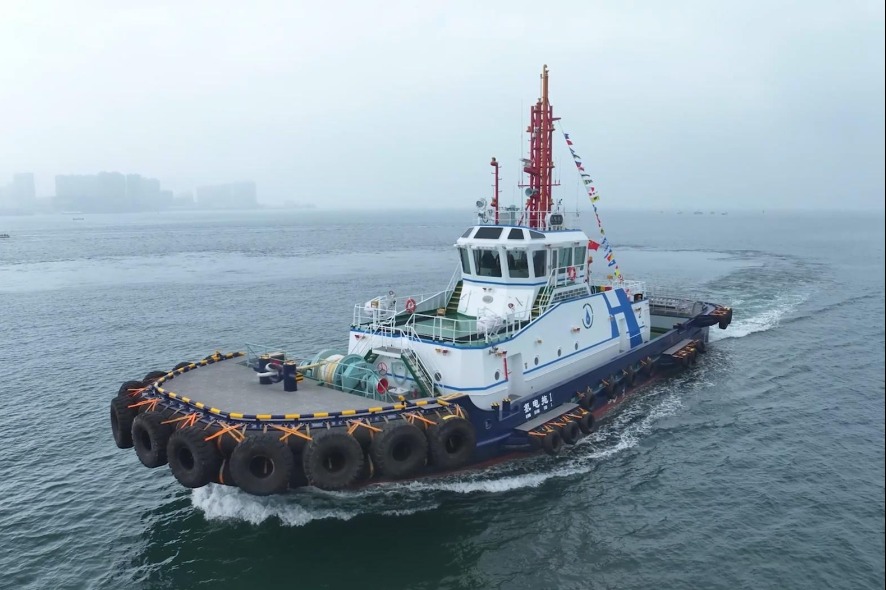
    Qingdao Port in Shandong Province has launched a groundbreaking clean energy initiative with the commissioning of China’s first hydrogen-electric hybrid tugboat, marking a significant advancement in sustainable maritime operations. Since its mid-summer deployment, the innovative vessel has been actively supporting port operations while demonstrating substantial environmental benefits.

    According to Captain Zhou Zixiang, the tugboat features an advanced hybrid propulsion system integrating hydrogen fuel cells with liquid-cooled lithium battery technology. This configuration enables approximately 12 hours of continuous operation on a single charging cycle. The vessel represents a technological leap forward in port machinery, offering superior energy utilization efficiency and enhanced maneuverability compared to conventional diesel-powered tugboats.

    The environmental impact is particularly noteworthy, with projections indicating an annual reduction of approximately 1,500 tons of carbon dioxide emissions from this single vessel alone. The tugboat incorporates China’s Beidou Navigation Satellite System for precise positioning and operations, complemented by an intelligent shore-based charging infrastructure specifically designed for hydrogen and electric vessels.

    This maritime innovation forms part of Qingdao Port’s broader green transformation strategy. Despite handling a record annual cargo throughput exceeding 700 million tons, the port has aggressively integrated renewable energy sources throughout its operations. The facility has established comprehensive solar and wind power generation systems combined with large-scale energy storage solutions, creating an integrated charging zone dedicated to clean energy vehicles and equipment.

    Current statistics reveal impressive sustainability metrics: photovoltaic installations generate approximately 25 million kilowatt-hours of electricity annually, nearly 80% of operational vehicles within the port now utilize new energy sources, and clean energy accounts for 69% of the port’s total energy consumption. These collective efforts are reducing carbon dioxide emissions by approximately 20,000 tons each year, positioning Qingdao Port as a leader in environmentally responsible port management and sustainable shipping technology.

  • Humanoid robots take center stage at Silicon Valley summit, but skepticism remains

    Humanoid robots take center stage at Silicon Valley summit, but skepticism remains

    MOUNTAIN VIEW, Calif. — The robotics sector is experiencing a paradigm shift as artificial intelligence breakthroughs breathe new life into long-standing ambitions to develop humanoid machines. This emerging transformation was the focal point of the recent Humanoids Summit, where over 2,000 engineers, investors, and entrepreneurs gathered to assess the industry’s trajectory.

    Venture capitalist Modar Alaoui, founder of the summit and general partner at ALM Ventures, noted that robotics had traditionally been viewed as “a bad bet for Silicon Valley investors — too complicated, capital-intensive and boring.” However, the commercial AI boom has fundamentally altered this perception, with many researchers now believing physical embodiments of AI “are going to become the norm.”

    The conference revealed both remarkable progress and significant challenges. Disney showcased its walking robotic version of “Frozen” character Olaf, scheduled to autonomously navigate Disneyland theme parks in Hong Kong and Paris by early 2025. Yet despite such entertainment applications, experts agree that truly “general purpose” robots capable of functioning as productive workplace or household members remain years away.

    Substantial skepticism persists even within the industry. Cosima du Pasquier, founder of Haptica Robotics, emphasized that “the humanoid space has a very, very big hill to climb” regarding research requirements. Robotics pioneer Rodney Brooks, who did not attend, has publicly questioned whether current investments will yield dexterous humanoids despite billions in funding.

    Geopolitical dimensions are emerging prominently. McKinsey & Company research identifies approximately 50 companies worldwide that have raised minimum $100 million for humanoid development, with China leading through approximately 20 initiatives compared to 15 in North America. Government incentives, component production support, and a mandated 2025 ecosystem establishment deadline contribute to China’s current momentum.

    Technical advances in generative AI have provided dual stimulation: investor excitement has flooded into hardware startups, while language model breakthroughs have enhanced robots’ task-learning capabilities through visual-language training systems.

    Notably absent from discussions was Tesla’s Optimus project, despite Elon Musk’s previous predictions of market availability within three to five years. The industry instead appears focused on incremental progress, drawing parallels to autonomous vehicle development timelines.

    Practical implementations are already underway. Agility Robotics announced deployment of its warehouse robot Digit at a Texas distribution facility operated by Mercado Libre, while industrial robots continue to demonstrate superior efficiency in manufacturing contexts.

    As the industry advances, calls for strategic national approaches are growing. Jeff Burnstein, president of the Association for Advancing Automation, is lobbying for enhanced U.S. robotics strategy, acknowledging China’s current momentum while emphasizing America’s underlying AI and technological strengths.

    The consensus suggests that while humanoid robotics has entered an accelerated development phase, the path to widespread adoption remains complex and uncertain, requiring continued innovation across multiple technological domains.

  • China launches new internet satellite group

    China launches new internet satellite group

    China has successfully deployed another cluster of internet satellites into low Earth orbit, marking a significant advancement in its space-based communications infrastructure. The launch occurred at precisely 7:00 AM local time on Friday, December 12, 2025, from the Wenchang Spacecraft Launch Site in Hainan province.

    The Long March 12 carrier rocket executed a flawless ascent, transporting what has been identified as the 16th grouping of low-orbit internet satellites destined to enhance global connectivity capabilities. Mission controllers confirmed that all payloads successfully reached their designated orbital parameters following the morning launch operation.

    This deployment represents the continuing expansion of China’s sophisticated satellite network architecture, designed to provide comprehensive internet coverage across remote and underserved regions worldwide. The strategic placement of these assets in low Earth orbit enables reduced latency and enhanced bandwidth capacity compared to traditional geostationary systems.

    Space technology analysts note that this launch demonstrates China’s growing proficiency in rapid satellite deployment and orbital network management. The successful mission reinforces the country’s position as a leading force in space-based telecommunications infrastructure development, with potential implications for global digital inclusion initiatives and competitive dynamics in the satellite internet market.

    The Hainan commercial launch facility continues to establish itself as a pivotal hub for China’s space ambitions, having supported numerous successful missions throughout 2025. This latest achievement underscores the technical precision and operational reliability of China’s space launch capabilities.

  • Chinese hydrogen-powered drone sets longest distance flight record

    Chinese hydrogen-powered drone sets longest distance flight record

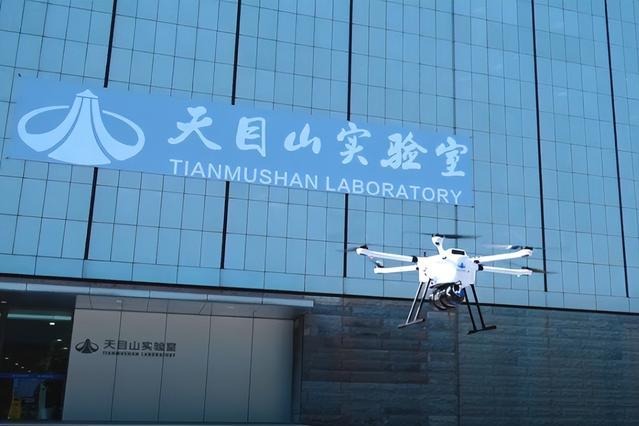
    China’s aerospace sector has achieved a groundbreaking milestone in unmanned aerial technology with its Tianmushan-1 hydrogen-powered drone setting a new Guinness World Record for the longest distance flight by a multirotor drone. The record-breaking flight of 188.605 kilometers was officially certified at the 7th Zhejiang International Intelligent Transportation Industry Expo in Hangzhou on December 11, 2025.

    Developed by the Tianmushan Laboratory under Beihang University, the advanced drone completed this historic flight on November 16th in Hangzhou, maintaining continuous operation for over four hours. The achievement was meticulously monitored in real-time and verified by Guinness World Records officials, who confirmed the drone’s propulsion system remained exceptionally stable throughout the entire journey with exemplary handling characteristics.

    The Tianmushan-1 represents a significant advancement in low-altitude economy technology, having successfully completed its maiden flight in August 2024 and entered production in April 2025. With a substantial 1,600 mm wheelbase and an empty weight of 19 kg, this zero-emission aircraft can carry payloads of up to 6 kg while delivering remarkable endurance capabilities.

    Technical specifications reveal even more impressive features: the drone can achieve up to 240 minutes of unloaded flight time, operate reliably in extreme temperatures ranging from -40°C to 50°C, and perform Beyond Visual Line of Sight (BVLOS) autonomous operations across 100-kilometer ranges.

    The practical applications for this technology span multiple sectors including high-speed ecological patrols, oil and gas pipeline surveys, renewable energy plant management, island resupply missions, urban traffic monitoring, and emergency response operations. This world record achievement underscores the substantial commercial potential of hydrogen-powered drone technology in transforming various industrial and logistical operations.

  • 2-ton cargo drone ready for takeoff

    2-ton cargo drone ready for takeoff

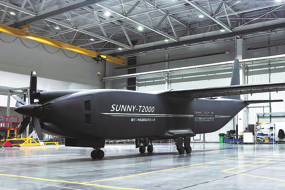
    China’s aviation sector has achieved a significant technological breakthrough with the successful production of the SUNNY-T2000, a heavy-payload unmanned cargo aircraft capable of carrying two metric tons. This development marks a substantial advancement in the country’s capabilities for long-haul transportation, regional distribution, and last-mile delivery solutions.

    Manufactured by Shenyang Sunny Aeronautics and Space Adventure Company, the drone officially rolled off production lines in Shenyang, Liaoning Province, on December 12, 2025. The aircraft features a substantial 15-cubic-meter rectangular cargo bay designed to accommodate diverse freight including emergency supplies, industrial components, and agricultural products.

    According to Professor He Jun, Chairman of Shenyang Sunny Aeronautics and Space Adventure and academic at Shenyang Aerospace University, the SUNNY-T2000 boasts an operational range exceeding 1,000 kilometers when fully loaded. The aircraft requires only an 800-meter runway for takeoff and landing operations, making it particularly suitable for reaching remote locations and navigating challenging terrain.

    Beyond conventional cargo transport, the drone’s design incorporates aerial cargo drop capabilities, expanding its potential applications to emergency rescue missions and forest firefighting operations. This multifunctional approach addresses limitations in existing cargo aircraft regarding payload capacity, internal space, and range efficiency.

    The development represents part of a broader strategic initiative in Shenbei New District, which has designated the low-altitude economy as a priority emerging industry during China’s 14th Five-Year Plan period (2021-2025). The district has attracted over thirty enterprises specializing in low-altitude technologies, creating a comprehensive manufacturing ecosystem.

    Infrastructure development has kept pace with technological advancements, with authorities approving fourteen airspaces and two dedicated drone logistics test routes—the largest and highest-quality airspace resources in Liaoning Province. The district has also established twenty-one temporary takeoff and landing points alongside ongoing construction of key facilities including Shenbei General Airport and the second phase of the Aifeike flight camp.

    Looking forward, the company is already advancing more ambitious projects including 6-ton and 7-ton cargo drone models, with the 6-ton variant designed to accommodate space equivalent to a 40GP standard container (approximately 67 cubic meters). Development is also underway for a 10-ton commercial cargo aircraft targeting cross-regional heavy cargo transportation.

    These developments collectively contribute to forming a multi-tiered logistics network that integrates with existing transportation infrastructure while expanding capabilities for specialized applications across multiple industries.

  • Large, unmanned jet makes maiden flight

    Large, unmanned jet makes maiden flight

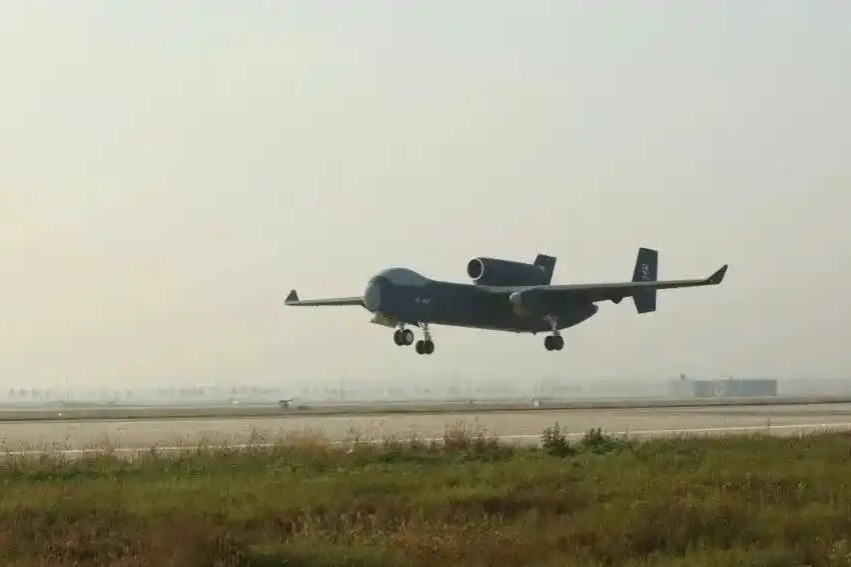
    China’s aviation sector achieved a significant technological milestone on Thursday, December 12, 2025, with the successful maiden flight of the Jiutian (High Sky), a large multifunctional unmanned jet aircraft. The prototype conducted its inaugural flight from an airport in Pucheng, Shaanxi Province, completing a brief aerial demonstration before returning safely to its departure point.

    Developed by the AVIC First Aircraft Institute for State-owned Shaanxi Unmanned Equipment Technology, the Jiutian represents a sophisticated advancement in unmanned aerial systems. The aircraft measures 16.4 meters in length with an impressive 25-meter wingspan, boasting a maximum takeoff weight of 16 metric tons and a payload capacity of up to 6 tons. With an operational ceiling of 15 kilometers and an endurance of 12 hours or 7,000 kilometers per mission, the platform demonstrates remarkable range and altitude capabilities.

    The Jiutian’s modular design architecture enables exceptional mission flexibility, allowing for various payload configurations including guided munitions, air-to-air missiles, cruise missiles, and loitering munitions. A distinctive feature is its compartmentalized internal bay, capable of housing over 100 loitering munitions or small attack drones, effectively functioning as a ‘mothership’ for drone swarm operations.

    Beyond military applications, the unmanned jet excels in civilian roles including heavy cargo transportation to remote mountainous regions and offshore islands, emergency communications restoration, disaster relief operations, geographic mapping, mineral surveys, cultural relic documentation, maritime patrol, and forest fire suppression.

    According to Wang Yanan, Chief Editor of Aerospace Knowledge magazine, the Jiutian’s substantial size and payload capacity enable extended operations behind enemy air defenses. The platform can perform long-range detection and tracking of naval targets followed by anti-ship missile engagements, or deploy drone swarms to overwhelm defensive systems in asymmetric warfare scenarios. Multiple Jiutian aircraft can operate collaboratively in fleet formations for enhanced mission effectiveness.

    The Jiutian was initially unveiled to the international community at the 15th China International Aviation and Aerospace Exhibition in Zhuhai, Guangdong Province, in November 2024. Aviation Industry Corp of China (AVIC), the nation’s premier aircraft manufacturer, confirmed that the maiden flight successfully validated the drone’s fundamental design parameters and basic flight performance characteristics.

  • Nation’s digital heft in UAE spotlight

    Nation’s digital heft in UAE spotlight

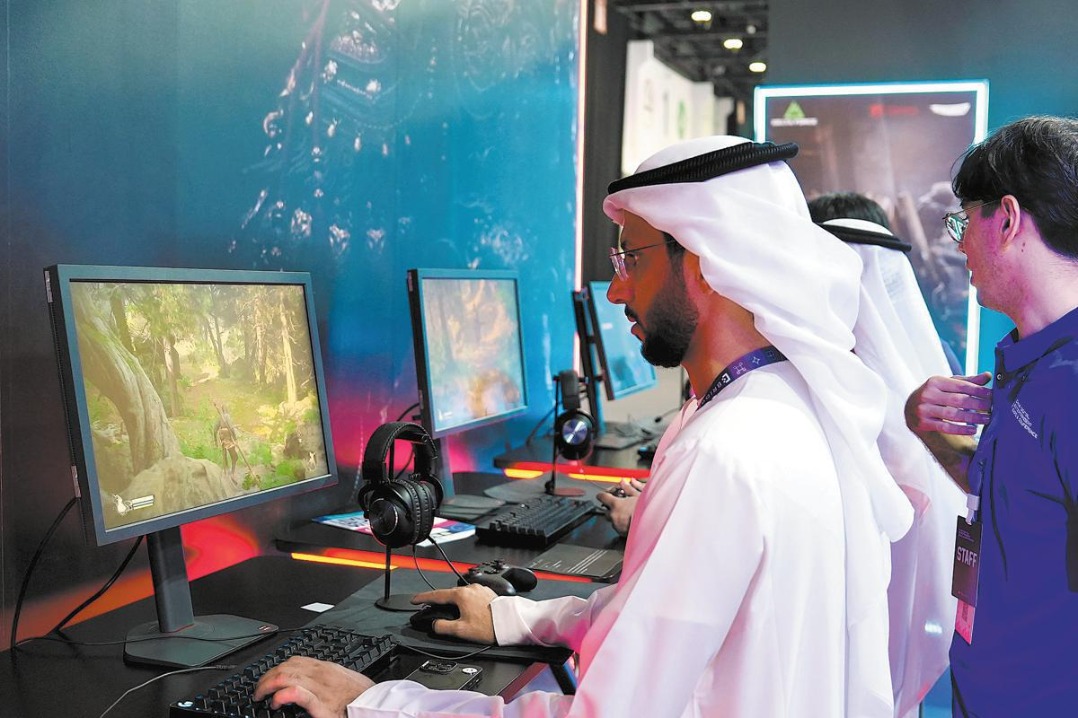
    ABU DHABI—China’s technological and cultural prowess took center stage at the BRIDGE Summit 2025 this week as Asia’s premier gaming exhibition, ChinaJoy, made its Middle Eastern debut in the United Arab Emirates capital. The event showcased China’s emerging role as a global innovator blending artificial intelligence, interactive entertainment, and cultural storytelling into a unified digital ecosystem.

    The three-day conference, running from December 9-11, attracted over 60,000 participants from across media and entertainment industries. The China-Joy pavilion featured 19 exhibitors and internationally celebrated titles including Black Myth: Wukong and Delta Force, demonstrating China’s integrated approach to technology and cultural content.

    Yu Kun, head of the China-Joy pavilion, described the event as more than an exhibition—but rather a ‘proof of concept’ for cultural co-creation. ‘We’re building a bridge between Chinese technological strength and Middle Eastern cultural preferences,’ Yu stated, emphasizing gaming’s unique capacity for cultural export through immersive experiences.

    The expansion aligns with China’s established dominance in digital content exports. Market analyst AppsFlyer reports China solidified its position as the world’s largest game exporter in the first half of 2025, accounting for 32.6% of global game exports.

    Middle Eastern audiences responded enthusiastically to the Chinese offerings. Emirati gamer Basem Sheikha noted, ‘Black Myth: Wukong blends gameplay with Chinese culture brilliantly. I’ve recommended it to many friends, and they all love it.’

    Regional industry leaders recognized the strategic significance of the partnership. Jamal Mohammed Obaid Al Kaabi, director-general of the UAE National Media Office, stated that bringing ChinaJoy to Abu Dhabi ‘opens a new channel for partnerships among China, the UAE and global gaming leaders.’

    The collaboration extends beyond entertainment into economic opportunity. According to market researcher Niko Partners, Saudi Arabia, the UAE and Egypt together will host 85.8 million gamers generating $3.1 billion in game revenue by 2025, with UAE players expected to exceed $100 in average annual revenue per user by 2029.

    Mohammed Ali Alblooshi of twofour54, an Abu Dhabi government-backed media production company, observed: ‘Asian influence lies in merging tech innovation with cultural diversity. Chinese gaming proves local narratives can resonate globally. China could be the tech enabler and content inspiration.’

    The event also highlighted broader technological convergence, with the Khaleej Times reporting that 67% of creators now use AI tools, while cross-sector collaborations have surged 340% over three years.

    Emirati media expert Mayed Alsakhawi noted the natural synergy between the partners: ‘China provides the tech and content, and the UAE offers geographic access and a flexible regulatory environment. Future media will bring more co-productions, cultural exchanges and business models that deepen mutual understanding.’