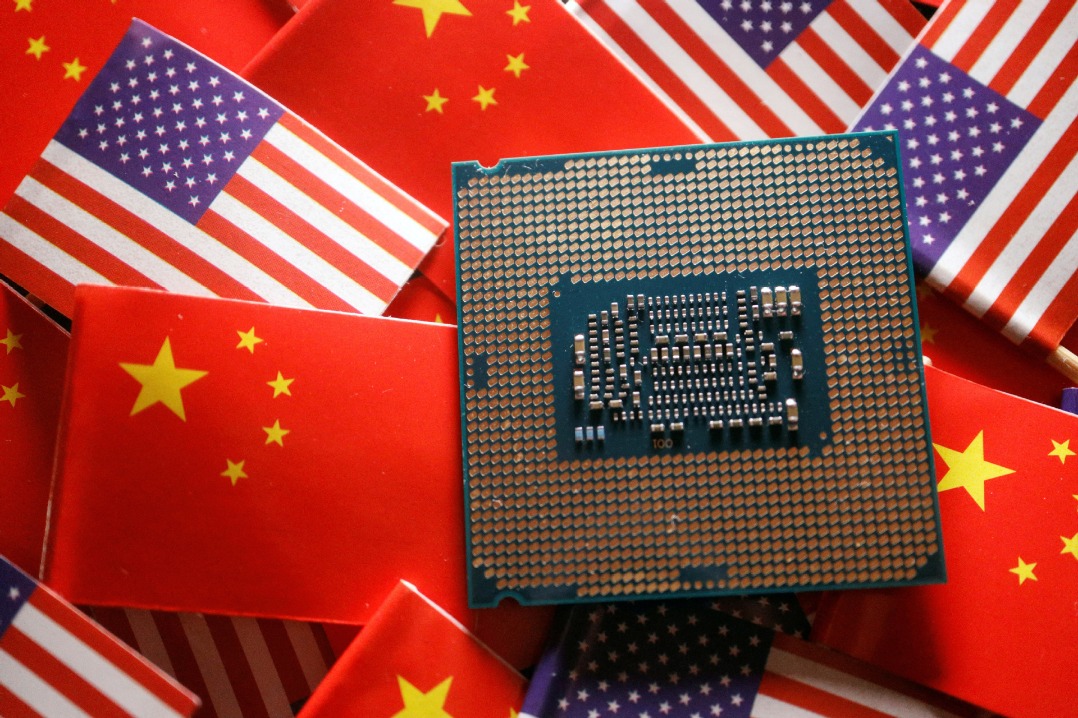
In a landmark collaboration, OpenAI, the San Francisco-based artificial intelligence pioneer, has joined forces with Taiwan’s electronics titan Foxconn to design and manufacture critical components for AI data centers in the United States. This partnership aims to bolster the nation’s AI infrastructure, ensuring its leadership in the rapidly evolving technological landscape. Foxconn, renowned for its production of AI servers for Nvidia and assembly of Apple products, including the iPhone, will co-develop AI data center racks with OpenAI. The agreement, announced in separate statements on Thursday and Friday, underscores Foxconn’s role in producing essential systems such as cabling, networking, and power solutions for AI data centers at its U.S. facilities in Ohio and Texas. OpenAI will gain early access to evaluate and potentially procure these products. The initial agreement does not entail financial obligations or purchase commitments. This collaboration aligns with Foxconn’s broader strategy to diversify its business, which includes ventures into electric vehicles and acquisitions of electronics companies. Sam Altman, CEO of OpenAI, emphasized the partnership’s significance, stating, ‘This is a step toward ensuring the core technologies of the AI era are built here, strengthening U.S. leadership and ensuring the benefits of AI are widely shared.’ OpenAI has committed $1.4 trillion to AI infrastructure development, including multi-billion-dollar partnerships with Nvidia, AMD, and Broadcom to enhance computing power and design custom AI chips. Despite concerns over OpenAI’s massive spending, Altman projects the company will achieve over $20 billion in annualized revenue this year, with growth expected to reach ‘hundreds of billions by 2030.’ Foxconn’s Taiwan-listed shares have surged 25% this year, reflecting the broader tech industry’s AI-driven momentum. The company reported a 17% year-on-year increase in net profit for the July-September quarter, driven by its cloud and networking business, including AI servers. Foxconn’s leadership remains optimistic about AI’s future, anticipating closer collaborations with key clients and partners in the coming year.
分类: technology
-

Streaming platform Twitch added to Australia’s teen social media ban
Australia’s groundbreaking social media ban targeting users under 16 has now extended its reach to include Twitch, the popular livestreaming platform predominantly used by gamers. The ban, set to take effect on December 10, mandates that platforms like Twitch must prevent under-16s from creating new accounts and deactivate existing ones by January 9. Twitch, owned by Amazon, joins other major platforms such as Facebook, Instagram, TikTok, and Snapchat in this regulatory measure.
-

Talent, ecosystem surge push UAE into global AI elite
The United Arab Emirates (UAE) has solidified its position as a global leader in artificial intelligence (AI), according to the latest Global AI Competitiveness Index by the International Finance Forum (IFF) and Deep Knowledge Group (DKG). Ranked ninth worldwide in AI enterprise density, the UAE boasts 49.5 AI firms per million people, surpassing many advanced economies. This achievement underscores the nation’s growing appeal as a hub for AI startups and scale-ups. The UAE also ranks 16th globally in AI talent share and within the top 20 in talent density, outperforming countries like Italy and Russia. This rapid ascent is attributed to the UAE’s proactive governance, including the National Strategy for Artificial Intelligence 2031 and the introduction of ethical frameworks like the non-binding AI Charter in 2024. Investment in AI startups further strengthens the UAE’s global profile, with the country ranking 11th for AI financing. The public sector has embraced AI at an unprecedented level, with federal entities achieving 97% utilization of AI tools. The UAE’s AI readiness is validated by international benchmarks, including Stanford University and Oxford Insights, which rank the country among the top performers globally. The private sector is also advancing, with UAE organizations demonstrating governance discipline that exceeds global norms. Economically, AI is projected to contribute $96 billion to the UAE’s GDP by 2030, transforming industries such as finance, retail, logistics, healthcare, and energy. Analysts highlight the UAE as a global testbed for AI innovation, driven by strong infrastructure, progressive regulation, and rapid adoption.
-

Look: How will air taxis look like? 3 models put on display at Dubai Airshow
The Dubai Airshow 2025 has unveiled a glimpse into the future of urban mobility, showcasing three cutting-edge air taxi models that could revolutionize transportation in the UAE by the end of the decade. These models, ranging from fully electric city hoppers to hybrid long-range concepts, highlight the region’s ambitious plans to integrate air taxis into everyday travel. Dubai is set to launch its first air taxi routes in 2026, while Abu Dhabi is concurrently developing its own point-to-point air mobility strategies. For many attendees, this marks their first encounter with the aircraft that may soon replace short car journeys in the region. Among the standout models is Archer Aviation’s Midnight, an electric commuter aircraft designed for urban trips. Capable of carrying four passengers and a pilot, the Midnight boasts speeds of up to 240 km/h, operates emission-free, and features multiple redundant safety systems. Archer has already confirmed its UAE operations will commence next year, with expansion plans into Saudi Arabia. The E20 Plus, developed by UAE-based Autocraft, is another highlight. Built to withstand the region’s harsh weather conditions, this four-passenger aircraft offers a 200 km range and rapid recharging times. Autocraft has partnered with Abu Dhabi Aviation to integrate the E20 Plus into the emirate’s flight ecosystem by late 2026. Honda R&D also presented a one-third scale model of its hybrid air taxi, which combines electric flight with a Formula One-inspired range extender, targeting a range of over 400 km. Although still in the research phase, Honda envisions future autonomous capabilities, with full certification expected in the early 2030s. These innovations underscore the UAE’s commitment to pioneering advanced transportation solutions.
-

IIT Delhi – Abu Dhabi IGNITE 2025: Deep science meets global impact
The Indian Institute of Technology Delhi – Abu Dhabi (IITD-AD) has successfully concluded IGNITE 2025, a groundbreaking two-day international forum that has positioned the campus as a hub for deep-science research and innovation in the UAE. Building on the six-decade legacy of its parent institution, IIT Delhi, globally recognized for its leadership in STEM, research excellence, and vibrant startup culture, IITD-AD showcased its commitment to advancing the UAE’s ambitions in deep science and innovation-driven entrepreneurship. Organized in collaboration with the American Chemical Society (ACS), FortyTwo.VC, and IvyCap Ventures, and supported by startAD, IGNITE 2025 marked the inaugural event of a series aimed at fostering research collaboration, startup showcases, and industry engagement.
The forum featured eight thematic tracks, including Energy and Sustainability, Advanced Materials, AI and Data Sciences, Healthcare and MedTech, Space and New-Age Mobility, Food and Water Security, Carbon Capture and Release, and Quantum Technologies. Participants delved into cutting-edge developments in green hydrogen, quantum sensing, digital health, desalination technologies, climate-smart agriculture, and carbon capture, many of which stem from early-stage collaborations between India, the UAE, and other international institutions. This diverse range of research and innovation highlighted IITD-AD’s ability to leverage IIT Delhi’s expertise to drive regionally relevant initiatives.
IITD-AD’s credibility is rooted in the institutional excellence of IIT Delhi, which ranks 26th globally for Engineering & Technology in the QS World University Rankings by Subject 2025. Since establishing its technical incubation unit in 1990, IIT Delhi has nurtured over 200 startups, with more than 80 currently active in AI, clean energy, healthcare, food technologies, carbon capture, and quantum technologies. Notably, IIT Delhi’s alumni have founded or co-founded nearly 30% of India’s unicorns, underscoring the impact of a robust innovation ecosystem that IITD-AD is now extending to Abu Dhabi.
Expert-led panel sessions, such as Building a Sustainable and Resilient Future, Science Without Borders, and The Next Billion Lives: Startups Reimagining Health, Food & Water, brought together leading voices from the UAE, India, and beyond. These sessions provided insights and practical pathways for collaboration, while investors and venture funds actively engaged with researchers and founders, signaling a growing interest in deep-tech investment and cross-border partnerships. Notable speakers included Dr. Farida Al Hosani, Sonia Weymuller, Prof. Hao Li, and others, highlighting the high caliber of dialogue and the potential for strategic partnerships.
Prof. Shantanu Roy, executive director of IITD-AD, described IGNITE 2025 as a pivotal milestone in the campus’s trajectory, emphasizing its role in bringing together talent, research capabilities, and venture networks from India and the UAE. Prof. Mohamed Ali Haider, vice-provost (research and external engagement) at IITD-AD, highlighted the campus’s operational approach, focusing on providing students and researchers with resources, mentorship, and platforms to convert ideas into viable ventures. He also emphasized the importance of early innovation initiatives, such as Energy, AI, and Innovation Boot Camps, in building curiosity and capability at the school level.
As IITD-AD continues to expand, IGNITE 2025 sets the stage for a recurring forum where research, entrepreneurship, and industry dialogue are meaningfully integrated. Anchored in IIT Delhi’s scientific legacy and bolstered by strategic partnerships, the campus is emerging as a new intellectual center of gravity within the UAE, fostering innovation grounded in rigorous science and engineered for real-world impact.
-

Chinese innovations hog limelight at Dubai air show
The Dubai Airshow 2025 became a stage for Chinese aviation innovations, as a wide array of cutting-edge products, from domestically developed jetliners to advanced drones, made their debut. This event significantly bolstered China’s presence in the global aviation sector. The Aero Engine Corporation of China showcased its latest technologies, marking the company’s most extensive overseas exhibition of homegrown aero engines to date. Among the highlights were the C919 and C909 passenger jets, which made their first appearances in the Middle East. The C919, operated by China Southern Airlines, features a modern cabin design with eco-friendly materials and a theme of ‘oriental grace.’ Visitors and industry professionals alike praised the aircraft for its comfort and stability. The Commercial Aircraft Corporation of China (COMAC) is actively seeking potential overseas clients, with over 170 C909 jets already delivered to domestic and foreign customers. The event also featured the Lanying R6000, the world’s first 6-ton-class tiltrotor aircraft, which holds significant potential for heavy-lift scenarios in the Middle East. Additionally, Chinese-manufactured unmanned aerial vehicles and electric vertical takeoff and landing aircraft garnered substantial attention, further solidifying China’s role as a key player in the global aviation industry.
-

Russian hacking suspect wanted by the FBI arrested on Thai resort island
A 35-year-old Russian national, suspected of orchestrating cyberattacks on U.S. and European government agencies, has been arrested in Phuket, Thailand, following a tip from the FBI. The suspect, identified as Denis Obrezko from Stavropol, entered Thailand on October 30 and was apprehended earlier this month at his hotel. Thai authorities seized laptops, mobile phones, and digital wallets during the arrest, with FBI officials present. Obrezko is now detained pending a potential extradition to the United States. Russian state media confirmed the arrest, and his relatives are reportedly planning to contest the extradition. The U.S. Department of Justice and State Department have declined to comment on the case. Russian diplomats have visited Obrezko in custody, and the Russian consulate in Phuket acknowledged the arrest but provided no further details. The extradition process is underway, though its duration remains uncertain.
-

Meta alerts young Australians to download their data before a social media ban
In a landmark move, Meta has begun notifying thousands of young Australians to download their digital histories and delete their accounts from Facebook, Instagram, and Threads. This action precedes the enforcement of Australia’s pioneering social media ban on accounts of children under 16, set to take effect on December 10. The Australian government recently mandated that major platforms, including Meta’s trio, Snapchat, TikTok, X, and YouTube, implement measures to exclude users below the age of 16. Meta, headquartered in California, has emerged as the first tech giant to outline its compliance strategy. Starting December 4, suspected underage users will be denied access, with Meta issuing warnings via SMS and email. The company has advised young users to utilize the notice period to save their data and update contact details for future account recovery. Meta estimates that 350,000 Australians aged 13-15 are on Instagram, with an additional 150,000 on Facebook. For those mistakenly flagged, Meta offers age verification through Yoti, requiring government-issued IDs or a ‘video selfie.’ However, experts like Terry Flew of Sydney University caution that facial-recognition technology has a failure rate of at least 5%. The government has warned platforms against imposing blanket age verification, emphasizing that they already possess sufficient data to identify underage users. Non-compliance could result in fines up to AUD 50 million (USD 32 million). Meta’s Antigone Davis advocates for a standardized, privacy-preserving age verification system at the OS/app store level, arguing it would offer more comprehensive protection. Meanwhile, Dany Elachi of the Heaps Up Alliance, a parents’ group that lobbied for the ban, urges parents to help their children reallocate time previously spent on social media. Despite some reservations about the legislation’s implementation, Elachi supports the principle that children under 16 are better off engaging with the real world.
-

Gulf cybersecurity spend to top Dh120 billion by 2030
The Gulf region is poised to witness a significant surge in cybersecurity investments, with spending projected to surpass Dh120 billion by 2030. This growth is driven by the rapid adoption of artificial intelligence (AI), sovereign cloud strategies, and hyperscale data infrastructure, according to a recent report by Grand View Research titled ‘Cyber Resilience in the Gulf: Where Technology Meets Sovereign Risk (2025 Edition).’ The UAE and Saudi Arabia are at the forefront of this transformation, with both nations accelerating their digital agendas under the ‘We the UAE 2031’ vision and Vision 2030 programs, respectively. The report highlights that the region’s ambitious infrastructure projects, including national data centers, AI clusters, and cloud corridors, are fueling unprecedented investments in cyber resilience and data sovereignty. The UAE’s AI-driven security market alone is expected to grow more than fourfold, exceeding Dh19.6 billion by 2030. Swayam Dash, Managing Director of Grand View Research, emphasized that cyber resilience has evolved from a technical discipline to a sovereign capability, crucial for sustaining growth, attracting capital, and maintaining public trust. The UAE and Saudi Arabia, which together account for over 60% of the region’s cybersecurity expenditure, are embedding digital protection into national policies. The UAE is focusing on AI-driven threat intelligence, zero-trust frameworks, and sovereign cloud ecosystems, while Saudi Arabia’s National Cybersecurity Authority (NCA) and SDAIA are prioritizing data protection across industrial and infrastructure projects. The report also notes a shift in the region’s cybersecurity approach, from network defense to institutionalized resilience through policy, collaboration, and redundancy. Key initiatives include the ADGM Cyber Risk Management Framework (2025), Saudi Central Bank’s cyber stress-testing regime, and cross-border CERT intelligence sharing. As the line between cyber disruption and economic disruption narrows, digital resilience is increasingly viewed as a form of sovereign credit, with Gulf banks incorporating cyber metrics into ESG disclosures and regulators considering system uptime a proxy for fiscal stability. Dash concluded that the Gulf’s next global advantage will stem not from faster networks but from networks that never fail.
-

Johnson Controls’ new building automation system sets new industry standard
Johnson Controls has introduced Metasys 15.0, a cutting-edge building automation system designed to revolutionize energy management and operational efficiency in mission-critical environments. This latest iteration of the company’s flagship open building automation system offers unparalleled scalability, built-in resiliency, and real-time energy intelligence, empowering facility managers to optimize building performance, ensure compliance, and accelerate decarbonization efforts.