分类: technology

  • 3 men are charged with conspiring to smuggle US artificial intelligence to China

    3 men are charged with conspiring to smuggle US artificial intelligence to China

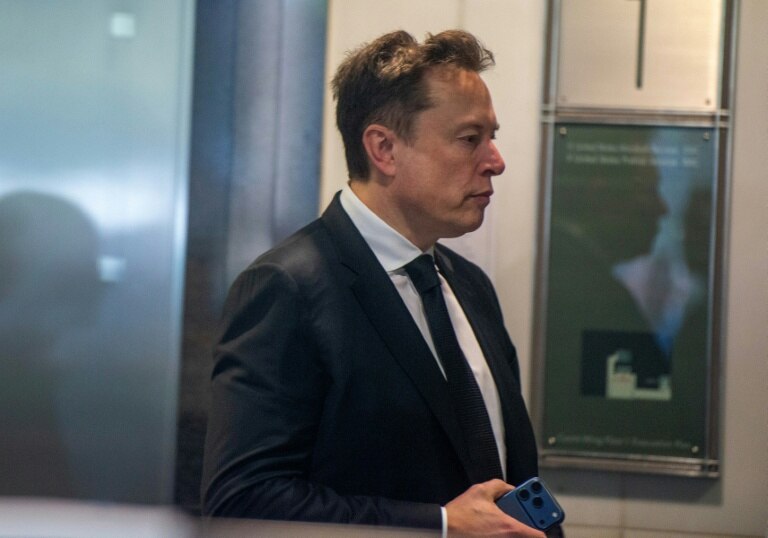
    Federal prosecutors in Manhattan have unsealed indictments against three technology executives accused of orchestrating an elaborate scheme to illegally divert advanced Nvidia server systems to China, circumventing U.S. export control regulations. The alleged conspiracy, which operated between 2024 and 2025, involved sophisticated methods to conceal the unlawful transfer of cutting-edge computing technology.

    Among those charged is Yih-Shyan ‘Wally’ Liaw, 71, a U.S. citizen serving as senior vice president and board member of Super Micro Computer Inc., who was apprehended Thursday in California alongside Ting-Wei ‘Willy’ Sun, 44, a company contractor. A third individual, Ruei-Tsang ‘Steven’ Chang, a Taiwan-based sales manager for the firm, remains at large according to law enforcement authorities.

    The elaborate operation allegedly utilized fabricated documentation, staged equipment to deceive audit inspections, and employed intermediary corporations to obscure the true destination and clients of the sophisticated computing systems. Court documents reveal the conspirators directed executives at a Southeast Asian company to place orders exceeding $2.5 billion for servers manufactured by San Jose-based Super Micro Computer, with at least $510 million worth of systems ultimately being rerouted to Chinese entities after assembly in the United States.

    This case emerges against the backdrop of intensifying technological competition between the United States and China, particularly in the field of artificial intelligence. Nvidia’s advanced processors have become critical components for AI data centers, positioning them as strategically significant technologies with potential national security implications. The U.S. government has maintained restrictions on exporting these high-performance chips to China, with both the Biden and Trump administrations implementing controls aimed at preserving American technological advantages.

    In response to the allegations, Super Micro Computer issued a statement emphasizing that the indicted individuals’ actions violated company policies and compliance protocols. The firm noted its cooperative stance with governmental investigators and reaffirmed its commitment to adhering to export control regulations. Similarly, Nvidia released a statement underscoring strict compliance as a top priority and highlighting the effectiveness of enforcement mechanisms against unlawful technology diversion.

    The case highlights the ongoing challenges in regulating the transfer of strategically sensitive technologies even as Nvidia’s market valuation has soared to unprecedented heights, recently reaching $4.3 trillion despite the absence of Chinese market sales in its revenue projections.

  • Global tech innovation competition concludes in Hainan

    Global tech innovation competition concludes in Hainan

    HAIKOU, HAINAN – The inaugural Global Scenario-Based Innovation Competition focused on “Digital Economy and New Consumption” reached its climactic conclusion on Thursday, March 19th, in Haikou, Hainan Province. This landmark event assembled pioneering technology startups from across the globe to demonstrate cutting-edge projects specifically aligned with the strategic industrial development goals of the Hainan Free Trade Port.

    Spanning nearly a full year, the extensive competition garnered significant international participation, receiving 103 submissions from innovators representing 16 different nations. Organizers facilitated preliminary qualification events in several world-renowned technology epicenters, including Paris, France, and Silicon Valley in the United States. After undergoing multiple rigorous evaluation rounds, 11 exceptional finalists were selected to compete in a dynamic pitch format. Their presentations showcased a diverse array of technological advancements across critical sectors such as artificial intelligence, robotics, biotechnology, advanced semiconductor packaging, and digital retail solutions.

    A distinguished panel of judges meticulously assessed each participant based on a comprehensive set of criteria, including technological innovation, demonstrated commercial viability, overall team competency, and practical applicability within current market conditions. The featured projects presented innovative solutions ranging from AI-powered cross-border e-commerce platforms and intelligent systems for pest control in tropical agriculture to sophisticated digital twin management technologies designed for pharmaceutical cold chain logistics.

    The timing of this competition is particularly strategic, following the island’s transition to special customs operations that commenced on December 18th. Hainan is actively cultivating its identity as a premier destination for digital economy investments, leveraging attractive tax incentive structures and progressive free trade policies to draw international business and technological talent.

    Asal Askari, Business Operations Lead at BrandPal Inc., expressed strong enthusiasm, stating, “The unique opportunities Hainan provides through its free trade port status and favorable tax policies are genuinely impressive.” She confirmed her company is actively considering market entry into Hainan to better serve global brands seeking expansion within the free trade port ecosystem.

    Gavenraj Sodhi, founder of the San Diego-based precision medicine firm Maddie BioGenetics, highlighted Hainan’s rapidly developing biotechnology sector and advantageous geographical position as key factors driving his interest. “Hainan holds significant strategic importance due to its prime location,” Sodhi remarked. “It presents a tremendous environment to advance scientific research, foster innovation, establish manufacturing capabilities, and subsequently distribute breakthroughs to international markets.”

    Zhou Guangqi, Vice-President of the Haikou National High-Tech Industrial Development Zone International Investment Consulting Co., detailed the substantial incentives available within the zone. These include dedicated funding for technological innovation, comprehensive talent development initiatives, and specialized support services tailored for biopharmaceutical enterprises. The zone further supports entrepreneurs through operational incubators and dedicated international service teams designed to facilitate smooth market entry and growth.

  • American Airlines and Google say AI helped airplanes reduce contrails that trap heat

    American Airlines and Google say AI helped airplanes reduce contrails that trap heat

    In a groundbreaking collaboration between aviation and technology sectors, American Airlines and Google have demonstrated a significant reduction in aviation’s environmental footprint through artificial intelligence. Their joint initiative utilized an AI-driven forecasting system to minimize heat-trapping condensation trails (contrails) formed during flights.

    The innovative approach addresses a critical climate challenge: when aircraft traverse cold, humid atmospheric regions, engine emissions trigger ice crystal formation that creates persistent clouds. These contrails account for approximately 1-2% of global warming effects according to Contrails.org, a research organization within Bill Gates’ Breakthrough Energy consortium that participated in the trial.

    During an extensive evaluation spanning January to May 2025, researchers analyzed 2,400 transatlantic flights between the United States and Europe. The experimental group received AI-generated route modifications suggesting altitude adjustments or alternative paths to avoid contrail-forming conditions. Results revealed that the 112 flights implementing these recommendations produced 62% fewer contrails while reducing associated warming effects by an impressive 69%.

    Notably, the trial achieved these environmental benefits without statistically significant increases in fuel consumption—addressing a primary industry concern about operational costs. The system integrated seamlessly with Flightkeys, American Airlines’ flight planning platform, enabling dispatchers and pilots to implement changes without operational difficulties.

    Dinesh Sanekommu, Google’s contrail initiative lead, emphasized the significance of these findings: ‘Aviation represents one of the most challenging sectors to decarbonize. Our demonstration proves that AI-powered solutions can contribute meaningfully to climate mitigation efforts through data-driven operational adjustments.’

    The collaboration builds upon previous work between Google, American Airlines, and Breakthrough Energy dating to 2023. Researchers now plan expanded trials and seek integration with additional flight planning systems to scale the technology across global aviation networks. While not yet incorporated into routine operations, the successful trial demonstrates a immediately deployable, cost-effective approach to reducing aviation’s climate impact alongside longer-term solutions like sustainable aviation fuels.

  • WIC summit targets AI divide in developing economies, small island states

    WIC summit targets AI divide in developing economies, small island states

    The World Internet Conference (WIC) has unveiled a groundbreaking initiative to address the significant artificial intelligence divide across Asia-Pacific nations, with particular focus on developing economies and small island states. Secretary-General Ren Xianliang announced at a Beijing press conference that the 2026 Asia-Pacific Summit will convene at Hong Kong’s Convention and Exhibition Centre from April 13-14, marking a pivotal moment in regional digital cooperation.

    The summit’s framework moves beyond theoretical discussions to implement practical solutions through six specialized sub-forums, including ‘AI for Better Life’ and ‘Digital and Intelligent Health.’ These forums will concentrate on developing secure digital systems and innovative healthcare models specifically designed for emerging economies’ unique challenges.

    A cornerstone of the strategy involves the WIC Digital Academy, which will host capacity-building programs featuring advanced training in AI and cybersecurity for government officials and industry professionals from developing nations. The curriculum emphasizes hands-on experience through field visits to technological hubs like the Hong Kong Development Zone, blending technical education with practical implementation strategies.

    The conference will achieve a significant milestone by hosting its first ministerial-level meeting, creating a premier platform for high-level officials and international organizations to discuss AI’s role in driving sustainable economic growth. Rather than exporting predefined technical models, the initiative focuses on cultivating local talent and building sustainable infrastructure tailored to each nation’s economic context.

    This approach reflects a fundamental shift toward genuine capacity building, particularly for countries participating in the Belt and Road Initiative. The strategy emphasizes reproducible digital transformation cases that can be adapted to various economic environments, ensuring technological solutions align with local needs and resources.

    The initiative emerged from poignant dialogues at the 2025 conference, where representatives from Pacific island nations like Samoa expressed their profound desire to participate fully in the digital age. This emotional imperative now drives the WIC’s commitment to creating a ‘community with a shared future in cyberspace,’ where digital advancement benefits all global community members equally.

  • Bridge as interface: Where tech meets humanity in Zhongguancun’s shadows

    Bridge as interface: Where tech meets humanity in Zhongguancun’s shadows

    Beneath the sprawling concrete arches of Zhongguancun Bridge, an unassuming infrastructure piece has evolved into the symbolic nexus where technology converges with human ambition. Located in Beijing’s Haidian District, this bridge serves as the physical and metaphorical connection point between China’s most prestigious academic institutions and its most dynamic technology companies.

    Unlike Beijing’s more visually striking bridges, Zhongguancun Bridge’s significance lies not in its architectural grandeur but in its daily procession of future innovators. The structure functions as a transitional space where theoretical knowledge from surrounding universities transforms into practical technological applications. Every day, thousands of ambitious students, startup founders, and established tech executives traverse this pathway, each carrying dreams of digital disruption.

    The bridge has witnessed the silent dramas of technological evolution: the first-time entrepreneur nervously crossing toward investor meetings, the exhausted programmer returning from all-night coding sessions, and the international delegates arriving to witness China’s technological renaissance. Its worn pavement tells the untold story of China’s digital transformation, serving as both launching pad and reflective space for those shaping the country’s technological future.

    This convergence point represents the human element often overlooked in discussions about technological hubs. While statistics highlight Zhongguancun’s output in patents and unicorn companies, the bridge reminds us that innovation ultimately stems from human connection, chance encounters, and the daily perseverance of individuals striving to turn visionary ideas into reality.

  • China, global collaboration key themes at science forum

    China, global collaboration key themes at science forum

    Beijing is poised to showcase its expanding role in global scientific innovation as it prepares to host the prestigious Zhongguancun Forum from March 25-29. The event will emphasize international cooperation and China’s commitment to opening its scientific facilities and research achievements to the world community.

    At a recent press conference, Lin Xin, Vice-Minister of Science and Technology, outlined how the forum will highlight Beijing’s evolution from a national innovation center to the anchor of the broader Beijing-Tianjin-Hebei innovation hub, designed to foster deeper industrial collaboration throughout the region.

    The forum will feature specialized sessions examining cutting-edge technological fields including 6G communications, brain-computer interface technology, and advanced cell and gene therapies. Significant announcements planned for the event include China’s list of top 10 scientific advancements and the unveiling of an international cooperation action plan.

    To accelerate the commercialization of scientific breakthroughs, the forum will host frontier technology competitions and technology trade conferences. Beijing’s substantial investment in technological development was highlighted by Jin Wei, Vice-Mayor of Beijing, who noted that over 6% of government spending is allocated to foster industrial clusters exceeding 1 trillion yuan ($145.4 billion) in sectors including information technology, pharmaceuticals, healthcare, and scientific services.

    The integration of the Beijing-Tianjin-Hebei innovation hub has already demonstrated remarkable progress, with technology contract transactions reaching over 320 billion yuan during the 14th Five-Year Plan period (2021-25), representing a 1.7-fold increase from the previous five years.

    The Huairou National Comprehensive Science Center has emerged as a cornerstone of this innovation ecosystem, having developed 37 scientific facility platforms with 29 currently operational. These facilities have provided 1.77 million hours of shared machine time for global researchers, resulting in 439 significant scientific breakthroughs.

    Ahead of the forum, Luo Minmin, Director of the Chinese Institute for Brain Research, emphasized the critical importance of international collaboration in neuroscience. The institute will introduce the new Beinao-2 model at the event, with Luo noting that while the United States maintains a longer history in brain-computer interface research and Europe is making substantial progress, China is focusing specifically on developing invasive BCI technologies with potential applications for paralyzed individuals and stroke victims.

    The collaborative spirit extends beyond China’s borders, as evidenced by recent agreements between the University of Manchester and both Peking University and Tsinghua University. Duncan Ivison, President of the University of Manchester, expressed particular interest in addressing global challenges including climate change, clean energy technology, and healthcare through these partnerships.

  • Digital shift propels village into thriving community

    Digital shift propels village into thriving community

    Nestled in the outskirts of Guiyang, Gaozhai village has undergone a remarkable metamorphosis from traditional farming community to a buzzing digital economy hub, demonstrating China’s innovative approach to rural revitalization through technology integration.

    The transformation centers around the Xiaolanshan project, a digital cultural initiative connecting seven villages in Guizhou province’s Guanshanhu district. Unlike conventional development models that involve clearing existing structures, Xiaolanshan’s architects adopted a preservation-forward strategy, repurposing abandoned chicken sheds and vacant buildings into modern workspaces for digital enterprises.

    At the heart of this digital renaissance lies a novel mechanism for revitalizing collectively owned village construction land. Project Director Fu Lidong revealed that while only 17.6 hectares of new construction land was available, the real asset emerged from 266 vacant rural buildings spanning approximately 100,000 square meters.

    The project has successfully attracted approximately 50 technology companies and over 600 digital professionals, creating a comprehensive ecosystem encompassing audio-visual content production, data annotation services, and scenario-based applications. This convergence of traditional village life and modern digital industry has generated substantial economic benefits, with reported digital economy output exceeding 800 million yuan ($116 million) in 2025.

    Local residents have experienced tangible improvements in their quality of life. More than 80 villagers now enjoy stable employment within their community while simultaneously benefiting from rental income derived from previously idle properties. The integration of new digital residents has fostered cultural exchange, with community activities and volunteer initiatives helping bridge traditional and modern perspectives.

    The development carefully maintains ecological balance, respecting environmental protection boundaries and permanent farmland regulations. This balanced approach has preserved the area’s rural character while introducing cutting-edge digital infrastructure, creating a unique model for sustainable rural development in the digital age.

  • Spring recruitment season highlights surging demand for talent in AI roles

    Spring recruitment season highlights surging demand for talent in AI roles

    China’s spring recruitment season has unveiled an unprecedented battle for artificial intelligence talent, with companies scrambling to secure skilled professionals amid explosive industry growth. Recent employment data reveals AI has become the most competitive sector in China’s job market, fundamentally reshaping recruitment strategies across the technology landscape.

    According to comprehensive reporting from domestic recruitment platform Maimai, AI-related job postings skyrocketed approximately twelvefold year-on-year during the first two months of 2026. This staggering growth dramatically outpaced the broader new economy sector, with AI positions now constituting 26.23% of all new economy jobs—a massive leap from just 2.29% the previous year.

    The intensifying competition has created severe talent shortages across specialized AI domains. High-performance computing engineers face the most critical deficit with a supply-demand ratio of 1:7, meaning only one qualified candidate exists for every seven open positions. Other roles experiencing acute shortages include simultaneous localization and mapping specialists, navigation algorithms engineers, and cloud computing experts.

    The recent emergence of OpenClaw’s open-source AI agent has further accelerated demand for AI application roles. Recruitment portal Zhaopin reported a 455% year-on-year surge in AI-related job postings during the first three weeks following the Spring Festival holiday.

    This demand translates into substantial financial incentives for qualified professionals. AI positions now offer average monthly salaries of 60,738 yuan ($8,837), representing a 26% premium over average compensation in the new economy sector.

    Industry experts attribute this hiring explosion to accelerating commercialization of large language models and expanding AI integration across business operations. Zhu Keli, founding director of the China Institute of New Economy, identifies three dominant trends reshaping internet industry employment: AI-centered specialization, vertically integrated scenarios, and increasingly hybrid skill requirements.

    “The job landscape is evolving from software-defined models toward hardware-software integration and physical-digital convergence,” Zhu noted. “Future employment value will be directly tied to technological implementation capabilities.”

    Major technology firms have responded with aggressive recruitment initiatives. Ant Group revealed that 85% of its current openings target technical roles, with over 70% specifically focused on AI including large model algorithms and multimodal generation. ByteDance announced its largest-ever internship program, planning to onboard more than 7,000 interns with over 60% allocated to AI-focused research and development. Meituan similarly launched recruitment programs emphasizing foundation models, AI applications, autonomous driving, and intelligent decision-making.

    Mo Rong, chief expert at the Chinese Academy of Labor and Social Security, emphasizes that AI literacy is becoming fundamental: “Digital proficiency and AI application capabilities are transforming into new ‘basic skills.’ Modern workers must understand AI principles and effectively utilize AI tools.”

    This shift is reflected in job requirements, with 34.39% of new positions explicitly mandating AI or large model-related skills—a significant increase from 22.35% year-on-year. Job seekers are actively adapting, with Liepin reporting a 139.67% year-on-year surge in resumes highlighting AI tool proficiency during the post-Spring Festival period.

    As technological evolution continues to shorten skill shelf lives, experts stress that continuous learning and adaptability have become professional necessities in China’s rapidly transforming digital economy.

  • AI drone breaks new ground on Sichuan rail line

    AI drone breaks new ground on Sichuan rail line

    A groundbreaking artificial intelligence system is transforming construction oversight along the Chengdu-Deyang intercity railway in Sichuan province, representing a significant technological advancement in China’s rail infrastructure development. The innovative approach combines autonomous drone technology with sophisticated AI algorithms to enhance safety monitoring and operational efficiency.

    The integrated system employs self-piloting drones that operate independently from automated charging stations, conducting regular patrols without requiring direct human intervention. These advanced devices are equipped with intelligent capabilities that extend beyond conventional aerial photography, featuring what engineers describe as an ‘AI brain’ for comprehensive hazard detection.

    At the project’s Tianxun intelligent command center, a large display screen presents real-time visual data transmitted from the drone fleet, providing complete visibility across all elevated sections of the railway. The AI software automatically analyzes captured imagery to identify potential safety concerns including deep foundation pit risks, unauthorized smoke sources, missing protective barriers, and improper hoisting operations.

    When the system detects hazards, it immediately broadcasts audible warnings to alert construction personnel on-site while simultaneously transmitting alert notifications to managers’ mobile devices. The technology also generates detailed 3D models of the construction environment using real-time dynamic positioning modules, enabling precise progress tracking for individual structural components.

    According to project officials, the 18-kilometer elevated section in Chengdu previously required hundreds of workers conducting continuous inspections during peak construction periods. The new drone system has dramatically improved operational efficiency, with just two units capable of completing a comprehensive patrol in approximately 30 minutes—representing an efficiency improvement exceeding 80 percent.

    Developed specifically for this railway project from its initial planning stages, the technology has now been deployed across critical areas including elevated segments and underground tunnel sections. Engineers anticipate that as application scenarios expand, the system’s AI capabilities will continue to evolve with increasing intelligence and accuracy.

  • Chinese and UK experts debate AI in Shanghai

    Chinese and UK experts debate AI in Shanghai

    Shanghai served as the international nexus for artificial intelligence discourse this week as Chinese and British academics convened for a high-level symposium on AI’s expanding role in global sustainability initiatives. The collaborative forum, jointly organized by the University of Warwick and the British Chamber of Commerce Shanghai, brought together leading researchers, corporate innovators, and policy experts to explore cutting-edge applications of artificial intelligence in addressing pressing environmental challenges.

    Caroline Meyer, Provost of the University of Warwick, framed the discussion by noting that ‘AI and sustainability have become fundamental questions of competitiveness, opportunity and resilience for every organization.’ Her remarks underscored the critical intersection of technological innovation and environmental stewardship that defined the day’s proceedings.

    Throughout the conference, speakers highlighted China’s distinctive position in the global sustainability landscape, emphasizing the nation’s unprecedented scale, rapid implementation capabilities, and growing innovation capacity. The event showcased several ongoing collaborative research initiatives between Warwick and prestigious Chinese institutions including Shanghai Jiao Tong University and Fudan University, demonstrating how transnational academic partnerships are generating insights with far-reaching practical applications.

    Technical sessions led by scholars from both nations examined AI’s evolving capacity to redesign complete systems for enhanced sustainability. Presenters illustrated concrete examples of AI-driven breakthroughs across multiple disciplines, including accelerated discovery of low-carbon materials, improved climate resilience modeling, and optimization of smart energy networks.

    Dr. Gu Sai, Deputy Pro-Vice-Chancellor (East and Southeast Asia) of the University of Warwick, presented compelling evidence regarding AI’s potential to dramatically reduce both time and financial resources required for materials science research. ‘This computational efficiency,’ Gu noted, ‘could unlock essential breakthroughs for transitioning to cleaner energy systems and sustainable manufacturing processes.’

    The commercial implications of AI transformation received significant attention through a keynote address by Austin Winters, President of Choreograph China and WPP Tech China. Winters detailed how AI-powered marketing platforms are revolutionizing brand engagement through sophisticated integration of data analytics, technological infrastructure, and creative strategy.

    Beyond immediate applications, discussions also addressed the evolving nature of organizational leadership and talent development in the AI era. Participants noted the gradual shift from traditional specialized departmental structures toward more integrated, diamond-shaped organizational models that combine creativity, data science, and technological capabilities within cohesive operational frameworks.