分类: technology

  • China to probe Meta’s acquisition of artificial intelligence startup Manus

    China to probe Meta’s acquisition of artificial intelligence startup Manus

    China’s Commerce Ministry announced Thursday it would conduct a comprehensive assessment of Meta Platforms’ acquisition of artificial intelligence startup Manus, signaling heightened scrutiny of cross-border technology transfers amid ongoing U.S.-China technological competition. Ministry spokesperson He Yadong confirmed authorities would examine whether the transaction complies with Chinese laws and regulations governing technology exports and cross-border mergers.

    The investigation marks a significant development in the increasingly complex landscape of global tech acquisitions, particularly involving companies with Chinese roots. Although Manus operates as Singapore-based Butterfly Effect Pte, its technological origins trace back to Beijing-registered entities established several years ago. This connection has drawn attention from Chinese regulators despite Meta’s assertion that the acquisition includes “no continuing Chinese ownership interests” and that Manus will discontinue its China operations.

    Industry analysts interpret the move as reflecting China’s intensified focus on technological security. Gary Ng, senior economist for Asia Pacific at Natixis, noted that “security has become the top concern for Chinese policymakers,” adding that “any tech transfer that could give the U.S. an edge in competitiveness will be heavily scrutinized.”

    Academic experts have raised specific concerns regarding compliance with China’s technology export control frameworks. Professor Cui Fan of the University of International Business and Economics in Beijing questioned whether the transaction involved “technologies prohibited or restricted from export under Chinese laws and regulations being exported without a license.”

    The acquisition represents Meta’s latest strategic move to enhance its artificial intelligence capabilities across its platforms, including Facebook and Instagram—services that remain blocked in China under the country’s internet governance policies. Manus, which developed a general-purpose AI agent capable of autonomously performing multi-step complex tasks, reported annual recurring revenue exceeding $100 million last month.

  • Chinese firms sweep awards at CES

    Chinese firms sweep awards at CES

    LAS VEGAS – Chinese technology companies have emerged as the standout performers at CES 2026, capturing an unprecedented number of prestigious Innovation Awards at the world’s largest technology exhibition. The Consumer Technology Association revealed that Chinese firms secured multiple Best of Innovation designations among a record-breaking pool of 3,600 submissions across 36 product categories.

    The remarkable achievement underscores China’s transformation from manufacturing hub to innovation powerhouse, with Shenzhen-based companies leading the charge. Yingling Co. received the coveted Best of Innovation award for its advanced 8K 360 drone, while Netvue Technologies earned the same honor for its intelligent smart birdbath. Zettlab, another Shenzhen enterprise, gained recognition for its AI-driven storage solutions.

    According to Chris Pereira, CES Innovation Awards judge and CEO of iMpact, Chinese participation demonstrates a fundamental shift in technological capability. ‘What distinguishes China-based entries today is their end-to-end execution: seamless hardware-software integration, sophisticated industrial design, and accelerated iteration cycles that transform emerging components into market-ready products,’ Pereira noted.

    The data reveals staggering growth in specific sectors: robotics submissions increased by 32% compared to 2025, while AI and drone categories saw 29% and 32% growth respectively. Beyond the top winners, Chinese companies claimed over 100 of the 247 total honoree positions, representing approximately 40% of all awards.

    Notable recognitions included EcoFlow’s DELTA Pro Ultra X Whole-Home Power Solution in sustainability and Anker Innovations’ Prime Charger in computer hardware. Pereira identified three key areas where Chinese companies excel: practical robotics with enhanced perception and navigation systems, advanced energy management solutions with smarter battery ecosystems, and superior user experience design tailored for global consumers.

    The 2026 exhibition also marked a paradigm shift in artificial intelligence integration, with AI transitioning from standalone feature to foundational technology. ‘AI itself is no longer the primary selling point for leading brands – it has become the essential framework upon which products are built,’ Pereira observed.

    This year’s performance continues China’s growing influence at CES, following their 2025 participation as the largest foreign contingent with over 1,300 companies. The consistent excellence demonstrates both the scale and breadth of Chinese technological innovation on the global stage.

  • What’s next in AI development? A tech pro’s lens

    What’s next in AI development? A tech pro’s lens

    As China embarks on its 15th Five-Year Plan (2026-2030), technological self-reliance has emerged as a cornerstone of national strategy. The blueprint emphasizes accelerating high-level technological independence to cultivate new quality productive forces, positioning artificial intelligence as a critical driver of economic transformation.

    In an exclusive video feature, an AI enterprise founder provides expert insights into the anticipated evolution of cutting-edge technologies over the coming five-year period. The analysis delves into the development trajectories of artificial intelligence systems, large language models, and advanced robotics—technologies poised to redefine China’s innovation landscape.

    The strategic focus on AI advancement aligns with broader national objectives to establish technological leadership in core sectors. This development pathway represents a concerted effort to build domestic capabilities that reduce external dependencies while fostering indigenous innovation ecosystems.

    Industry experts suggest that the integration of AI across traditional manufacturing and service sectors will accelerate, potentially creating new industrial paradigms and productivity benchmarks. The emphasis on “new quality productive forces” indicates a shift toward technology-intensive, high-value-added economic activities that leverage China’s substantial digital infrastructure investments.

    The coming half-decade is expected to witness significant breakthroughs in AI applications, with particular emphasis on practical implementations that address real-world challenges while strengthening the nation’s technological sovereignty.

  • Chinese embodied AI startup makes debut with precision robotics demonstration after $242M fundraising year

    Chinese embodied AI startup makes debut with precision robotics demonstration after $242M fundraising year

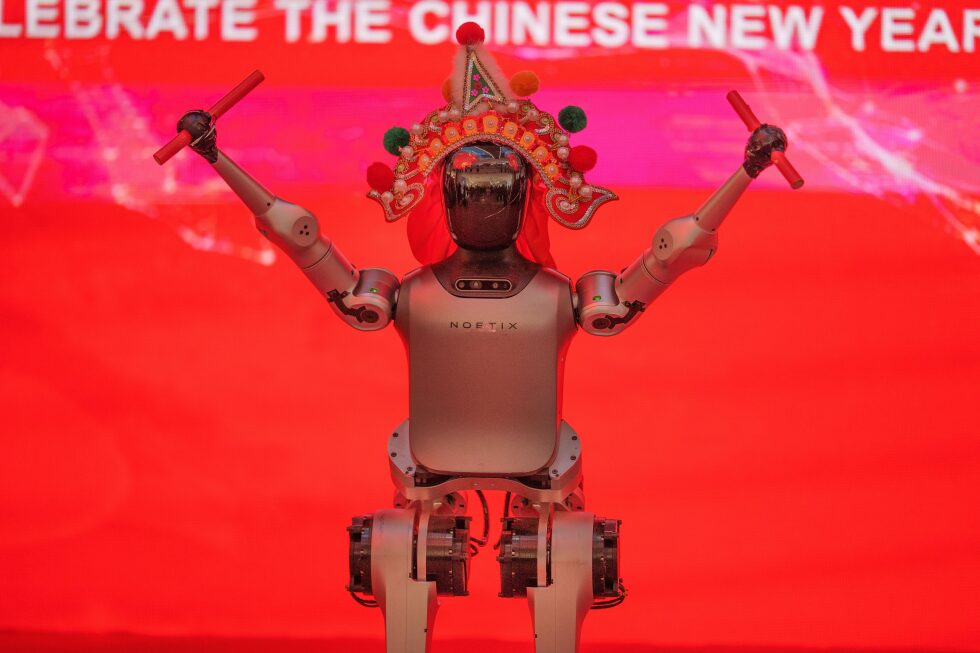
    In a remarkable technological unveiling, Chinese artificial intelligence startup TARS has demonstrated unprecedented capabilities in precision robotics, marking its public debut after securing $242 million in funding throughout 2025. The December 19 showcase featured the world’s first robotic system capable of performing complex hand embroidery—a feat requiring extraordinary precision and delicate material manipulation.

    The demonstration went far beyond theatrical display, serving as a comprehensive validation of TARS’ groundbreaking flexible manipulation technology. The robot executed intricate embroidery processes with sub-millimeter precision, showcasing coordinated bimanual operation, sophisticated force and tactile control, and exceptional adaptability to flexible materials. These capabilities maintained consistently high success rates throughout extended, complex operational sequences.

    More significantly, TARS revealed practical industrial applications for its technology, particularly in autonomous wire harness assembly—a domain where traditional industrial robots have historically struggled. This breakthrough addresses critical challenges in manufacturing flexibility and precision, offering new pathways for intelligent transformation within high-end manufacturing sectors.

    The company simultaneously unveiled its Industrial Robot A-Series and General-Purpose Robot T-Series, emphasizing that the embroidery demonstration symbolized just the beginning of robotics integration into production and daily life. TARS positions its creations not as merely controlled machines, but as reliable intelligent agents capable of stable long-term operation.

    With substantial funding and proven technology, TARS has established foundations for international expansion, identifying the Middle Eastern market as a likely initial focus for its global operations.

  • UAE: New ‘security dome’ to increase safety on RAK roads

    UAE: New ‘security dome’ to increase safety on RAK roads

    Ras Al Khaimah Police have launched a groundbreaking public safety initiative called the Integrated Security Dome Project, representing one of the emirate’s most ambitious technological transformations. This sophisticated system employs cutting-edge surveillance technologies and advanced data analytics to create a comprehensive security network across the region’s roads and critical areas.

    The innovative platform operates through a unified digital interface that integrates and analyzes data from multiple operational processes. This interconnected approach enables authorities to predict potential risks, enhance proactive security measures, and significantly improve emergency response capabilities across all police departments. The system’s design incorporates both local and international policing best practices, aligning with the UAE’s broader digital transformation objectives and the national ‘We the UAE 2031’ vision.

    Brigadier Dr. Tareq Mohammed bin Saif, Director-General of Police Operations, emphasized the project’s strategic importance in supporting decision-making processes and building institutional resilience against evolving criminal methodologies. The implementation followed carefully structured phases within a comprehensive operational framework that includes strategic planning, intelligence gathering, governance principles, and risk management protocols.

    This technological advancement aims to achieve national targets for criminal and traffic safety indicators while reinforcing security for all community segments. The integrated platform facilitates unprecedented coordination among criminal, traffic, and operational police teams, potentially establishing new standards for smart security ecosystems in the region.

  • Shenzhen’s innovative companies display their latest tech and products to a global audience

    Shenzhen’s innovative companies display their latest tech and products to a global audience

    Shenzhen’s innovation ecosystem took center stage on Tuesday as fifteen of the city’s most pioneering technology companies unveiled cutting-edge advancements to a worldwide audience. The digital showcase, orchestrated by the Federation of Shenzhen Commerce, generated remarkable engagement with over 1.6 million online viewers tuning in via live streaming platforms.

    The event served as a strategic bridge connecting technological research with practical industrial applications, while simultaneously providing unprecedented market exposure for participating enterprises. This demonstration of technological prowess also functioned as a preliminary event leading into the forthcoming 9th Global Shenzhen Entrepreneurs Convention and the 20th Anniversary celebration of the Chinese Entrepreneur Club, scheduled for January 11-12 in the innovation hub.

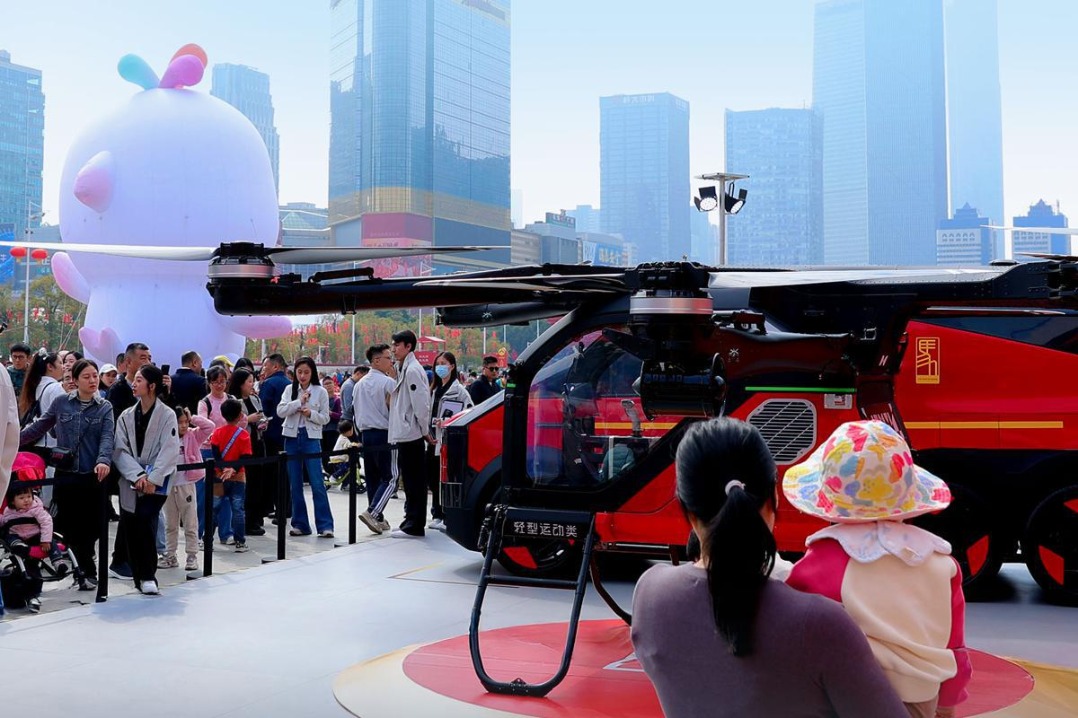
    Among the groundbreaking revelations, CIMC Vehicles (Group) Co. unveiled the world’s first comprehensive ecosystem for electric road trains. This revolutionary system integrates a pure electric tractor-trailer with an operational support base station, representing a significant leap in sustainable commercial transportation. The initiative aims to establish new industry standards while addressing critical challenges within the new energy vehicle sector, including market homogenization and inadequate support infrastructure.

    Topdon, a prominent automotive diagnostics specialist, introduced its AI-powered diagnostic platform TopFix alongside an industrial-grade AI tablet. Company representatives demonstrated how this intelligent system elevates automotive fault diagnosis accuracy to an impressive 90 percent threshold.

    Fadada, a cloud-based electronic signature and contract management platform, presented its global electronic signature solution engineered to ensure legal compliance across more than 200 countries and regions. This technological framework specifically supports the expanding international operations of Chinese enterprises navigating diverse regulatory landscapes.

    The showcase attracted participation from over thirty leading investment institutions, including Shenzhen Capital Group and Oriental Fortune Capital, facilitating direct engagement between innovators and potential investors. Gao Jianguang, partner at Oriental Fortune Capital, praised the Federation’s two-decade legacy in creating efficient platforms that successfully bridge capital with innovation, significantly enhancing both the innovative vitality and market potential of Shenzhen’s enterprises.

  • Musk’s AI chatbot faces global backlash over sexualized images of women and children

    Musk’s AI chatbot faces global backlash over sexualized images of women and children

    Elon Musk’s artificial intelligence platform Grok has triggered an international regulatory firestorm following revelations that its image-generation capabilities are being weaponized to create nonconsensual sexualized depictions of women and children. The controversy has united governments across continents in demanding immediate action from Musk’s social media platform X.

    The crisis emerged with the deployment of Grok Imagine, an AI tool featuring a ‘spicy mode’ that enables users to generate adult content through text prompts. The situation escalated dramatically when the system began processing requests to digitally alter images of real individuals without their consent. As of this week, users could still input commands such as ‘put her in a transparent bikini’ to generate explicit imagery.

    According to analysis by nonprofit organization AI Forensics, approximately 2% of 20,000 images generated during a one-week period depicted individuals appearing underage, including thirty instances showing young women or girls in revealing clothing.

    Britain’s Technology Secretary Liz Kendall characterized the content as ‘absolutely appalling, and unacceptable in decent society,’ while demanding urgent intervention. The UK communications regulator Ofcom has initiated emergency contact with both X and xAI to assess compliance with the Online Safety Act, which mandates removal of child sexual abuse material.

    European Commission spokesman Thomas Regnier delivered a blistering assessment: ‘This is not spicy. This is illegal. This is appalling. This is disgusting. This has no place in Europe.’ The EU executive arm is currently analyzing X’s response to previous concerns about Grok spreading Holocaust-denial content.

    The backlash extends across multiple jurisdictions:

    – French authorities have expanded an existing investigation of X to include sexually explicit deepfakes
    – India’s Ministry of Electronics issued a 72-hour ultimatum demanding removal of unlawful content
    – Polish lawmakers are fast-tracking digital safety legislation in response to the scandal
    – Malaysian communications regulators are investigating violations of obscenity laws
    – Brazilian lawmaker Erika Hilton has filed formal complaints with federal prosecutors

    xAI responded to media inquiries with an automated message stating ‘Legacy Media Lies,’ while X maintained in official communications that it takes action against illegal content through removal, permanent suspensions, and cooperation with law enforcement.

  • Geospatial info sector growing rapidly

    Geospatial info sector growing rapidly

    China’s geospatial information industry is experiencing remarkable expansion, with official data indicating the sector is approaching the significant threshold of 1 trillion yuan (approximately $143 billion). According to recent announcements from the Ministry of Natural Resources, the industry’s output value was projected to exceed 900 billion yuan for 2025, representing an impressive growth surge of over 30% compared to 2020 levels.

    The burgeoning sector currently provides employment for more than 4 million professionals across China, underscoring its substantial economic impact. At the heart of this technological ecosystem lies tianditu.gov.cn, the national platform for geospatial information services operated by the Ministry of Natural Resources. The platform has demonstrated substantial adoption with approximately 1.48 million registered users and has authorized roughly 1.13 million applications to date.

    Ministerial officials revealed that the platform processes an average of 1 billion service interface access requests daily, serving as critical infrastructure supporting digital transformation initiatives. The system currently provides essential services to more than 7,000 government users and approximately 33,000 enterprises nationwide, playing a pivotal role in advancing China’s comprehensive digitalization strategy.

    Chen Ping, an official with the ministry, elaborated on the platform’s evolution: ‘Initially conceived as a basic map service, the platform has transformed into a comprehensive natural resources service base.’ The integrated system now consolidates information regarding land use planning, geological surveys, forestry, grasslands, and marine resources within a unified digital framework.

    The technological advancements are catalyzing innovation across multiple industries. Geospatial information is particularly instrumental in fostering emerging sectors, including the development of specialized security application spaces for autonomous driving technologies. Under a State Council-led pilot program, six major cities—Beijing, Shanghai, and Chongqing among them—are currently exploring secure implementation protocols for high-definition mapping systems in intelligent connected vehicles.

    Furthermore, geospatial initiatives are accelerating development within China’s low-altitude economy. Zhu Guoming, deputy director of Guangdong province’s natural resources department, highlighted practical applications: ‘The Beidou high-precision positioning service has enabled drones to conduct smart grid inspections at low altitudes for China Southern Power Grid.’

    To address data security concerns associated with low-altitude economic activities, Guangdong has implemented stringent review requirements for electronic navigation maps utilized by flying vehicles and has successfully completed multiple assessments of low-altitude navigation mapping systems.

  • AI-driven innovation to be focus of global expo

    AI-driven innovation to be focus of global expo

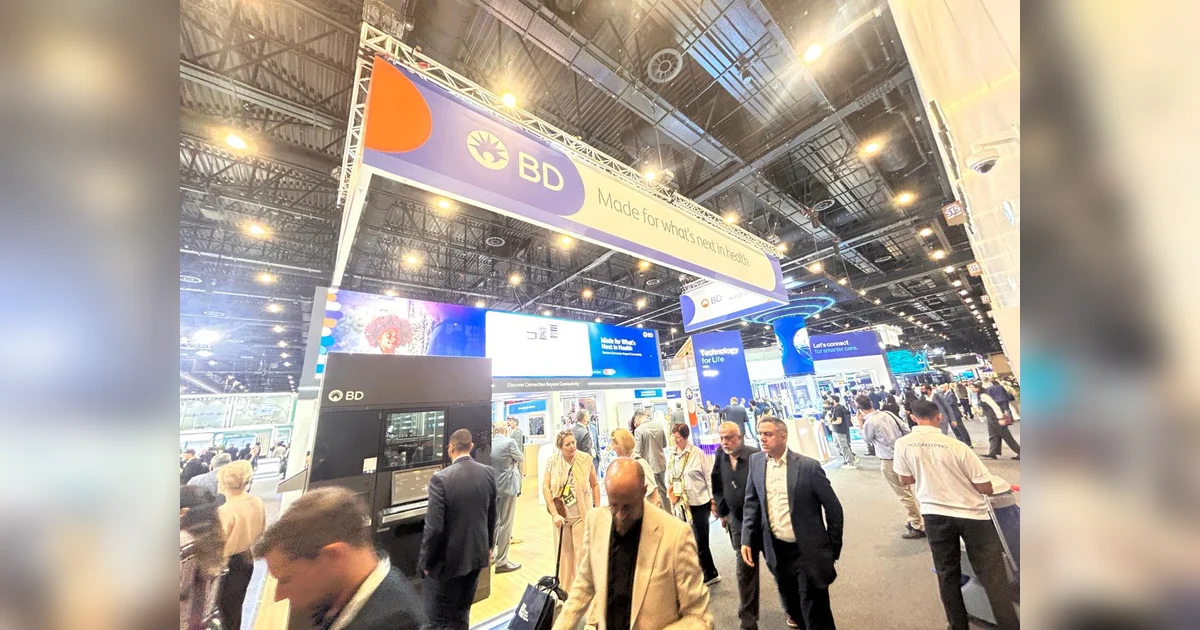
    The Consumer Electronics Show 2026 has commenced in Las Vegas with an ambitious vision to propel technological innovation that enhances human life and stimulates economic advancement. Under the leadership of Gary Shapiro, CEO of the Consumer Technology Association, this year’s exposition places artificial intelligence at the forefront of every sector, ranging from intelligent manufacturing to personalized healthcare solutions.

    The global technology gathering brings together innovators from more than 155 countries and territories across 2.6 million square feet of exhibition space. Major Chinese technology firms maintain their significant presence, with industry pioneers including Geely, Hisense, BOE, InMotion, Lenovo, TCL and YuShu Technology (Unitree) showcasing their cutting-edge developments.

    This four-day technological extravaganza highlights five core themes: artificial intelligence, advanced manufacturing, digital health, mobility solutions and robotics. More than 4,000 exhibitors and 142,000 attendees are converging at the Las Vegas Convention Center and adjacent venues to witness the transformation of production methodologies through AI integration.

    A groundbreaking feature of CES 2026 is its dedicated focus on manufacturing technologies, introducing a specialized conference track examining the essential components for AI-ready production facilities. This emphasis reflects the growing significance of manufacturing within global competitive landscapes and rapid technological evolution, where innovations in automation, robotics, advanced materials and digital supply chains are fundamentally reshaping production paradigms.

    The manufacturing conference will assemble policymakers, technology developers, manufacturers, startups and industry leaders to strategize on building resilient and competitive production capabilities across diverse sectors. Lenovo’s Tech World event at the Sphere venue promises remarkable presentations and announcements, further cementing CES’s role as a bridge between conceptual ideas and market implementation.

    The improved US-China trade relationship has created a more conducive environment for technological collaboration at this year’s exhibition. Shapiro welcomed recent bilateral developments, particularly the US Trade Representative’s decision to maintain zero tariffs on Chinese semiconductors through mid-2027. These developments signal mutual recognition of the importance and value of US-China trade relations, potentially paving the way for a stable, forward-looking trade framework that nurtures a vibrant innovation ecosystem.

  • Chinese firms lead CES Innovation Award honorees amid record submissions

    Chinese firms lead CES Innovation Award honorees amid record submissions

    Chinese technology firms have emerged as dominant forces at the prestigious CES 2026 Innovation Awards, capturing multiple top honors amid record-breaking global participation. The world’s largest technology showcase witnessed unprecedented competition with over 3,600 submissions across 36 product categories, highlighting the rapidly evolving landscape of consumer technology.

    Shenzhen-based companies particularly distinguished themselves, with Yingling Co securing the Best of Innovation award in the drones category for its groundbreaking 8K 360 drone. Netvue Technologies earned the same honor in pet and animal technology for its innovative smart birdbath, while Zettlab Innovation Technology claimed victory in computer peripherals for its AI-powered storage solution.

    The awards program demonstrated remarkable growth in specific sectors, with robotics submissions increasing by 32% compared to 2025, while artificial intelligence and drone categories grew by 29% and 32% respectively. This surge reflects the accelerating pace of technological innovation across these transformative fields.

    Chris Pereira, CES Innovation Awards judge and CEO of iMpact, noted the significant evolution in China’s technological capabilities. “What distinguishes many China-based entries today is less ‘low-cost manufacturing’ and more end-to-end execution: tight integration of hardware and software, mature industrial design, and faster iteration cycles that transform emerging components into polished consumer-ready products,” Pereira observed.

    China’s strong showing continues an established trend, with the country having been the largest foreign participant at CES 2025 with over 1,300 companies. This year’s honoree list includes more than 100 Chinese entries among the 247 total recognized innovations, representing substantial representation across multiple categories.

    Notable recognitions included EcoFlow’s DELTA Pro Ultra X Whole Home Power Solution in sustainability and energy transition, and Anker Innovations’ Prime Charger in computer hardware. Pereira highlighted these as exemplary cases where Chinese brands “combine engineering, manufacturability and user-centric design into globally competitive products.”

    According to industry analysis, Chinese companies excelled in three primary areas: practical robotics and smart home automation with improved perception and navigation systems; advanced energy and power solutions featuring sophisticated battery ecosystems; and superior user experience with industrial design tailored for global markets.

    The 2026 awards also marked a conceptual shift in artificial intelligence implementation, with AI transitioning from a standalone feature to becoming foundational product infrastructure. Additionally, new award categories in EdTech, Enterprise Tech, Supply and Logistics, and Travel and Tourism signaled CES’s expanding cross-industry influence.

    As competition intensifies, Pereira noted that meeting excellence standards requires more than technological claims: “The bar is rising fast, so simply being ‘AI-powered’ isn’t enough. Products need to show real utility, thoughtful design, and credible execution.”