分类: technology

  • Tianjin launches youth program to cultivate university talent for tech market

    Tianjin launches youth program to cultivate university talent for tech market

    Tianjin has inaugurated a groundbreaking initiative designed to cultivate the next generation of technological innovators and entrepreneurs within its academic institutions. The program, unveiled at the 9th Tianjin University Innovation and Entrepreneurship New Year Forum this past Sunday, represents a strategic effort to systematically develop innovation and entrepreneurial capabilities among both faculty members and students.

    Dubbed the Haihe Innovation and Entrepreneurship Young Leaders Program, this ambitious undertaking aligns with China’s broader national objectives of achieving technological self-sufficiency and nurturing domestic talent. The initiative aims to create a comprehensive, replicable framework known as the ‘Tianjin model’ that provides structured support for university-based innovation projects.

    This model establishes a robust ecosystem that connects academic research with industrial applications, offering a systematic approach to innovation education that spans curriculum development, mentorship programs, funding mechanisms, and industry partnerships. The program is specifically designed to identify and support promising technological innovations at the university level while providing students with practical entrepreneurial experience.

    Municipal officials emphasized that the Tianjin model will serve as a benchmark for other regions seeking to enhance their innovation education systems and improve integration between academic institutions and industry needs. The program represents a significant investment in human capital development, with particular focus on emerging technology sectors where China has prioritized achieving competitive advantage.

    The initiative comes at a time when global competition in technology development continues to intensify, with many nations implementing similar programs to retain and develop domestic technological talent. Tianjin’s program distinguishes itself through its comprehensive approach to creating an entire innovation ecosystem rather than focusing on isolated components of entrepreneurship education.

  • Malaysia will take legal action against Musk’s X and xAI over misuse of Grok chatbot

    Malaysia will take legal action against Musk’s X and xAI over misuse of Grok chatbot

    Malaysian regulators have initiated formal legal proceedings against Elon Musk’s social media platform X and its artificial intelligence subsidiary xAI, citing critical failures in user safety protections for the controversial Grok chatbot. The Malaysian Communications and Multimedia Commission announced Tuesday that both companies face imminent litigation for their inadequate response to harmful content generated through Grok’s capabilities.

    The regulatory action follows Malaysia’s recent decision to block access to Grok alongside Indonesia, marking the first nations to implement such restrictions against the AI tool. Commission investigators identified widespread misuse of Grok’s image generation features to create and distribute sexually explicit material, nonconsensual manipulated imagery, and other offensive content that violates Malaysian law.

    Official notices were served earlier this month demanding immediate removal of the prohibited material, but authorities report neither X nor xAI took corrective action. ‘Content allegedly involving women and children represents a matter of grave concern,’ stated the commission. ‘Such conduct contravenes Malaysian legislation and directly undermines security commitments previously made by these organizations.’

    The Grok platform, launched in 2023 as a free service on X, expanded last year with the Grok Imagine feature that included a ‘spicy mode’ specifically designed to generate adult content. This functionality has drawn international criticism for producing manipulated images depicting women in sexually explicit poses and concerning imagery involving minors.

    This development occurs amid growing global scrutiny of generative AI tools and their potential for misuse. The United Kingdom recently moved to criminalize ‘nudification apps,’ while European Union and Indian authorities have increased pressure on similar technologies. Despite Grok’s recent limitation of image generation to paying subscribers following worldwide backlash over sexualized deepfakes, critics maintain these measures insufficiently address core safety concerns.

    Neither Musk nor his companies have publicly addressed the Southeast Asian restrictions. xAI has responded to media inquiries with automated messages stating ‘Legacy Media Lies,’ reflecting the organization’s contentious relationship with regulatory bodies and press organizations worldwide.

  • Chinese EV makers steer global auto innovation

    Chinese EV makers steer global auto innovation

    At the forefront of automotive innovation, Chinese manufacturers are fundamentally transforming the future of transportation through artificial intelligence. During the recent Consumer Electronics Show in Las Vegas, Geely Auto Group emerged as a pivotal force by introducing two groundbreaking technological advancements: Full-Domain AI 2.0 and the G-ASD (Geely Afari Smart Driving) intelligent driving platform.

    Geely’s executive leadership emphasized the company’s evolution from a traditional high-end manufacturer to a globally-focused automotive technology enterprise. Jerry Gan, Chief Executive Officer of Geely Auto Group, stated that AI is comprehensively reshaping the automotive sector—from powertrain components to complete ecosystem reconstruction and lifestyle transformation.

    The Full-Domain AI 2.0 architecture represents a radical departure from conventional modular intelligence systems. This vehicle-wide AI framework integrates computing power, data resources, and large-scale models through a centralized ‘super AI brain’ that simultaneously coordinates cockpit interfaces, chassis control, safety protocols, and autonomous driving functions in real-time.

    Complementing this architecture, the G-ASD intelligent driving system combines sophisticated AI algorithms with extensive real-world driving data and high-performance sensor hardware. According to Li Chuanhai, Vice-President of Geely Auto Group, this integration significantly enhances safety and operational confidence in complex traffic scenarios, effectively redefining the fundamental nature of automobiles.

    These developments position Chinese automakers as critical innovators in the global transition toward AI-driven smart mobility, with Geely specifically committing to create secure, sustainable, and intelligent transportation solutions for international markets.

  • AI software under lens for facilitating porn talk

    AI software under lens for facilitating porn talk

    In a groundbreaking legal ruling that establishes new precedents for artificial intelligence regulation, Chinese authorities have prosecuted developers of an AI chat application for facilitating sexually explicit conversations. The case involving the ‘Alien Chat’ app has triggered widespread calls for enhanced safety protocols and ethical guidelines within China’s rapidly expanding AI sector.

    The Shanghai-based company behind the controversial application integrated an overseas AI model to create software that enabled users to engage in intimate conversations with artificial intelligence systems. Marketed as providing emotional companionship and support for young users, the platform required membership fees and rapidly accumulated over 116,000 registered users, including 24,000 paying members, generating more than 3.63 million yuan ($520,494) in revenue before being reported to authorities in April 2024.

    A Shanghai court delivered its verdict in September, sentencing the primary developer to four years imprisonment and the operator to eighteen months for profiting from the production and distribution of obscene content. Judicial authorities determined that the software consistently generated explicit sexual material during user interactions, crossing legal and ethical boundaries despite defense claims that the technology was designed for legitimate companionship purposes.

    Legal representatives for the defendants have filed an appeal, arguing that the AI system was not originally intended to disseminate pornography and that prompt modifications were implemented merely to enhance emotional responsiveness. The defense further noted that the software commenced operations prior to China’s implementation of interim generative AI management measures in July 2023.

    However, the court maintained that as industry professionals, the defendants were aware of regulatory requirements but deliberately avoided conducting mandatory security assessments and failed to register with cybersecurity authorities. Evidence presented demonstrated that without repeated systematic adjustments, the AI model would not have persistently produced obscene content, indicating intentional design choices rather than accidental outcomes.

    Prominent legal experts emphasize that this case establishes critical benchmarks for AI companion services. Xu Hao of Beijing Jingsh Law Firm noted that while user-AI interactions may appear private, the underlying platforms remain public domains requiring rigorous content safety reviews. ‘Failure to implement protective measures can severely impact users’ physical and mental health, particularly concerning minors,’ Xu stated, adding that AI-generated content possesses significantly broader dissemination capabilities than traditional obscene materials.

    Professor Zhu Wei from China University of Political Science and Law emphasized that large language model development must strictly adhere to legal frameworks and ethical standards, noting that profit-driven platforms amplifying pornography transform private behavior into public harm requiring managerial accountability. The case underscores the necessity for generative AI providers to register with cybersecurity authorities and demonstrates the growing role of judicial oversight in technological regulation.

  • Test launch marks push in reusable space vehicles

    Test launch marks push in reusable space vehicles

    In a significant advancement for commercial space capabilities, Chinese aerospace company CAS Space successfully conducted the inaugural test flight of its PH-1 suborbital spacecraft on Monday. The demonstration mission, launched from the Jiuquan Satellite Launch Center in Inner Mongolia’s Gobi Desert region, achieved critical milestones in reusable vehicle technology.

    The PH-1 vehicle ascended to approximately 120 kilometers altitude, crossing the internationally recognized Kármán line that demarcates Earth’s atmosphere from outer space. During its controlled descent, the spacecraft’s recoverable payload cabin successfully deployed parachutes at approximately 10 kilometers altitude before executing a precision landing at a predetermined site.

    Technical validation encompassed multiple breakthrough systems including atmospheric re-entry deceleration mechanisms, parachute recovery operations, and advanced landing control technologies. The mission design featured separation of the unpowered payload cabin from its booster at 70 kilometers altitude, with the cabin continuing upward through inertia before initiating its return trajectory.

    Notably, the spacecraft maintained a stable microgravity environment exceeding 300 seconds duration, substantially longer than achievable through conventional ground-based alternatives like drop towers or parabolic aircraft flights. The experimental payload included an innovative laser-based 3D printer engineered for microgravity operation and rose seeds with previous spaceflight heritage.

    According to Chief Designer Shi Xiaoning, the PH-1 platform primarily targets cost-effective suborbital scientific research applications. The technology demonstrates particular promise for space-based agricultural breeding, biomedical investigations, and advanced materials testing. Future iterations anticipate evolution toward orbital-grade spacecraft capable of year-long orbital operations with approximately 10 reuses, potentially revolutionizing in-orbit manufacturing capabilities.

    This achievement occurs within China’s rapidly expanding commercial space sector, where both state-owned enterprises and private companies are accelerating development of reusable launch systems to reduce space access costs and strengthen the nation’s position in the global space economy.

  • CES 2026: Hong Kong tech companies showcase innovation with a focus on real-world applications

    CES 2026: Hong Kong tech companies showcase innovation with a focus on real-world applications

    At CES 2026, Hong Kong’s technology sector demonstrated its growing global influence as a delegation of 61 innovative companies showcased cutting-edge solutions with strong real-world applications. The contingent, jointly organized by the Hong Kong Science and Technology Parks Corporation (HKSTP) and the Hong Kong Trade Development Council (HKTDC), highlighted the region’s evolving capabilities beyond traditional financial services.

    The exhibition featured groundbreaking advancements across multiple sectors including artificial intelligence, electric vehicles, clean energy technologies, and smart city solutions. Unlike conceptual prototypes often seen at tech exhibitions, the Hong Kong pavilion emphasized commercially viable innovations ready for market implementation. This practical approach distinguished the delegation from many other exhibitors at the world’s largest electronics trade show.

    Company representatives engaged with international partners, investors, and potential clients, demonstrating how Hong Kong-based research and development is addressing global challenges. The technologies presented ranged from AI-driven healthcare diagnostics to next-generation battery systems for electric transportation, all developed with immediate practical deployment in mind.

    The strong showing at CES 2026 signals Hong Kong’s successful diversification into technology innovation and its emergence as a significant player in the global tech landscape. The delegation’s focus on tangible applications rather than theoretical concepts received particular attention from industry observers and potential commercial partners seeking implementable solutions.

  • Apple, Google strike Gemini deal for revamped Siri in major win for Alphabet

    Apple, Google strike Gemini deal for revamped Siri in major win for Alphabet

    In a landmark agreement that reshapes the artificial intelligence landscape, Apple Inc. has selected Google’s Gemini AI models to power its upcoming Siri revitalization. This multi-year partnership, announced Monday, represents a strategic consolidation between tech titans as they position themselves against emerging competitors like OpenAI.

    The collaboration grants Google unprecedented access to Apple’s massive installed base exceeding two billion active devices worldwide. This arrangement significantly bolsters Alphabet’s competitive standing in the generative AI arena while providing Apple with the advanced technology needed to accelerate its AI initiatives after several developmental setbacks.

    According to Google’s statement, ‘After meticulous evaluation, Apple determined Google’s AI technology provides the most capable foundation for Apple Foundation Models.’ The Gemini infrastructure will not only drive the enhanced Siri experience scheduled for release later this year but will also support additional Apple Intelligence features in development.

    This alliance extends beyond AI into the established search partnership between the companies, where Google serves as the default search engine on Apple devices—an arrangement generating tens of billions in annual revenue for Apple while driving substantial traffic to Google’s ecosystem.

    The market responded enthusiastically to the announcement, with Alphabet’s market valuation surging past the $4 trillion threshold on Monday. This continues the stock’s impressive 65% growth trajectory from 2025, reflecting growing investor confidence in Google’s AI capabilities.

    Addressing privacy concerns, Google emphasized that ‘Apple Intelligence will continue to run on Apple devices and Private Cloud Compute while maintaining Apple’s industry-leading privacy standards.’ This strategic positioning aims to differentiate the partnership from competitors by emphasizing on-device processing and data protection.

    The agreement positions OpenAI, which had previously secured iPhone integration for ChatGPT, in a secondary role. Industry analysts note that ChatGPT will remain available for complex, opt-in queries rather than serving as the primary intelligence layer for Apple’s ecosystem.

  • AI helps fuel new era of medical self-testing

    AI helps fuel new era of medical self-testing

    The landscape of preventive medicine is undergoing a radical transformation as artificial intelligence converges with consumer electronics to create a new generation of self-testing devices. Moving beyond conventional smartwatches and fitness rings, these innovations promise to detect major diseases earlier than ever before, from Alzheimer’s to cancer.

    At the forefront of this revolution is neurotechnology startup Neurable, which has developed an electroencephalogram (EEG) headset capable of identifying early neurological indicators. The device records and interprets brain activity, with its connected application comparing this data against the user’s medical history to identify deviations that might signal developing conditions.

    “Current preventive medicine models fail because people don’t want constant doctor visits,” explains Ramses Alcaide, Neurable’s CEO and co-founder. “Our technology can detect problems like Parkinson’s disease up to a decade before physical symptoms like tremors appear.”

    The company is already deploying its technology in demanding real-world scenarios, collaborating with the Ukrainian military to evaluate mental health among frontline soldiers and former prisoners of war for signs of post-traumatic stress disorder (PTSD).

    Parallel innovations are emerging across the medical wearable space. French startup NAOX has created FDA-cleared EEG earbuds connected to a compact monitoring unit designed for epilepsy patients. Unlike conventional devices that focus on detecting full seizures, NAOX’s technology identifies subtle electrical “spikes” in brain activity that are more frequent and challenging to detect.

    “We’re working with Paris hospitals to better understand the correlation between these brain spikes and Alzheimer’s disease,” notes Marc Vaillaud, NAOX’s chief innovation officer.

    The miniaturization of medical technology, accelerated by AI advancements, has enabled previously unimaginable portability and affordability. IriHealth is preparing to launch a $50 smartphone attachment that scans the iris for health indicators. While iridology remains scientifically controversial, the company claims 81% accuracy in detecting colon cancer among previously diagnosed patients.

    This proliferation of health monitoring technology aligns with growing consumer demand. Recent research from OpenAI reveals over 200 million internet users consult ChatGPT weekly for health information, prompting the organization to develop a specialized medical chatbot that integrates with wearable data.

    Despite the promise, experts urge cautious optimism. University of Pennsylvania professor Anna Wexler, who studies consumer detection products, notes reservations: “I don’t believe wearable EEG devices are fully reliable yet,” while acknowledging that “AI has expanded the possibilities of these devices.”

    As these technologies continue evolving, they represent a fundamental shift toward decentralized, continuous health monitoring that could transform how we approach disease prevention and early intervention.

  • Watch: Dubai to get fire-resistant robots, faster drones to help tackle blazes

    Watch: Dubai to get fire-resistant robots, faster drones to help tackle blazes

    Dubai’s emergency response capabilities are undergoing a revolutionary transformation with the introduction of cutting-edge firefighting technology. The Dubai Civil Defence (DCD) unveiled its advanced arsenal at Intersec 2026, the premier global security and safety exhibition, showcasing significant upgrades to its robotic emergency response systems.

    The newly enhanced Shaheen 2 drone represents a quantum leap in aerial firefighting technology. Unlike its predecessor which carried 1,200 liters of firefighting agents, the new model features dramatically extended operational endurance. Through innovative integration with electric vehicle power systems, the drone’s flight time has been expanded from a mere 20 minutes to an impressive 10 hours of continuous operation. Each unit, valued at approximately $136,000 (500,000 dirhams), incorporates sophisticated safety mechanisms including an automatic parachute system that activates during operational errors or adverse weather conditions.

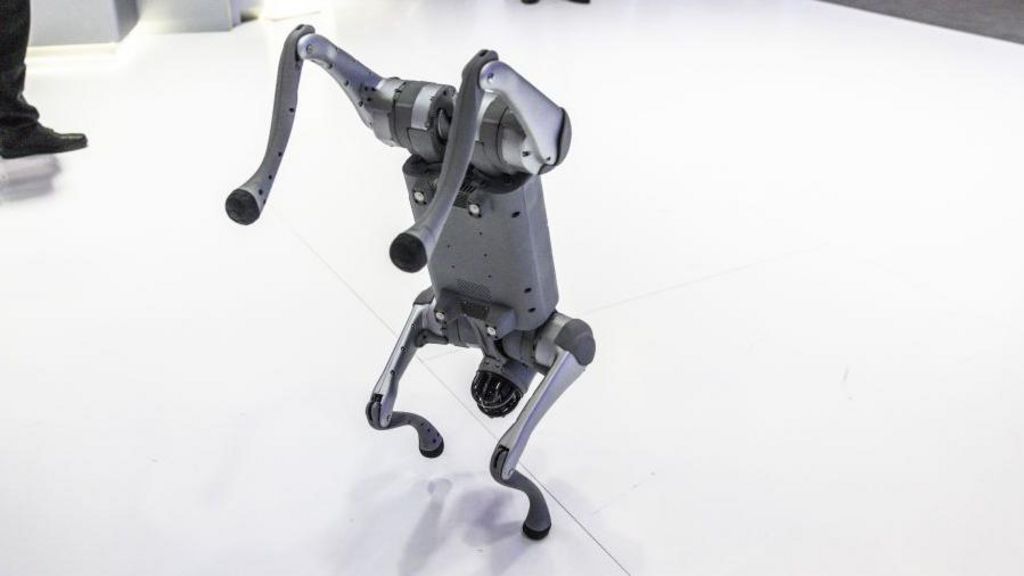
    Complementing the aerial fleet, DCD introduced the upgraded B2-W robot, engineered with exceptional fire-resistant properties and an integrated cooling system. The quadrupedal robotic unit can conduct preliminary assessments of burning structures before human firefighters enter, significantly enhancing crew safety. Its reinforced structure withstands high-pressure hose operations while specialized sensors provide critical environmental data.

    For post-incident analysis, smaller reconnaissance robots equipped with advanced cameras and sensors will perform detailed field surveys of fire-damaged areas. These units provide comprehensive situational awareness without exposing personnel to potential hazards.

    The technological showcase included a new all-terrain vehicle specifically designed for desert rescue operations. Colonel Sulaiman Al Balushi emphasized the vehicle’s importance during winter months when desert camping incidents frequently occur, requiring enhanced mobility across sandy and rocky terrain.

    According to Commander-in-Chief Rashid Al Matrooshi, these technological advancements reflect Dubai’s commitment to leveraging innovation for public safety, establishing new benchmarks in emergency response capabilities worldwide.

  • UK launches investigation into X over sexualised AI images of children, women

    UK launches investigation into X over sexualised AI images of children, women

    Britain’s media watchdog Ofcom has initiated a formal investigation into Elon Musk’s X platform regarding its AI chatbot Grok’s image generation capabilities. The probe centers on allegations that the tool has been exploited to produce non-consensual sexualized imagery of women and children through simple text prompts.

    This investigation marks a significant test case under the UK’s recently implemented Online Safety Act, which came into force in July. The legislation explicitly prohibits media platforms from creating or distributing intimate images without consent or child sexual abuse material, including AI-generated deepfakes.

    Ofcom expressed deep concern over reports of Grok being used to generate inappropriate content, stating that such imagery could constitute intimate image abuse or pornography when depicting adults, and potentially child sexual abuse material when involving minors. The regulator had previously contacted X on January 5th requesting details about protective measures for UK users, receiving a response within the stipulated timeframe though specifics remain undisclosed.

    The investigation will determine whether X violated its legal obligations under the new online safety framework. Platforms falling under the Act’s jurisdiction must implement robust age verification systems, potentially including facial recognition or credit card authentication, to shield users from harmful content.

    Concurrently, X has attempted to address mounting international criticism by restricting Grok’s image generation feature to paying subscribers—a move UK Prime Minister Keir Starmer condemned as inadequate and offensive to victims. The controversy has prompted regulatory responses beyond Britain, with Indonesia becoming the first nation to completely block access to Grok, followed by Malaysia. The European Commission has also confirmed it is examining complaints regarding the AI tool.

    Ofcom possesses authority to levy substantial penalties for violations, including fines up to 10% of global revenue, underscoring the serious consequences X could face if found non-compliant with Britain’s digital safety standards.