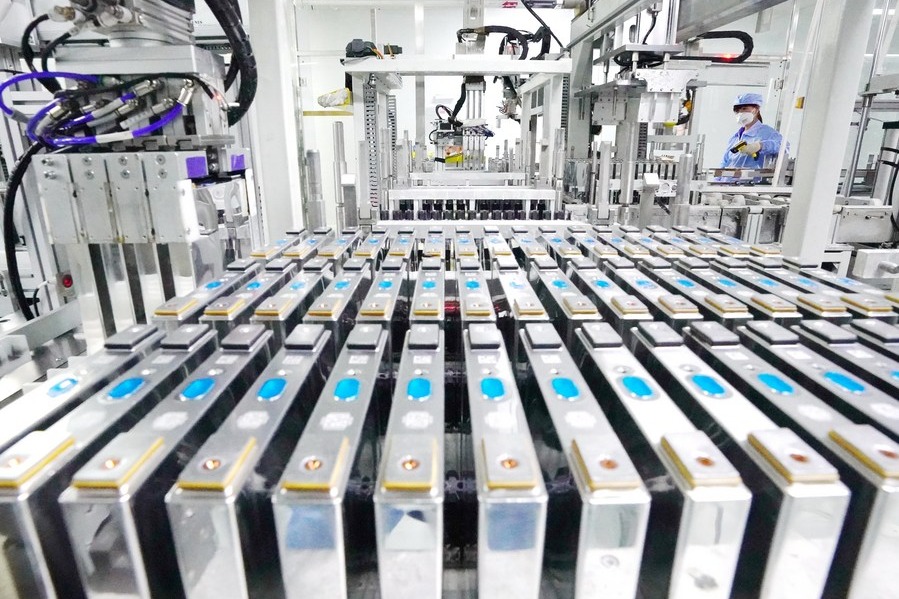
In a groundbreaking development, China has successfully launched an advanced safety system for the air transport of power lithium batteries, addressing long-standing global challenges in the safe transportation of high-risk energy products. The inaugural flight, operated by SF Express, took off from Ezhou Huahu International Airport in Hubei Province on Tuesday, coinciding with a seminar on power battery air logistics supply chains held in Ezhou. The event brought together industry experts and enterprise representatives to discuss solutions to development bottlenecks.
分类: technology
-

China decries prejudicial nature of some overseas-made games
The Ministry of State Security in China has raised concerns over certain overseas-produced video games, accusing them of embedding discriminatory portrayals of Chinese people and distorting China’s territorial integrity. In a recent article published on its official WeChat account, the ministry highlighted the risks these games pose to national security, urging the public to remain vigilant and strengthen their cybersecurity awareness.
The ministry pointed out that some games developed by foreign companies feature character designs, storylines, and art styles that perpetuate stereotypes and prejudice against Chinese communities. These games often depict Chinese characters as sinister and deceitful, engaging in violent acts that violate local laws. Additionally, the ministry criticized certain games for misrepresenting China’s territory, such as labeling the Xizang autonomous region as part of British India in a World War II simulation game.
Furthermore, the article noted that some in-game maps inaccurately depict borders involving Aksai Chin and Zangnan, and portray Taiwan as separate from the Chinese mainland. The ministry emphasized that safeguarding China’s territorial integrity is a non-negotiable principle and called for heightened vigilance when cultural products like games involve China’s boundaries or map labels.
The ministry also revealed that foreign espionage and intelligence agencies have infiltrated the gaming sector, using deceptive tactics to target players. One example cited was an overseas game that bypassed regulatory review by offering in-game rewards for watching advertisements, which covertly delivered ‘spy recruitment’ messages disguised as collaboration or part-time work offers.
To combat these threats, the ministry advised the public to download games through official app stores and avoid unknown download links or installation packages. It also urged citizens to report any suspicious activities that may endanger national security via the hotline 12339, the online reporting platform (www.12339.gov.cn), or directly to local national security authorities.
-
‘Bricks’ for lunar base clear tough first test
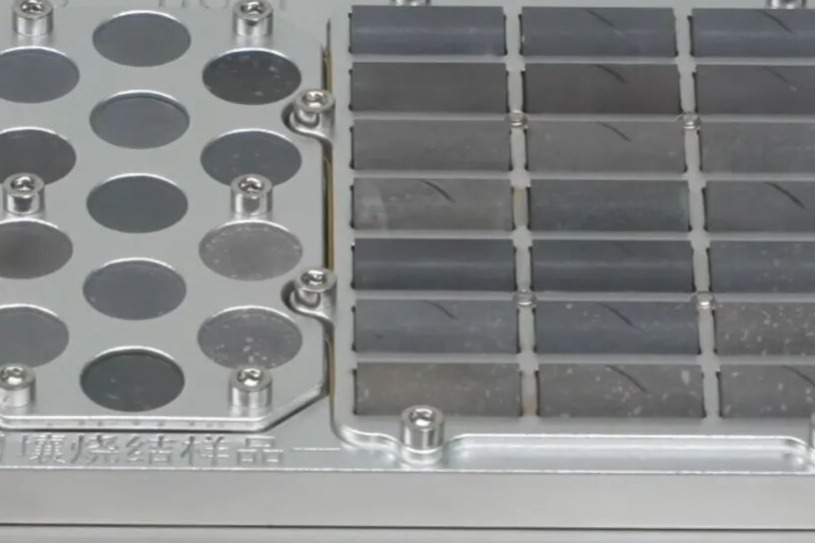
China has achieved a significant breakthrough in its lunar exploration ambitions by successfully testing experimental ‘lunar bricks’ in the harsh conditions of space for nearly a year. These bricks, designed to mimic the composition of lunar soil, were recently returned to Earth aboard the Shenzhou XXI spacecraft, marking a pivotal step toward the construction of a permanent lunar base by 2035. The 34 sample bricks, weighing approximately 100 grams in total, were exposed to extreme space conditions, including vacuum, cosmic radiation, and temperature fluctuations ranging from -190°C to 180°C. Despite these challenges, the bricks remained largely intact, demonstrating their durability and potential for lunar construction. Scientists at Huazhong University of Science and Technology, who developed the bricks, noted that they are over three times stronger than standard bricks and showed no signs of cracks or pits caused by space debris. However, a slight color change was observed, prompting further investigation. The project, led by Ding Lieyun of the Chinese Academy of Engineering, aims to address the high costs of transporting building materials from Earth by utilizing lunar resources. The bricks were created using volcanic ash from China’s Changbai Mountains, which closely resembles lunar soil, through a process called hot-press sintering. The experiment is part of a broader plan to establish the International Lunar Research Station, with China aiming to land astronauts on the moon by 2030 and expand the station by 2045, potentially serving as a launchpad for missions to Mars.
-

Singapore tells Apple and Google to clamp down on government spoofing
In a decisive move to protect its citizens from escalating online scams, Singapore has issued a directive to tech giants Apple and Google, demanding they take immediate action to prevent the impersonation of government agencies on their messaging platforms. The city-state’s Ministry of Home Affairs announced on Tuesday that both companies must block or filter accounts and group chats that mimic Singapore government agency identities on Apple’s iMessage and Google Messages by the end of November. The ministry emphasized the urgency of implementing measures to deter the abuse of these platforms by scammers. Non-compliance could result in fines of up to one million Singapore dollars ($768,000). Both Apple and Google have reportedly indicated their willingness to comply with the order, which also includes changes to how profile names of unknown senders are displayed. Government agencies have been using the ‘gov.sg’ message ID to verify legitimate communication, but scammers have exploited the lack of safeguards on messaging platforms to deceive the public. Google stated that it is collaborating with the Singapore government to implement pre-emptive measures to prevent the spoofing of government agencies’ names on its messaging platform, reaffirming its commitment to keeping Singaporeans safe online. Apple, however, could not be immediately reached for comment. This directive follows a similar order issued to Meta, the parent company of Facebook, to curb scammers impersonating government officials on the social media platform.
-

X’s new feature raises questions about the foreign origins of some popular US political accounts
Accounts with names like @TRUMP_ARMY and @MAGANationX, adorned with portraits of former President Donald Trump, voter rallies, and American flags, have long appeared to be fervent supporters of U.S. politics. However, a recent update to the social media platform X has revealed that many of these accounts are not based in the United States but in regions such as South Asia, Africa, and Eastern Europe. This discovery has raised significant concerns about foreign influence on American political discourse. Elon Musk’s X introduced a new feature on Saturday, allowing users to see the location of an account. This tool, called ‘About This Account,’ displays the country or region where an account is based. While the feature aims to enhance transparency and combat misinformation, it has also sparked controversy. Researchers at NewsGuard, a firm specializing in tracking online misinformation, identified several popular accounts—purportedly run by Americans—that are actually based abroad. These accounts have been disseminating polarizing and misleading claims about U.S. politics, including allegations that Democrats bribed moderators of a 2024 presidential debate. The location feature, while 99.99% accurate according to X’s head of product Nikita Bier, is not foolproof. Accounts can use virtual private networks (VPNs) to mask their true location, and some internet providers automatically use proxies, complicating the accuracy of the data. The revelation has divided users, with some praising the transparency and others questioning its implications for privacy. Critics argue that the feature could be seen as an invasion of privacy, while supporters believe it is a necessary step to safeguard the integrity of online discourse. The controversy underscores the ongoing challenges of combating misinformation and foreign influence in the digital age.
-

Meta in talks to spend billions on Google’s chips, The Information reports
Meta, the parent company of Facebook, is reportedly in advanced discussions with Alphabet’s Google to secure a multi-billion dollar agreement for the use of Google’s tensor processing units (TPUs) in its data centers. According to a report by The Information, this collaboration could see Meta renting TPUs from Google Cloud as early as next year, with full integration into its data centers slated for 2027. Google has positioned its TPUs as a cost-effective and secure alternative to Nvidia’s chips, which have faced supply constraints. The report also suggests that Google aims to capture 10% of Nvidia’s revenue through its TPU business. Neither Meta, Google, nor Nvidia have commented on the matter, and Reuters has yet to independently verify the report. Meta has been a significant customer of Nvidia since 2022, utilizing its graphics processing units (GPUs) to train AI models and support its vast user base of over 3 billion daily app users. Earlier this year, Meta announced a $600 billion investment in U.S. infrastructure and jobs over the next three years, including the development of AI data centers.
-
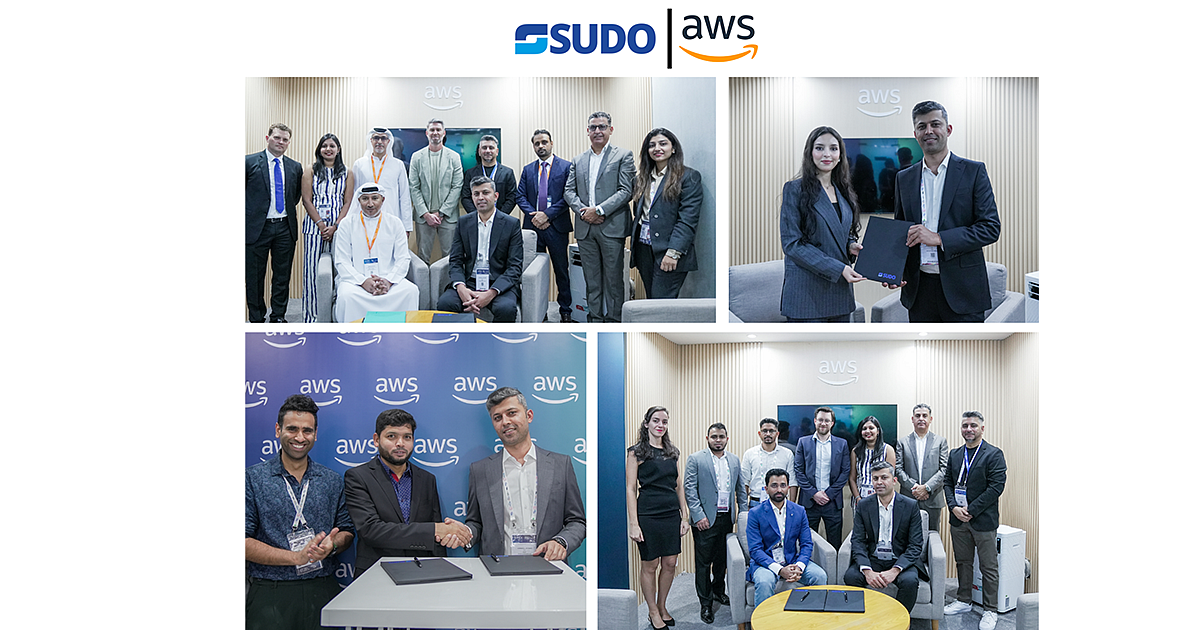
SUDO strengthens strategic alliances with multiple MOU signings at GITEX GLOBAL 2025
SUDO, a leading cloud transformation firm and AWS Premier Tier Services Partner, made significant strides at GITEX GLOBAL 2025 by signing multiple Memorandums of Understanding (MOUs) with prominent organizations, including INDEX Holding, EatEasy, Dkhoon Emirates, and Ram Clinics. These agreements, formalized at the AWS Booth, highlight SUDO’s growing network of innovation partners and its commitment to advancing Generative AI adoption, cloud modernization, and data-driven transformation across industries. Hameedullah Khan, CEO of SUDO, emphasized the importance of these partnerships, stating, ‘GITEX 2025 marks a defining moment in our journey. These collaborations reflect our dedication to leveraging AWS technologies to empower SMBs, drive operational intelligence, and scale innovation responsibly.’ The partnerships focus on diverse sectors, from food-tech to healthcare, aiming to enhance operational efficiency, customer experiences, and decision-making through advanced AWS solutions. SUDO’s expertise in Generative AI, cloud architecture, and data engineering continues to position it as a key enabler of secure and rapid business innovation. As a premier AWS Partner, SUDO offers specialized programs and proof-of-concept engagements to accelerate solution validation, ensuring alignment with global best practices.
-

UAE: OpenAI launches local data residency; 6 in 10 young residents use ChatGPT weekly
OpenAI has significantly bolstered its presence in the United Arab Emirates (UAE) by introducing local data residency options, a move that aligns with the nation’s growing demand for artificial intelligence (AI) solutions. This development comes as the company reports a tripling of its user base in the UAE over the past year, with 60% of residents aged 18–24 and half of those aged 25–34 using ChatGPT weekly. The new data residency feature, now available for ChatGPT Enterprise, ChatGPT Edu, and OpenAI’s API platform, enables businesses, public-sector entities, and educational institutions to store data locally, ensuring compliance with national governance and operational requirements. Farouk El Hamzawi, Head of Enterprise for OpenAI MENA, emphasized that the UAE’s AI adoption is progressing at a “remarkable pace,” driven by a clear long-term national strategy under the UAE Vision 2031 initiative. Major UAE organizations, including G42, Mubadala, Khalifa University, and NYU Abu Dhabi, are leveraging OpenAI’s technologies to enhance productivity, research, and AI-driven innovation. The launch of the data residency feature follows OpenAI’s earlier announcement of Stargate UAE, a collaborative data-center project with the UAE Government, G42, Oracle, NVIDIA, Cisco, and SoftBank, aimed at supporting the country’s AI infrastructure needs. OpenAI has assured that the feature adheres to enterprise-grade security standards, including data encryption, exclusion of customer data from model training, and customizable retention policies. This strategic expansion underscores the UAE’s position as a regional leader in AI adoption and technological advancement.
-
Alibaba’s cloud business revenue soars 34% driven by AI boom
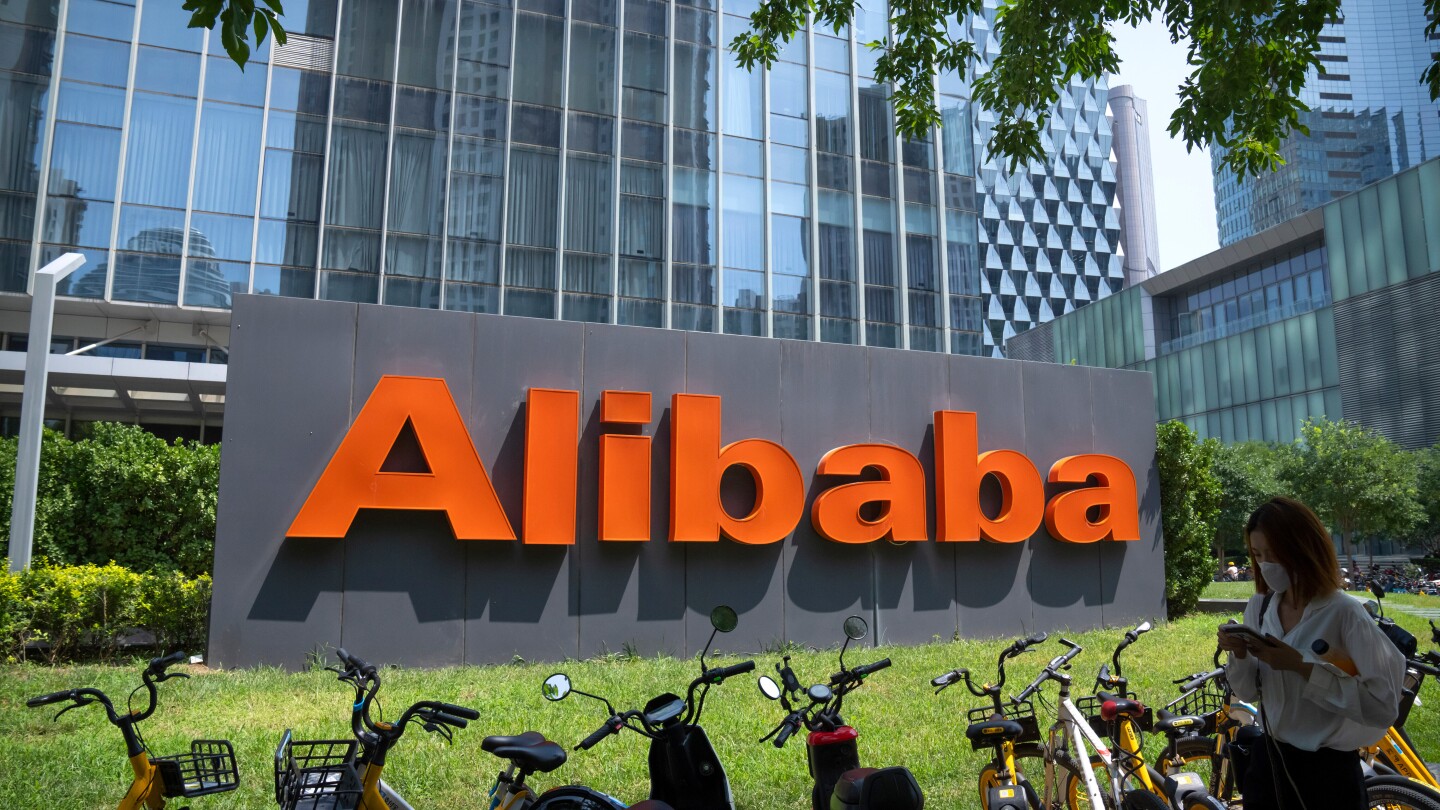
Alibaba Group, the Chinese tech giant, reported a 34% surge in revenue from its cloud computing division in the July-September quarter, driven by the rapid adoption of artificial intelligence (AI) technologies. Despite this impressive growth, the company’s overall revenue for the quarter rose by a modest 5% year-on-year to 247.8 billion yuan ($35 billion), while net profit plummeted by 52%. The decline in profitability was attributed to intense price competition in China’s e-commerce and food delivery sectors, which impacted short-term earnings. Competitor JD.com also faced a similar challenge, reporting a 55% drop in net profit during the same period. Alibaba, which began as an e-commerce platform, has increasingly shifted its focus to cloud computing and AI. Earlier this year, the company committed to investing at least 380 billion yuan ($53 billion) over three years to bolster its AI and cloud infrastructure. CEO Eddie Wu highlighted that the group’s substantial investments in AI have been instrumental in driving revenue growth. The 34% increase in cloud revenue outpaced the 26% growth recorded in the previous quarter. Alibaba emphasized that demand for AI is accelerating, and it may exceed its planned investment of 380 billion yuan to meet surging market needs. The company also announced that its upgraded AI chatbot, Qwen, which competes with OpenAI’s ChatGPT, garnered 10 million downloads within a week of its public launch. Alibaba’s Hong Kong shares rose by 2% on Tuesday, and its New York Stock Exchange shares climbed 2.4% before the opening bell. Year-to-date, the company’s shares have surged over 90%, reflecting investor optimism about its AI advancements. Meanwhile, other Chinese tech giants have reported mixed results. Tencent, a rival in AI, posted a 15% year-on-year revenue increase, while Baidu saw a 7% decline. Despite growing concerns among investors about a potential AI bubble, strong earnings from Nvidia last week have somewhat alleviated these worries.
-

AI-powered living: BSH revolutionises home with smart technology
BSH Home Appliances is pioneering a new era of home living by seamlessly integrating artificial intelligence (AI) and Home Connect technology across its brand portfolio. This innovative approach is redefining how individuals interact with their homes, offering smarter, more personalised experiences that enhance comfort and convenience. At the forefront of this transformation is Siemens, one of BSH’s leading brands, which is leveraging AI to elevate lifestyle and well-being while fostering meaningful relationships and environmental sustainability.