分类: technology

  • Panasonic aims to develop groundbreaking EV battery in about two years

    Panasonic aims to develop groundbreaking EV battery in about two years

    Panasonic Corp, a leading global supplier of electric vehicle (EV) batteries, is on the brink of a technological breakthrough that could significantly enhance the performance of EVs. The company is developing an anode-free battery technology, which it aims to commercialize within the next two years. This innovation could potentially increase the driving range of Tesla’s Model Y by up to 90 miles (approximately 145 km) without altering the battery pack size, marking a 25% boost in capacity.

    By eliminating the anode during the manufacturing process, Panasonic’s new design allows for the formation of a lithium metal anode after the battery’s initial charge. This approach not only frees up space for more active cathode materials—such as nickel, cobalt, and aluminum—but also enhances energy density. The company claims this technology will achieve a ‘world-leading level’ of battery capacity by the end of 2027.

    In addition to improving range, Panasonic is exploring ways to reduce the proportion of nickel in its batteries, a move that could lower costs and make EVs more affordable. However, the company has not disclosed specific details regarding potential price reductions for Tesla vehicles.

    This anode-free technology is part of a broader industry trend, with multiple global battery producers pursuing similar innovations. Panasonic’s advancements come at a critical time for Tesla, which has seen its U.S. market share decline amid increasing competition from rival EV manufacturers.

    The development underscores Panasonic’s commitment to driving the EV industry forward, offering solutions that balance performance, cost, and sustainability. As the race for superior battery technology intensifies, Panasonic’s anode-free design could position it as a key player in shaping the future of electric mobility.
  • North Korea’s Kim Jong Un oversees drone testing, KCNA says

    North Korea’s Kim Jong Un oversees drone testing, KCNA says

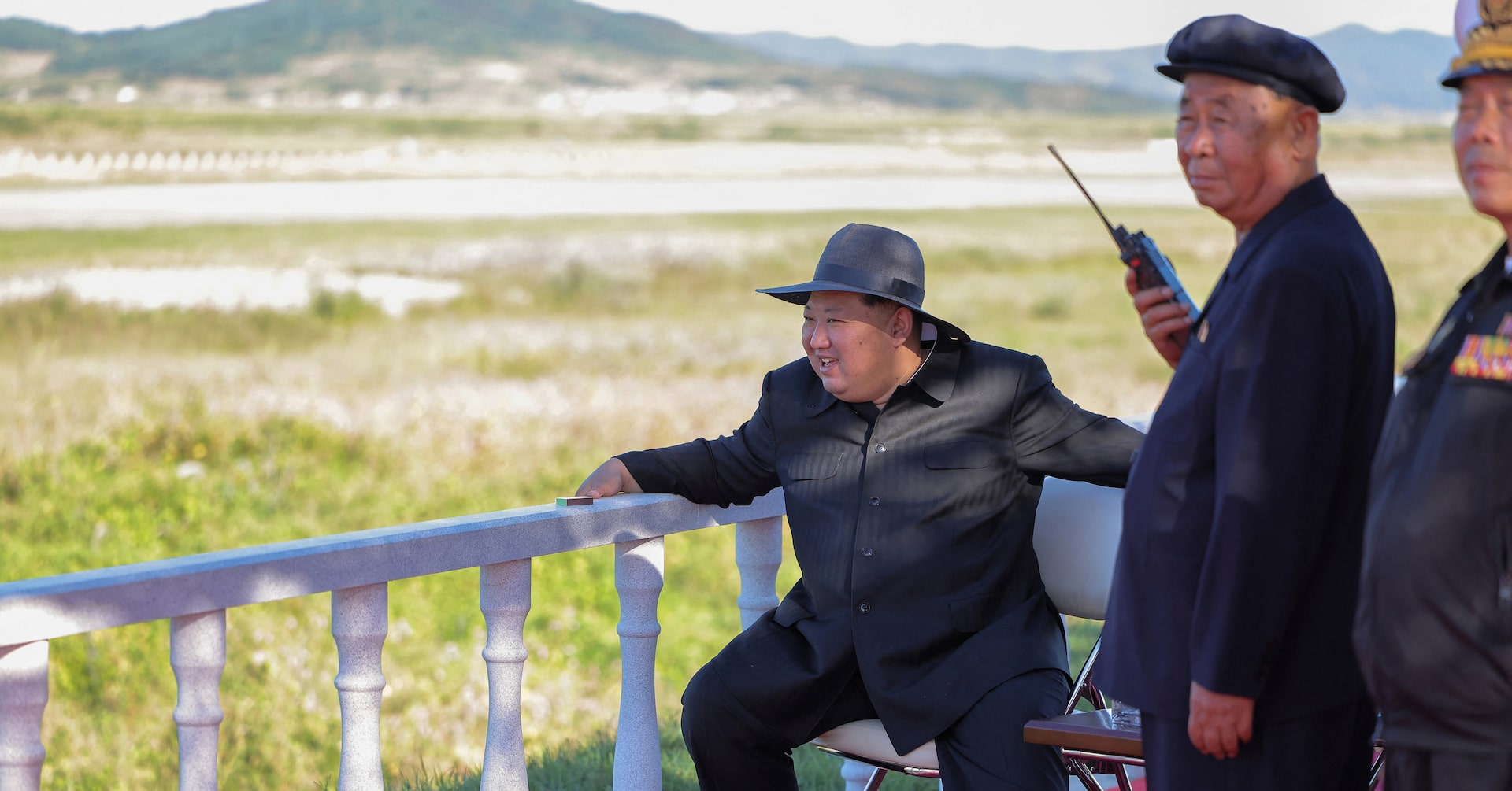
    North Korean leader Kim Jong Un personally supervised the testing of advanced unmanned drones on September 18, 2025, as reported by the state-run Korean Central News Agency (KCNA). The tests, conducted at an undisclosed location, focused on enhancing the capabilities of these drones through artificial intelligence (AI) technology. Kim expressed satisfaction with the performance of the ‘Kumsong’ tactical unmanned attack aircraft and an unmanned strategic reconnaissance aircraft, approving plans to further strengthen their operational effectiveness. This marks a continuation of North Korea’s efforts to integrate AI into its military technology, following a similar test of suicide drones equipped with AI in March 2025. In addition to the drone tests, Kim inspected the construction of a large greenhouse farm in Sinuiju, a city bordering China, highlighting the regime’s dual focus on military and agricultural advancements. The developments underscore North Korea’s commitment to leveraging cutting-edge technology to bolster its defense capabilities and self-sufficiency.

  • Cyber attacks cost German economy 300 bln euros in past year, survey finds

    Cyber attacks cost German economy 300 bln euros in past year, survey finds

    The German economy suffered staggering losses of nearly €300 billion ($354.99 billion) over the past year due to a surge in cyberattacks, according to a recent survey by industry group Bitkom. The report, unveiled on September 18, 2025, in Berlin, highlights that foreign intelligence agencies, particularly from Russia and China, are increasingly behind these attacks, overshadowing traditional cybercriminals. Ralf Wintergerst, President of Bitkom, emphasized during a press conference that nearly half of the companies able to trace the origins of attacks identified Russia and China as the primary sources, while a quarter pointed to other EU countries or the United States. The survey, which polled 1,002 companies, revealed that ransomware attacks, which lock data until a ransom is paid, were the most prevalent, affecting 34% of businesses—a significant jump from 12% in 2022. One in seven companies admitted to paying ransoms. While large corporations were generally well-prepared for the escalating cyber threats, small and medium-sized enterprises, which form the backbone of Germany’s economy, were found to be more vulnerable. The €289.2 billion in damages primarily stemmed from production losses, theft, and substantial legal and remediation costs. Sinan Selen, Deputy Head of Germany’s domestic security service BfV, noted that the lines between cybercrime and cyberespionage are increasingly blurred, with state actors often purchasing credentials from criminals on the dark web. He also identified Iran and North Korea as significant sources of cyberattacks. The findings underscore the growing complexity of cybersecurity in an era of heightened geopolitical tensions, particularly since Russia’s invasion of Ukraine in 2022.

  • Waymo and Via to offer robotaxis for public transit, starting with Arizona

    Waymo and Via to offer robotaxis for public transit, starting with Arizona

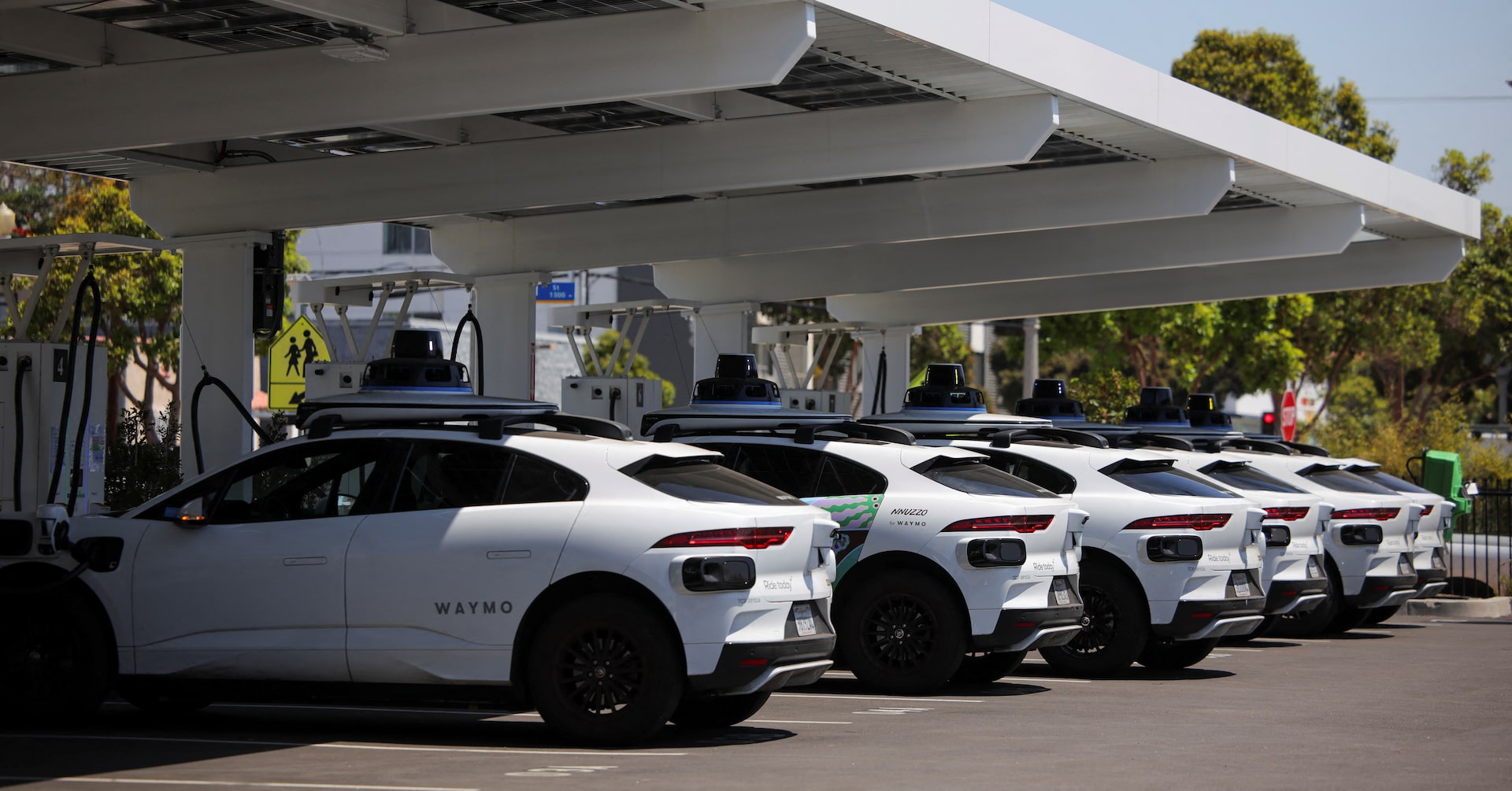
    In a groundbreaking move, Alphabet’s autonomous vehicle subsidiary, Waymo, has announced a strategic partnership with Via Transportation, a leading public transit software provider. The collaboration will integrate Waymo’s self-driving vehicles into Via’s platform, starting with Chandler, Arizona’s on-demand public transit service, Chandler Flex, this fall. This initiative marks a significant step in making autonomous vehicles (AVs) accessible to millions of public transit users globally. Via’s technology powers public transportation systems in over 30 countries, and this partnership aims to enhance mobility, reduce operational costs, and improve safety outcomes. Daniel Ramot, Via’s co-founder and CEO, expressed enthusiasm about the collaboration, highlighting its potential to revolutionize public transit. Waymo has been expanding its footprint in the U.S., recently announcing plans to launch autonomous cab services in Nashville, Tennessee, in partnership with Lyft. Since its debut in Phoenix in 2020, Waymo has extended its paid driverless services to major cities, including San Francisco, Los Angeles, Austin, and Atlanta. Meanwhile, Tesla has also entered the robotaxi arena, launching a limited service in Austin in June, with plans to expand to the San Francisco Bay Area. This partnership underscores the accelerating race in the autonomous vehicle sector, with companies vying to integrate AVs into mainstream transportation systems.

  • China’s DeepSeek says its hit AI model cost just $294,000 to train

    China’s DeepSeek says its hit AI model cost just $294,000 to train

    In a groundbreaking revelation, Chinese AI developer DeepSeek disclosed that it spent a mere $294,000 to train its R1 model, a figure significantly lower than the costs reported by its U.S. counterparts. This disclosure, published in a peer-reviewed article in the journal Nature on September 18, 2025, is poised to reignite discussions about China’s role in the global AI race. The Hangzhou-based company, which has largely remained out of the public eye since its January 2025 announcement of lower-cost AI systems, detailed that the R1 model was trained using 512 Nvidia H800 chips over 80 hours. The article, co-authored by DeepSeek founder Liang Wenfeng, also revealed that the company utilized Nvidia A100 GPUs in the preparatory stages of development, a fact that had not been previously disclosed. This revelation comes amidst ongoing scrutiny from U.S. companies and officials regarding DeepSeek’s access to advanced AI chips, particularly after the U.S. imposed export controls on high-performance chips to China in October 2022. Despite these challenges, DeepSeek has managed to attract top talent in China, partly due to its operation of an A100 supercomputing cluster, a rarity among domestic firms. The company’s cost-effective approach to AI development has already had a significant impact on global markets, prompting investors to reevaluate the dominance of established AI leaders like Nvidia.

  • Nvidia bets big on Intel with $5 billion stake and chip partnership

    Nvidia bets big on Intel with $5 billion stake and chip partnership

    In a landmark move, Nvidia has announced a $5 billion investment in Intel, solidifying its position as one of the largest shareholders in the U.S. chipmaker. This strategic partnership, unveiled on September 18 in San Francisco, comes weeks after the U.S. government acquired a 10% stake in Intel, signaling a concerted effort to bolster domestic semiconductor capabilities. The collaboration aims to enhance AI and computing technologies, posing a significant challenge to industry giants like TSMC and AMD. Nvidia’s investment, priced at $23.28 per share, reflects confidence in Intel’s potential despite its recent struggles. The deal excludes Intel’s foundry business but focuses on joint development of PC and data center chips, leveraging Nvidia’s proprietary technology for faster chip-to-chip communication. This alliance could reshape the competitive landscape, particularly in AI servers, where Nvidia and Intel’s combined offerings may outpace rivals like AMD and Broadcom. Intel’s CEO, Lip-Bu Tan, has pledged to streamline operations and align factory capacity with demand. The partnership underscores a broader trend of U.S. tech firms uniting to counter global competition, with Nvidia and Intel poised to drive innovation in the next era of computing.

  • Key products in Huawei’s AI chips and computing power roadmap

    Key products in Huawei’s AI chips and computing power roadmap

    In a groundbreaking move, Chinese tech giant Huawei has broken its silence to reveal a comprehensive product roadmap for its chips and computing power systems, marking its first public strategy to compete with global leader Nvidia. The announcement, made on September 18, 2024, outlines Huawei’s plans to introduce three new Ascend series chips over the next three years, starting with the Ascend 950 in the first quarter of 2025. The Ascend 950 will come in two variants: the 950PR, optimized for inference and recommendations, and the 950DT, designed for model training and decoding. Huawei also revealed that the Ascend 960 and 970 will significantly boost computing power and memory capacity, with the 970 expected to surpass Nvidia’s offerings. Despite U.S. export restrictions limiting Huawei’s access to TSMC, the company has developed its own high-bandwidth memory (HBM) technology, which it claims is more cost-effective than SK Hynix and Samsung’s HBM3E and HBM4E. Huawei’s cluster computing systems, such as the Atlas 900 A3 SuperPoD, already rival Nvidia’s advanced products, and the company plans to launch the Atlas 950 SuperPod in Q4 2026, boasting 6.7 times more computing power than Nvidia’s NVL144 system. Additionally, Huawei’s Kunpeng CPU chip series, first introduced in 2019, will see new iterations in 2026 and 2028, accompanied by the TaiShan 950 SuperPod for general-purpose computing. This bold strategy underscores Huawei’s determination to establish itself as a major player in the global semiconductor and AI markets.

  • Chipmaker Nvidia to invest $5bn in rival Intel

    Chipmaker Nvidia to invest $5bn in rival Intel

    In a landmark move, Nvidia, the global leader in artificial intelligence (AI) chip manufacturing, has announced a $5 billion investment in Intel, its long-time rival. The deal, unveiled on Thursday, marks a significant lifeline for Intel, which has been grappling with declining market share and operational challenges. The partnership will focus on developing cutting-edge chips for personal computers and data centers, capitalizing on the surging demand for AI technologies. This strategic alliance will grant Nvidia a 4% stake in Intel, positioning it as one of the company’s largest shareholders. Following the announcement, Intel’s stock surged by over 25%, while Nvidia’s shares saw a modest 3% increase. Intel, once a dominant force in the semiconductor industry, has struggled to keep pace with Nvidia, whose market capitalization has soared past $4 trillion, dwarfing Intel’s $100 billion valuation. Nvidia CEO Jensen Huang described the collaboration as a ‘fusion of two world-class platforms,’ emphasizing its potential to drive innovation and shape the future of computing. The deal comes on the heels of a separate $10 billion investment in Intel by the U.S. government, aimed at bolstering domestic semiconductor production and maintaining America’s technological edge. Intel CEO Lip-Bu Tan welcomed Nvidia’s investment, expressing gratitude for the confidence placed in his company. The partnership also unfolds against a backdrop of geopolitical tensions, as Nvidia faces challenges in the Chinese market due to the U.S.-China trade war and China’s push for domestic chip production. Despite these hurdles, the collaboration between Nvidia and Intel signals a new chapter in the semiconductor industry, with both companies poised to leverage their strengths in the rapidly evolving AI landscape.

  • SoftBank, OpenAI Japan AI joint venture is delayed, source says

    SoftBank, OpenAI Japan AI joint venture is delayed, source says

    SoftBank Group Corp. and OpenAI’s highly anticipated joint venture to deliver artificial intelligence (AI) services to corporate clients in Japan has encountered significant delays, according to an insider familiar with the matter. Initially slated for launch this summer, the venture, named SB OpenAI Japan, is now expected to provide an update on its progress in November. The source, who requested anonymity due to the confidential nature of the details, cited prolonged preparations as the primary cause for the setback. SoftBank confirmed that preparations are ongoing but refrained from commenting further, while OpenAI has yet to respond to inquiries. The venture was announced in February by SoftBank CEO Masayoshi Son and OpenAI CEO Sam Altman, with ownership shared between OpenAI and a newly established SoftBank entity. At a June shareholder meeting, Junichi Miyakawa, CEO of SoftBank’s telecom unit, had targeted the end of July for the venture’s launch, though specific product offerings remain under discussion. This initiative marks a resurgence in Son’s bold investment strategy, following a period of retrenchment due to underperforming tech investments. Meanwhile, SoftBank’s $500 billion Stargate project, aimed at developing data centers in the U.S., has also faced delays due to protracted negotiations and location-related decisions, as disclosed by CFO Yoshimitsu Goto last month.

  • Facebook owner unveils new AI-powered smart glasses

    Facebook owner unveils new AI-powered smart glasses

    At the annual Meta Connect conference held in Silicon Valley, Meta CEO Mark Zuckerberg introduced a groundbreaking lineup of smart glasses and AI-powered wearable devices, signaling the company’s ambitious push into the future of wearable technology. The event, attended by hundreds of tech enthusiasts and industry leaders, showcased Meta’s latest innovations, including the Meta Ray-Ban Display glasses and the Oakley Meta Vanguard, both designed to integrate seamlessly with the company’s AI ecosystem. The Meta Ray-Ban Display features a high-resolution, full-color screen embedded in one lens, enabling users to conduct video calls, view messages, and capture photos with a 12-megapixel camera. Additionally, Meta unveiled a neural wristband that pairs with the glasses, allowing users to perform tasks like sending messages through subtle hand gestures. Despite a minor hiccup during the live demonstration—a WhatsApp call failed to connect—Zuckerberg emphasized the transformative potential of these devices, calling the technology a ‘huge scientific breakthrough.’ Analysts predict that smart glasses, with their everyday practicality, could outperform Meta’s Metaverse project in terms of market adoption. However, challenges remain in convincing consumers of their value, particularly given the $799 price tag for the Meta Ray-Ban Display. Zuckerberg also highlighted Meta’s massive investments in AI infrastructure, including plans to build sprawling data centers across the U.S., as part of its mission to develop ‘superintelligence.’ The event was not without controversy, as activists protested outside Meta’s New York headquarters, demanding stronger safeguards for children on social media platforms. These concerns were amplified by recent Senate testimonies from former Meta researchers alleging the company downplayed potential harms of its VR products. Meta has denied these claims, labeling them as ‘nonsense.’