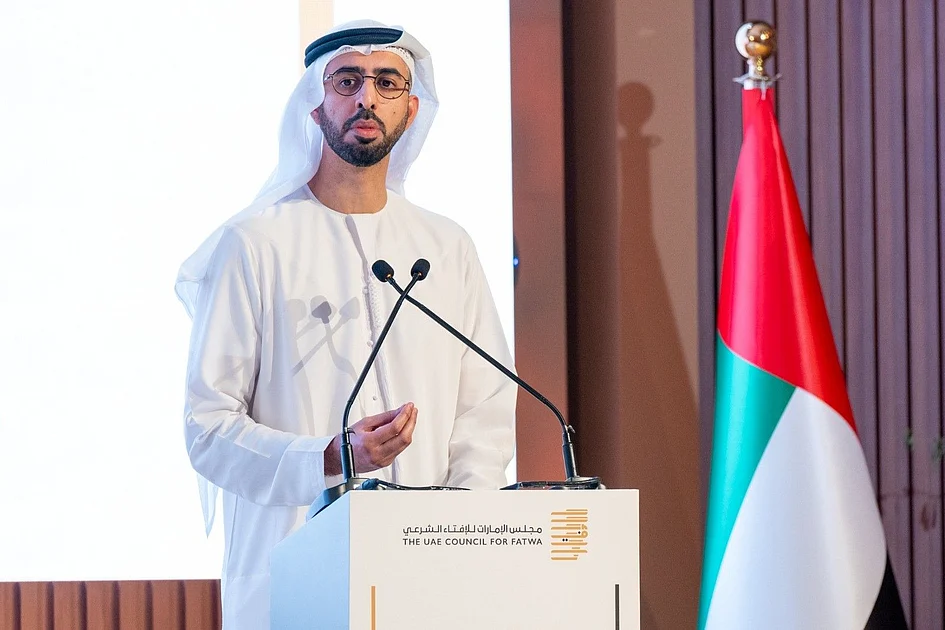
In a striking revelation at Gitex Global 2025, Omar Sultan Al Olama, UAE Minister of State for Artificial Intelligence, Digital Economy, and Remote Work Applications, disclosed that over half of the internet’s content is now generated by artificial intelligence (AI). However, this AI-driven content is failing to capture human interest or rank well on search engines. ‘Approximately 52% of online content is AI-generated, while 48% remains human-created. Yet, we’re observing that search engines aren’t prioritizing AI content, and users aren’t engaging with it,’ Al Olama stated during a fireside chat. He attributed this lack of engagement to the overwhelming volume of uninteresting AI-generated material. The minister emphasized the need for agile policymaking to address the evolving impacts of AI, urging governments to regulate the technology effectively without overreach. Al Olama also highlighted the UAE’s unique approach to AI governance, including the appointment of chief AI officers across federal and Dubai government agencies. These officers are tasked with understanding AI’s frontiers and crafting proactive, well-informed regulations. He cautioned against overestimating AI’s capabilities and stressed the importance of balancing excitement with realistic expectations. ‘AI won’t solve every problem,’ he concluded, advocating for informed and balanced regulation.
分类: technology
-

UAE faces 200,000 daily cyberattacks; Dubai, Abu Dhabi, Sharjah most targeted
The United Arab Emirates (UAE) is under constant siege from cyber threats, facing over 200,000 cyberattacks daily, with Dubai, Abu Dhabi, and Sharjah bearing the brunt of nearly 60% of these assaults. Dr. Mohammed Al Kuwaiti, head of cybersecurity for the UAE government, revealed these alarming statistics during his presentation at Gitex Global 2025. Dubai leads as the most targeted emirate, accounting for 21% of attacks, followed by Abu Dhabi (19%) and Sharjah (18%). Other emirates like Ras Al Khaimah, Fujairah, Ajman, and Umm Al Quwain also face significant threats, albeit to a lesser extent. Government entities are the primary targets, absorbing 34.9% of the attacks, while financial firms, energy sectors, and healthcare organizations also face substantial risks. Despite the relentless onslaught, the UAE has demonstrated remarkable resilience, successfully defending both public and private sector organizations. The average duration of a cyberattack in the UAE is significantly shorter than the global average, standing at 18.53 minutes compared to 60 minutes worldwide. However, the financial impact remains severe, with the Middle East experiencing an average data breach cost of $7.92 million in 2024, far exceeding the global average of $4.88 million. Dr. Al Kuwaiti emphasized the evolving nature of cyber threats, warning that they outpace the ability of enterprises to adapt. He highlighted a recent ransomware attack on a private healthcare facility that resulted in the exfiltration of 8 terabytes of data. To combat these challenges, the UAE is fostering a cyber-resilient culture, conducting global cyber drills with over 133 countries, and integrating advanced technologies like AI into its defense strategies. Dr. Al Kuwaiti stressed the importance of anticipating and countering cyber threats to safeguard the economy, national security, and society. Global losses from cyberattacks reached $10.5 trillion in 2024 and are projected to soar to $15.6 trillion by 2029, underscoring the urgency of collective action.
-

Cats fighting bear, fake investments: UAE officials warn deepfake videos can trick anyone
In a stark warning about the growing threat of deepfake technology, UAE officials have highlighted the potential dangers of manipulated videos, which are becoming increasingly difficult to distinguish from reality. Speaking at Gitex Global 2025, Omar Sultan Al Olama, UAE Minister of State for Artificial Intelligence, Digital Economy, and Remote Work Applications, emphasized the global scale of this challenge. He shared an anecdote about a dinner conversation where attendees debated whether to adopt a cat after watching a deepfake video of a cat fending off a bear. Al Olama warned that such deceptive content could influence critical decisions, from voting in elections to sharing sensitive information. Meanwhile, Abdullah Bin Touq Al Marri, UAE Minister of Economy, cautioned residents and investors against trusting social media videos falsely depicting him endorsing specific investments. He clarified that such videos are deepfakes and urged the public to remain vigilant. Both ministers stressed the need for global collaboration to address the issue, including the implementation of watermarks to identify deepfake content. Al Olama also highlighted the importance of upskilling the public and fostering a global dialogue to combat the misuse of AI technology.
-
Microsoft: Russia, China increasingly using AI to escalate cyberattacks on the US
A recent report by Microsoft reveals a significant surge in the use of artificial intelligence (AI) by adversarial nations and criminal entities to orchestrate cyberattacks and disseminate disinformation. The findings, published in Microsoft’s annual digital threats report, highlight over 200 instances of AI-driven fake content creation in July alone—a stark increase compared to previous years. Russia, China, Iran, and North Korea are at the forefront of this trend, leveraging AI to automate cyberattacks, craft convincing phishing emails, and even generate digital clones of high-ranking officials. These tactics are employed to infiltrate sensitive systems, disrupt critical services, and spread inflammatory disinformation. Amy Hogan-Burney, Microsoft’s Vice President for Customer Security and Trust, emphasized the urgent need for robust cybersecurity measures as attackers increasingly target governments, businesses, and vital infrastructure like hospitals and transportation networks. Despite the escalating threats, many U.S. organizations continue to rely on outdated defenses. The U.S. remains the primary target for cyberattacks, followed by Israel and Ukraine, reflecting the spillover of geopolitical conflicts into the digital domain. While adversarial nations deny their involvement in cyber espionage, evidence suggests otherwise. North Korea, for instance, has pioneered the use of AI personas to create fake American identities, enabling hackers to infiltrate remote tech jobs and steal sensitive data. Nicole Jiang, CEO of Fable, a San Francisco-based security firm, underscored the dual role of AI in both enabling cyberattacks and defending against them. As AI continues to evolve, the digital landscape is poised for an intensified cat-and-mouse game between attackers and defenders.
-
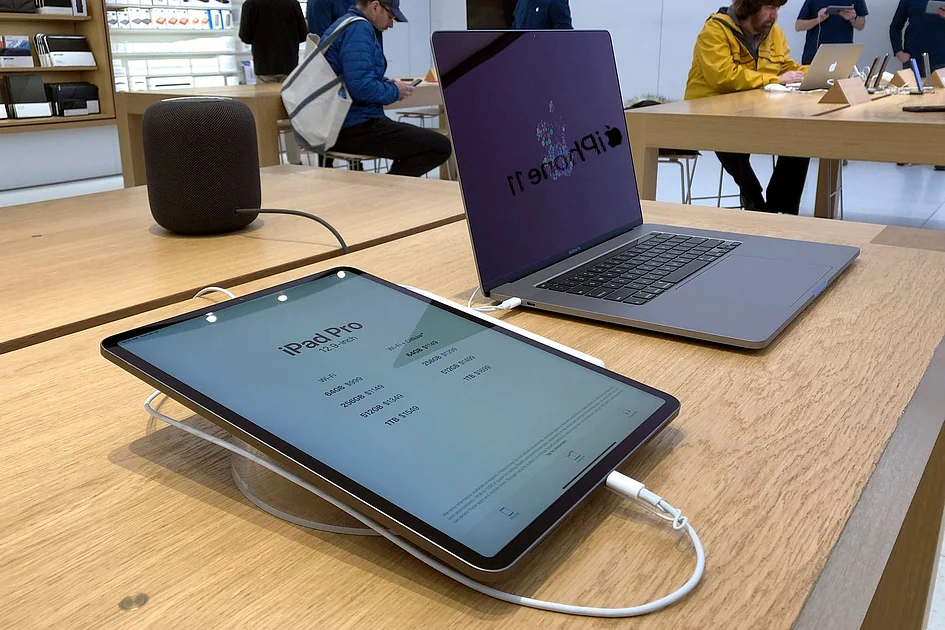
Apple rolls out MacBook Pro, iPad Pro with more powerful M5 chip
Apple has introduced its latest lineup of devices, including the refreshed MacBook Pro, iPad Pro, and the second-generation Vision Pro headset, all powered by the new M5 chip. The announcement, made on Wednesday, underscores Apple’s commitment to enhancing performance for creative professionals while maintaining competitive pricing. The M5 chip, built using a cutting-edge 3-nanometer process, promises significant improvements in both performance and energy efficiency, enabling advanced AI-based applications to run seamlessly on these devices. Notably, the MacBook Pro with the M5 chip can now support large language models directly on the device, a leap forward in on-device AI capabilities. Despite these upgrades, Apple has kept the prices unchanged from the previous M4-powered versions, with the 14-inch MacBook Pro starting at $1,599, the iPad Pro at $999, and the Vision Pro at $3,499. The Vision Pro, which debuted in 2023, has received positive feedback for its display quality but remains a niche product with limited adoption. Apple’s strategy of integrating its most advanced chips into premium devices like the MacBook Pro and iPad Pro aims to counter the performance gains of competitors using Qualcomm and Intel’s AI-oriented chips. The company also anticipates a rebound in iPad and Mac sales, driven by more affordable models and a global recovery in electronics demand.
-

From complex to autonomous: The next chapter in telecom’s evolution
The telecommunications industry is undergoing a transformative shift as it embraces autonomous networks powered by artificial intelligence (AI). These networks, which go beyond traditional rule-based automation, are designed to sense, learn, and act with minimal human intervention. This evolution marks a significant departure from manual processes and siloed systems, enabling telecom operators to manage soaring traffic volumes, rising energy demands, and sophisticated security threats more effectively.
-

How Sharjah cut rental process from multiple visits to minutes
Sharjah has transformed its rental process from a cumbersome, multi-visit ordeal to a seamless digital experience, saving residents both time and money. Through a unified digital system integrating key government entities such as the Sharjah Electricity, Water and Gas Authority (SEWA), Sharjah City Municipality, the Real Estate Registration Department, and the Department of Town Planning and Survey, the emirate has achieved remarkable efficiency gains. Between 2022 and 2024, this system saved Dh250 million and reduced over 1.2 million work hours across government bodies. Residents have directly benefited, saving Dh1 million and more than 79,000 hours, as services like moving into a new home can now be completed in minutes through a single digital channel. Sheikh Saud bin Sultan Al Qasimi, Director General of the Sharjah Digital Department (SDD), emphasized that the future of government services in Sharjah will be defined by integration and simplicity, with every experience designed to be seamless and people-centric. Lamia Al Hussan Al Shamsi, Director of the SDD, highlighted key digital projects showcased at Gitex Global 2025, including Digital Sharjah, an AI-powered chatbot, and the Aqari Platform, which has processed over 2,000 transactions and registered 42,000 real estate units entirely online. Sharjah’s digital transformation aligns with the UAE’s broader smart governance goals, leveraging AI and data to enhance urban life, sustainability, and community trust.
-

Flying cars and AI dazzle at Dubai expo
China’s cutting-edge low-altitude technology and innovative flying vehicles took center stage at the 45th edition of GITEX Global in Dubai, one of the world’s most influential technology and AI exhibitions. Over 300 Chinese enterprises showcased their latest advancements in AI robotics, intelligent solutions, flying cars, and 5G technologies at the event, which ran from October 13 to 17 and attracted 6,800 tech companies and 2,000 startups from 180 countries and regions. Among the highlights was Xpeng AeroHT’s two-seater electric vertical takeoff and landing (eVTOL) aircraft, part of the world’s first mass-produced modular flying car, the ‘Land Aircraft Carrier.’ The aircraft completed its first overseas manned flight in Dubai, securing 600 orders across the Middle East, marking the largest overseas order volume for a Chinese eVTOL manufacturer. Deliveries are set to begin in 2027. GOVY, a flying vehicle brand under Chinese automaker GAC Group, also made its Middle East debut with the Govy AirCar, featuring aviation-grade carbon fiber composites and gull-wing doors for vertical takeoff and landing. The event underscored China’s efforts to build a low-altitude economy ecosystem, utilizing airspace below 3,000 meters for applications in manufacturing, logistics, entertainment, and emergency services. Ou Boqian, China’s consul-general in Dubai, emphasized the significance of this progress, calling it a crucial step in the internationalization of China’s low-altitude electric manned flight technology. The Boston Consulting Group forecasts that China’s eVTOL market will be worth $41 billion by 2040, with the Middle East market expected to reach $11 billion. As the UAE and Saudi Arabia pivot toward technology-driven economies, low-altitude transportation has emerged as a key sector, with Chinese solutions poised to play a pivotal role in shaping the future of air commuting in the region.
-

Is Microsoft’s first ever handheld Xbox console worth the wait?
After nearly two decades of speculation, Microsoft has finally unveiled its handheld gaming console, the ROG Xbox Ally, marking a significant entry into the portable gaming market. Designed to compete with industry giants like Nintendo and PlayStation, the device promises a unique blend of Xbox and PC gaming experiences. Priced at £499 for the base model and £799 for the more advanced ROG Xbox Ally X, the console is not just a gaming device but a portable Windows PC, offering compatibility with a vast library of PC games alongside Xbox’s Game Pass subscription service. The device’s dual functionality allows users to play both Xbox and PC games, though it comes with the inherent challenges of PC gaming, such as compatibility issues and the need for manual adjustments. The ROG Xbox Ally features a comfortable controller design, a decent LCD display, and solid performance for most modern games. However, its reliance on Windows 11 introduces some drawbacks, including mandatory updates and a lack of the polished user experience typically expected from premium gaming devices. While the console excels in offering Game Pass on-the-go and access to a massive game library, its high price and late market entry raise questions about its ability to stand out in an already crowded handheld gaming space. As Microsoft targets tech-savvy gamers, the ROG Xbox Ally’s success will depend on whether its unique features can justify its cost and compete with established rivals like the Nintendo Switch 2 and Steam Deck.
-
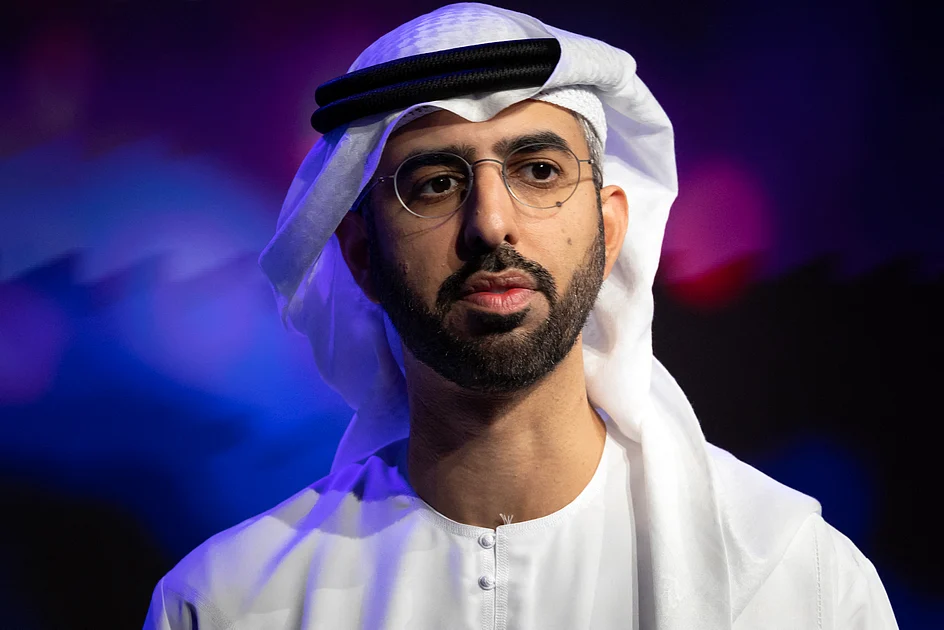
How UAE’s next decade will be run by digital-first natives with ‘more productivity’
The United Arab Emirates (UAE) is poised to lead the next decade with a generation of digital-first natives, according to Omar Sultan Al Olama, the UAE’s Minister of State for Artificial Intelligence, Digital Economy, and Remote Work Applications. Speaking at the World Economic Forum’s Annual Meetings of the Global Future Councils and Cybersecurity, Al Olama emphasized the transformative potential of this tech-savvy generation in addressing global challenges such as climate change and social inequality. He urged global leaders to adopt bold, forward-thinking strategies, rejecting the tendency to dwell on past limitations. Al Olama highlighted the UAE’s own journey, from a modest vision in 1991 to its current leadership in AI and blockchain innovation. He underscored the importance of audacious visions, citing the UAE’s success in creating a blockchain network that mobilized 20 gigawatts of power globally in just 12 years. Addressing concerns about AI, Al Olama provided data-driven optimism, noting that AI-generated content has plateaued at 52% online, countering fears of an AI takeover. He concluded by sharing a powerful lesson from Sheikh Mohammed bin Rashid Al Maktoum: ‘If you don’t have a vision, you will be part of someone else’s vision.’ The UAE’s commitment to innovation and its digital-first approach positions it as a global leader in shaping the future.