分类: technology

  • Meta partners with news outlets to expand AI content

    Meta partners with news outlets to expand AI content

    In a significant move to enhance its artificial intelligence capabilities, Meta announced on December 5, 2025, the formation of strategic partnerships with major news organizations to integrate real-time content into its Meta AI assistant. This collaboration will provide users across Facebook, Instagram, and WhatsApp with immediate access to breaking news, entertainment updates, and lifestyle stories directly through AI interactions.

    The initiative draws content from a diverse array of media partners including CNN, Fox News, Le Monde, People, and USA Today, with additional partnerships with The Daily Caller and The Washington Examiner ensuring representation across the political spectrum. According to Meta’s official blog post, this integration will enable users to access more varied content sources while receiving direct links to partner websites for deeper exploration of news stories.

    Meta explicitly acknowledged the challenges current AI systems face in keeping pace with real-time events, stating that these partnerships aim to make Meta AI “more responsive, accurate, and balanced” through the incorporation of diverse viewpoints. The company emphasized its commitment to expanding these collaborations and developing new features as competition intensifies among technology firms racing to advance their AI assistants.

    This development occurs amidst a broader industry trend where AI companies, including ChatGPT and Google’s Gemini, are increasingly incorporating live web content and news feeds. The announcement marks a notable shift in Meta’s relationship with news organizations, which has experienced significant fluctuations over the years.

    The social media giant had previously minimized news content on its platforms, shutting down the Facebook News tab in multiple markets including the United States, Britain, and France while ending multi-million dollar deals with leading news organizations. The company’s January decision to terminate its US fact-checking program, which had employed third-party fact checkers from organizations including AFP to combat misinformation, further complicated its relationship with established media.

    Meta AI currently serves billions of users globally across the company’s ecosystem of applications, positioning this news integration as a substantial enhancement to its functionality and relevance in the competitive AI landscape.

  • China’s Kuaizhou-1A rocket launches two new satellites into space

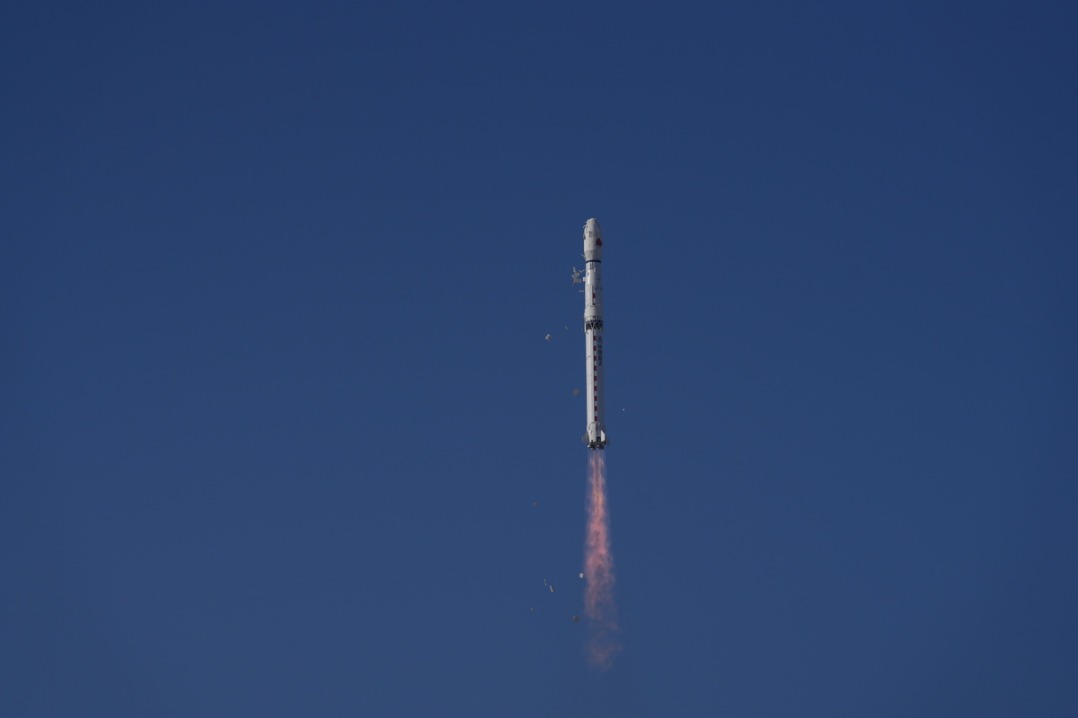
    China’s Kuaizhou-1A rocket launches two new satellites into space

    China has marked another milestone in its space exploration endeavors with the successful deployment of two advanced Very High Frequency Data Exchange System (VDES) satellites. The launch occurred precisely at 5:00 PM Beijing Time on December 5, 2025, from the Jiuquan Satellite Launch Center situated in China’s northwestern region.

    The mission utilized the reliable Kuaizhou-1A (KZ-1A) carrier rocket, which demonstrated exceptional performance during the ascent phase. Following textbook separation procedures, both satellites seamlessly entered their predetermined orbits, confirming the complete success of the operation.

    These newly deployed VDES satellites represent significant advancements in maritime communication technology. The system enhances ship-to-ship and ship-to-shore data transmission capabilities, contributing to improved maritime safety, navigation efficiency, and oceanographic monitoring. This launch underscores China’s growing expertise in satellite technology and space infrastructure development.

    The Jiuquan Satellite Launch Center, one of China’s primary space facilities, has consistently proven its capability to support complex space missions. The center’s strategic location and advanced infrastructure make it an ideal site for such satellite deployment operations.

    This achievement reinforces China’s position in the global space technology arena and demonstrates the country’s commitment to advancing space-based communication systems that benefit international maritime operations and global connectivity.

  • Meet UAE’s leading cybersecurity experts

    Meet UAE’s leading cybersecurity experts

    In an era defined by escalating digital threats, a new cadre of cybersecurity pioneers is emerging as the critical line of defense for global organizations. These technological strategists are navigating increasingly sophisticated cyber landscapes while architecting robust security frameworks that safeguard essential infrastructure and sensitive data ecosystems.

    These experts employ cutting-edge technological solutions that extend beyond conventional security protocols, implementing advanced artificial intelligence systems, predictive threat analytics, and zero-trust architectures. Their approach represents a fundamental shift from reactive security measures to proactive defense mechanisms capable of anticipating novel attack vectors before they manifest.

    The human element remains equally crucial to their strategy. These leaders are cultivating specialized security teams through comprehensive training initiatives and fostering organizational cultures that prioritize cyber resilience at every operational level. By merging technological innovation with human expertise, they create multidimensional defense systems that adapt dynamically to evolving threats.

    Their work transcends traditional IT security, encompassing critical infrastructure protection across financial systems, healthcare networks, energy grids, and governmental operations. As digital transformation accelerates across all sectors, the role of these cybersecurity visionaries becomes increasingly vital to maintaining operational continuity and protecting against potentially catastrophic breaches.

    The evolving nature of cyber threats demands continuous innovation in defense methodologies, with these experts consistently developing new frameworks to address emerging challenges in cloud security, IoT vulnerabilities, and sophisticated ransomware campaigns that threaten global economic stability.

  • Expo on AI machines, electronics opens in Macao, pursuing global opportunities

    Expo on AI machines, electronics opens in Macao, pursuing global opportunities

    MACAU – The 2025 Global Artificial Intelligence Machines and Electronics Expo (AIE) commenced Thursday in Macao, positioning the special administrative region as a crucial nexus for international technological collaboration. The landmark event, running concurrently in Macao and neighboring Zhuhai in Guangdong Province, has attracted participation from more than 1,000 domestic and international enterprises alongside buyers representing over 30 countries and regions.

    The expo’s strategic focus emphasizes strengthening cooperative ties within the Guangdong-Hong Kong-Macao Greater Bay Area while simultaneously creating pathways for global market integration. A highlight of the event is the Macao Innovation and Technology Pavilion, which brings together more than 50 local companies and four universities to demonstrate cutting-edge research and commercial applications across artificial intelligence, smart healthcare, and Internet of Things technologies.

    Wang Ning, President of the China Electronics Chamber of Commerce which organized the event, characterized the expo as an emerging global platform for electronic products and intelligent manufacturing. “This gathering facilitates essential connections that allow participants to integrate into worldwide industrial supply chains while fostering meaningful international partnerships,” Wang stated during an interview.

    The four-day event, which continues through Saturday, features extensive exhibition spaces showcasing humanoid robots, automated systems, and next-generation electronics. Visitors have been engaging with interactive displays, including photo opportunities with advanced humanoid robots that represent the forefront of AI embodiment technology. Industry analysts view the event as a significant milestone in Macao’s ongoing transformation into a technology and innovation hub within the Greater Bay Area’s comprehensive development strategy.

  • Security experts say India made ‘right call’ in dropping mandatory rollout of govt app

    Security experts say India made ‘right call’ in dropping mandatory rollout of govt app

    In a significant policy reversal, the Indian government has abandoned its controversial plan to mandate smartphone manufacturers to preinstall the state-developed Sanchar Saathi cybersecurity application. The decision follows substantial public outcry and expert warnings about potential privacy violations and security vulnerabilities associated with forced installation.

    The Sanchar Saathi platform, developed by India’s Department of Telecommunications, was designed to combat mobile-related crimes by enabling users to block lost or stolen devices, verify mobile device authenticity, and monitor SIM cards registered under their identity. The system integrates with national telecom databases to address SIM-swapping fraud and identity theft crimes.

    Cybersecurity experts universally praised the government’s reversal while acknowledging the application’s legitimate security purposes. Agam Chaudhary, Founder and CEO of Two99, explained that preinstalled applications typically operate with privileged system-level access that users cannot revoke, creating potential backdoors for unauthorized data collection. ‘In cybersecurity, control equals safety,’ Chaudhary emphasized. ‘The less control a user has over their own device, the more fragile the ecosystem becomes.’

    Technical analysis revealed the application required extensive permissions including access to call logs, SMS messaging capabilities, camera functions, device storage, and network connectivity. Morey Haber, Chief Security Advisor at BeyondTrust, noted that such broad access could enable the collection of rich metadata regardless of privacy policy limitations—a concern previously raised about social media platforms like TikTok.

    Obaidullah Kazmi, Founder & CTO of CREDO Technology Services, characterized the withdrawal as ‘the right call,’ stating that ‘security tools handling sensitive data must be built on transparency and trust rather than compulsion.’

    The voluntary approach appears successful thus far, with telecommunications ministry data indicating approximately 14 million users have voluntarily downloaded the application, reporting roughly 2,000 fraud cases daily. Experts suggest this demonstrates that security and privacy need not be mutually exclusive when users maintain autonomy over their digital environments.

  • Chinese tech firms race to build AI computing capabilities in space

    Chinese tech firms race to build AI computing capabilities in space

    A technological revolution is unfolding in Earth’s orbit as Chinese companies lead the charge to deploy advanced artificial intelligence systems in space. This emerging frontier represents a strategic response to the growing computational constraints facing terrestrial AI development, including energy limitations, physical space shortages, and cooling challenges.

    The recent deployment of Starcloud-1 satellite equipped with Nvidia GPUs via SpaceX rocket in early November has brought space-based computing into international focus. Chinese enterprises have positioned themselves at the forefront of this movement, recognizing orbital platforms as a solution to Earth’s AI infrastructure bottlenecks.

    Among the pioneers is Zhongke Tiansuan (Comospace), established in 2024, which has achieved a significant milestone with its Aurora 1000 space computer logging over 1,000 operational days aboard a Jilin-1 satellite. The company is preparing to launch its next-generation Aurora 5000 system, featuring domestically developed high-performance GPUs, for orbital trials next year as part of an ambitious project to construct a ‘space supercomputer’ in low Earth orbit.

    According to Liu Yaoqi, CEO of Zhongke Tiansuan, orbital edge computing offers distinct advantages by positioning AI capabilities directly at the data source. ‘This approach enables processing petabytes of daily satellite imagery and traffic before transmission through constrained downlink channels,’ Liu explained to Xinhua. Additional benefits include global coverage through low-orbit constellations and nearly free computational power from abundant solar energy.

    China’s space computing initiative aligns with broader national ambitions. Beijing municipal authorities recently unveiled plans for a massive orbital data center positioned 700-800 kilometers above Earth in a dawn-dusk orbit. This project, spearheaded by an innovation consortium, targets a system with power capacity exceeding one gigawatt. The initial technology demonstration satellite, Chenguang-1, is scheduled for launch in late 2025 or early 2026, with computing power comparable to a single ground server.

    Zhang Shancong, president of Beijing Astro-future Institute of Space Technology (BAIST), which leads the project, acknowledged the modest beginning while emphasizing its significance: ‘Its scale is modest, but we are taking this first small step.’ The deployment strategy involves three progressive phases, culminating by 2035 in a megawatt-scale orbital data center expected to surpass China’s entire current ground-based computing capacity.

    In parallel developments, Hangzhou-based Zhejiang Laboratory has established a 12-satellite mini computing constellation named ‘Three-Body,’ equipped with an 8-billion-parameter space-borne AI model. Two satellites within this network carry X-ray polarimeters that combine their computational resources to detect transient gamma-ray bursts in real time. The laboratory projects that upon completion of its planned 1,000-plus satellite constellation, the system will process 100 quintillion operations per second.

    ‘With a computing constellation, part of the data can be processed in space and delivered straight to users,’ stated Li Chao from Zhejiang Laboratory.

    Critical to connecting these distributed orbital computers, China is advancing inter-satellite laser communication technology. Beijing startup Laser Starcom has achieved a breakthrough with a 400 Gbps laser link between its Guangchuan-01/02 satellites, launched aboard a Zhuque-2 rocket last November. Company founder Wu Shaojun emphasized that ‘Laser links are the bedrock that breaks the communication bottleneck and lets space-based computing fly.’

    Significant technical challenges remain, particularly regarding operation in extreme radiation environments and heat dissipation in the vacuum of space where conventional cooling methods are ineffective. The Tiansuan team has implemented redundant designs, error correction protocols, and recovery systems to address radiation-induced computational errors and system crashes in industrial-grade chips. They are also experimenting with fluid-loop cooling technology to manage thermal output from high heat-flux components in orbit.

    Liu Yaoqi outlined a developmental roadmap beginning with intelligent remote sensing to overcome data transmission limitations, progressing to enhanced communications through large satellite networks for increased capacity and reduced latency, and ultimately evolving toward sophisticated in-orbit AI providing real-time computational support for terrestrial applications. These could include perception systems for autonomous vehicles, drone traffic management, cross-border logistics coordination, and maritime navigation assistance.

    Envisioning practical applications, Liu suggested future fisheries might utilize a ‘Fish Finder’ application integrating real-time satellite imagery, environmental data, AIS signals, and on-orbit AI processing to direct fishing vessels precisely to optimal fishing locations.

  • Taiwan to ban Chinese app RedNote over fraud concerns

    Taiwan to ban Chinese app RedNote over fraud concerns

    Taiwan has announced a comprehensive one-year blockade of the Chinese social media platform Xiaohongshu (also known as RedNote), citing escalating cybersecurity vulnerabilities and widespread e-commerce fraud incidents. The decision follows an official investigation revealing over 1,700 documented fraud cases originating from the platform since last year, resulting in financial losses exceeding NT$247 million (approximately $7.9 million).

    The island’s Criminal Investigation Bureau confirmed the ban on Thursday, highlighting the platform’s failure to establish local regulatory compliance or address data protection deficiencies. With an estimated three million users in Taiwan, Xiaohongshu’s absence will create a significant void in the social commerce landscape. The platform, which combines Instagram-style content sharing with integrated shopping features, has seen substantial global growth throughout 2025.

    Taiwanese authorities emphasized that the ban resulted from the platform’s repeated non-compliance with data security standards and its inability to provide adequate consumer protection mechanisms. The Taipei Times reported that Xiaohongshu’s operators failed to maintain a local office or submit required cybersecurity improvement plans to Taiwanese regulators.

    The decision occurs amid broader geopolitical tensions, with Taiwan expressing concerns about potential disinformation campaigns and opinion manipulation through Chinese social platforms. Beijing maintains its stance regarding Taiwan’s status as a breakaway province, while Taiwan continues to assert its autonomous governance.

    Xiaohongshu, launched in 2013, has grown into a global phenomenon with particular stronghold in Asian markets. Its recent expansion into Western markets accelerated as American users sought alternatives amid potential TikTok restrictions in the United States.

    Notably, the platform faces regulatory pressure from multiple fronts. Chinese authorities recently demanded stricter content moderation and executive accountability for ‘negative posts’ on Xiaohongshu. Meanwhile, Russia’s simultaneous restrictions on Snapchat and Apple’s FaceTime services illustrate a growing global pattern of heightened social media regulation.

  • Alert sent for Nevada earthquake that did not happen

    Alert sent for Nevada earthquake that did not happen

    The United States Geological Survey (USGS) issued and subsequently retracted a false earthquake alert for northern Nevada on Thursday, marking what appears to be the first complete false notification from its automated detection system. The erroneous alert was disseminated through the ShakeAlert early warning application.

    At 08:06 local time, the automated system generated a report indicating a magnitude 5.9 earthquake near Carson City, Nevada’s state capital. The alert reached recipients nearly 200 miles away in California’s San Francisco Bay Area, triggering automatic safety instructions advising residents to take protective cover.

    The agency canceled the alert within minutes and removed all corresponding entries from its official platforms. Through a statement on X (formerly Twitter), the USGS clarified: ‘There was no M5.9 earthquake near Carson City, NV.’

    Multiple law enforcement agencies across cities and counties near the reported epicenter confirmed the complete absence of seismic activity. According to the Michigan Tech Earthquake Magnitude Scale, an earthquake of magnitude 5.9 typically produces noticeable shaking and could cause minor property damage.

    The USGS has launched an investigation to determine the cause of the system malfunction that generated the false report. This incident represents a significant anomaly in the earthquake early warning infrastructure designed to protect millions along seismic zones.

  • Police punish shopper after AI video used in fake crab claim

    Police punish shopper after AI video used in fake crab claim

    In a landmark case highlighting emerging technological threats to e-commerce, Chinese authorities have detained a shopper for utilizing artificial intelligence to fabricate evidence in a fraudulent refund scheme. The incident, originating from Guangzhou, represents one of the first documented instances where AI-generated content has been weaponized against online merchants.

    The case unfolded when a Jiangsu-based seafood vendor identified as Gao received a complaint from a customer who had purchased eight live crabs on November 17. The buyer subsequently claimed six had arrived deceased, supporting their allegation with photographic and video evidence that appeared convincing at initial inspection. Complying with standard refund protocols, Gao processed a 195 yuan ($27) reimbursement.

    However, upon closer examination, Gao detected multiple anomalies in the submitted materials. The crustaceans exhibited unnatural rigidity in their limbs, while their abdominal flaps were positioned in biologically implausible configurations inconsistent with actual deceased specimens. Further scrutiny revealed even more glaring inconsistencies: the gender distribution of the crabs shown across different videos contradicted both the original shipment composition and each other.

    When attempts to contact the customer proved unsuccessful, Gao publicly shared her suspicions through social media channels. This action triggered harassment from unidentified parties and a privacy complaint from the alleged fraudster. With legal assistance, she formally reported the incident to Guangzhou law enforcement on November 28.

    Police investigation confirmed the customer had employed mobile technology to create synthetic media depicting dead crabs. The perpetrator received an eight-day administrative detention sentence from November 29 to December 7, with full restitution of the fraudulently obtained funds.

    This case has ignited concerns among China’s e-commerce community regarding increasingly sophisticated refund fraud methodologies. The situation is particularly alarming as major platforms have begun scaling back their previously generous ‘refund-only’ policies, which were originally designed to streamline customer satisfaction but have increasingly been exploited by malicious actors.

    In a related development from Yiwu, Zhejiang province, another merchant reported a similar attempted scam involving AI-generated video evidence for a pair of shoes valued at approximately 10 yuan. The merchant successfully thwarted the attempt by insisting on physical destruction of the merchandise as proof of damage.

    Industry advocates are now calling for enhanced technological safeguards, including advanced detection systems capable of identifying AI-manipulated visual content, to protect merchants from rapidly evolving digital fraud tactics.

  • Meta starts removing under-16s from social media in Australia

    Meta starts removing under-16s from social media in Australia

    In a groundbreaking regulatory move, Australia has implemented the world’s first comprehensive ban prohibiting minors under 16 from accessing major social media platforms. Tech giant Meta confirmed on December 4, 2025, that it has initiated the removal process of underage users from Instagram, Threads, and Facebook in compliance with the new legislation that takes full effect on December 10.

    The Online Safety Act mandates that digital platforms including TikTok and YouTube implement stringent age verification systems, with non-compliant companies facing substantial penalties of up to AU$49.5 million (approximately US$32 million). Meta’s spokesperson acknowledged the complexity of full compliance, stating, “While we are working hard to remove all users who we understand to be under the age of 16 by December 10, compliance with the law will be an ongoing and multi-layered process.”

    The policy has sparked significant controversy across multiple fronts. YouTube has publicly criticized the legislation, arguing that removing account requirements for under-16s would actually diminish safety by eliminating platform-controlled content filters. Meanwhile, digital rights organization The Digital Freedom Project has mounted a legal challenge in Australia’s High Court, contending the ban constitutes an unfair restriction on freedom of speech.

    Communications Minister Anika Wells defended the legislation, citing concerning connections between social media algorithms and youth mental health crises. “Some Australian teens had killed themselves as algorithms latched on—targeting them with content that drained their self-esteem,” Wells revealed to reporters. She emphasized that while the law wouldn’t address all internet harms, it would create safer digital environments for adolescents.

    The implementation challenges are substantial, with experts anticipating that determined teenagers might employ artificial intelligence to alter their appearance or submit falsified identification documents. Australia’s eSafety Commissioner has acknowledged that “no solution is likely to be 100 percent effective” against such circumvention attempts.

    With an estimated 350,000 Australian Instagram users aged 13-15 alone, the ban’s impact will be widespread. The legislation exempts certain platforms including WhatsApp, Roblox, and Pinterest, though this list remains under ongoing review. International observers are closely monitoring Australia’s experiment, as Malaysia and New Zealand have indicated plans to introduce similar age restrictions in the coming year.