分类: sports

  • Cortina’s curling darling Stefania Constantini is the focus of Italian fans in bid to advance

    Cortina’s curling darling Stefania Constantini is the focus of Italian fans in bid to advance

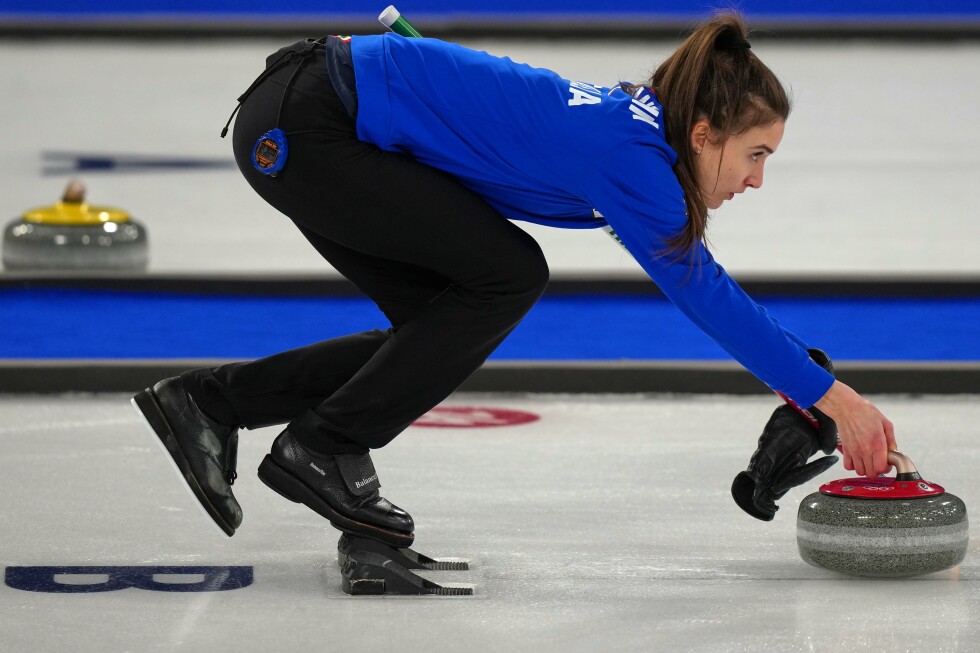
    CORTINA D’AMPEZZO (AP) — Amidst four simultaneous curling matches at the Cortina stadium, all local attention remains intensely focused on defending gold medalist Stefania Constantini. The 26-year-old native, distinguished by her high ponytail, has become the center of an electrifying atmosphere as she battles for advancement in the competition.

    The arena resonates with overwhelming Italian support as fans chant “Italia, Italia, Italia!” with such fervor that they drown out contingents from top curling nations like the United States and Great Britain. Spectators rhythmically pound the wooden barristers, creating reverberations that echo throughout the venue. A subtle gesture from Constantini triggers explosive cheers from the passionate crowd.

    Constantini’s journey began in this picturesque Tyrolean town, where she trained on courts nestled between the dramatic peaks of the Dolomites. Her historic gold medal performance with partner Amos Mosaner at Beijing 2022 positioned these Games as her opportunity to establish Italian dominance in the sport. However, recent setbacks against Sweden on Saturday and Canada the previous day have placed the duo outside the top four standings, requiring flawless performance in upcoming matches to secure playoff qualification.

    “Today we struggled somewhat to adapt from yesterday’s games to today’s conditions,” Constantini acknowledged post-match. Mosaner concurred, stating, “We must reset, avoid previous errors, and deliver our optimal performance tonight to position ourselves favorably for tomorrow.”

    Before her Olympic triumph, Constantini maintained employment as a sales associate at The North Face store on Corso Italia, a position she held until just one month before the Beijing Games. Their success has sparked unprecedented interest in curling throughout Italy, particularly in Cortina, which stands as the nation’s historical cradle for the sport. Notably, Mayor Gianluca Lorenzi, a former national team member and son of Italian curling’s founding father, underscores the town’s deep connection to the game.

    Despite mounting pressure, both athletes maintain that the high-stakes environment enhances rather than hinders their performance. “The crowd support is special and genuinely uplifting during competition,” Constantini remarked.

    The team faces crucial matches against Norway later Saturday, with subsequent games against Czechia and Great Britain scheduled for Sunday. Italian supporter Carla Pelosin, who traveled from Noale with the national flag painted on her face, expressed confidence: “They appeared slightly nervous today, but we maintain full belief in their capabilities for the coming matches. My message would be simply to give their utmost effort—the Italian people trust and believe in them completely.”

  • Speedskater Francesca Lollobrigida wins host Italy’s first gold medal of the Milan Cortina Olympics

    Speedskater Francesca Lollobrigida wins host Italy’s first gold medal of the Milan Cortina Olympics

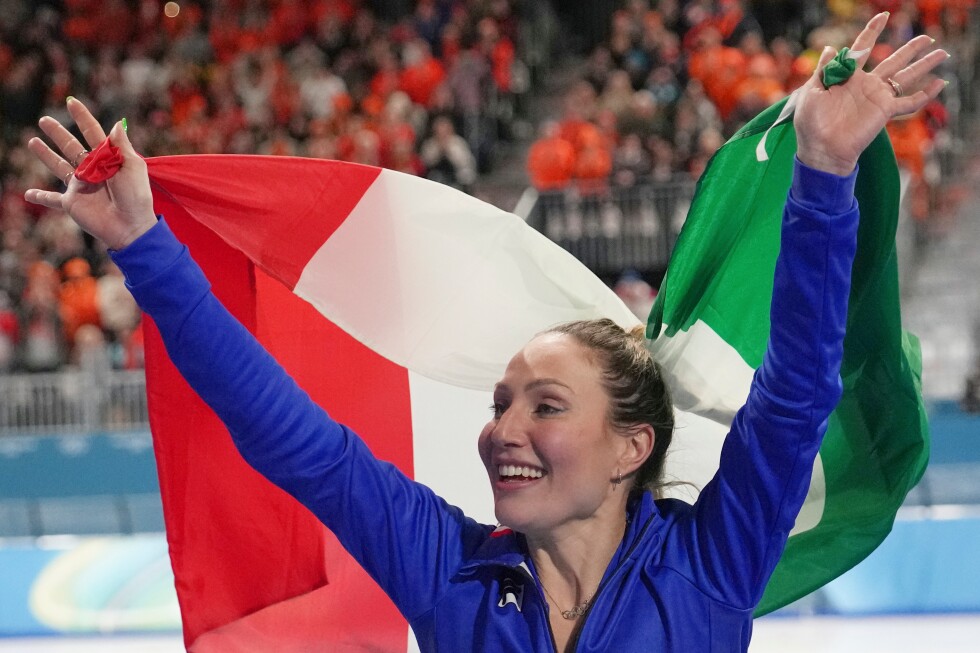
    In a spectacular display of athletic prowess and national pride, Italian speedskater Francesca Lollobrigida secured host nation Italy’s inaugural gold medal at the Milan Cortina Games with a record-breaking performance in the women’s 3,000 meters event on Saturday. The veteran athlete achieved this milestone on her 35th birthday, delivering an unforgettable moment for the roaring home crowd that rose to their feet in celebration.

    Lollobrigida completed the race in an Olympic record time of 3 minutes, 54.28 seconds, finishing more than two seconds ahead of Norwegian contender Ragne Wiklund who claimed silver. Canadian skater Valerie Maltais rounded out the podium with a bronze medal performance.

    The victory holds particular significance as it represents not only Lollobrigida’s first Olympic gold but also marks the first time an Italian woman has triumphed in speedskating at the Winter Games. The accomplished athlete, who balances motherhood with elite competition as parent to a two-year-old son, previously earned two medals at the Beijing Games four years ago—silver in the 3,000 meters and bronze in the mass start event.

    Hailing from Frascati, a picturesque hill town near Rome renowned for its white wine production, Lollobrigida carries a legacy of Italian excellence—her great aunt was the legendary 1950s and 60s film star Gina Lollobrigida.

    The emotional weight of the moment was palpable throughout the competition. During pre-race introductions, Lollobrigida received thunderous applause from patriotic spectators, responding with an enthusiastic smile and dual-arm wave before placing her hands over her heart in gratitude. Though initially trailing behind Maltais at the first checkpoint, the Italian champion steadily gained momentum, seemingly propelled by the vocal support from her compatriots, and delivered a powerful final lap with her arms swinging rhythmically behind her.

    Lollobrigida’s record-shattering time surpassed the previous Olympic benchmark set by Irene Schouten at the 2022 Beijing Games by an impressive 2.5 seconds. As subsequent skaters took to the ice, the emotional champion frequently covered her eyes with her hands, unable to watch the remaining competition that would determine her final standing.

  • Italy’s heroic defense stops Scotland’s last-gasp charge for Six Nations win

    Italy’s heroic defense stops Scotland’s last-gasp charge for Six Nations win

    In a dramatic Six Nations showdown at Rome’s rain-drenched Stadio Olimpico, Italy secured a monumental 18-15 victory against Scotland on Saturday, showcasing exceptional defensive resilience in the closing moments. The match culminated in a heart-stopping finale as Scotland mounted a 30-phase offensive assault that ultimately collapsed under Italy’s determined last-line defense.

    The Italian squad demonstrated remarkable tactical maturity from the opening whistle, establishing an early 12-0 advantage before torrential downpours transformed the pitch into a challenging aquatic battlefield. Despite Scotland’s attempts to capitalize on the adverse conditions, Italy maintained composure under pressure.

    Captain Michele Lamaro epitomized the team’s spirit, declaring post-match: ‘Absolutely incredible. The final defensive sequence demonstrates our profound commitment to each other, this jersey, and our nation. This performance truly represents our identity.’

    Italy’s strategic brilliance manifested through two first-half tries that exposed Scotland’s reconfigured back-three defense. Wing Louis Lynagh and center Tommaso Menoncello executed perfectly coordinated attacks, with fly-half Paolo Garbisi contributing crucial kicks despite some missed opportunities.

    Scotland’s challenges multiplied through persistent lineout malfunctions, losing five throws throughout the contest. Discipline further undermined their efforts, with hooker Ewan Ashman’s high tackle and George Turner’s yellow card compounding their difficulties.

    The visitors displayed late resurgence with Jack Dempsey’s first-half try and George Horne’s second-half score, narrowing the deficit to three points with twelve minutes remaining. However, Italy’s impregnable defense in the final moments secured their seventeenth Six Nations victory and ninth against Scotland.

    This triumph positions Italy to potentially avoid the tournament’s wooden spoon for an unprecedented third consecutive year, while Scotland faces urgent reassessment before hosting England next weekend.

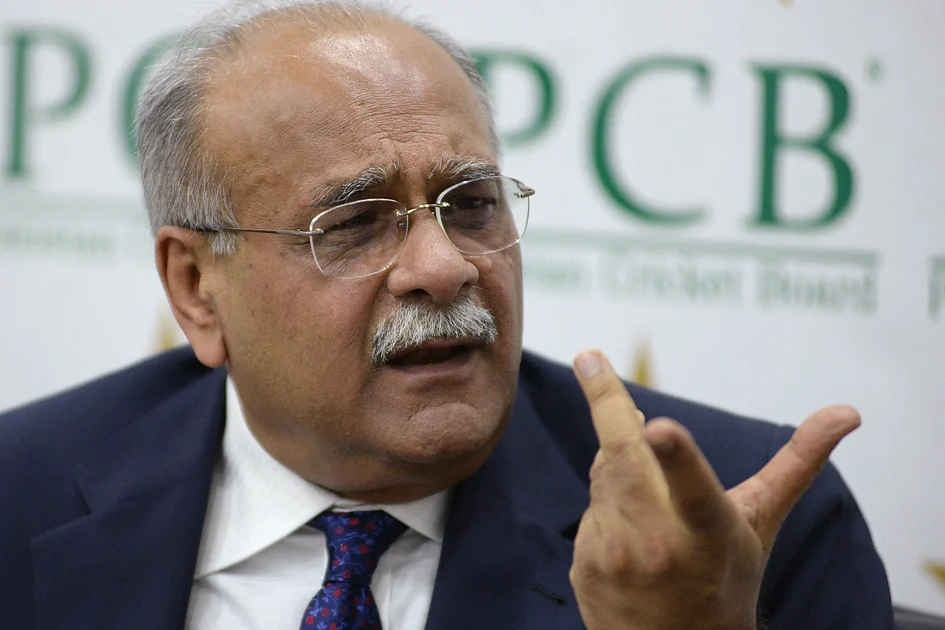
  • Exclusive: Ex-PCB chief recalls the day India-Pakistan cricket collapsed

    Exclusive: Ex-PCB chief recalls the day India-Pakistan cricket collapsed

    The high-stakes world of international cricket faces its most significant political crisis in years as Pakistan’s government-backed boycott of the February 15 T20 World Cup match against India exposes deep fractures within the sport’s governance. The decision, taken in solidarity with Bangladesh after their removal from the tournament, threatens to derail cricket’s most lucrative rivalry that generates approximately $400 million per match.

    Najam Sethi, former Pakistan Cricket Board chairman with three separate tenures, provided exclusive insight to Khaleej Times regarding the escalating confrontation between Pakistan and the International Cricket Council. According to Sethi, Pakistan’s protest stems from perceived inconsistent application of ICC regulations, particularly referencing the precedent set when India’s matches were relocated to Dubai during the 2025 Champions Trophy due to security concerns.

    The veteran administrator revealed startling behind-the-scenes details of cricket diplomacy, including a 2015 incident where Pakistani officials were allegedly humiliated during a trip to Mumbai. “They received us at the airport, brought us to the hotel, and asked us to wait,” Sethi recounted. “Three hours later, they told us the meeting had been cancelled and police were waiting outside to take us back to the airport.”

    The current standoff represents a dramatic escalation in cricket’s geopolitical tensions. Pakistan Prime Minister Shehbaz Sharif has publicly endorsed the boycott, characterizing it as a stance against unfair treatment. Sethi suggests informal backchannel negotiations are underway between ICC representatives and Pakistani officials, though he acknowledges the challenging dynamics given the Board of Control for Cricket in India’s considerable influence within international cricket.

    With the Olympics potentially welcoming cricket in 2028, Sethi warns that the sport’s governing body risks damaging its credibility through perceived political bias. “The Olympics will never tolerate a politicized ICC,” he emphasized, noting that the timing of this confrontation could jeopardize cricket’s Olympic aspirations.

    The situation remains fluid with February 15 looming as a critical deadline. Should Pakistan maintain their position and refuse to play India in potential knockout matches, the ICC faces unprecedented disciplinary decisions that could reshape international cricket’s power structure.

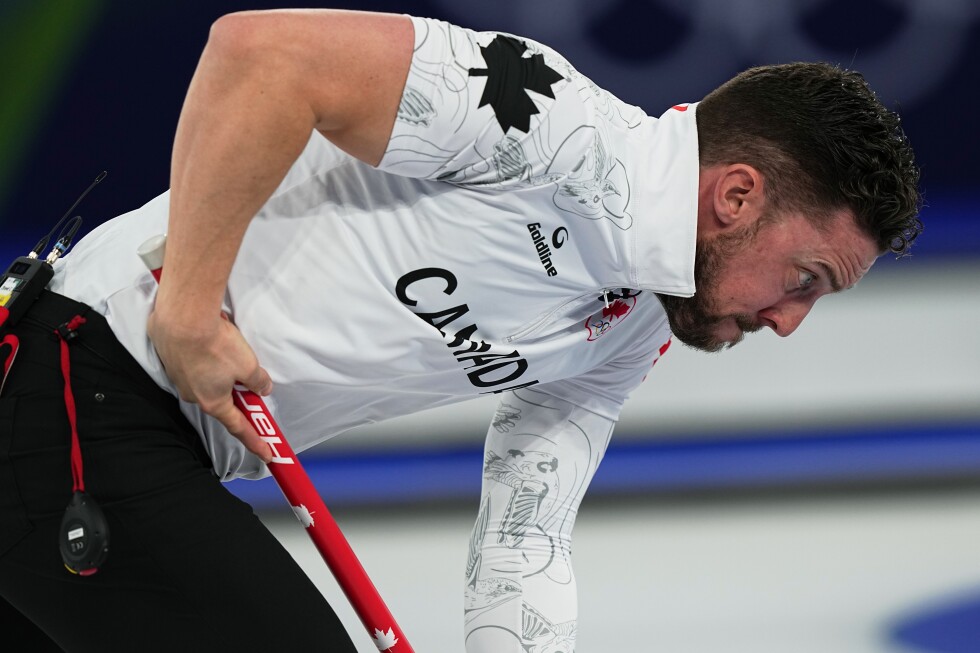
  • Canada, the world’s historic curling powerhouse, is feeling the pressure at Cortina

    Canada, the world’s historic curling powerhouse, is feeling the pressure at Cortina

    CORTINA D’AMPEZZO, Italy — The Olympic curling arena witnessed a dramatic power shift on Saturday as Great Britain’s Bruce Mouat and Jennifer Dodds delivered a decisive blow to Canadian veterans Brett Gallant and Jocelyn Peterman. The match, characterized by Britain’s aggressive stone placement that systematically dismantled Canada’s strategic formations, represents more than just a round-robin defeat—it symbolizes the complete transformation of international curling competitiveness.

    This marked Canada’s second consecutive loss in the mixed doubles tournament, following an earlier defeat by the United States team. The back-to-back setbacks highlight the erosion of Canada’s historical dominance in a sport it once commanded. Olympic observers now recognize that the competitive landscape has undergone fundamental changes through recent Olympic cycles, with multiple nations developing world-class training programs.

    Devin Heroux, Canadian Broadcasting Corporation’s seasoned curling analyst, noted: “This outcome perfectly illustrates curling’s current global state. Canada long operated under the assumption that it produced the world’s finest curlers. The reality now is that not only has the international community caught up—they’ve arguably surpassed us.”

    Despite these losses, both teams remain likely to advance to the next round alongside the United States and Italy, with Britain now positioned strongly for qualification among the ten teams competing at the 2026 Milan Cortina Games.

    The British duo’s victory stems from years of dedicated training at Scotland’s National Curling Academy, established in 2017. Their partnership exemplifies the structured development programs that have produced formidable challengers to Canadian supremacy. Since the 2018 Pyeongchang Games—where Canada failed to medal in either four-person team event—the nation’s curling dominance has waned, managing only a single bronze across all disciplines in Beijing.

    Post-match discussions revealed another critical factor: rapidly changing ice conditions at Cortina’s curling center. Athletes noted significant alterations from previous days, with ice playing “up to two seconds faster”—a substantial variation that forced tactical adjustments. Gallant employed an automotive analogy: “It’s like taking a Honda Civic down the highway then jumping into a Ferrari.” He emphasized that while challenging, the conditions didn’t excuse the loss: “The team that adjusts better gains the advantage. They adapted quicker than we did.”

    His assessment was echoed by the victorious British pair. “We coped with it very well,” stated Dodds, while Mouat added: “We’re communicating effectively and now understand how the ice will behave for the remainder of the competition.”

    Heroux concluded that adaptation to Cortina’s volatile ice conditions would ultimately determine which team claims gold, marking a new era where flexibility and rapid adjustment have become as crucial as traditional curling skills.

  • Open Masters Games Abu Dhabi 2026: Meet couple who ‘never wins’ but travels world for sport

    Open Masters Games Abu Dhabi 2026: Meet couple who ‘never wins’ but travels world for sport

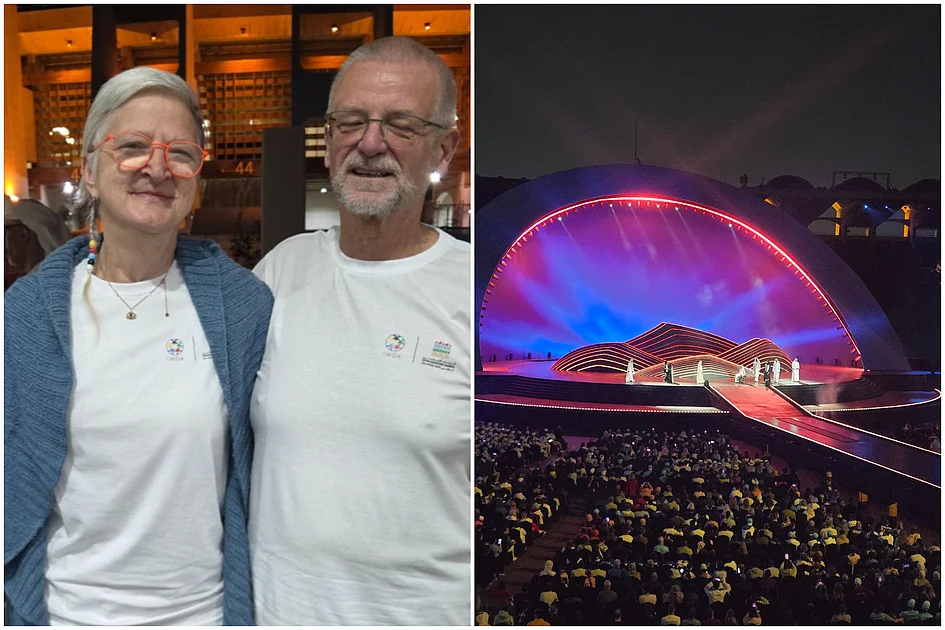
    ABU DHABI – While elite athletics often focus on podium finishes and medal counts, the Open Masters Games Abu Dhabi 2026 is showcasing a profoundly different competitive ethos: one where participation transcends victory and community outweighs conquest. This alternative sporting philosophy finds perfect embodiment in German archers Manfred and Maria Wirsing, whose global journey exemplifies the event’s core values.

    Since their inaugural Masters competition in Auckland (2017), the Wirsings have traversed continents not in pursuit of trophies but meaningful human connections. “We never win,” acknowledges 70-year-old Manfred with cheerful acceptance. “We try. We want to meet friends. Meeting people is what matters.” His wife Maria, a 62-year-old archery enthusiast for quarter-century, shares this perspective: “It’s a hobby. If you win, that’s good – but it’s not necessary.”

    Their story converged with thousands of other amateur athletes during Friday’s opening ceremony, where the couple experienced a novel honor – marching behind the archery flag despite their non-competitive status. For the Wirsings, this recognition symbolized something deeper than athletic achievement: validation of their decade-long commitment to global sporting fellowship.

    The ceremony itself marked a historic milestone as the first Open Masters Games hosted in the Middle East, featuring a spectacular fusion of visual effects, cultural storytelling, and live performances. Organizers introduced the concept of the “original athlete” – defined not by medals but by movement, resilience, and collective human endeavor. This narrative framework deliberately emphasized sport’s roots in daily life rather than elite performance.

    Among those embodying this spirit was Emirati athlete Azza Al Ghunaimi, selected to carry the International Masters Games flag. The 49-year-old runner from Abu Dhabi described her unexpected nomination as culminating years of dedication. “When I came for rehearsals and they called my name, I felt that all these years of hard work meant something,” she reflected, preparing for her upcoming half-marathon participation.

    Meanwhile, Lebanese swimmer Racha Kabbara (55) embraced both the honor and anxiety of marching before thousands. “They trained us how to walk, how to hold the flag,” she noted. “It’s not hard – but there is fear. Fear of being in front of all these people.” Kabbara’s ambitions extend far beyond these Games, with plans to attempt an Ironman triathlon at age 60.

    The scale of the event is monumental: over 21,000 participants from more than 100 nations, ranging from their 30s to 91 years old, competing across 38 sports until February 15. As UAE Minister of Sports Dr. Ahmad Belhoul Al Falasi emphasized, the Games represent a broader vision positioning sport as both lifestyle and unifying force.

    International Masters Games Association President Sergii Bubka highlighted the inspirational message sent by nonagenarian competitors: “The desire to move has no limits.”

    For the Wirsings – already planning future competitions in Kansai and New Zealand – the Abu Dhabi experience reinforces their enduring conviction. As Manfred observed while watching athletes from across the globe parade under stadium lights: “Abu Dhabi is new for us, but this community – it’s always the same spirit.” In an arena where simply participating constitutes victory, the Games continue redefining what it means to be an athlete at any age.

  • Pressure is on freeski star Gu after she falls on first run in slopestyle qualifying at Olympics

    Pressure is on freeski star Gu after she falls on first run in slopestyle qualifying at Olympics

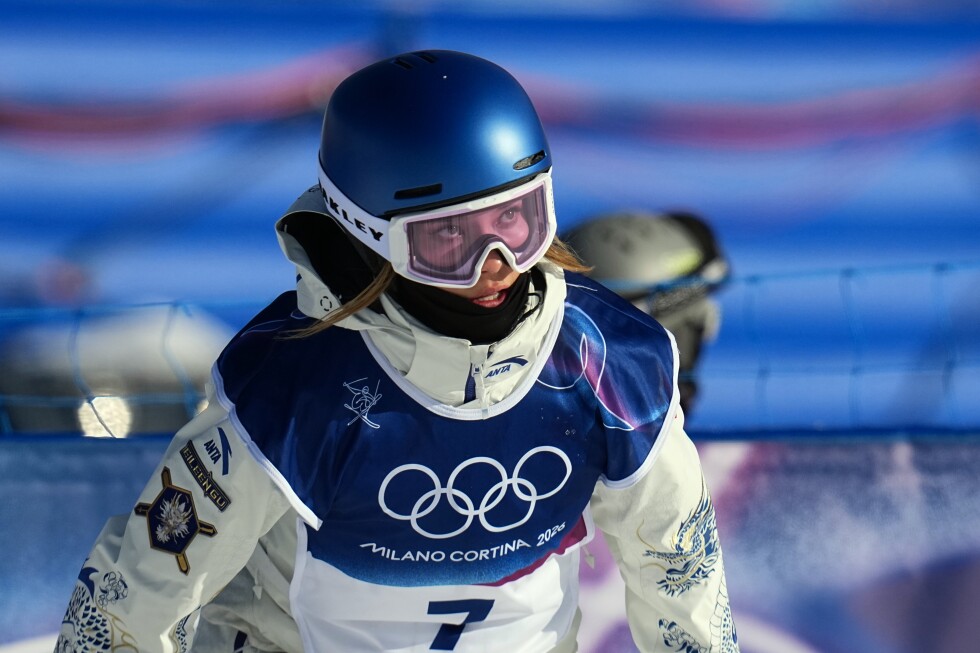
    LIVIGNO, Italy — Reigning Olympic silver medalist Eileen Gu faced an immediate setback during the women’s slopestyle qualifying at the Winter Olympics on Saturday when she fell on her initial run. The Chinese freeskiing sensation lost balance upon exiting the first rail feature, resulting in a tumble that compromised her score potential.

    Demonstrating characteristic resilience, the 22-year-old athlete promptly recovered and completed her routine despite the early error. This performance places significant pressure on Gu’s second and final qualifying attempt, where she must achieve a top-twelve score to advance to Monday’s championship final.

    The California-born skier, who represents China internationally, arrived at these Games with established superstar status following her remarkable performance at Beijing 2022. During those home-soil Olympics, Gu narrowly missed achieving an unprecedented triple gold accomplishment, securing victory in both halfpipe and big air events while earning silver in slopestyle.

    All eyes now turn to Gu’s crucial second run as she attempts to maintain her medal contention in the slopestyle discipline, an event that has previously showcased both her technical precision and creative flair on the Olympic stage.

  • Milestones, surprises, and birthday cheers as the Carnival makes more history at Meydan

    Milestones, surprises, and birthday cheers as the Carnival makes more history at Meydan

    The Meydan Racecourse witnessed an extraordinary evening of racing history during Friday’s 11th meeting of the Dubai Racing Carnival, setting unprecedented records as the prestigious Dubai World Cup approaches. The event unfolded as a celebration of breakthrough achievements and unexpected outcomes, captivating audiences with its dynamic display of international horseracing excellence.

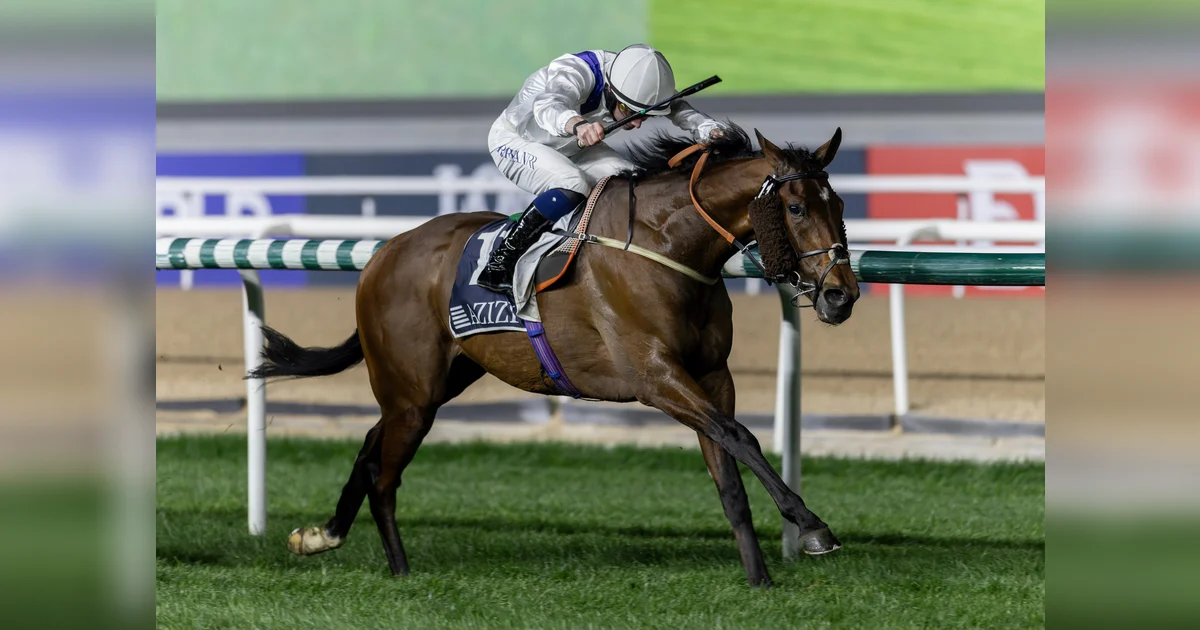
    British raiders dominated the turf with remarkable performances, headlined by Dividend’s triumphant victory in the Lord Glitters Handicap. Ridden by Irish jockey Rossa Ryan, who secured his inaugural Meydan win, the four-year-old outperformed Godolphin’s King’s Charter by three-quarters of length. The victory marked a significant milestone for co-trainers Dr. Richard Newland and Jamie Insole, achieving their first international success. “This horse has been consistently competitive in major handicaps,” Newland remarked. “The additional furlong and cheekpieces proved decisive tonight.”

    Northern Champion continued Britain’s winning streak by claiming the Dubai Trophy under five-time champion jockey Oisin Murphy. The colt demonstrated exceptional versatility, dropping back to 1,200 meters after previously winning over 1,400 meters, and secured a two-length victory over Charlie Appleby’s Maximised. Murphy, celebrating his first Meydan triumph since 2020, praised trainer Ed Walker’s strategic decision to shorten the distance.

    The carnival atmosphere intensified as popular jockey Pat Dobbs celebrated his 47th birthday with a spectacular double victory. Dobbs guided Cats By Five to a commanding five-length win in the Burj Azizi Handicap, with trainer Doug Watson confirming plans to advance the impressive grey to Super Saturday’s G3 Mahab Al Shimaal. Dobbs’ earlier victory came aboard Nyaar in the Azizi Creek Views Handicap, where the six-year-old demonstrated exceptional closing speed to overcome early leader Action Point.

    International participation flourished with South African trainer Dylan Cunha securing his second carnival victory through Tailgunner Joe’s narrow triumph in the Azizi Venice Handicap. Jockey Bernardo Pinheiro, who meticulously studied the horse’s Dubai performances, executed a perfect inside ride to edge Jolly Roger by a quarter-length. Pinheiro completed a personal double when Desperate Hero captured the Azizi Riviera Handicap finale by two and a half lengths.

    The evening’s proceedings commenced with Purebred Arabian competition, where Uptown Walk The Line delivered a spectacular ten-length victory under jockey Sandro Paiva. Former champion trainer Bhupat Seemar and jockey Richie Mullen also celebrated success with Watch Collector, who dramatically reversed previous poor form to win the Azizi Reve Maiden.

  • Salama credits local caddie for stunning wire-to-wire victory in Egypt Golf Series finale

    Salama credits local caddie for stunning wire-to-wire victory in Egypt Golf Series finale

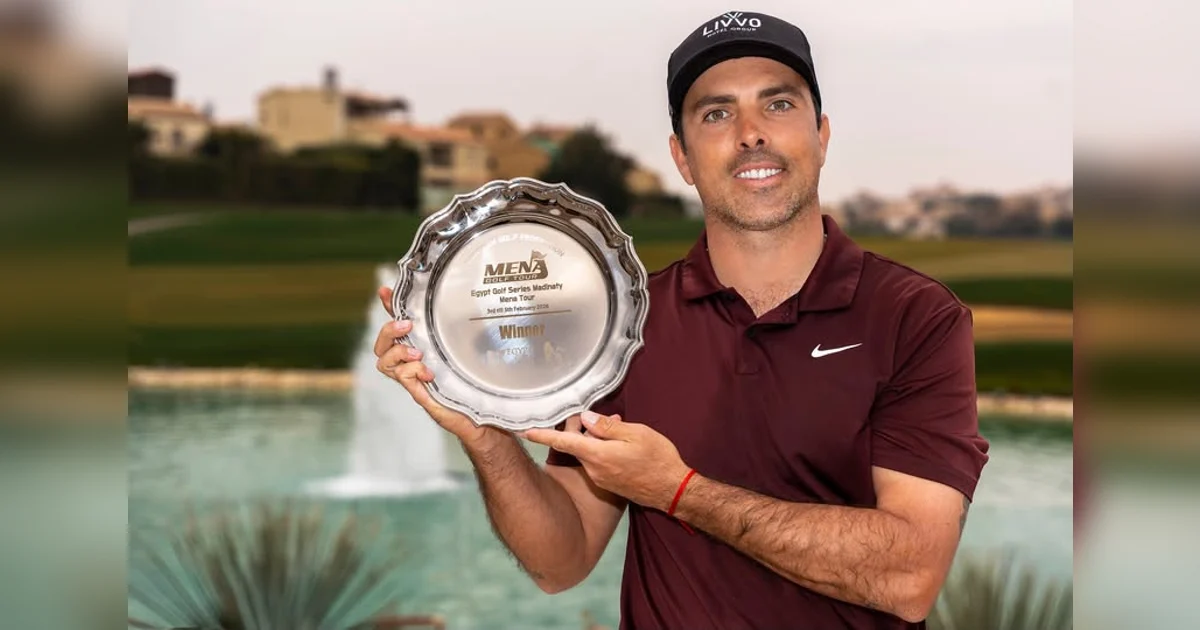
    Spanish professional golfer Juan Salama captured his first MENA Golf Tour championship with a dominant wire-to-wire victory at the Egypt Golf Series finale held at Madinaty Golf Club in Cairo. The rising star credited his local caddie’s expertise as instrumental in his spectacular performance that culminated in a three-shot triumph.

    Salama established tournament dominance from the outset by firing a blistering course-record 60 in the opening round, marking his personal best competitive round. He maintained his commanding position throughout the competition, closing with a five-under-par 65 to finish at 17-under overall. The Spaniard’s victory provided redemption after suffering a playoff defeat to Jack Davidson just seven days earlier at Address Marassi.

    “Shooting 60 was my personal best round, so to open the tournament like that really set everything up,” Salama acknowledged. “I had a local caddie this week who read the greens exceptionally well, and it’s been a fantastic start to the year.”

    The final round presented tense moments as Salama’s pursuers attempted to close the gap. After extending his lead with four birdies on the front nine, a dropped shot at the 15th hole briefly offered hope to competitors. However, Salama demonstrated remarkable composure, navigating the challenging water hazard at the 16th before sealing his victory with a birdie at the 17th.

    “I felt solid but was definitely nervous,” Salama confessed. “I focused on staying present on every shot, maintaining my routine, and handling each moment individually. The water hazard at 16 created particular tension, but I managed to navigate it successfully.”

    Welsh golfer Jack Davidson, last week’s champion, shared second place at 14-under with overnight co-leader Owen Edwards. Davidson posted a 66 in the final round but acknowledged that catching Salama proved ultimately impossible given the Spaniard’s consistent performance.

    England’s Ben Jones delivered the joint best round of the final day with a six-under 64, climbing to fourth position at 13-under. compatriot Curtis Knipes matched Jones’s 64 to secure fifth place at ten-under.

    The tournament concluded the MENA Golf Tour’s successful four-event Egypt swing, which distributed $400,000 in prize money across world-class venues. Salama collected $18,000 from the $100,000 prize fund along with valuable Official World Golf Ranking points. The tour now progresses to Morocco before continuing to Jordan and the GCC region.

  • Sofia Goggia lights the cauldron in Cortina after helping Italy secure Olympic hosting rights

    Sofia Goggia lights the cauldron in Cortina after helping Italy secure Olympic hosting rights

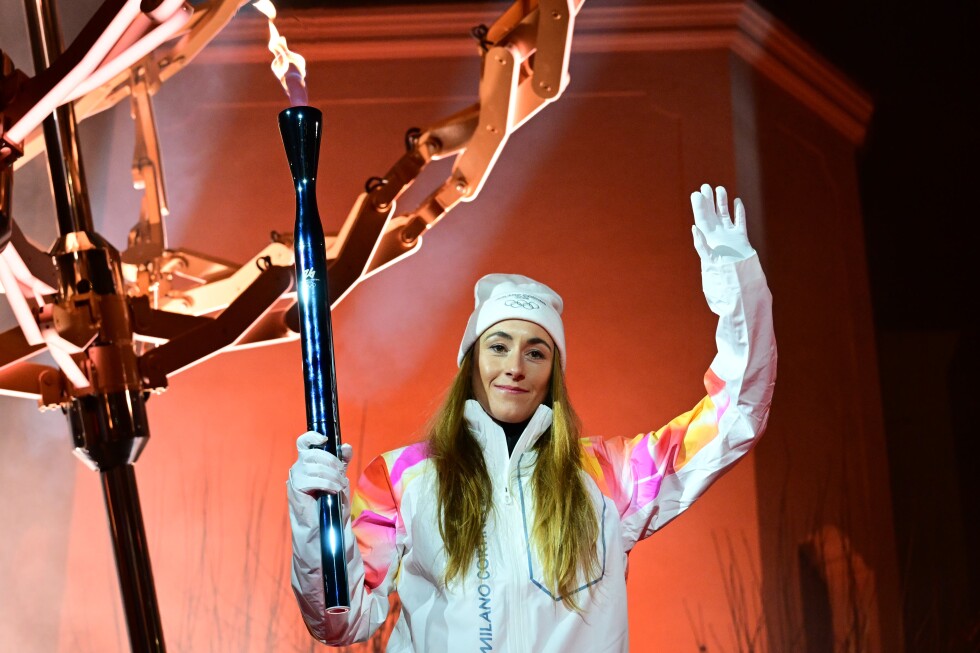
    CORTINA D’AMPEZZO, Italy — Italian skiing champion Sofia Goggia, whose pivotal role in securing the 2026 Winter Olympics for Italy, delivered a symbolic culmination to Friday’s opening ceremony by lighting the Olympic cauldron in Cortina d’Ampezzo. The honor occurred simultaneously with retired Olympic legends Alberto Tomba and Deborah Compagnoni performing identical duties in Milan, creating a historic dual-city spectacle.

    Goggia’s selection as torchlighter carried profound significance given her instrumental involvement in Milan-Cortina’s successful bid. During the critical 2019 IOC voting session, Goggia and snowboarder Michela Moioli delivered a charismatic joint presentation that reportedly swayed nearly 100 committee members with their infectious enthusiasm. Their demonstration, which included a synchronized dab gesture, ultimately helped overcome Sweden’s competing candidacy through an exhibition of authentic Italian athletic spirit.

    The 2018 Olympic downhill gold medalist and 2022 Beijing silver medalist now prepares to compete in Sunday’s women’s downhill event on her home slope. Goggia maintains a complex relationship with the Cortina course, having secured four World Cup downhill victories here while simultaneously missing the 2021 world championships due to injury.

    The ceremony additionally featured defending World Cup champion Federica Brignone as one of Italy’s flag bearers, with Olympic curling champion Amos Mosaner physically elevating her during the athletes’ parade—a moment Brignone later remarked upon with humorous concern about her weight. The dual-city opening ceremony established a powerful visual narrative of Italian winter sports heritage bridging generations of athletic excellence.