分类: sports

  • Who is on helmet that led to Ukrainian athlete’s ban from Winter Olympics?

    Who is on helmet that led to Ukrainian athlete’s ban from Winter Olympics?

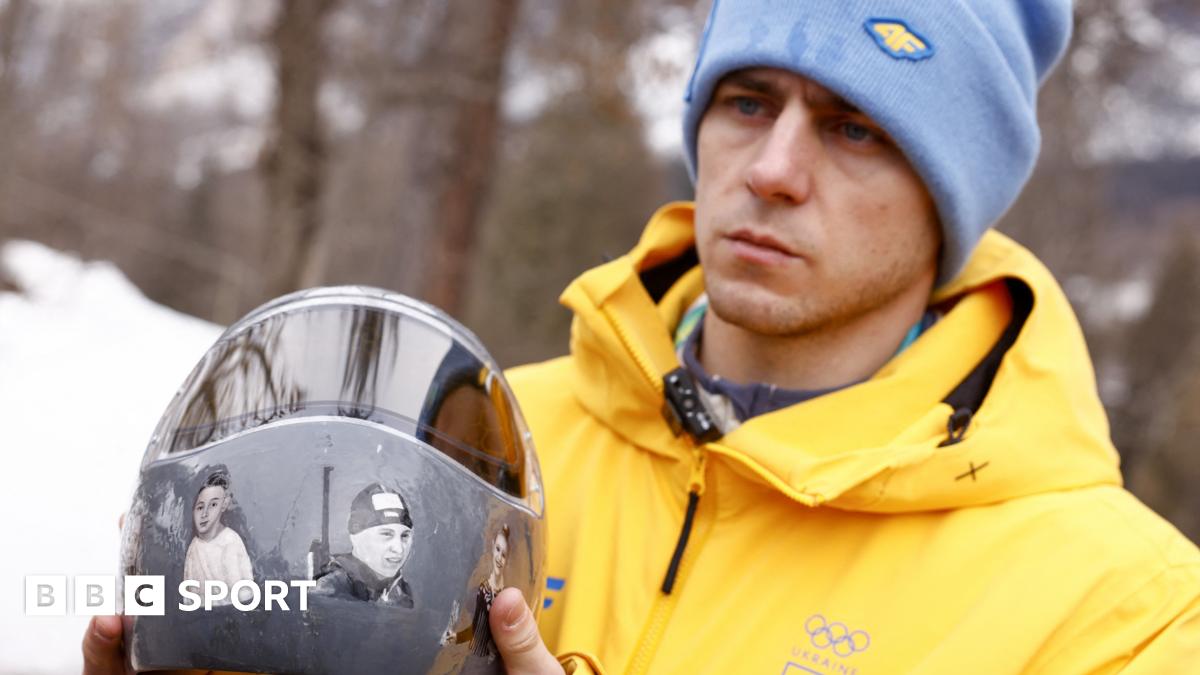
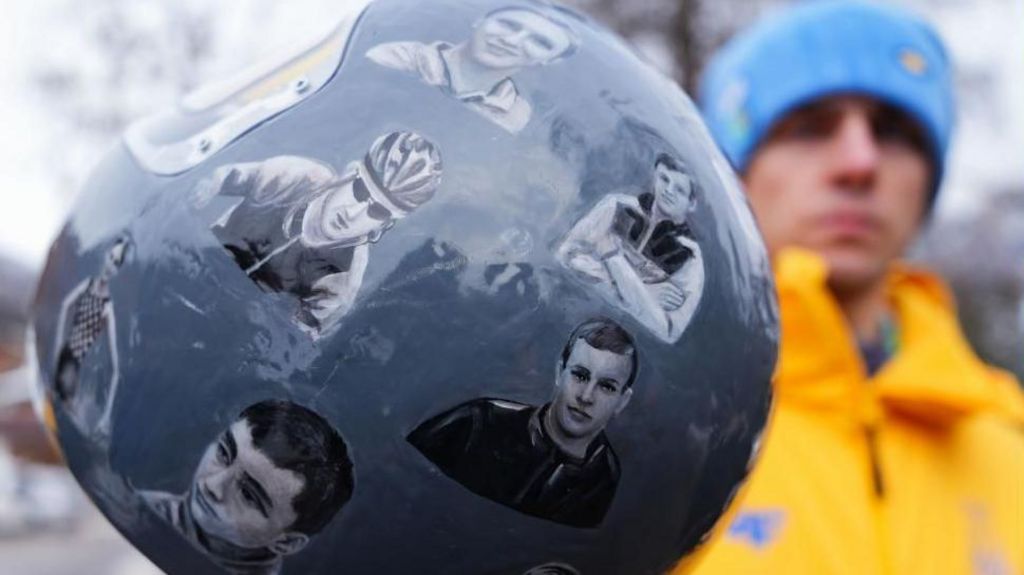
    The International Olympic Committee has disqualified Ukrainian skeleton racer Vladyslav Heraskevych from the Winter Games following his refusal to cease wearing a specially designed ‘helmet of remembrance’ honoring fallen Ukrainian athletes. The controversial decision, upheld after a failed appeal on Friday, has ignited the most significant dispute of the Milan-Cortina Olympics.

    Heraskevych’s helmet features more than twenty Ukrainian sports figures who have perished since Russia’s full-scale invasion, including teenage weightlifter Alina Peregudova, boxer Pavlo Ishchenko, and ice hockey player Oleksiy Loginov – some of whom the athlete personally knew. The memorial headgear has become a symbol of athletic sacrifice and national tragedy.

    Among those memorialized is decathlete Andriy Androschuk, who abandoned his Olympic aspirations to volunteer for military service before perishing in Bakhmut at age 22. The helmet also honors 17-year-old kickboxing champion Karyna Bakhur, killed by Russian shelling in Kharkiv just weeks before her eighteenth birthday.

    The collection of fallen athletes spans multiple disciplines and age groups, from 9-year-old judo enthusiast Ivashko to 31-year-old shooting champion Khabarov. Each represents a life cut short by conflict, their athletic promise extinguished by war. The memorial includes dancers, strongmen, fencers, and cyclists – all who either joined the defense effort or became casualties of attacks on civilian areas.

    The IOC’s decision has raised questions about the boundaries between athletic representation and political expression at the Games. Heraskevych maintains that the helmet serves as a tribute to lost colleagues rather than a political statement, arguing that remembering fallen athletes should fall within Olympic values of respect and remembrance.

    Ukrainian sports organizations have expressed outrage at the disqualification, noting that many international competitions have previously allowed similar memorial tributes. The controversy continues to develop as athletes and officials debate the appropriate balance between Olympic neutrality and humanitarian recognition.
  • Coyne Schofield scores 2 goals as US routs Italy 6-0 to advance to Olympic women’s hockey semifinals

    Coyne Schofield scores 2 goals as US routs Italy 6-0 to advance to Olympic women’s hockey semifinals

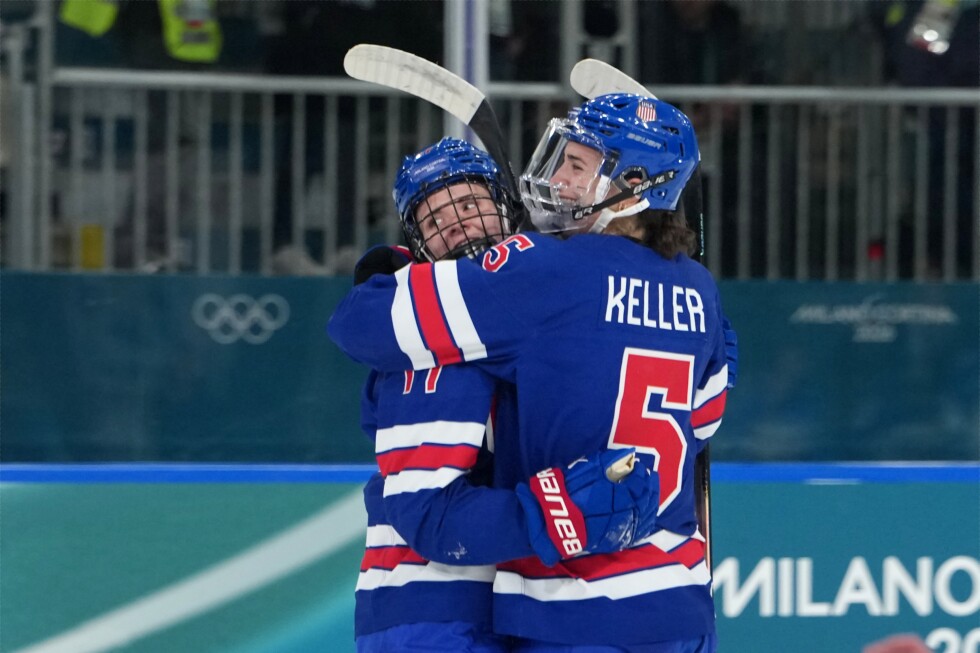
    In a commanding quarterfinal performance at the Milan Cortina Winter Olympics, the United States women’s hockey team delivered a resounding 6-0 victory against host nation Italy on Friday evening. The top-seeded American squad showcased their offensive prowess with five goals in the second period alone, continuing their dominant run through the tournament.

    Team captain Kendall Coyne Schofield led the scoring charge with two goals, while Megan Keller, Laila Edwards, Hannah Bilka, and Britta Curl-Salemme each contributed to the scoreboard. Goaltender Gwyneth Philips maintained her exceptional form with six saves, recording her fourth consecutive shutout in Olympic competition.

    The American team has demonstrated remarkable offensive efficiency throughout the Games, outscoring opponents 26-1 across five victories. Their only conceded goal occurred during the tournament opener against Czechia. With Friday’s performance, only two U.S. skaters remain without tournament points—defenders Cayla Barnes and Rory Guilday.

    The match atmosphere remained electric despite the lopsided score, with passionate fans from both nations engaging in spirited chanting duels. Italian supporters maintained remarkable enthusiasm throughout the game, cheering enthusiastically for every scoring opportunity their team generated.

    Italian goaltender Gabriella Durante delivered a standout performance despite the final score, making 45 saves including several spectacular stops. Her most impressive save came with 14 seconds remaining in the first period, using her stick paddle to deny Abbey Murphy’s one-timer from the left circle.

    The game intensity occasionally escalated, culminating in a bench-clearing scuffle late in the second period after Bilka’s goal made it 6-0. The confrontation resulted in penalties for both teams and sparked an animated exchange between coaches John Wroblewski of the U.S. and Italy’s Eric Bouchard.

    In other Olympic women’s hockey action, Sweden pulled off a significant upset by defeating Czechia 2-0. Hanna Olsson scored a power-play goal in the second period, while 19-year-old goaltender Ebba Traff Svensson stopped all 29 shots she faced. This victory marks Sweden’s first semifinal appearance since the 2014 Sochi Games.

    The United States now advances to Monday’s semifinal round, where they will face the winner of Saturday’s quarterfinal between Canada and Germany.

  • Norwegian cross-country skiing star Klaebo ties Olympic record by winning eighth career gold medal

    Norwegian cross-country skiing star Klaebo ties Olympic record by winning eighth career gold medal

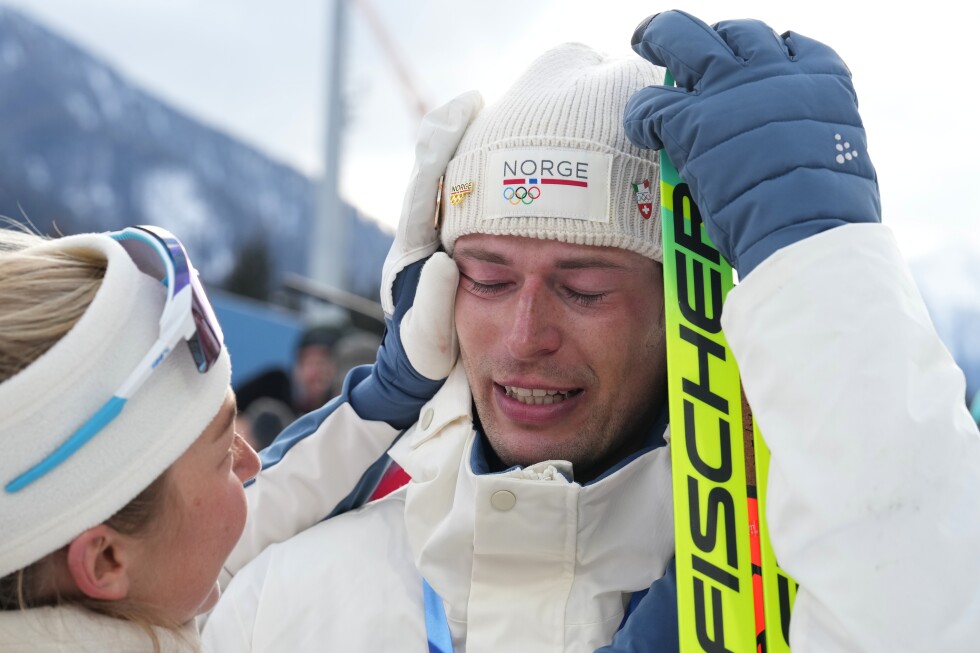
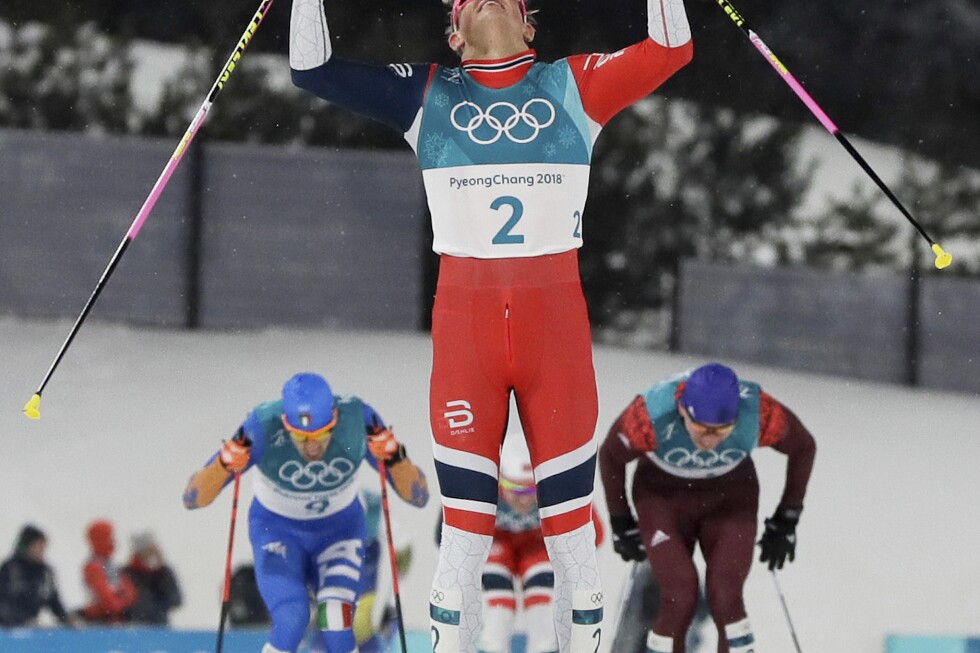
    CORTINA D’AMPEZZO, Italy — Norwegian cross-country skiing phenomenon Johannes Høsflot Klaebo has achieved a monumental milestone at the Milan Cortina Winter Olympics, securing his eighth career gold medal despite previously considering the 10-kilometer interval-start race his most challenging discipline.

    The 29-year-old champion executed his characteristic late-race acceleration to dominate Friday’s competition, completing the course in 20 minutes and 36.2 seconds. This victory places Klaebo in an elite tie with Norwegian legends Marit Bjørgen, Bjørn Dæhlie, and Ole Einar Bjørndalen for the most Winter Olympic gold medals in history.

    Competing under unusually warm conditions that prompted some athletes to race in minimal gear, Klaebo demonstrated strategic pacing by conserving energy during the initial phase before unleashing his powerful finish. The physical toll was evident as the skier collapsed into the snow immediately after crossing the finish line, later describing the achievement as “a special day” that left him “lost for words.”

    Klaebo now stands poised to break the record outright with three additional events scheduled at the Tesero Cross-Country Skiing Stadium.

    In other Olympic developments, Norwegian biathlete Strula Holm Laegreid captured his second bronze medal in four days during the sprint event, adopting a more reserved approach following his controversial personal disclosure earlier in the week. Meanwhile, Australian snowboarder Josie Baff claimed gold in women’s snowboardcross, marking Australia’s second gold medal of the Games following Cooper Woods’ earlier victory in men’s moguls.

  • Ukrainian slider’s Olympics over as helmet appeal dismissed

    Ukrainian slider’s Olympics over as helmet appeal dismissed

    In a controversial decision that has sparked international debate, Ukrainian skeleton racer Vladyslav Heraskevych has been officially barred from competing at the Winter Olympics following a ruling by the Court of Arbitration for Sport (CAS). The 26-year-old athlete’s appeal to wear a helmet memorializing athletes killed during Russia’s invasion of Ukraine was dismissed, ending his Olympic campaign.

    The conflict began when the International Olympic Committee (IOC) prohibited Heraskevych from competing after he wore the commemorative helmet during training sessions. IOC President Kirsty Coventry personally visited the athlete at Cortina’s sliding track in a final attempt to persuade him against wearing the helmet in competition, but Heraskevych remained steadfast in his position.

    CAS, while expressing sympathy for Heraskevych’s situation and acknowledging his right to freedom of expression, ultimately ruled that such demonstrations are not permitted ‘on the field of play.’ The court did however criticize the IOC’s initial withdrawal of the athlete’s accreditation, calling it ‘unfair under these circumstances’ and leading to its reinstatement.

    The IOC maintained that while Heraskevych could display his helmet in mixed zones, news conferences, and on social media, the competition area must remain ‘sacrosanct.’ This stance references the 2023 athlete expression guidelines that emphasize keeping the focus on athletic performance and maintaining the neutrality of Olympic sports.

    The Ukrainian athlete argued that his disqualification was disproportionate, citing examples like American figure skater Maxim Naumov who displayed a photograph of his deceased parents while awaiting scores. Heraskevych has accused the Milan-Cortina Games of facilitating ‘Russian propaganda,’ a sentiment echoed by Ukrainian President Volodymyr Zelensky who stated the IOC is ‘playing into the hands of the Russian aggressor.’

    Despite the ban, Heraskevych has received significant support from fellow Ukrainian athletes at the Games, with displays of solidarity including Alpine skier Dmytro Shepiuk showing a note reading ‘Ukrainian heroes with us’ and the Ukrainian mixed relay luge team taking the knee while holding their helmets aloft.

  • Bravo! Act I of the Winter Olympics’ visit to Italy has been filled with drama, catharsis and tears

    Bravo! Act I of the Winter Olympics’ visit to Italy has been filled with drama, catharsis and tears

    CORTINA D’AMPEZZO, Italy (AP) — The Milan Cortina Winter Olympics have evolved into a breathtaking theatrical production, mirroring the emotional intensity of Italian opera that began four centuries ago. This quadrennial spectacle, hosted in Northern Italy, has transformed into a stage where human drama unfolds with unparalleled intensity.

    The Games witnessed tearful departures when American skiing legend Lindsey Vonn’s courageous Olympic comeback at age 41 ended abruptly during the women’s downhill. A devastating crash just 13 seconds into her run resulted in a broken left leg, followed by an emotional helicopter descent past spectators who had anticipated witnessing history.

    Parallel drama emerged when Ukrainian skeleton racer Vladyslav Heraskevych was disqualified for refusing to remove a helmet memorializing coaches and athletes lost in Russia’s ongoing invasion. His principled stand sacrificed Olympic glory but amplified global awareness of Ukraine’s struggle, creating what IOC President Kirsty Coventry acknowledged as “a powerful message” despite the enforcement of competition rules.

    The Games also delivered unexpected personal revelations, as Norwegian biathlete Sturla Holm Laegreid used his bronze medal moment to publicly confess infidelity to a former partner—a raw emotional display that overshadowed his athletic achievement and sparked discussions about the intersection of sport and personal drama.

    Amidst the turmoil, love triumphed when Olympic downhill champion Breezy Johnson, after crashing in the Super-G, received a surprise marriage proposal from boyfriend Connor Watkins, who knelt with Taylor Swift lyrics and a sapphire ring. The moment transformed disappointment into lifelong memory, with Johnson declaring she had “extra peaked” at the Olympics.

    The competition itself delivered stunning upsets, with favorites including Mikaela Shiffrin and snowboarder Chloe Kim facing unexpected challenges. Shiffrin recorded her worst slalom performance since 2012, while Kim’s bid for a third consecutive halfpipe gold was thwarted by South Korean teenager Gaon Choi, who had grown up idolizing the American champion.

    Italy itself emerged as a central character in this drama, with skier Federica Brignone completing a remarkable comeback from multiple leg surgeries to claim Super-G gold before the Italian President and celebrating crowds. Her victory, accompanied by an aerial display from the Italian Air Force, embodied what she described as “one of those films you don’t believe in because it’s not possible for it to end that well.”

    As the Games reach their midpoint, the stage is set for a potentially even more compelling second act, continuing the tradition of Olympic competition where victory, heartbreak, and human drama intersect beneath the iconic five rings.

  • Germany, US, Australia and more: Women’s bobsled races at Milan Cortina have plenty of contenders

    Germany, US, Australia and more: Women’s bobsled races at Milan Cortina have plenty of contenders

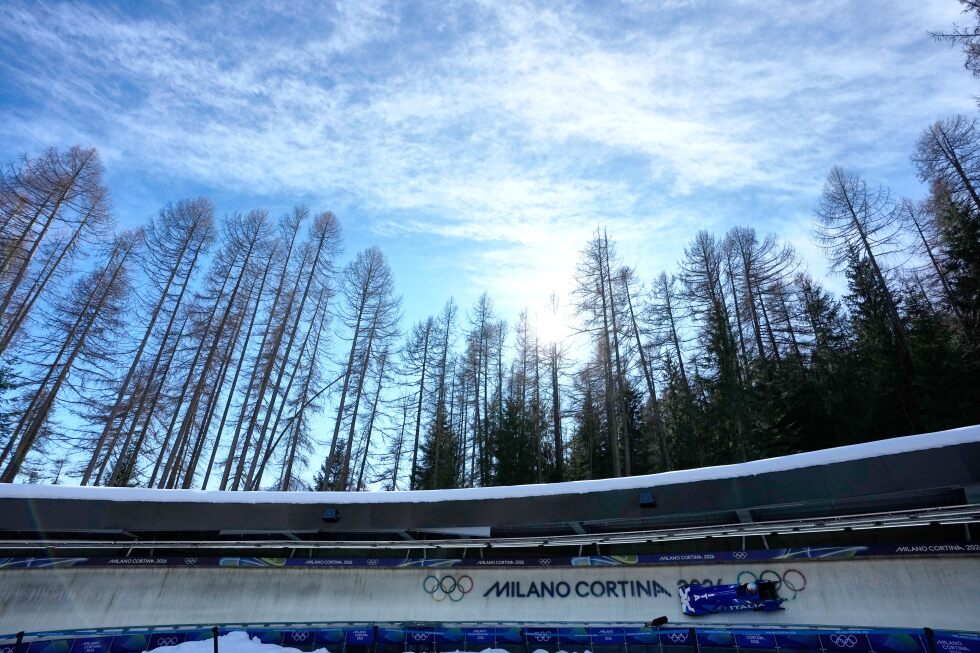
    CORTINA D’AMPEZZO, Italy — While German men have established near-total dominance in bobsled competitions, the women’s division presents a strikingly different competitive landscape. As the Milan Cortina Winter Games commence, the women’s monobob event emerges as one of the most unpredictable Olympic contests.

    The United States team arrives with formidable credentials, featuring reigning world monobob champion Kaysha Love, five-time Olympic medalist Elana Meyers Taylor, and three-time gold medalist Kaillie Humphries Armbruster. This impressive roster positions Team USA as serious contenders against Germany’s traditional stronghold.

    Training sessions have revealed the event’s competitive parity, with seven athletes from four different nations securing top-three finishes across just four practice runs. The current World Cup season further demonstrates this diversity, with eight drivers from six countries having claimed monobob medals.

    Australian pilot Bree Walker, herself a three-time monobob winner this season, observes: ‘The podium features different nations almost every week in monobob competition. This unpredictability creates tremendous excitement for the sport.’

    Despite theoretical equipment standardization in monobob—where single athletes pilot sleds without brakemen, making starts and driving technique paramount—Germany and the United States have dominated the winter World Cup circuit. Together they captured 11 of 14 possible gold medals across monobob and two-woman events, with Germany taking seven and the US four, while collectively securing 31 of 42 total medals.

    German athlete Laura Nolte, current World Cup champion in both monobob and two-woman disciplines, enters as the theoretical favorite. ‘My performance gives me confidence heading into the Games,’ Nolte commented. ‘I know I can medal in both events, which is certainly my objective. However, on competition day, every element must execute perfectly.’

    The women’s monobob competition begins Sunday, promising a showcase of athletic excellence and international rivalry that defies predictable outcomes.

  • For Scotty James, Ayumu Hirano and the rest, it’s time to throw down on the Olympic halfpipe

    For Scotty James, Ayumu Hirano and the rest, it’s time to throw down on the Olympic halfpipe

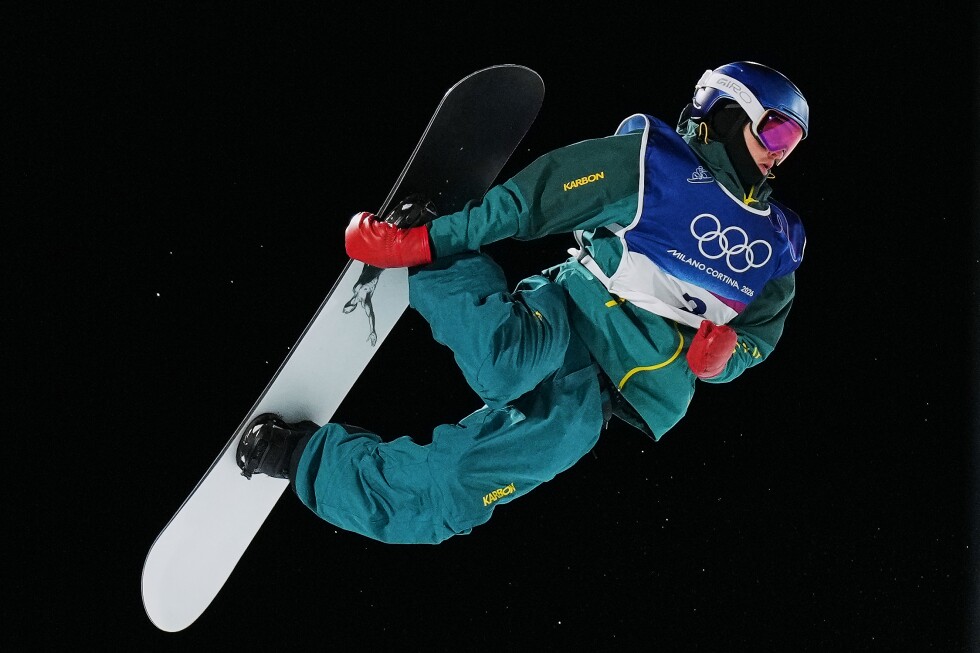
    LIVIGNO, Italy — The men’s snowboard halfpipe competition at the Winter Olympics is poised for an epic confrontation between Australia’s Scotty James and defending champion Ayumu Hirano of Japan. This premier event, scheduled for Friday, represents James’ opportunity to claim the sole missing achievement in his distinguished career: Olympic gold.

    Hirano, who triumpphantly claimed victory at the 2022 Beijing Games during snowboarding legend Shaun White’s farewell competition, arrives at these Games compromised by injury. The Japanese champion suffered a broken nose and additional injuries following a severe fall during training in Switzerland last month, reportedly operating at only 50% capacity.

    This physical setback potentially creates an opening for James, who has secured second and third place finishes in the previous two Olympic competitions. The Australian rider now seeks to ascend to the top podium position that has eluded him throughout his spectacular career.

    Two critical elements will determine the outcome of this high-stakes contest:

    The triple cork maneuver has evolved from Hirano’s gold-winning innovation in 2022 to become the essential requirement for podium contention. Athletes capable of landing multiple triple corks—including New Zealand’s Cam Melville Ives and American teenager Alessandro Barbieri—immediately enter medal consideration. The snowboarding community anticipates whether any competitor will attempt the groundbreaking triple-cork 1620, a trick previously executed only in training by South Korea’s Chaeun Lee.

    Style represents the second decisive factor, particularly for James. Renowned for his technical precision and unique approach, the Australian specializes in exceptionally difficult jumps involving backward riding and complex spins initiated while facing up the halfpipe—a technique that eliminates visual confirmation of his landing zone. His recent achievement of back-to-back backside 1440s at the X Games marked a historic combination never before accomplished. However, without incorporating triple rotations, judges may relegate James to another silver medal finish despite his stylistic excellence.

    The competition promises to showcase the rapid progression of halfpipe snowboarding, where technical innovation and artistic execution collide in one of the Winter Olympics’ most anticipated events.

  • Africa Cup of Nations 2027 set for June-July slot

    Africa Cup of Nations 2027 set for June-July slot

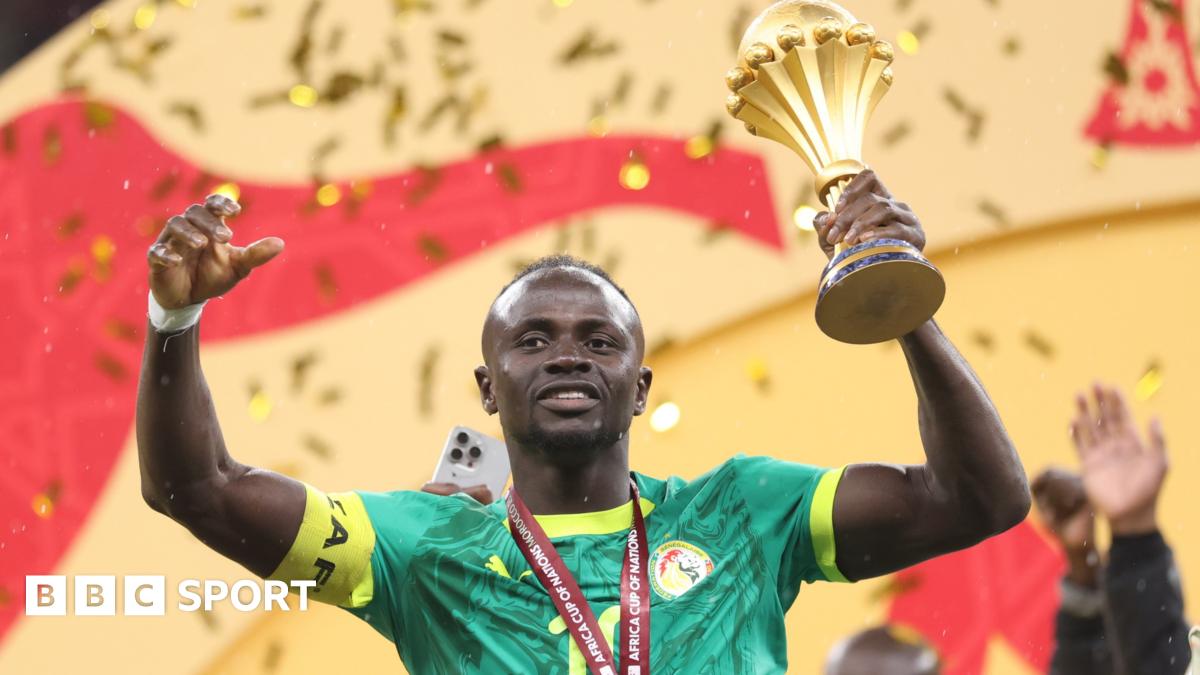
    The Confederation of African Football (CAF) President Patrice Motsepe has officially confirmed that the 2027 Africa Cup of Nations will proceed as scheduled in June and July next year, dismissing speculation about potential delays or relocation. The tournament will be jointly hosted by three East African nations: Kenya, Tanzania, and Uganda.

    Motsepe characterized reports suggesting possible postponement as “totally unfounded” during a press conference following CAF’s executive committee meeting in Dar es Salaam. “The AFCON next year in Kenya, Tanzania and Uganda is going to be enormously successful,” he stated, expressing strong confidence in the hosting capabilities of the three nations despite acknowledged infrastructure challenges.

    The announcement comes amid concerns regarding readiness of facilities in the host countries. Nicholas Musonye, chair of Kenya’s local organizing committee, previously suggested to AFP that a postponement until 2028 would benefit Kenya, which faces a general election in August 2027.

    CAF officials are currently conducting inspections of facilities and infrastructure across the three host nations, with assessments continuing through Tuesday. The tournament represents a return to mid-year scheduling after three consecutive editions were held during January-February or December-January windows to avoid conflicts with European club seasons.

    In additional developments, Motsepe confirmed that the AFCON tournament will transition to a four-year cycle beginning in 2028, replacing the previous biennial format. He also expressed aspirations to expand the competition from 24 to 28 teams in future editions.

    Regarding the 2026 Women’s Africa Cup of Nations, Motsepe indicated that Morocco remains the designated host despite offers from other nations to stage the tournament. He emphasized the importance of maintaining the scheduled March 17th start date as it serves as a qualifier for the 2027 Women’s World Cup.

  • UAE cricket fans shell out up to Dh7,000 to watch India-Pakistan match in Colombo

    UAE cricket fans shell out up to Dh7,000 to watch India-Pakistan match in Colombo

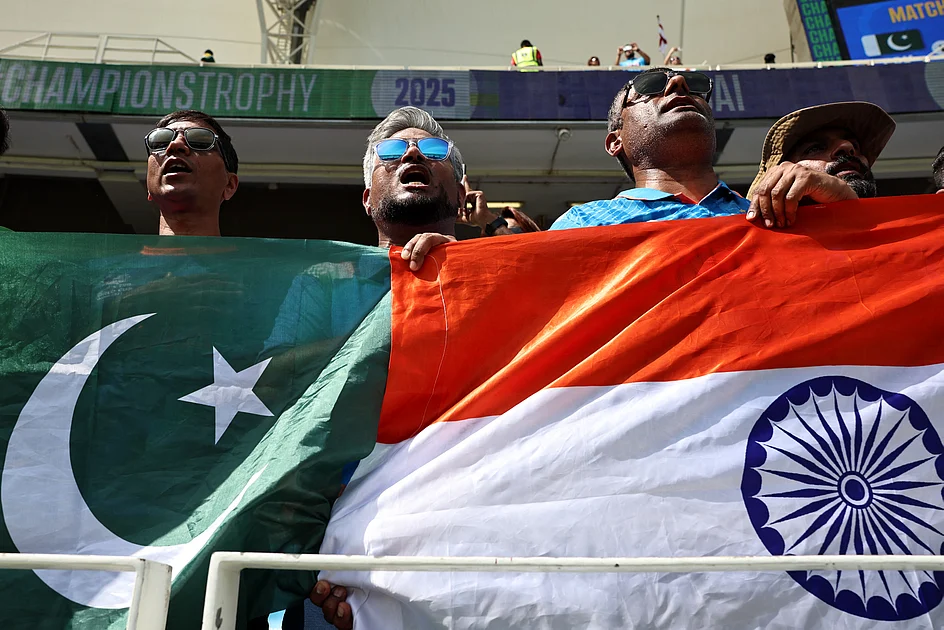
    Cricket aficionados based in the United Arab Emirates are demonstrating extraordinary financial commitment to witness the iconic India-Pakistan T20 confrontation live in Colombo, with comprehensive weekend packages reaching approximately Dh7,000. This prestigious sporting event, scheduled for Sunday, has triggered substantial increases in both aviation and hospitality sectors as dedicated fans secure last-minute arrangements.

    Current market analysis reveals that round-trip airfare from Dubai to Colombo during the match period averages Dh3,700, with significant fluctuations based on travel dates and booking availability. Friday departures are commanding approximately Dh1,680 for outbound flights, while return journeys three days later average Dh1,200. Saturday travelers face even higher costs, with onward fares reaching Dh2,000 and Tuesday returns around Dh1,600.

    The accommodation sector reflects similar inflationary trends, with five-star properties in central Colombo charging between Dh1,800 and Dh4,000 for four-night stays during the match weekend. Mid-range stadium seating adds another Dh400-Dh600 to the overall budget, while ancillary expenses including local transportation, culinary costs, and brief sightseeing excursions contribute an additional Dh600-Dh800 to the total expenditure.

    Jahanzeb, a Pakistani entrepreneur residing in Dubai, exemplifies this dedicated fandom. Having secured his Dh2,300 return ticket before recent price surges, he has arranged a specially extended weekend absence from professional responsibilities to experience the match atmosphere firsthand. “This rivalry transcends ordinary cricket matches—the stadium environment offers an incomparable experience,” he remarked.

    Tourism professionals attribute this surge to multiple factors. Subair Thekepurathvalappil, Senior Manager at Wisefox Travel and Tourism, noted: “We’re observing intense demand from passionate cricket supporters of both nations. The streamlined visa procedures for UAE residents traveling to Sri Lanka, combined with the country’s established tourism infrastructure, create ideal conditions. Many visitors are strategically combining the match with pre-Ramadan vacations, recognizing that such high-profile events occur infrequently.”

    This singular sporting occasion is providing measurable economic stimulation to Colombo’s tourism economy, demonstrating how premium athletic competitions can generate temporary but significant commercial benefits for host destinations.

  • Brilliant Muzarabani helps Zimbabwe stun Australia

    Brilliant Muzarabani helps Zimbabwe stun Australia

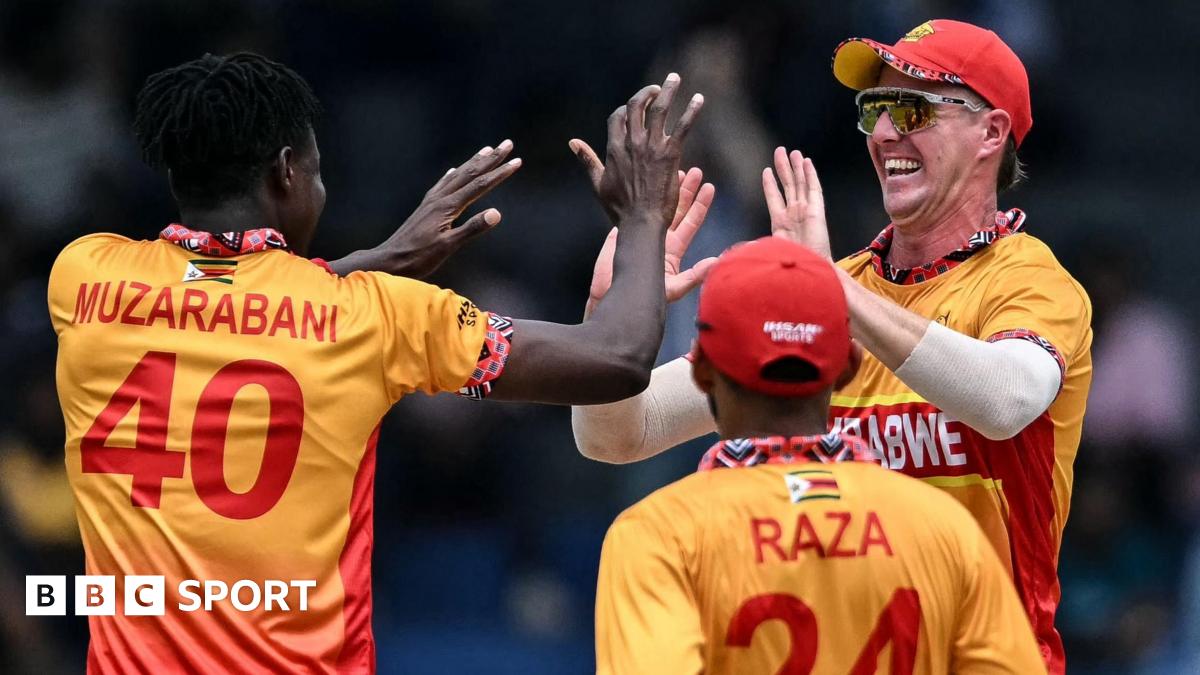
    In a stunning upset at the T20 World Cup, Zimbabwe delivered a masterclass in disciplined cricket to defeat tournament favorites Australia by 23 runs in Colombo. The Chevrons, led by an exceptional bowling performance from Blessing Muzarabani who claimed career-best figures of 4-17, defended a modest total of 169-2 with remarkable composure against the reigning champions.

    The match turned dramatically during Australia’s chase when Muzarabani and Brad Evans (3-23) dismantled the top order, reducing the Aussies to 29-4 within the powerplay. Despite a valiant 77-run partnership between Matthew Renshaw (65) and Glenn Maxwell (31) that briefly revived hopes, Zimbabwe’s bowlers maintained relentless pressure on a slow R. Premadasa Stadium pitch.

    The decisive moment arrived with eight balls remaining when the 6ft 8in pace bowler Muzarabani removed Renshaw, effectively sealing Australia’s fate. Zimbabwe’s fielding proved equally instrumental, with Clive Madande and Tony Munyonga producing spectacular boundary saves that conserved crucial runs.

    Zimbabwe’s batting approach, initially perceived as overly cautious, was vindicated by the result. Opener Brian Bennett anchored the innings with an unbeaten 64 from 56 balls, supported by aggressive cameos from Tadiwanashe Marumani (35 off 21) and Ryan Burl (30 off 30). Captain Sikandar Raza provided late impetus with 25 not out from just 13 deliveries.

    The victory marks Zimbabwe’s second T20 World Cup win against Australia, repeating their 2007 triumph at Newlands. The result leaves Group B delicately balanced after two matches, with Australia now trailing both Zimbabwe and Sri Lanka by two points ahead of their crucial encounter on Monday.

    Raza emphasized the team’s cultural foundation post-match: ‘The unity we’ve created makes me extremely proud. The boys really deserved this victory, but we must now focus on our next challenge.’

    For Australia, stand-in captain Travis Head remained philosophical: ‘We’ve found ourselves in this position before and will look to navigate this situation using our previous experiences.’

    The upset represents one of Zimbabwe’s most significant cricketing achievements in recent years, demonstrating their growing capability to compete with elite international sides.