分类: sports

  • AFL 2026: Melbourne coach Steven King has united with his fellow coaches on a fixture flaw

    AFL 2026: Melbourne coach Steven King has united with his fellow coaches on a fixture flaw

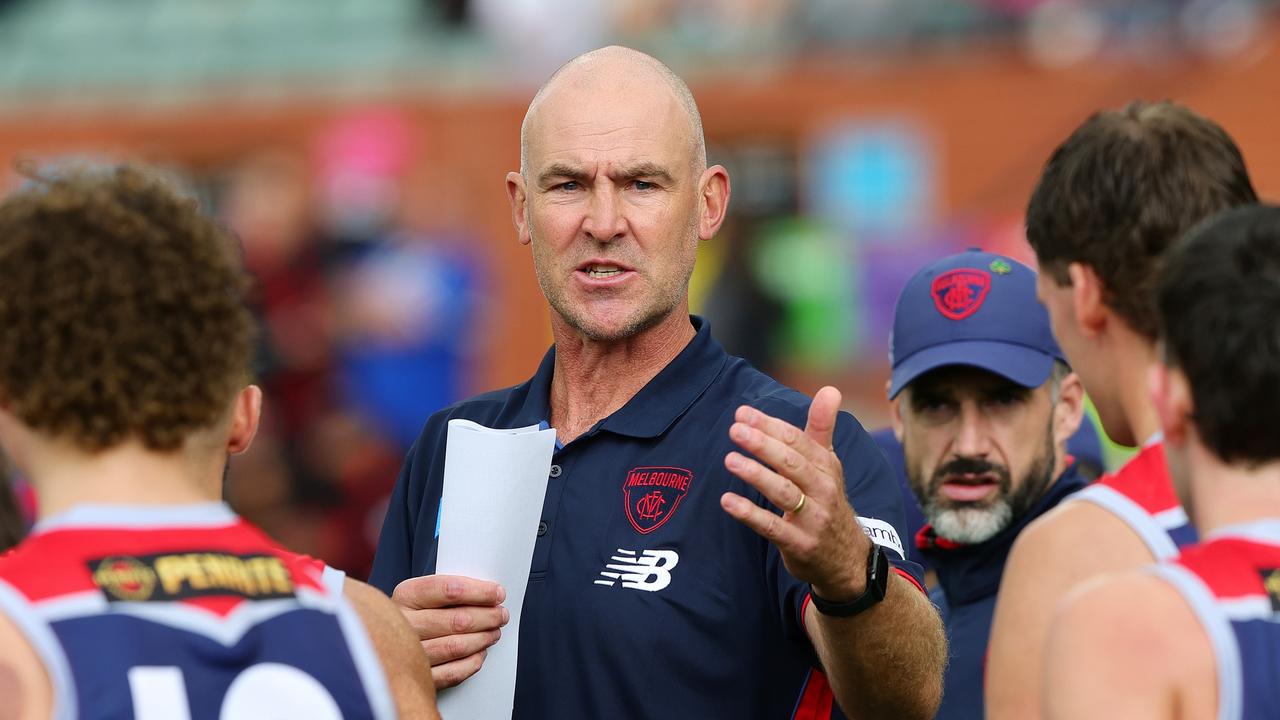
    Just six games into his tenure as Melbourne Football Club’s senior AFL coach, Steven King has added his voice to a growing cohort of league coaches pushing for major changes to the Victorian Football League (VFL) competition fixture, citing disruptive scheduling gaps that derail player development pathways.

    The Demons’ reserves affiliate, the Casey Demons, have only been able to complete two regular matches through the first chunk of the 2024 season, with a scheduled bye for the club and a league-wide break to accommodate the VFL State of Origin exhibition match forcing the side into an extended break. The fragmented, stop-start schedule left King’s side with no official competitive outlet for their development players, prompting Melbourne to arrange an unofficial scratch match against Essendon’s reserves at the Bombers’ training base, the Hangar, this past Sunday.

    King explained that the current scheduling structure fails star development players waiting for their chance to break into the senior AFL lineup. “I’ve got 12 to 15 players who are hungry to compete every week to prove they deserve an AFL call-up, and right now they can’t get that game time in the official competition,” King said. He pointed out a specific conflict with the State of Origin round: when the VFL pauses all club matches for the representative game, only a tiny handful of VFL-listed players get selected to participate, leaving dozens of AFL-listed reserves with no competitive match to play. “This is something the AFL should look into adjusting. If stand-alone clubs get a bye when they lose players to the State of Origin game, why can’t our AFL-listed reserves get the opportunity to keep playing?” he added.

    The disjointed fixture has also forced awkward, difficult conversations between King and players on the cusp of senior selection. “Players come up to me and ask, ‘Does this mean I’m out of contention for the first six weeks because there are no games for me to prove myself?’ That’s a really tough question to answer,” King said. “All our guys want is to get out on the ground and play, so they can put their hand up for senior selection. I know most other clubs have already raised concerns about this issue, and I will be following the proper channels to push for change too.”

    Looking ahead to this weekend, Melbourne is set to face the Brisbane Lions at the Melbourne Cricket Ground on Sunday for the annual Jim Stynes Foundation charity match. The game comes as a critical bounce-back opportunity for the Demons, who suffered an upset loss to Essendon during the league’s recent Gather Round.

    When asked about his game plan for the Lions, who boast one of the deepest, most talented midfield groups in the competition, King said he would prioritize sticking to Melbourne’s own identity rather than completely overhauling the Demons’ game plan to counter the opposition. “We can’t be a club that just reacts every week and changes how we play to match the opponent,” King explained. “We know what works for our game and what fuels our belief. Of course we will tweak a few things to limit the Lions’ strengths — that’s just standard preparation. But as a young coach, I want this group to play our brand of footy and play to our own strengths.”
  • Atletico resist Barca comeback to reach Champions League semis

    Atletico resist Barca comeback to reach Champions League semis

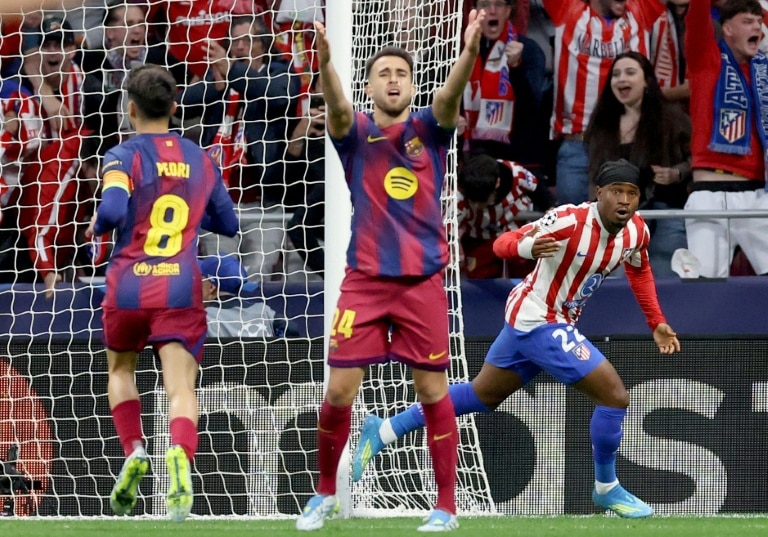
    A dramatic all-Spanish Champions League quarter-final clash ended in heartbreak for Barcelona and jubilation for Atletico Madrid, as Diego Simeone’s side held on to seal a 3-2 aggregate victory and secure their place in the competition’s final four, despite a 2-1 second-leg defeat on Tuesday night at the Metropolitano.

    Barcelona came out of the gate firing from the opening whistle, nearly taking the lead inside the first minute when teenage star Lamine Yamal’s sharp effort was tipped around the post by Atletico goalkeeper Juan Musso. The Catalan side did not have to wait long for their opening goal, however: in the fourth minute, Yamal pressured Atletico defender Clement Lenglet into a costly turnover, collected a return pass from Ferran Torres, and slid a low shot between Musso’s legs to silence the capacity home crowd and ignite Barca’s comeback bid, built on a 2-0 first-leg deficit.

    Barca continued to dominate the opening exchanges, with Dani Olmo coming close to doubling their lead before his lobbed effort was gathered by Musso. The second goal finally arrived in the 24th minute, when Torres outpaced Lenglet to meet Olmo’s through ball and fired a clinical finish into the top corner, drawing the tie level on aggregate. Fermin Lopez nearly put Barca ahead on aggregate soon after, but Musso clawed away his header — an intervention that left Lopez bloodied after Musso’s boot caught him in the face.

    Against the run of play, Atletico clawed their way back into the tie in the 31st minute when Barcelona switched off defensively for the first time. Marcos Llorente broke behind Barca’s high defensive line down the right flank and delivered a pinpoint cross for Ademola Lookman, who converted the finish to restore Atletico’s aggregate lead. Lookman, who had troubled Barca defender Jules Kounde all night, would see his strike prove the decisive goal of the tie.

    The second half brought even more tension and controversy. Barcelona thought they had extended their lead on the night early on when Torres volleyed home, but the goal was ruled out for offside, leaving the Catalan side frustrated. With 20 minutes remaining to find the goal that would force extra time, Barca manager Hansi Flick — who had previously benched star forwards Marcus Rashford and Robert Lewandowski in favor of high-energy pressing from Torres and Gavi — brought on the two veteran attackers to turn the tide.

    Tempers boiled over as the clock wound down: Atletico’s Matteo Ruggieri was left bleeding from the face after Gavi caught him with an elbow, and tensions reached a breaking point when Barcelona defender Eric Garcia was sent off for clipping the heels of Alexander Sorloth as the striker bore down on goal. The red card mirrored the first leg’s dismissal of Pau Cubarsi, leaving 10-man Barca with an uphill battle to salvage the tie. Flick pushed center-back Ronald Araujo into the forward line in a last-ditch attempt to find the needed goal, but Atletico held firm through eight minutes of stoppage time to confirm their progression.

    This run marks Atletico’s first appearance in the Champions League semi-finals since 2017, and the club will next face either Arsenal or Sporting Lisbon for a spot in the final. The capital side has never lifted the Champions League trophy, having fallen in the 2014 and 2016 finals under Simeone’s leadership. Following the final whistle, Atletico captain Koke expressed his side’s pride at knocking out one of Europe’s elite clubs.

    “Very happy, knocking out a great Barca side. We had a great game away… it was really hard for us at the start of this one, but the team knew how to get back on its feet,” Koke told Movistar.

    For Barcelona, the defeat extends their 10-year wait for a sixth Champions League crown, having last won the competition in 2015. Despite the exit, midfielder Frenkie de Jong said the club is still progressing in the right direction under new leadership. “I think we had a very good game, we gave our lives out there, we tried everything,” the Dutch midfielder said. “I feel like luck was not on our side. We have to continue — we’re on a good path, we’re growing every year.”

  • Slot in the firing line as Liverpool blown away by PSG

    Slot in the firing line as Liverpool blown away by PSG

    For the second straight season, Paris Saint-Germain sent Liverpool packing from the Champions League on their home soil — but this year’s exit was far more devastating, ending the Merseyside club’s hopes of any trophy this campaign and casting major uncertainty over the future of manager Arne Slot.

    Ousmane Dembele scored both goals in PSG’s 2-0 second-leg win at Anfield on Tuesday, wrapping up a lopsided 4-0 aggregate victory that exposed a yawning gap in quality between the two sides. The French champions did not even need to hit their full stride to eliminate the Reds, a stark contrast to 12 months prior, when Liverpool fell to the eventual tournament winners only on penalties, leaving with their heads held high.

    Slot’s tenure got off to a promising start, with Liverpool claiming the Premier League title in his debut season last year. Buoyed by that success, the club’s ownership launched a historic £450 million ($605 million) summer transfer splurge, aiming to build on the foundation Jurgen Klopp left after his trophy-laden tenure and push for both domestic and European glory. Liverpool broke its own transfer record twice, landing Alexander Isak for an English-record £125 million from Newcastle United and Florian Wirtz for another nine-figure fee, while adding Hugo Ekitike, Jeremie Frimpong and Milos Kerkez to create a new-look squad. It was the biggest single-window spend by any club in history.

    But the campaign was overshadowed by tragedy before it even began: fan favorite Diogo Jota died in a car accident while returning to Merseyside for pre-season training. While the emotional impact of losing a beloved teammate can never be measured, it has hung over the club all season, and on-pitch results have descended into chaos.

    The disappointing campaign has already triggered a raft of high-profile exits. Mohamed Salah, who signed a two-year contract extension just 12 months ago, has cut his time at Anfield short a year early. Tensions between Salah and Slot boiled over in December when the Egyptian winger launched an angry outburst after being dropped from the starting lineup, and he was left on the bench for both legs of the PSG tie. Long-serving full-back Andy Robertson has also confirmed he will leave at the end of the season, meaning only Virgil van Dijk, Alisson Becker and Joe Gomez remain from the Liverpool squad that lifted the Champions League trophy in 2019.

    Key departures of key first-team stars Trent Alexander-Arnold and Luis Diaz left a major hole in the squad, and the rebuild’s thin depth has been stretched even further by a devastating string of injuries. When Slot fielded all five summer signings in the starting XI for the first time against PSG, the experiment lasted less than 30 minutes before Ekitike went down with a suspected ruptured Achilles, an injury that will almost certainly rule him out for the rest of this season and well into the next.

    “It is part of our season,” Slot told reporters after the defeat. “We had Alex, Hugo and Florian together for only 88 minutes before tonight. We added 28 minutes and I would be surprised if we can add a few more minutes to that (this season).”

    Isak, the club’s record signing, made his first start back after a broken leg that kept him sidelined since December. Frimpong’s first season at Anfield has been ruined by recurring muscle injuries, forcing another half-time substitution against PSG. While Wirtz has avoided major injury problems, he has failed to replicate the form that made him the star of Bayer Leverkusen’s Bundesliga title-winning side two seasons ago.

    Liverpool currently sits fifth in the Premier League table, with only one remaining goal for the season: securing a top-five finish to qualify for next season’s Champions League. Holding a four-point lead over sixth-placed Chelsea, the Reds are still favorites to claim that spot — but it remains unclear whether Slot will be the one leading them into it.

    Speculation over Slot’s future has been growing for weeks, with Liverpool fans chanting for former Reds midfielder Xabi Alonso during the club’s 4-0 FA Cup defeat to Manchester City earlier this month. Alonso, who left his role as Real Madrid head coach in January, is widely tipped as the leading candidate to replace Slot if the club’s hierarchy decide to sack the Dutchman just 12 months after he won the Premier League.

  • AFL Players’ Association CEO James Gallagher on Lance Collard’s homophobic slur ban

    AFL Players’ Association CEO James Gallagher on Lance Collard’s homophobic slur ban

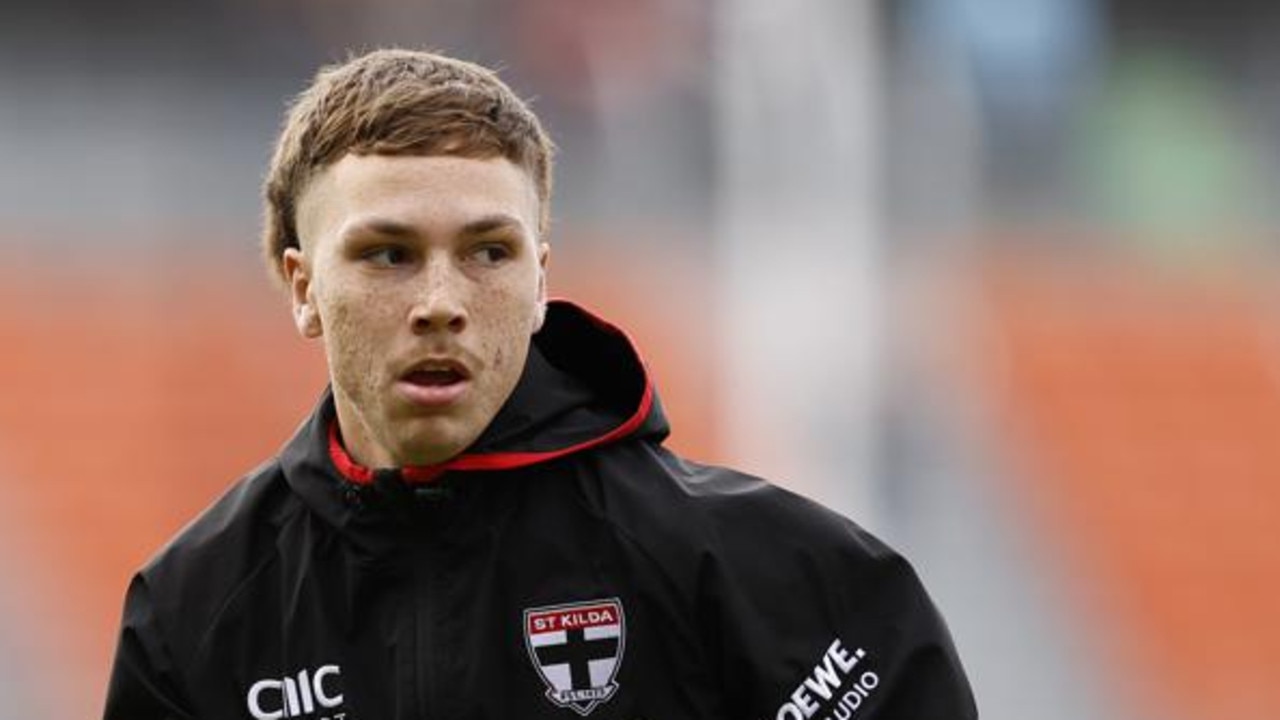
    A controversial nine-week suspension handed to St Kilda AFL forward Lance Collard for a repeated homophobic slur incident has drawn formal response from the AFL Players’ Association (AFLPA), with the governing body voicing disappointment and pushing for sweeping systemic change to how the sport handles discriminatory conduct.

    Collard received the penalty this week following a hearing into his verbal abuse of a Victorian Football League (VFL) opponent, where he was recorded using an openly homophobic slur during a match against Frankston. The nine-week sentence includes a nine-week playing ban, with two weeks of the punishment deferred to the end of the current season. This marks Collard’s second breach of the league’s anti-discrimination rules: he previously served a six-week suspension in 2024 for an identical offence of using a homophobic slur.

    In addition to this latest penalty, Collard is already serving a separate two-match ban for a high tackle offence committed during the same Frankston match. Throughout the tribunal process, Collard has consistently maintained his innocence, with his legal team arguing that a harsh suspension for the second offence could have irreversible, life-ruining impacts on his young playing career. To date, Collard has appeared in 15 senior AFL matches for St Kilda.

    AFLPA chief executive James Gallagher released an official public statement Wednesday confirming the association’s position, noting that while the entire Australian Football industry shares a unified goal of eliminating homophobia from the sport, the current case underscores deep flaws in the existing approach to addressing discrimination.

    Gallagher explained that the tribunal itself acknowledged that complex issues like homophobia and racism cannot be resolved through polarizing debate centered on whether offending language was used, and that the AFLPA is disappointed the panel did not accept Collard’s consistent claims of innocence. The association will continue to provide full support to Collard and St Kilda Football Club throughout the process, including exploring all possible avenues for an appeal against the suspension.

    “A holistic solution that doesn’t focus solely on punitive measures can only be realised through meaningful engagement with LGBTIQA+ community leaders, education that reflects diverse backgrounds and experiences of players, alongside a disciplinary process that is fit for purpose, minimises and remedies the harms caused and shifts behaviour,” Gallagher said.

    He added that through collective bargaining agreements, the AFLPA has already negotiated a formal shared commitment with the broader AFL to embed equality, inclusion and safety across the sport, and work continues to progress these pledges to make the game welcoming and safe for all participants. Gallagher also acknowledged the far-reaching impact of the entire disciplinary process on multiple affected groups, including the LGBTIQA+ community, First Nations communities, and Collard and his family.

  • England beats Spain again, winning 1-0 in Women’s World Cup qualifier

    England beats Spain again, winning 1-0 in Women’s World Cup qualifier

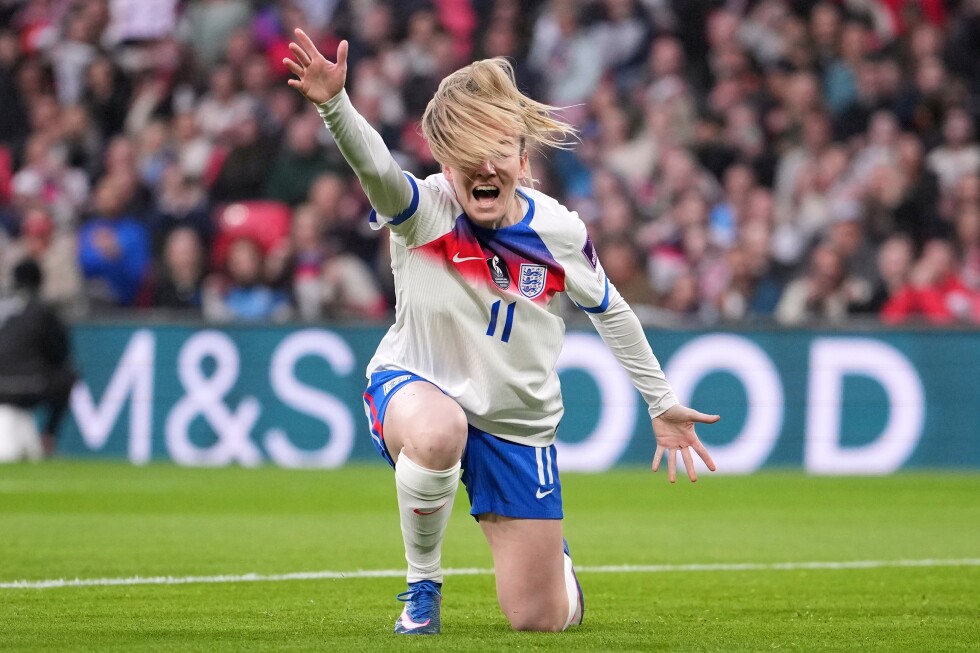
    LONDON – In a highly anticipated rematch between two of women’s soccer’s global powerhouses, European champion England secured a dramatic 1-0 victory over top-ranked Spain in a 2027 FIFA Women’s World Cup Group A3 qualifier at iconic Wembley Stadium on Tuesday. The only goal of the match came just three minutes after kickoff, when forward Lauren Hemp poked the ball into the net from an early corner kick. Although Spanish star Alexia Putellas made a last-ditch attempt to clear the ball off the goal line, replays confirmed the effort had already crossed the boundary, giving England an early lead that it never relinquished.

    Tuesday’s clash marked the latest in a string of high-stakes meetings between the two elite sides. It mirrored the matchups of both the 2022 UEFA Women’s Euros final and the 2023 FIFA Women’s World Cup final, two of the biggest matches in recent women’s soccer history. In the 2022 Euros final, England claimed victory to defend their continental title, securing back-to-back European championships. Just one year later, Spain flipped the script at the 2023 World Cup, lifting the trophy for the first time in their history after defeating England in the final.

    With the result, England maintains a perfect winning record through its qualifying campaign so far and sits firmly at the top of Group A3. Heading into the next round of matches, the three points gained from this marquee win give the Lionesses a major boost in their bid to qualify for the 2027 Women’s World Cup, which is scheduled to be hosted by Brazil. Fourth-ranked England’s defeat of world number one Spain also serves as a powerful statement of intent ahead of the upcoming tournament, reigniting debate over which side enters the global event as the favorite.

    This report was compiled from original wire coverage of the match, part of ongoing international soccer qualifying action for the 2027 cycle.

  • Hugo Ekitike injury looks ‘really bad’ in potential blow for Liverpool and France

    Hugo Ekitike injury looks ‘really bad’ in potential blow for Liverpool and France

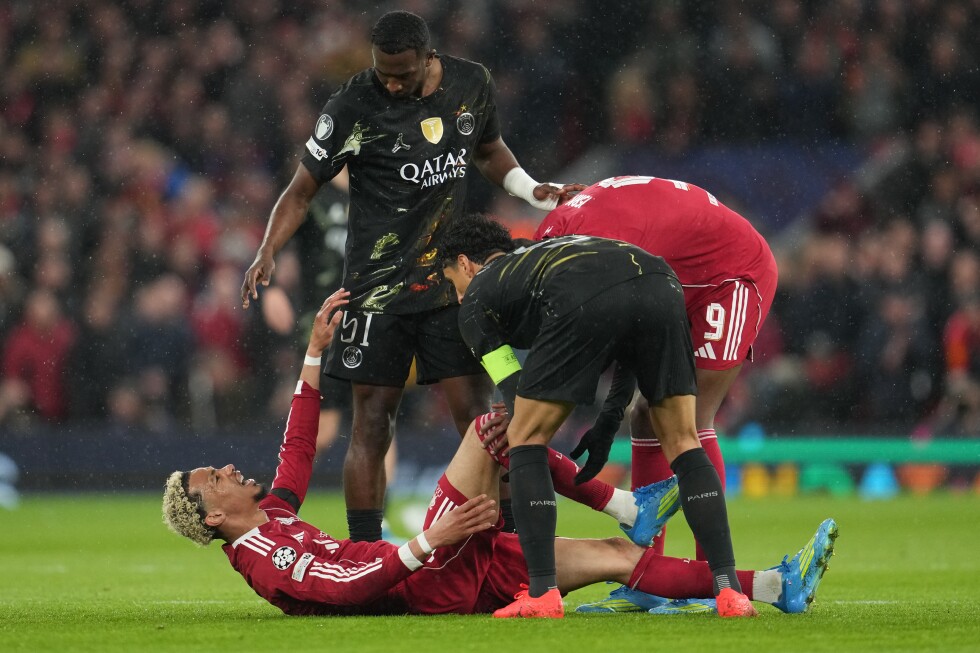
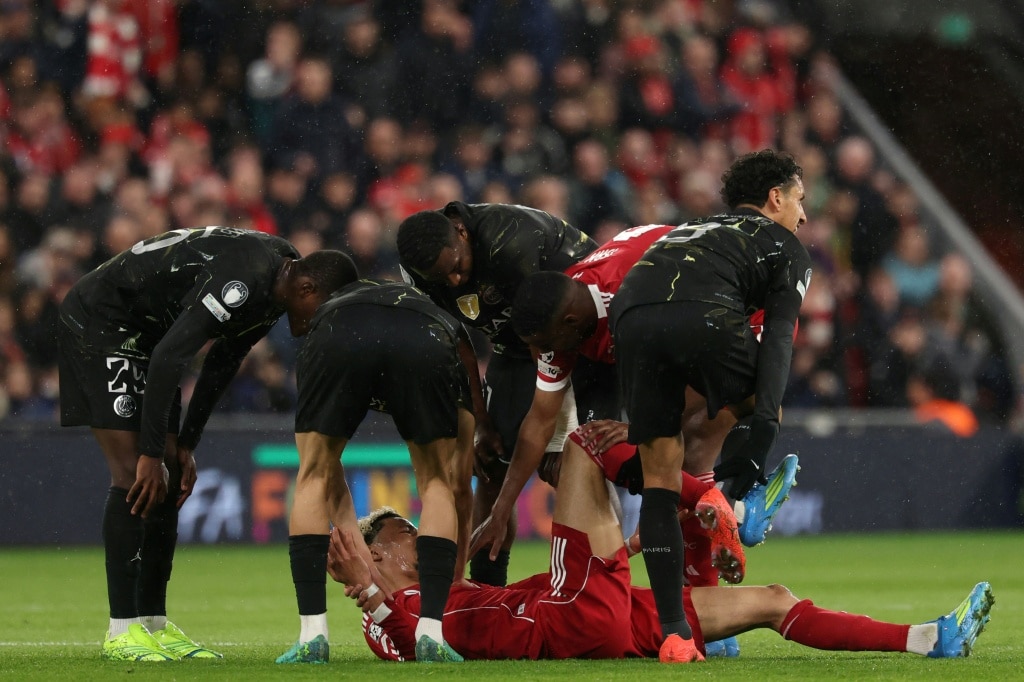
    In a tense UEFA Champions League quarterfinal second-leg fixture at Anfield on Tuesday, a 2-0 defeat for Liverpool that secured a 4-0 aggregate win for Paris Saint-Germain was overshadowed by a worrying first-half injury to French striker Hugo Ekitike. The incident occurred in the 27th minute, when Ekitike slipped awkwardly on the Anfield pitch, appearing to sustain damage to his right leg that required immediate medical attention on the field. After quick evaluation by club medical staff, it was determined the forward could not continue the match, and he was stretchered off the pitch to be replaced by veteran Liverpool winger Mohamed Salah. Speaking post-match following Liverpool’s elimination from the competition, Reds head coach Arne Slot offered a grim early assessment of Ekitike’s condition. “It doesn’t look good,” Slot told reporters. “It looks really bad, but it’s difficult for me to say how bad. Tomorrow we will investigate further.” The injury carries major ramifications beyond Liverpool’s domestic and European campaign. Ekitike has emerged as one of the Merseyside club’s most impactful performers this season, netting 19 goals across all club and international competitions. Most recently, he scored the decisive goal for France in a high-profile 2-1 friendly win over Brazil just one month ago. With the men’s FIFA World Cup set to kick off later this year, Ekitike was widely expected to be a key starting attacker for the defending champions, making his fitness a major point of concern for French national team staff. For Liverpool, the potential long-term absence of Ekitike also complicates the club’s ongoing push to secure a top-four finish in the English Premier League, which would grant them qualification to next season’s Champions League. The fixture was not without other injury concerns for both sides. PSG left-back Nuno Mendes was forced to withdraw shortly before halftime with an unspecified health issue, though he was able to walk off the pitch unassisted. Young PSG attacker Desire Doue became the third player to exit early, leaving the match with a leg injury early in the second half.

  • Italy to host a Wimbledon tuneup on grass starting in 2028. It could be played on the San Siro field

    Italy to host a Wimbledon tuneup on grass starting in 2028. It could be played on the San Siro field

    Italian tennis is experiencing an unprecedented period of expansion and ambition, with a series of high-profile developments signaling the country’s growing influence on the global tennis landscape.

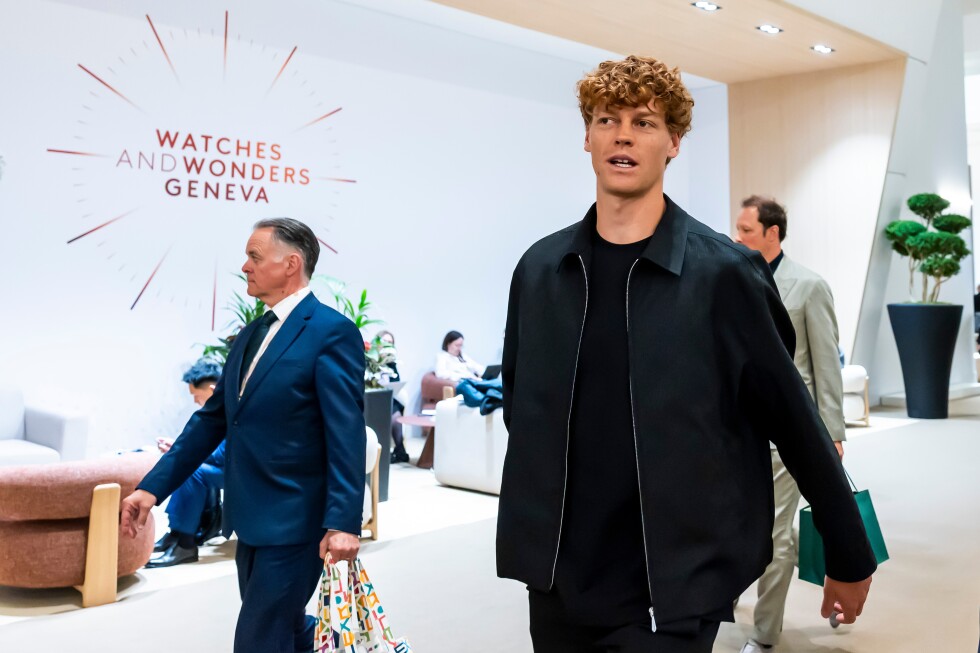
    In the latest announcement Tuesday, Angelo Binaghi, president of the Italian Tennis and Padel Federation, confirmed the federation has acquired the hosting rights to a 250-level ATP Tour tournament previously held in Brussels each October. Relocated to Italy, the new event will launch in June 2028, positioning it as a key pre-Wimbledon warm-up tournament on grass courts. Binaghi noted that while a final venue is still to be confirmed, climate conditions point to northern Italy as the most likely location. One standout potential option under consideration is the iconic San Siro soccer stadium in Milan, following the lead of Madrid Open organizers who are set to add practice courts inside Real Madrid’s Santiago Bernabéu Stadium. “For once, we wouldn’t be the first to do it,” Binaghi pointed out.

    This new grass-court event is just the latest addition to Italy’s packed portfolio of top-tier tennis competitions. The country already hosts the season-ending ATP Finals in Turin through 2030, and the Davis Cup Finals in Bologna through 2025. From 2022 to 2024, Italy also staged a WTA grass-court tournament in Gaiba, building valuable experience in hosting outdoor grass events ahead of the new ATP addition.

    Attention now turns to the upcoming Italian Open, scheduled to begin next month at Rome’s Foro Italico. Organizers are riding a wave of momentum after world No. 1 Jannik Sinner’s straight-sets victory over Carlos Alcaraz in the Monte Carlo Masters final Sunday, a win that reclaimed the top ranking for the Italian star. The tournament is already abuzz with speculation that Sinner could become the first Italian man to lift the Italian Open men’s singles trophy in 50 years, since Adriano Panatta’s iconic win in 1975. Binaghi expressed confidence in the host nation’s prospects at the tournament presentation, noting that Italy has three additional top-25 ranked players: Lorenzo Musetti at No. 9, Flavio Cobolli at No. 16, and Luciano Darderi at No. 21. Last year’s tournament delivered historic home success too: Jasmine Paolini claimed both the women’s singles and doubles titles alongside partner Sara Errani, while Alcaraz defeated Sinner in the men’s final in Sinner’s first competition back after a three-month doping ban.

    Major infrastructure upgrades are also underway at the Foro Italico to prepare for the tournament’s growing profile. Construction of a retractable roof for the main Campo Centrale court will kick off immediately after this year’s Italian Open, with completion targeted for the 2028 edition. The renovation will increase seating capacity for the main stadium from 10,500 to 12,400 for tennis, with additional capacity available for other sports such as basketball.

    Looking further ahead, Binaghi reiterated the federation’s long-term ambition to elevate the Italian Open to the status of a fifth Grand Slam, joining the existing four major tournaments that have defined top-tier men’s and women’s tennis for a century. First proposed by Binaghi last year, the plan would see the federation acquire the license for the Madrid Open — which currently sits on the calendar immediately before Rome — and merge or restructure the events to create a fifth elite major. “I think about it every day,” Binaghi said. “There’s only a brief window when we can achieve this. … Italy would benefit from it for 100 years. It’s our dream.”

  • New trial over Diego Maradona’s death resumes in Argentina against 7 health care professionals

    New trial over Diego Maradona’s death resumes in Argentina against 7 health care professionals

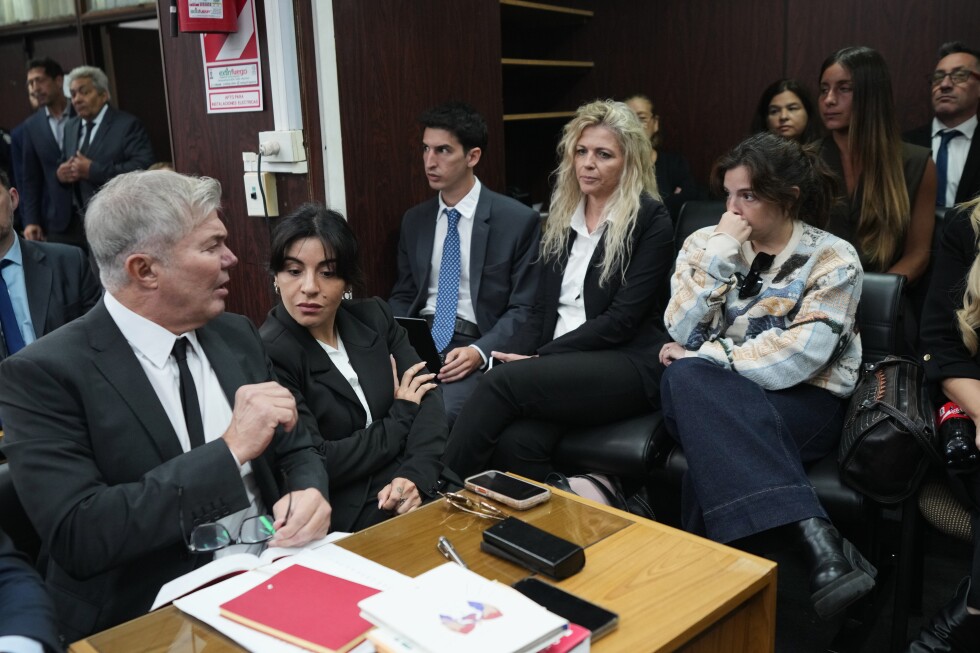
    BUENOS AIRES, Argentina – Nearly 12 months after a high-profile misconduct scandal derailed the first proceeding, the long-awaited negligence trial against seven medical professionals charged in the 2020 death of Argentine soccer icon Diego Maradona officially restarted Tuesday.

    Widely celebrated as one of the most talented soccer players in history, Maradona passed away at 60 from cardiac arrest, while he was recovering from emergency brain surgery to remove a blood clot. His death at his private residence outside Buenos Aires, just two weeks after his hospital discharge, sparked immediate outrage and investigations into the quality of care he received in his final days.

    The seven defendants, which include Maradona’s longtime personal physician Leopoldo Luque, psychiatrist Agustina Cosachov, and psychologist Carlos Díaz, face charges of culpable homicide – an offense comparable to involuntary manslaughter under Argentine law. Prosecutors argue the medical team knowingly acted recklessly and failed to address the life-threatening risks they created for Maradona, and if convicted, each could face prison sentences between 8 and 25 years.

    The case centers on allegations that the group of care providers failed to deliver adequate monitoring and treatment to Maradona in the weeks leading up to his death. A 2021 investigative report compiled by a 20-member independent medical panel accused Maradona’s care team of acting “inappropriately, deficiently and recklessly,” leaving the legend in severe pain without medical assistance for more than 12 hours before his cardiac arrest.

    Maradona had battled severe chronic health complications for decades, many exacerbated by years of substance and alcohol use. He had already survived near-death episodes in both 2000 and 2004, according to court records. Defense attorneys for the defendants reject all criminal allegations, arguing Maradona’s death was the natural outcome of his multiple pre-existing serious conditions, and no unlawful conduct contributed to his passing.

    The original 2024 trial collapsed into a mistrial after presiding judge Julieta Makintach stepped down amid intense public and legal criticism. Makintach faced backlash after footage revealed she had appeared prominently in *Divine Justice*, a documentary covering the Maradona case, raising unresolvable questions about judicial impartiality. In her resignation letter submitted to judicial authorities last June, Makintach wrote: “I present my resignation with serenity, without renouncing the right to exercise my defense in the appropriate arenas.”

    For the resumed trial, hearings are scheduled to take place twice weekly on Tuesdays and Thursdays. Roughly 100 witnesses are expected to give testimony over the coming months, including Maradona’s family members, close associates, independent medical experts, and law enforcement officials. The new three-judge panel overseeing the case – lead by Alberto Gaig, Alberto Ortolani and Pablo Rolón – is expected to issue a final verdict in early June 2025.

    Fernando Burlando, the lead attorney representing Maradona’s two eldest daughters Dalma and Giannina, who are co-plaintiffs in the case, told reporters outside the courtroom ahead of Tuesday’s opening session that his legal team has full confidence in the new judicial panel. “We place enormous trust in them,” Burlando said. “They are judges with extensive experience and backgrounds.”

    Burlando added that Maradona’s daughters have endured extreme emotional fatigue in the nearly five years since their father’s death, still waiting for answers about what led to his passing. “It is very difficult,” he said. “They are Maradona’s daughters, and that alone is not easy, and the fact that they cannot even have a moment of relief to know what happened to their father … although we are convinced of what happened.”

  • Three-time World Cup finalist the Netherlands faces Japan, Sweden and Tunisia in Group F

    Three-time World Cup finalist the Netherlands faces Japan, Sweden and Tunisia in Group F

    For decades, the Netherlands has stood as one of international men’s soccer’s most enduring nearly men. Three times the Oranje have marched all the way to the FIFA World Cup final, and three times they have fallen short of lifting the sport’s most prestigious trophy—back-to-back defeats in 1974 and 1978, followed by a heartbreaker in 2010. This year, the three-time runners-up get a new chance to rewrite their legacy, drawn into Group F alongside rising Asian powerhouse Japan, resurgent Sweden, and African hopeful Tunisia, all hungry to upend the pre-tournament projections.

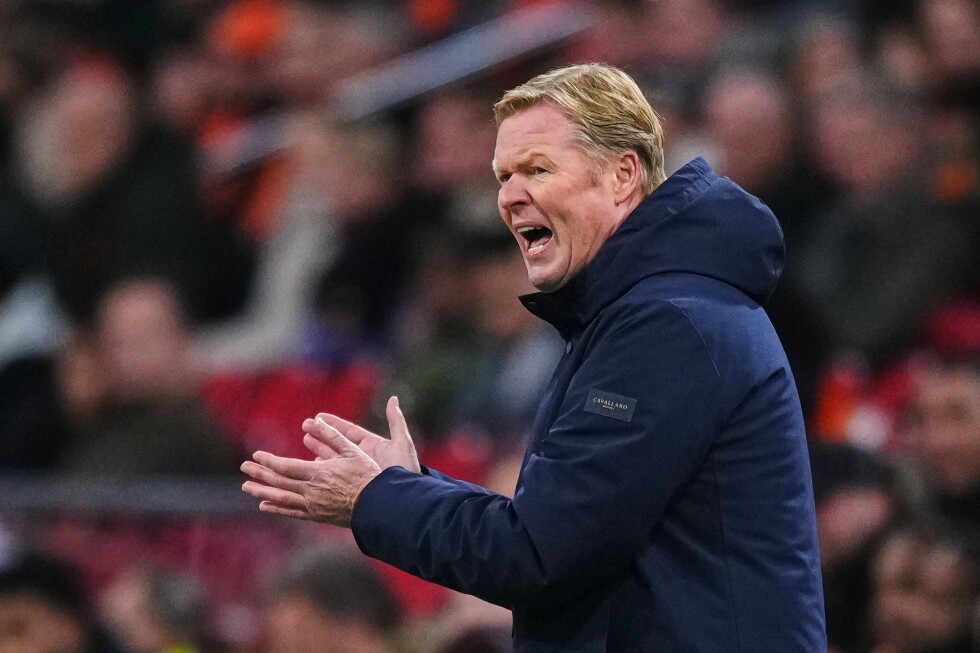
    Pioneers of the revolutionary ‘total football’ framework that redefined the global game in the 1970s, the Netherlands has always produced sides celebrated for their dynamic, aesthetically pleasing style—yet that magic has consistently evaporated when the final whistle of the World Cup final blows. This cycle, the Dutch are led by head coach Ronald Koeman, who is in his second stint at the helm of the national team and is desperate to end his country’s decades-long title drought. Koeman already knows what it takes to win major honors with the Netherlands, having lifted the UEFA European Championship as a player in 1988, and he reached the UEFA Nations League final during his first tenure in charge back in 2019. Today, his squad draws heavily from English Premier League talent, including defensive anchor Virgil van Dijk, dynamic midfielders Ryan Gravenberch and Tijjani Reijnders, and dynamic attacker Cody Gakpo. While the current cohort is solid, analysts widely note it lacks the elite generational talent that defined some of the Netherlands’ most iconic squads of past tournaments. Even so, the Oranje enter Group F as heavy favorites to finish top of the table and advance to the knockout round—but they are not without potential pitfalls, the most notable being 2022’s giant-killers Japan.

    Japan is making its eighth consecutive World Cup appearance this year, targeting a third straight advancement out of the group stage. The Blue Samurai were also the first team outside of this year’s three co-host nations to secure their spot in the tournament, booking their qualification with three group matches still left to play. At the 2022 Qatar World Cup, Japan authored two of the biggest upsets in modern World Cup history, knocking off both Germany and Spain on their way to topping their group—a run that sent shockwaves through the global soccer community. Still, the nation has never advanced past the round of 16, leaving its squad hungry to break that new barrier this cycle. A majority of Japan’s current national team players compete in top European club competitions, including Bayern Munich defender Hiroki Ito and Brighton & Hove Albion dynamic winger Kaoru Mitoma, both of whom have built strong reputations for outperforming expectations against elite competition.

    For Sweden, the road to this year’s World Cup was far from straightforward. The side finished bottom of its direct qualifying group without recording a single win, and only secured a spot in the qualifying playoffs thanks to its strong performances in the 2024-2025 UEFA Nations League, granting it an unexpected second chance to qualify. Under new head coach Graham Potter, who stepped into the role looking to rebuild his managerial reputation following successive club exits from Chelsea and West Ham United, Sweden defied predictions to knock out both Ukraine and Poland in the playoffs to claim its spot in the 24-team field. The side boasts elite offensive talent that makes it a dangerous outlier in the group, including in-form Newcastle United striker Alexander Isak and Sporting Lisbon forward Viktor Gyökeres, two of the most clinically finishing strikers in European soccer. Additional key talent includes young midfield star Lucas Bergvall and Manchester United winger Anthony Elanga. Sweden has its own historic World Cup memories tied to co-host nation the United States: the side finished as runners-up in 1958, and reached the semi-finals the last time the U.S. hosted the tournament in 1994, giving the side a layer of historical confidence heading into this year’s competition.

    Completing Group F is Tunisia, making its seventh World Cup appearance and still chasing its first ever advancement out of the group stage. The North African side came heartbreakingly close to breaking that streak in Qatar four years ago, beating defending champion France 1-0 and holding Denmark to a draw, only to miss out on knockout qualification by a single point. Following a disappointing early exit from the 2023 African Cup of Nations at the round of 16, Tunisia hired former head coach Sabri Lamouchi to lead the side through this World Cup cycle. A rising young star to watch for the Carthage Eagles is 21-year-old Khalil Ayari, who earned a transfer to Paris Saint-Germain ahead of this season and has recently broken through into the senior national team, bringing new energy to Tunisia’s bid to make history.

    As Group F prepares to kick off, all eyes will be on the Netherlands as it chases the title that has eluded it for half a century—with three motivated opponents all ready to turn the group’s dynamics upside down.

  • Can Germany avoid another early World Cup exit in Group E against Curacao, Ivory Coast and Ecuador?

    Can Germany avoid another early World Cup exit in Group E against Curacao, Ivory Coast and Ecuador?

    When the upcoming FIFA World Cup kicks off this June, Group E will bring together one of the sport’s most decorated powerhouses and the smallest nation to ever qualify for the tournament, creating one of the most compelling narrative matchups of the entire group stage. Four-time champion Germany, tournament debutant Curacao, 2024 African Cup of Nations winner Ivory Coast, and South American contender Ecuador will all vie for two knockout stage spots, each carrying their own unique stakes and question marks into the competition.

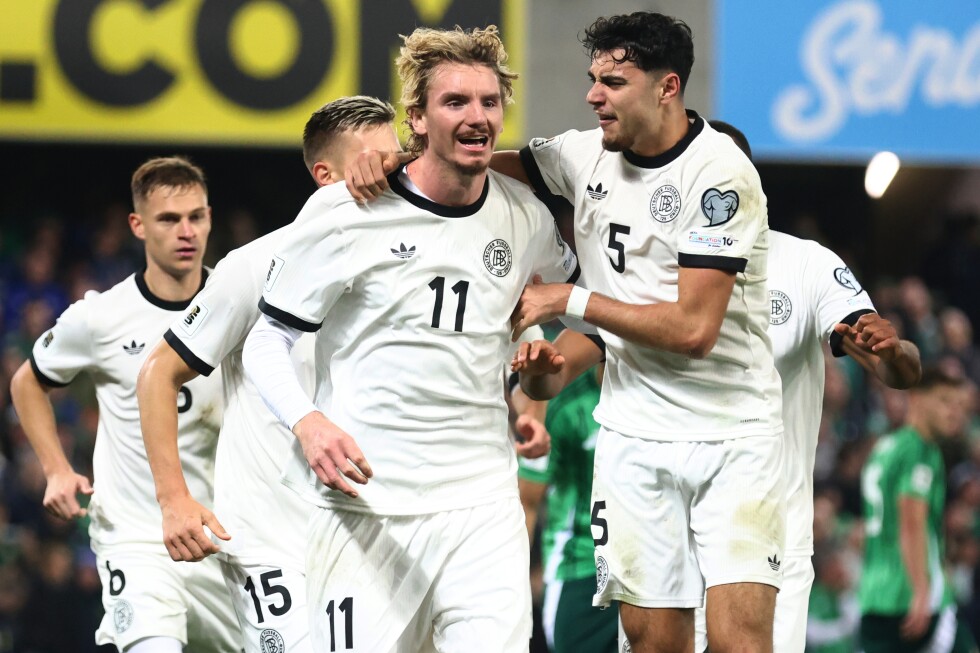
    Leading the group is Germany, a nation that has defined international soccer success for decades but enters the tournament carrying heavy pressure to end a decade-long underperformance slump. Since lifting the World Cup trophy in 2014, Die Mannschaft has crashed out in the group stage in both the 2018 and 2022 tournaments, making an early exit this time around unthinkable for the historically dominant side. Under new manager Julian Nagelsmann, the team is building its attack around dynamic Liverpool playmaker Florian Wirtz, who has emerged as the creative hub of the side. Nagelsmann also has promising young talent to deploy: 1.98-meter striker Nick Woltemade, whose imposing frame creates constant problems for opposing defenses, and 18-year-old midfielder Lennart Karl, who many analysts tip as a potential breakout star of the entire tournament.

    Still, major question marks hang over Germany ahead of kickoff. A tense 4-3 friendly win over Switzerland in March exposed persistent defensive vulnerabilities, rekindling criticism of Nagelsmann’s controversial decision to bench veteran Real Madrid center back Antonio Rüdiger. The side has not tested itself against top-tier global competition since dropping losses to France and Portugal in 2023, and the team has yet to find a proven, reliable successor to long-time starting goalkeeper Manuel Neuer. One interesting addition to the squad is defender Nathaniel Brown, who was eligible to represent the United States but ultimately elected to play for his country of birth, Germany.

    For Curacao, just reaching the World Cup is a historic milestone that no other small nation has ever achieved. The Caribbean island nation, with a total population of just 156,000, will open its first ever World Cup campaign against the four-time champions, a matchup that ranks as one of the most daunting opening fixtures in modern tournament history. The side faced a major setback in pre-tournament preparations back in February, when veteran Dutch manager Dick Advocaat stepped down from his role to care for his daughter, who faces health issues. The federation moved quickly to replace Advocaat with Fred Rutten, a well-traveled coach with experience at top Dutch clubs including FC Twente, PSV, and Feyenoord, as well as German side Schalke 04. Like many former Dutch Caribbean territories, Curacao’s national squad relies heavily on players born and developed in the Netherlands, giving the side a level of talent that defies its small domestic player pool.

    Ivory Coast returns to the World Cup for the first time in a decade, ending a long drought that followed the retirement of its iconic golden generation led by stars Didier Drogba and Yaya Touré. For years after that core retired, the Elephants struggled to rebuild, failing to qualify for three consecutive World Cup cycles. A stunning turnaround came earlier this year, when a new young generation of Ivorian talent stunned the continent by winning the 2024 African Cup of Nations on home soil, and sealed their World Cup spot by finishing top of their qualifying group. This will mark Ivory Coast’s fourth appearance at the tournament, and the side will be chasing its first ever knockout stage berth, having fallen in the group stage in all three of its previous runs. The team is led by manager Emerse Fae, who took the job midway through AFCON 2024 and steered the side all the way to the trophy, with Manchester United winger Amad Diallo standing out as the new generation’s biggest attacking star.

    Completing the group is Ecuador, a South American side that will pin its hopes of a first knockout stage berth in 20 years on Premier League superstar Moises Caicedo. The powerhouse midfielder made British soccer transfer history in 2023, when he joined Chelsea from Brighton & Hove Albion for a $146 million fee, making him the most expensive British transfer acquisition ever. If Ecuador is to reach the knockout round for just the second time in its history, Caicedo’s form in the center of the park will be the deciding factor. The side overcame early adversity to qualify, finishing second in the South American standings behind defending World Cup champion Argentina even after opening the qualifying campaign with a three-point deduction for a document irregularity stemming from the 2022 qualifying cycle. Veteran forward Enner Valencia led the side’s qualifying effort, scoring six of Ecuador’s 14 total goals to secure the team’s spot in the tournament.

    As all four sides finalize their preparations ahead of the June kickoff, Group E stands out as a microcosm of what makes the World Cup unique: a stage where underdogs can upset the odds, powerhouses fight to reclaim their legacy, and new generations of talent get their chance to shine on soccer’s biggest global stage.