分类: sports

  • Ruud overcomes heat struggles to progress in Paris

    Ruud overcomes heat struggles to progress in Paris

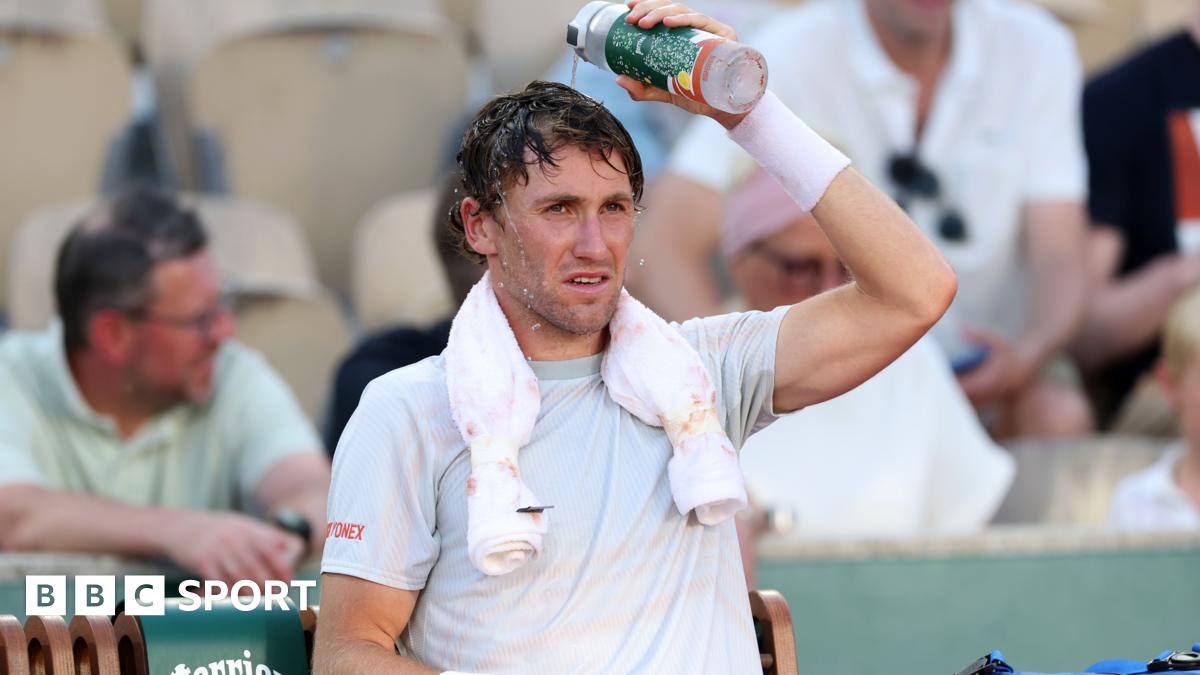
    The 2025 French Open opened under sweltering conditions in Paris, with two-time Roland Garros runner-up Casper Ruud pulling off a dramatic comeback victory over Russian qualifier Roman Safiullin in a five-set first-round marathon that tested both men’s physical and mental limits. Temperatures climbed to 33 degrees Celsius across the tournament’s opening two days, turning the clay courts of Court Simonne-Mathieu into a grueling heat trap that pushed both competitors to the brink of exhaustion.

    Ruud, the 15th seed in the men’s draw, entered the match as the clear favorite and raced out to an early lead, taking the first set 6-2 and edging a tight second-set tiebreak 7-5 to go two sets up. But by the third set, the brutal heat had already begun to take its toll: the Norwegian squandered five consecutive match points, and started suffering painful leg cramps that would only worsen as the match dragged on. He called a medical timeout to address heat-related distress, and relied on ice towels and repeated water douses between changeovers in a desperate attempt to bring his core body temperature down.

    Safiullin, who had been down 2-5 in the third set, capitalized on Ruud’s physical collapse to mount an extraordinary comeback: the Russian qualifier won 11 straight games to steal the third set 7-5 and take the fourth set 6-0, turning a match that looked like an easy Ruud win into a deciding fifth set. Like Ruud, however, Safiullin also struggled with the extreme conditions, requiring on-court medical treatment for injury issues late in the fourth set. Both players left the court for an extended cooling break before the fifth set, a pause that would prove pivotal for Ruud.

    When play resumed, the 27-year-old Norwegian had recovered enough of his strength and focus to dominate the decider, closing out a 6-2, 7-5 (7), 5-7, 0-6, 6-2 win after nearly four hours of competition. The entire clash stretched three hours and 56 minutes on the outer Parisian clay court.

    In post-match comments, Ruud opened up about the debilitating impact of the Paris heatwave, comparing his experience to a past heat-related retirement on the ATP tour. “It felt like a bit of a heatstroke feeling,” he explained. “I experienced something similar some years ago when I played in Washington DC and I had to retire in the third set because of it. That’s the only time I had that same feeling as I had today in the fourth set, where I felt at times really dizzy, really tired and walking around like a zombie almost.”

    Ruud credited the mid-match pause for giving him a chance to recover enough to finish the match. “Luckily, I was 2-1 up still [in sets] and allowed myself to kind of lower the intensity a bit to get my pulse and body temperature down as much as possible in the fourth to see if there was any chance to finish in the fifth and have some extra energy. Luckily, that ended up working.”

    When asked if the win counted as a victory of mental toughness or physical resilience, Ruud said it was both, but emphasized the role of mental grit in getting him across the finish line. “It feels like a mental win,” he said. “At times in the fourth [set] I was thinking ‘I have to book the flight home tomorrow and I’ll be watching from home on the sofa the next two weeks’. Luckily, that’s not the case. Physically, also, I’m proud because I never really gave in. I didn’t give up.”
  • Watch: Only world record broken at Enhanced Games won’t be recognised

    Watch: Only world record broken at Enhanced Games won’t be recognised

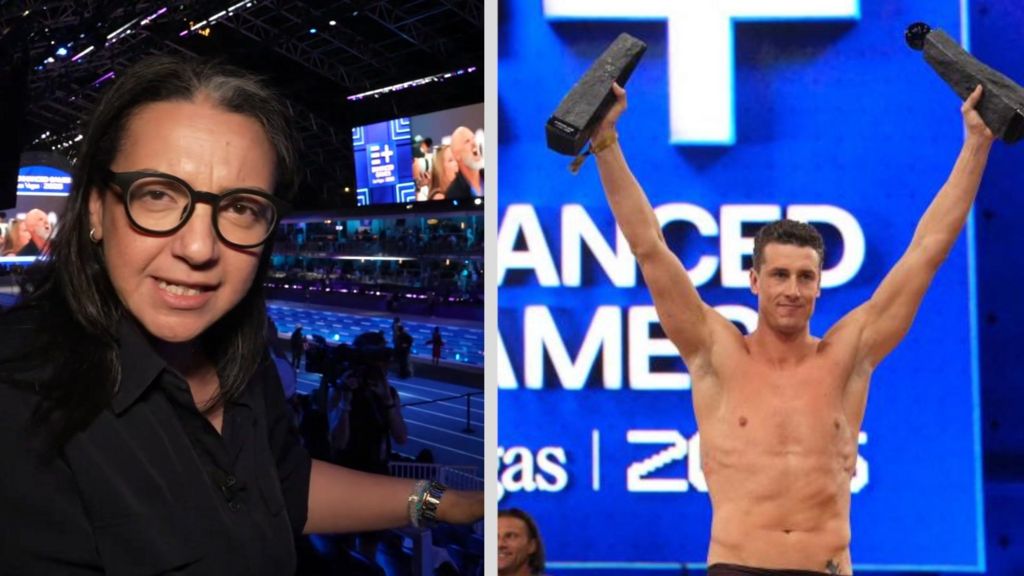
    A groundbreaking moment at the controversial Enhanced Games has turned into a dispute over sporting legitimacy, after officials confirmed a new world mark set by Greek swimmer Kristian Gkolomeev will not receive formal recognition from any mainstream global sports governing bodies.

    The Enhanced Games, an event that has sparked fierce debate across the international athletic community, permits competitors to use performance-enhancing substances that are strictly banned under traditional anti-doping regulations. This core stance puts the competition in direct conflict with the long-standing rules and ethical frameworks established by leading international sports organizations.

    BBC correspondent Shaimaa Khalil has detailed the structural conflict that led to the automatic rejection of Gkolomeev’s record. Even though the Greek athlete delivered an impressive performance that surpassed existing global standards, the unauthorised status of the Enhanced Games means official bodies cannot acknowledge the result as a valid world record under their by-laws.

    The decision has reignited long-running conversations about the future of clean sport, the line between innovation and fairness in elite competition, and how governing bodies should respond to emerging alternative sporting events that challenge established anti-doping norms. While supporters of the Enhanced Games frame it as a progressive reimagining of elite athletics, traditional governing bodies have remained firm in protecting the integrity of drug-free competition, leaving records set at the alternative event outside the bounds of official recognition.

  • ‘Hit you like a tonne of bricks’: NSW great backs Blayke Brailey to rip through Queensland’s ruck

    ‘Hit you like a tonne of bricks’: NSW great backs Blayke Brailey to rip through Queensland’s ruck

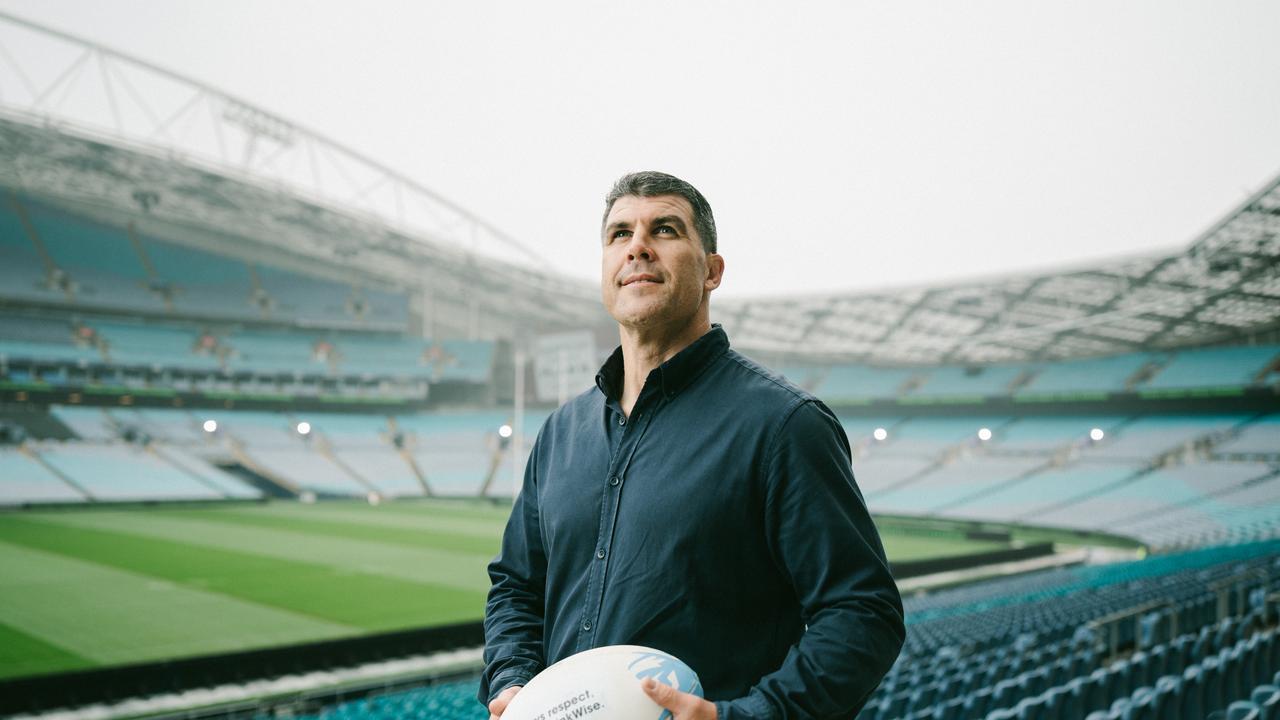
    A decade after former NSW Blues hooker and Cronulla Sharks legend Michael Ennis first heard rumblings of a pair of promising young brothers rising through the Cronulla development ranks, he believes one of those prospects is poised to deliver NSW a victory in the opening game of the 2024 State of Origin series from the interchange bench.

    Ennis, an eight-time Blues representative and part of the Sharks’ 2016 NRL premiership-winning squad, made his prediction as he teamed up with public health initiative DrinkWise at Accor Stadium on Monday morning, just 48 hours before kickoff of the highly anticipated Origin opener. The event launched a new campaign backed by the New South Wales government, NSW Police Force, the National Rugby League, and local support services, which encourages matchgoing fans and home viewers alike to drink responsibly and maintain respect for other spectators during the game.

    Serving as a DrinkWise ambassador for this year’s State of Origin series, Ennis emphasized the value of creating positive, lasting memories of the sport’s biggest annual interstate rivalry. “It was a privilege to experience State of Origin as a player, but now as a fan and a parent, I want to see the night remembered for great moments on the pitch, and the good times we share off it,” he said. “No matter if fans are watching from home, at local pubs and clubs, or right here at Accor Stadium, we just want to encourage anyone drinking to do so in moderation, enjoy the experience, and show respect to everyone around them. That way, everyone can leave with great memories and hopefully a NSW win.”

    Off the campaign trail, Ennis’s attention quickly turned to the on-field action, where he named Cronulla Sharks dummy-half Blayke Brailey – one of the two brothers he first heard about a decade ago during his final years at the Cronulla club – as the secret weapon that could swing the opener in the Blues’ favor. Brailey, who will make his State of Origin debut off the NSW bench on Wednesday, has worked his way into the representative side after several strong seasons leading Cronulla’s attack, and Ennis said he has watched the young hooker’s growth with pride.

    “I haven’t spoken to Blayke ahead of this debut, but I couldn’t be happier for him,” Ennis said. “Blayke and his brother Jayden were just coming through the youth system when I was finishing up my time at Cronulla, and to see both of them now playing elite NRL footy is fantastic. There was always chatter around the club about how talented both boys were, even back then – when Jayden made his first-grade debut, everyone was already talking about Blayke coming up right behind him.”

    From his early days in the top grade, Blayke Brailey was always tipped as a future Origin-calibre dummy-half, Ennis explained. Over the past few seasons, as he has grown into the starting nine role for the Sharks, he has transformed his game to become a key attacking focal point, rather than just a support player for his teammates. That evolution has helped Cronulla push deep into the NRL finals series in recent campaigns, and Ennis said Brailey has finally found the self-belief to match his proven on-field skill.

    Ennis noted that Brailey’s call-up to the Blues squad is fully deserved, after the hooker gained valuable experience on last year’s Kangaroos Ashes tour, where he got the chance to test himself against Queensland’s star hooker Harry Grant. While Ennis said he does not know exactly how Blues coach Laurie Daley will deploy Brailey from the bench, he is confident the rookie will make a major impact when he comes on to relieve starting hooker Reece Robson late in the first half, when fatigue starts to set in for the starting side.

    “That rotation between Reece and Blayke off the bench is going to be one of NSW’s biggest strengths through the whole series,” Ennis said. “Reece already has that established combination with Blues captain James Tedesco from their time together at the Roosters, but having Blayke’s attacking threat to bring on in the middle part of the game, when fatigue really hits, is going to be a massive asset. Origin fatigue hits you harder than any other football, especially in the first game of the series, and with wet conditions forecast for Sydney on Wednesday, that tiredness will set in even faster. Blayke’s speed and ability to change direction quickly out of the ruck could be exactly what the Blues need to take control of the game.”

    For Ennis, if the Blues can pull off the opening win, he plans to celebrate with a quiet couple of beers of his own – responsibly, of course – watching the young rookie he first heard about a decade ago take the next step in what looks set to be a stellar representative career.

  • Injured Yamal and Williams in Spain’s World Cup squad, no Real Madrid players named

    Injured Yamal and Williams in Spain’s World Cup squad, no Real Madrid players named

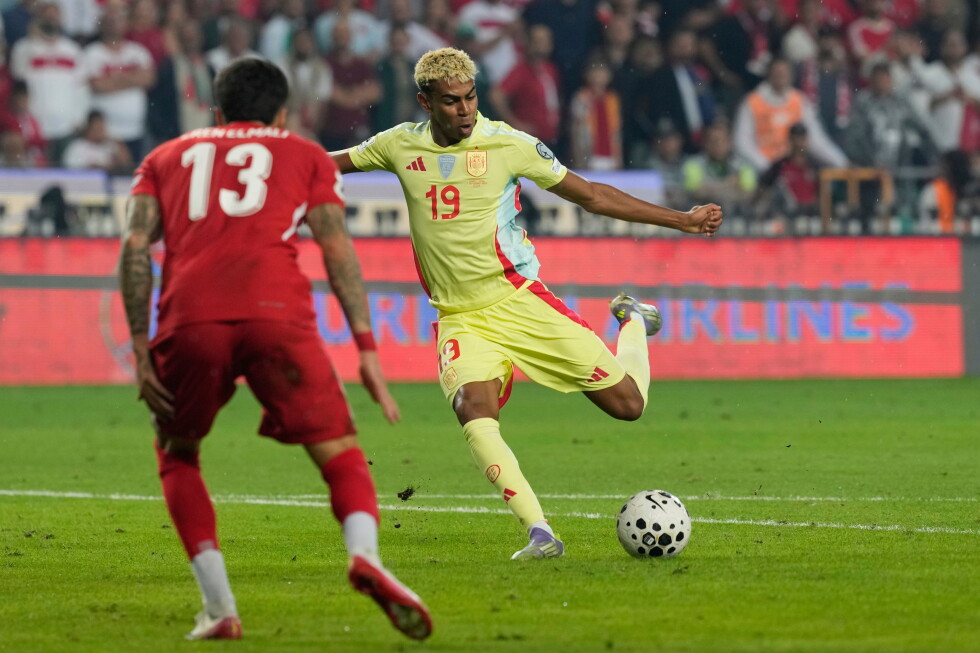
    MADRID – In a high-stakes announcement that has shaken up European football ahead of the 2026 FIFA World Cup, Spain head coach Luis de la Fuente unveiled his 26-man squad for the upcoming tournament on Monday, making the controversial call to include injured star forwards Lamine Yamal and Nico Williams despite their late-season muscle issues.

    De la Fuente made clear in post-announcement comments that he remains confident both attackers will be fully match-fit by the time Spain kicks off its Group H campaign. The Spanish side will open its World Cup run against Cape Verde on June 15 in Atlanta, Georgia, before facing Saudi Arabia in the same city on June 21, and wrapping up group play against Uruguay on June 26 in Guadalajara, Mexico.

    One of the most notable surprises in the squad selection is a historic first for Spanish football: for the first time in the nation’s World Cup history, no Real Madrid players have earned a call-up. Young defender Dean Huijsen, one of the last hopefuls fighting for a spot, was ultimately cut from the final roster by de la Fuente.

    Several other high-profile absences were confirmed, as expected. Promising Barcelona midfielder Fermín López was ruled out after sustaining a right foot fracture earlier this month, ending his hopes of a first World Cup appearance. In welcome return news, however, Arsenal midfielder Mikel Merino – who has only featured once for the Premier League side since suffering a foot injury in January – has earned his place back in the national squad. Paris Saint-Germain playmaker Fabián Ruiz also secured a spot despite picking up a recent minor injury.

    Spain’s pre-tournament preparations are scheduled to get underway this coming Saturday, with two warm-up friendly matches scheduled before the World Cup kicks off: against Iraq on June 4, followed by a clash with Peru on June 5.

    In recent years, Spain has emerged as one of the most consistent top performers in international men’s football, bouncing back from a disappointing 2022 World Cup round-of-16 exit at the hands of Morocco to claim the 2024 European Championship title in Germany. The side also lifted the 2023 UEFA Nations League trophy, and finished as runners-up behind Portugal in the 2025 edition of that competition. Even with this recent form, however, Spain has not advanced past the round of 16 at the World Cup since claiming its only tournament title in 2010, creating extra pressure for the side to break that drought in 2026.

    The full 2026 Spain World Cup squad is as follows:
    – Goalkeepers: Unai Simón (Athletic Bilbao), David Raya (Arsenal), Joan García (Barcelona)
    – Defenders: Marc Cucurella (Chelsea), Alejandro Grimaldo (Bayer Leverkusen), Marcos Llorente (Atletico Madrid), Pau Cubarsí (Barcelona), Aymeric Laporte (Athletic Bilbao), Pedro Porro (Tottenham), Eric García (Barcelona), Marc Pubill (Atletico Madrid)
    – Midfielders: Rodri (Manchester City), Martín Zubimendi (Arsenal), Pedri (Barcelona), Dani Olmo (Barcelona), Mikel Merino (Arsenal), Fabián Ruiz (Paris Saint-Germain), Gavi (Barcelona)
    – Forwards: Lamine Yamal (Barcelona), Ferran Torres (Barcelona), Yéremi Pino (Crystal Palace), Mikel Oyarzabal (Real Sociedad), Víctor Muñoz (Osasuna), Alex Baena (Atletico Madrid), Borja Iglesias (Celta Vigo), Nico Williams (Athletic Bilbao)

  • Brazil turns to Carlo Ancelotti to end long wait for World Cup glory

    Brazil turns to Carlo Ancelotti to end long wait for World Cup glory

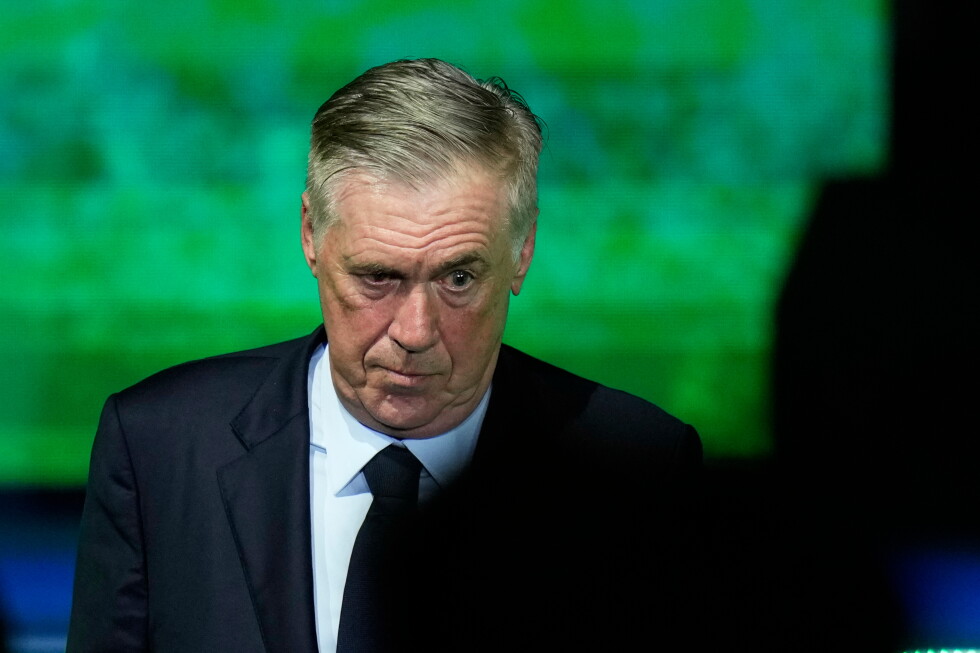
    For a nation as soccer-obsessed as Brazil, 24 years without a FIFA World Cup trophy has felt like an eternity. The five-time world champions, creators of some of the most iconic players the sport has ever seen—from Pelé to Ronaldo to Ronaldinho—have not lifted football’s most coveted prize since their 2002 triumph, and this year, the country’s hopes for ending that dry spell do not rest on a lethal striker, crafty playmaker or dynamic dribbler. Instead, Brazilians are pinning their dreams of a sixth title on a 66-year-old Italian sitting on the sidelines: legendary manager Carlo Ancelotti.

    Ancelotti, one of the most decorated club coaches of his generation, departed Real Madrid last year to take the helm of the Brazilian men’s national team, a highly unusual move for a program that has almost exclusively been led by domestic managers. Though his early results in charge have been uneven, posting a mixed record of five wins, three defeats and two draws across his first matches, widespread optimism persists that he can lift a current squad widely viewed as less star-studded than Brazil’s legendary historic sides—even with elite global talents such as Neymar and Vinicius Júnior on the roster.

    Brazil’s decades-long title drought has been punctuated by repeated heartbreaking disappointment. Since 2002, the Seleção have only advanced past the World Cup quarterfinals once, when they hosted the tournament in 2014. That run ended in infamous humiliation, with a crushing 7-1 semi-final defeat to eventual champion Germany that remains a raw memory for Brazilian fans. Compounding the nation’s lack of confidence in recent years has been the sustained success of archrival Argentina, which claimed the 2022 World Cup title and has won back-to-back Copa America championships, feeding a growing undercurrent of self-doubt within Brazil’s soccer community.

    In response to this uncertainty, Ancelotti has struck a balanced yet encouraging tone. “It is allowed to believe,” the manager stated in a recent World Cup-themed advertising campaign, acknowledging the quiet uncertainty that has lingered among fans. For the 2026 expanded 48-team World Cup, Brazil will kick off their campaign at New Jersey’s MetLife Stadium on June 13 against 2022 World Cup semi-finalist Morocco, with Haiti and Scotland rounding out their Group C fixtures. While advancing past the group stage is widely treated as an expectation in Brazil—failure to do so would be considered a catastrophic outcome—the question of how far the side can progress against elite competition in the knockout round remains open. Ancelotti, for his part, has expressed confidence in his squad’s potential: “I am aware and reliant that this team can compete against the best in the world. Can we win the World Cup and reach the final? Yes, we can reach the final. But I don’t know if that is enough, it is best for us to get there and win the final.”

    One of the biggest selection calls Ancelotti has made already is the inclusion of 34-year-old star Neymar, who has been plagued by a string of serious knee injuries in recent years. After transferring to Saudi Arabia’s big-spending Pro League in 2023, Neymar barely featured due to fitness issues, and a subsequent return to his boyhood club Santos in Brazil was also cut short by recurring injuries. Despite widespread concerns over his match fitness, Ancelotti named Neymar to the final World Cup squad, calling him a critical piece of the team. Barcelona winger Raphinha echoed that sentiment, recently describing Neymar as “the man of our sixth World Cup title.”

    Unlike the free-flowing, attacking style that made Brazilian football famous around the globe, Ancelotti—renowned as one of the sport’s sharpest tactical minds—has implemented a more structured, counter-attacking system for the Seleção. He often deploys a compact 4-4-2 formation that can quickly shift to an aggressive 4-2-4 when turning defense into attack, prioritizing defensive solidity over the constant ball dominance that defined past Brazil sides.

    Overall, Ancelotti retains broad support among Brazilian fans and football figures, even with his uneven early results. During World Cup qualifying, Brazil claimed two wins, one draw and one loss under Ancelotti, finishing fifth in the South American standings behind Argentina, Ecuador, Colombia and Uruguay. In recent friendly matches, the side secured a meaningful win over Croatia—who knocked Brazil out of the 2022 World Cup on penalties—before falling to 2022 runner-up France. Former Brazil left-back Filipe Luís, who recently launched his own coaching career, called Ancelotti “the best thing that happened” to the national team back in April. “It is not a sure thing we will win anything,” he noted. “But we needed someone big, with enough support to make decisions. A man people respect, who knows Brazil has gone through many years in doubt for not winning the World Cup.”

    Ancelotti took charge of Brazil after a period of extreme instability for the national program. The Seleção struggled through 2026 qualifying, dropping two matches to Argentina, and were knocked out by Uruguay in the 2024 Copa America quarterfinals. Three different managers occupied the role in quick succession—interim coaches Ramon Menezes and Fernando Diniz, plus full-time boss Dorival Júnior—all departing after poor results and widespread fan criticism. While that was unfolding, the Brazilian Football Confederation actively pursued Ancelotti, whose second tenure at Real Madrid was drawing to a close even after the club claimed both the 2024 Champions League and La Liga titles. So convinced are Brazilian officials that they have made the right hire that they already extended Ancelotti’s contract through the 2030 World Cup. “We have a beast taking care of our national team, a man who is respected by everyone,” Luís said. “This World Cup is for us to build on that.”

  • Tennis Australia hires NRL CEO Andrew Abdo to replace Craig Tiley

    Tennis Australia hires NRL CEO Andrew Abdo to replace Craig Tiley

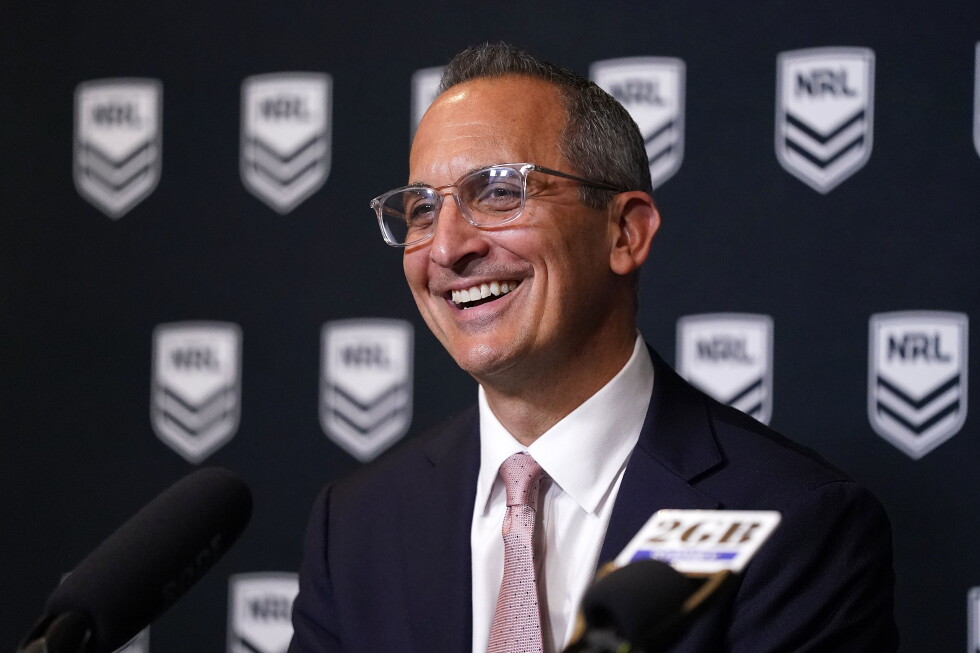
    In a widely anticipated leadership shakeup for Australian tennis, Andrew Abdo, a long-time executive with Australia’s National Rugby League (NRL), has been tapped to take over as chief executive officer of Tennis Australia, filling the vacancy left by outgoing chief Craig Tiley. Both the NRL and Tennis Australia formally confirmed the senior leadership appointment in official media statements released on Monday.

    Tiley, a South African-born sports administrator, first announced his planned departure back in February. After nearly two decades at the helm of Australian tennis, he will step down from his dual roles as Tennis Australia CEO and Australian Open Tournament Director to take up a senior position with the United States Tennis Association, the governing body that oversees the annual U.S. Open Grand Slam.

    Tiley’s tenure with Tennis Australia stands as one of the most transformative periods in the organization’s history. He first took on the Australian Open tournament director role back in 2006, and over his 18 years in charge, he oversaw the event’s dramatic expansion, most notably extending it from a 14-day to a 15-day competition. Under his leadership, the tournament repeatedly smashed both attendance and revenue records, cementing its status as one of the most prestigious and commercially successful stops on the global tennis tour. He added the title of Tennis Australia CEO to his portfolio in 2013.

    Like Tiley, Abdo is also a South African-born leader, and brings nearly 11 years of senior executive experience in Australia’s professional sports industry to his new role. He joined the NRL in 2013, starting out as the league’s chief commercial officer before being promoted to CEO in 2020. Throughout his time at the NRL, Abdo earned widespread praise for his steady leadership, particularly during the unprecedented disruption of the COVID-19 pandemic, when he guided the league through complex public health restrictions to keep competition running. He also played a central role in driving the NRL’s expansion and long-term commercial growth during his tenure as CEO.

    In his first public comment following the appointment, Abdo emphasized the unique standing of tennis and the Australian Open in the global sports landscape. “Tennis Australia has a unique role in Australian sport. The Australian Open is already one of the leading sporting events in the world,” Abdo said. “The opportunity is to keep evolving it – as a global event, as a fan experience, and as a platform that brings more people into the sport.”

    Tennis Australia’s board conducted a global recruitment search for the new CEO role, which drew more than 150 expressions of interest from candidates across the world. The organization highlighted that Abdo’s proven track record of leading a high-profile, large-scale national sports league made him the clear standout candidate for the role.

    In a farewell statement, Tiley offered an optimistic assessment of Australian tennis’s current position and future trajectory. “Tennis is one of the nation’s most popular sports, and participation is growing,” Tiley said. “We have a great group of players performing at the highest level and a world-class team developing the next generation of talented players and coaches.”

    As the first of the four Grand Slam tournaments on the annual global tennis calendar, the Australian Open holds a unique place in the sport, opening the season each year before the tour moves on to the French Open, Wimbledon, and the U.S. Open. The leadership transition comes as the tournament continues to solidify its status as a cornerstone of the international tennis circuit.

  • Record 50m freestyle time at controversial Enhanced Games

    Record 50m freestyle time at controversial Enhanced Games

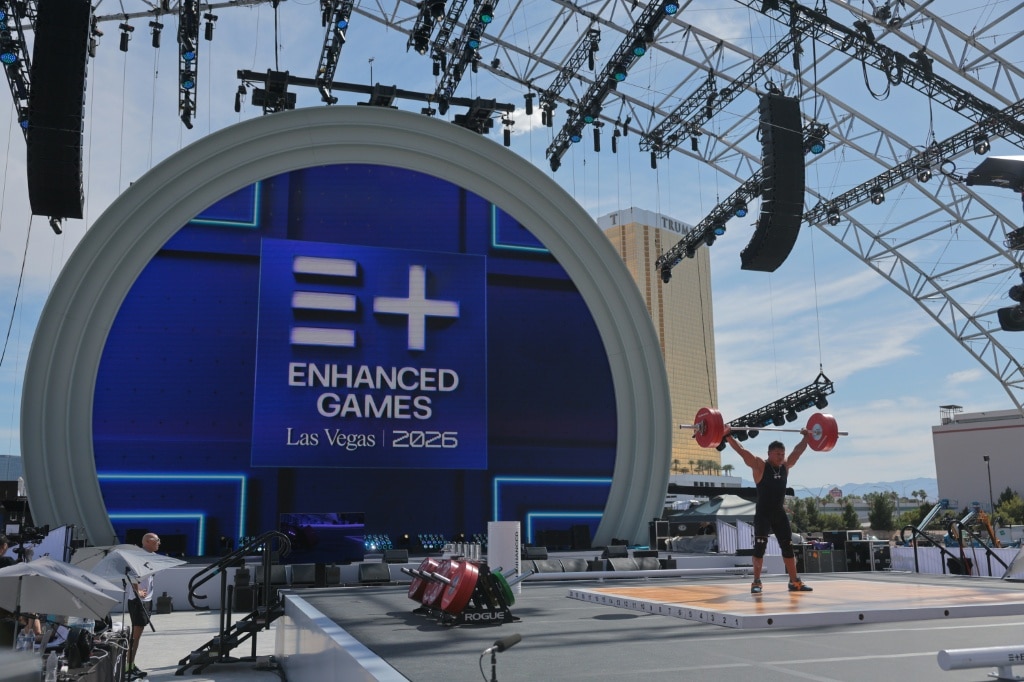
    The first ever Enhanced Games, a controversial Las Vegas-based competition that openly permits competitors to use performance-enhancing substances banned from mainstream elite sport, concluded with only one athlete beating a recognized global world record — a result that falls far short of organizers’ earlier optimistic predictions.

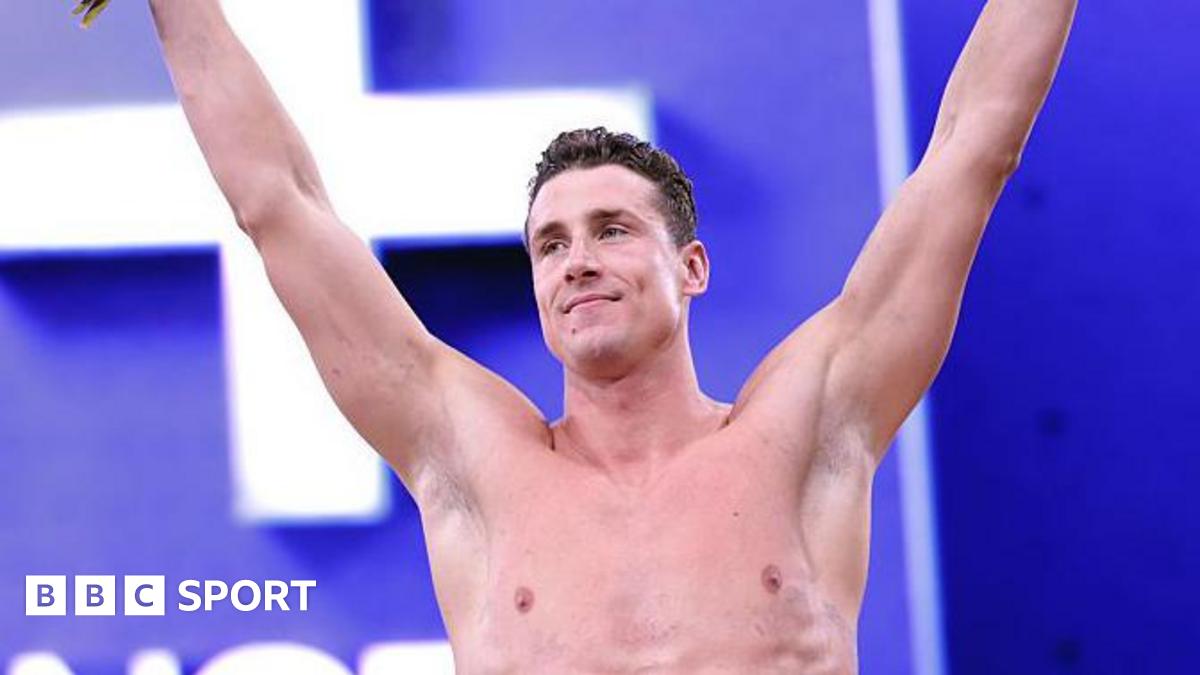
    Greek swimmer Kristian Gkolomeev, a 32-year-old who has gone podium-less across four consecutive Olympic appearances, clocked 20.81 seconds in the men’s 50m freestyle event. That time beat the previous official world record of 20.88 seconds set by Australian Cameron McEvoy earlier this year. However, Gkolomeev’s new mark will never be formally recognized by global sporting authorities, due to the event’s permissive stance on banned substances. Gkolomeev also wore a polyurethane swimsuit, a design that is outlawed in all official international swimming competitions for the performance advantage it provides.

    The Enhanced Games’ founding premise rejects mainstream anti-doping rules, arguing that performance enhancement is already widespread in elite sport but practiced in secret, and that open, regulated access to enhancement would create a safer, fairer playing field. All performance-enhancing substances used by athletes at the event are required to be approved by the U.S. Food and Drug Administration, and include testosterone, growth hormone, anabolic steroids and peptides — all substances strictly banned by the World Anti-Doping Agency (WADA) and the International Olympic Committee (IOC).

    Of the 42 athletes competing across swimming, athletics and weightlifting, the majority admitted to using performance-enhancing substances, with organizers confirming 13 competitors set new personal bests. The invite-only event was held in front of a curated audience of roughly 2,500 guests, with no tickets made available to the general public.

    Other high-profile competitors saw mixed results. American former 100m world champion Fred Kerley, one of the few athletes who competed clean, won the men’s 100m with a time of 9.97 seconds, far off his personal best of 9.76 seconds. British swimmer Ben Proud, 2024 Paris Olympic silver medalist in the 50m freestyle, took gold in the 50m butterfly with a time of 22.32 seconds, just 0.05 seconds off Andrii Govorov’s existing world record, a margin that left him disappointed. Fellow British Olympic swimmer Emily Barclay won the women’s 50m freestyle in 24.09 seconds, roughly half a second slower than the current world record. Hafthor Bjornsson, the former Game of Thrones actor best known for playing The Mountain and a former professional weightlifter, also competed but failed to beat his own existing deadlift world record of 510kg.

    For his world record swim, Gkolomeev took home $250,000 in prize money for the win plus an additional $1 million bonus for the unofficial record. The Greek athlete called the windfall life-changing, saying: “It’s not bad at all. This is going to change my life to the good, for sure. It’s a big help for me and my family. And yeah, I’m going to continue next year. Maybe I’ll break it again.”

    The event has faced fierce condemnation from global sporting governing bodies since its announcement. World Aquatics, the global governing body for swimming, labeled the Enhanced Games a “circus, built on short-cuts”. The IOC and WADA have described the concept as “immoral”, “dangerous” and “irresponsible”, while World Athletics president Lord Coe called any athlete choosing to compete “moronic”. Multiple national governing bodies have issued formal rebukes to participating athletes, and some have issued formal bans for competing.

    Founded in 2023 by entrepreneurs Aron D’Souza and Maximilian Martin, the project has secured high-profile backing from Silicon Valley billionaire Peter Thiel and Donald Trump Jr. Prior to the event, Martin predicted that athletes would break “quite a few” world records, a projection that fell far short of the single record set at the 2025 inaugural competition.

  • Messi suffers injury scare before World Cup

    Messi suffers injury scare before World Cup

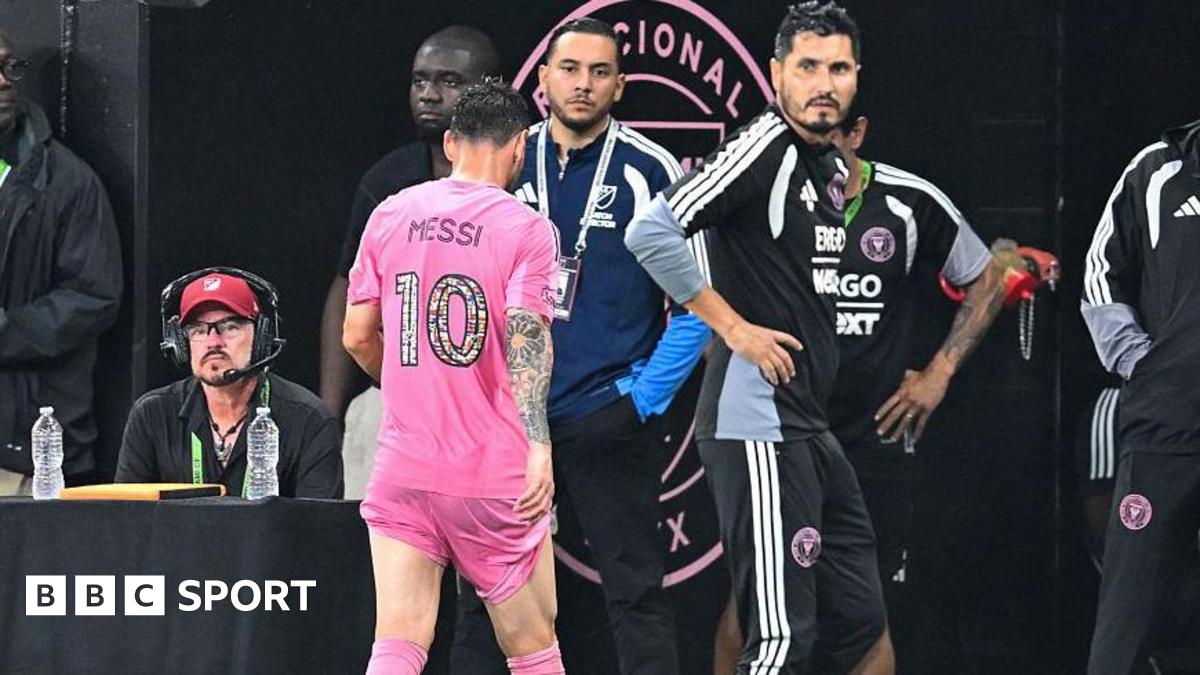
    Just weeks before the 2026 FIFA World Cup kicks off across North America, Argentine football icon Lionel Messi has sent shockwaves through the global football community after being forced off the pitch during Inter Miami’s recent Major League Soccer clash against the Philadelphia Union, sparking widespread concern over his fitness for the upcoming tournament.

    The 38-year-old eight-time Ballon d’Or winner, who is widely tipped to make a historic sixth World Cup appearance for defending champions Argentina, signaled discomfort after clutching the back of his left leg in the 73rd minute of Sunday’s fixture. Though he left the pitch walking normally and headed straight for the dressing room, the unexpected substitution immediately prompted questions about whether the issue would impact his World Cup preparations.

    Inter Miami interim head coach Guillermo Hoyos moved quickly to calm fears in post-match comments, framing the substitution as a purely precautionary measure rather than a response to a serious muscle injury. Hoyos explained that persistent wet conditions at the Miami venue left the playing pitch heavy and taxing for players, and that Messi was already showing clear signs of fatigue by the time the substitution was made.

    “As far as I know, we don’t have a [medical] report on that yet, but he really was fatigued,” Hoyos told reporters when asked for an update on the forward’s condition. “He was tired; the pitch was heavy and when in doubt, the standard approach is always to ensure you don’t take any risks.”

    Messi’s fitness has been a closely watched topic throughout his time at Inter Miami, ever since he joined the MLS club in summer 2023. The veteran attacker has carefully managed his playing workload to accommodate his age and recurring physical issues, and has already missed multiple club matches this season due to hamstring problems.

    While Messi has not yet made an official public announcement confirming his participation in the June 11 – July 19 World Cup co-hosted by the United States, Canada, and Mexico, the global football community universally expects him to be named to Argentina’s squad, which is set to be announced next week. Argentina will open its title defense against Algeria on June 16, just five days after the tournament gets underway. As the highest-paid player in MLS history, Messi’s presence not only drives massive viewership and commercial growth for the North American league, but also remains the biggest centerpiece of Argentina’s bid to retain the World Cup title they won in Qatar 2022.

  • Fight MND founder Neale Daniher dies after inspirational battle with the disease

    Fight MND founder Neale Daniher dies after inspirational battle with the disease

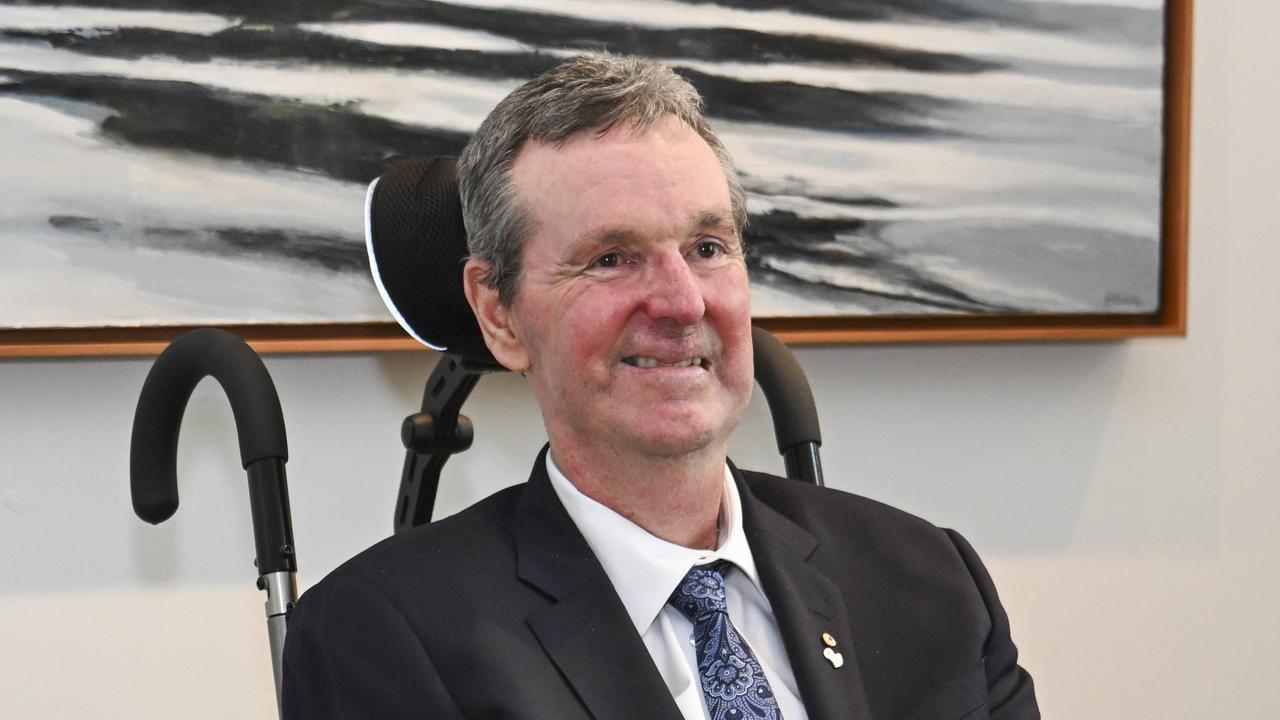
    Australian Rules Football icon and one of the nation’s most inspirational public figures Neale Daniher has passed away at 65, bringing a close to a 13-year public battle against motor neurone disease (MND). He died surrounded by his immediate family, leaving behind a transformative legacy of courage, fundraising and advocacy that has changed the global fight against the devastating neurodegenerative condition.

    In a public statement released Monday afternoon, the Daniher family paid tribute to the man they described as the unshakable heart of their clan. “From day one, Neale was a fighter. His determination was unmatched – choosing every day to find opportunity where others might see only challenge, and taking the fight to the Beast with everything he had,” the statement read.

    Even as his illness progressed through its most debilitating stages, Daniher never lost his signature playful charm and sharp wit. “Even in the toughest times, he kept pushing forward, determined to land as many blows as he could against his toughest opponent, all with a cheeky grin and a sharp sense of humour that never left him,” the family shared.

    Raised as one of 11 children, Daniher built a reputation for bringing light and connection to every room he entered long before his MND diagnosis. He first made his mark on Australian sport as a fierce, strategically brilliant player for the Essendon Football Club, before transitioning to a legendary coaching career with the Melbourne Football Club, where fans affectionately nicknamed him “Coach” and “Reverend.” Across every stage of his life, he drew people in as a natural leader, beloved far beyond his titles as a husband, father, proud grandfather, music lover, and the person with the loudest laugh in any gathering.

    Daniher’s activism against MND began after his own diagnosis in 2012, when he launched the “Beat The Beast” campaign that evolved into the national FightMND movement and the iconic annual Big Freeze match held at the Melbourne Cricket Ground (MCG). Over 13 years, his work raised more than $100 million for MND research globally. This year’s Big Freeze match, scheduled to take place in just a few weeks, will mark the first edition of the event held without Daniher present.

    In 2025, Daniher’s extraordinary contributions to public life were recognized when he was named Australian of the Year, an honor that Prime Minister Anthony Albanese noted was met with unanimous national approval. He left a simple, powerful legacy for current and future MND fighters: “No matter the odds, no matter the diagnosis, we all have the power to fight, to smile, and to do. Because the mark of a person isn’t what they say, it’s what they do.” The family closed their statement with Daniher’s iconic catchcry: “Play On.”

    AFL chief executive Andrew Dillon described Daniher’s passing as a devastating loss for the entire Australian football community. Beyond his on-field achievements, which included leading Melbourne to six finals series and a 2000 Grand Final appearance, Dillon emphasized that Daniher’s greatest impact came from his selfless advocacy.

    “His contribution to wider Australian life was simply incredible in the way he put himself at the forefront, despite the challenge of his own MND diagnosis, to raise awareness of the disease, champion fundraising efforts and search for a cure that he knew would likely not help him, but may help many thousands of other Australians in the future,” Dillon said.

    Melbourne Football Club President Steven Smith echoed that sentiment, noting that Daniher’s courage extended far beyond the boundaries of the football pitch. “It is impossible to encapsulate in words the impact of Neale Daniher. His courage transcended the football field, and his determination inspired an entire country,” Smith said. “Neale was not driven by personal motivation, he was driven by helping others, right until the very end. He was a true leader and the definition of what it means to be selfless.”

    Prime Minister Albanese joined tributes, calling Daniher one of Australia’s greatest modern figures. “The devastating impacts of MND stole so much from Neale, but he held onto everything that people loved and admired about him: his selflessness, his bravery, his humour, his ability to look on the bright side and his fierce determination to make a difference for others,” Albanese said. “Neale Daniher’s remarkable legacy lives all around us.”

    Daniher’s death comes just days after 30-year-old NRL star Jai Arrow revealed his own MND diagnosis and immediate retirement from professional sport, a revelation that cast renewed national attention on the condition.

    The Florey Institute of Neuroscience and Mental Health, a leading Australian medical research institution that has received $17.5 million in funding from FightMND, called Daniher an extraordinary force for the global fight against MND. “Through his powerful advocacy work, Neale helped to raise millions of dollars for researchers in Australia and around the world working to find a cure for MND,” the institute said in a statement.

    Executive Director Professor Peter van Wijngaarden noted that Daniher turned a personal battle into a global movement that continues to accelerate research. “Even in his own battle with MND, Neale was fighting for everyone who would come after him,” van Wijngaarden said. “We will forever be grateful to him and FightMND for putting this disease in the spotlight, inspiring so many and supporting vital research at The Florey and across the globe.”

  • Swimmer Gkolomeev ‘breaks’ record at drug-fueled Enhanced Games

    Swimmer Gkolomeev ‘breaks’ record at drug-fueled Enhanced Games

    The first edition of the highly divisive Enhanced Games, an event that openly permits competitors to use performance-enhancing drugs banned by every major international sports governing body, wrapped up in Las Vegas on Sunday with just one unofficial world record broken, falling far short of organizers’ bold predictions of multiple record-breaking performances.

    Greek swimmer Kristian Gkolomeev delivered the sole standout result of the night, clocking 20.81 seconds in the men’s 50-meter freestyle to beat the existing official world mark of 20.88 seconds set by Australia’s Cameron McEvoy earlier this year. Competing in a synthetic full-body supersuit banned from Olympic and other mainstream sporting events for decades, Gkolomeev’s achievement will never be formally recognized by global athletics regulators, but it earned him a $1 million bonus from event organizers. “It was a great race… I got it,” Gkolomeev said after the win. “I’m going to continue. Maybe next year I’ll break it again.”

    Organizers had built hype around the event by promising that the open use of sophisticated doping regimens would lead to dozens of new records across swimming, sprinting, and weightlifting. Gkolomeev’s last-minute win spared the event from a total record drought, though most athletes came within fractions of a second or kilograms of existing marks without surpassing them. Earlier in the competition, Gkolomeev had also come close to breaking Pan Zhanle’s 100m freestyle world record of 46.40 seconds, finishing with a time of 46.60 and saying he was frustrated to fall just short.

    Other high-profile competitors also narrowly missed record targets. Britain’s Ben Proud, a 2024 Paris Olympics silver medallist who admitted to using multiple performance-enhancing substances, won the men’s 50m butterfly in 22.32 seconds — just 0.05 seconds off the world record. “We all know what we came for. And that’s world records. And so to be that agonizingly close, it’s frustrating,” Proud said.

    In a surprising turn of events that defied the event’s core premise, several clean, unenhanced athletes claimed event titles against doped competitors. American swimmer Hunter Armstrong took gold in the opening swimming event, the men’s 50m backstroke, with a time of 24.21 seconds to beat two rivals who used performance-enhancing drugs. Former 100m world champion Fred Kerley, currently serving a suspension for missed drug tests, also won the men’s 100m sprint clean with a time of 9.97 seconds, joking of his doped rivals: “Man, they got to do better than that. They need to train a little harder. Get on that shit a little bit more.” Barbados sprinter Tristan Evelyn also won the women’s 100m sprint clean, finishing in 11.25 seconds. US Olympic medallist Cody Miller, another clean competitor, rolled back the years to win the men’s 50m breaststroke, cutting seven-tenths of a second off his own personal best at age 34, though he did not come close to challenging Adam Peaty’s world record.

    The pattern of near-misses extended to the weightlifting platform, where multiple athletes failed to hit the record lifts they had achieved in training. Dominican Republic weightlifter Beatriz Piron, who reportedly hit a world record lift in training, narrowly failed to complete a 100kg snatch to open the competition. Canadian Boady Santavy and American Wesley Kitts also fell short of their target record snatch lifts of 183kg and 197kg respectively, even after organizers bent competition rules to grant each an extra fourth attempt. “I hit a lot of PRs in training. Not 197 yet… Man, if I had about four more weeks (in training) I’d say I’d have had a good shot at it,” Kitts said. Even Hafthor Bjornsson, the former World’s Strongest Man best known for playing The Mountain on *Game of Thrones*, failed to break his own existing 510kg deadlift world record.

    Backed by high-profile investors including billionaire tech entrepreneur Peter Thiel and former U.S. President Donald Trump’s son Donald Trump Jr., the Enhanced Games was held at a custom-built temporary arena on the parking lot of a Las Vegas casino, with large cash prizes — up to $1 million for a world record and $250,000 for an event win — luring a field that included multiple current and former Olympic medallists.

    The event has faced widespread condemnation from global sports governing bodies, who refuse to recognize any records set at the competition and have called it a dangerous experiment that normalizes harmful doping. Public health experts have also raised urgent alarms, warning that the open use of banned substances such as testosterone and anabolic steroids carries major long-term risks, including life-shortening heart, liver, and kidney damage, with little research available on the full health impacts of the regimens athletes are using. Enhanced Games officials have pushed back against these criticisms, noting that all substances used by athletes are approved by the U.S. Food and Drug Administration, and the event’s parent company already sells many of these substances directly to the general public.