分类: sports

  • Man City consider legal action after Haaland claim

    Man City consider legal action after Haaland claim

    As Real Madrid prepares to hold its first contested presidential election in two decades this Sunday, a bold pledge from an underdog candidate to pry two star players from English champions Manchester City has sparked a major cross-club controversy, putting transfer politics at the center of the club’s leadership race.

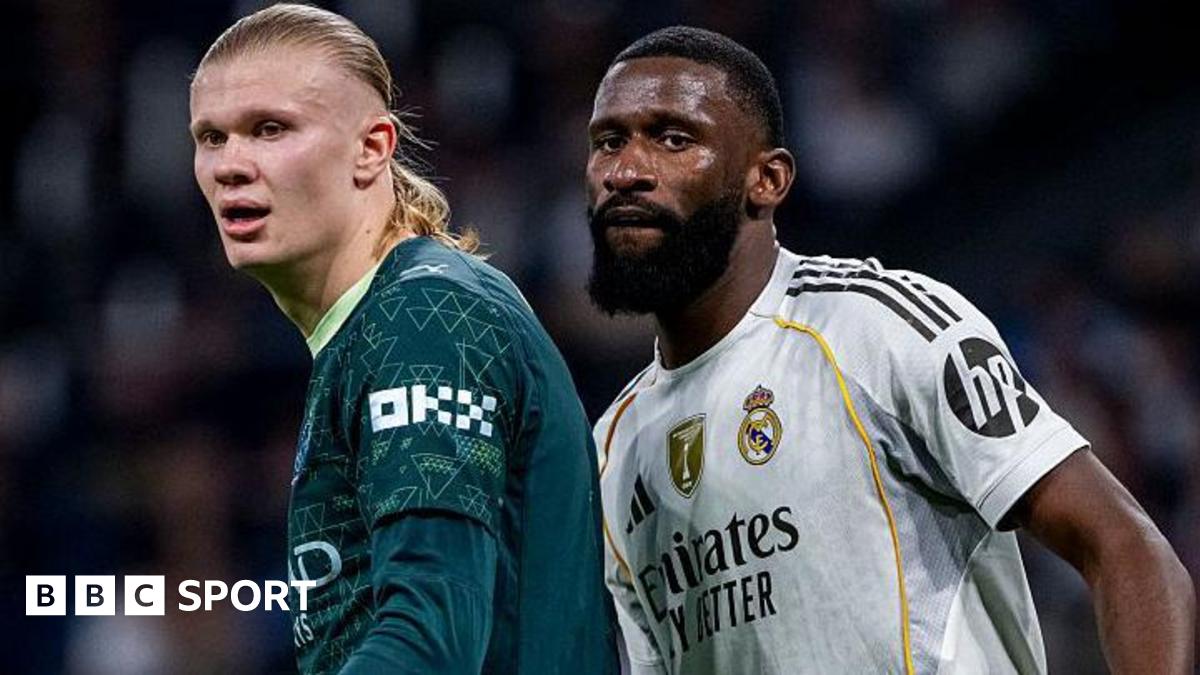
    Enrique Riquelme, a 37-year-old renewable energy tycoon who is challenging long-time incumbent Florentino Perez for the club’s top job, made headlines during a televised appearance Wednesday when he unveiled a Real Madrid jersey printed with star striker Erling Haaland’s name. Riquelme claimed Haaland, who scored twice against Real Madrid during their three Champions League matches last season, has a release clause in his City contract and wants to move to the Spanish capital, promising “if I become president, he will play for Real Madrid.” He followed that announcement with a second pledge to sign City’s star midfielder Rodri, adding “he is a great player, in a position where Madrid need to strengthen. We have spoken to his agent. We have to respect his club, but if I’m president he will play for Madrid. I will do everything possible.”

    The claims were immediately met with firm denials from all parties connected to Manchester City and Haaland. In a joint statement, Haaland’s father Alfie Inge Haaland and his agent Rafaela Pimenta called the rumors “all very entertaining but not true” and closed by wishing both candidates well in the election. Manchester City followed with an even stronger rebuke, confirming that no such release clause exists and that a transfer is completely out of the question. “The stories which have emerged from Spain regarding the future of Erling Haaland are untrue. There is no chance of this happening and there is no contractual clause to enable it,” the club said in its official statement. The Premier League side also confirmed it is evaluating legal options over the unauthorized use of Haaland’s image in Riquelme’s campaign stunt.

    The controversial transfer pledge comes as Riquelme wages an uphill campaign against Perez, who has led Real Madrid since 2009 and held the presidency for 20 years total without facing any challenger until this year’s vote. Riquelme launched his bid after two back-to-back trophy-less seasons for the La Liga giant, running on an aggressive populist platform that includes major fan perks: he has promised to build a dedicated member’s leisure complex near the club’s training ground with swimming pools, padel courts and a basketball arena, and pledged to cut annual membership fees by up to 50% if the club fails to win the Champions League next season. He has also publicly opposed Perez’s reported plan to hire Jose Mourinho as the next first-team manager, with his campaign hinting that former Liverpool boss Jurgen Klopp is his top target for the role.

    Perez, for his part, has framed his campaign around fixing last season’s underperformance and has dismissed Riquelme’s superstar transfer promises as economically unfeasible and unrealistic. The 79-year-old construction magnate and former city councilor has acknowledged the club’s underwhelming results in the last two seasons, blaming a congested schedule caused by the Club World Cup, which forced the team to skip pre-season preparation, and an unprecedented injury crisis that saw nearly 30 first-team players sidelined in the first half of the campaign. He has already reached pre-agreements to sign two high-profile defenders, Liverpool’s Ibrahima Konate and Inter Milan’s Denzel Dumfries, once he secures re-election, and pledged to end internal squad conflict that disrupted the second half of the most recent season.

    Rodri, the 29-year-old Spanish midfield star whose name has also been dragged into the election campaign, addressed the rumors last month, saying he will finalize his future plans after this summer’s World Cup. “When a player is approaching the final stage of his contract, it’s normal for names to be mentioned,” he said. “I’m very calm, I know exactly where I stand, and I’ll tell you that perhaps if there hadn’t been a World Cup, things might be different now.”

    Founded as a member-owned club, Real Madrid’s presidential election gives nearly 100,000 eligible voting members the chance to shape the future of one of the world’s most valuable sports franchises. Perez called the election early this year to shore up his mandate after growing fan discontent over on-field results at the Santiago Bernabeu, and he remains the heavy favorite to win another term, even as the race has devolved into repeated public attacks between the two camps. During Riquelme’s recent appearance on popular Spanish variety show *El Hormiguero*, Perez’s campaign bought ad time to formally announce Mourinho’s pending appointment and call for voters to back the incumbent.

    Club legends are split along the two campaigns: the majority of former stars, including Karim Benzema, Casemiro and Roberto Carlos, have lined up behind Perez, while former captains Iker Casillas and Fernando Hierro have backed Riquelme’s challenge. Perez first won the Real Madrid presidency in 2000 on a similar promise of signing global superstars, when his pledge to bring Barcelona icon Luis Figo to the club secured his upset victory over incumbent Lorenzo Sanz, launching the iconic ‘Galacticos’ era that saw the club sign Zinedine Zidane, Ronaldo, David Beckham and Michael Owen in consecutive summers. He resigned in 2006 amid poor results, but returned unopposed to the presidency in 2009, holding power ever since until this year’s challenge.
  • Nepali climber alive after six days missing on Everest

    Nepali climber alive after six days missing on Everest

    In an extraordinary story of survival that has stunned the global mountaineering community, a Nepali climbing guide declared lost and presumed dead after six days stranded on Mount Everest has been rescued alive, having crawled nearly the entire distance to Base Camp unaided, officials confirmed to AFP Thursday.

    Fifty-something Dawa Sherpa, a veteran guide widely known by the nickname “Hillary” in honor of legendary Everest pioneer Edmund Hillary, disappeared from the upper slopes of the world’s highest peak amid brutal weather conditions in the early hours of May 30. He was located Thursday morning near Base Camp by personnel from the Sagarmatha Pollution Control Committee (SPCC), a Nepali organization tasked with maintaining climbing routes and removing discarded waste from the mountain.

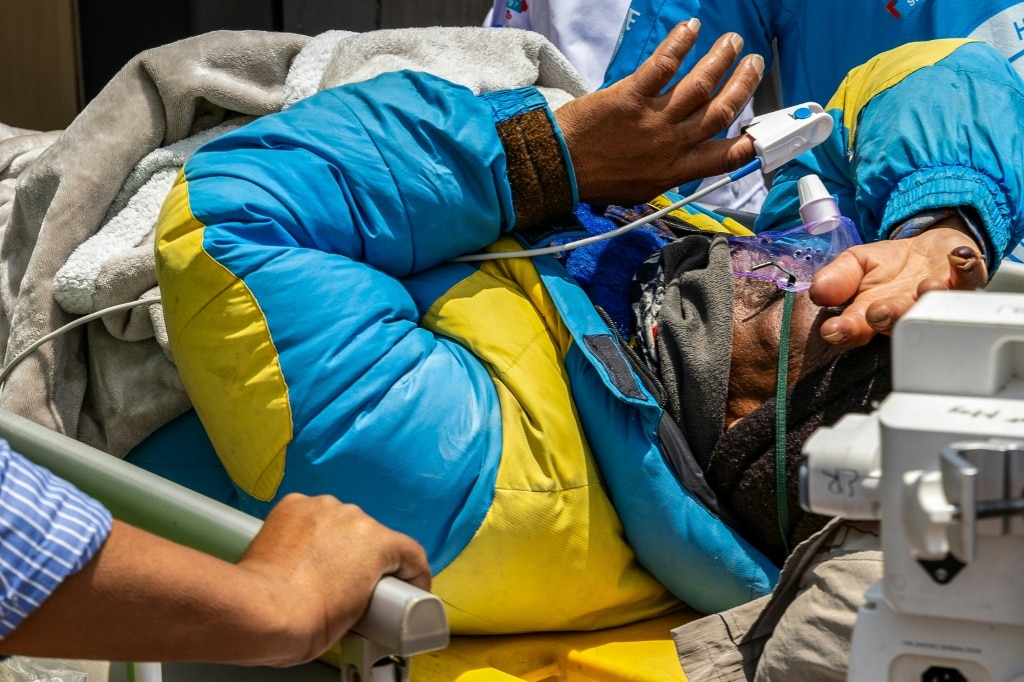
    “He was found by an SPCC team this morning close to base camp — he was crawling down,” Pemba Sherpa, a representative from 8K Expeditions, the company that coordinated the search and rescue operation, told reporters. A rescue helicopter airlifted the climber directly to Kathmandu, where an AFP on-site team observed him being carried from the aircraft on a stretcher and transferred to HAMS Hospital for treatment.

    Pemba Sherpa added that after consulting with attending physicians, the guide is conscious and only suffering from minor frostbite, with no other life-threatening injuries. His wife, Damu Sherpa, spoke from the hospital Thursday, describing her family’s overwhelming shock and joy at the miracle outcome. “We had given up all hope, we even began traditional death puja prayers for his soul yesterday,” she shared. “Hearing he was alive was more happiness than we ever dared to imagine.”

    The events that led to Dawa Sherpa being stranded began on the evening of May 29, when he guided former British Royal Marine and climber Chris Thrall to a successful summit of the 8,849-meter peak by approximately 5:00 pm. Before Dawa Sherpa went missing, Thrall had posted an Instagram tribute Wednesday mourning what he believed was his guide’s passing, calling him an “absolute gentle giant of a man and a true ‘tiger of the mountains’”.

    Thrall recounted that the pair began their descent from Camp Four, which sits roughly 7,950 meters above sea level just below the oxygen-starved “death zone,” on May 30. As they climbed down, Dawa Sherpa paused to rest, telling Thrall to continue ahead without him — a common occurrence between guides and clients on large expeditions. As Thrall moved down, he encountered a Polish climber in critical condition: the mountaineer had exhausted his supplementary oxygen, already developed frostbite, and was at high risk of deadly hypothermia.

    This season’s summit conditions were unusually harsh, Thrall explained: what is typically a five-day round trip to the summit stretched to 11 days for his team. Faced with an impossible choice, Thrall opted to assist the imperiled Polish climber, sharing his own oxygen supply as the pair descended. The trip that normally takes just two hours to Camp Three took 11 hours due to severe conditions, leaving Thrall unable to return for Dawa Sherpa.

    Search teams launched efforts to locate the missing guide immediately, but harsh weather and the timing of the expedition — one of the final permitted climbs of the spring season, when few other climbers remain on the mountain — left no trace of him until Thursday’s unexpected discovery. Five other climbers, two Indian mountaineers and three Nepali guides, have already lost their lives on Everest during the 2026 spring climbing season. Initial counts from Nepali authorities show that more than 1,000 climbers have summited the peak this season, making it the busiest climbing season in Everest’s history.

  • Knicks lead NBA Finals after late run beats Spurs

    Knicks lead NBA Finals after late run beats Spurs

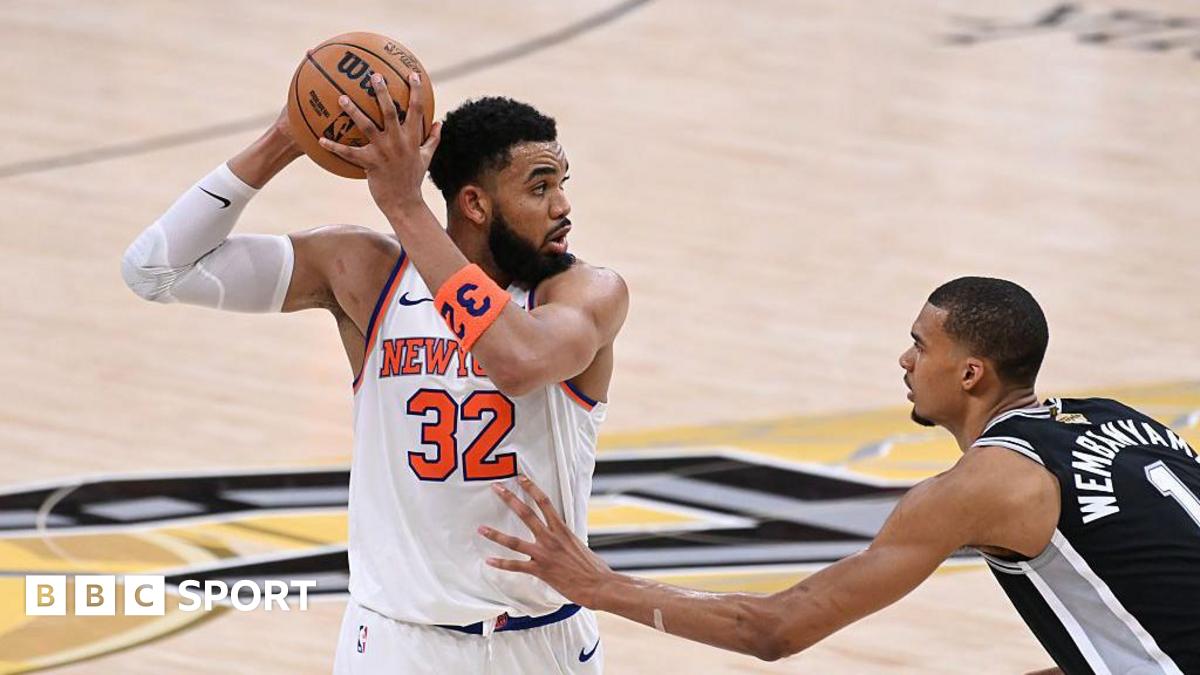
    The opening clash of the 2026 NBA Finals delivered a dramatic turnaround for the ages, as the New York Knicks erased a 14-point third-quarter deficit to secure a 105-95 road win over the San Antonio Spurs on Wednesday.

    Led by veteran floor general Jalen Brunson, who poured in 13 of his game-high 30 points in the final frame, the Knicks closed out the contest with an unanswered 11-point run over the closing two minutes to pull away from the hosts. The victory marked New York’s 12th consecutive postseason win, tying the record for the second-longest winning streak in NBA playoff history — a mark that was previously set by the 1999 Spurs, the last team to defeat the Knicks in an NBA Finals matchup.

    This comeback is far from an anomaly for the 2023-2024 Knicks: Game 1 marked the fourth time this postseason that the team has rallied from a double-digit halftime deficit to claim victory. In the Eastern Conference Finals opener against the Cleveland Cavaliers, New York even overcame an even larger 22-point hole to kickstart their run to the Finals.

    Karl-Anthony Towns, the 2015 first overall pick who notched a double-double of 18 points and 12 rebounds in Game 1, credited New York’s passionate fanbase and the iconic grit of the city for the team’s repeated ability to fight back from big deficits. “It’s something that’s in the city, you feel that energy in the city. The grit, the grind, the hard work you’ve got to put in to make it in the city. I think we reflect our fans and their lifestyles and what it takes to make it in New York City, when we step on that court with the Knicks jersey,” Towns told reporters postgame.

    For the Spurs, the night was marked by an uncharacteristically off performance from generational rookie star Victor Wembanyama. While Wembanyama led the team in scoring with 21 points, he connected on just 6 of his 21 field goal attempts, struggling to find his rhythm against New York’s aggressive interior defense. The 7-foot-4 phenom remained unshaken by the underwhelming outing, noting his confidence in bouncing back in the next game. “We’ve been down in a series before – never in the Finals – but I’m not kicking myself about anything. I was bad, it’s not more complicated than that. I’m not worried in the slightest,” Wembanyama said.

    The best-of-seven championship series will remain in San Antonio for Game 2 on Friday, before the teams travel to New York to face off at Madison Square Garden for Game 3 on Monday. The Knicks are currently vying for their first NBA championship title in more than five decades, with their last title win coming all the way back in 1973.

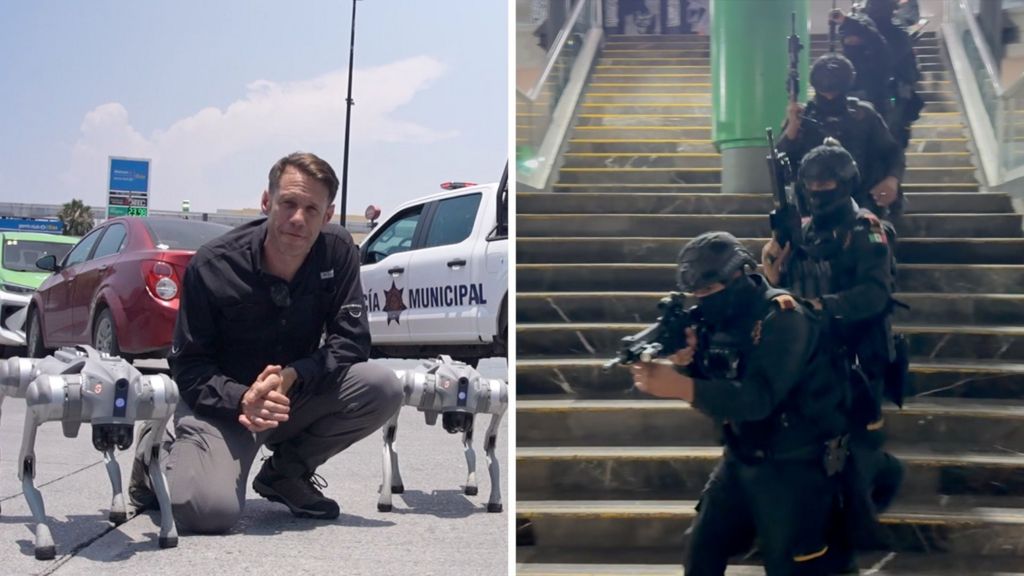
  • Robodogs and Black Hawks – How one Mexican city is preparing for the World Cup

    Robodogs and Black Hawks – How one Mexican city is preparing for the World Cup

    As one of the host cities for the upcoming 2026 FIFA World Cup, the northern Mexican metropolis of Monterrey is leaving no stone unturned when it comes to securing its match venues and surrounding areas, rolling out a cutting-edge security operation that combines cutting-edge robotics, aerial surveillance, and traditional law enforcement coordination. BBC correspondent Will Grant recently gained exclusive on-the-ground access to tour the city’s preparation sites, giving global audiences a first-hand look at the unprecedented safety measures being put in place ahead of four high-profile World Cup group stage and knockout matches that will draw tens of thousands of local fans and international visitors.

    Unlike standard large-scale event security setups, Monterrey’s plan integrates unusual new tools to bolster patrol capacity and response speed: quadrupedal robodogs, designed to navigate tight spaces and crowded venues that are hard for human officers to access quickly, and Black Hawk unmanned aerial vehicles that provide real-time, 360-degree aerial monitoring of public spaces, fan zones, transportation hubs, and stadium perimeters. City security officials told Grant that the new technologies are not meant to replace on-the-ground police teams, but rather to extend their situational awareness and reduce risk to officers during potential emergency situations.

    Monterrey, which has faced long-standing public safety challenges linked to organized crime in recent decades, has faced increased scrutiny over its ability to host a global event of the World Cup’s scale. Security planners have emphasized that the integrated system of new tech and increased personnel is designed to create a safe, welcoming environment for fans from across the world, while also addressing any potential security threats before they can escalate. Grant’s on-site reporting confirmed that final drills and training exercises for the new security system are already underway, with teams testing robodog navigation in crowded stadium corridors and Black Hawk drone surveillance across the city’s busiest fan zones ahead of the tournament’s kickoff in 2026.

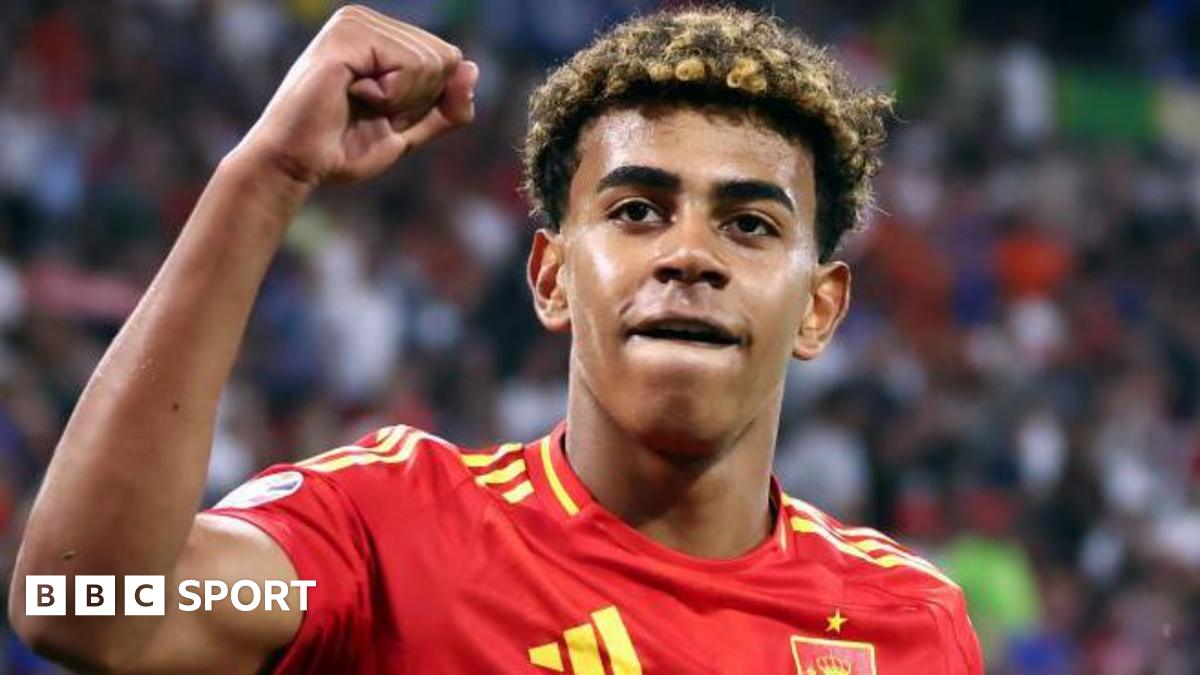
  • A higher ceiling than Messi? What next for Lamine Yamal?

    A higher ceiling than Messi? What next for Lamine Yamal?

    As the 2026 FIFA World Cup approaches, all eyes in global football are turning to 18-year-old Spanish phenom Lamine Yamal, a teenage talent already being hailed as the next generational great of the game – even by the greatest to ever play the sport.

    During a World Cup commercial event, Lionel Messi was asked to name the standout young player of the new era, and he left no room for debate. “It would be Lamine. No doubt about it: for me, he is the best,” Messi said. Just one week later, when US broadcaster CBS asked Yamal point-blank if Spain would lift the World Cup trophy, the teenager smiled and gave a confident one-word answer: “Yes.”

    What makes Yamal’s ascent genuinely extraordinary is not just the avalanche of praise from football royalty that has landed on his shoulders before his 19th birthday. It is the remarkable poise and self-awareness with which he carries that weight, and how clearly he has already carved out his own identity, both as a footballer and a public figure.

    At 18 years old, Yamal already has a resume most senior players can only dream of: he has featured in a UEFA Champions League semi-final, won the 2024 European Championship with Spain, and inherited Barcelona’s iconic number 10 shirt – the same number Messi wore for nearly 15 years at Camp Nou. While his precocity is staggering, the most striking trait of his game and his character is his unshakable serenity under pressure.

    Comparisons to Messi have followed Yamal throughout his rise, whether he seeks them out or not. Both are left-footed players with the same deceptive dribbling intelligence that makes the most challenging on-field moves look effortless. In fact, many experts argue Yamal has already had a far greater impact at Barcelona at 18 than Messi did at the same age, though any prediction that he will ultimately match the eight-time Ballon d’Or winner’s legacy remains far too early to make.

    One telling statistic, however, highlights just how far Yamal has already come: by his 18th birthday, he had already made 151 appearances for Barcelona’s first team. By the time Messi turned 19 in June 2006, he had only notched 41 top-flight appearances for the Catalan club.

    Football greats who have seen both players develop have been quick to draw a clear lineage between the two generations. Ronaldinho, who played alongside a young Messi at the start of Barcelona’s golden era and won the Champions League with him, drew the line directly in comments to FIFA’s website in March. “Messi and I made history, and now it is Lamine Yamal’s turn. What he has already shown at such a young age is extraordinary,” the Brazilian legend said.

    Former Manchester United defender Rio Ferdinand went even further when asked if Yamal is already a better player at the same age than Messi and Cristiano Ronaldo were. Ferdinand replied bluntly on ESPN: “Yes. His potential or ceiling might be better than theirs. The body of work at 17 years old – no-one has done it. Pele may have, but I didn’t see Pele.”

    Spain national team head coach Luis de la Fuente, who has watched Yamal progress through the country’s youth age groups, says what sets the teenager apart goes far beyond raw talent. “He is a player blessed by God. Football geniuses have something special, and he has it,” De la Fuente said. “You can immediately see those kinds of footballers who are touched by magic that says: you are going to be special.”

    Barcelona manager Hansi Flick, who works with Yamal in training every day and has watched him perform on the biggest club stages all season, echoes that praise. “He is special, he is a genius. In the big matches, he shows up. Players do not usually reach this level of maturity until they are 24 or 25 years old. If this kind of talent only comes every half-century, I am glad it is for Barcelona,” Flick said.

    What truly separates Yamal from the dozens of previous “next Messis” tipped for stardom at Barcelona over the past two decades is his deliberate rejection of trying to fill anyone else’s shoes. While he openly admires Messi, he holds a quiet, unshakable determination to forge his own path. “For me, Messi is the greatest football player in history. He is a legend and I do not find myself worthy of being compared to him,” Yamal said. “I do not want to be Messi and he knows it. I want to follow my own path.”

    The same mindset applies when comparisons to Ronaldo are raised. Yamal does not dismiss either the comparisons or the legendary legacy of the five-time Ballon d’Or winner – he simply refuses to structure his own ambition around matching anyone else. “It is best not to compare yourself to anyone,” he said at an awards ceremony. “Players like Cristiano Ronaldo did what they did because they wanted to be themselves. I try to be me, play my game, and get people to recognise me for being Lamine.”

    Barcelona’s academy has produced no shortage of young talents anointed as the next great hope, only for many to fade under the weight of expectations: Giovani dos Santos, Gerard Deulofeu, Bojan Krkic, Ansu Fati, and Munir El Haddadi are just a few of the prospects who carried the “next Messi” label at one point or another. Yamal, by contrast, lets the media and fans debate his potential while he focuses on playing, even as speculation about a future Ballon d’Or win has followed him since he was 16 years old.

    He says he plays to bring joy to fans, and wants young children to aspire to be like him – not like Messi or Ronaldo. “I am not thinking about the Ballon d’Or. I want to enjoy myself and win with Barca and the national team,” he said. “Pressure does not exist, it is an excuse. If you just think about enjoying yourself and having fun, there is no pressure.”

    That confidence in his own trajectory is nothing new to the coaches who spotted his talent early. Inocente Diaz, one of Yamal’s youth coaches at Barcelona’s famed La Masia academy, made a bold prediction as far back as 2025. “He is even better than Messi,” Diaz told Spanish newspaper Sport. “He possesses a unique blend of physical attributes reminiscent of both Messi and Cristiano Ronaldo. In six years, he will win the Ballon d’Or.”

    For Yamal himself, the immediate target is clear: the 2026 World Cup. He has already laid out his ambitions for the tournament, where he will be the centerpiece of a Spanish squad ranked among the pre-tournament favorites. “I have always imagined playing in a World Cup, seeing my mother in the stands. I hope I can win it,” he said.

    What many casual observers have missed about Yamal’s game, which La Masia coaches recognized long before the rest of the world, is his evolving tactical profile. While he is officially listed as a winger who terrorizes opposing full-backs from the left flank with elite dribbling numbers, Yamal says his childhood approach to the game was far more focused on football intelligence than individual skill. “When I was small I never dribbled much or got past many opponents. I scored a lot of goals, ran a lot, but above all I had very good vision of the game,” he explained. “I focused on what Messi did because he gave different passes – passes that led to goals. And I looked at Modric, who passed with the outside of his foot. That seemed more interesting to me than dribbling, because it is more about the mind.”

    That fascination with a midfielder renowned for his spatial awareness and vision, rather than a dynamic winger, hints at the evolutionary path Yamal is already walking. Over the past two seasons, tactical data has shown Yamal increasingly drifting into central areas of the pitch, operating as a second playmaker as often as he stays wide on the flank. That shift mirrors the transition Messi made early in his career, when he moved from the right wing to the false nine position at the center of Barcelona’s attack, a shift that turned him into the greatest player of his generation. It took Messi more than a decade to complete that transition – Yamal may make the move far earlier.

    Julen Guerrero, who worked with Yamal in Spain’s youth system, says he is not surprised by the teenager’s tactical evolution. “Of course I can picture him as a false nine,” Guerrero said. “But it is a less comfortable position because teams block the centre more, there are fewer spaces, you have to be more patient. But he is very intelligent. He knows how to move.”

    As the 2026 World Cup kicks off, Yamal will be just 18 years old – he will not turn 19 until the day before the tournament’s first semi-final. Spain arrives at the competition as one of the title favorites, built around the teenage talent who has already proven he is far more than just the next Messi. He is Lamine Yamal – and he is ready to write his own story on the world’s biggest football stage.

  • How Ukraine-Russia tension hangs over French Open semi-finals

    How Ukraine-Russia tension hangs over French Open semi-finals

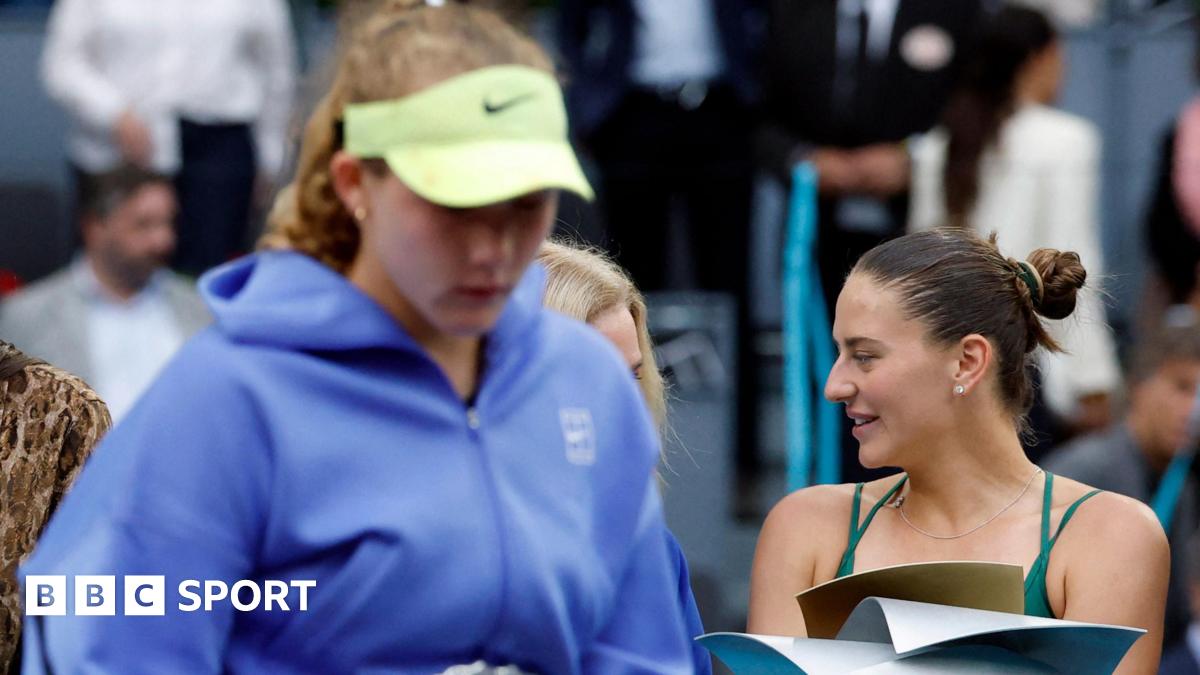
    The 2026 French Open women’s singles draw has already delivered a string of stunning upsets and historic breakthroughs, but all eyes will turn to a highly anticipated semi-final match on Thursday that carries far more stakes than just a spot in a Grand Slam final. With Russia’s full-scale invasion of Ukraine entering its fifth year, the showdown between Ukraine’s Marta Kostyuk and Russia’s teen star Mirra Andreeva will play out against the unavoidable, weighty backdrop of ongoing armed conflict between their home nations.

    Kostyuk, the 23-year-old 15th seed, has emerged as one of the most vocal Ukrainian athlete advocates since the 2022 invasion, consistently using her platform as a top tennis player to keep global attention focused on the human cost of the war. Just last week, she revealed that a Russian missile strike hit a building less than 100 meters from her family’s home in Kyiv during a renewed wave of attacks on the Ukrainian capital. Following her hard-fought quarter-final win over fellow Ukrainian Elina Svitolina, Kostyuk reiterated that speaking out about the war is the most critical contribution she can make amid the crisis.

    “The biggest thing I can do is sit here and talk about [the war] so more people can find out about it and don’t get used to this terrible life,” she told reporters.

    Her opponent, 19-year-old eighth seed Andreeva, has repeatedly declined to engage with questions about the conflict, sticking to that stance again in pre-match press conferences ahead of Thursday’s semi-final. This is Andreeva’s second consecutive appearance in the French Open semi-finals, and she says she is focused solely on executing her game plan, regardless of who stands across the net.

    “It doesn’t matter who I play. I really try to play against the ball that is coming at me,” Andreeva said. “It doesn’t matter to me who I’m playing against, so I’m trying to really focus on the game and on the gameplan that I have to use on the court.”

    This match marks the second meeting between Kostyuk and Andreeva in just over a month. The pair faced off in the Madrid Open final last month, where Kostyuk claimed a 6-3 7-5 victory to win the biggest title of her professional career. Following that match, the two players did not share the customary post-match handshake, a policy adopted by all Ukrainian tennis players against competitors from Russia and Belarus (a Russian ally that backed the invasion) that will remain in place at Roland Garros.

    If Kostyuk defeats Andreeva to extend her 17-match clay-court winning streak to 18, she will face a second Russian player, 22-year-old Diana Shnaider, in Saturday’s final. Shnaider earned her spot in her first ever Grand Slam semi-final after pulling off one of the biggest upsets of the tournament, knocking out Belarusian world No. 1 Aryna Sabalenka, who has publicly condemned the invasion.

    Shnaider has already faced her own share of controversy at this year’s tournament. Before her third-round match against Ukrainian player Oleksandra Oliynykova, Oliynykova publicly accused Shnaider of supporting the invasion, citing Shnaider’s decision to compete in a St. Petersburg exhibition event sponsored by Gazprom, Russia’s state-owned energy giant. Oliynykova compared participating in the event to playing in a tournament organized by Nazi Germany during World War II.

    Shnaider defended her choice to compete in the event, noting it was her only opportunity in 2026 to play in front of her family in Russia. Like Andreeva, she has declined to comment publicly on the war, a choice that has drawn sharp criticism from Kostyuk.

    “They are all grown-ups. They know what they’re talking about. They know what’s going on. They have phones. They have Instagram. They have news. They are clearly aware of what’s going on,” Kostyuk told reporters. “I don’t know how you can sleep at night peacefully when you know that this is going on and you have nothing to say about it.”

    For Kostyuk, every win she earns at Roland Garros is a tribute to her war-torn home nation. Though she acknowledges the privilege of building her career away from the active conflict zone, she says the ongoing suffering of Ukrainians back home is her core source of motivation to keep competing and winning.

    Former world No. 5 Slovakian player Daniela Hantuchova, speaking to BBC Radio 5 Live, says the pressure and adversity faced by players from conflict-affected regions in Eastern Europe creates a unique drive to succeed.

    “This desire comes from there being no other options, when you have war behind your courtyard and you know sport in particular is the only way to escape that,” Hantuchova said. “You don’t question anything you are told to do to get where you want. The starting point creates this incredible hunger and willingness to do whatever it takes.”

    In the other semi-final, Shnaider will face unseeded Polish qualifier Maja Chwalinska, who has continued her Cinderella run through the draw after entering the tournament ranked outside the world’s top 100. Remarkably, all four 2026 French Open women’s semi-finalists hail from Eastern or Central Europe, each carrying their own personal story of resilience amid extraordinary pressure. All four players have outperformed pre-tournament expectations in a wide-open draw that lacked many of the tour’s top contenders.

    Regardless of how the semi-finals unfold, Saturday’s final will crown a first-time Grand Slam singles champion, a result that very few tennis pundits or fans predicted at the start of the tournament two weeks ago. The question remaining is not just who will hold the trophy, but how the weight of geopolitical conflict will shape one of the most politically charged matches in recent Grand Slam history.

  • Favourites keep apart in lead up to Tour de France

    Favourites keep apart in lead up to Tour de France

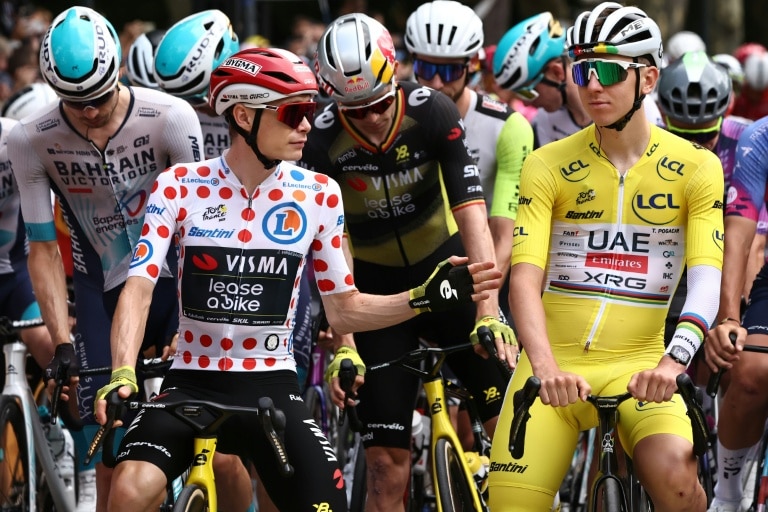
    One month out from the 2025 Tour de France, the cycling world is already buzzing for what is set to be one of the most compelling yellow jersey battles in modern cycling history. The race’s starting line in Barcelona will welcome a stacked field of elite contenders, headlined by Slovenian four-time champion Tadej Pogacar, who is chasing a record-tying fifth Grand Boucle title. Hot on his heels will be rejuvenated Danish two-time winner Jonas Vingegaard and breakout French teenage talent Paul Seixas. But unlike typical pre-Tour seasons, fans will have to wait until the opening stage of the race itself to see these three top favorites go head-to-head, after all three opted for drastically different training and warm-up schedules that have kept them apart.

  • Golden generation: The seven premiership graduates who prove the Storm’s new system is working

    Golden generation: The seven premiership graduates who prove the Storm’s new system is working

    For years, the Melbourne Storm has focused on one strategic mission: unearthing homegrown rugby league talent across Victoria and nurturing it locally, rather than watching promising young athletes leave the state for opportunities elsewhere. Now, the club’s years of investment in grassroots development are beginning to deliver a new golden generation of players that could reshape the club’s future for decades to come.

    Before the club launched its groundbreaking “Road to AAMI Park” initiative, Melbourne Storm leadership faced a persistent problem: top junior prospects were forced to leave Victoria because there was no clear, supported route to the National Rugby League (NRL) first grade. Only a small handful of local juniors had ever successfully made the jump to the top competition, a gap the club was determined to close. Today, the program’s impact is already clear, with fullback Sua Fa’alogo – a local Victorian product – emerging as one of Melbourne’s standout performers so far this season. Fa’alogo has become the public face of the club’s youth development success, and club leaders say he is just the first of many promising young athletes to rise through the new system.

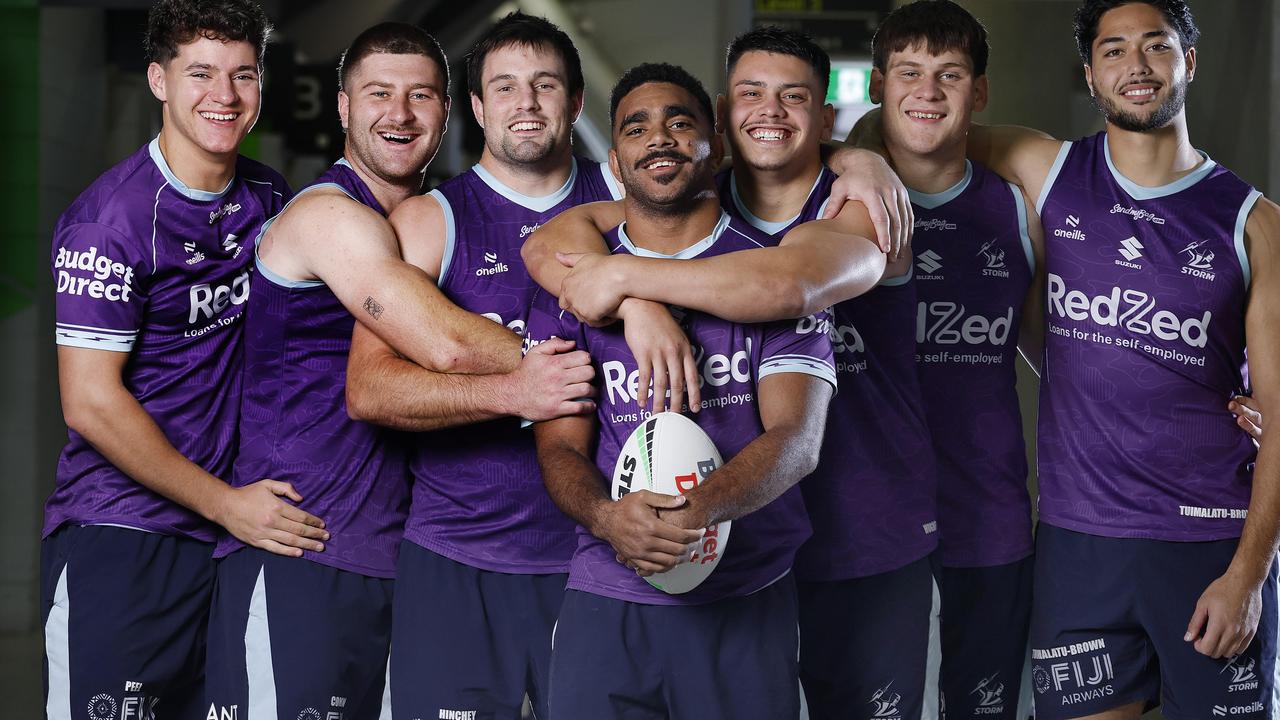
    Seven players from Melbourne Storm’s 2024 (corrected from 2025 per context) Jersey Flegg under-21 premiership-winning squad have already earned their first NRL call-ups this season, capitalizing on an injury crisis that opened up unexpected first-team opportunities at the club. Hugo Peel, Siulagi Tuimalatu-Brown, Gabriel Satrick, Preston Conn, Angus Hinchey, Cooper Clarke and Stanley Huen all helped defeat Penrith in last year’s under-21 grand final, and all made their NRL debuts in 2025. The long-term goal of the program is to see dozens more local juniors follow this path into the top-tier NRL system.

    Melbourne Storm chief executive Justin Rodski explained the strategy was developed in partnership with the NRL specifically to grow rugby league’s footprint and build a robust development pipeline in Victoria. “There was a rich nursery of young talent across rugby codes in this state, so our priority was to build a genuine pathway with quality coaching and development opportunities that let young players stay close to home in Victoria, rather than forcing them to leave,” Rodski told NewsWire. “Seeing seven of these players, who came through the system together, make their debuts this season has been incredibly rewarding. Even though the opportunity came because of our injury crisis, it has let these young players step up together, which is exactly what we hoped for.”

    Rodski pointed to a proven pattern across the most successful NRL teams of the past 20 years: championship-winning squads are almost always built around a core of players who grew up and developed together from a young age. “We’re really hopeful that this group is that next core for us,” he said. “These young talent coming through the system, play together, develop together, and ultimately become first-grade NRL players together. Get that right, and you have a group that can carry the club into its next golden generation.”

    Among the seven debutants, 20-year-old forward Cooper Clarke has already emerged as the biggest early success story. Early impressions from his first NRL season suggest the young middle forward is on track for a long and impactful top-flight career, and he has already re-signed with the club through to 2029. Clarke says he is proud to have watched his former junior teammates earn their own opportunities alongside him. “It’s really special that the club prioritizes local juniors coming through, and that we can be the example for the next group coming up,” Clarke said. “It proves that if you put in the work, it doesn’t matter where you start – you can be playing NRL in just a year’s time, or in the lower pathways. It might take longer for some, but seeing us do this can inspire the kids coming after us. It’s been an absolute honor to be here with all these guys and watch each of them get their chance.”

    Gabriel Satrick’s journey to the NRL is arguably the most inspiring of the group. The young dummy-half made his debut against the Canterbury Bulldogs last month, and the entire small communities he comes from turned out to celebrate his milestone. Satrick’s maternal family hails from Hope Vale, while his father is from Yam Island in the Torres Strait, which has a total population of just 275 people. He grew up in Yarrabah, a small Queensland community of around 2500 people, and nearly the whole town turned out to watch his debut: more than 50 locals traveled to Melbourne to cheer him on, while hundreds more gathered in the local park with popcorn and a projector to watch the game live.”

    “Everyone in Yarrabah was so proud and excited,” Satrick said. “It was a big deal, everyone knew about it, and everyone turned out to the park to watch. It was really emotional for me, because it’s been such a long journey to get here. I left home when I was young to move to Ipswich, and I’ve been away from my family and community for six years. To see it all pay off like this is just incredible. Satrick added that he has learned a huge amount from Melbourne’s star hooker Harry Grant in his first weeks in the top squad.

    For the Melbourne Storm, this wave of homegrown debutants is more than just a short-term solution to an injury crisis: it is proof that a years-long bet on local youth development is working, and the foundation for a dominant new era of NRL competition.

  • ‘He won’t travel with us’: Roosters to welcome back Kangaroos star, but they’ve lost a winger for the trip to Canberra

    ‘He won’t travel with us’: Roosters to welcome back Kangaroos star, but they’ve lost a winger for the trip to Canberra

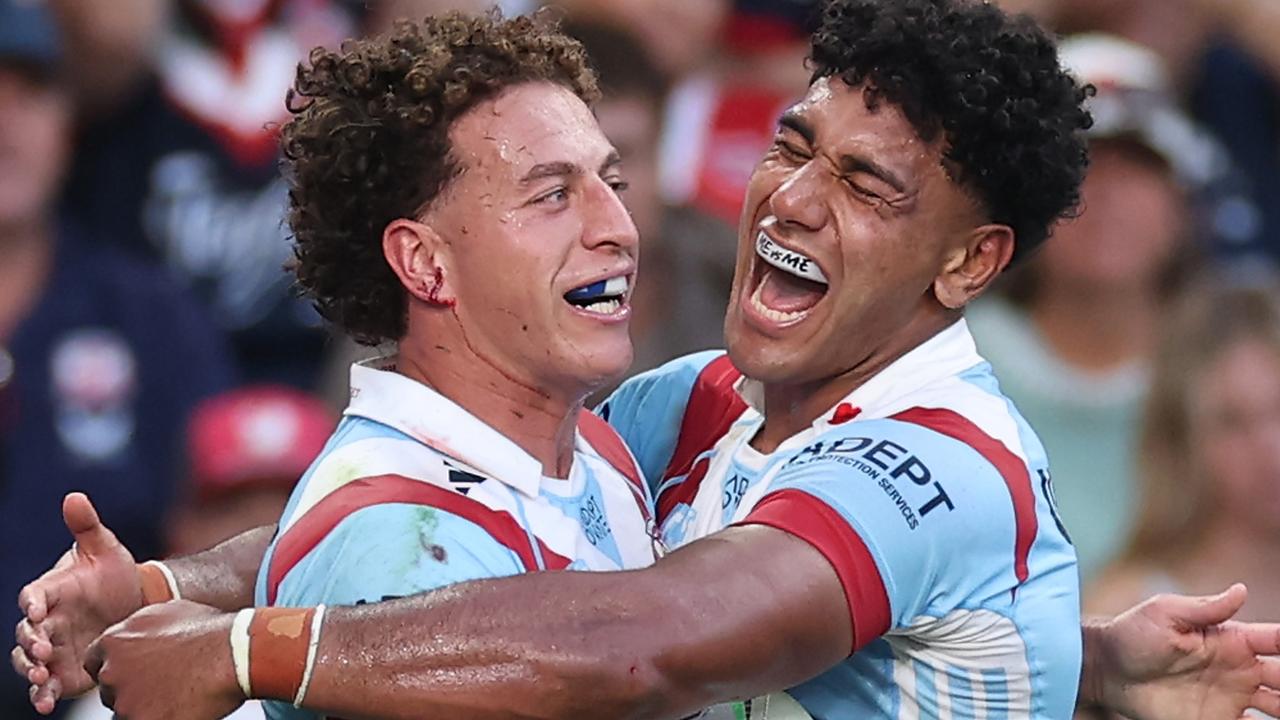
    The Sydney Roosters are heading into Friday night’s blockbuster clash against the Canberra Raiders with a mix of bad news and a massive boost for their backline, confirming that Australian Kangaroos representative winger Mark Nawaqanitawase is set to make his long-awaited return from a season-disrupting injury, just as inspirational comeback story Cody Ramsey is abruptly ruled out of the trip with an illness.\n\nNawaqanitawase has not taken the field since Round 9, when he suffered a severe syndesmosis injury that required surgical intervention and forced him to withdraw from a potential debut with the New South Wales Blues State of Origin side. But after completing a full, contact-heavy training session on Wednesday, the dynamic winger has passed all final fitness tests to be available for selection against the Raiders.\n\nHis comeback arrives at a critical time for the Roosters, who have already been without veteran starting winger Daniel Tupou in recent weeks. Roosters head coach Trent Robinson confirmed the positive update on Nawaqanitawase’s availability, noting that Wednesday’s session was the final hurdle to clear for his return. “Yesterday was the real test for us to make sure that he was right to tick off everything he needed after that syndesmosis injury. It’s looking good for him to play tomorrow,” Robinson told reporters.\n\nThe electrifying winger brings a unique attacking spark to the Roosters lineup, combining creative playmaking with a lethal finishing ability that has made him one of the most exciting young talents in the National Rugby League. Still, Robinson emphasized that the club’s game plan remains rooted in collective effort rather than relying on one individual to turn recent fortunes around. “In some areas he brings a creativity and a finish that’s really important. He’s a high-quality player,” Robinson said. “But then in other areas, that’s just a team concept rather than an individual that’s going to change it. It’s a whole-team concept, so no individual coming in or out is going to change that. It has been a collective.”\n\nNawaqanitawase will slot into the starting right wing position, a spot that was set to be filled by Ramsey – who is now forced to miss the clash just weeks after completing one of the most anticipated comebacks in recent rugby league history. Ramsey, who was sidelined for 1337 days recovering from a serious long-term injury, had already produced one of the feel-good stories of the 2025 NRL season with his return to the top flight. However, Robinson confirmed the club only learned of Ramsey’s illness roughly 30 minutes before speaking to media, ruling him out of travel and selection for the fixture. “Cody’s actually a bit crook. We only just found that out sort of half an hour ago, so he won’t travel with us,” the coach added.\n\nBeyond the backline selection news, the Roosters’ main focus in training this week has been fixing a costly ball control issue that has derailed their last two outings. Against the Melbourne Storm last Saturday, the side coughed up 18 unforced errors and managed just one try on the night, following on from a 14-error performance in a Magic Round loss to the North Queensland Cowboys. A visibly frustrated Robinson addressed the errors directly with his playing group in the sheds after the Storm loss, and this week the squad has prioritized tightening up their completion rates on the training paddock.\n\n“The first thing is to discuss it, and then the second thing is to do it at training,” Robinson explained. “That’s a really key part of the game is talking about it, but training it, and then it’s up to us to perform that tomorrow night. It’s not the single focus, either. You want to improve that, and we’ve been pretty good at that this year. The last two games has not been what we wanted, So we talk about it, practise it, and then go out and do it.”\n\nThe 2026 NRL rule changes have placed unprecedented emphasis on retaining possession and territorial control, making reliable ball handling more critical than ever for title contenders. The Roosters have long built their identity on an expansive, attacking style of play that has sometimes come with higher error counts, but Robinson says the squad has already proven this season that it can balance elite attacking movement with high completion rates. Citing a standout performance against Manly where the side posted a 96% completion rate and only one unforced error, the coach said his side is capable of fixing the recent slump ahead of Friday’s kickoff.\n\n“I think we’ve shown that we can do both,” Robinson said. “I go back to the Manly game where it was sort of about 96 per cent completions. I think we had one error in that game, and there’s been others throughout that period where we’ve been able to do both. We’ve been able to score points but then also control the ball, and that’s the game. That’s pretty clear what’s needed in the game, and our job is to go out and get it done.”

  • World Cup fans barred from bringing water bottles into stadia

    World Cup fans barred from bringing water bottles into stadia

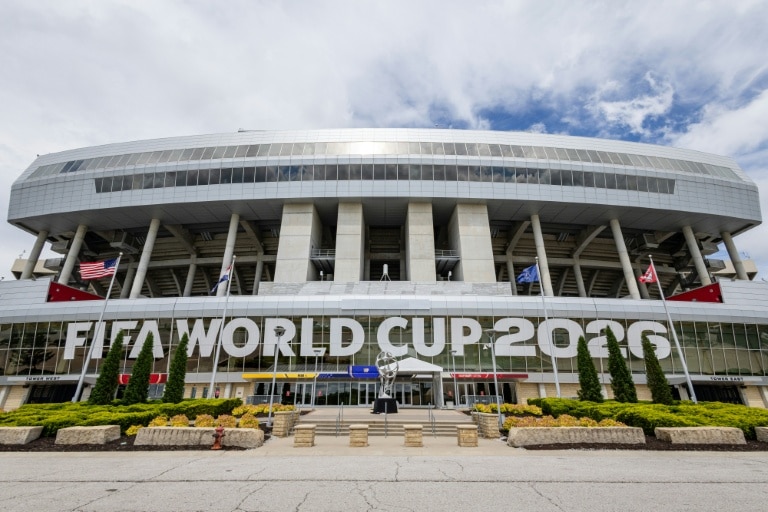
    Just months ahead of the historic 2026 FIFA World Cup co-hosted by the United States, Canada, and Mexico, global soccer governing body FIFA has implemented a sudden, controversial policy shift that will bar spectators from bringing their own refillable water bottles into match venues, forcing attendees to purchase overpriced bottled water inside stadiums, sports outlet The Athletic first reported Wednesday.

    The policy reversal marks a sharp departure from FIFA’s publicly released stadium guidelines as recently as one month ago, which explicitly permitted fans to carry empty, transparent reusable plastic water bottles of up to one liter into grounds. The updated code of conduct, however, has been amended to outright prohibit all reusable water containers, removing the prior allowance entirely.

    In an official comment to Agence France-Presse, a FIFA spokesperson defended the last-minute rule change as a safety-focused adjustment, noting that multiple host stadiums already enforce similar bans on outside bottles for their own local events. “FIFA is committed to protecting the health and safety of all players, referees, fans, volunteers, and staff,” the organization’s statement read. “FIFA made the decision to prohibit bottles to prevent risk and injury to players and attendees. Outside bottles are already prohibited at several of these venues for safety considerations, and FIFA is applying this consideration across its tournament stadiums.”

    FIFA also sought to address concerns over access to hydration, confirming that multiple cooling and hydration resources including misting stations, portable fans, dedicated hydration points, and cooling tents will be positioned across all stadium precincts. The organization added that the price of bottled water sold inside venues will match the pricing used for other major events held at the same stadiums, though it did not disclose specific price points.

    The new rule has been introduced despite urgent warnings from climate and health experts that extreme heat at many open-air World Cup venues could pose significant public health risks for attendees. A recent analysis published by climate research group World Weather Attribution last month projected that 26 of the tournament’s 104 total matches will be played in conditions where the Wet Bulb Global Temperature (WBGT) — a composite metric measuring heat stress that accounts for air temperature, humidity, wind speed, and solar radiation — will exceed 26 degrees Celsius, a threshold linked to increased risk of heat-related illness.

    This is not the first time FIFA has faced criticism over water bottle bans at major events held in North America. During the 2025 FIFA Club World Cup hosted in the U.S., attendees publicly complained about searing, dangerous heat inside venues after being barred from bringing their own water into the grounds, echoing the same concerns now being raised ahead of the 2026 World Cup.