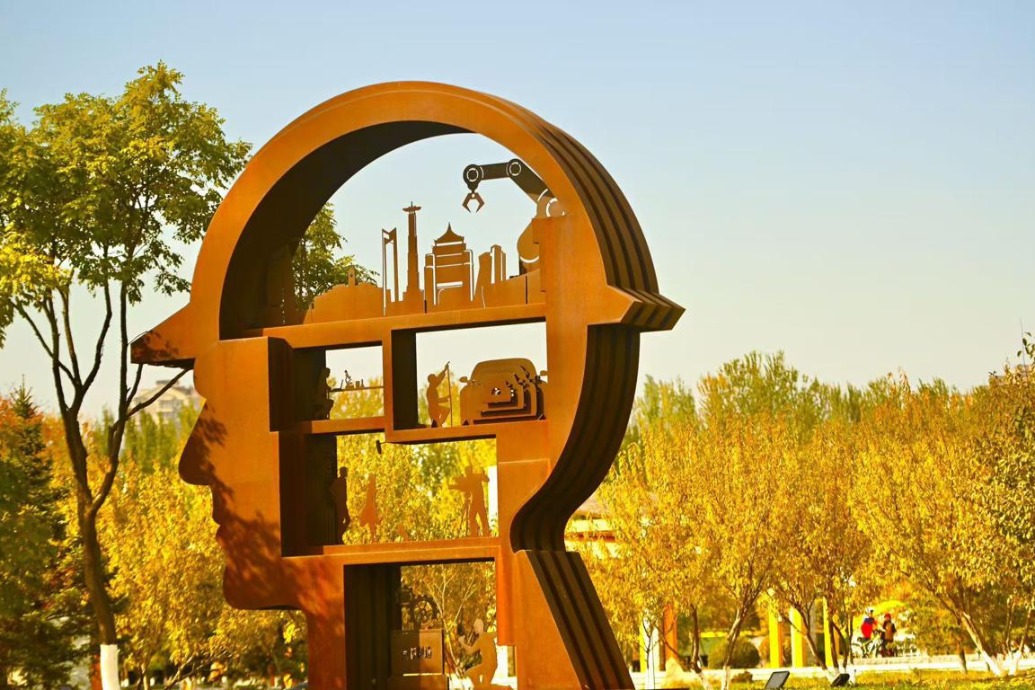
As October ushers in the golden hues of autumn, Changchun Industrial Track Park in Jilin Province transforms into a mesmerizing fusion of industrial heritage and seasonal splendor. Spanning 210,000 square meters, the park features a 1.6-kilometer path adorned with golden leaves, offering a picturesque journey through time. A retired tram, once part of the No. 54 bus line, now stands as a silent yet poignant reminder of the city’s commuting history, drawing residents to reflect on the past. Visitors can cycle along the serene riverbank, immersing themselves in the harmonious interplay of movement and tranquility as leaves gently fall. The park’s industrial sculpture group, set against the autumn backdrop, vividly recreates pivotal moments from Changchun’s automotive, film, and urban construction industries, adding depth to the park’s historical narrative. This unique blend of nature and industry not only preserves the city’s legacy but also provides a space for residents to connect with their heritage in a tranquil, reflective setting.
分类: society
-
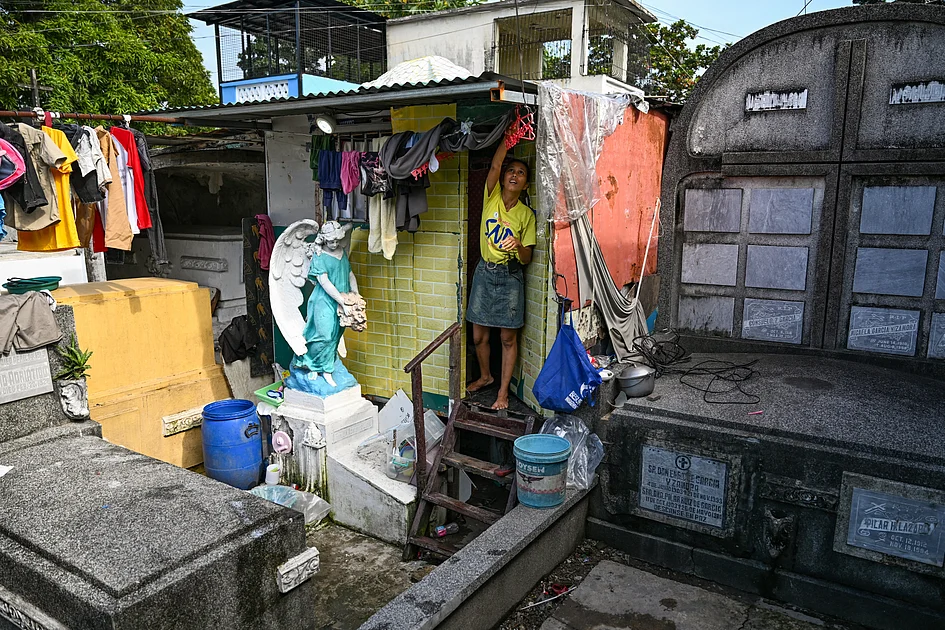
Photos: Poverty forces these Filipinos to live among the dead, become cemetery dwellers
In the heart of Manila, where poverty is pervasive and millions struggle with inadequate housing, some residents have found an unconventional refuge: cemeteries. The Manila North Cemetery, a vast 54-hectare public graveyard, is home to approximately 6,000 informal settlers who live among the tombs of over a million deceased Filipinos. These cemetery dwellers, often referred to as ‘informal settlers,’ have turned the gravesites into makeshift homes, repurposing crypts and mausoleums into living spaces. Laileah Cuetara, a 36-year-old mother of two, resides in a small wooden shanty perched atop a pair of raised tombs. Her home, furnished with a foam mattress, shelves, a television, and picture frames, is a stark reminder of the dire economic conditions faced by many in the Philippines. Cuetara earns around 3,000 pesos ($51) monthly by selling snacks and drinks to cemetery visitors. During All Saints’ Day and All Souls’ Day, she and her partner earn additional income by cleaning and tending to 30 tombs, receiving up to 1,700 pesos for each. However, their earnings are insufficient to escape the cemetery. ‘With the high prices of basic goods nowadays, it’s very difficult to improve our living conditions,’ Cuetara lamented. She moved into the cemetery in 2008 after a family conflict forced her to leave her suburban home. The plight of cemetery dwellers like Cuetara is not unique. Priscilla Buan, 51, was born in the cemetery and has raised her children among the tombs. She and her family sleep atop two crypts in a mausoleum, with the remaining space converted into a living room complete with a sofa, cabinet, and appliances. Buan sells snacks from the tomb’s grilled window but dreams of a better life. ‘Even if I wanted to, we don’t have money to buy a house,’ she said. The number of cemetery dwellers has been increasing, according to Vicente Eliver of the Kapatiran-Kaunlaran Foundation, which provides livelihood and educational programs to these residents. Eliver noted that while only grave caretakers and their families once lived in the cemetery, their descendants have continued the tradition, leading to a growing population. Most residents claim to have permission to occupy mausoleums or build shanties on graves in exchange for maintaining them. They tap into existing power lines for electricity and pay 3 pesos per gallon of water from nearby wells. However, Daniel Tan, the cemetery director, emphasized that the arrangement is not meant to be permanent. ‘This is a cemetery, it’s for the dead and not for the living,’ Tan stated. He acknowledged that the city is attempting to find permanent housing solutions but provided no specifics. For Cuetara and others, living in the cemetery is a last resort. Her 11-year-old son faces bullying at school due to their address, while her six-year-old daughter dreams of a real home, often drawing houses that adorn their makeshift dwelling. ‘All of us here dream of having a house outside, but… it’s hard, very hard,’ Cuetara said.
-
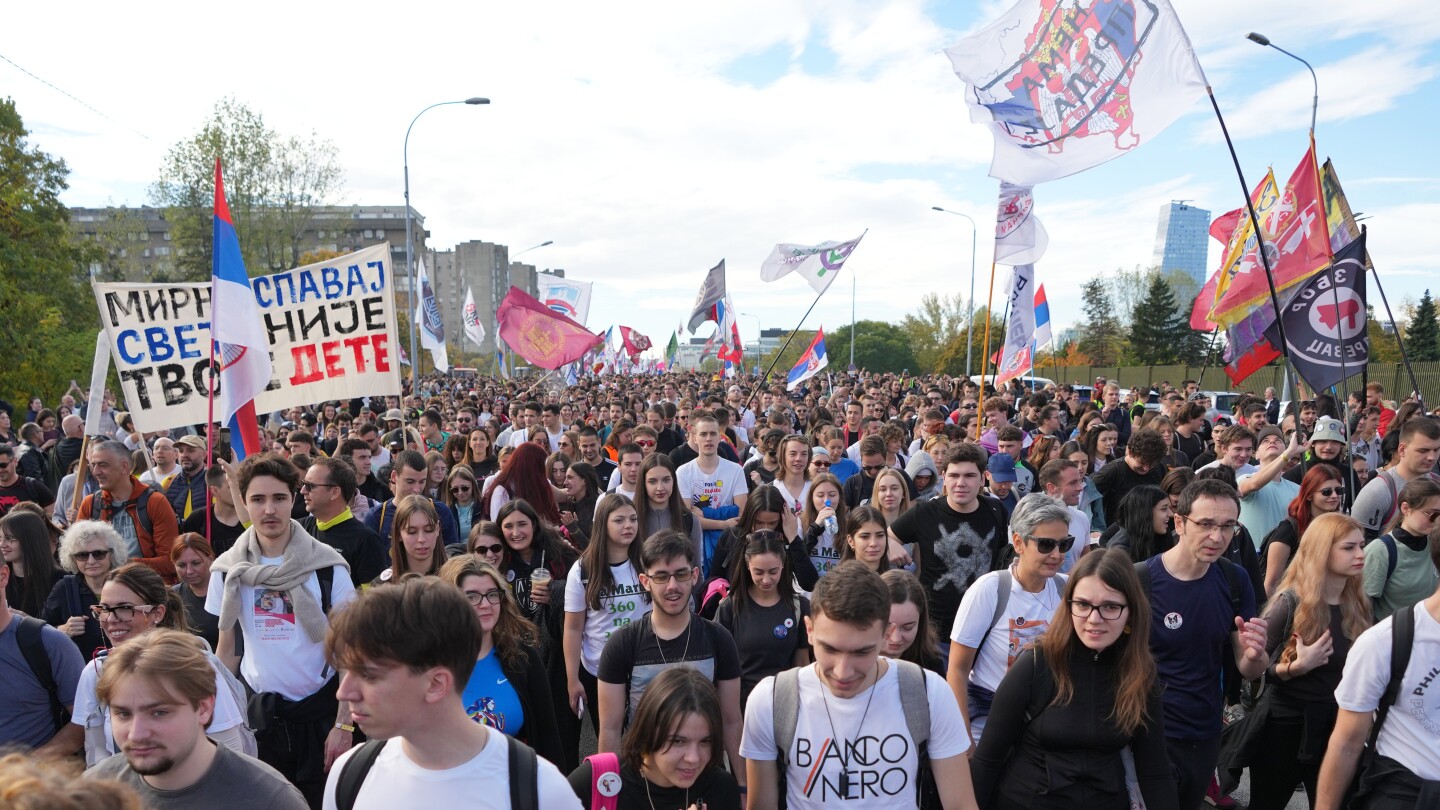
Serbia youth lead thousands on march for weekend rally marking deadly canopy collapse last year
Thousands of predominantly young Serbians commenced a two-day march from Belgrade on Thursday, converging in the northern city of Novi Sad to commemorate the anniversary of a catastrophic train station disaster. The incident, which occurred on November 1, involved the collapse of a concrete canopy at Novi Sad’s central train station, claiming 16 lives. The tragedy has galvanized a youth-led protest movement, targeting President Aleksandar Vucic’s administration, which protesters accuse of corruption and negligence in the station’s renovation. Demonstrators are demanding accountability for the disaster and advocating for early parliamentary elections to oust Vucic’s populist government. The march, spanning 90 kilometers (58 miles), was spearheaded by flag-waving university students, with Saturday’s rally expected to draw tens of thousands, intensifying pressure on the president. Over the past two weeks, various student groups have trekked across Serbia, uniting in Novi Sad for the anniversary. Belgrade residents showed solidarity, honking car horns, waving, and blowing whistles as protesters passed. Participants like Mihajlo Jovanovic and Ana Marija Seslija expressed hope for change and determination to continue their struggle. Authorities have detained numerous protesters in recent months, with allegations of police brutality. While 13 individuals have been charged in connection with the disaster, no trial date has been set, raising doubts about accountability. Vucic has dismissed the protesters as Western-backed “terrorists,” exacerbating political tensions. Serbia’s EU accession process remains stalled amid concerns over democratic freedoms and Vucic’s ties with Russia and China.
-

When Asian culture goes global: voices meet, bridges form
The global fascination with Asian culture is reaching unprecedented heights, as people from diverse corners of the world—ranging from Germany and France to Canada and Brazil—are increasingly engaging with it through digital platforms. A Brazilian enthusiast eloquently expressed this sentiment: ‘Watching through the screen, I can feel the culture coming alive in real time.’ This immersive experience is not only enriching their understanding but also inspiring them to add more destinations to their travel itineraries. The allure of Asian traditions, arts, and lifestyles is resonating deeply, fostering cross-cultural connections and mutual appreciation. To witness this cultural phenomenon firsthand, viewers are encouraged to explore the accompanying video, which showcases how Asian culture is captivating hearts globally.
-
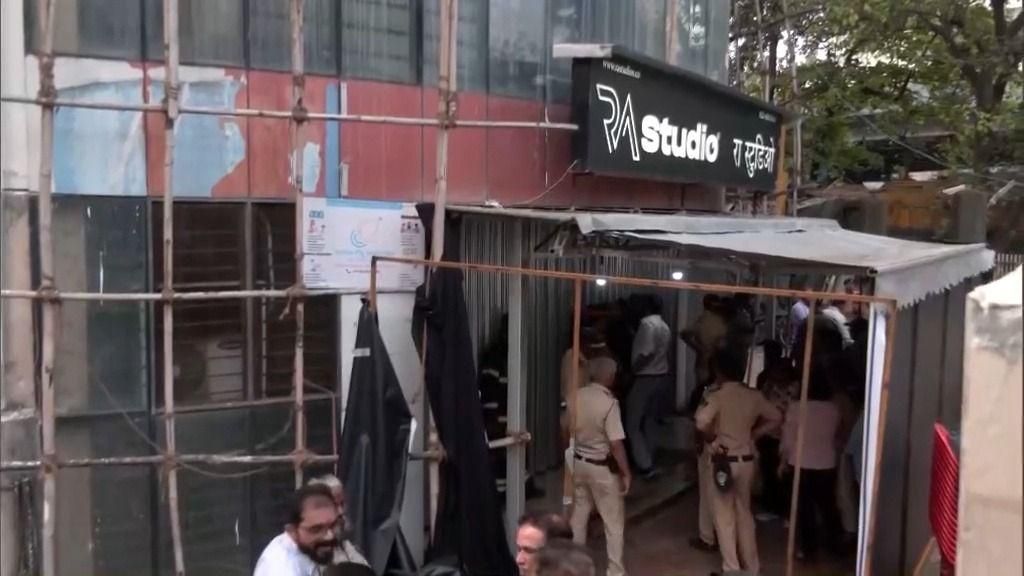
Police in Mumbai rescue 17 children taken hostage by man
In a dramatic operation, Mumbai Police successfully rescued 17 children and two adults from a hostage situation at an acting school in the bustling Powai neighborhood. The incident unfolded in the Mahavir Classic building, where the children were reportedly attending an audition. Authorities received a distress call at 13:45 local time (08:15 GMT) alerting them to the crisis. Initial attempts to negotiate with the hostage-taker proved futile as he remained unyielding, prompting police to use force to enter the premises. The suspect, who claimed to have ‘simple moral and ethical demands,’ was subsequently taken to a hospital for treatment, with media reports indicating he sustained injuries. Police are currently conducting a thorough investigation at the scene and have refrained from providing further details until the inquiry is complete. The motive behind the hostage-taking remains unclear, though the individual denied any terrorist affiliations or financial demands.
-
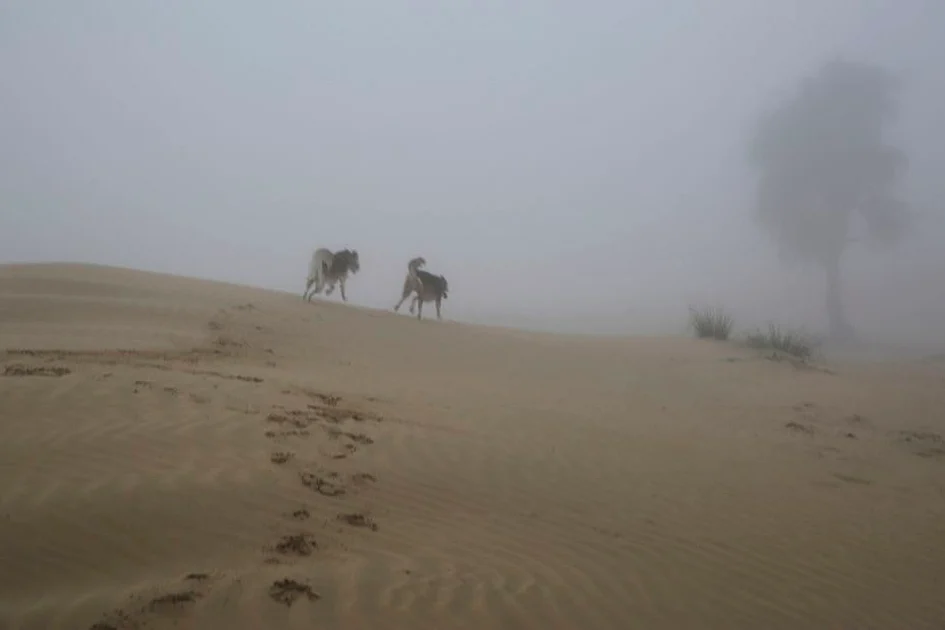
UAE weather: Fog predicted as temperatures drop to 17°C in some parts
As November approaches, the United Arab Emirates (UAE) is preparing for a shift in weather patterns, marked by foggy conditions and cooler temperatures. On Thursday, October 30, 2025, the skies across the UAE are expected to be fair to partly cloudy, with fog or mist likely to form over coastal and internal areas, particularly in the northern regions. Humidity levels are predicted to rise significantly by night and into Friday morning, reaching up to 85% in major cities like Abu Dhabi and Dubai. Temperatures will vary across the country, with Abu Dhabi experiencing a range of 25°C to 33°C, while Dubai will see temperatures between 26°C and 34°C. Sharjah is expected to cool down to 23°C, and some southern and internal areas may even see temperatures drop to as low as 17°C to 21°C. Light to moderate southeasterly-to-northwesterly winds are forecasted, with calm seas in the Arabian Gulf and the Oman Sea. Residents are advised to stay cautious during early morning commutes due to reduced visibility caused by fog.
-
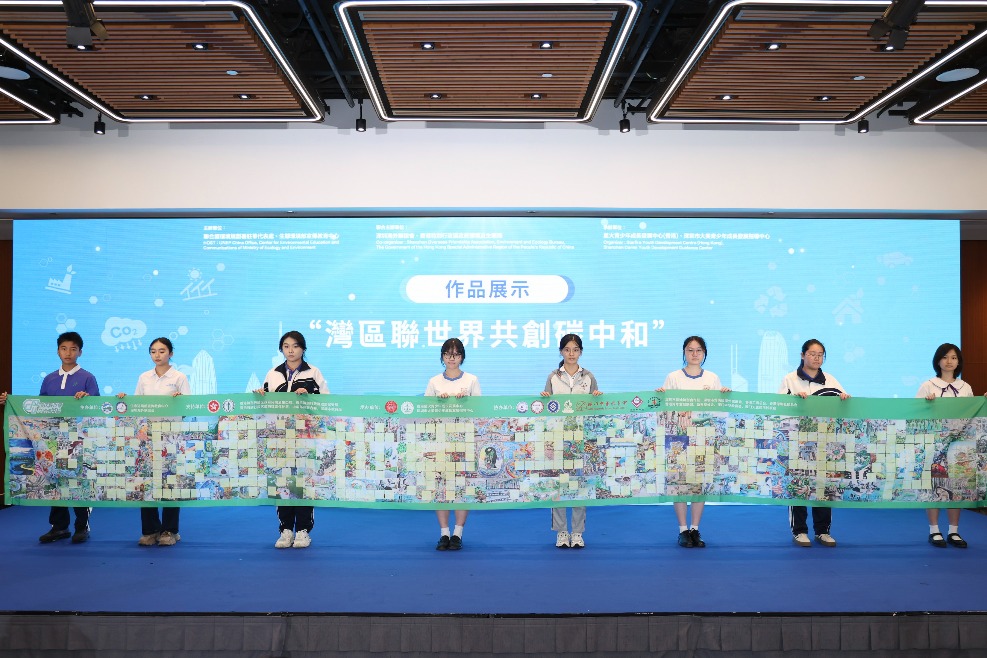
Environment forum in Hong Kong fosters green collaboration across GBA
The 2025 United Nations China Youth Environment Forum, held in Hong Kong on October 29, 2025, brought together approximately 150 participants to discuss carbon neutrality education and regional ecological cooperation. Titled ‘Beautiful China, Zero Carbon Action,’ the event featured representatives from ecological and educational departments across the Chinese mainland, Hong Kong, and Macao, alongside experts, youth delegates, and educators. The forum was co-organized by the United Nations Environment Program’s Chinese Office and China’s Ministry of Ecology and Environment, with support from the Hong Kong SAR government and a Shenzhen-based overseas friendship association. Keynote speeches and experience-sharing sessions highlighted China’s progress in ecological civilization education and showcased the collaborative efforts of its youth in building a sustainable future. China’s Vice Minister of Ecology and Environment, Yu Huiwen, underscored Hong Kong’s pivotal role in the Guangdong-Hong Kong-Macao Greater Bay Area (GBA) as a bridge for ecological protection and international cooperation. Hong Kong’s Secretary for Environment and Ecology, Tse Chin-wan, reiterated the city’s commitment to achieving carbon neutrality by 2050, aligning with national dual carbon goals. The forum also provided a platform for global environmental experts to share insights on climate change, fostering a deeper understanding of carbon neutrality among young participants and inspiring a sense of mission.
-
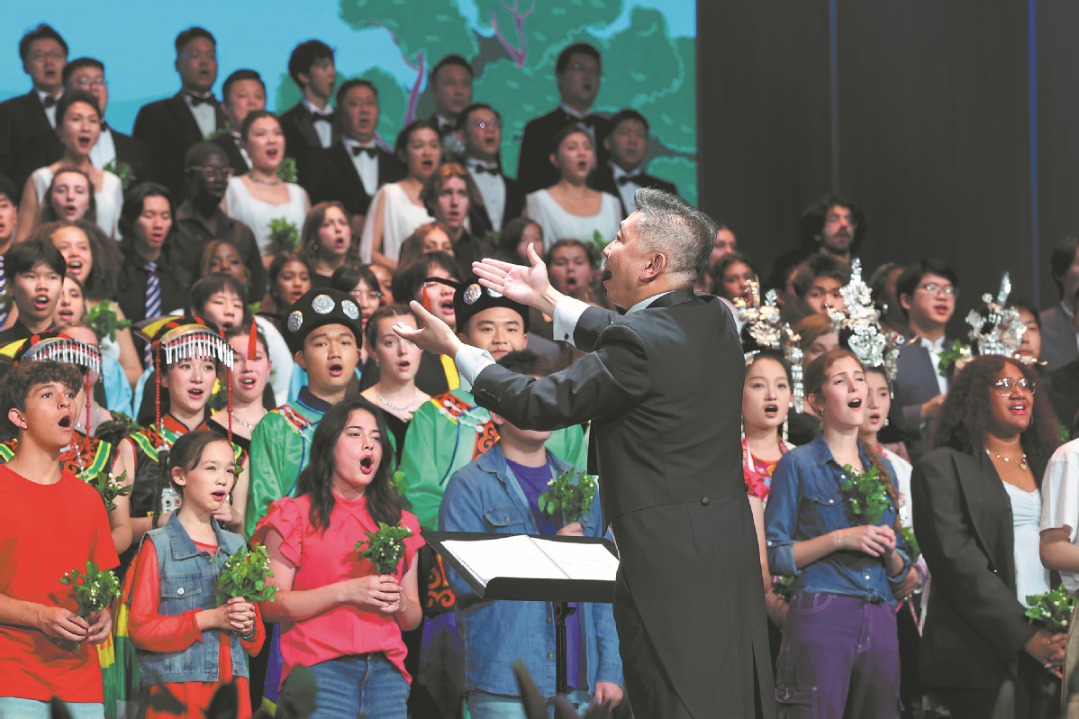
Educational exchanges sow seeds of understanding
Educational exchanges between China and the United States are proving to be a vital conduit for fostering mutual understanding and strengthening bilateral ties. James Long, co-chair of the Durham Sister Cities Kunshan Committee, exemplifies this trend. His journey began with a minor in Chinese studies during his undergraduate years, followed by immersive language studies at Nanjing Normal University. Long believes that firsthand experiences in China can dispel misconceptions and showcase the nation’s rapid development and rising living standards. He is now actively working to establish student exchange programs between North Carolina and China, leveraging technology to bridge language barriers and spark curiosity among American youth. Digital platforms like TikTok are making Chinese language learning accessible and popular, further enhancing cultural exchange. The importance of educational collaboration was underscored at a recent panel discussion in Hangzhou, attended by representatives from the US education, political, and academic sectors. Participants emphasized that such exchanges go beyond knowledge transfer, fostering dialogue and friendship. Susan Thornton, vice-chair of the US Heartland China Association, highlighted the need for broader access to study opportunities in China for American students, noting that the future of US-China relations hinges on grassroots connections. Initiatives like the recent visit of 20 young agricultural professionals from the US heartland to China demonstrate the transformative impact of such exchanges. Participants returned with broadened perspectives and a renewed sense of shared purpose. Natalie Mihalek, a member of the Pennsylvania House of Representatives, echoed these sentiments, stressing that educational exchanges build empathy and trust, transcending political differences. She called for expanded student exchange programs, increased teacher collaboration, and joint research initiatives to further strengthen ties between the two nations.
-

Ancient ancestor honored in Zhejiang
A significant ceremony commemorating Huangdi, the revered Yellow Emperor, took place on Wednesday at the Huangdi Temple in Jinyun County, Lishui City, Zhejiang Province. Huangdi, a legendary figure who unified China approximately 5,000 years ago, is celebrated as the progenitor of the Chinese people and the architect of Chinese culture. The event, attended by over 400 participants, including national role models, Taiwanese compatriots, and overseas Chinese, featured traditional rituals, music, and dance performances. The ceremony began at 9:50 AM, symbolizing the ‘nine five’ numerical combination that signifies Huangdi’s supreme majesty. Drums and bells were struck 34 and 15 times respectively, representing China’s 34 administrative regions and the 1.5 billion Chinese people worldwide. Tsai Meng-hsuan, a Taiwanese doctoral graduate from Fudan University, emphasized the importance of these traditions, stating, ‘These rites are our roots and origins. If you lose them, you will lose your direction and forget who you are.’ The event also coincided with the Double Ninth Festival, a traditional Chinese holiday honoring the elderly. Zhang Hongmin, a researcher at the Zhejiang Academy of Social Sciences, highlighted the enduring legacy of Huangdi’s culture, noting that advancements in artificial intelligence could further enhance the understanding and dissemination of this cultural heritage.
-

Xizang’s green success exemplifies sustainable development
The Xizang autonomous region has emerged as a global exemplar of sustainable development, showcasing a unique blend of modernization and ecological preservation. This was the central theme at the 2025 Forum on the Development of Xizang, held in Nyingchi, where over 400 participants from 44 countries and regions gathered to discuss the region’s progress. The forum highlighted Xizang’s transformation from a remote area to a hub of green innovation and cultural preservation. Mo Gaoyi, deputy director of the Publicity Department of the Communist Party of China Central Committee, emphasized the region’s new historical starting point as China prepares its 15th Five-Year Plan (2026-30). He underscored the importance of governance experience exchange, human rights advocacy, and cross-cultural learning. UNESCO representative Shahbaz Khan lauded Xizang’s modern infrastructure, which has connected its most isolated communities, expanding access to education, services, and markets. Pakistan’s ambassador Khalil Hashmi praised Xizang’s green growth model as replicable for other plateau regions, noting the success of its highland barley industry, which is projected to exceed 5 billion yuan in output by 2025. Timor-Leste’s ambassador Maubere Lorosae da Silva Horta highlighted the shared challenges of climate change, calling for enhanced South-South cooperation through a Plateau-Island Ecological Monitoring Mechanism. Zhao Peng, vice-chairman of the regional government, emphasized the role of Xizang’s youth in driving sustainable development, urging them to adopt eco-friendly lifestyles and contribute to the region’s ecological and economic progress.