分类: society

  • China’s population falls for fourth straight year

    China’s population falls for fourth straight year

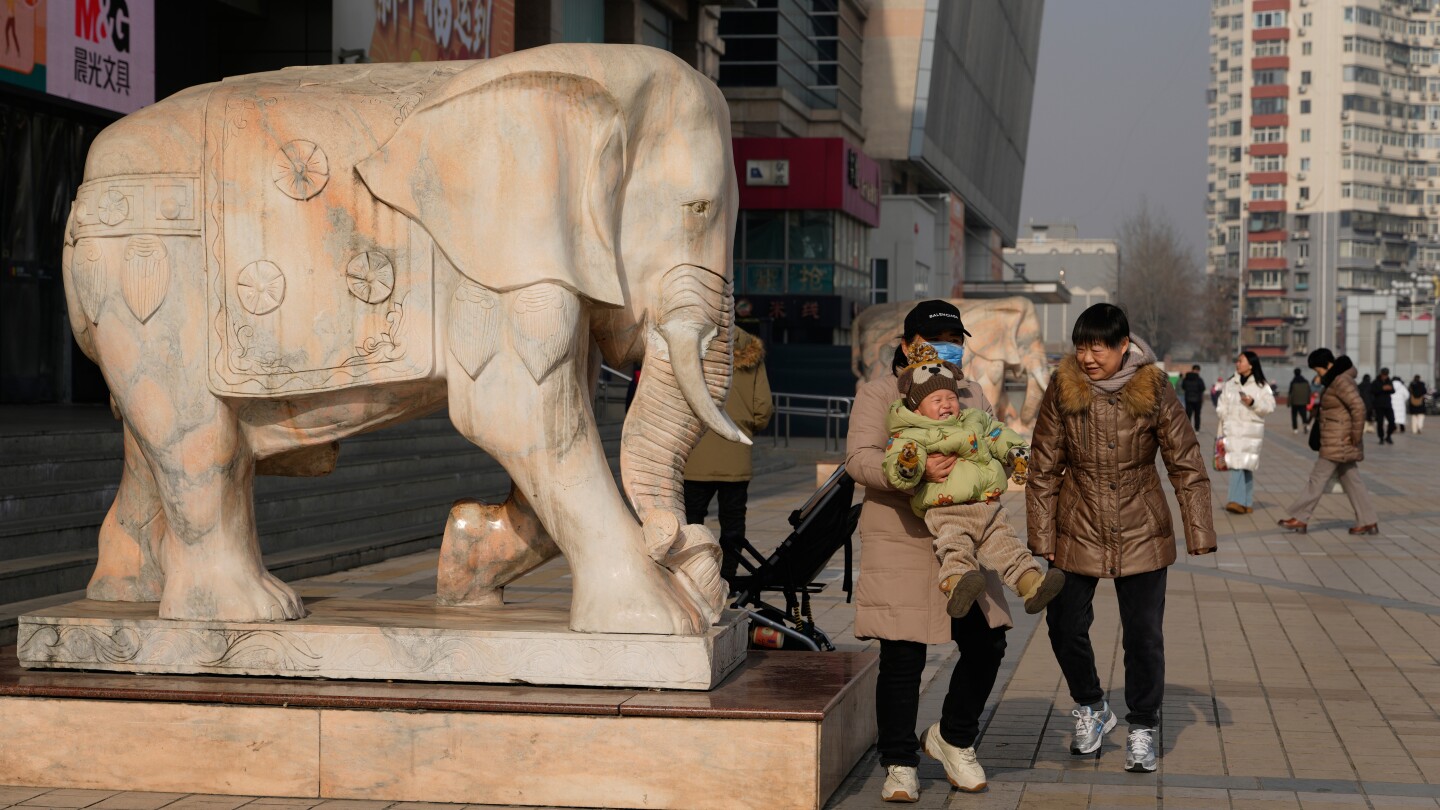
    China’s demographic landscape continues its concerning downward spiral, with official data revealing a fourth consecutive year of population decline in 2025. The National Bureau of Statistics reported the population dropped by 3.39 million to settle at approximately 1.4 billion by year’s end, representing an accelerated decline compared to previous years.

    The critical birth rate metric plummeted to a historic low of 5.63 per 1,000 people—the lowest recording since the establishment of the People’s Republic in 1949. Simultaneously, the mortality rate climbed to 8.04 per 1,000 people, reaching heights not seen since 1968. This widening gap between births and deaths underscores the severity of China’s demographic challenge.

    Confronted with both an aging citizenry and economic stagnation, Chinese authorities have implemented numerous policy measures to reverse this trend. The government’s approach has evolved significantly from the 2016 abolition of the notorious one-child policy to the current three-child policy introduced in 2021. More recent interventions include direct financial incentives, offering parents 3,600 yuan annually for each child under three years old, alongside provincial initiatives featuring cash bonuses and extended parental leave provisions.

    However, certain policies have generated public controversy, particularly a new 13% taxation on contraceptive products including condoms and birth control medications. Health advocates have raised concerns that this measure might inadvertently increase unintended pregnancies and potentially affect HIV transmission rates.

    China’s fertility rate remains among the world’s lowest at approximately one child per woman—significantly below the 2.1 replacement level needed for population stability. This pattern mirrors demographic trends seen in other East Asian economies including South Korea, Singapore, and Taiwan.

    Compounding the problem, China ranks as one of the most financially demanding countries for child-rearing according to the YuWa Population Research Institute’s 2024 analysis. Beyond economic considerations, cultural shifts are influencing reproductive decisions, with many young Chinese citing lifestyle preferences and personal freedom as factors in their choice to remain childless.

    United Nations demographic projections indicate China’s population could diminish by more than half before 2100. This demographic contraction poses substantial economic threats, including workforce reduction, weakened consumer markets, and mounting pressure on pension systems. The Chinese Academy of Social Sciences has warned about the sustainability of retirement funds as the elderly population grows increasingly dependent on state support.

  • UK, France mull social media bans for youth as debate rages

    UK, France mull social media bans for youth as debate rages

    A growing international movement to restrict youth access to social media platforms is gaining momentum across Western nations, with France and the United Kingdom actively considering measures inspired by Australia’s groundbreaking legislation. The Australian model, which prohibits individuals under 16 from accessing major platforms like Instagram, Facebook, TikTok, and YouTube, has ignited a complex global debate about digital protection versus personal freedom.

    This policy shift stems from escalating concerns regarding adolescent mental health deterioration. Prominent advocates, including American psychologist Jonathan Haidt, author of the influential book ‘The Anxious Generation,’ argue that excessive social media exposure is fundamentally rewiring developing brains and creating a mental health crisis. Haidt’s work, which has attracted significant political attention, posits that screen-based interactions are displacing crucial real-world experiences necessary for healthy development.

    However, the scientific community remains deeply divided on implementing blanket bans. Canadian psychologist Candice Odgers and other academics challenge the alarmist narrative, contending that Haidt’s conclusions lack robust scientific validation. This academic disagreement centers on the difficulty of isolating social media’s specific impact amid numerous factors influencing teen wellbeing.

    Research from the University of Queensland’s Michael Noetel suggests that while evidence of harm exists, the effects might be more nuanced than extreme positions indicate. Noetel describes supporting restrictive measures as ‘a bet worth making’ given potential benefits. Conversely, University of Adelaide researcher Ben Singh’s longitudinal study of over 100,000 Australian youth revealed a U-shaped relationship: both heavy usage (over two hours daily) and complete non-use correlated with poorer outcomes, while moderate engagement showed the best results. The study notably found gender differences, with excessive use most harmful for girls and complete deprivation most detrimental for older teenage boys.

    French psychiatrist Serge Tisseron acknowledges social media’s ‘appallingly toxic’ aspects but cautions that outright bans might be technologically circumvented by digitally-native youth while inadvertently relieving parents of supervisory responsibilities. He advocates for more sophisticated, nuanced regulatory approaches rather than polarized all-or-nothing solutions.

    As France debates legislation for under-15s and UK officials consult experts, many researchers suggest observing Australia’s implementation. Cambridge University’s Amy Orben notes that within a year, substantial data will emerge regarding the ban’s effectiveness and any unintended consequences, with Australia’s e-safety commissioner already reporting 4.7 million blocked underage accounts.

  • China’s population falls again as births drop 17% a decade after the 1-child policy ended

    China’s population falls again as births drop 17% a decade after the 1-child policy ended

    A decade after dismantling its infamous one-child policy, China confronts an escalating demographic crisis as innovative pronatalist measures fail to reverse the nation’s persistent population decline. Recent statistics reveal China’s populace shrank for the fourth consecutive year in 2025, with the current tally standing at 1.404 billion—a reduction of 3 million from the preceding year.

    The most alarming data emerges from birth figures, which show merely 7.92 million newborns in 2025. This represents a dramatic 17% decrease (1.62 million fewer births) from previous counts, decisively countering the slight resurgence observed in 2024. This continuation of the downward trajectory marks the seventh year of declining births since 2023, when India surpassed China as the world’s most populous nation.

    Demographic experts estimate China’s fertility rate has plummeted to approximately 1.0—far beneath the 2.1 replacement level required for population stability. This critical shortage of new births compounds the nation’s existing demographic pressures, creating an inverted population pyramid with profound implications for future economic stability and social welfare systems.

    Despite implementing creative policy interventions—including direct cash subsidies of 3,600 yuan ($500) per child, tax exemptions for childcare services and matchmaking agencies, and the controversial imposition of a 13% value-added tax on contraceptives—authorities have achieved limited success in altering reproductive behaviors. Surveys indicate most families attribute their reluctance to expand to the exorbitant costs and intense pressures of child-rearing within China’s hyper-competitive society, exacerbated by ongoing economic uncertainties that strain household budgets.

    The government’s approach has evolved through multiple phases: transitioning from the one-child policy to a two-child limit in 2015, then expanding to three children in 2021. However, these incremental relaxations have proven insufficient to counteract deeply entrenched social and economic deterrents to larger families, leaving China grappling with a demographic challenge that threatens to reshape its global standing and domestic future.

  • China’s Buddha artisans carve out a living from dying trade

    China’s Buddha artisans carve out a living from dying trade

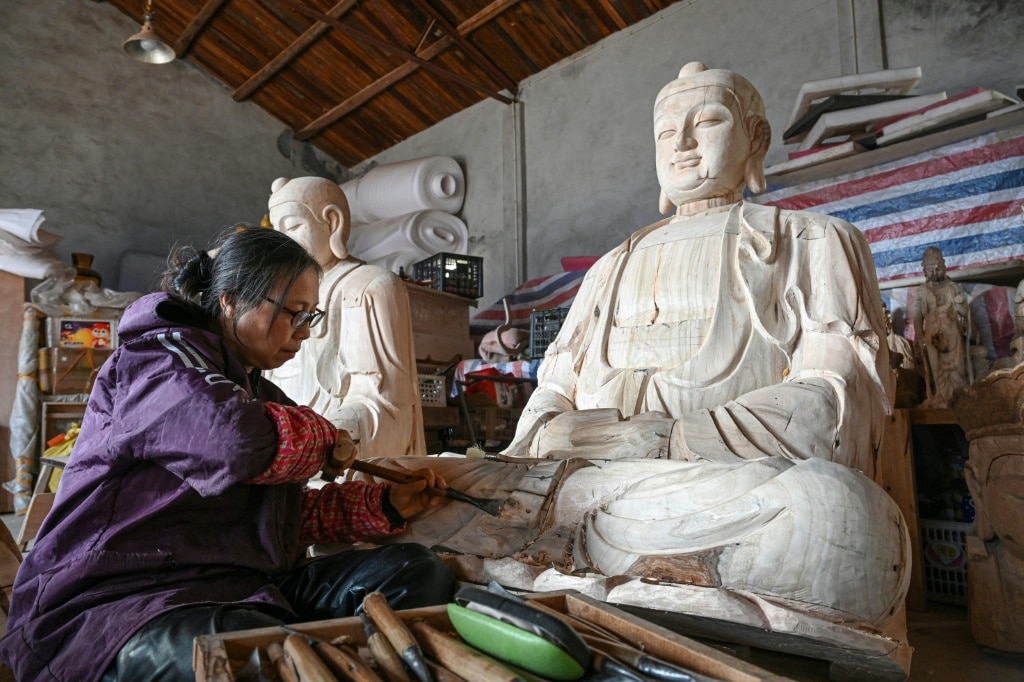
    In the dusty workshops of Chongshan village near Suzhou, a centuries-old tradition of sacred woodcarving stands on the brink of disappearance. Master craftsman Zhang meticulously shapes a block of wood into a divine foot beneath the silent gaze of dozens of unfinished life-sized Buddhist and Taoist statues, continuing a family legacy that spans multiple generations.

    This specialized craft, requiring five to six years of dedicated apprenticeship to master, faces an existential crisis as younger generations reject the demanding profession. Zhang, who learned the intricate art from his father during his teenage years, acknowledges the inevitable: ‘Once our generation retires, there will be no one left to carry on the tradition.’

    The decline stems from a combination of inadequate financial compensation and modern youth’s reluctance to invest the necessary time and energy. The village experienced a temporary resurgence in orders during the late 20th century when China relaxed religious restrictions, leading to a nationwide revival of temple construction and decoration.

    However, the market has now reached saturation point, with most temples across China already furnished with statues. At another workshop, 71-year-old artisan Gu recalls adapting to political pressures during the Cultural Revolution by producing secular handicrafts when religious expression was suppressed. Specializing in carving expressive Buddha heads, Gu demonstrates how each gilded figure conveys unique emotional depth – some smiling, others crying, with renowned monk Ji Gong sculptures even displaying contrasting expressions on each side of the face.

    While outsiders perceive these creators as artists, Zhang maintains a pragmatic perspective: ‘People look at us like we’re artists. But to us, we’re just creating a product.’ This disconnect between cultural significance and economic reality ultimately threatens the survival of one of China’s most spiritually significant artisanal traditions.

  • Death toll in Karachi shopping plaza fire rises to 10 as search continues for dozens missing

    Death toll in Karachi shopping plaza fire rises to 10 as search continues for dozens missing

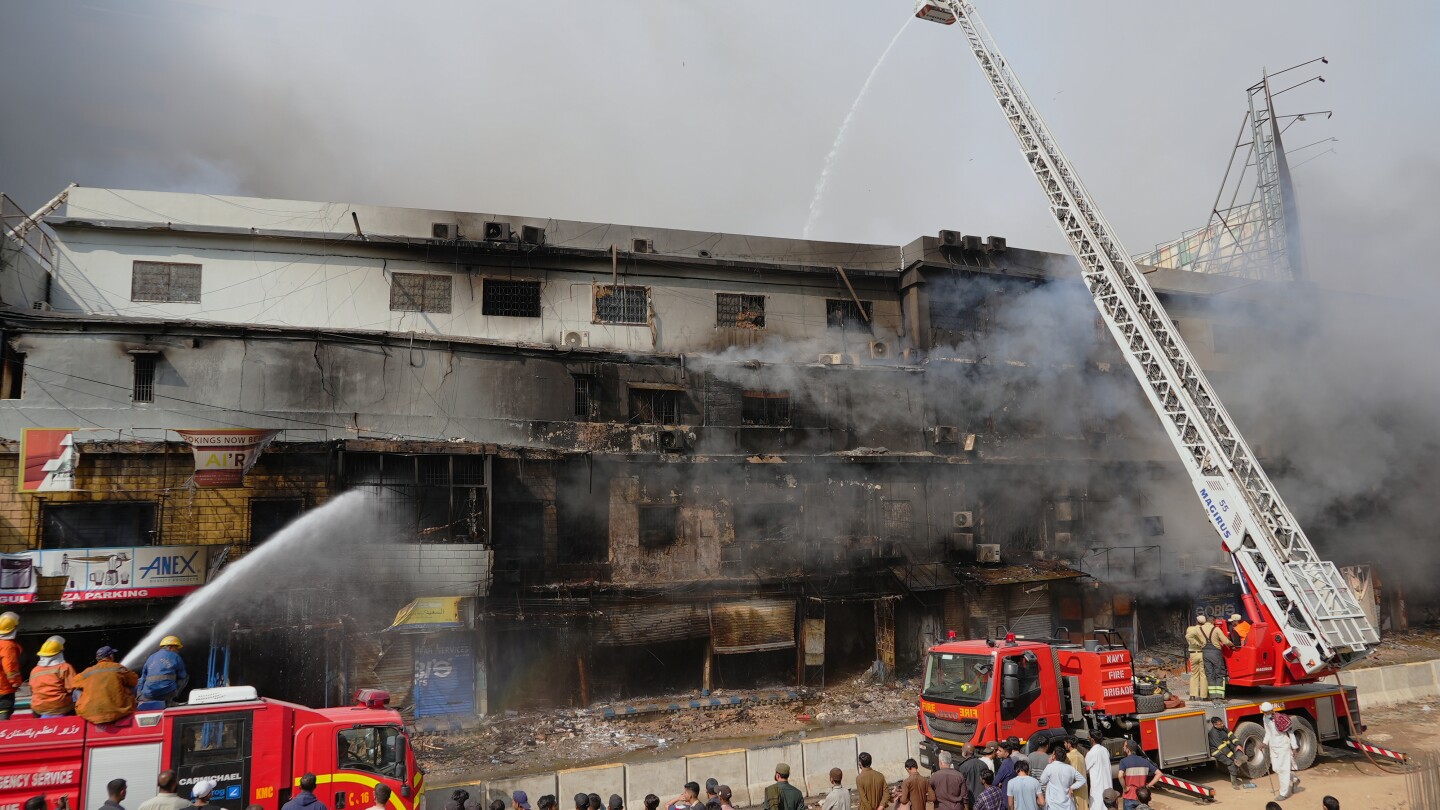
    KARACHI, Pakistan — A devastating multi-story fire at Gul Plaza shopping complex has resulted in at least 10 confirmed fatalities, with rescue teams recovering four additional bodies during overnight operations. The blaze, which ignited late Saturday, consumed the building for nearly 24 hours before firefighters finally contained the inferno late Sunday.

    According to Mayor Murtaza Wahab, the death toll continues to rise as emergency crews comb through the severely damaged structure. Local media sources indicate the fatalities may have reached 14 individuals. The rapid spread of flames through shops containing highly flammable materials—including cosmetics, garments, and plastic goods—created extremely hazardous conditions, according to Dr. Abid Jalal Sheikh, Karachi’s chief rescue officer.

    The scale of the tragedy became increasingly apparent as Sindh Chief Minister Murad Ali Shah revealed that approximately 60 individuals have been reported missing by concerned families. This prompted authorities to initiate an intensive search operation amid emotional scenes outside the charred building, where distraught relatives gathered awaiting news of their loved ones.

    Karachi, the provincial capital of Sindh, has experienced numerous deadly fires throughout its history, with safety experts frequently citing inadequate safety protocols and unauthorized construction practices as contributing factors. This latest incident echoes previous tragedies, including a November 2023 shopping mall fire that claimed 10 lives and injured 22, and the horrific 2012 garment factory blaze that resulted in 260 fatalities—one of Pakistan’s deadliest industrial disasters.

    Authorities have launched a formal investigation to determine the origin and cause of the fire, though preliminary findings have not been released. The incident has renewed concerns about urban safety standards and emergency response capabilities in Pakistan’s largest metropolitan area.

  • Prince Harry returns to court in battle with British tabloids

    Prince Harry returns to court in battle with British tabloids

    LONDON — The High Court in London has commenced a pivotal nine-week trial that pits Prince Harry and six other prominent figures against Associated Newspapers Ltd., publisher of the Daily Mail and Mail on Sunday. The plaintiffs allege systematic privacy invasions through unlawful information-gathering methods spanning more than two decades.

    The Duke of Sussex serves as the lead claimant in this collective action that accuses the media conglomerate of employing private investigators to conduct surveillance operations including phone interception, vehicle bugging, and unauthorized access to private records. The celebrity cohort includes music icon Elton John, actors Elizabeth Hurley and Sadie Frost, anti-racism campaigner Doreen Lawrence, and former politician Simon Hughes.

    Associated Newspapers has categorically denied all allegations, dismissing them as “preposterous” in previous court filings. The trial represents the third major legal confrontation between Prince Harry and British media organizations, following his successful 2023 lawsuit against Mirror Group Newspapers that resulted in substantial damages for “widespread and habitual” phone hacking.

    Legal analysts note the case’s complexity stems from its historical scope, with some claims dating back to 1993. Justice Matthew Nicklin previously ruled that the plaintiffs had demonstrated a “real prospect of succeeding” despite defense arguments that the statute of limitations should invalidate older claims.

    The proceedings have been complicated by contradictory sworn statements from private investigator Gavin Burrows, who initially claimed to have conducted “hundreds of jobs” for the Daily Mail between 2000-2005 before submitting a subsequent affidavit denying any unlawful work for the publisher.

    The trial coincides with ongoing tensions within the royal family, though palace observers note that Harry’s current visit appears strictly focused on legal proceedings rather than family reconciliation. The timing coincides with King Charles III’s scheduled engagements in Scotland, minimizing opportunities for father-son interaction.

    This legal battle forms part of Prince Harry’s broader campaign against British tabloid culture, which he holds partially responsible for his mother Princess Diana’s 1997 death and the subsequent treatment of his wife Meghan that prompted their royal exit and relocation to California.

  • Architect behind Singapore’s public housing system dies aged 87

    Architect behind Singapore’s public housing system dies aged 87

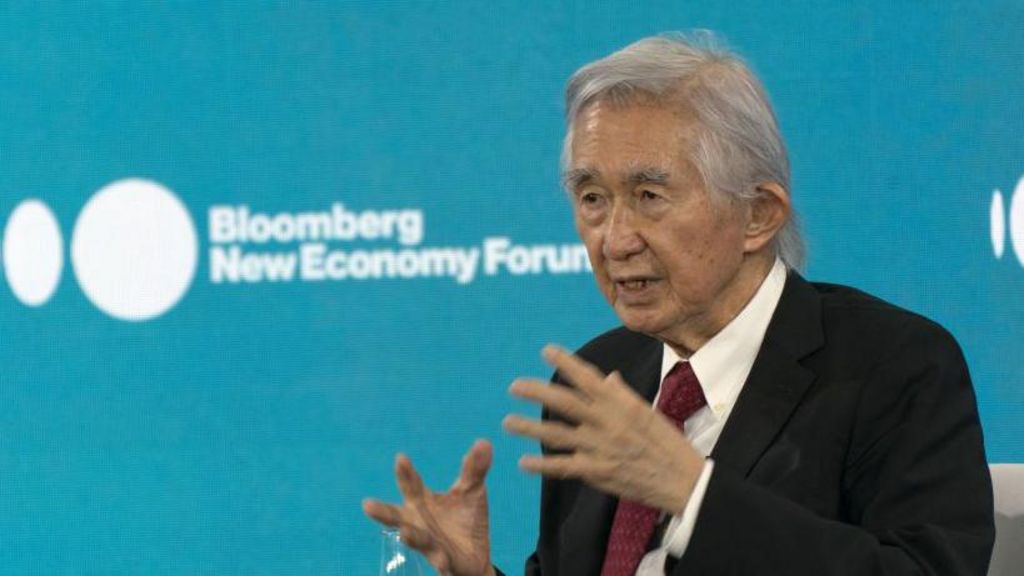
    Singapore is mourning the loss of Dr. Liu Thai Ker, the master architect behind the nation’s transformative public housing system, who passed away at age 87 on Sunday due to complications from a fall. The visionary urban planner, widely celebrated as the principal designer of modern Singapore’s landscape, leaves behind a physical and social legacy that houses approximately 80% of the country’s 5.9 million residents.

    Liu’s innovative approach to urban development through Singapore’s Housing and Development Board (HDB) fundamentally reshaped the nation’s identity. His distinctive housing blocks, now iconic features of Singapore’s skyline, replaced overcrowded slums with meticulously planned townships that blended functionality with community living. During his tenure as HDB’s chief architect, Liu spearheaded the creation of 20 new towns and approximately 500,000 housing units, effectively engineering one of the world’s most successful public housing models.

    The Singaporean system distinguished itself globally through its unique ownership model. Unlike traditional public housing, HDB flats are heavily subsidized but purchased by citizens, becoming personal assets with 99-year leases that can be resold on the open market after a minimum occupancy period. This system has become a cornerstone of Singapore’s wealth creation and social stability, though it has faced criticism for its partial market-driven approach that some argue prices out lower-income citizens.

    Born in Malaysia in 1938, Liu moved to Singapore at age six and later pursued architecture studies in Australia before earning a master’s degree in city planning from Yale University. He gained professional experience working alongside renowned architect I.M. Pei in New York before returning to Singapore in 1969, where he dedicated 24 years to public service, eventually leading the Urban Redevelopment Authority.

    National leaders including Prime Minister Lawrence Wong and President Tharman Shanmugaratnam offered heartfelt tributes, recognizing Liu’s profound impact on Singapore’s development. PM Wong noted that the ‘buildings, homes and public spaces that Singaporeans use every day stand as a quiet testament to his dedication and vision,’ while President Tharman credited Liu with helping ‘make Singapore a liveable city in the tropics.’

    Citizens and institutions across Singapore, including Liu’s alma mater Chung Cheng High School, expressed profound gratitude for his contributions, with many noting that he ‘didn’t just build buildings, he built a nation’ through his visionary urban planning that created both physical infrastructure and social cohesion.

  • Watch: Footage inside Spanish train as passengers evacuate from crash

    Watch: Footage inside Spanish train as passengers evacuate from crash

    Distressing mobile footage has emerged from inside a Spanish passenger train following a significant derailment in the southern region of Andalusia. The video evidence, captured by a traveler aboard the service, depicts the immediate chaotic aftermath of the incident, showcasing a severely damaged carriage with significant structural compromise.

    In the visuals, passengers can be seen taking matters into their own hands to ensure their safety, with one individual documented meticulously climbing through a fractured section of the train’s exterior to reach the safety of the tracks below. The scene inside the cabin reveals a state of disarray, with personal belongings scattered and visible signs of the impact’s force. The footage stands as a critical firsthand account of the rescue and evacuation procedures undertaken by civilians prior to the arrival of emergency services.

    The derailment, which occurred on a key transit route, prompted a large-scale response from local emergency crews, including multiple firefighting units, medical teams, and law enforcement. Preliminary reports from authorities indicate the incident resulted in a confirmed number of fatalities and several individuals sustaining injuries, though official numbers are pending a full assessment. An investigation into the precise cause of the crash has been launched, with early scrutiny focusing on track conditions and operational factors.

  • UAE announces January 19 as end of Rajab 1447 AH

    UAE announces January 19 as end of Rajab 1447 AH

    The UAE Fatwa Council has officially declared Monday, January 19, 2026, as the conclusive day of the Islamic month of Rajab 1447 AH. This determination was reached following meticulous examination of astronomical data regarding the crescent moon, conducted in coordination with the nation’s specialized astronomical authorities.

    Consequently, Tuesday, January 20, 2026, will be recognized as the inaugural day of Shaban 1447 AH within the Islamic Hijri calendar. Shaban holds particular significance as it immediately precedes Ramadan, the holy month of fasting. This period traditionally serves as a spiritual preparatory phase for Muslims worldwide, who observe dawn-to-dusk fasting during Ramadan.

    The commencement date for Ramadan 2026 remains subject to final confirmation via traditional moon-sighting practices. Islamic months span either 29 or 30 days, contingent upon lunar observations. Official moon-sighting committees will convene on the 29th of Shaban to ascertain the exact beginning of Ramadan. Should the crescent moon be sighted that evening, Ramadan will initiate the following day.

    Current astronomical projections suggest Thursday, February 19, 2026, as the probable start date, though this remains conditional upon actual visual confirmation. The conclusion of Ramadan will subsequently usher in Eid Al Fitr, a significant Islamic festival marking the end of fasting, which will provide UAE residents with their first extended weekend break of the year.

  • Chinese steel factory officials detained after explosion that leaves 2 dead, 8 missing

    Chinese steel factory officials detained after explosion that leaves 2 dead, 8 missing

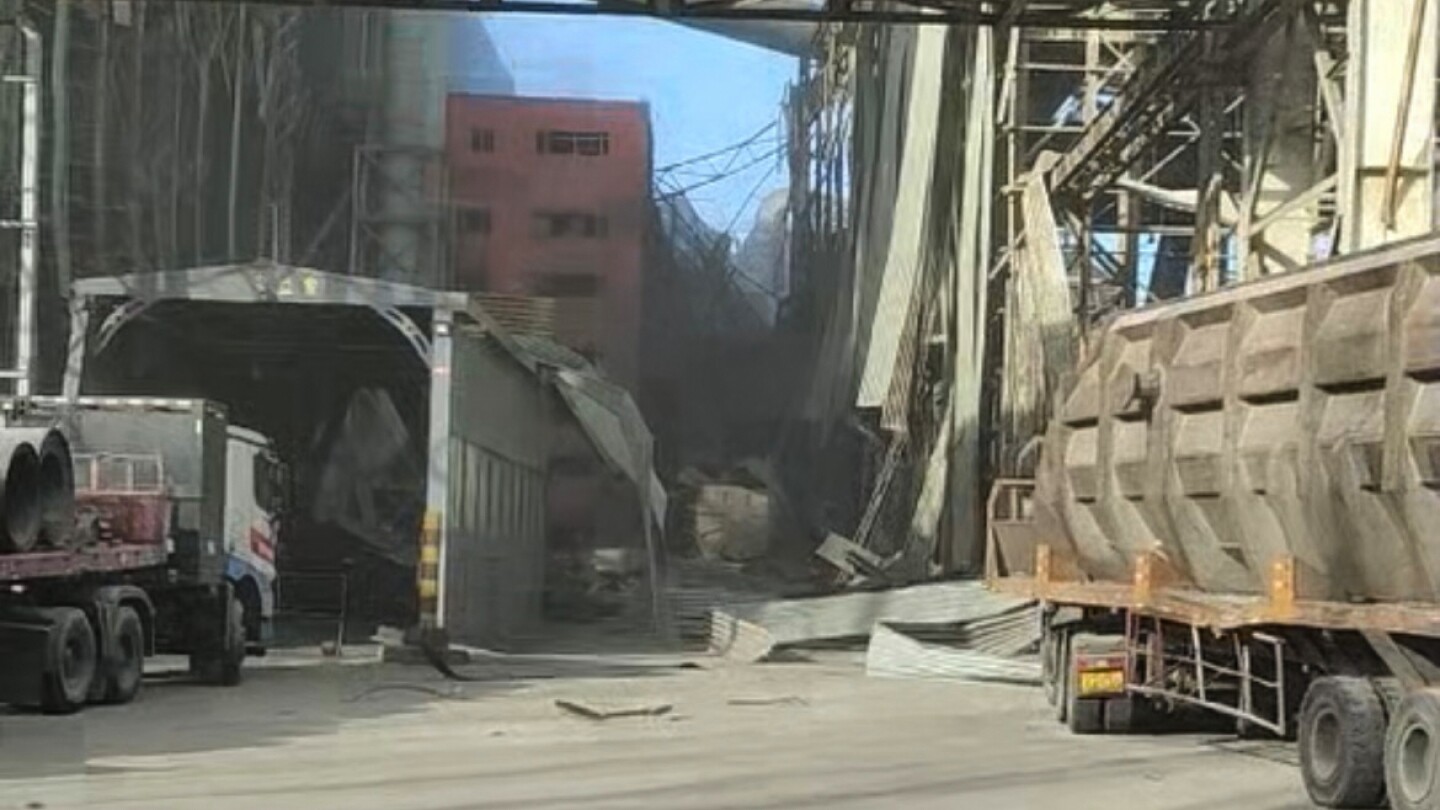
    Authorities in China’s Inner Mongolia Autonomous Region have launched a comprehensive investigation following a catastrophic industrial explosion at a state-owned steel facility that resulted in multiple casualties. The incident occurred at approximately 3:00 PM local time on Sunday at the Baogang United Steel plant in Baotou City, where a high-pressure storage vessel containing steam and superheated water ruptured with tremendous force.

    The detonation produced seismic-like tremors throughout the surrounding industrial zone and emitted an enormous plume of white vapor into the atmosphere. Emergency response teams immediately initiated rescue operations at the scene of the devastation.

    Official statements from the Baotou Municipal Information Office confirmed the tragic human toll: two workers sustained fatal injuries while eighty-four others required urgent medical treatment for various trauma and burn injuries. Search and rescue specialists continue to comb through the wreckage for eight missing individuals whose whereabouts remain unknown.

    In response to the industrial catastrophe, law enforcement agencies have taken the unprecedented step of detaining the facility’s management personnel pending a full safety review. The dramatic regulatory action underscores the seriousness with which Chinese authorities are treating the incident at this major state-operated industrial complex.

    The Baogang United Steel facility represents a significant component of China’s state-owned industrial infrastructure, making this incident particularly noteworthy within the nation’s industrial safety landscape. The investigation will likely examine maintenance protocols, safety compliance measures, and operational procedures at the plant.