In the heart of Shanxi province, farmers in Hanxue township, Wanrong county, are basking in the success of a record-breaking persimmon harvest this golden autumn. The picturesque village of Xuecungou is abuzz with activity as locals meticulously sort and dry the vibrant orange fruit, a process that enhances its sweetness over two to three weeks of sun exposure. The village is adorned with persimmons, creating a charming and festive atmosphere that reflects the season’s abundance. Nestled on the Loess Plateau, Hanxue township boasts ideal conditions for persimmon cultivation, contributing to an annual yield of approximately 25,000 metric tons. Additionally, the township processes 18,000 tons of persimmon-based snacks, a thriving industry that has significantly boosted local incomes. This year’s harvest not only underscores the region’s agricultural prowess but also highlights the resilience and dedication of its farming community.
分类: society
-

‘I thought I was dying’ – teacher shot by 6-year-old student testifies against school administrator
In a highly emotional courtroom scene, Abigail Zwerner, a former Virginia schoolteacher, testified in a $40 million civil lawsuit against Ebony Parker, the former assistant principal of Richneck Elementary School. Zwerner was shot by a 6-year-old student in January 2023 while teaching her first-grade class in Newport News, Virginia. The bullet passed through her hand and into her chest, leaving her with severe injuries that required multiple surgeries. Zwerner recounted the harrowing experience, stating, ‘I thought I was dying, I thought I had died. I thought I was on my way to heaven or in heaven, but then it all got black.’
Zwerner’s lawsuit alleges that Parker failed to act despite being warned about the child potentially bringing a gun to school. According to the lawsuit, Parker was informed of the gun approximately 45 minutes before the shooting but took no action. Zwerner’s testimony highlighted the lasting physical and emotional trauma she has endured, including difficulties with simple tasks like opening a bag of potato crisps or a water bottle. She described a sense of emotional detachment, stating, ‘I still feel connected and close, but it’s also that feeling of distance, a little numbness.’
Parker’s defense attorney, Daniel Hogan, argued that the case is one of ‘hindsight bias,’ emphasizing that no one could have reasonably foreseen a 6-year-old bringing a firearm to school. Hogan posed challenging questions to the jury, including whether Parker was indifferent or failed to exercise care, and whether Zwerner took steps for her own safety. The civil trial precedes a criminal case in which Parker faces eight counts of felony child neglect, each punishable by up to five years in prison. The student’s mother has already been sentenced to nearly four years for child neglect and federal weapons charges. The student, who was not charged, is reportedly under the care of a relative and attending a different school.
The case has reignited discussions about gun violence in the United States, particularly in educational settings, and raises critical questions about school safety and administrative accountability.
-

Barcelona’s Sagrada Familia becomes the world’s tallest church
Barcelona’s iconic Sagrada Familia basilica has achieved a historic milestone by becoming the world’s tallest church. On Thursday, a section of its central tower was successfully installed, elevating the structure to a height of 162.91 meters (534 feet). This surpasses Germany’s Ulmer Münster, a Gothic Lutheran church that previously held the title at 161.53 meters (530 feet). The Sagrada Familia, designed by the visionary architect Antoni Gaudí, is now just over a meter taller than its German counterpart. The central “Tower of Jesus Christ” is still under construction and is expected to reach its final height of 172 meters (564 feet) in the coming months. Construction of the basilica began in 1882, and Gaudí, who passed away in 1926, never anticipated its completion within his lifetime. Over the decades, the project has gained momentum, fueled by its status as a global tourist attraction. Last year alone, 4.9 million visitors, including 15% from the United States, contributed to its funding through entrance fees. The church’s intricate facades and interior decorations will continue to be developed over the next decade, with full completion anticipated around 2035. Next year marks the centenary of Gaudí’s death, and the basilica plans to host events honoring his architectural legacy, which includes other remarkable structures in Barcelona and across Spain.
-

Dubai: Sheikh Mohammed announces launch of Dh4.7 billion endowment project
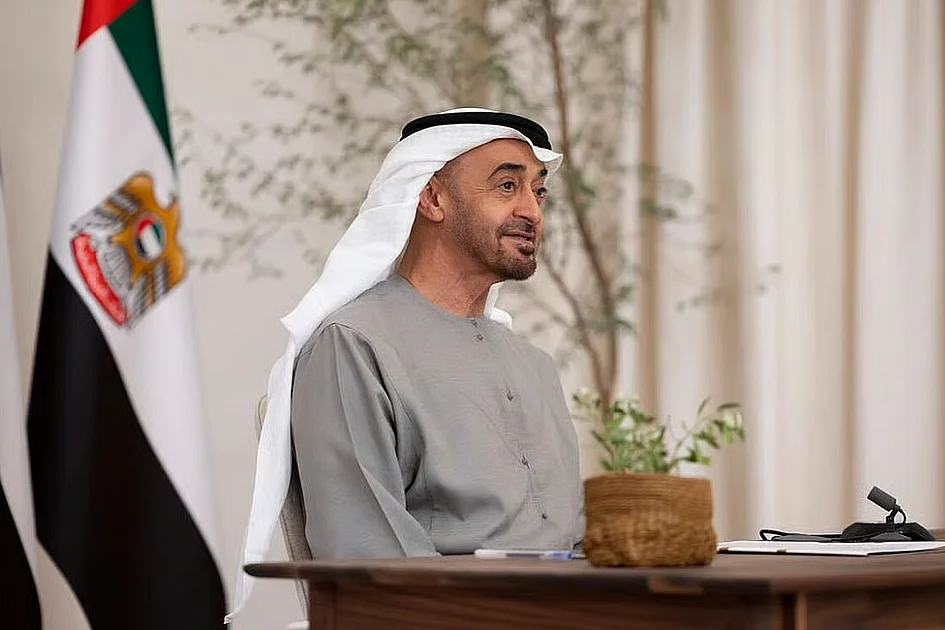
In a landmark announcement, Sheikh Mohammed bin Rashid Al Maktoum, Vice-President and Prime Minister of the UAE, has revealed the launch of a Dh4.7 billion endowment project under the Mohammed bin Rashid Al Maktoum Global Initiatives. This ambitious endeavor, described as a ‘permanent humanitarian charitable endowment,’ aims to channel its proceeds into global health and education initiatives. The project will feature a state-of-the-art hospital capable of serving 90,000 patients annually, a medical university, schools accommodating over 5,000 students, and residential buildings with 2,000 housing units. Additionally, the endowment district will include a boulevard, charitable commercial shops, and other community-focused facilities. Sheikh Mohammed expressed his gratitude to key contributors, including Azizi Developments, and emphasized the importance of sustaining goodness in the nation of generosity and giving. This announcement follows the recent launch of the ‘Volunteering and Community Engagement Ecosystem,’ which seeks to bolster the impact of volunteering and support nonprofit organizations in their contributions to sustainable development. The ecosystem includes a Dh100 million fund and a strategy to expand the country’s volunteer base to 600,000.
-

1,290 organizations and 1,990 individuals awarded for contributions to elderly care
In a significant ceremony held in Beijing on Wednesday, the China National Working Commission on Aging honored 1,290 organizations and 1,990 individuals for their exceptional contributions to elderly care. The event aimed to inspire broader societal participation in supporting the elderly, emphasizing the importance of respecting and caring for seniors as both a traditional virtue and a social responsibility. State Councilor Shen Yiqin, who attended the commendation ceremony, underscored the need for enhanced elderly care services, increased social engagement among seniors, and the enrichment of their cultural and spiritual lives to foster an age-friendly society. Lu Zhiyuan, Minister of Civil Affairs, highlighted the necessity of translating the influence of role models into practical actions that respect, care for, and support the elderly across all societal levels. He also stressed the importance of addressing the urgent needs of the elderly to create a supportive environment that ensures their well-being and rights.
-

Guy Kopelowicz, former Paris photo chief for AP, dies at 89
Guy Kopelowicz, a revered figure in photojournalism and a key contributor to The Associated Press’s visual storytelling in France for over four decades, has died at the age of 89. His family confirmed his passing on Sunday. Kopelowicz’s illustrious career spanned some of the most pivotal moments in modern history, including the 1968 Paris uprising, the 1972 Munich Olympics hostage crisis, and the 1998 World Cup. Born in Paris on October 28, 1936, he joined the AP in 1964 as a photo editor, eventually rising to become Paris Chief Photo Editor in 1984, a role he held until his retirement in 2005. Beyond his professional achievements, Kopelowicz was a lifelong jazz aficionado, writing for Jazz Hot and Jazz Magazine in the late 1950s and later photographing jazz performers post-retirement. His passion for jazz was matched only by his love for fine wine, particularly Bordeaux grands crus. Kopelowicz leaves behind his wife of 55 years, Denise, and their son, Marc. A memorial service will be held at Père Lachaise Cemetery in Paris on Friday.
-

‘You are enough’: Therapist urges UAE women to rewrite their inner dialogue
At the ‘We the Women’ event in Dubai, renowned therapist Marisa Peer delivered a compelling message to a packed audience, urging women to rewrite their inner dialogue and reclaim their power. Peer, the founder of Rapid Transformational Therapy (RTT), emphasized the societal barriers that often hold women back, including self-doubt, perfectionism, and ingrained gendered narratives. She called for a shift in mindset, encouraging women to embrace their flaws and strengthen their self-belief. Peer highlighted the importance of empowering young girls early on, suggesting that parents and mentors should focus on instilling ambition and confidence rather than traditional roles. She also addressed the burden of societal judgment that women face, noting that 80% of women experience imposter syndrome. Peer stressed the transformative power of positive self-talk, advocating for affirmations like ‘I’m enough’ and ‘I matter.’ She urged women to let go of the pursuit of perfection, introducing her concept of being ‘flawsome’—embracing imperfections as a source of strength. Peer’s talk centered on the idea that beliefs shape reality, and she encouraged women to take control of their thoughts to create a more fulfilling life. Her message resonated deeply, offering practical strategies for women to elevate their self-esteem and achieve their full potential.
-

Repurposed Changchun park glows with industrial autumn memories
As October ushers in the golden hues of autumn, Changchun Industrial Track Park in Jilin Province transforms into a mesmerizing fusion of industrial heritage and seasonal splendor. Spanning 210,000 square meters, the park features a 1.6-kilometer path adorned with golden leaves, offering a picturesque journey through time. A retired tram, once part of the No. 54 bus line, now stands as a silent yet poignant reminder of the city’s commuting history, drawing residents to reflect on the past. Visitors can cycle along the serene riverbank, immersing themselves in the harmonious interplay of movement and tranquility as leaves gently fall. The park’s industrial sculpture group, set against the autumn backdrop, vividly recreates pivotal moments from Changchun’s automotive, film, and urban construction industries, adding depth to the park’s historical narrative. This unique blend of nature and industry not only preserves the city’s legacy but also provides a space for residents to connect with their heritage in a tranquil, reflective setting.
-

Photos: Poverty forces these Filipinos to live among the dead, become cemetery dwellers
In the heart of Manila, where poverty is pervasive and millions struggle with inadequate housing, some residents have found an unconventional refuge: cemeteries. The Manila North Cemetery, a vast 54-hectare public graveyard, is home to approximately 6,000 informal settlers who live among the tombs of over a million deceased Filipinos. These cemetery dwellers, often referred to as ‘informal settlers,’ have turned the gravesites into makeshift homes, repurposing crypts and mausoleums into living spaces. Laileah Cuetara, a 36-year-old mother of two, resides in a small wooden shanty perched atop a pair of raised tombs. Her home, furnished with a foam mattress, shelves, a television, and picture frames, is a stark reminder of the dire economic conditions faced by many in the Philippines. Cuetara earns around 3,000 pesos ($51) monthly by selling snacks and drinks to cemetery visitors. During All Saints’ Day and All Souls’ Day, she and her partner earn additional income by cleaning and tending to 30 tombs, receiving up to 1,700 pesos for each. However, their earnings are insufficient to escape the cemetery. ‘With the high prices of basic goods nowadays, it’s very difficult to improve our living conditions,’ Cuetara lamented. She moved into the cemetery in 2008 after a family conflict forced her to leave her suburban home. The plight of cemetery dwellers like Cuetara is not unique. Priscilla Buan, 51, was born in the cemetery and has raised her children among the tombs. She and her family sleep atop two crypts in a mausoleum, with the remaining space converted into a living room complete with a sofa, cabinet, and appliances. Buan sells snacks from the tomb’s grilled window but dreams of a better life. ‘Even if I wanted to, we don’t have money to buy a house,’ she said. The number of cemetery dwellers has been increasing, according to Vicente Eliver of the Kapatiran-Kaunlaran Foundation, which provides livelihood and educational programs to these residents. Eliver noted that while only grave caretakers and their families once lived in the cemetery, their descendants have continued the tradition, leading to a growing population. Most residents claim to have permission to occupy mausoleums or build shanties on graves in exchange for maintaining them. They tap into existing power lines for electricity and pay 3 pesos per gallon of water from nearby wells. However, Daniel Tan, the cemetery director, emphasized that the arrangement is not meant to be permanent. ‘This is a cemetery, it’s for the dead and not for the living,’ Tan stated. He acknowledged that the city is attempting to find permanent housing solutions but provided no specifics. For Cuetara and others, living in the cemetery is a last resort. Her 11-year-old son faces bullying at school due to their address, while her six-year-old daughter dreams of a real home, often drawing houses that adorn their makeshift dwelling. ‘All of us here dream of having a house outside, but… it’s hard, very hard,’ Cuetara said.
-

Serbia youth lead thousands on march for weekend rally marking deadly canopy collapse last year
Thousands of predominantly young Serbians commenced a two-day march from Belgrade on Thursday, converging in the northern city of Novi Sad to commemorate the anniversary of a catastrophic train station disaster. The incident, which occurred on November 1, involved the collapse of a concrete canopy at Novi Sad’s central train station, claiming 16 lives. The tragedy has galvanized a youth-led protest movement, targeting President Aleksandar Vucic’s administration, which protesters accuse of corruption and negligence in the station’s renovation. Demonstrators are demanding accountability for the disaster and advocating for early parliamentary elections to oust Vucic’s populist government. The march, spanning 90 kilometers (58 miles), was spearheaded by flag-waving university students, with Saturday’s rally expected to draw tens of thousands, intensifying pressure on the president. Over the past two weeks, various student groups have trekked across Serbia, uniting in Novi Sad for the anniversary. Belgrade residents showed solidarity, honking car horns, waving, and blowing whistles as protesters passed. Participants like Mihajlo Jovanovic and Ana Marija Seslija expressed hope for change and determination to continue their struggle. Authorities have detained numerous protesters in recent months, with allegations of police brutality. While 13 individuals have been charged in connection with the disaster, no trial date has been set, raising doubts about accountability. Vucic has dismissed the protesters as Western-backed “terrorists,” exacerbating political tensions. Serbia’s EU accession process remains stalled amid concerns over democratic freedoms and Vucic’s ties with Russia and China.