分类: society

  • Honghe Hani Rice Terraces in Yunnan enters best viewing period

    Honghe Hani Rice Terraces in Yunnan enters best viewing period

    The Honghe Hani Rice Terraces in Yuanyang county, Yunnan province, have transformed into a breathtaking winter spectacle, entering their optimal viewing season according to recent reports. This UNESCO World Heritage site now attracts travelers nationwide with its extraordinary visual transformation during the December period.

    These magnificent terraces, carved meticulously into mountain slopes across generations, currently present an awe-inspiring panorama. When filled with water, the stepped paddies resemble countless scattered silver mirrors reflecting the sky. The visual drama intensifies during sunrise and sunset when golden sunlight pierces through the clouds, creating a shimmering effect across the entire landscape. This natural phenomenon transforms the terraces into what appears to be a vast, living palette of the Earth, with light and water interacting to produce constantly shifting patterns and colors.

    The timing coincides with ideal weather conditions that enhance both water retention and light reflection qualities. Local tourism authorities note that this period represents the terraces’ most photogenic phase, offering visitors unparalleled opportunities to witness one of China’s most remarkable agricultural and cultural landscapes at its visual peak. The site demonstrates the harmonious integration of human engineering and natural beauty, showcasing sustainable farming practices that have endured for centuries while creating this seasonal visual marvel.
  • UAE: Cooler, humid winter days in December; average temperatures 17.7°C to 21.8°C

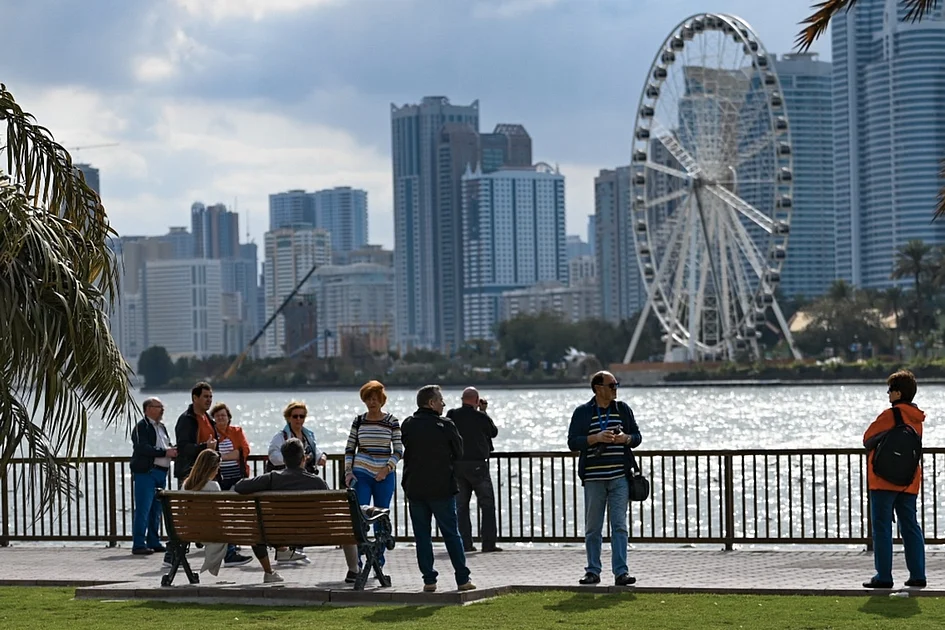
    UAE: Cooler, humid winter days in December; average temperatures 17.7°C to 21.8°C

    The United Arab Emirates is experiencing a significant meteorological shift as December marks the official transition into the winter season, according to the latest climate summary from the National Centre of Meteorology (NCM). Temperature patterns show a notable decline, with mean maximum and minimum readings dropping by 3 to 6 degrees Celsius compared to November levels.

    Meteorological data reveals average temperatures now range between 17.7°C and 21.8°C across the Emirates. Daytime highs typically settle between 21.7°C and 27.4°C, while nighttime temperatures frequently drop to between 12.9°C and 17.4°C. Historical extremes include a record high of 37°C documented in Sweihan during 2016 and a remarkable low of -0.7°C recorded at Jabal Jais in 2004.

    The changing weather patterns result from a strengthening high-pressure system extending from northern regions, accompanied by northwesterly winds that drive nighttime temperatures lower, particularly across inland and mountainous areas. Simultaneously, upper-level westerly troughs contribute to the formation of low and medium cloud cover, creating conditions conducive to rainfall that occasionally intensifies into thunderstorms.

    Humidity patterns undergo significant transformation during December, with mean humidity levels reaching approximately 63%. Maximum humidity frequently climbs to between 79% and 90%, while minimum levels range from 32% to 49%. These conditions emerge as moist air masses move from the Arabian Gulf toward the UAE, creating ideal circumstances for fog and mist formation during early morning hours.

    Wind patterns remain generally light to moderate with an average speed of 11 km/h, though historical data shows occasional strong gusts, including a record 87 km/h documented at Makassib in 2019. Fog occurrence becomes notably more frequent, with 2014 standing as particularly remarkable with 20 fog days and 5 mist days recorded throughout the month.

    Precipitation, while occasional, can reach intense levels as demonstrated by the 208.4 mm rainfall recorded in Dhudna during 2006—the highest December measurement on record. The winter solstice, occurring around December 23, reinforces the cooling trend as the UAE solidifies its entry into the meteorological winter season.

  • Traffic alert: Dubai Police warn of accident causing congestion

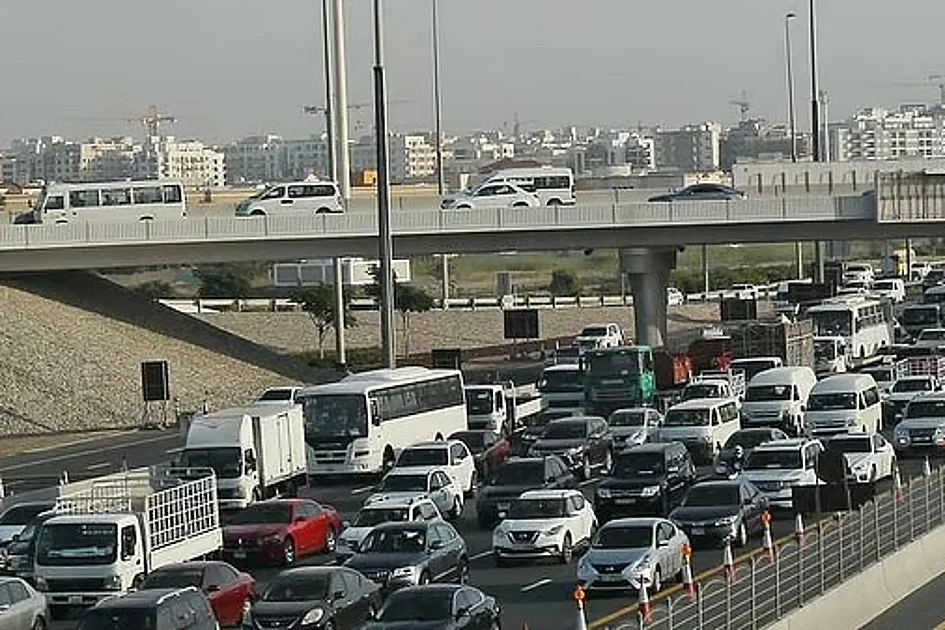
    Traffic alert: Dubai Police warn of accident causing congestion

    Dubai authorities issued an urgent traffic advisory on Thursday morning following a collision that resulted in significant congestion on a major transportation artery. The incident occurred on Dubai Al Ain Road in the vicinity of Nad Al Sheba 1, specifically affecting traffic flow toward Bukadra bridge during peak commuting hours.

    The Dubai Police Department promptly alerted motorists through official channels, emphasizing the need for extreme caution when navigating the affected area. Law enforcement officials specifically urged drivers to reduce speeds, maintain safe following distances, and remain vigilant while approaching the incident site.

    Compounding the traffic challenges, meteorological conditions throughout the early morning hours created additional hazards for commuters. Widespread fog formations significantly reduced visibility across multiple regions of the United Arab Emirates, creating particularly dangerous driving conditions that required heightened awareness from all road users.

    The combination of adverse weather patterns and traffic incidents represents a recurring challenge for Dubai’s transportation infrastructure, particularly during early morning hours when visibility issues frequently develop. Police communications highlighted the importance of defensive driving techniques during such conditions, with special attention to reduced speed protocols and increased stopping distances.

    Transportation officials continue to monitor the situation while encouraging alternative routes where possible. The timely notification by Dubai Police exemplifies the city’s ongoing commitment to utilizing advanced warning systems that enhance road safety and minimize traffic disruption during unexpected incidents.

  • F-16C fighter jet crashes in California during training mission

    F-16C fighter jet crashes in California during training mission

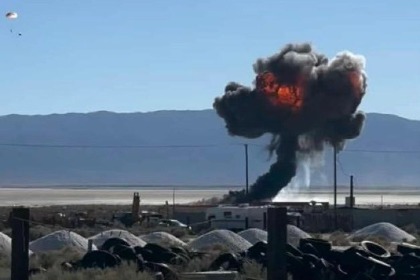
    A United States Air Force F-16C Fighting Falcon combat aircraft assigned to the elite Thunderbirds demonstration squadron crashed during a routine training exercise over Southern California on Wednesday morning. The incident occurred in controlled airspace near the community of China Lake, approximately 270 kilometers north of downtown Los Angeles.

    According to official statements from the Air Force, the pilot successfully executed emergency ejection procedures and landed safely without sustaining serious injuries. The mishap took place at approximately 10:45 AM local time during what was described as a standard training mission for the prestigious aerial acrobatics team.

    Sergeant Jovante Johnson, a US Air Force spokesperson, confirmed to the Los Angeles Times that the crashed aircraft belonged to the Thunderbirds unit, which is permanently based at Nellis Air Force Base in Nevada. The Thunderbirds represent the Air Force’s premier demonstration squadron, renowned for their precision flying performances at air shows across the nation.

    The San Bernardino County Fire Department responded to the crash site in the remote desert region, though no ground injuries or property damage were immediately reported. Military investigators have launched a comprehensive inquiry to determine the exact circumstances that led to the aircraft’s failure. Standard procedure following such incidents involves examining maintenance records, pilot actions, environmental factors, and potential mechanical malfunctions.

    The safe ejection of the pilot represents a successful outcome from what could have been a tragic aviation accident, highlighting the effectiveness of military emergency protocols and safety systems.

  • Investigation underway after search completed in fire-hit buildings in Hong Kong

    Investigation underway after search completed in fire-hit buildings in Hong Kong

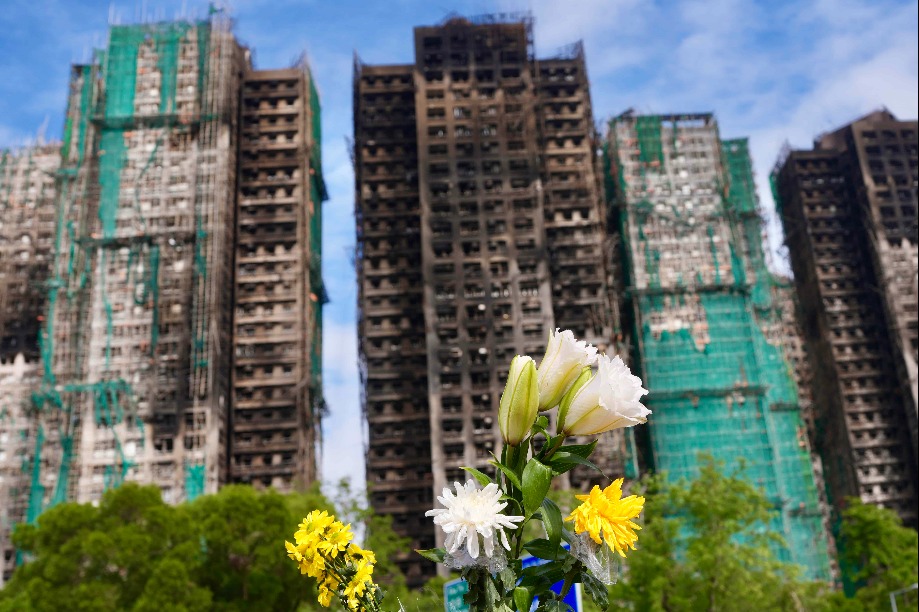
    Hong Kong authorities have initiated a comprehensive investigation and safety review following the completion of search operations at Wang Fuk Court, where a catastrophic fire claimed 159 lives. The tragedy, one of Hong Kong’s deadliest building fires in decades, has prompted immediate government action and exposed critical safety failures.

    The Hong Kong Special Administrative Region government has mandated the removal of all scaffolding nets from building maintenance projects across the territory within 72 hours for urgent fire safety inspections. Development Secretary Bernadette Linn announced that removed materials will only be reinstalled after meeting new safety standards to be issued next week.

    Police confirmed the devastating human toll on Wednesday, with 140 victims identified ranging from 1 to 97 years old, while 31 individuals remain unaccounted for. Search operations have expanded beyond the seven affected buildings to surrounding areas where collapsed scaffolding may conceal additional remains—a meticulous process requiring careful debris removal under safe conditions.

    The investigation has taken a prosecutorial turn with six arrests connected to the contractor responsible for fire safety equipment installation. Authorities allege the company deceived fire services by falsely certifying functional alarm systems during maintenance work. Parallel inquiries are examining potential document forgery regarding renovation materials.

    Substantial financial support has been mobilized, with a disaster relief fund accumulating HK$2.4 billion (approximately $308 million). The government has implemented extensive support measures including tax relief, fee waivers, and comprehensive medical coverage for victims until December 2026. Educational support provides HK$20,000 per student for academic expenses.

    The Central Government’s Hong Kong and Macao Work Office continues coordinating delivery of critical emergency supplies, including specialized protective equipment that has aided recovery operations. Previous shipments from mainland China provided essential lighting equipment that enabled nighttime search operations.

  • Norway donates a Christmas tree to London every year. Here’s how the tradition began

    Norway donates a Christmas tree to London every year. Here’s how the tradition began

    LONDON — The iconic Christmas tree in Trafalgar Square was ceremoniously illuminated on Thursday, marking the continuation of a profound seven-decade tradition between London and Oslo. This annual lighting ceremony represents far more than seasonal decoration—it stands as an enduring symbol of international friendship forged during World War II.

    The tradition originated in 1947 when Norway began gifting Christmas trees to Britain in gratitude for London’s support during the Nazi occupation. When Germany invaded Norway in 1940, King Haakon VII and his government established a government-in-exile in London. The BBC’s Norwegian-language broadcasts became a critical information lifeline for occupied Norwegians, who risked severe punishment to listen to prohibited transmissions.

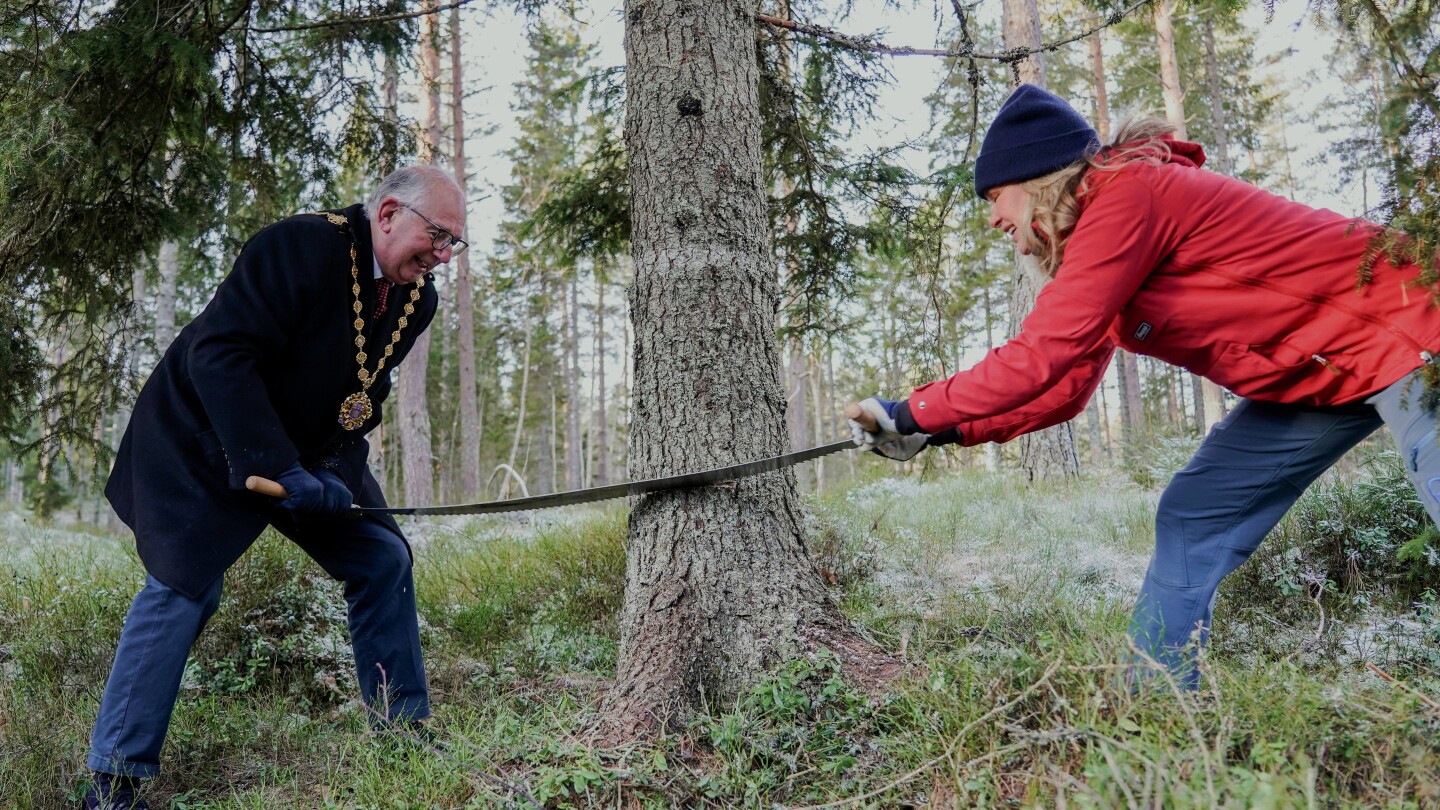
    Each tree undergoes an extensive selection process, with potential candidates identified five to ten years in advance. This year’s specimen, affectionately nicknamed ‘Ever Oslo,’ stands approximately 20 meters tall and is estimated to be sixty years old. Selected over competitors ‘Nordic Star’ and ‘Fjord Fir,’ the Norwegian spruce was carefully harvested on November 21st.

    The tree’s journey to London involved meticulous transportation planning. After ceremonial felling, it traveled 180 kilometers to port in a specialized cradle, underwent cleansing to remove road salt, then embarked on a 26-hour sea voyage stored below deck for protection. The final leg involved truck transportation to central London.

    The lighting ceremony—promoted on social media as ‘Britain’s national tree-sure’—traditionally occurs on the first Thursday of December and features vertically hung lights according to Norwegian custom. The tree will remain illuminated until January 5th (Twelfth Night), after which it will be recycled into compost and mulch. Meanwhile, Norwegian authorities will plant a replacement tree in the Oslo forest, ensuring the continuity of this meaningful tradition.

  • Death toll hits 159 in Tai Po blaze, 31 still missing

    Death toll hits 159 in Tai Po blaze, 31 still missing

    Hong Kong authorities confirmed Wednesday that the devastating Tai Po apartment complex fire has claimed 159 lives, marking one of the deadliest urban disasters in the city’s history. The catastrophic blaze at Wang Fuk Court has left 31 individuals still unaccounted for as search operations concluded across all seven affected towers.

    Police Commissioner Joe Chow Yat-ming disclosed that forensic teams have identified 140 victims through meticulous examination, with victims spanning all age groups from 1 to 97 years old. The tragic tally includes 49 men and 91 women, among them one firefighter who perished during rescue operations, ten foreign domestic workers, and five on-site workers.

    Medical authorities reported that 42 injured survivors have been discharged from hospitals, while 37 remain under medical care—four in critical condition, nine classified as serious, and 24 in stable condition. Search operations will continue beneath collapsed scaffolding structures where additional victims might be located.

    Initial investigations point to substandard protective mesh netting installed during building renovations as a primary factor in the fire’s rapid escalation through the residential complex. In response, the Hong Kong Special Administrative Region government has mandated immediate removal of all similar netting from buildings undergoing major renovations citywide.

    The Buildings Department is preparing to implement stringent new safety protocols by next week, requiring all construction site mesh materials to undergo mandatory on-site laboratory testing before installation approval.

    Law enforcement agencies have intensified their investigation, arresting six additional individuals aged 44 to 55 for allegedly providing false information to fire authorities about functional alarm systems in the affected buildings. This brings the total number of arrests related to maintenance works to 21, with four separate arrests made for alleged seditious activities connected to the disaster.

    The Office for Safeguarding National Security of the Central People’s Government issued a strong statement condemning external hostile forces for attempting to exploit the tragedy, warning that such actions would face severe consequences.

    Relief efforts continue with 1,921 households receiving HK$10,000 emergency grants and 104 families obtaining HK$50,000 living allowances. Over 2,600 displaced residents are currently accommodated in temporary to long-term housing arrangements, supported by a government-established fund that has accumulated HK$2.3 billion in donations.

    The Chinese mainland has contributed additional emergency supplies including protective goggles and waterproof gloves, coordinated through the Ministry of Emergency Management and the Hong Kong and Macao Work Office of the Communist Party Central Committee.

  • Relief, prevention, investigation underway after search completed in fire-hit buildings in Hong Kong

    Relief, prevention, investigation underway after search completed in fire-hit buildings in Hong Kong

    Hong Kong authorities have initiated comprehensive emergency measures following the catastrophic fire at Wang Fuk Court housing complex that has resulted in 159 confirmed fatalities. The Hong Kong Special Administrative Region (HKSAR) government has mandated the immediate removal of all scaffolding from building maintenance projects across the territory within a 72-hour window for urgent fire safety inspections.

    Development Secretary Bernadette Linn announced that construction materials will only be reinstalled after meeting new safety standards to be formally issued next week. The police confirmed Wednesday afternoon that 31 individuals remain unaccounted for following the blaze, with victims ranging from 1 to 97 years old. Of the 159 recovered bodies, 140 have been formally identified.

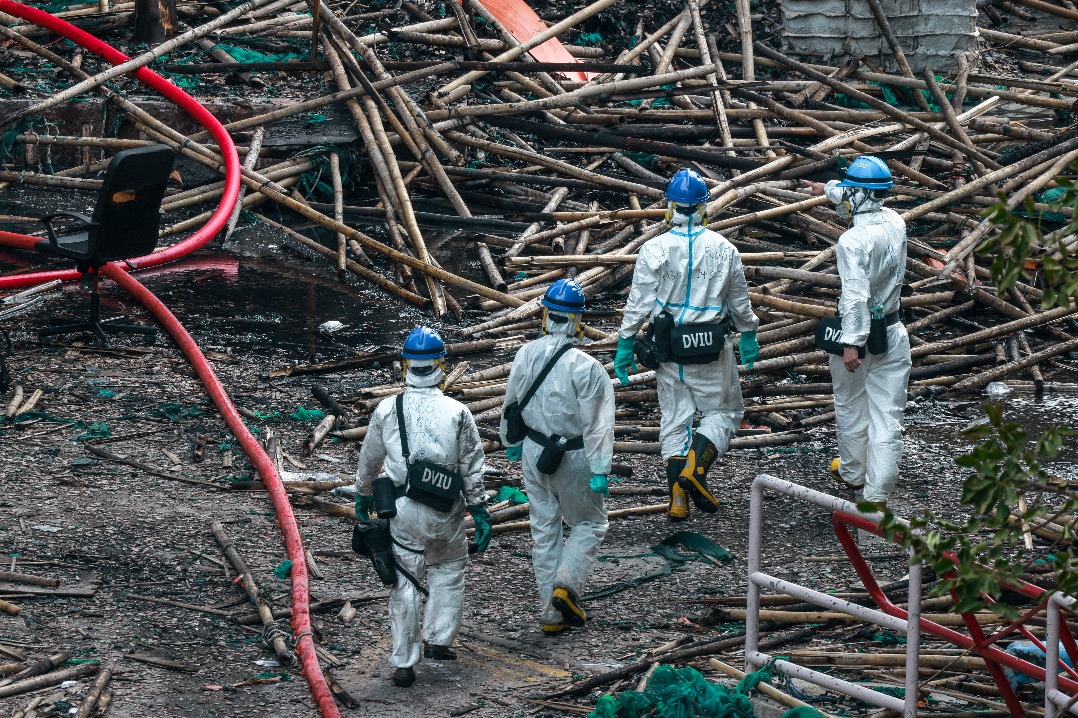
    Search operations within the seven affected buildings have concluded, with authorities now expanding their recovery efforts to the surrounding areas where scaffolding collapsed during the fire. This next phase requires meticulous removal of debris and ashes under controlled safety conditions, which officials indicate will require additional time.

    In a significant development, law enforcement has arrested six individuals connected to a contractor responsible for installing fire safety equipment. The suspects are accused of falsely certifying that fire alarms were operational during maintenance work at Wang Fuk Court. Additional investigations are underway regarding potential document forgery related to renovation materials used at the site.

    Financial support for affected residents continues to grow, with the disaster relief fund reaching HK$2.4 billion (approximately $308 million) by Wednesday noon. The HKSAR government is implementing tax relief measures and fee waivers for victims and their families.

    The Central Government’s Hong Kong and Macao Work Office is coordinating delivery of critical disaster-relief supplies, including protective goggles and waterproof gloves requested by local authorities. Previous shipments from the mainland included emergency lighting equipment that assisted police in their search and recovery operations.

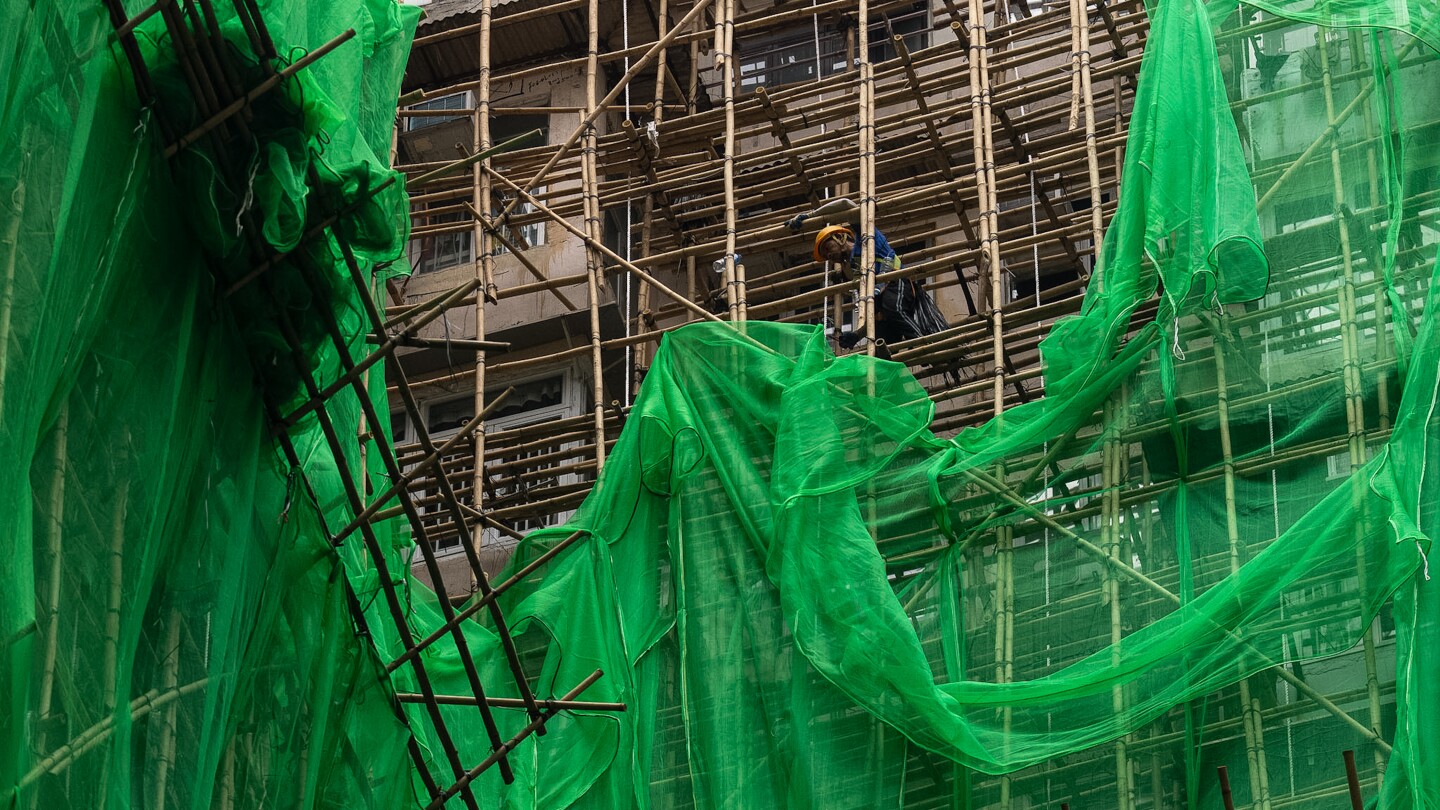
  • Hong Kong residents and experts defend bamboo scaffolding after deadly fire

    Hong Kong residents and experts defend bamboo scaffolding after deadly fire

    A contentious debate has emerged in Hong Kong regarding the role of traditional bamboo scaffolding in the city’s deadliest fire in decades, which claimed 159 lives at the Wang Fuk Court complex on November 26. While authorities quickly identified the bamboo structures and their green netting as primary factors in the rapid spread of flames, construction experts, residents, and former officials are challenging this assessment, arguing that systemic regulatory failures rather than the material itself deserve scrutiny.

    The tragic incident occurred during ongoing building renovations, where preliminary investigations revealed the use of substandard fire netting and flammable foam boards for window sealing. Despite officials including Chief Secretary Eric Chan characterizing bamboo’s fire resistance as ‘inferior’ to metal alternatives, architectural specialists caution against simplistic conclusions.

    Professor Kristof Crolla from the University of Hong Kong emphasized that ‘when properly used with certified fire-retardant netting, bamboo is comparatively hard to ignite.’ His colleague Raffaella Endrizzi from Chinese University of Hong Kong noted that focusing solely on bamboo risks obscuring broader safety issues, adding that the material isn’t easily ignited under proper conditions.

    The defense of bamboo scaffolding highlights its unique advantages in Hong Kong’s dense urban environment. Generations of skilled workers have mastered this centuries-old technique, which offers unparalleled flexibility, light weight, and adaptability to irregular building facades. Hong Kong and Kowloon Bamboo Scaffolding Workers Union chairman Ho Ping-tak noted that bamboo costs half or less than metal alternatives, raising questions about affordability for aging buildings requiring renovations.

    Former government officials have joined the critique, with security chief Regina Ip describing the bamboo focus as ‘lazy scapegoating’ and ex-financial secretary John Tsang warning against hasty bans of the flexible material. Public sentiment echoes these concerns, with memorial notes at the disaster site calling for systemic review rather than material replacement.

    Meanwhile, authorities have arrested 15 individuals for suspected corruption and negligence in the renovation project, revealing deeper issues of bid-rigging and substandard materials. The government has ordered removal of scaffolding nets at hundreds of buildings for testing, while Chief Executive John Lee pledged systemic industry reforms and an independent investigation to ‘uncover the truth and ensure justice.’

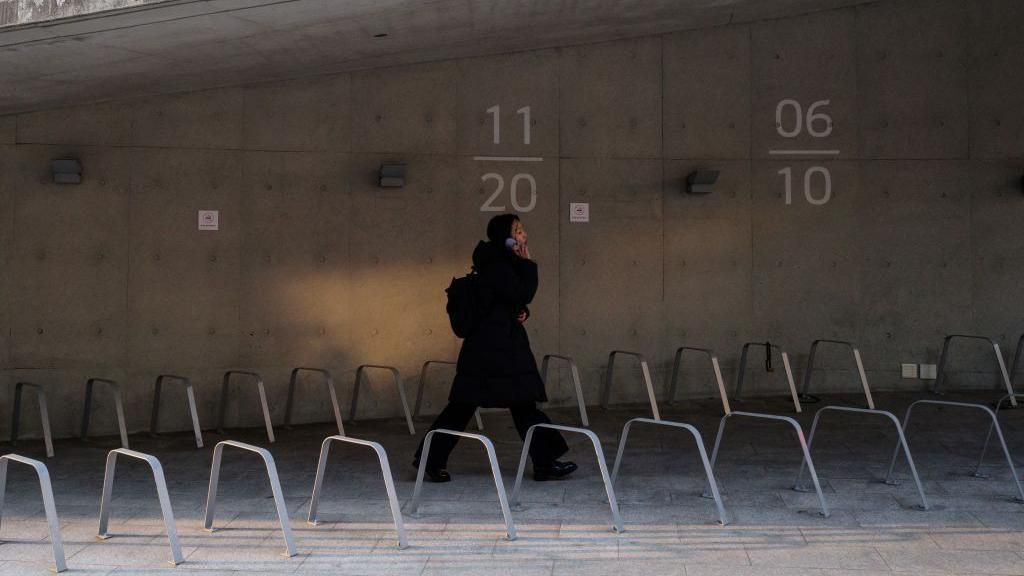
  • South Korea developing app that shows real-time location of stalkers

    South Korea developing app that shows real-time location of stalkers

    South Korea’s Justice Ministry has unveiled a groundbreaking mobile application designed to empower stalking victims with real-time location tracking capabilities of their perpetrators. This technological intervention, announced on Wednesday, forms a critical component of newly approved amendments to the nation’s electronic monitoring legislation.

    The innovative application addresses significant limitations within the existing protective framework, which currently provides victims with basic proximity alerts via text messages without revealing the stalker’s precise whereabouts. According to official statements, this limitation has historically complicated victims’ ability to assess threat direction and execute appropriate safety measures.

    Under the enhanced system, authorized individuals will gain access to visualized mapping interfaces displaying their stalkers’ exact locations, enabling more informed evacuation decisions. The tracking mechanism operates through wearable electronic devices mandated for offenders under court orders.

    Beyond immediate victim protection, authorities are advancing integration between the tracking platform and South Korea’s national emergency response network. This strategic enhancement, anticipated for completion next year according to domestic media reports, will facilitate rapid police deployment when victims face imminent danger.

    This legislative development occurs against a backdrop of escalating public concern regarding stalking-related violence, particularly targeting women. Societal tensions intensified dramatically following the 2022 murder of a female stalking victim by her former colleague, despite prior police reports that deemed the perpetrator ‘low risk.’

    Since implementing initial anti-stalking legislation in 2021—establishing penalties of up to three years imprisonment and substantial financial penalties—South Korea has witnessed remarkable growth in stalking reports. Justice Ministry statistics indicate cases surged from 7,600 in 2022 to exceeding 13,000 in 2023, following parliamentary revisions that lowered prosecution thresholds.