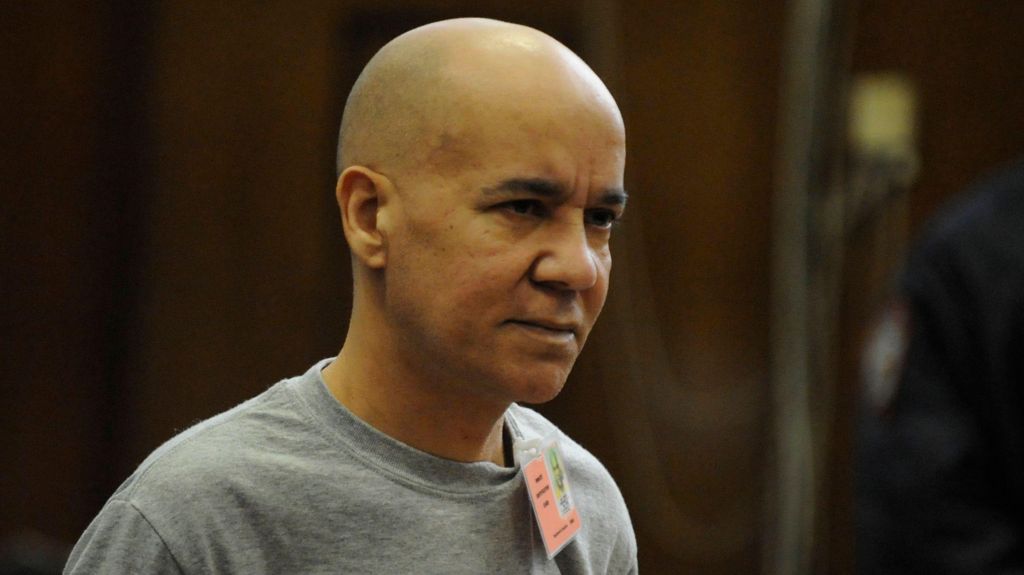
The decades-long legal saga surrounding Pedro Hernandez, the man convicted of the 1979 murder of six-year-old Etan Patz, has reached a critical juncture. Following a July ruling by the Second Circuit Court of Appeals that overturned Hernandez’s 2017 conviction, Manhattan prosecutors and defense attorneys are now locked in a heated debate over the next steps. The appeals court cited concerns about Hernandez’s police interrogation, his mental health history, and jury instructions as grounds for reconsideration. On Thursday, prosecutors requested 90 days to decide whether to retry Hernandez, while his defense team pushed for a 30-day deadline. U.S. District Judge Colleen McMahon is expected to rule on the matter within days. Etan Patz’s disappearance in 1979, while he was walking to school in Manhattan’s SoHo neighborhood, became a national symbol of missing children cases. Despite extensive investigations, Patz was never found. Hernandez, who worked as a shop clerk near the bus stop where Patz vanished, confessed in 2012 to luring the boy into a basement and strangling him. His first trial in 2015 ended in a mistrial, but he was convicted in 2017 of felony murder and kidnapping, though acquitted of intentional murder. Hernandez’s lawyers have argued that the jury instructions during his second trial were prejudicial and inconsistent with legal precedent. Prosecutors, however, maintain that the conviction was just and plan to appeal to the U.S. Supreme Court. Meanwhile, Hernandez’s legal team is pushing for his immediate release, claiming an innocent man is being wrongfully imprisoned.
分类: society
-
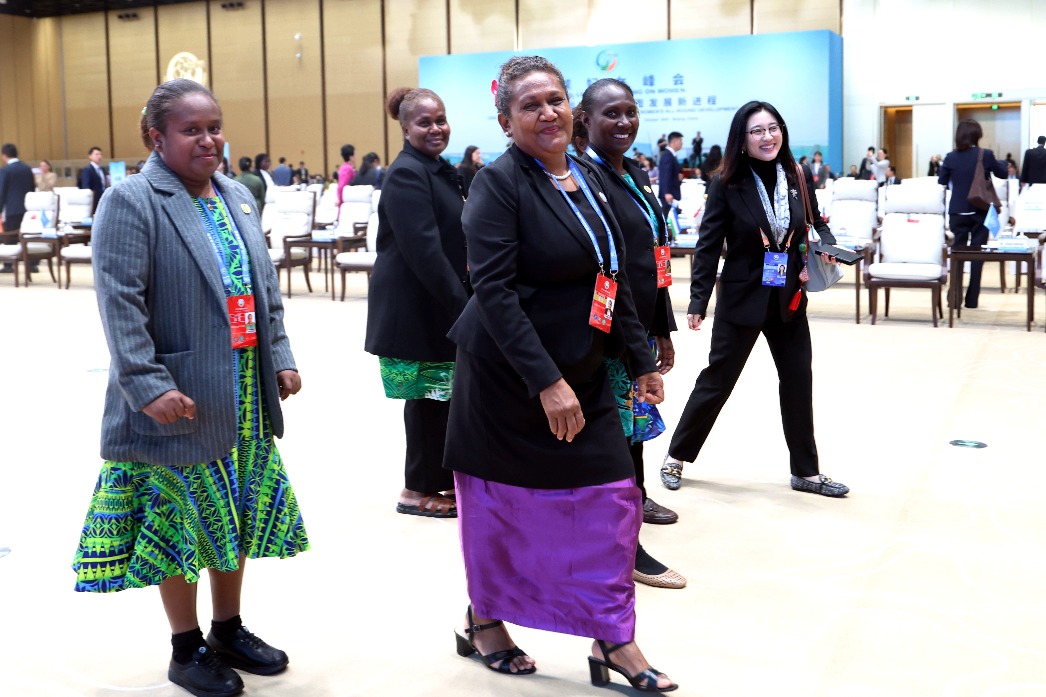
Female leaders urge global solidarity for women’s development
At the Global Leaders’ Meeting on Women held in Beijing, prominent female leaders from around the world emphasized the need for global solidarity to advance women’s development and address ongoing challenges. Cathy Nori, Minister of Women, Youth, Children, and Family Affairs of the Solomon Islands, highlighted the nation’s efforts to promote gender equality and protect women from violence. She also pointed out the disproportionate impact of climate change on women and girls, urging collective action to ensure no one is left behind. Gro Harlem Brundtland, former Prime Minister of Norway, reflected on the progress made since the Beijing Declaration in 1995 but stressed that significant work remains, particularly in areas like political participation, economic empowerment, and reproductive rights. Zhang Haidi, former Chairperson of the China Disabled Persons’ Federation, shared her personal story of resilience, inspired by her mother’s enduring strength despite decades of illness. She encouraged women, especially those with disabilities, to embrace their inner fortitude and create possibilities for a better society. The event underscored the importance of continued advocacy and collaboration to achieve gender equality and empower women globally.
-
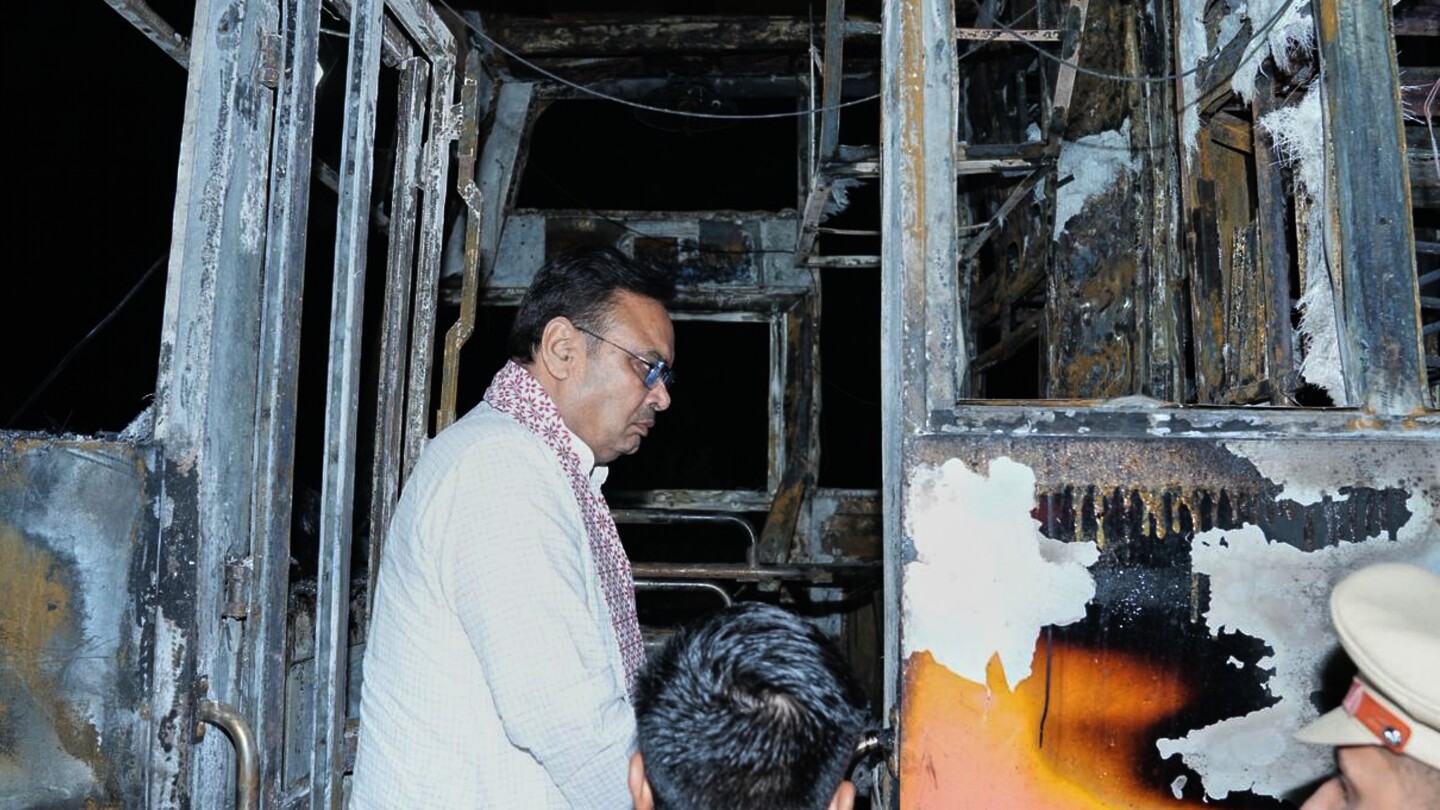
A passenger bus in northern India catches fire and burns at least 20 people to death
A tragic incident unfolded in northern India on Tuesday when a suspected electrical short circuit ignited a fire on a passenger bus, resulting in the deaths of at least 20 individuals and leaving 15 others critically injured. The bus, carrying between 35 and 50 passengers, was en route from Jaisalmer to Jodhpur in Rajasthan state when the blaze erupted. According to Mahant Pratap Puri, a local lawmaker, the fire spread rapidly, leaving passengers with no time to escape. Nineteen victims were found inside the charred vehicle, while one succumbed to severe burns while being transported to a hospital. Witnesses reported that smoke began emanating from the rear of the bus just minutes after departure, prompting the driver to halt near a military station. However, the flames quickly consumed the vehicle. Puri, who was present during the rescue efforts, noted that the bus was newly equipped with air-conditioning and had only one exit, which tragically hindered evacuation efforts. Authorities have launched an investigation into the cause of the fire and are using DNA evidence to identify the victims. Prime Minister Narendra Modi and Rajasthan Chief Minister Bhajan Lal Sharma expressed their condolences to the families of the deceased, as the incident raises urgent questions about vehicle safety standards.
-
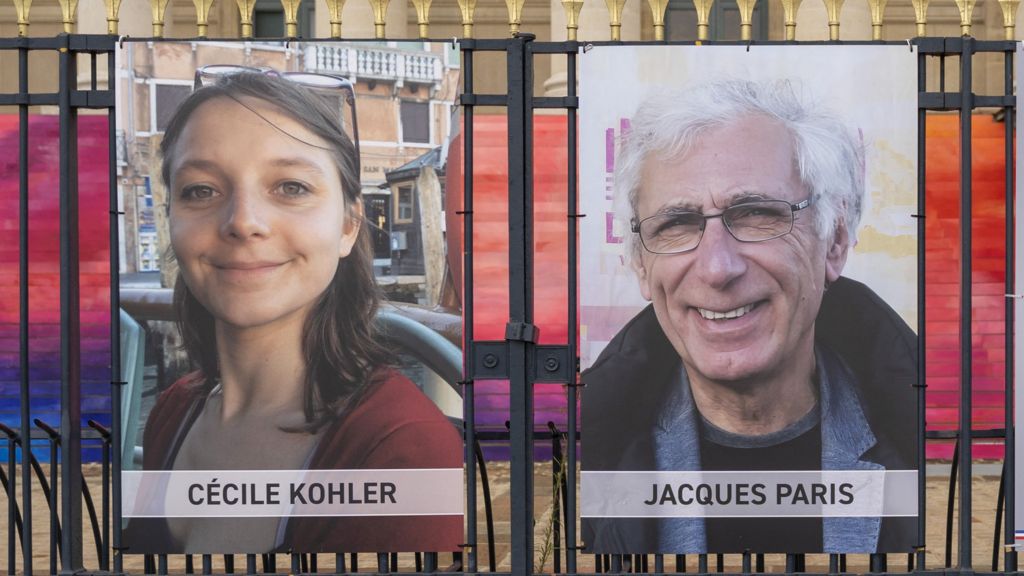
French pair sentenced in Iran on spying charges
Two French citizens, Cecile Kohler, 40, and Jacques Paris, 72, have been sentenced to lengthy prison terms by an Iranian court after being convicted of espionage. The pair, arrested during a tourist trip in May 2022, were accused of spying for both France and Israel. Iranian state media reported the verdicts but did not name the defendants, though they are widely believed to be the only French nationals detained in Iran. Kohler and Paris were sentenced to multiple years in prison and exile, with their pre-trial detention time to be deducted from their sentences. The verdicts can be appealed within 20 days. This case follows a pattern of Iran detaining foreign nationals, often for diplomatic leverage. Earlier this year, another French tourist, Olivier Grondeau, was released after serving part of a five-year sentence. Iran has previously suggested that Kohler and Paris could be exchanged for Mahdieh Esfandiari, an Iranian woman held in France on terrorism-related charges. France has condemned the detentions as arbitrary and accused Iran of subjecting the pair to torturous conditions. Human rights groups have criticized Iran for using detainees as bargaining chips in international negotiations. The situation highlights ongoing tensions between Iran and Western nations, with multiple Europeans currently held in Iranian custody.
-

US Supreme Court rejects Alex Jones appeal in Sandy Hook shooting case
The US Supreme Court has declined to hear an appeal from controversial right-wing conspiracy theorist Alex Jones, who sought to overturn a nearly $1.5 billion defamation judgment against him. The ruling stems from Jones’ false claims that the 2012 Sandy Hook Elementary School shooting, which claimed the lives of 20 children and six educators, was a hoax. The judgment, issued in 2022, has forced Jones to sell his media company, Infowars, to satirical news outlet The Onion, a move he argued would cause irreparable harm to him and his 30 million followers. Despite the court’s decision, Jones has yet to pay any of the damages owed to the victims’ families. The Supreme Court did not provide an explanation for its refusal to hear the case. Jones’ legal team argued that his statements were protected under the First Amendment, akin to journalistic freedoms, and that the financial penalties were excessively punitive. In his appeal, Jones described the judgment as a ‘financial death penalty.’ While a bankruptcy judge previously blocked The Onion’s attempt to acquire Infowars, the media company may soon be back on the market, offering The Onion another opportunity. Legal challenges against Jones have intensified since two juries found him liable for defamation and emotional distress related to his false claims about the Sandy Hook tragedy. Following the initial verdict in Connecticut, Jones filed for bankruptcy in Texas, prompting the auction of Infowars to satisfy the judgment. During Texas court proceedings, Jones admitted the Sandy Hook attack was ‘100% real,’ a stark reversal from his earlier assertions that the event was staged as part of a government conspiracy to disarm Americans.
-
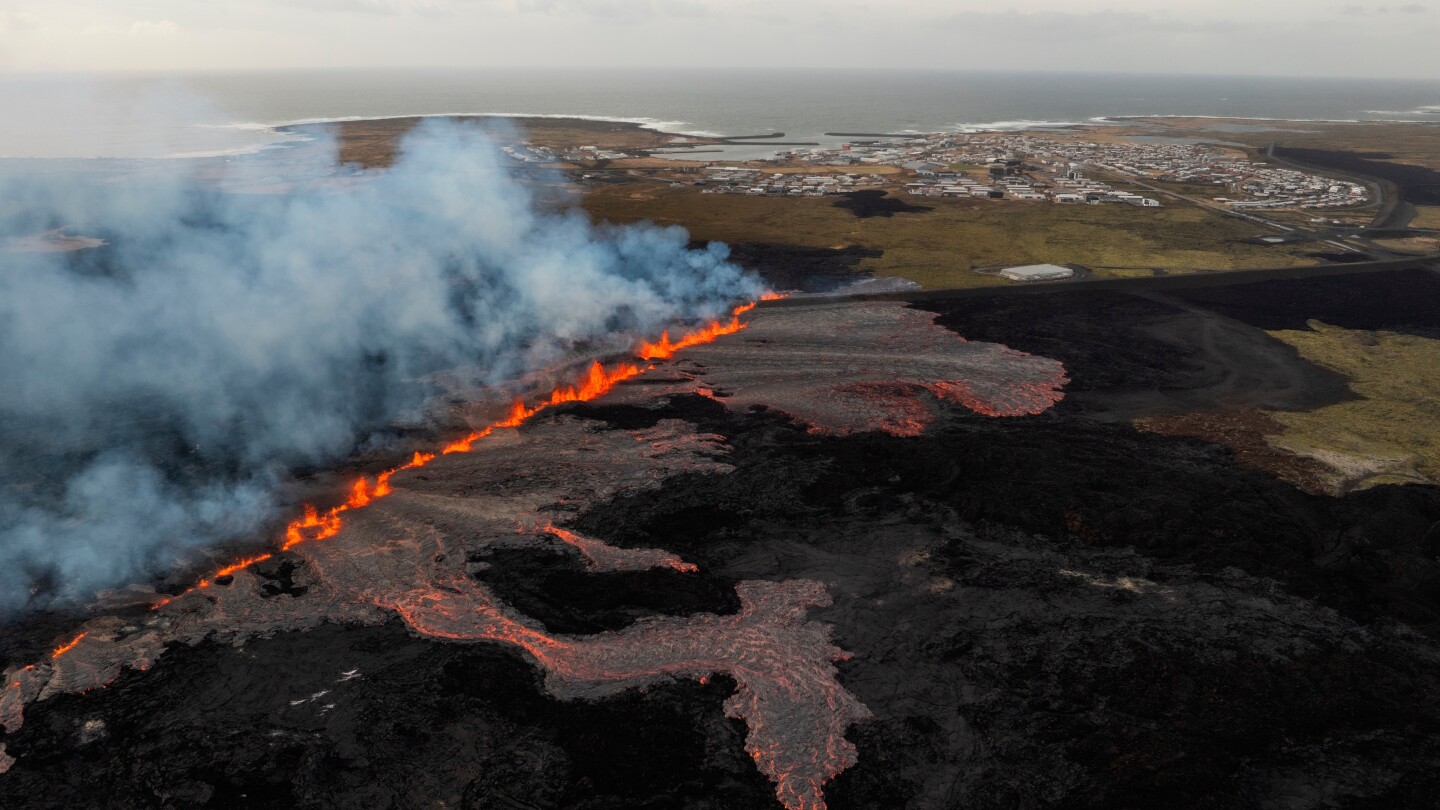
In Iceland, a town still shaken by volcanic eruptions tries to recover
In the coastal town of Grindavik, Iceland, Vignir Kristinsson’s gift shop, once bustling with customers, now sees only occasional visitors. The 64-year-old craftsman, who turned his passion for woodworking into a business five years ago, faces an uncertain future as volcanic eruptions have repeatedly forced evacuations since December 2023. The town, home to 3,800 residents, has been closed intermittently, leaving businesses like Kristinsson’s struggling to survive. ‘I’m supposed to run a business when people are told they should not come,’ he lamented. ‘How is that possible?’
Grindavik’s plight is emblematic of Iceland’s volatile relationship with its volcanic landscape. The eruptions, originating from the Sundhnuksgígar crater row, part of the Svartsengi volcanic system, have disrupted life in the Reykjanes Peninsula. Before the first eruption nearly two years ago, the system had been dormant for 783 years. Scientists predict that the volcanic activity is far from over, with the Icelandic Meteorological Office warning of a potential 10th eruption in the coming months.
Residents like Kristólína Ósk Guðjónsdóttir, an 18-year-old high school student, have grown accustomed to the constant stress. ‘When we had to leave, we had five minutes to get our stuff,’ she recalled, describing the first evacuation in November 2023. Since then, she has been attending school in Keflavik, 23 kilometers north of Grindavik, where maintaining a sense of community has been challenging.
Despite the devastation, there are glimmers of hope. The local professional basketball team has resumed games, and authorities are considering reopening schools next year. Some residents are returning, though the town remains largely empty. Tourists, drawn by the dramatic landscape, have become a rare source of activity, flying drones over vast lava fields and exploring the damaged town.
For many former residents, the decision to return is fraught with uncertainty. The government has offered to buy their homes, giving them three years to decide whether to repurchase them. Kristinsson, who now lives in Hafnarfjordur, 42 kilometers northeast of Grindavik, continues to operate his shop sporadically, relying on income from renting an apartment above the store. ‘People who live here now want to see things come back faster,’ he said.
Meanwhile, businesses like Herastubbur Bakari, a 30-year-old bakery, are fighting to stay afloat. Owner Sigurður Enoksson, 60, has no plans to return to his damaged home but remains committed to the town through his bakery. ‘There are not always customers each day,’ he admitted. ‘We are trying our best.’
As Grindavik grapples with the aftermath of the eruptions, its residents’ resilience shines through. While the road to recovery is long, their determination to rebuild offers a testament to the enduring spirit of this Icelandic town.
-
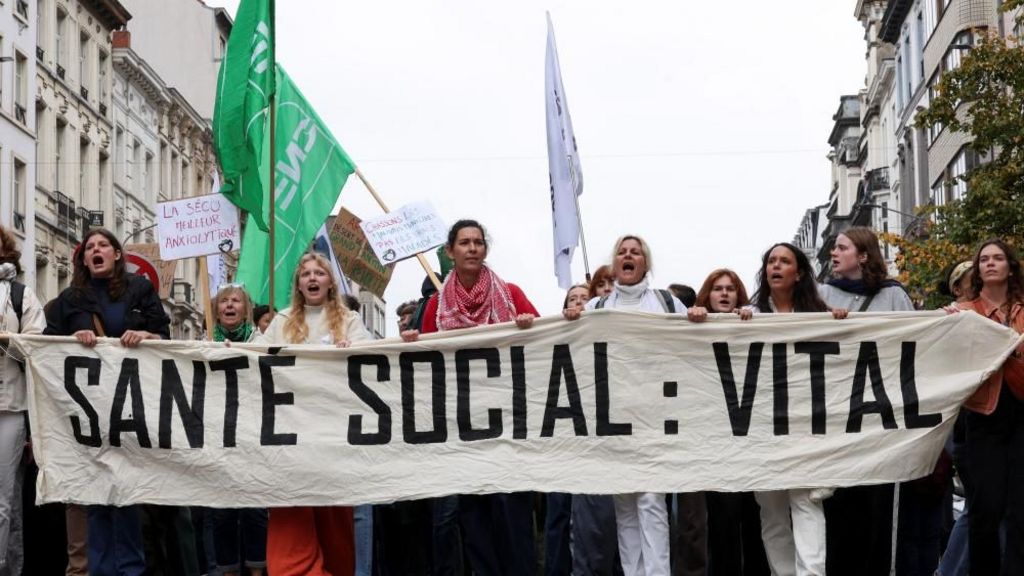
National strike by Belgium’s big unions hits public transport, airports and ships
Tens of thousands of Belgians flooded the streets of Brussels in a nationwide strike, protesting against sweeping government reforms and austerity measures. The demonstrations, organized by Belgium’s three major unions, brought significant disruptions to public transport, halted flights, and suspended operations at Europe’s second-largest port in Antwerp. The protests targeted Prime Minister Bart de Wever’s center-right government, which has introduced controversial measures to reduce the budget deficit, including pension reforms and cuts to unemployment benefits. At Brussels Airport, all departures and many arrivals were canceled, while Charleroi Airport saw a complete shutdown of services. Public transport in the capital was severely affected, with most buses, trams, and underground trains coming to a standstill. The unions are particularly opposed to the government’s plan to increase the number of working days required to qualify for pensions and the elimination of special schemes for sectors like the military and railway workers. Demonstrators, many clad in the red and green colors of the unions, voiced their frustrations over what they perceive as unfair burdens on the working class. ‘It’s always the same part of the population that has to tighten their belts,’ said 29-year-old Anaïs, who criticized the reforms for disproportionately affecting lower-income Belgians. The protests also highlighted broader concerns about the future, with many participants expressing fears for their children’s prospects. Despite the largely peaceful nature of the demonstrations, isolated incidents of vandalism and clashes with police were reported. The strike underscores the growing discontent with the government’s austerity agenda, which includes proposed cuts to child benefits and potential VAT increases. As Belgium grapples with its fiscal challenges, the protests signal a deepening divide between the government and its citizens.
-

Suspect in the fatal stabbing of a Kenyan presidential guard will be assessed
NAIROBI, Kenya — A chilling security breach near Kenya’s presidential office has raised alarms after a man allegedly stabbed a guard to death on Monday. The suspect, Kithuka Kimunyi, reportedly approached the State House main gate disguised as a homeless person, armed with a bow and arrow. After fatally shooting the guard, Ramadhan Hamisi Matanka, Kimunyi was apprehended at the scene. The guard succumbed to his injuries at a nearby hospital.
-

ICE’s use of full-body restraints during deportations raises concerns over inhumane treatment
A Nigerian man, part of a federal lawsuit, recounted a harrowing experience of being forcibly deported by U.S. Immigration and Customs Enforcement (ICE) officers in September. He described being awoken in the middle of the night, shackled, and strapped into a full-body restraint device known as the WRAP. Despite not being from Ghana, he and others were flown there on a 16-hour flight, denied access to their attorneys, and subjected to what he likened to a kidnapping. The WRAP, often referred to as “the burrito” or “the bag,” has become a controversial tool in ICE’s deportation process, with detainees alleging its use as a form of intimidation and punishment. The Associated Press (AP) investigation revealed multiple instances of ICE deploying the WRAP, despite internal concerns raised by the Department of Homeland Security’s (DHS) civil rights division. The device, originally designed as a safety measure for law enforcement, has been linked to fatalities and is now the subject of numerous lawsuits. Detainees claim they were restrained in the WRAP for hours, even when they posed no threat, leading to physical and psychological trauma. ICE and DHS have defended the use of restraints as standard protocol to ensure safety during deportations, but advocates argue the practice is inhumane and violates human rights. The AP’s findings highlight a growing debate over the ethical and legal implications of ICE’s deportation methods, particularly under the Trump administration’s aggressive immigration policies.
-

Death toll rises to 16 after factory fire in Bangladesh capital
A devastating fire broke out at a garment factory and adjacent chemical warehouse in Dhaka, Bangladesh, on Tuesday, claiming the lives of at least 16 people, according to the Fire Service and Civil Defense department. The blaze, which originated on the third floor of a seven-story building in the Mirpur area, left several others injured. Fire official Talha bin Jashim confirmed that rescue teams have recovered multiple bodies, and efforts to control the fire and complete the rescue operation continued into the evening. Bangladesh, the world’s second-largest garment exporter after China, employs approximately 4 million workers in this sector, predominantly women. The industry, which generates around $40 billion annually from exports to the United States and Europe, has a troubled history of industrial accidents and fires, often attributed to inadequate safety monitoring and violations of building codes. This incident underscores the urgent need for stricter safety regulations and enforcement in the country’s garment sector.