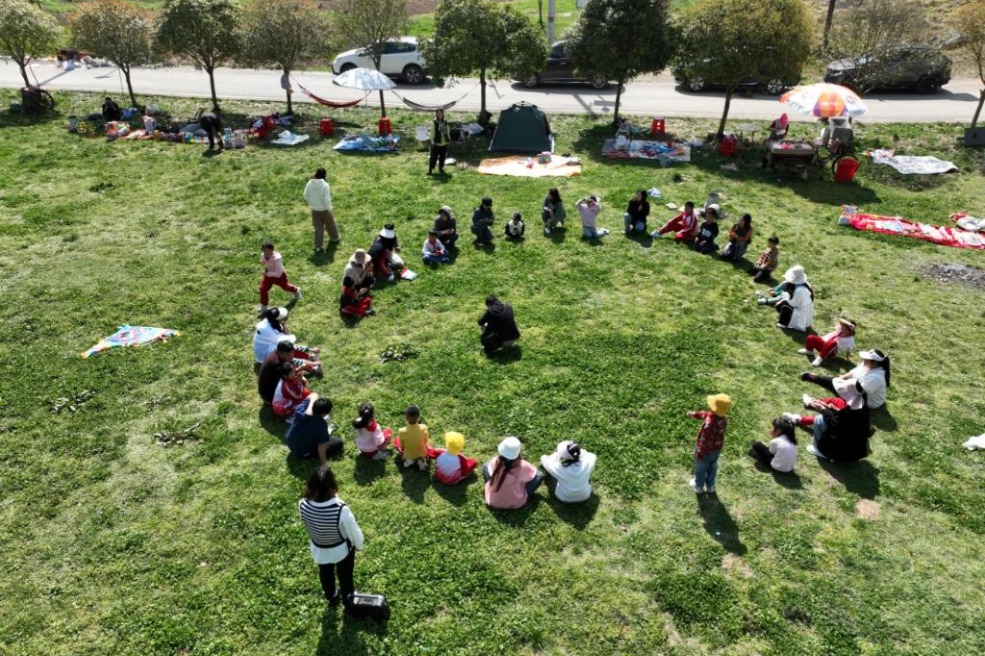
The introduction of autumn breaks for students in several Chinese provinces is set to invigorate the tourism industry while enhancing the paid vacation system for parents. Provinces such as Zhejiang and Guangdong have announced three-day autumn vacations for primary and junior high school students, running from November 12 to 14, with the option to extend to five days by including the weekend. Cities like Ningbo, Huzhou, Jiaxing, and Foshan are leading this initiative, with other regions like Jinhua also scheduling breaks in November. This move has already spurred a significant surge in flight and hotel bookings. According to Qunar, flight bookings from Ningbo between November 12 and 16 have increased by 2.18 times compared to last year, with Beijing, Xi’an, and Changsha emerging as top destinations. Foshan has seen an even greater rise, with flight bookings up 2.76 times. Online travel agency Tuniu reported a spike in tour reservations for Ningbo, Taizhou, and Foshan during the same period. Families are predominantly opting for two- to three-day domestic trips, though some are planning longer independent vacations to destinations like Sanya or international locations such as Japan. Wei Changren, founder of btiii.com, highlighted the benefits of this initiative, noting that it helps balance travel peaks during summer and public holidays, improving the overall experience for families. The flexibility allows parents to align their paid vacations with the autumn break, potentially refining the paid vacation system. With northern China transitioning to winter, milder destinations in the east and south are gaining popularity, along with nearby international locations like South Korea and Japan. This development follows a September notice from nine central departments, including the Ministry of Commerce and the Ministry of Education, encouraging local governments to optimize student vacation schedules by introducing spring and autumn breaks, potentially shortening summer and winter holidays.
分类: society
-
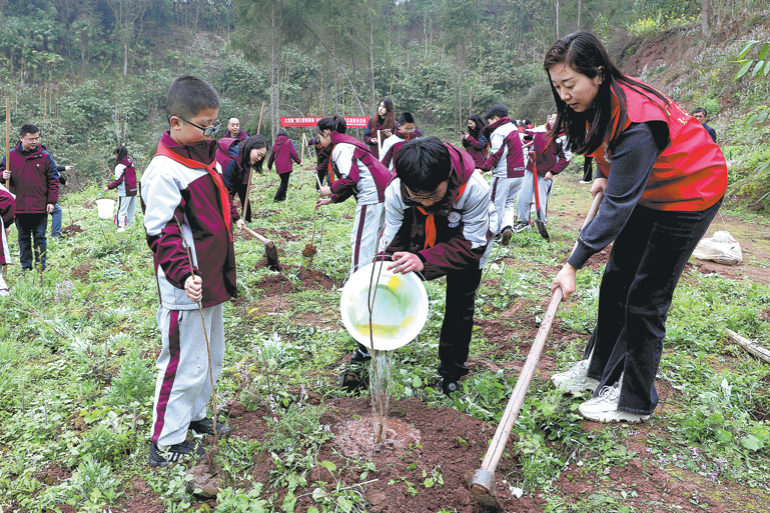
Autumn school holidays a welcome break with tradition
In a significant shift aimed at reducing academic pressure and promoting well-rounded growth, China has introduced autumn breaks for primary and secondary school students. This initiative, part of the nation’s ongoing education reforms, seeks to balance classroom learning with practical, real-world experiences. Chen Mingshan, a 10-year-old fifth-grader from Lichuan, Hubei province, is among the first to experience this new holiday. ‘My parents are taking me to the countryside to pick tangerines and dig up sweet potatoes,’ he said excitedly. ‘The best part is there’s no homework—just free time to enjoy.’ The Lichuan Education Bureau announced a nine-day autumn break from November 3 to November 7, extending the holiday by including two weekends. Schools are mandated to implement the break uniformly, with no written homework or mandatory tasks assigned. Teachers and parents alike have welcomed the initiative. Xiao Junling, a teacher at Lichuan Second Ethnic Experimental Primary School, noted that families are planning meaningful activities, such as learning tea processing, recording Tujia folk songs, or exploring nature reserves. Huang Jie, a parent, praised the opportunity for relaxed, off-peak travel, allowing children to truly unwind. This innovative approach integrates local culture and hands-on learning, transforming abstract knowledge into tangible experiences.
-

Rescuers in Nepal search for climbers’ bodies after deadly avalanche
In a devastating turn of events, an avalanche struck the base camp of Mount Yalung Ri in Nepal on Monday morning, claiming the lives of seven climbers. The incident occurred at an altitude of 4,900 meters (16,000 feet), where the climbers were caught off guard by the sudden natural disaster. Snowstorms initially hindered rescue efforts, but by Tuesday, improved weather conditions allowed a helicopter to reach the site, enabling rescuers to begin the grim task of recovering bodies from the ice and snow. Among the victims were two Nepali mountain guides, while the identities of the remaining four remain unknown. At least three bodies were recovered by Tuesday afternoon, though it remains uncertain when they will be transported from the mountain. Four injured climbers were airlifted to Kathmandu for medical treatment, including two French nationals. Isabelle Solange Thaon, 54, one of the survivors, recounted the harrowing experience, expressing gratitude for her survival but mourning the loss of her husband, Christian Manfred, who tragically succumbed to the avalanche. Mount Yalung Ri, a 5,600-meter (18,370-foot) peak, is typically considered suitable for novice mountaineers, making this tragedy all the more shocking.
-
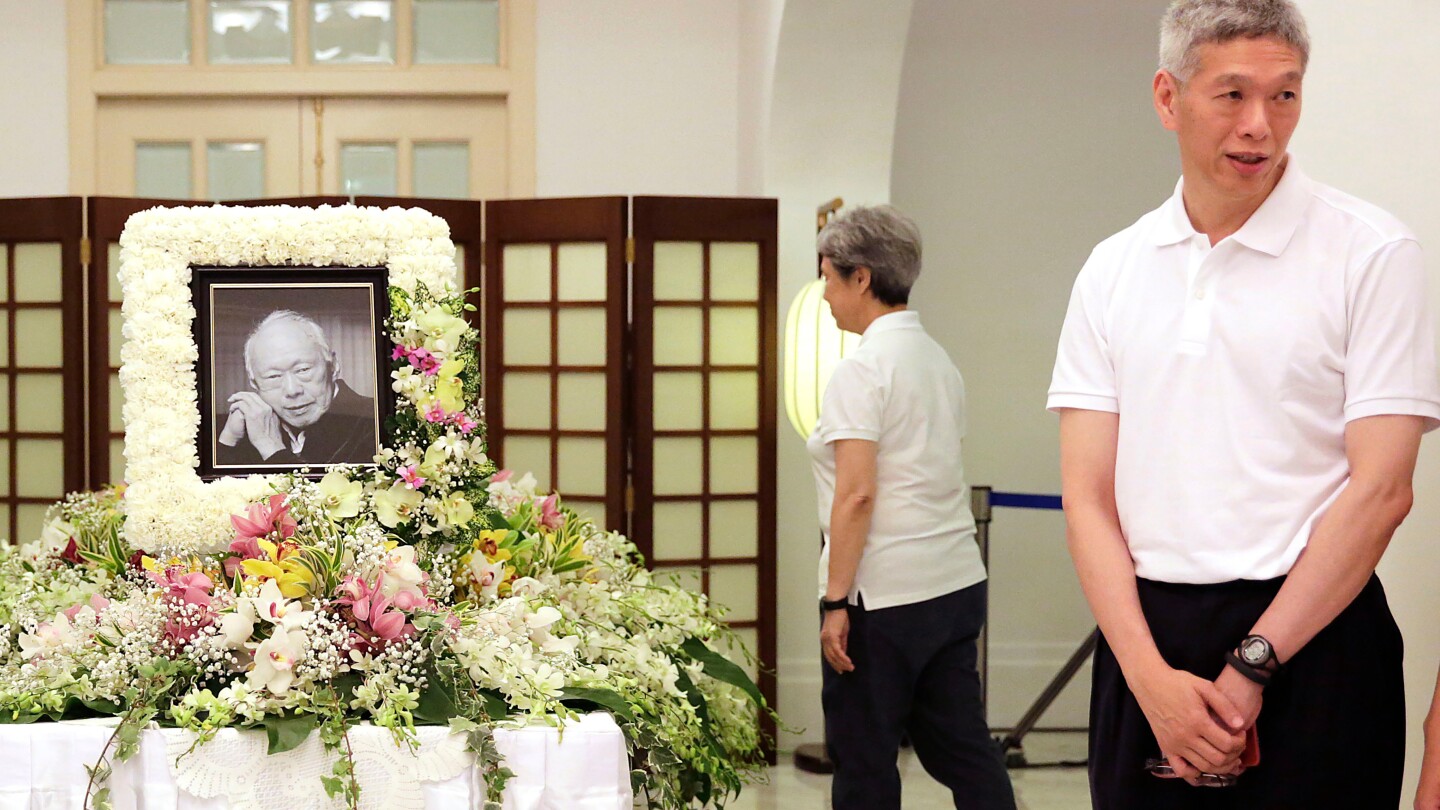
Lee Kuan Yew’s youngest son slams Singapore’s plan to preserve family home as national monument
A long-standing family dispute over the legacy of Singapore’s founding prime minister, Lee Kuan Yew, has reignited following the government’s decision to preserve his former residence as a national monument. The announcement, made on Monday, has drawn sharp criticism from Lee’s youngest son, Lee Hsien Yang, who accused the ruling People’s Action Party (PAP) of disregarding his father’s wishes. The heritage advisory body deemed the house at 38 Oxley Road to be of “national significance,” citing its role in pivotal decisions that shaped Singapore’s independence. Acting Culture Minister David Neo emphasized the importance of preserving this historic site for future generations. However, Lee Hsien Yang, who owns the property, argued that his father consistently opposed the preservation of his home as a monument, even stipulating its demolition in his final will. The younger Lee has been locked in a public feud with his older brother, former Prime Minister Lee Hsien Loong, since their father’s death in 2015. Lee Hsien Yang and his sister, Lee Wei Ling, have accused their brother of abusing his political influence to block the demolition. The government has issued a written notice of its intent to acquire the property and transform it into a public space, possibly a heritage park, while removing traces of the family’s private living spaces. Meanwhile, Lee Hsien Yang, who claims to be a political refugee after receiving asylum in the U.K., faces investigations over allegations of providing false evidence in judicial proceedings related to his father’s will.
-
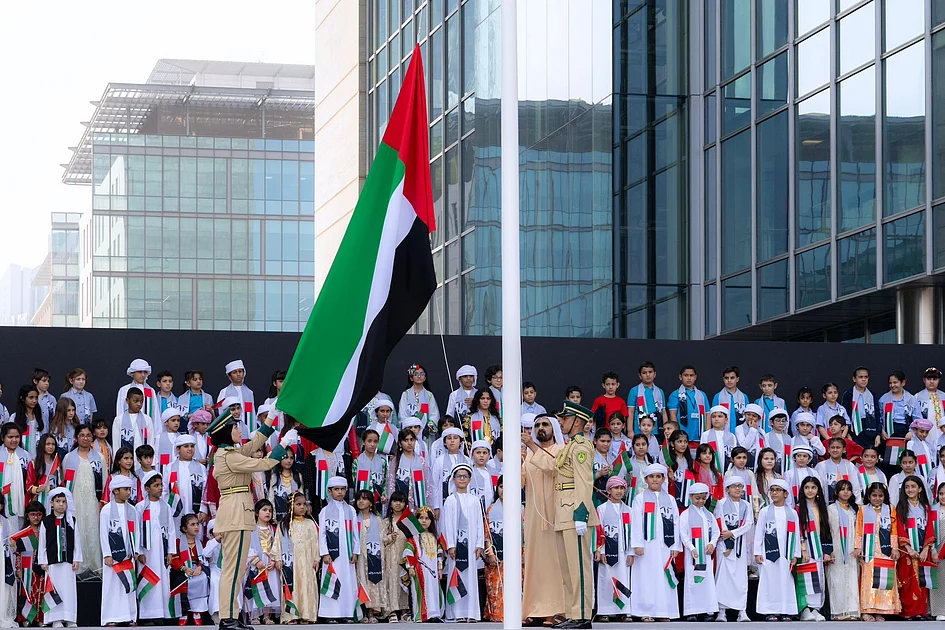
Watch: Sheikh Mohammed hoists UAE’s ‘symbol of unity’ on Flag Day along with little ones
In a vibrant display of national pride, Sheikh Mohammed bin Rashid Al Maktoum, Vice-President and Prime Minister of the UAE and Ruler of Dubai, led the UAE Flag Day celebrations at DIFC’s The Gate in Dubai. The event, held on November 3, 2025, was marked by the presence of 300 students from schools across the emirate, symbolizing the nation’s unity and its commitment to future generations. Sheikh Mohammed was warmly welcomed by police officials as he hoisted the UAE flag, a powerful symbol of dignity, unity, and progress. The ceremony took place under a grand 15-storey mural depicting the UAE’s Founding Fathers, Sheikh Zayed bin Sultan Al Nahyan and Sheikh Rashid bin Saeed Al Maktoum. As the flag rose, the children waved their flags and sang the national anthem, with Sheikh Mohammed joining them in a moment of collective pride. On his social media, Sheikh Mohammed emphasized the flag’s significance, calling it a symbol of the UAE’s unity, pride, and enduring legacy. He also reflected on the values instilled by the Founding Fathers, which have shaped the UAE into a global model of development and humanitarianism. Sheikh Mohammed highlighted the importance of national progress as a shared responsibility, urging citizens to express their belonging through work, conduct, and achievement. He praised the leadership of UAE President Sheikh Mohamed bin Zayed Al Nahyan and the Supreme Council Members, noting the Union’s strength, stability, and prosperity. UAE Flag Day, initiated by Sheikh Mohammed in 2013, is an annual celebration observed on November 3 to honor the flag as a symbol of sovereignty and unity. The event also marks the beginning of the National Month campaign, which runs until Eid Al Etihad on December 2, 2025, commemorating national milestones and inspiring pride in the UAE’s journey.
-

William plays football with children at iconic Maracana stadium
Prince William, the Prince of Wales, embarked on a five-day visit to Brazil, marking his arrival with a memorable stop at the iconic Maracana Stadium in Rio de Janeiro. On his first day, the royal engaged in a friendly football match with local children, showcasing his approachable and community-focused demeanor. The Maracana Stadium, renowned for its historical significance in the world of football, provided a fitting backdrop for this interaction. This visit underscores the Prince’s commitment to fostering international goodwill and connecting with communities through shared interests. The event was warmly received, highlighting the positive impact of such high-profile engagements on local morale and international relations.
-
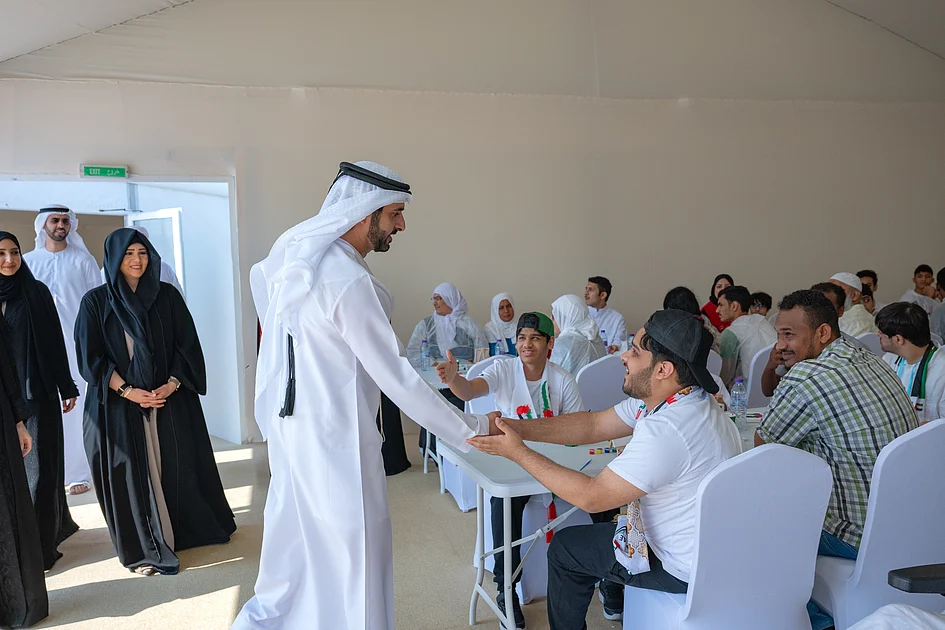
Look: Sheikh Hamdan meets people of determination painting Flag Day mural on Mamzar beach
In a vibrant celebration of UAE Flag Day, Sheikh Hamdan bin Mohammed bin Rashid Al Maktoum, Crown Prince of Dubai, joined over 200 individuals of determination and 400 volunteers at Al Mamzar Park for a special art session. The event, titled ‘Art Session with People of Determination’, was part of the ‘7 Over 7’ initiative, aimed at fostering skill-based volunteering and community engagement across the UAE’s seven emirates. Participants showcased their artistic talents by creating a series of artworks that celebrated the UAE’s identity and heritage, with the highlight being the painting of the UAE flag on the outer theatre wall at the park. Sheikh Hamdan praised the creativity and unity displayed, emphasizing the importance of volunteerism and the role of art in uniting the community. The event also saw the presence of Sheikha Latifa bint Mohammed, Chairperson of Dubai Culture and Arts Authority, and other officials, who commended the participants for their inspiring contributions to the nation’s cultural development.
-

Taiwan and mainland united by goddess Mazu, common ancestral roots
The shared cultural and ancestral ties between Taiwan and mainland China were highlighted during a recent visit by Taiwan compatriots to Qingshan Temple in Hui’an county, Quanzhou, Fujian province. The event underscored the deep-rooted connections that bind people across the Taiwan Strait, emphasizing their shared belief in the goddess Mazu and common ancestry in Fujian province. Approximately 80% of Taiwan’s population traces their lineage to Fujian, which lies just across the narrow strait from Taiwan. Lin Ming-cong, head of an association of relatives of patriots in Taiwan who fought against Japanese occupation, remarked, ‘We speak the same dialect and worship the same goddess, which shows that we share the same roots and are one family.’ His family, originally from Pinghe county in Zhangzhou, Fujian, migrated to Taiwan during the Qing Dynasty (1644-1911) and later thrived there. In Taiwan, numerous groups have been established to unite descendants of Fujian, fostering mutual support and strengthening ties among clan relatives on both sides of the Strait. This cultural and familial bond serves as a powerful reminder of the unity and shared heritage that transcend political divisions.
-

Watch: Moment train collides with lorry carrying vehicles
A startling incident unfolded in Texas when a train collided with a lorry that had come to a halt on the railroad tracks. Authorities reported that the truck was fully loaded with vehicles at the time of the accident. The collision occurred as the train approached the stationary lorry, resulting in a dramatic crash. Emergency services were promptly dispatched to the scene to manage the aftermath and ensure the safety of all involved. The incident has raised concerns about railway safety and the importance of adhering to traffic regulations near railroad crossings. Investigations are underway to determine the exact cause of the collision and to prevent similar occurrences in the future.
-

Palestine Action prisoners launch rolling hunger strike over detention conditions
Three detainees in the UK, held on remand for alleged offenses linked to Palestine Action activities, have initiated a hunger strike to protest what they describe as “systematic abuse” by prison authorities. The campaign group Prisoners for Palestine (PFP) revealed on Sunday that Qesser Zurah and Amu Gibb began a rolling hunger strike at HMP Bronzefield by refusing food. Huba Muraisi, detained at HMP New Hall, joined the protest on Monday. PFP anticipates more participants in the coming days but refrained from disclosing exact numbers due to fears of further targeting by authorities. Muraisi, a Yemeni national with family in Gaza, is part of the Filton 24, a group arrested on terrorism charges in August 2024 for targeting an Israeli arms company’s research hub in Bristol. Although the charges are now non-terror-related, the Crown Prosecution Service plans to argue a “terrorism connection” in court, potentially worsening their sentences. All Filton 24 defendants have been denied bail and held beyond the UK’s standard 182-day pre-trial custody limit. PFP claims Muraisi has faced severe restrictions, including privacy violations, limited access to books and visits, and forced segregation. Her hijab, a kuffiyeh used during prayers, was reportedly removed by prison security. Muraisi was transferred to HMP Newhall, far from her family and support network. Qesser was allegedly confined to her cell after announcing her hunger strike, with guards threatening disciplinary action. The strike follows the Home Secretary’s failure to address their demands for bail and an end to prison interference with communications. In July, Palestine Action was banned and classified as a terrorist organization, leading to increased restrictions on detainees’ post, calls, and visits. This prompted a previous hunger strike by detainee T Hoxha in August.