分类: society

  • Dubai skyline, Hatta peaks: Why UAE landscapes pull people toward extreme challenges

    Dubai skyline, Hatta peaks: Why UAE landscapes pull people toward extreme challenges

    In the United Arab Emirates, a nation synonymous with luxury and convenience, a counterintuitive trend is emerging: residents are increasingly pursuing physically demanding challenges across the country’s most rugged landscapes. A new endurance series, spearheaded by former UK Special Forces soldier and television personality Ant Middleton, is currently capturing this phenomenon on film in locations ranging from Dubai’s periphery to Hatta’s mountainous terrain.

    This psychological shift sees participants voluntarily confronting extreme environmental conditions—scaling rocky peaks exceeding 1,300 meters in elevation and traversing sun-scorched desert expanses—activities that test both physical endurance and mental resilience. Middleton, renowned for his mindset-focused programming like SAS: Who Dares Wins, observes that UAE residents living in one of the world’s most secure and organized societies are deliberately seeking discomfort to rediscover self-reliance.

    The unique juxtaposition of ultra-modern urban infrastructure with raw, untamed nature creates what Middleton describes as an ideal environment for personal transformation. Hatta’s challenging topography, particularly Umm Al Nesoor peak, presents technical climbing difficulties amplified by regional heat and humidity that rapidly reveal participants’ true capabilities under pressure.

    According to Middleton’s assessment, these extreme experiences serve as powerful authenticity catalysts: ‘When we strip people down and show them a mirror, they either turn away because they don’t like what they see, or they accept it, learn from it, and come back stronger.’ The phenomenon demonstrates that growth occurs outside comfort zones, with participants seeking not victory but transformative clarity—moments where daily distractions fade, leaving only fundamental effort and self-awareness.

    This movement reflects a deeper human need for self-discovery in increasingly structured modern societies, suggesting that even within environments designed for comfort, people inherently crave challenges that reveal their core identity and capabilities beyond perceived limitations.

  • Angry fans throw chairs and bottles at Messi event in India

    Angry fans throw chairs and bottles at Messi event in India

    Lionel Messi’s highly anticipated appearance in India descended into chaos and violence as frustrated fans rioted at Kolkata’s Salt Lake Stadium during the football superstar’s promotional tour. The incident unfolded when thousands of supporters who had paid premium prices—up to 12,000 rupees (£100; $133)—found their expectations dramatically unmet during Saturday’s event.

    The disruption began when Messi’s stadium appearance, which lasted approximately 20 minutes, was abruptly cut short by security personnel. The Argentina and Inter Miami forward had been largely obscured during his brief pitch walk by an extensive entourage of officials and local celebrities, preventing clear visibility for most attendees. This visual obstruction, combined with the premature conclusion of his appearance, triggered widespread disappointment among the crowd.

    As realization spread that Messi had departed, segments of the audience turned hostile. Enraged supporters stormed the field, vandalizing stadium property including banners and temporary structures. Witnesses reported plastic chairs and water bottles being hurled toward the pitch while seats were physically torn from their fixtures in acts of collective frustration.

    The situation prompted a swift response from West Bengal’s political leadership. Chief Minister Mamata Banerjee expressed being ‘deeply disturbed and shocked’ by the events and announced an official inquiry into the incident. Through her social media channels, she extended apologies both to Messi and to ‘sports lovers’ while committing to identify responsibility and implement preventive measures for future events.

    Financial disappointment compounded the emotional letdown for many attendees. Multiple fans reported spending amounts equivalent to a month’s salary for the opportunity to see the eight-time Ballon d’Or winner. One supporter told Indian news agencies: ‘Only leaders and actors were surrounding Messi… Why did they call us then? We paid 12 thousand rupees but couldn’t even see his face.’ Another attendee criticized the event management and security personnel for prioritizing selfies over crowd management.

    The Kolkata incident occurred within the context of Messi’s broader ‘GOAT Tour’ across India, which includes scheduled appearances in Hyderabad, Mumbai, and New Delhi. The tour commenced with the virtual unveiling of a monumental 70-foot statue honoring the footballer, a project requiring 27 days of construction by a 45-person team. Security concerns necessitated the digital revelation rather than a physical ceremony.

    Despite the stadium chaos, Messi’s cultural impact in India remains significant. The tour features extensive fan engagement opportunities including the ‘Hola Messi’ zone—an immersive experience containing throne-seated life-sized replicas, trophy displays, and detailed recreations of his Miami residence complete with mannequin representations of his family.

    Kolkata represents a particularly football-passionate community within cricket-dominated India, regularly drawing hundreds of thousands of supporters to local club derbies. This deep-seated enthusiasm contributed to the intensity of disappointment when expectations surrounding the global icon’s appearance remained unfulfilled.

  • Kenya’s census warns of ecosystem collapse

    Kenya’s census warns of ecosystem collapse

    A comprehensive national wildlife census conducted by Kenya’s Wildlife Research and Training Institute (WRTI) has issued a stark warning about the country’s deteriorating ecological health. The 2024-25 assessment reveals that despite successful recovery stories for some iconic species, numerous others are experiencing precipitous declines that threaten irreversible ecosystem collapse within the coming decade.

    The report, unveiled in Nairobi this week, presents a complex picture of conservation in the East African nation. While elephant populations have shown encouraging growth—increasing from 36,280 in 2021 to 41,952 currently—and black rhinos have demonstrated steady recovery through intensive protection programs, many plains game species face catastrophic declines. Hartebeest, wildebeest, topi, and sable antelope populations continue to diminish due to escalating habitat loss, human-wildlife conflict, and increasing competition from livestock.

    Particularly alarming is the situation of the hirola, one of the world’s rarest antelopes, which has experienced one of the most dramatic population crashes—plummeting from 497 individuals in 2021 to just 245 in 2025, pushing this critically endangered species to the brink of extinction. The rare roan antelope, despite a modest increase from 15 to 21 individuals, remains in critically low numbers that demand intensified recovery efforts.

    President William Ruto characterized the findings as deeply concerning, emphasizing that wildlife protection directly correlates with job creation, tourism growth, and community livelihoods. “Wildlife remains central to our identity, economy and ecological security,” Ruto stated during the report’s launch. “Our protected areas and conservancies are the backbone of tourism, one of the country’s top foreign exchange earners and a major source of livelihoods.”

    With tourism projected to contribute over $9 billion to Kenya’s economy this year—equivalent to more than 7% of GDP—the ecological crisis carries significant economic implications. Tourism Cabinet Secretary Rebecca Miano noted the report reveals both resilience and urgency, acknowledging successful recovery stories while highlighting the pressing need for expanded conservation measures.

    Researchers identified rapid development, climate shocks, and shifting land-use patterns as primary drivers of habitat fragmentation that outpace wildlife adaptation capabilities. The report recommends immediate government intervention, including integrating wildlife ecosystem plans into county spatial planning, securing critical wildlife corridors, and fast-tracking regulations under the Wildlife Conservation and Management Act to better define protected zones and endangered species classifications.

  • From booze to black belts: Virginia’s drunk raccoon strikes in karate studio

    From booze to black belts: Virginia’s drunk raccoon strikes in karate studio

    A raccoon in Hanover, Virginia, has achieved viral notoriety after an alleged multi-location crime spree culminating in an intoxicated episode at a local liquor store. Dubbed the ‘Trashed Panda,’ the animal was first discovered in a stupor inside the bathroom of an Ashland spirits retailer two days following the Thanksgiving holiday, apparently having consumed several bottles.

    Officer Samantha Martin, an animal control official, now suspects this particular raccoon is a repeat offender. According to her statements on the county’s ‘Hear in Hanover’ podcast, the same masked mammal is the prime suspect in prior break-ins at a nearby karate studio and a Department of Motor Vehicles (DMV) office, where snacks were reportedly pilfered.

    While acknowledging the possibility of a different perpetrator for the earlier incidents, officials maintain strong suspicion against this individual. After sobering up in custody, the raccoon was released back into a natural habitat approximately one mile from the shopping complex. Officer Martin described the animal’s detainment as peaceful, noting it ‘was just having a good time’ and was ‘feeling good’ under the sun in its kennel.

    The incident has sparked widespread amusement and relatability, resonating with a global audience. Capitalizing on the fame, Hanover County began selling merchandise featuring the ‘Trashed Panda’ logo. The initiative has been remarkably successful, raising over $207,000 as of last Friday. These funds are designated for renovations and capacity expansion at the local animal shelter.

    This event aligns with broader ecological observations. Recent studies indicate raccoons, known for their intelligence and adaptability, are increasingly evolving behaviors that bring them into closer contact with human environments, often in search of easily accessible food sources. Officer Martin humorously concluded that the animal is likely to reoffend, stating, ‘He’ll be back. He’s not a dummy.’

  • Wave of freezing weather brings snow to northern China

    Wave of freezing weather brings snow to northern China

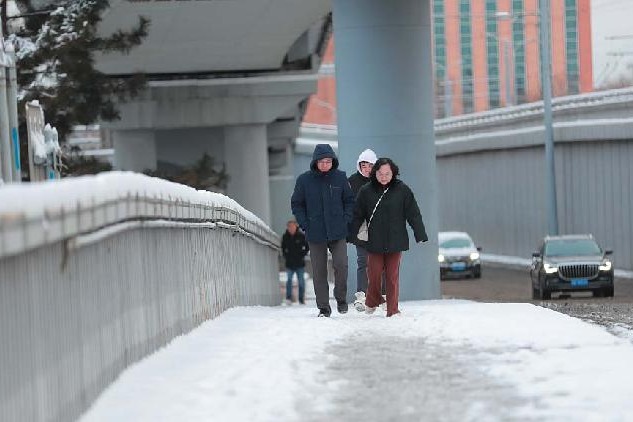
    A significant winter weather system has descended upon northern China, bringing the season’s most extensive snowfall and plunging temperatures. Beijing experienced its first major winter snowstorm on Friday, prompting municipal authorities to implement comprehensive emergency measures across the capital region.

    The Beijing Meteorological Service issued critical weather alerts, including an orange warning for icy roads—the second-highest level in the three-tier alert system—and a blue alert for snowstorms. In response to the deteriorating conditions, transportation authorities permitted private vehicles to use bus-only lanes during Friday’s evening rush hour to alleviate traffic congestion.

    According to chief forecaster Zhang Linna, snow accumulation reached 2-5 centimeters in urban plains and 5-8 centimeters in mountainous areas. The city’s primary snow-clearing operator, Beijing Huanwei Group, deployed an extensive fleet of 2,520 pieces of equipment, including 1,672 specialized snow-removal vehicles, to maintain road accessibility.

    Airports implemented enhanced operational protocols, with Beijing Daxing International Airport mobilizing 300 personnel and 84 snow-removal vehicles. Despite the challenging conditions, both of Beijing’s major airports maintained largely normal flight operations, experiencing only minimal weather-related delays.

    The weather system represents the most substantial precipitation event since winter began, affecting multiple regions including Shaanxi, Shanxi, Hebei, Henan, Shandong, Liaoning provinces, and the Inner Mongolia Autonomous Region. Temperature drops exceeding 10 degrees Celsius were recorded across northern regions, with the cold front expected to continue affecting central China in coming days. Meteorological authorities project temperature rebounds beginning Monday as the system moves southward.

  • An eyebrow tip and McDonald’s footage: Takeaways from Luigi Mangione’s evidence hearing

    An eyebrow tip and McDonald’s footage: Takeaways from Luigi Mangione’s evidence hearing

    Manhattan criminal court has become the stage for a pivotal pre-trial hearing in the high-profile case against Luigi Mangione, the accused murderer of United Healthcare CEO Brian Thompson. The proceedings have revealed startling new evidence about Mangione’s capture at a Pennsylvania McDonald’s and the circumstances surrounding his December 2024 arrest.

    Prosecutors presented never-before-seen body camera footage showing the moment officers confronted the Ivy League graduate and scion of a prominent Maryland family. The visual evidence depicts Mangione calmly eating a meal while surrounded by law enforcement waiting for backup, all accompanied by incongruous Christmas music playing throughout the restaurant.

    The hearing has focused intensely on the defense’s attempts to suppress critical evidence, including a 9mm handgun, silencer, and a notebook allegedly containing anti-healthcare industry writings that prosecutors characterize as a ‘manifesto.’ Defense attorneys Karen Friedman Agnifilo and Marc Agnifilo argue these items were obtained without proper warrant authorization.

    A remarkable aspect of the case emerged through testimony about Mangione’s distinctive eyebrows, which ultimately led to his identification. McDonald’s employees alerted police after a customer noticed the unique facial feature despite the suspect’s attempts at disguise with a black hoodie, medical mask, and beanie.

    Prosecutors introduced particularly damning evidence in the form of notecards found on Mangione containing what appeared to be post-crime instructions. One card explicitly stated: ‘Change hat, shoes, pluck eyebrows’ – suggesting awareness of his most identifiable feature. Another note read: ‘Keep momentum, FBI slower overnight.’

    The testimony of Altoona Lieutenant William Hanelly revealed the initial skepticism among officers about finding a New York shooting suspect in their small Pennsylvania town. Despite this disbelief, officers quickly recognized the resemblance to circulated NYPD photos after days without leads.

    Video evidence shows Mangione initially providing a false New Jersey identification under the name ‘Mark Rosario’ before eventually confessing his true identity. This deception provided the legal grounds for his initial arrest on false identification charges.

    The hearing continues to examine the legality of the backpack search that yielded numerous evidentiary items including dozens of $100 bills, face masks, a hair trimmer, and a passport. Defense arguments center on Fourth Amendment violations, while prosecutors maintain exceptional circumstances justified the warrantless search.

    Mangione remains composed throughout the proceedings, frequently taking notes and occasionally sharing quiet moments with his legal team. The case continues to draw national attention as both sides prepare for what promises to be a complex trial addressing both state murder charges and federal counts that could carry the death penalty.

  • A backstreet abortion nearly killed her. It became a story that shaped the rest of her life

    A backstreet abortion nearly killed her. It became a story that shaped the rest of her life

    Nobel literature laureate Annie Ernaux has transformed her traumatic experience with illegal abortion into a powerful literary testament that continues to resonate across generations. In 1963, as a 23-year-old university student from a working-class background, Ernaux faced an unplanned pregnancy that threatened to derail her academic aspirations and literary ambitions.

    Describing the experience as “a battle of life and death,” Ernaux recounts the terrifying isolation and desperation that characterized illegal abortions in pre-1975 France. With abortion criminalized and information completely inaccessible, young women faced impossible choices between dangerous self-induced procedures or seeking help from underground “angel-makers”—both options carrying severe legal and medical consequences.

    Her meticulously detailed account in “Happening” (2000) documents the physical trauma of her abortion using a knitting needle and the subsequent medical emergency that required hospitalization. The book’s unflinching factual language serves as both historical record and political statement, preserving the memory of what she calls “the worst violence that could be inflicted on a woman.”

    Ernaux’s literary courage extends beyond abortion to other taboo subjects including sexual assault, family secrets, and aging parents. Her distinctive minimalist style, developed while writing about her working-class father, reflects her commitment to social justice and giving voice to marginalized experiences.

    Now 85, Ernaux advocates for memorializing the countless women who died from illegal abortions—estimated between 300,000 to one million annually before legalization. She recently proposed a monument to the Mayor of Paris, analogous to France’s unknown soldier memorial, recognizing these forgotten casualties.

    Despite France’s constitutional protection of abortion rights, Ernaux warns against complacency, citing recent restrictions in US states and Poland. Her work remains on French school syllabi and has been adapted into award-winning films, ensuring new generations understand the brutal history preceding reproductive freedoms.

  • Fired University of Michigan football coach charged with stalking

    Fired University of Michigan football coach charged with stalking

    Sherrone Moore, the recently dismissed head coach of the University of Michigan football program, now confronts serious criminal charges including home invasion and stalking within a domestic relationship. This legal development follows his abrupt termination by the university earlier this week after officials obtained what they described as “credible evidence” of an inappropriate relationship with a staff member.

    According to court documents, the 39-year-old coach was formally charged on Friday afternoon, just two days after his dismissal and subsequent arrest. The incident unfolded when police in Pittsfield Township responded to assault reports at approximately 16:10 local time on Wednesday, coinciding with Moore’s termination.

    Law enforcement authorities from the neighboring city of Saline assisted in locating and detaining the former coach near the university’s Ann Arbor campus. While specific details regarding the alleged assault and inappropriate relationship remain undisclosed, a magistrate has imposed stringent conditions including $25,000 bail, mandatory GPS monitoring, and a restraining order requiring Moore to maintain distance from his former girlfriend.

    The university’s athletic department issued a strong statement emphasizing that Moore’s alleged conduct “constitutes a clear violation of university policy” and reaffirmed their “zero tolerance for such behavior.” This sudden departure creates immediate leadership challenges for the football program, with associate head coach Biff Poggi assuming command ahead of the team’s scheduled appearance in the Cheez-It Citrus Bowl against the University of Texas on December 31.

    Neither Moore nor his legal representative have provided public comments regarding the allegations or criminal charges.

  • Viral scenic valley in China, not Japan, operators of tourist attraction clarify

    Viral scenic valley in China, not Japan, operators of tourist attraction clarify

    A breathtaking viral video showcasing mist-shrouded cliffs that captivated global social media audiences has been definitively identified as featuring China’s Wangxian Valley, despite widespread mislabeling as Japanese scenery. The management of this Jiangxi province tourist destination has confirmed the footage’s true origins after the clip amassed significant international attention.

    Xiong Hui, co-founder and vice-president of Jiuniu Cultural and Tourism Co, which operates the scenic area, expressed surprise at the unexpected global spotlight. The company noticed substantial overseas engagement with the video on Wednesday morning, prompting their clarification.

    “Wangxian Valley is indeed located in Shangrao, Jiangxi,” Xiong stated. “Its distinctive deep gorges and ever-shifting mist create a landscape that is immediately recognizable to those familiar with our region. We are delighted that viewers worldwide have appreciated the footage and extend a warm invitation to international visitors to experience Jiangxi’s authentic natural beauty firsthand.”

    The site’s transformation from a discontinued mining zone to a cultural resort town represents a remarkable rehabilitation success story. Today, Wangxian Valley combines spectacular natural scenery with traditional folk culture and performance activities, creating a multifaceted tourist experience.

    Official statistics reveal the destination’s growing popularity, with 3.1 million visits recorded in 2024, including over 150,000 international tourists. This misidentification incident previously drew the attention of diplomatic channels, with the Chinese embassy in India clarifying on social media platform X on December 8 that the viral video—which had garnered 1.3 million likes—depicted Chinese scenery rather than locations in Tokyo or Hokkaido, Japan. The embassy spokesperson seized the opportunity to encourage global social media users to discover China’s authentic landscapes.

  • Families of Palestine Action hunger strikers in hospital ‘blocked’ from contacting them

    Families of Palestine Action hunger strikers in hospital ‘blocked’ from contacting them

    A deepening humanitarian crisis is unfolding within Britain’s prison system as multiple Palestine Action-linked detainees continue a prolonged hunger strike, now entering its most critical phase. The situation has drawn sharp criticism from medical professionals and lawmakers who allege systematic neglect and violations of standard healthcare protocols.

    At the center of the controversy is Kamran Ahmed, hospitalized for the second time this week after refusing food since November 2nd. His sister, Shahmina Alam, describes an agonizing information blackout imposed by Pentonville prison authorities. ‘We don’t know how he’s doing, that’s the honest answer,’ Alam told Middle East Eye, explaining how the institution has blocked direct medical updates from healthcare providers to families and legal representatives.

    This communication barrier mirrors experiences across multiple facilities. Ella Moulsdale, listed as next of kin for striker Qesser Zuhrah at HMP Bronzefield, discovered the prison had replaced her as emergency contact without consultation. ‘The hospital refused her a call to me and her lawyer,’ Moulsdale revealed, describing how she learned of Zuhrah’s December 3rd hospitalization through absence rather than official notification.

    Medical oversight appears dangerously inadequate according to emergency physician Dr. James Smith, who has been advising the strikers’ families. He reports consistent failures in basic monitoring: ‘There doesn’t appear to have been a single day where a full set of clinical signs have been shared with me by the next of kin.’ Particularly alarming are missing daily measurements of ketone levels and weight—critical indicators when prisoners approach 40 days without nutrition.

    The physical deterioration has become severe. Ahmed exhibited dangerously high ketone levels and slowing pulse rates before hospitalization, conditions that can precipitate coma or cardiac arrest. Dr. Smith emphasizes the extreme vulnerability during this phase: ‘The body is effectively starting to break down muscles and essential organs. There’s a very, very high risk of death due to infection or electrolyte imbalances that can stop the heart abruptly.’

    Further concerns involve treatment obstruction by prison guards. Smith reports instances where hospitalized strikers were shackled to beds or officers during medical assessments, showers, and consultations—practices that interfere with proper healthcare delivery. He concludes that the standard of care falls ‘far below the minimum standard’ required for such high-risk patients.

    With lives hanging in the balance, multiple MPs have urgently appealed to Justice Secretary David Lammy for intervention. Labour MP Zarah Sultana warned the strikers’ lives are ‘now at immediate risk’ and demanded ‘meaningful action.’ Thus far, responses have been inadequate or nonexistent, raising questions about accountability and transparency within the UK’s justice system as this preventable medical emergency escalates.