分类: society

  • Children at kindergarten in N China learn to make dumplings ahead of Winter Solstice

    Children at kindergarten in N China learn to make dumplings ahead of Winter Solstice

    In anticipation of the upcoming Winter Solstice, young students at a kindergarten in Jiyuan city, Shandong province, engaged in a hands-on cultural activity by learning to make traditional Chinese dumplings on December 19, 2025.

    The event, captured in photographs distributed by Xinhua News Agency, shows children proudly presenting their handmade dumplings while learning about this significant seasonal festival. Winter Solstice, occurring this year on December 21st, represents the shortest day of the year and historically marked the beginning of deep winter in traditional Chinese agricultural society.

    This educational initiative connects the younger generation with China’s rich cultural heritage surrounding the solar term. The tradition of consuming specific foods during Winter Solstice varies regionally across China, with northern provinces maintaining the custom of eating dumplings, while southern regions typically enjoy tangyuan (sweet glutinous rice balls).

    The kindergarten’s curriculum-integrated activity demonstrates how educational institutions are preserving cultural traditions through experiential learning. Children not only developed culinary skills but also gained understanding of seasonal changes and their significance in Chinese agricultural history and contemporary practices.

  • Museum’s donated painting in spotlight

    Museum’s donated painting in spotlight

    Nanjing Museum has produced archival documents claiming a disputed 16th-century landscape painting at the center of a major donation controversy was officially classified as forged decades ago. The revelation comes amid escalating legal battles with the descendants of renowned collector Pang Laichen (1864-1949), who donated 137 artifacts to the institution in 1959.

    The conflict emerged when family members discovered ‘Jiangnan Spring’ – attributed to Ming Dynasty master Qiu Ying – was scheduled for auction in Beijing with an ¥88 million ($12.5 million) price tag. The painting was abruptly withdrawn after the Pangs protested, prompting investigations that revealed five artworks from their donation were missing from museum records.

    According to documents presented by the museum, a 1961 expert panel determined ‘Jiangnan Spring’ was duplicated, with a second panel confirming its forged status in 1964. Records indicate the painting was subsequently transferred to Jiangsu Cultural Relics Store in the 1990s under then-prevailing collection management regulations, with a 2001 invoice showing its eventual sale for merely ¥6,800 as ‘A Copy of Qiu Ying’s Jiangnan Spring’.

    Pang Shuling, the collector’s great-granddaughter, has filed a court enforcement application demanding full transparency regarding the transferred artifacts. ‘The donation made by my father to Nanjing Museum in 1959 are all precious works, they are not forged,’ she asserted.

    The museum maintains it acted within historical guidelines, with attorney Zhang Han noting ownership transferred completely upon donation. However, family attorney Yin Zhijun argues donors retain right-to-know privileges regarding their contributions’ preservation.

    Museology professor Pan Shouyong of Shanghai University contextualized the dispute: ‘People’s understanding of what a ‘cultural relic’ is has been constantly growing. It’s unfair to always use today’s guiding mindset to judge past deeds, but neither can we conceal a past blemish if we want to achieve more.’

    The case highlights evolving standards in China’s cultural heritage management, particularly since the National Cultural Heritage Administration’s 2018 interim measures requiring donor consultation for deaccessioning procedures.

  • American students immerse in Chinese culture in Chinatown

    American students immerse in Chinese culture in Chinatown

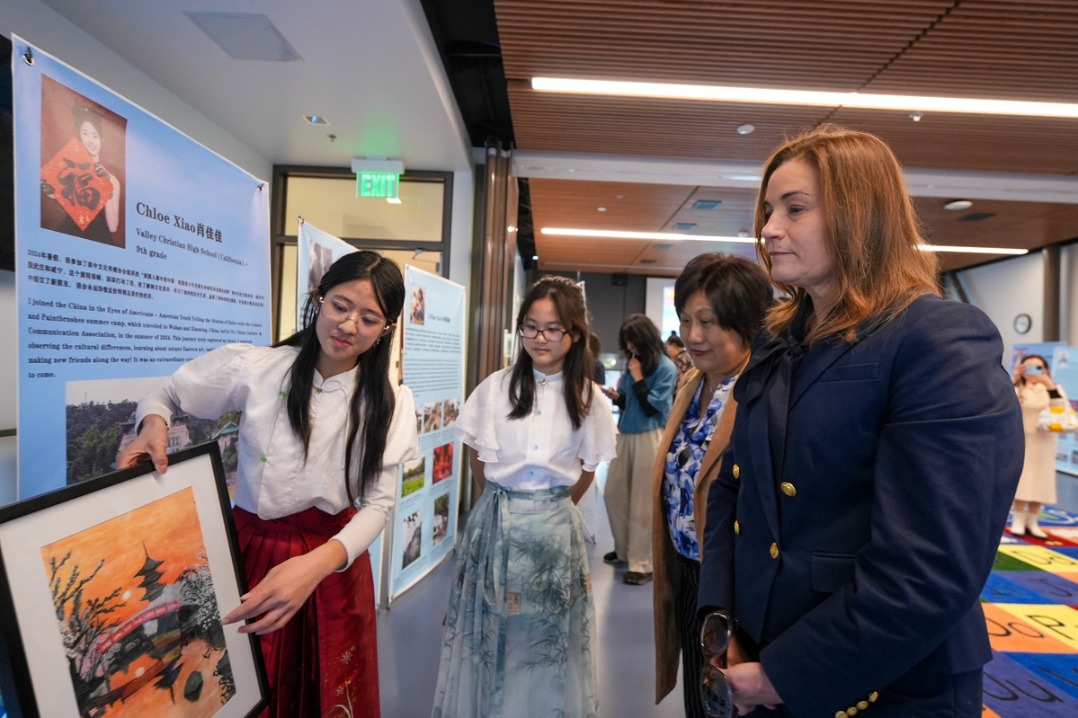
    WASHINGTON, DC – On December 17, 2025, students from Centennial High School’s Chinese language program participated in an immersive cultural experience at the Chinatown Community Cultural Center. The event, titled “The Touch of China in Chinatown,” represents the third consecutive year of this innovative cultural initiative designed to bridge cultural understanding between American youth and traditional Chinese heritage.

    The program provides hands-on exposure to various aspects of Chinese culture through interactive workshops, traditional art demonstrations, and cultural performances. Unlike conventional classroom learning, this experiential approach allows students to engage directly with cultural practices that have been preserved and celebrated within the DC Chinatown community for generations.

    Educators and community organizers collaborated to create an environment where American teenagers could not only observe but actively participate in cultural activities. The program’s structure emphasizes cultural exchange rather than passive observation, encouraging students to ask questions and participate in traditional practices under the guidance of cultural experts and community elders.

    The Chinatown Community Cultural Center has developed this program as part of its ongoing mission to promote cross-cultural understanding and preserve Chinese cultural traditions within an urban American context. The continued success and expansion of this initiative over three consecutive years demonstrates both the community’s commitment to cultural education and the growing interest among American youth in understanding global cultures.

    Participants reported increased appreciation for cultural diversity and expressed interest in further exploring Chinese language studies following their immersive experience. The program serves as a model for how urban cultural centers can facilitate meaningful cross-cultural exchanges that benefit both the local community and broader educational institutions.

  • HK bids farewell to Tai Po blaze’s fallen firefighter

    HK bids farewell to Tai Po blaze’s fallen firefighter

    Hong Kong observed a day of profound mourning on Friday as the city paid final respects to Firefighter Ho Wai-ho, who made the ultimate sacrifice during last month’s catastrophic Tai Po residential fire that claimed 160 lives. The solemn ceremonies brought together government leaders, emergency personnel, and grieving citizens in a powerful display of communal solidarity.

    The formal funeral service, organized by the Fire Services Department at Hung Hom’s Universal Funeral Parlour, commenced at 10 am with Chief Executive John Lee Ka-chiu joining senior officials, Ho’s heartbroken family, and his fellow firefighters. The 37-year-old hero sustained fatal injuries on November 26 while conducting rescue operations at Wang Fuk Court in Tai Po district.

    In recognition of his extraordinary bravery, the Fire Services Department posthumously promoted Ho to the honorary rank of senior fireman. Having joined the department in 2016 and stationed at Sha Tin, Ho built a distinguished nearly nine-year career marked by exceptional dedication and participation in numerous critical rescue missions.

    Public admiration manifested early as residents began gathering outside the funeral parlor by 8 am, many bringing floral tributes to honor the fallen first responder. The subsequent procession featured a fire-truck-turned-hearse carrying Ho’s flag-draped coffin, which paused at approximately 11:10 am near the scene of the tragic blaze for a poignant memorial ceremony. Firefighters stood at solemn attention while officials bowed in respect, with nearby footbridges filled with mourning citizens.

    Among those paying respects was a Ms. Lee from adjacent Kwong Fuk Estate, who came to express gratitude for Ho’s sacrifice. She recounted how the acrid smoke from the November fire had permeated her home, creating an enduring sensory memory of the disaster.

    The procession then proceeded to Sha Tin Fire Station, where Ho had been based. There, personnel from across Hong Kong bowed collectively as a fire bell sounded four times—three short rings followed by one long—symbolically releasing Ho from his duties. The final journey concluded at Gallant Garden in Wo Hop Shek Cemetery, the resting place reserved for government servants who die in service to Hong Kong.

    At approximately 1:10 pm, six firefighters and two pallbearers carried Ho’s coffin to his final resting place, followed by his brother holding a portrait and his bereaved fiancée. In a touching final ritual, the flag covering the coffin was carefully folded and Ho’s service helmet was placed atop the lid, marking the formal end of his watch.

  • High-speed passenger train kills 7 elephants crossing railway tracks in northeast India

    High-speed passenger train kills 7 elephants crossing railway tracks in northeast India

    A devastating railway collision claimed the lives of seven wild Asiatic elephants and injured a calf in northeastern India’s Assam state during the early hours of Saturday. The Rajdhani Express train, transporting 650 passengers from Sairang to New Delhi, struck the elephant herd while traversing through forested terrain approximately 78 miles southeast of Guwahati, Assam’s capital.

    According to Indian Railways spokesman Kapinjal Kishore Sharma, the locomotive operator detected the massive herd of approximately 100 elephants and immediately engaged emergency braking systems. Despite these preventive measures, the high-speed passenger train could not avoid impact with multiple animals. The collision resulted in the derailment of five coaches and the engine, though remarkably no human passengers sustained injuries.

    Veterinary specialists conducted postmortem examinations on the deceased elephants, with burial procedures scheduled for later the same day. Railway authorities confirmed that the accident occurred outside designated elephant crossing corridors, though the region is known for frequent elephant movements.

    Following the incident, railway personnel separated the unaffected coaches, allowing the main train to continue its journey to New Delhi. Approximately 200 passengers from the derailed compartments were transferred to Guwahati via alternative transportation.

    This tragedy highlights an ongoing conservation challenge in Assam, which hosts an estimated 7,000 wild Asiatic elephants—among India’s highest population densities for the species. Since 2020, train collisions have killed at least a dozen elephants statewide. The problem intensifies annually during harvest season, when elephants increasingly venture into human-occupied areas near railway tracks.

  • Watch: Images, cassettes and high-profile figures – What’s in the latest Epstein files?

    Watch: Images, cassettes and high-profile figures – What’s in the latest Epstein files?

    A new tranche of documents from the Jeffrey Epstein case has been partially unsealed, offering fresh glimpses into the world of the convicted sex offender. The latest release includes previously unseen photographs of Epstein’s multiple properties, audio cassette recordings, and heavily redacted legal documents.

    The visual materials provide insight into the lavish environments where Epstein operated his criminal enterprise, spanning from his New York mansion to his private Caribbean island. While many documents remain censored to protect the identities of non-public figures, the release continues to draw attention due to Epstein’s connections with numerous high-profile individuals from business, politics, and academia.

    Legal experts note that the gradual document release represents an ongoing effort to balance transparency with privacy concerns, particularly for victims and innocent associates. The latest disclosures form part of a larger collection of evidence that continues to be processed through judicial channels, with additional documents expected to become public in the future as court-mandated redactions are carefully reviewed.

  • Artist’s battlefield collection captures the lived experience of Ukraine’s resistance to invasion

    Artist’s battlefield collection captures the lived experience of Ukraine’s resistance to invasion

    In a concealed basement near Kyiv’s Maidan Square, Ukrainian street artist Maxim Kilderov has created a profound testament to human resilience amid conflict. His unconventional exhibition, assembled from the visceral remnants of battle, serves as an organic archive of Russia’s ongoing invasion of Ukraine.

    The space contains a haunting array of artifacts: rocket launch tubes stand adjacent to a Russian intelligence officer’s personal diary; captured military uniforms drape darkened walls; thousands of vibrantly colored unit patches create a mosaic of military identity, defiance, and dark humor. For Kilderov, who survived 55 days under Russian occupation in Nova Kakhovka, these objects constitute crucial evidence that transcends official war narratives.

    What began as a personal collection in his home has evolved into a comprehensive repository featuring captured documents, passports, helmets, weapon fragments, and specialized military equipment. Among the most poignant items is a smartphone pierced by shrapnel that saved a soldier’s life, alongside personal effects like soldiers’ drawings and partially consumed cigarette packets.

    Kilderov’s distinctive artistic style—doodle-like calligraphy concealing symbols and resistance messages—permeates the exhibition. A centerpiece is his 5-meter painting titled “55,” an intricate maze of colored lines and symbols representing each day of his occupation experience, during which he organized underground aid networks and documented life under Russian control.

    Since fleeing westward, Kilderov has expanded his mission, creating military patch designs, transforming battlefield debris into art, and converting rocket tubes into Bluetooth speakers—donating most proceeds to Ukrainian military units. His Kyiv basement has become an organic gathering place where soldiers contribute new artifacts and stories, continually expanding this raw documentation of Ukraine’s lived reality.

    As Ukraine enters its fourth winter of conflict, Kilderov expresses concern about diminishing social unity despite the ongoing emergency. His deliberate wearing of a red MAGA hat during interviews serves as ironic commentary on Ukraine’s precarious dependence on foreign aid that could be withdrawn without warning.

    The artist ultimately plans to formalize the collection into a museum that concentrates emotional impact within a single immersive space, rejecting traditional museum formats in favor of immediate, powerful confrontation with war’s human cost.

  • Sri Lanka tea workers struggle in poverty. Flooding cost many their lives

    Sri Lanka tea workers struggle in poverty. Flooding cost many their lives

    The devastating impact of Cyclone Ditwah has laid bare the extreme vulnerabilities facing Sri Lanka’s tea plantation communities, where centuries-old systemic inequalities have amplified a natural disaster into human tragedy. In the hilly central regions, entire communities of Malaiyaha Tamil workers—descendants of indentured laborers brought from India during British colonial rule—have been virtually erased by catastrophic landslides and flooding.

    Survivors like Kumaran Elumugam returned from work to discover his home completely buried, claiming six family members including his wife, mother-in-law, and grandchildren. “The small one is still under the mud,” he lamented, encapsulating the horrifying human toll. Across the affected regions, over 640 lives were lost with hundreds more missing, while more than 100,000 homes were destroyed or damaged.

    The disaster disproportionately impacted tea workers who typically inhabit primitive 150-year-old colonial-era structures measuring barely 100 square feet, often housing eight family members with inadequate sanitation facilities. Climate researcher Melanie Gunathilaka noted that while tea plantations on flatter ground remained largely unaffected, worker settlements situated near dangerous mountain slopes were completely destroyed—a stark illustration of how little value has been placed on these communities’ safety.

    These communities, representing Sri Lanka’s fourth-largest ethnic group, survive on wages well below the minimum of 1,200 rupees ($4) per day with limited access to education, healthcare, or alternative employment. The catastrophe has exposed how climate vulnerability intersects with preexisting socioeconomic disparities.

    The government has promised compensation packages and new housing initiatives, including an Indian-assisted project to build 7,000 homes. Deputy Minister Sundaralingam Pradeep confirmed negotiations with tea companies to identify safer lands for reconstruction. However, survivors report continuing to work under dangerous conditions as companies provide no support without labor.

    Beyond immediate recovery, Sri Lanka faces profound climate adaptation challenges. The nation accounts for less than 1% of global emissions yet ranks among the most vulnerable to climate impacts. According to UN estimates, Sri Lanka loses over $300 million annually to climate-related disasters, with 19 million citizens living in disaster-prone areas.

    The country’s massive debt burden—owing billions to the IMF, multilateral banks, and national creditors—severely hampers climate resilience efforts. As analyst Sandun Thudugala observed, “Disasters don’t break the system. They expose the already broken systems.” Without debt relief and significant investment in climate-resilient infrastructure, early warning systems, and adaptive housing, Sri Lanka’s most marginalized communities remain trapped in a cycle of vulnerability despite contributing minimally to the global climate crisis.

  • Kebabs, biryani and much more: Indian city on Unesco culinary list

    Kebabs, biryani and much more: Indian city on Unesco culinary list

    The northern Indian city of Lucknow has received international recognition as UNESCO designated it a Creative City of Gastronomy, placing it among 408 cities worldwide committed to leveraging creativity for sustainable urban development. This prestigious accolade makes Lucknow only the second Indian city after Hyderabad to join this exclusive network.

    UNESCO’s Regional Director for South Asia, Tim Curtis, emphasized that this designation serves as a testament to Lucknow’s profound culinary heritage and dynamic food ecosystem, simultaneously honoring its cultural legacy while creating opportunities for global collaboration.

    The city’s gastronomic identity traces back to the 18th and 19th centuries when it served as the capital of the Awadh region under wealthy Muslim rulers known as Nawabs. Their royal kitchens became centers of culinary innovation, blending Persian and Indian techniques to create what is now known as Awadhi cuisine. Among their most significant contributions was the Dum pukht method—slow-cooking ingredients in a sealed pot with dough—developed during Nawab Asaf-ud-Daulah’s reign to address famine conditions through a work-for-food program.

    Lucknow’s culinary landscape features iconic dishes including melt-in-the-mouth kebabs like the galouti kebab, created for a toothless nawab using finely minced meat with papaya and spices. The city’s distinctive biryani, kormas, sheermal (saffron flatbread), and shahi tukda (bread pudding) further demonstrate its rich gastronomic diversity.

    Beyond meat-based specialties, Lucknow offers a vegetarian paradise with seasonal delights and street food like chaat. The city boasts generations-old establishments such as Sharmaji Tea Stall, operating since 1949 and famous for its masala chai served in clay glasses, and Netram, a 150-year-old institution renowned for kachoris and jalebis.

    Seasonal specialties include makkhan malai, a frothy winter dessert created through a scientific process of dew-exposed, hand-churned milk. However, concerns exist about the preservation of such traditional methods as younger generations show declining interest in these culinary arts.

    Local advocates including celebrity chef Ranveer Brar and Madhavi Kuckreja of the Sanatkada Trust emphasize that UNESCO recognition should spotlight lesser-known eateries and family recipes that constitute Lucknow’s living culinary history. They hope this international acknowledgment will encourage global visitors to explore the stories behind each dish and sustain the city’s food traditions for future generations.

  • UAE’s People of Determination craft 13,000-lanyard chain, breaking Guinness Record

    UAE’s People of Determination craft 13,000-lanyard chain, breaking Guinness Record

    The United Arab Emirates has secured another prestigious Guinness World Records title through a remarkable initiative highlighting inclusivity and determination. The Zayed Authority for People of Determination has been officially recognized for creating the world’s longest chain of lanyards, measuring an impressive 663.53 meters in length.

    This extraordinary achievement comprises 13,000 individually handcrafted sunflower lanyards, meticulously created by people of determination themselves. The project saw collaboration across 13 national entities that united to transform this visionary concept into tangible reality. The manufacturing and coordination process took place at the Authority’s Innovation Centre, where participants engaged in designing, assembling, and organizing the lanyards.

    The sunflower lanyard holds global significance as a recognized symbol for raising awareness about hidden disabilities. This initiative aims to foster greater community understanding and encourage institutions worldwide to develop more supportive environments for individuals with non-visible disabilities.

    Abdullah Abdulali Al Humaidan, Director General of Zayed Authority for People of Determination, emphasized the profound meaning behind this accomplishment. ‘This record transcends being merely another certificate in the UAE’s achievements register,’ he stated. ‘It represents a powerful message embodying the core values of empowerment, respect, and humanity. The project demonstrates that remarkable achievements become possible when collective efforts converge, proving that people of determination can accomplish the extraordinary when provided with supportive environments and dedicated partners.’

    Al Humaidan further reinforced the Authority’s ongoing commitment to developing high-impact initiatives that showcase the capabilities of people of determination. These efforts strengthen their vital role in the UAE’s developmental journey while contributing to global achievements that reflect national excellence and the enduring spirit of determination and perseverance.