
分类: society

  • Spain begins 3 days of mourning for deadly train wreck while searchers look for more bodies

    Spain begins 3 days of mourning for deadly train wreck while searchers look for more bodies

    Spain has commenced three days of national mourning following a catastrophic train collision in the southern region of Andalusia that has claimed at least 40 lives. Emergency crews continue their painstaking search through the wreckage near Adamuz, where two passenger trains collided under circumstances authorities describe as “truly strange.

    The tragedy unfolded Sunday evening at 7:45 p.m. when the rear section of an Iryo-operated train carrying 289 passengers from Málaga to Madrid derailed on a straight section of track. The dislodged cars then slammed into an oncoming Renfe train traveling from Madrid to Huelva with nearly 200 passengers aboard. The impact was most severe for the Madrid-Huelva train, whose first two carriages were thrown down a 4-meter (13-foot) slope upon collision.

    Interior Minister Fernando Grande-Marlaska confirmed that three additional bodies have been located within the wreckage but remain unrecovered, suggesting the death toll may rise further. Regional president Juanma Moreno characterized the scene as “a twisted mass of metal,” noting that some victims were found hundreds of meters from the impact site.

    Transport Minister Óscar Puente revealed investigators have discovered a broken section of track but remain uncertain whether this damage caused or resulted from the derailment. Both trains were reportedly traveling well below the 250 kph (155 mph) speed limit, with Renfe president Álvaro Fernández stating that “human error could be ruled out.” The Iryo train involved was relatively new, manufactured in 2022 and having passed its latest safety inspection on January 15.

    The collision has profoundly shaken a nation that prides itself on operating Europe’s most extensive high-speed rail network. Prime Minister Pedro Sánchez visited the accident site Monday and declared official mourning, with flags lowered to half-staff on all public buildings and naval vessels. King Felipe and Queen Letizia are scheduled to visit the area Tuesday.

    Meanwhile, transportation disruptions continue throughout Andalusia, Spain’s most populous region, with train services between Madrid and Andalusian cities canceled indefinitely. Spanish airline Iberia has added extra flights to Sevilla and Málaga to accommodate stranded travelers, while bus companies have reinforced their services in affected areas. The Civil Guard is collecting DNA samples from families seeking to identify missing relatives among the deceased.
  • Civil aviation readies for record rush

    Civil aviation readies for record rush

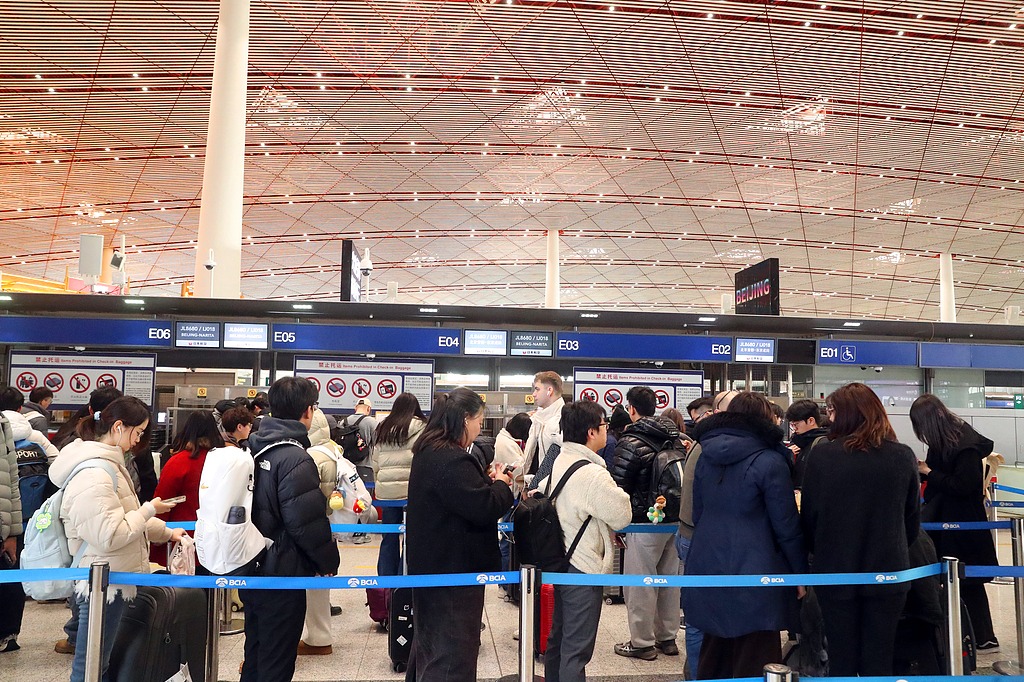
    China’s civil aviation industry is preparing for unprecedented passenger volumes during the upcoming Spring Festival travel period, with officials projecting approximately 95 million air trips throughout the 40-day chunyun season. The travel rush, scheduled from February 2 to March 13, represents a 5.3% increase compared to previous years, averaging 2.38 million daily passenger journeys.

    The Spring Festival migration, recognized as the world’s largest annual human movement, demonstrates the cultural significance of family reunions and holiday traditions in Chinese society. This year’s extended nine-day public holiday from February 15-23, with the actual festival falling on February 17, is expected to create concentrated passenger flows as students and migrant workers coordinate their travel schedules around the extended break.

    Wang Weijun, Deputy Director of the Civil Aviation Administration of China’s Transport Department, emphasized that traditional family reunion travel combined with robust tourism demand will drive unprecedented aviation activity. “The combination of traditional travel for family reunions, student travel and strong holiday tourism demand is expected to further release aviation travel potential during the Spring Festival period,” Wang stated at a Beijing news conference.

    The aviation sector has coordinated approximately 780,000 scheduled flights throughout the travel period, representing a 5% year-over-year capacity increase averaging 19,400 daily flights. Peak travel is anticipated both before and after the main holiday, with post-festival return travel expected to be particularly congested. Single-day passenger volumes could reach 2.6 million during the highest demand periods.

    Concurrently, the CAAC has implemented enhanced safety protocols for unmanned aircraft operations. Chen Ye, Deputy Director of the Aircraft Airworthiness Department, outlined new standards requiring real-name registration, activation procedures, and operational identification for all civil drones. These measures establish technical systems to ensure traceability and monitoring capabilities throughout drone operations, addressing public safety concerns while supporting the development of China’s low-altitude aviation sector.

  • China’s population falls for fourth year amid economic woes

    China’s population falls for fourth year amid economic woes

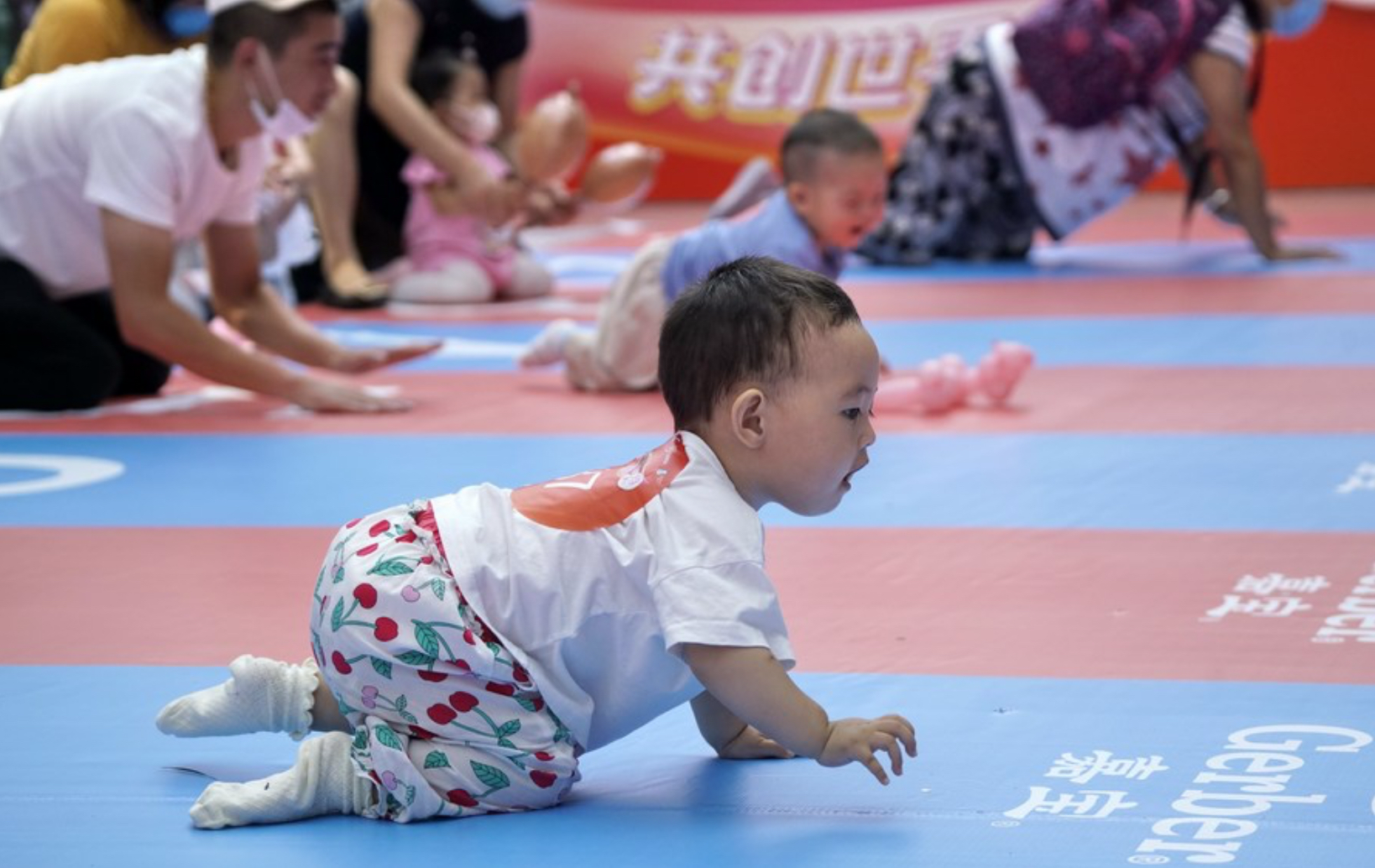
    China has documented its fourth successive annual population contraction in 2025, cementing a concerning demographic trajectory that poses substantial challenges to economic vitality and social welfare frameworks. Official statistics from the National Bureau of Statistics (NBS) reveal a stark imbalance: with 7.92 million births overshadowed by 11.31 million deaths, the nation experienced a net reduction of 3.39 million people, settling the year-end population at approximately 1.405 billion.

    This persistent downturn reflects deeper systemic issues, including widespread employment instability among youth and diminishing marriage rates, which collectively undermine China’s long-term growth potential. The contracting workforce signals impending strains on pension systems and escalating healthcare expenditures associated with an aging citizenry.

    Critical analysis of workforce demographics shows the core working-age population (16-59 years) now constitutes 60.6% of the total populace, down from 60.9% in the previous year. This segment witnessed an annual decrease of 6.62 million individuals, highlighting tightening labor conditions despite advancements in educational attainment and productivity metrics.

    NBS officials, including Wang Pingping, Director of Population and Employment Statistics, emphasize qualitative improvements within the demographic profile. With 851 million people in the 16-59 cohort and 323 million aged 60 or above, China benefits from significant human capital. Wang notes that many seniors maintain robust health and economic activity, while average educational duration reaches 11.3 years and life expectancy climbs to 79 years. The nation’s R&D personnel now exceed 10.8 million, indicating a strategic pivot from labor quantity to expertise quality.

    Regional disparities further illustrate demographic fragmentation. Northeastern provinces like Liaoning, Heilongjiang, and Jilin report severe natural population declines, exacerbated by outward migration and aging residents. Conversely, southern regions and less-developed western areas, including Guangdong, Tibet, and Xinjiang, demonstrate relative resilience through higher birth rates and younger demographic structures.

    Underpinning these trends are evolving social attitudes. Marriage registrations briefly rebounded by 8.5% in early 2025 following policy interventions, yet analysts consider this temporary amid enduring economic pressures. A shrinking marriage-age population—down by over 60 million in a decade—coupled with pronounced gender imbalances and financial barriers like betrothal gifts and housing costs, continue to discourage family formation. These dynamics fuel the proliferation of ‘tang ping’ (lying flat) and ‘bai lan’ (let it rot) lifestyles among disenchanted youth.

    Despite these challenges, China retains formidable demographic advantages, including an urban population of 954 million (67.9% urbanization rate) and a consumer market surpassing the combined populations of developed nations. Policy measures expanding childcare support and educational access aim to mitigate demographic headwinds, though structural economic transformations appear inevitable.

  • Innovative architecture gives rise to schools of the future

    Innovative architecture gives rise to schools of the future

    In the heart of Shenzhen, Guangdong province, an educational architecture revolution is unfolding as innovative design solutions address the critical shortage of student placements in one of China’s most densely populated urban centers. The Hongling Experimental Primary School, completed in 2018 at the foot of Antuo Hill, stands as a pioneering model of high-density educational infrastructure that has captured international attention.

    Architect He Jianxiang, the visionary behind this groundbreaking project, frequently returns to the school with both architectural experts and educational delegations to demonstrate how creative thinking transformed spatial limitations into educational opportunities. The school’s distinctive features include semi-underground indoor sports facilities, expansive rooftop gardens, unusually wide corridors, and sunken landscaped courtyards that collectively create an environment where children consistently choose to extend their stay beyond school hours.

    This architectural achievement emerged from Shenzhen’s urgent ‘new campus action plan’ initiated in response to a severe educational infrastructure crisis. In 2017, city authorities committed to an ambitious five-year development strategy allocating 400 billion yuan ($56.3 billion) to construct 247 new educational institutions capable of accommodating 740,000 additional students. The Hongling school represents the inaugural and most influential project within this comprehensive initiative, successfully solving the complex puzzle of creating functional educational spaces within extreme urban density constraints.

    The school’s open design philosophy has transformed it into a community hub that extends beyond traditional educational functions, while its innovative use of vertical and underground spaces has established new standards for urban school architecture. The project demonstrates how architectural innovation can directly address social challenges, particularly in cities experiencing rapid population growth and limited available land resources.

  • New Year art draws on town’s colorful tradition

    New Year art draws on town’s colorful tradition

    As China enters layue, the twelfth lunar month, the picturesque town of Tantou in Hunan province comes alive with the centuries-old tradition of creating vibrant nianhua (New Year paintings). These elaborate artworks transform ordinary doors into canvases depicting fortune gods, striped tigers, and whimsical scenes like mouse wedding processions, serving as both cultural expressions and talismans believed to ward off misfortune while inviting prosperity.

    Tantou nianhua boasts a remarkable history spanning over three centuries, earning the town the prestigious title “Hometown of Modern Folk New Year Paintings.” The tradition gained national recognition when renowned writer Lu Xun nostalgically described a Tantou “mouse wedding” painting that adorned his childhood bedroom in his essay collection Dawn Blossoms Plucked at Dusk.

    The creation process represents a completely self-contained local production cycle rare in Chinese folk art. Artisans begin by crafting specialized paper from locally sourced bamboo, providing the perfect textured base for printing. The heart of the technique lies in woodblock carving using the distinctive “steep knife upright line” method, which requires exceptional precision and artistic intuition to maintain consistent angles and pressure throughout intricate designs.

    National intangible cultural heritage inheritor Liu Guoli emphasizes the spiritual dimension of the craft: “Your personality and temperament shape the carving, making each block unique.” The vibrant coloration emerges through a multi-step printing process where each hue corresponds to a separate woodblock, culminating in hand-painted facial features that imbue characters with lifelike qualities.

    The artworks’ striking palette features tangerine reds, brilliant yellows, rose pinks contrasted with cool cyan and deep charcoal—a dynamic interplay that gives each piece its characteristic vitality. Professor Wu Yuqing of Hunan Normal University’s Fine Arts Academy notes: “The motifs represent a practical aesthetic shaped over centuries by countless families. The more deeply art is rooted in ordinary people’s lives, the more vibrantly its brilliance unfolds.

    Recent documentation in the series Ancient Crafts of Hunan employed macro lenses and slow-motion cinematography to showcase this intricate process, bringing renewed attention to Tantou’s cultural treasure that was among China’s first entries on the national intangible cultural heritage list in 2006.

  • Analysis: China’s birth-rate struggles underscore its millennia-long struggle to manage ‘the masses’

    Analysis: China’s birth-rate struggles underscore its millennia-long struggle to manage ‘the masses’

    China confronts an unprecedented demographic challenge as newly released data reveals its population has entered a period of historical decline, dropping by 3 million to 1.404 billion people. This development marks the lowest birth rate recorded since the establishment of the People’s Republic in 1949, signaling a critical juncture in the nation’s millennia-long struggle with population management.

    The current situation represents a dramatic reversal from decades of restrictive population control measures. The notorious one-child policy, implemented in 1980 to curb rapid population growth, has yielded unintended consequences that continue to reverberate through Chinese society. This policy not only created a disproportionate aging population but also triggered severe social distortions including gender imbalance, the emergence of single-child ‘little emperors’ in urban households, and widespread loneliness among elderly citizens separated from their geographically dispersed children.

    President Xi Jinping has revitalized ancient cultural precepts that equate population strength with national power, describing China’s people as a ‘great wall of steel.’ This philosophical shift accompanies practical policy changes including tax exemptions for condoms, daycare centers, and matchmaking services. The government’s current five-year development plan explicitly aims to cultivate positive attitudes toward marriage and childbearing while implementing financial incentives to reduce the costs associated with raising children.

    The demographic transition occurs against an increasingly competitive international backdrop, with India having surpassed China as the world’s most populous nation in 2023. This development carries significant implications for China’s geopolitical standing and its aspirations to lead the Global South. As contemporary China grapples with the complex legacy of its population policies, the nation faces fundamental questions about how traditional values can coexist with modern realities in shaping its demographic future.

  • Exhibition highlights American youth voices

    Exhibition highlights American youth voices

    SAN FRANCISCO—An extraordinary collection of artistic works created by American high school students during their cultural immersion trips to China is now captivating audiences at the Cupertino City Library. The exhibition, titled “China in the Eyes of Americans,” showcases photography, sketches, and personal narratives from 21 students who explored China’s Hubei province during the summers of 2024 and 2025.

    Organized by the US-China Culture and Communication Association in collaboration with the Youth Horizon Culture Connection Association, the exhibition represents a unique cross-cultural initiative. The participating students, primarily from California with additional representation from Florida and Tennessee, documented their journeys through Wuhan, Enshi, Xiaogan, and surrounding regions, capturing both iconic landscapes and everyday moments of Chinese life.

    Chloe Xiao, a California high school sophomore and founder of the Youth Horizon association, emphasized the transformative nature of the experience. “In Enshi, we wore traditional Tujia attire, gaining firsthand appreciation for the elegance and rich heritage of Tujia culture,” she recalled, describing the silver hair ornaments and complete costumes as “gorgeous.”

    The exhibition reveals diverse perspectives through different artistic mediums. Jasmine White, a senior from Carlmont High School, focused her photographic work on Hubei’s bridges, particularly the Yingwuzhou Yangtze River Bridge. “This trip taught me the significance of bridges in China—they represent connection: linking people, communities, and cultures across generations,” White explained.

    For many participants, the human connections formed during their travels proved most meaningful. Benjamin Li, a sophomore from Florida, described bonding with Chinese university students from ethnic minority backgrounds in Enshi. “We laughed, played games, and had fun together,” he shared. “It made my summer unforgettable.”

    Aiden Wei Tanner from San Jose contrasted his China experience with previous European travels, noting, “Those cities in Europe feel distinctly foreign. China is different—I felt part of the culture rather than an outsider.” This sense of belonging influenced how he photographed everyday life in Hubei, capturing images of store owners, students, and strangers alike.

    Beyond cultural immersion, students also gained practical benefits. Iris Zhu, a California freshman, reported significant improvement in her Chinese language skills, while all participants gained insights rarely accessible to most foreigners.

    Song Min, president of UCCA, initiated the program six years ago to foster connections between American and Chinese youth. “When young people start to listen to their peers and learn from each other, great things will happen,” Song stated, emphasizing that these American students serve as “practitioners of cross-cultural communication” rather than mere observers.

    The exhibition continues through January at the Cupertino library, offering Bay Area residents a rare glimpse of China through the authentic perspectives of American youth.

  • Surfer bitten in 4th shark attack off Australia’s east coast in 3 days

    Surfer bitten in 4th shark attack off Australia’s east coast in 3 days

    A series of shark encounters along Australia’s New South Wales coastline has resulted in multiple injuries and prompted extensive beach closures. The latest incident occurred Tuesday morning at Point Plomer, approximately 460 kilometers north of Sydney, where a 39-year-old surfer sustained minor injuries after a shark attacked his surfboard.

    According to Matt Worrall, captain of the Kempsey-Crescent Head Surf Life Saving Club, the surfboard absorbed the majority of the impact. ‘He made his own way into shore where he was assisted by locals,’ Worrall reported to Australian Broadcasting Corp. The victim was transported to hospital by bystanders and later discharged.

    This incident marks the fourth shark encounter in the region within a three-day period. The previous attacks included:

    – A 12-year-old boy who suffered severe injuries after jumping from a 6-meter ledge at Shark Beach within Sydney Harbor on Sunday. Reports indicate the boy may have lost both legs in the attack, with friends credited for saving his life by dragging him to safety.
    – An 11-year-old boy whose surfboard was bitten at Dee Why Beach on Monday, though he escaped unharmed.
    – A surfer in his 20s who was critically injured after being bitten on the leg at North Steyne Beach Monday evening.

    Authorities have responded by closing beaches indefinitely along the northern coast of New South Wales and deploying electronic drumlines off the Sydney coast to detect shark activity. Surf Life Saving NSW chief executive Steve Pearce warned that recent rainfall has created murky water conditions particularly conducive to bull shark activity, the species responsible for most attacks around Sydney.

    ‘If you’re thinking about going for a swim, just go to a local pool because at this stage, we’re advising that beaches are unsafe,’ Pearce stated. The latest attack occurred in an isolated area without protective shark netting, raising questions about the effectiveness of current safety measures.

  • Shark bites surfer in Australian state’s fourth attack in 48 hours

    Shark bites surfer in Australian state’s fourth attack in 48 hours

    Australian authorities have issued urgent warnings for swimmers and surfers to avoid coastal waters following an alarming series of shark encounters along New South Wales’ coastline. The most recent incident occurred Tuesday when a surfer sustained minor injuries from a suspected bull shark bite on the Mid North Coast, marking the fourth such attack within a 48-hour period.

    The concerning pattern began Sunday afternoon when a 12-year-old boy suffered severe lower limb injuries while swimming in Sydney Harbour. Police Superintendent Joseph McNulty described the scene as ‘horrendous’ and confirmed the child remains in critical condition. On Monday, two separate incidents occurred on Sydney’s northern beaches: one surfer sustained critical leg injuries at Manly Beach, while an 11-year-old boy narrowly escaped harm when a shark damaged his surfboard just north of the area.

    Marine scientists attribute this unusual spike in shark activity to recent heavy rainfall patterns. Professor Culum Brown of Macquarie University explained that bull sharks are particularly drawn to freshwater outlets where rivers meet the ocean, following prey species that get washed downstream. ‘The incredible rainfall we’ve experienced creates ideal feeding conditions for sharks as they pursue fish and other organic matter flowing from inland waterways,’ Brown stated.

    All northern Sydney beaches remain closed indefinitely as authorities monitor the situation. Surf Life Saving New South Wales continues to emphasize the importance of heeding safety warnings until water conditions normalize and shark activity decreases.

  • AFL great Nicky Winmar to fight assault allegations at August hearing

    AFL great Nicky Winmar to fight assault allegations at August hearing

    Australian Football League icon Nicky Winmar is preparing to formally contest serious criminal allegations in a Melbourne court. The former St Kilda champion faces charges of assault and choking stemming from an incident alleged to have occurred on July 18 of last year.

    Winmar appeared remotely via video link before Melbourne Magistrates Court on Tuesday, where his legal representative, prominent barrister Dermott Dann KC, indicated the 60-year-old would dispute all allegations. The court has scheduled a comprehensive hearing to examine the evidence, set to occur approximately eight months from now.

    The specific charges include two counts of assault and one count of unlawfully choking, strangling or suffocating another person without legal justification. These charges were formally filed against Winmar on July 19, 2023, following police investigation into the alleged altercation.

    Beyond his current legal challenges, Winmar remains celebrated for his groundbreaking 251-game AFL career spanning twelve seasons, during which he earned All Australian honors twice. His legacy extends beyond athletic achievement to social significance—his iconic stance against racial abuse during a 1993 match was permanently commemorated with a bronze statue outside Perth’s Optus Stadium.

    The court has scheduled Winmar’s next appearance for August 11 as proceedings continue to develop.