分类: society

  • The retired Indian factory worker who built a library of two million books

    The retired Indian factory worker who built a library of two million books

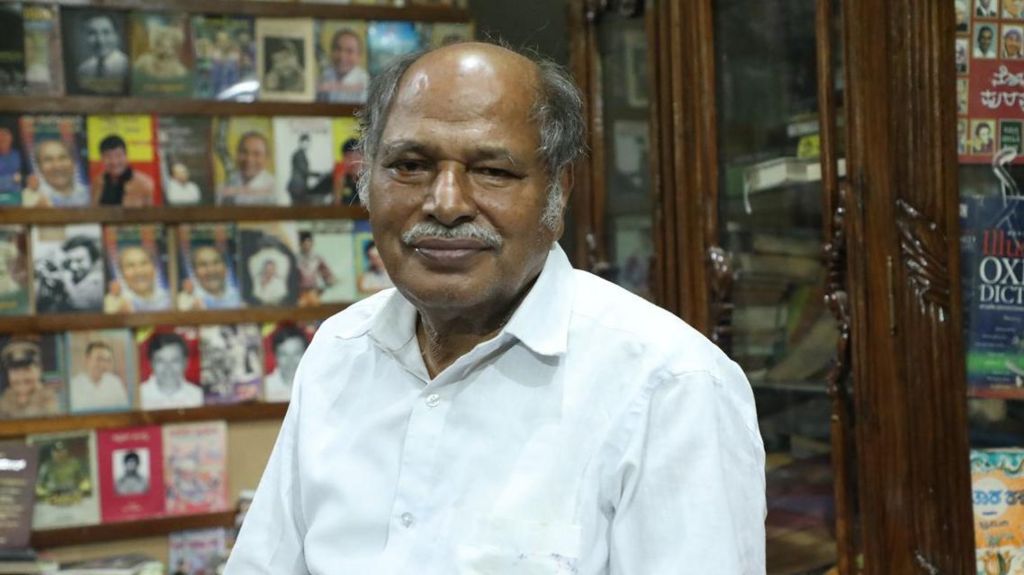
    In the quiet municipality of Pandavapura, Karnataka, 79-year-old Anke Gowda has transformed a childhood passion into one of India’s most extraordinary literary institutions. The retired sugar factory worker, recently honored with the prestigious Padma Shri award, has amassed a staggering collection of approximately two million books over five decades, all freely accessible to the public.

    Gowda’s journey began in rural poverty where books were considered unaffordable luxuries. His insatiable curiosity led him to sacrifice meals for literature, using food money to purchase volumes about Indian freedom fighters and spiritual leaders that he describes as ‘like candy.’ This personal sacrifice evolved into a systemic mission after inspiration from a teacher who encouraged him to create reading opportunities for other rural students.

    After obtaining a postgraduate degree in Kannada literature, Gowda dedicated two-thirds of his factory salary to expanding his collection while supplementing his income through dairy farming and insurance sales. The collection eventually outgrew his home, spilling out of metal trunks and overwhelming his living space until intervention came from unexpected quarters.

    The late industrialist Hari Khoday, upon witnessing the scale of Gowda’s collection, funded construction of a dedicated library building spanning 15,800 square feet. Subsequent support from former Chief Minister HD Kumaraswamy expanded the facility with two additional structures, creating the sprawling complex that stands today.

    Unlike conventional libraries, Gowda’s establishment operates without professional librarians or systematic organization. Books reside in haphazard stacks on shelves and floors, with approximately 800,000 volumes still awaiting unpacking from sacks beneath the library’s awnings. Despite the apparent chaos, regular visitors attest to Gowda’s uncanny ability to locate any volume instantly.

    The library has become an educational hub attracting students, teachers, and scholars from across Karnataka. Assistant Professor Ravi Bettaswami credits the institution with inspiring his own substantial book collection, while government college lecturer Shilpashree Haranu acknowledges the collection’s disorganized appearance but praises Gowda’s intuitive cataloging system.

    Now contemplating the future of his legacy, Gowda expresses hope that governmental or public institutions will assume responsibility for maintaining and expanding the collection. ‘I have fulfilled my responsibility,’ he states philosophically. ‘I have done my best, now it is up to others.’


  • From Hollywood to the homeland: Why African countries are courting black American stars

    From Hollywood to the homeland: Why African countries are courting black American stars

    A growing movement of African nations is granting citizenship to prominent African-American celebrities as part of a strategic cultural and economic initiative. Benin, Ghana, Gabon, and Guinea have officially welcomed stars including Samuel L. Jackson, Ciara, Ludacris, Meagan Good, Jonathan Majors, and Stevie Wonder through formal citizenship ceremonies.

    This trend represents a modern evolution of historical pan-African connections that date back to Liberia’s founding by freed American slaves in 1822 and the mid-20th century migration of black intellectuals to Ghana. The contemporary movement has been significantly accelerated by DNA testing technology that enables precise ancestral tracing.

    African governments frame these citizenship grants as symbolic homecomings that strengthen diaspora ties. Former Ghanaian President Nana Akufo-Addo characterized Stevie Wonder’s naturalization as ‘reaffirming our belief in the enduring spirit of pan-Africanism.’

    Beyond cultural significance, the initiative carries substantial economic considerations. Governments anticipate that celebrity endorsements will boost tourism from African-Americans, whose collective economic power continues to grow. Benin President Patrice Talon has specifically invested in cultural heritage sites, including the Marina Project memorial complex in Ouidah, to attract diaspora tourism.

    The citizenship programs also serve soft power objectives for nations with limited natural resources. As Beninois lecturer Francis Kpatindé notes, ‘Benin has no diamonds, no petrol, nothing. We just have cotton, the ports and culture.’ Celebrity ambassadors provide global visibility that traditional diplomacy might not achieve.

    However, the initiative faces criticism regarding procedural equity. Some citizens express frustration that celebrities appear to bypass cumbersome bureaucratic processes that ordinary applicants must navigate. Ghanaian painter Taufic Suleman questioned why ‘your citizens have to go through vetting’ while celebrities receive expedited processing.

    Officials maintain that all applicants follow standard procedures, with Benin’s tourism authority head Sindé Chekete emphasizing that ‘citizenship processing is not influenced by celebrity status.’ Concerns also exist about whether these connections will prove substantive rather than symbolic.

    Despite challenges, the movement continues evolving. Benin recently announced a government agency dedicated to nationalizing ‘Afro-descendants,’ though Ghana has temporarily paused applications to improve system accessibility. The long-term success of these cultural reunification efforts may require decades to fully assess, but proponents believe they represent concrete action toward meaningful pan-African unity.

  • Lawyers say jury-tampering claims in Palestine Action trial ‘dangerous’ and ‘misleading’

    Lawyers say jury-tampering claims in Palestine Action trial ‘dangerous’ and ‘misleading’

    A contentious legal battle surrounding Palestine Action activists has concluded with significant acquittals at Woolwich Crown Court, sparking debates about judicial integrity and jury independence. Six defendants—Leona Kamio (30), Samuel Corner (23), Fatema Rajwani (21), Zoe Rogers (22), Jordan Devlin (31), and Charlotte Head (29)—were cleared of aggravated burglary charges following a raid on an Elbit Systems weapons plant near Bristol in August 2024.

    The jury delivered mixed outcomes: full acquittals on violent disorder charges for all defendants, while remaining deadlocked on criminal damage allegations despite five defendants admitting to destroying military equipment. The case further complicated when jurors couldn’t reach a verdict regarding Corner’s alleged grievous bodily harm against a police officer with a sledgehammer.

    Post-verdict controversies erupted when Lord Walney, former government adviser on political violence, alleged jury tampering through posters displayed near the courtroom promoting ‘jury equity’—the principle allowing jurors to acquit based on conscience. This prompted calls for retrial and investigation.

    Defense lawyer Audrey Cherryl Mogan countered these claims as ‘misleading and dangerous,’ noting similar displays are common in protest trials. She referenced the historic Bushell’s Case plaque at Old Bailey that commemorates the 1670 ruling establishing jury independence.

    The trial revealed deeper tensions regarding judicial guidance on moral justification. Justice Johnson initially instructed jurors to disregard Middle East context, but jurors subsequently inquired whether they could acquit based on defendants’ genuine belief in life-saving actions. This intersected with ongoing legal debates about jury independence, recently tested in climate protester Trudi Warner’s contempt case.

    Former government lawyer Tim Crosland highlighted potential influence attempts by political figures, including Shadow Home Secretary Chris Philp who publicly characterized unproven allegations as fact. Defend Our Juries campaign group formally requested contempt proceedings against Philp for potentially prejudicial statements.

    Evidentiary complexities emerged during trial, including missing security footage from critical areas and contradictory bodycam evidence showing security guards assaulting unarmed defendants. The prosecution’s narrative of ‘meticulously organized’ action was challenged by defense accounts of chaotic circumstances and self-defense motivations.

    The acquittals have intensified discussions about protest rights, judicial oversight, and the balance between legal evidence and moral justification in politically charged trials.

  • They were drawn to Korea with dreams of K-pop stardom – but then let down

    They were drawn to Korea with dreams of K-pop stardom – but then let down

    The global phenomenon of K-pop has transformed South Korea into a magnet for aspiring young performers worldwide, yet beneath the glittering surface lies a troubling reality of exploitation and regulatory gaps. International trainees, drawn by the success stories of multinational idols like Blackpink’s Lisa, are increasingly vulnerable within an industry struggling to oversee its training institutions.

    Recent investigations reveal disturbing patterns within Seoul’s K-pop academies, where foreign students pay substantial fees—up to $20,000 for six-month programs—with promises of professional training and agency auditions. However, multiple trainees from one particular academy (unnamed for legal reasons) report experiencing breached contracts, inadequate instruction, and serious misconduct allegations including sexual harassment and invasive surveillance.

    One Japanese teen, identified as Miyu, described how promised weekly auditions never materialized while lessons remained sporadic. More alarmingly, she alleges inappropriate advances from a senior staff member who commented on her physique and pressured her to sit on his lap during costume discussions. Two other foreign trainees corroborated similar experiences with the same individual, including unwelcome physical contact and late-night intrusions into dormitories under pretexts like ‘fixing lights.’

    The institutional framework contributes to these vulnerabilities. While classified as hagwons (private academies) fall under education department oversight, many training centers register as entertainment agencies—placing them under the Ministry of Culture’s jurisdiction, which lacks robust regulatory mechanisms. A ministry official acknowledged the challenge, noting current regulations don’t restrict entertainment agencies from teaching foreign nationals, creating a gray area for ‘academy-type agencies.’

    Compounding these issues is the extensive surveillance reported by trainees. CCTV cameras with audio recording capabilities were installed throughout practice rooms and female dormitories, allegedly monitored continuously by staff who provided unsolicited commentary on performances. The company defends this as a safety measure following past security incidents, though trainees claim they never consented to 24/7 monitoring.

    Despite police reports filed by victims, cases have been dismissed due to insufficient evidence, highlighting the additional barriers foreign trainees face including language limitations and unfamiliar legal systems. Meanwhile, the academy continues recruiting internationally through social media promotions, underscoring the persistent demand despite known risks.

    This situation reflects broader industry trends where foreign trainees—representing nearly one-third of trainees at major companies like Hybe—face disproportionate challenges including visa limitations, cultural barriers, and industry connections. With only 60% of trainees ultimately debuting after approximately two years of training, the odds remain slim even under ideal circumstances.

    As K-pop’s global influence expands, current and former trainees advocate for stronger protections. ‘I still dream of becoming an idol,’ Miyu confesses, ‘but I hope future generations can pursue this dream in safer environments.’ Their experiences reveal urgent need for structural reforms in an industry where artistic ambition often outweighs participant welfare.

  • UK medical regulator to appeal decision clearing Palestinian surgeon of misconduct

    UK medical regulator to appeal decision clearing Palestinian surgeon of misconduct

    The UK’s General Medical Council (GMC) has initiated a controversial appeal against a tribunal ruling that exonerated prominent Palestinian surgeon Dr. Ghassan Abu Sittah of professional misconduct allegations. The decision marks the third legal action against the surgeon, who has become a focal point in the intersection of medical regulation and Middle East politics.

    Dr. Abu Sittah’s legal team received formal notification late Thursday that the medical regulator intends to challenge last month’s Medical Practitioners Tribunal Service (MPTS) clearance at the High Court. The surgeon responded through the International Centre for Justice for Palestinians (ICJP), accusing the GMC of yielding to political pressure and functioning as an instrument of ‘political repression in service of Israel’s genocidal project.’

    The original complaints originated from UK Lawyers for Israel, targeting an article Abu Sittah authored for Lebanese publication Al Akhbar and two social media reposts. The content included references to ‘martyrdom’ and statements about ‘revolutionary violence,’ which the pro-Israel group claimed compromised his professional standing.

    Despite the MPTS determining no evidence of misconduct or risk to patient safety, the GMC persists with its appeal—even as its own chief executive acknowledges the regulator is poised to lose its appeal rights against tribunal decisions later this year.

    The prolonged proceedings have imposed substantial mental and financial burdens on Abu Sittah, who has balanced UK hearings with his clinical work in Lebanon treating war casualties. The renowned plastic surgeon has served multiple volunteer rotations in Gaza, including during Israel’s 2023 bombardment, where he documented alleged war crimes and accused Israeli forces of employing illegal white phosphorus in populated areas.

    His election as rector of Glasgow University and his role as a spokesperson for Palestinian medical professionals have elevated his profile amid the ongoing legal battles. The ICJP characterizes the appeal as the latest development in a sustained campaign to revoke his medical license.

  • TCM markets offering experiences attract crowds in China

    TCM markets offering experiences attract crowds in China

    Across urban centers in China, a new wave of Traditional Chinese Medicine (TCM) markets is transforming public perception of ancient healing practices. These innovative venues are attracting unprecedented crowds, particularly among younger demographics seeking authentic cultural experiences alongside wellness solutions.

    The recent TCM experience event at Beijing Massage Hospital exemplified this trend, drawing diverse participants including international visitors. Layla Rabie, a Libyan professional based in China, participated in auricular plaster therapy sessions targeting sleep improvement. The event featured multiple interactive stations where visitors could undergo professional pulse diagnosis, receive tuina therapeutic massage, create personalized herbal bookmarks, and sample medicinal beverages and specialty pastries formulated with TCM principles.

    This movement represents a strategic modernization of TCM cultural promotion, moving beyond clinical settings into vibrant market environments. Organizers have successfully created spaces that blend education with entertainment, allowing participants to engage with TCM through multisensory experiences rather than passive observation. The approach has proven particularly effective in making complex medical concepts accessible to those without prior knowledge of Chinese medicinal philosophy.

    Hospital administrators note that these events consistently exceed attendance expectations, with many visitors returning for formal clinical consultations after initial exposure through market experiences. The phenomenon reflects broader national initiatives to revitalize traditional cultural assets through contemporary presentation methods while maintaining rigorous medical standards.

  • Norway’s crown princess apologises after pressure over Epstein friendship

    Norway’s crown princess apologises after pressure over Epstein friendship

    Norway’s Crown Princess Mette-Marit has issued a profound public apology following revelations of her extensive three-year correspondence with convicted sex offender Jeffrey Epstein. The palace released an official statement expressing the royal’s deep regret for her association with the disgraced financier, acknowledging the damage caused to the Norwegian monarchy.

    Newly disclosed emails from 2011-2014, uncovered in recent U.S. Justice Department filings, reveal startling details about their relationship. The correspondence indicates the crown princess spent four days at Epstein’s Palm Beach residence while he was absent, and contains evidence she was aware of his criminal history. In one October 2011 message, she wrote: ‘Googled u after last email… Agree didn’t look too good,’ referencing Epstein’s 2008 prostitution conviction.

    The apology comes during an exceptionally challenging period for the royal family. Crown Princess Mette-Marits eldest son, Marius Borg Høiby, is currently facing a high-profile trial on 38 criminal charges including four counts of rape, all of which he denies. The 29-year-old, who is not a royal family member but was raised within the royal household, broke down in court this week while describing lifelong media harassment.

    Compounding these difficulties, the crown princess suffers from severe pulmonary fibrosis and may require a lung transplant. Crown Prince Haakon acknowledged the family’s multiple crises, stating his priority has been ‘to take care of the flock’ during this tumultuous period.

    The royal household faces mounting scrutiny as Princess Ingrid Alexandra, second in line to the throne, separately criticized media coverage on her private social media, denouncing ‘personal attacks’ without specifically referencing either controversy.

    The palace has declined further comment on either matter, maintaining that the crown princess needs time to ‘gather herself’ amid what it describes as a ‘very difficult situation.’

  • Dubai scooter rider seriously injured after colliding with car; police issue advisory

    Dubai scooter rider seriously injured after colliding with car; police issue advisory

    Dubai authorities have intensified road safety warnings following a severe traffic incident in the Naif district, where an electric scooter rider sustained critical injuries after colliding with a passenger vehicle. The collision occurred when the individual was operating the personal mobility device against established traffic flow patterns on an internal roadway.

    Brigadier Jumaa Salem bin Suwaidan, Director of the General Department of Traffic, characterized counter-flow driving as a direct threat to public safety. “Operating any vehicle—including motorcycles and scooters—in opposition to traffic direction represents one of the most dangerous violations of road regulations,” he stated. “This behavior dramatically increases the probability of head-on collisions with potentially fatal outcomes.”

    The emergency response was initiated through the Command and Control Center at the General Department of Operations, which deployed both traffic patrol units and medical personnel to the accident scene. The injured rider received immediate medical attention before being transported to a healthcare facility for further treatment.

    This incident has prompted renewed emphasis on traffic regulation compliance. Authorities specifically highlighted the importance of maintaining proper lane discipline and respecting directional traffic flows. The police advisory serves as both a warning and educational initiative, reminding all road users—including those utilizing emerging transportation technologies—that safety protocols apply equally to all mobility forms.

    The broader context includes increasing integration of electric scooters into urban transportation ecosystems, creating new challenges for traffic management systems originally designed for conventional vehicles. Dubai Police have indicated that enforcement measures will be strengthened to address non-compliant riding behaviors that endanger both riders and other road users.

  • Young diners flock to Ningxia Hui market

    Young diners flock to Ningxia Hui market

    In a striking cultural shift, Ningxia Hui Autonomous Region’s historic Jingui Market is witnessing an unprecedented influx of young patrons, transforming the traditional marketplace into a vibrant intersection of heritage and contemporary lifestyle. As Lunar New Year festivities approach, this culinary and cultural destination has become a magnet for millennials and Gen Z seekers authentic experiences beyond commercial shopping malls.

    The market’s sensory landscape—aromas of freshly ground chili powder, sizzling golden fried bread, and the visual appeal of hand-painted couplets—creates an immersive environment that resonates deeply with younger visitors. Beyond mere consumption, these diners pursue meaningful connections to regional traditions and communal warmth, finding rare joy in the market’s bustling corridors where modern life momentarily recedes.

    Vendors report notable demographic changes, with youth attendance increasing significantly throughout 2026. This trend reflects broader societal movements among Chinese youth who increasingly value handmade craftsmanship, affordable authenticity, and shared culinary experiences over standardized retail environments.

    At the epicenter of this renaissance stands 24-year-old entrepreneur Feng Yuyao, whose venture ‘Jingui Youmi’ (colloquially known as ‘I’m Rich’) exemplifies the market’s new direction. After completing university studies in Yunnan Province, Feng deliberately returned to his hometown, establishing a premium local rice brand that simultaneously promotes regional agricultural specialties while honoring the market’s traditional character.

    ‘Jingui Market has evolved into an internet sensation,’ Feng observed. ‘During peak market days, we regularly document foot traffic exceeding 30,000 visitors. The compelling dynamic isn’t merely commercial—it’s about collective energy, cultural novelty, and shoulder-to-shoulder human connection that digital spaces cannot replicate.’

    This phenomenon represents a significant socioeconomic development where traditional markets regain relevance through youth engagement, suggesting evolving definitions of community and cultural preservation in modern China.

  • Uber ordered to pay $8.5m over claim driver raped passenger

    Uber ordered to pay $8.5m over claim driver raped passenger

    In a precedent-setting legal decision, Uber Technologies Inc. has been mandated by a federal court to compensate a passenger with $8.5 million in damages following a sexual assault incident involving one of its drivers. The case, adjudicated in Arizona, represents a critical juncture in the ongoing legal scrutiny facing the ride-sharing giant regarding passenger safety protocols.

    The plaintiff, Jaylynn Dean, alleged that she was sexually assaulted during an Uber ride to her hotel in 2023. Her legal team successfully argued that Uber should be held accountable under the ‘apparent agency’ doctrine, establishing that the driver was acting on the company’s behalf during the incident. This legal theory proved pivotal in the jury’s determination of liability after two days of deliberation.

    While the court awarded substantial compensatory damages, it notably rejected Dean’s claim for $144 million in punitive damages. The jury also dismissed ancillary allegations of corporate negligence and defective safety systems within the lawsuit.

    Legal representatives for Dean characterized the verdict as a validation for thousands of survivors who have reported similar incidents. Attorney Sarah London emphasized that true justice would be measured not only through litigation outcomes but also through Uber’s implementation of meaningful safety reforms for future passenger protection.

    This case serves as the inaugural proceeding among twenty selected ‘bellwether’ trials against Uber, whose outcomes are expected to establish legal precedents for approximately 2,500 similar federal cases pending against the company.

    Uber maintained throughout the proceedings that it should not bear responsibility for criminal acts committed by independent contractors using its platform. The company highlighted the driver’s strong passenger ratings and clean criminal record, arguing the assault was unforeseeable. An Uber spokesperson indicated the company’s intention to appeal while characterizing the reduced damage award as affirmation of their responsible safety investments.

    The contrasting outcomes in similar cases—including a previous ruling where Uber wasn’t found liable for a driver’s assault—highlight the complex legal landscape surrounding platform accountability for contractor misconduct.