分类: society

  • Explore ancient and iconic architecture with Beautiful Hebei

    Explore ancient and iconic architecture with Beautiful Hebei

    The tenth installment of the ‘Beautiful Hebei’ visual series offers a breathtaking journey through the province’s rich architectural heritage, showcasing ancient temples, historic towers, and magnificent grottoes through a curated collection of exceptional photography.

    Produced under the auspices of the Hebei Photographers Association, this ambitious project comprises eleven short films that collectively present 198 meticulously selected images. The visual content has been sourced from three primary channels: the association’s extensive archival library, specially commissioned submissions from professional photographers, and targeted collections from relevant cultural organizations.

    This multimedia initiative represents a significant cultural preservation effort, documenting Hebei’s most iconic structures and sacred spaces with unprecedented visual depth. The series not only highlights the architectural diversity spanning different dynasties but also demonstrates sophisticated photographic techniques in capturing the interplay of light, shadow, and form across these ancient edifices.

    Each episode serves as both an artistic presentation and historical documentation, offering viewers virtual access to sites that reflect Hebei’s position as a cradle of Chinese civilization. The project stands as a testament to the province’s enduring cultural significance and the continuing relevance of its architectural traditions in contemporary society.


  • Dubai schools announce Ramadan 2026 timings, activity schedules

    Dubai schools announce Ramadan 2026 timings, activity schedules

    Educational institutions across Dubai are proactively implementing strategic adjustments for Ramadan 2026, anticipated to commence approximately February 19 pending lunar confirmation. Schools throughout the emirate are currently distributing surveys and operational details to families, facilitating advanced preparation for the holy month’s modified academic schedules and activities.

    At Ambassador School, administrative leadership has established revised operational hours prioritizing community welfare. According to Principal Sheela Menon, the institution will transition to weekday sessions from 7:30 AM to 12:30 PM, with Fridays concluding at 11:30 AM. These temporal adjustments aim to support comfortable fasting observance while sustaining educational engagement. Beyond schedule modifications, the school emphasizes spiritual development through communal Iftar gatherings that foster collective reflection on Ramadan’s significance. Classroom pedagogy will integrate values-based learning focusing on compassion, empathy, and self-reflection, complemented by community service initiatives.

    Regent International School, operating under Fortes Education, demonstrates parallel considerations. Principal David Williams emphasized the institution’s thoughtful and respectful approach, implementing adapted start and finish times alongside pedagogically restructured lessons optimized for shortened days. The school annually solicits parental input regarding Ramadan scheduling through comprehensive surveys, ensuring arrangements align with community needs. Student programming incorporates age-appropriate activities emphasizing empathy, generosity, and service, frequently involving family and community participation.

    The American Academy for Girls embraces Ramadan as both operational adjustment and celebratory occasion. Principal Lisa Johnson characterized the period as fundamentally joyful and community-centered, referencing traditional activities including Hag Al Laila celebrations and the ‘Tahadou Tahabbou’ Secret Pal tradition that cultivate anticipatory excitement while reinforcing values of generosity and communal spirit.

    Across all institutions, academic planning occurs months in advance, with major assessments and events scheduled pre-Ramadan to minimize pressure during the holy month. Educational professionals receive support developing realistic lesson plans and balanced assessments emphasizing qualitative excellence over quantitative volume, creating optimally supportive learning environments throughout Ramadan’s spiritual observance.

  • UAE weather: Chance of rainfall; Red alert issued due to thick fog

    UAE weather: Chance of rainfall; Red alert issued due to thick fog

    The United Arab Emirates’ National Centre of Meteorology (NCM) has issued a significant weather advisory warning residents of unusual climatic conditions developing across the region. Meteorological authorities have activated a red alert status due to dangerously thick fog formations expected to persist from early morning through mid-morning on Saturday, February 7th, creating potentially hazardous travel conditions.

    Weather patterns indicate increasingly cloudy conditions with intermittent partly cloudy periods accompanied by rising temperatures. Meteorological models predict rainfall across island territories and specific coastal regions, particularly affecting northern and eastern areas with precipitation intensifying during nighttime hours.

    Temperature readings across major urban centers show moderate conditions with Abu Dhabi and Dubai experiencing nearly identical minimum temperatures of 18°C, while maximum temperatures reach 28°C and 27°C respectively. Wind patterns demonstrate light to moderate intensity, blowing from southeasterly to northeasterly directions at velocities ranging between 10-25 km/h, with occasional gusts potentially reaching 40 km/h.

    Maritime conditions present additional concerns as the Arabian Gulf and Oman Sea waters transition from slight to moderate roughness, with forecasts indicating potentially rough sea states during nighttime periods. The convergence of fog, rainfall, and maritime disturbances creates a complex weather scenario unusual for February in the region.

    The NCM continues to monitor atmospheric developments closely, recommending that residents exercise heightened caution during early morning travel, particularly in fog-affected areas, while maritime enthusiasts should remain alert to changing sea conditions.

  • Will solar eclipse affect Ramadan crescent sighting? What Dubai expert says

    Will solar eclipse affect Ramadan crescent sighting? What Dubai expert says

    As Muslims worldwide anticipate the sighting of the crescent moon marking the commencement of Ramadan on February 17, 2026, astronomical experts in Dubai have addressed concerns regarding a coinciding solar eclipse. According to Khadijah Al Hariri of the Dubai Astronomy Group, the annular solar eclipse occurring that afternoon will have no effect on traditional moon-sighting practices for determining the holy month’s start.

    The celestial event, scheduled for approximately 4:00 PM UAE time, will feature the moon passing before the sun while leaving a distinctive ‘ring of fire’ visible. However, Ms. Al Hariri emphasized that eclipse phenomena will conclude before sunset, when lunar observation committees typically convene for official crescent verification.

    Islamic months alternate between 29 and 30 days based on visual confirmation of the new moon. Should the crescent be sighted on February 17, Ramadan will begin the following day. Otherwise, the current month of Shaban will complete its 30-day cycle, pushing Ramadan’s commencement to February 19.

    Engineer Muhammad Shawkat Odeh, Director of the Abu Dhabi-based International Astronomy Centre, provided technical analysis indicating challenging viewing conditions. The moon will set before the sun in eastern Islamic regions, simultaneously with sunset in central areas, and merely minutes after sunset in western territories—insufficient time for the crescent to become visibly distinct after the astronomical new moon.

    Despite astronomical predictions suggesting February 19 as the probable start date for Ramadan in the UAE and neighboring countries, the final determination rests with official moon-sighting committees who will make their announcement after sunset observation on February 17.

  • Dubai court sentences man to jail for impersonating judge in Dh3.15-million WhatsApp scam

    Dubai court sentences man to jail for impersonating judge in Dh3.15-million WhatsApp scam

    In a landmark ruling underscoring the seriousness of digital fraud, Dubai Criminal Court has handed down a five-year prison sentence to a 41-year-old African national convicted of orchestrating an elaborate Dh3.15 million scam through judicial impersonation and threats via messaging platforms.

    The court mandated full restitution of the embezzled Dh3,154,731 to the victim, alongside confiscation of all electronic devices employed in the criminal operation and deletion of associated digital evidence. The convicted individual will face deportation following completion of his prison term.

    Court documents reveal the sophisticated scheme originated on marriage-oriented social media platforms, where the perpetrator adopted a falsified identity as a UAE national working offshore. After establishing romantic rapport with the victim, the fraudster transitioned communications to WhatsApp where he masqueraded as a judicial authority.

    Prosecutors demonstrated how the defendant systematically issued threats of imminent arrest and legal retaliation unless substantial financial transfers were directed to specified bank accounts. Intimidated by these assertions of judicial authority, the victim progressively transferred funds exceeding Dh3.15 million.

    Forensic analysis of digital evidence—including WhatsApp message histories and banking transaction records—established a consistent pattern of deception and coercion. Prosecutors successfully argued that the interconnected offenses of official impersonation, threat dissemination, and financial fraud constituted a unified criminal enterprise under UAE jurisprudence.

    The judicial panel affirmed that electronic documentation and investigative findings provided unequivocal proof of guilt. This case exemplifies the severe consequences awaiting those who exploit digital platforms to impersonate government officials and manipulate victims through intimidation tactics.

    Authorities reiterate advisories against responding to financial demands received through messaging applications, particularly those invoking official authority, and emphasize the critical importance of independent verification before any fund transfers.

  • Paid parking improves safety, access for emergency vehicles in Dubai International City

    Paid parking improves safety, access for emergency vehicles in Dubai International City

    A strategic shift to paid parking regulations in Dubai’s International City has yielded an unexpected yet critical benefit: dramatically improved access for emergency response vehicles throughout the congested residential district. For years, residents endured severe safety concerns as narrow internal roads were perpetually clogged with indiscriminately parked commercial vans, buses, and private vehicles, often rendering passage for ambulances and fire trucks nearly impossible.

    Prior to the implementation of paid zones, the area’s clusters—themed after nations like France, Italy, and England—suffered from chronic misuse of their roadways. Large commercial vehicles, including car-lift transporters and delivery trucks, treated the residential streets as free long-term parking lots, creating hazardous, bumper-to-bumper conditions. This not only disrupted daily life but also sparked deep anxiety among inhabitants about potential emergency scenarios where every second counts.

    The introduction of paid parking has effectively displaced these non-residential vehicles. Residents now report visibly clearer lanes and a transformed urban environment. Abdul Rahman, a France Cluster resident, recalled the previous struggles, stating, ‘Earlier, if an ambulance or fire truck had to enter our cluster, it would struggle… We used to think, ‘What if something serious happens at night?’’

    The solution did not require expensive infrastructure projects like road widening. Instead, it leveraged economic disincentives to correct behavioral misuse of public space. Farah Malik, an Italy Cluster resident with elderly parents, confirmed the palpable change: ‘You can actually see open lanes now… Earlier, vehicles were parked so tightly that even pedestrians had to walk carefully. Now the roads feel wider.’

    This case in International City presents a compelling model for urban management, demonstrating how policy tools like parking fees can efficiently enhance public safety and accessibility without resorting to heavy-handed enforcement or capital-intensive construction, ultimately restoring residential areas to their intended function.

  • Zambian leader backs traditional Ghanaian outfit after online trolling

    Zambian leader backs traditional Ghanaian outfit after online trolling

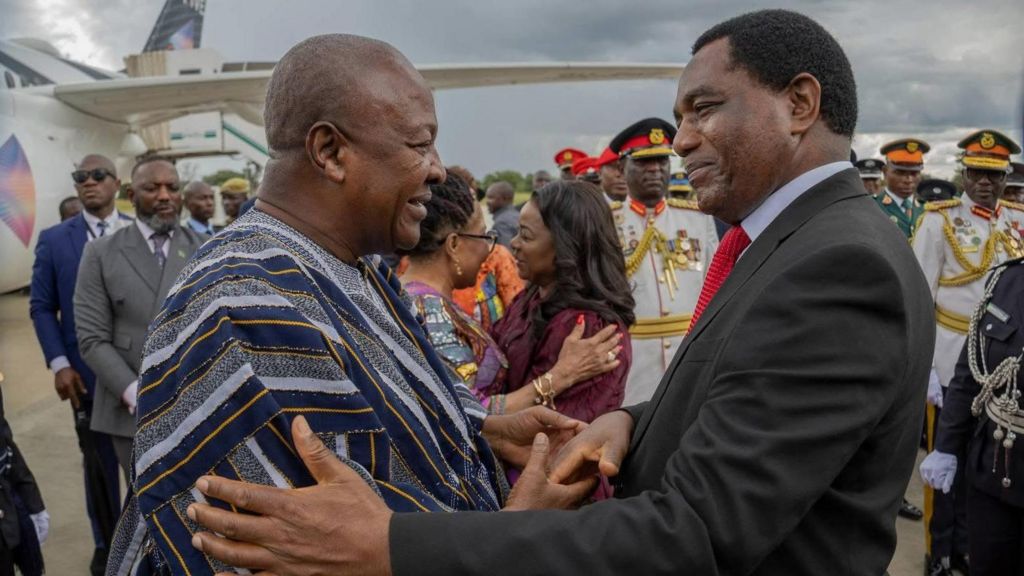
    A diplomatic visit between Ghana and Zambia has evolved into a continental conversation about cultural identity and heritage reclamation, sparked by sartorial choices at the highest levels of government. The discourse began when Ghana’s President John Dramani Mahama arrived in Lusaka for a three-day state visit adorned in a traditional northern Ghanaian fugu garment—a structured, poncho-style outfit crafted from hand-woven cotton strips. His Zambian counterpart, President Hakainde Hichilema, greeted him in conventional Western business attire, creating a visually striking contrast that immediately captured public attention. The sartorial juxtaposition ignited vigorous online debate, with some Zambian social media users initially mocking the Ghanaian president’s traditional garment as a ‘blouse’ or ‘maternity wear’ in various Facebook commentary threads. Rather than dismissing the criticism, President Hichilema strategically embraced the cultural significance of the fugu during the Ghana-Zambia Business Forum, announcing his intention to personally ‘order more of that stuff’ from Ghanaian artisans. This presidential endorsement transformed the conversation from mockery to meaningful dialogue about African cultural identity. Ghana’s Foreign Minister Samuel Okudzeto Ablakwa interpreted the viral discussion as evidence of a growing movement among young Africans to reconnect with their heritage, describing the phenomenon as a renaissance of the ‘African personality.’ The minister highlighted the historical significance of the fugu, noting that Ghana’s founding father Kwame Nkrumah wore similar traditional attire when declaring independence from British colonial rule in 1957. The conversation expanded beyond political circles when prominent Ghanaian YouTuber Wode Maya contributed to the discourse, defending the presidential fashion choice as a deliberate strategy to promote local garment industries and encourage cultural pride across Africa. This diplomatic sartorial incident has brought renewed attention to Ghana’s existing ‘Fugu Friday’ initiative, which encourages citizens to wear traditional African clothing at least once weekly. The exchange demonstrates how cultural diplomacy and social media engagement can combine to foster important conversations about post-colonial identity, economic development through cultural promotion, and pan-African solidarity in the digital age.

  • Tourism changes face of poverty-ridden Hebei county

    Tourism changes face of poverty-ridden Hebei county

    Nestled within the rugged terrain of the Taihang Mountains, Luotuowan village in Fuping county, Hebei province, has undergone a remarkable metamorphosis from one of China’s most impoverished communities to a flourishing tourism destination. The village’s stone courtyards now adorned with red lanterns and the sounds of cultural performances signal a dramatic departure from its recent past.

    A decade ago, Luotuowan faced severe challenges with rocky, unproductive land, inadequate infrastructure, and mass youth migration seeking employment opportunities elsewhere. More than 70% of residents lived below the poverty line with per capita disposable income under 950 yuan ($137). The turning point emerged through strategic government-led poverty alleviation initiatives that prioritized rural tourism development.

    The transformation accelerated in 2017 when former migrant workers like Bai Long returned to establish homestay businesses with government support. Today, the village operates 137 homestays offering over 300 beds, many managed through cooperatives led by the local Communist Party of China branch. Tourism has fundamentally reshaped the local economy, with annual visitor numbers surpassing 500,000 in 2025.

    Beyond economic metrics, the revival has generated profound social changes. More than 70 young residents have returned to Luotuowan and neighboring Gujiatai village to establish restaurants, manage tourism accommodations, and market local agricultural products online. Elderly villagers maintain economic activity through homestay operations, with some like 78-year-old Sun Zhenze converting family homes into modest guest accommodations.

    The county’s success has attracted international recognition, hosting university students from abroad and delegations from Brazil studying China’s rural poverty governance approaches. Local specialties including high-altitude apples and shiitake mushrooms have gained prominence among visitors.

    With the anticipated 2027 opening of a high-speed railway connecting the region to Beijing and Shanxi province, local authorities anticipate further tourism growth. The Luotuowan model now serves as a national benchmark for culture-led rural revitalization, demonstrating how ecological assets and community-based tourism can create sustainable development in previously marginalized regions.

  • Photos: Kites, victory cries fill Lahore skies as Basant festival returns after long ban

    Photos: Kites, victory cries fill Lahore skies as Basant festival returns after long ban

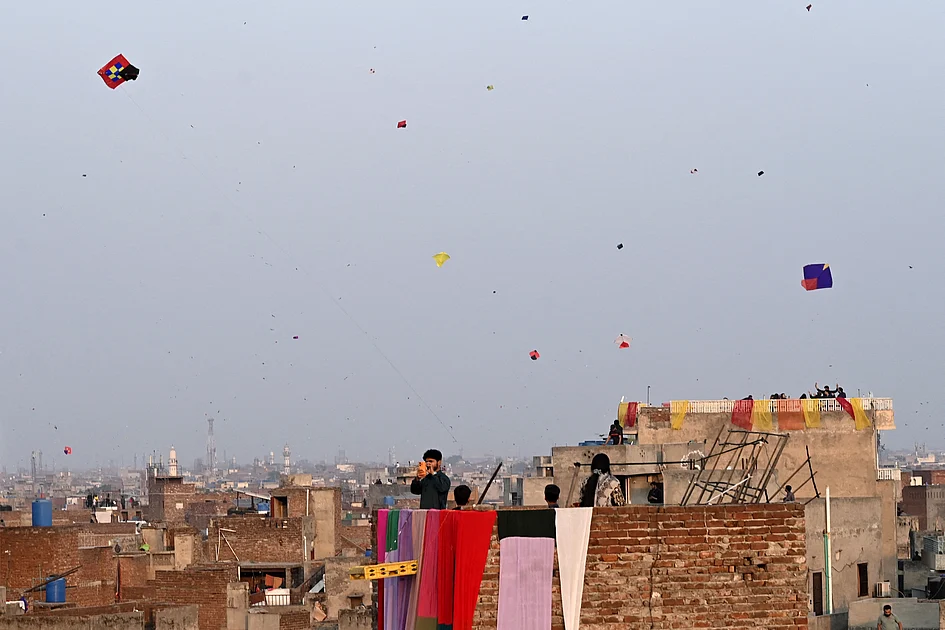
    The ancient city of Lahore witnessed a spectacular cultural renaissance as the traditional Basant kite-flying festival returned to its skies after an 18-year prohibition. On Friday, the vibrant tapestry of colorful kites transformed the atmosphere above Pakistan’s cultural capital, accompanied by triumphant shouts of “bo-kata!” echoing across rooftops as enthusiasts severed opponents’ strings.

    The spring heralding festival, banned in 2008 due to safety concerns after several fatalities involving metal-coated kite strings, was reinstated last year following substantial public demand. The official commencement occurred at midnight with Punjab Information Minister Azma Bukhari ceremoniously launching the inaugural kite.

    Throughout the night, families and friends crowded onto rooftops throughout the Walled City and surrounding neighborhoods, creating a carnival atmosphere with drumbeats and enthusiastic celebrations. Abdul Aziz, 57, described the emotional significance: “Today, when I dropped the first kite in air, I felt as if there was a space in my life that was now filled.”

    Authorities implemented comprehensive safety measures including QR code tracking systems on all kites and strings, prohibition of metallic or chemical-coated materials, and mandatory safety rods for motorcyclists. Approximately 4,600 producers registered with authorities to sell festival materials, while officials conducted rooftop inspections and restricted access to non-compliant structures.

    The festival’s economic impact proved substantial, generating an estimated 3 billion rupees ($10 million) in kite-related commerce alone. Hotels reached full capacity while poultry demand surged to levels typically seen during major religious festivals. At Mochi Gate, Pakistan’s largest kite market, supplies were rapidly depleted with vendor Zubair Ahmed reporting complete sell-outs within two days.

    The celebrations were somewhat tempered by security concerns following a suicide bombing in Islamabad that claimed 31 lives. In response, Punjab Chief Minister Maryam Nawaz announced the cancellation of Saturday’s Liberty Square concert originally scheduled as part of the Basant festivities.

  • Colorado funeral home director sentenced to 40 years for corpse abuse

    Colorado funeral home director sentenced to 40 years for corpse abuse

    A Colorado court has delivered a 40-year prison sentence to Jon Hallford, co-owner of the Return to Nature Funeral Home, following one of the most disturbing corpse abuse cases in recent memory. The sentencing concludes a horrific chapter that saw nearly 200 decaying bodies discovered improperly stored at the Penrose facility.

    During emotional courtroom proceedings, grieving family members confronted Hallford, describing him as a ‘monster’ whose actions caused lasting trauma. Victims’ relatives detailed nightmares about their loved ones decomposing in his care, with one daughter stating her mother was ‘treated like yesterday’s trash.’

    The investigation revealed that over four years, 189 bodies—including children and fetuses—were stored in piles within non-refrigerated areas while the funeral home provided families with fake ashes. Prosecutors established that financial greed motivated the scheme, as the business generated sufficient revenue to properly handle remains.

    Judge Eric Bentley, while imposing the sentence, noted the case tested fundamental beliefs about human decency. Hallford offered a courtroom apology, acknowledging, ‘I had so many chances to put a stop to everything and walk away, but I did not. My mistakes will echo for a generation.’

    The case has triggered significant regulatory changes in Colorado’s funeral industry. Previously, state law didn’t require funeral home operators to hold licenses, mortuary science degrees, or even high school diplomas. New legislation imposing stricter oversight has been enacted since the scandal emerged.

    Carie Hallford, Jon’s ex-wife and business partner, has pleaded guilty to similar charges and awaits sentencing. The investigation began in October 2023 following reports of foul odors from the property, leading to the discovery of 115 improperly stored bodies.