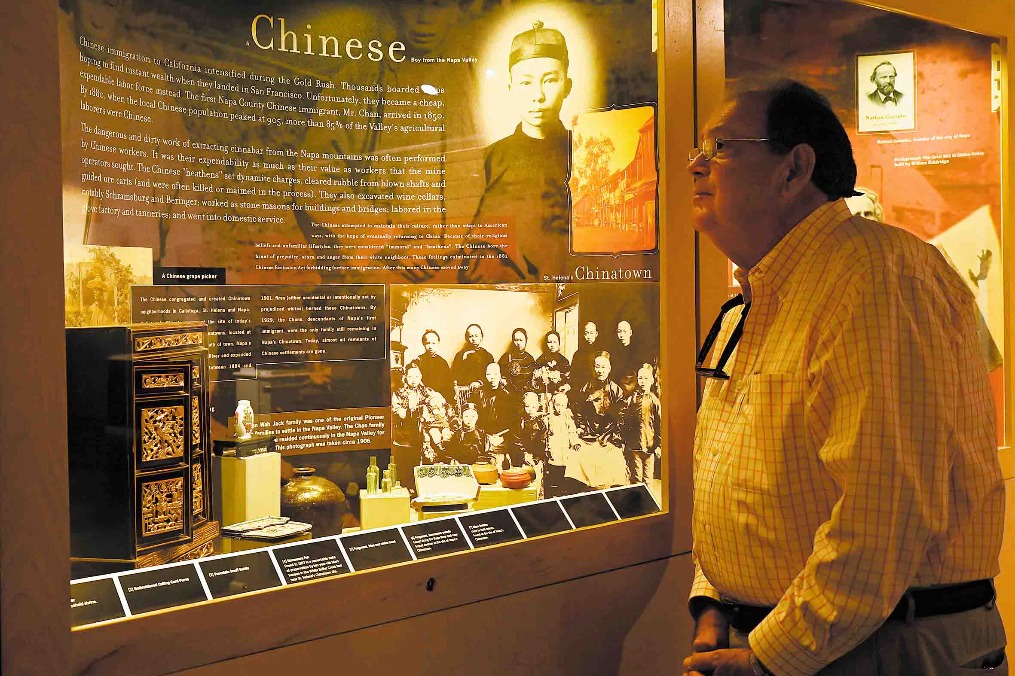
Nestled in the lower-level gallery of the Napa Valley Museum in Yountville, California, a modest exhibit quietly narrates the untold story of Chinese immigrant workers who once shaped the region’s burgeoning wine industry. Displaying artifacts such as a stoneware pot, fragments of vessels, and an embroidered purse, the showcase brings to life the contributions of these laborers, whose efforts were pivotal yet largely erased from history.
分类: society
-

Planners balance urban renewal, heritage
The Global Mayors Dialogue Zhengzhou and the 2025 International Mayor’s Forum on Tourism brought together mayors and urban planners from around the world to explore the delicate balance between urban modernization and the preservation of cultural heritage. Held in Zhengzhou, Henan province, the four-day event showcased innovative strategies for urban renewal and tourism development, emphasizing the importance of integrating historical memory into contemporary cityscapes. The forum concluded on Saturday, leaving participants with actionable insights for sustainable urban growth. Zhuang Jianqiu, mayor of Zhengzhou, highlighted the city’s transformation of old factories and neighborhoods into vibrant cultural and entertainment hubs. One notable example is Fuminli, a once-dilapidated area near the 3,600-year-old ancient city wall, now a thriving tourist destination attracting over a million visitors annually. The city preserved the architectural essence of old Zhengzhou while introducing modern amenities, creating a nostalgic yet dynamic urban environment. International participants, including Frank Amoakohene from Ghana and Maurizio Rasero from Italy, shared their experiences in reviving traditional construction techniques and repurposing historical sites for tourism. The event underscored the importance of a people-oriented approach to urban renewal, ensuring that disused buildings are transformed into spaces that enhance citizens’ daily lives. With around 300 attendees, the forum served as a platform for exchanging practical solutions to urban challenges and promoting global tourism sustainability.
-

Grandmothers in Colombia get the quinceañera they never had
In a heartwarming celebration of resilience and joy, 72-year-old Rosalba Casas and 28 other women finally experienced their long-awaited quinceañeras in Bogotá, Colombia. Organized by the Sueños Hechos (Dreams Come True) Foundation, the event brought together women aged 60 to 85 who had missed this cherished Latin American tradition due to childhood hardships. For many, it was their first time wearing formal gowns, professional makeup, or riding in a limousine. The festivities included a red carpet entrance, a waltz, and emotional moments as the women danced with family members and police officers. The foundation, founded by retired police officer Freddy Alfonso Páez, initially focused on underprivileged girls but expanded to older women to honor those who never had the chance to celebrate their 15th birthdays. The event, supported by sponsors and local police, highlighted the deep inequalities in Colombia, where 31% of the population lives in poverty. Despite health challenges, the women embraced the celebration with laughter and gratitude, making it a day to remember.
-

‘My skateboard journey round the Wild Atlantic Way to honour my friend’
Becky Gilmour, a 26-year-old from Banbridge, is nearing the completion of her extraordinary skateboarding journey along Ireland’s Wild Atlantic Way. Embarking on this 2,500-kilometer (1,553-mile) coastal route in June, Becky aims to finish by December, before the winter weather worsens. Her mission is deeply personal: to raise awareness about suicide, a cause she was inspired to champion after losing a friend during the Covid-19 pandemic. Becky hopes her journey will encourage open conversations about mental health and demonstrate that outdoor adventures are accessible to everyone, regardless of perceived barriers like cost or athletic ability. Despite not considering herself an athlete, Becky has skated between 20 to 60 kilometers (12 to 37 miles) daily, relying on her trusty longboard, which has required minimal maintenance. Her journey has taken her through picturesque counties like Mayo, where she praised the smooth road surfaces, though she admitted to enduring a few challenging falls. Along the way, Becky has engaged with local communities, visited schools, and even taken to the sea on a paddleboard with her friend Adam, exploring islands like Aran, Inishbofin, and Clare. She has also left behind murals in each county she visits, funded by donations, to spread hope and support for those struggling with mental health issues. Becky’s journey will culminate in Portrush, County Antrim, where she purchased her first longboard with her late friend. Her story has resonated with many, inspiring others to embrace adventure and advocate for mental health awareness.
-

Russia faces a shrinking and aging population and tries restrictive laws to combat it
For over two decades, Russia has grappled with a deepening demographic crisis characterized by a shrinking and aging population. Since President Vladimir Putin assumed power in 2000, the country has faced persistent challenges in reversing this trend. In 1999, Russia recorded its lowest number of births, a figure that has continued to haunt the nation despite temporary improvements. By 2015, births peaked at 1.94 million, but economic instability, the ongoing war in Ukraine, and an exodus of young men have since reversed these gains. In 2023, Russia recorded only 1.22 million births, barely surpassing the 1999 low. The population has also aged significantly, with 30% now over 55, compared to 21.1% in 1990. Putin has implemented various measures to encourage larger families, including financial incentives, free school meals, and Soviet-style ‘hero-mother’ medals for women with 10 or more children. However, critics argue that these efforts, coupled with restrictive laws on abortion and LGBTQ+ activism, are unlikely to solve the crisis. The war in Ukraine has further exacerbated the problem, with hundreds of thousands of young men either killed or fleeing the country. Immigration, a potential solution, remains unpopular due to rising anti-migrant sentiment. As Russia’s fertility rate stagnates at 1.4, well below the replacement rate of 2.1, the demographic crisis continues to pose a significant threat to the nation’s future.
-
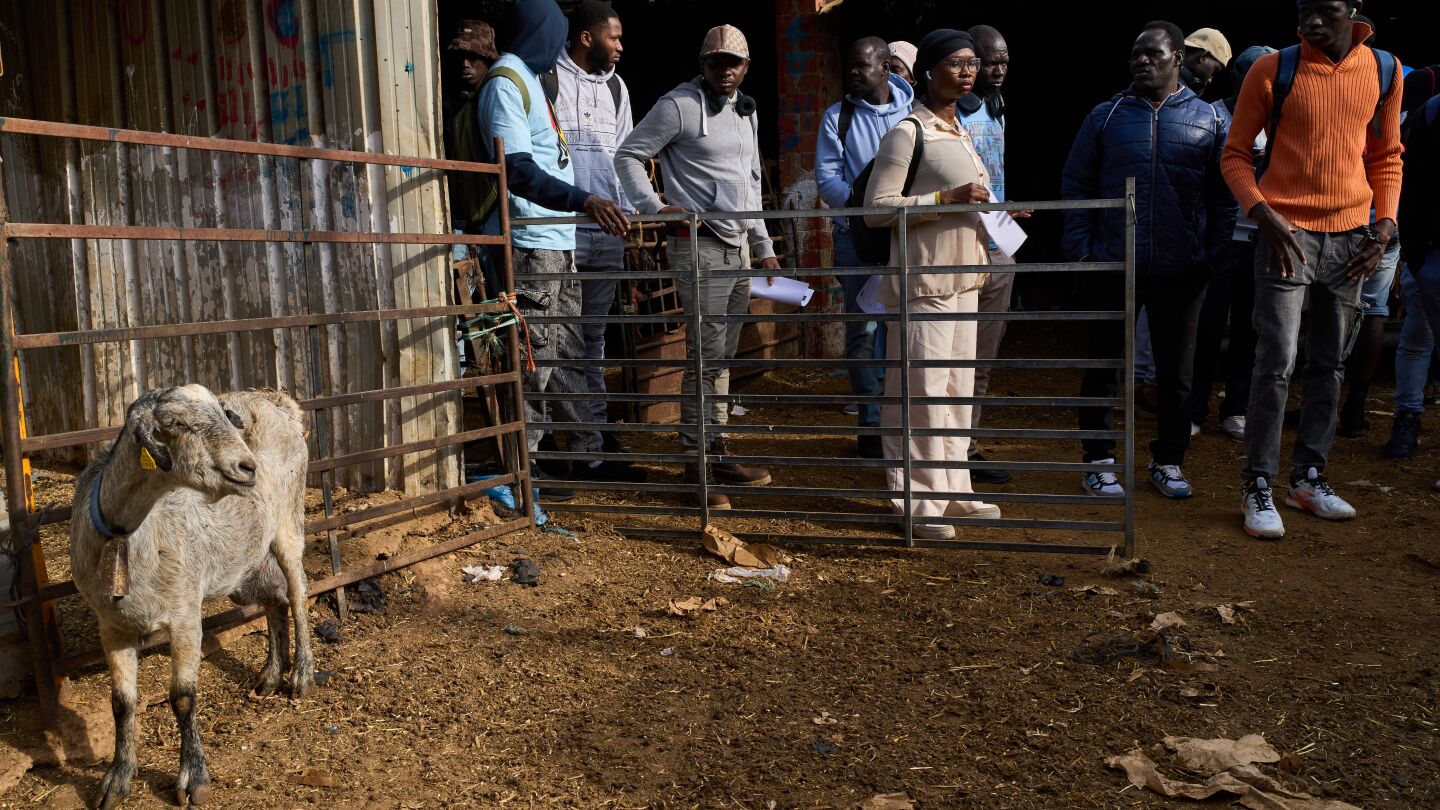
The new shepherds of Spain: African migrants take up a neglected rural trade
In the sun-drenched plains of Castile-La Mancha, Spain, Osam Abdulmumen, a 25-year-old migrant from Sudan, herds 400 sheep on a centuries-old farm in the village of Los Cortijos. This pastoral scene, reminiscent of the region’s literary fame in “Don Quixote,” masks a deeper crisis: rural depopulation has left traditional shepherding jobs unfilled, a role Spaniards increasingly shun. To address this, a government program is training migrants like Abdulmumen—many from Africa, Venezuela, and Afghanistan—to sustain the region’s prized sheep’s milk cheese industry.
Abdulmumen, who fled violence in Sudan, now lives in a modest apartment in Los Cortijos, dreaming of sending money home to his family. His journey to Spain was arduous, spanning Egypt, Tunisia, Morocco, and finally Ceuta, a Spanish enclave, where he sought asylum. Today, he finds solace in the tranquility of rural life, earning €1,300 monthly, slightly above Spain’s minimum wage.
The program, funded by the regional government, has trained 460 migrants since 2022, with 51 now employed as shepherds. Sharifa Issah, a 27-year-old from Ghana, is among them, drawn to the work due to her experience with animals back home. The training, held near Toledo, covers the basics of shepherding over five days, preparing migrants for roles on farms, slaughterhouses, and olive groves.
Álvaro Esteban, a fifth-generation farmer, returned to Los Cortijos after years away, modernizing his family’s farm with drones and cheese production. He acknowledges that without migrant labor, many farms would face closure within a decade. “Most businesses won’t have successors,” he laments, highlighting the sector’s neglect.
Abdulmumen’s story is emblematic of a broader trend: migrants filling critical gaps in Spain’s rural economy, ensuring the survival of traditions and livelihoods in a region grappling with an aging population and urban migration.
-
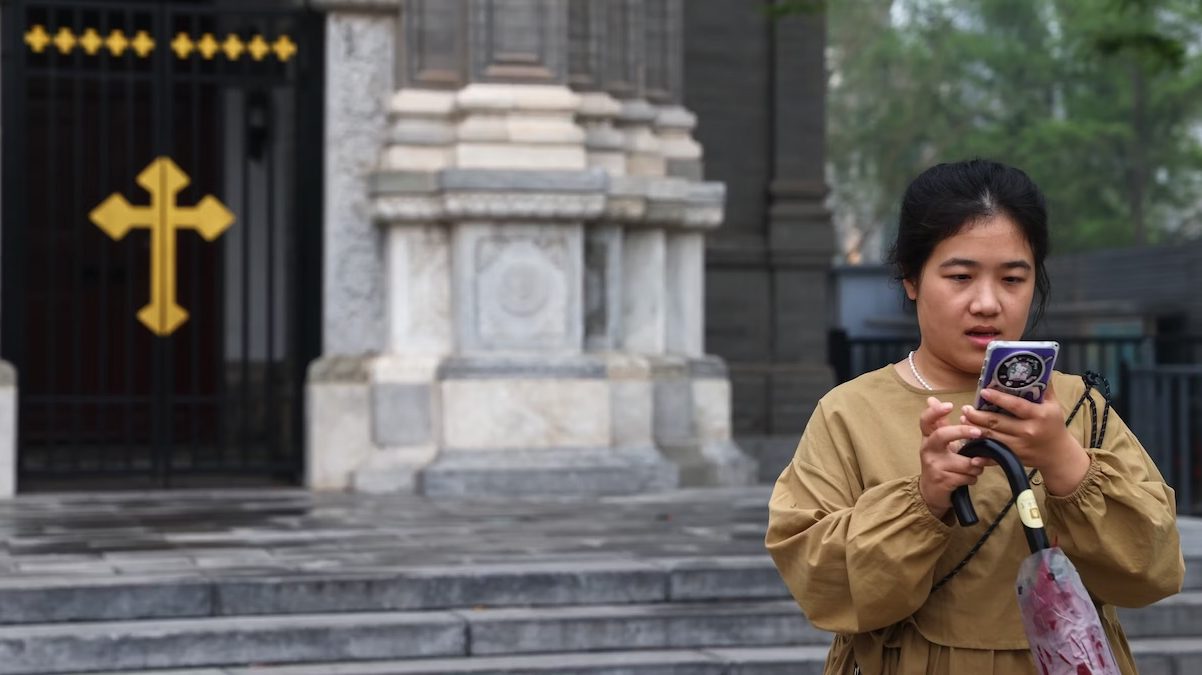
Beijing looking to exert tighter control over Chinese Christians
In a significant move, Chinese authorities detained Ezra Jin, the leader of the Zion Church, along with over 30 church staff, including pastors, on October 10. This marks one of the largest crackdowns on Christian churches in recent years, shedding light on Beijing’s ongoing efforts to regulate religious activities. The Zion Church, a prominent unregistered Christian congregation with widespread presence across China, has long been under government scrutiny. The timing of this crackdown is particularly notable, as it coincides with escalating tensions between China and the United States, suggesting that both domestic religious policies and international relations are influencing Beijing’s actions. China officially recognizes five religions—Buddhism, Daoism, Islam, Catholicism, and Protestantism—with Buddhism and Daoism considered indigenous and central to Han Chinese culture. Christianity, introduced to China centuries ago, has faced periods of tolerance and persecution. The 19th century saw significant growth in Chinese Christianity, fueled by Western missionaries, but this also led to xenophobic movements that contributed to the fall of the empire. After the establishment of the People’s Republic of China in 1949, foreign Christians were expelled, and state-controlled religious bodies were created. Dissatisfaction with these bodies led to the rise of unregistered churches, which have operated outside state control ever since. The Cultural Revolution (1966–1976) brought severe persecution of all religious practices, but Christianity persisted and experienced a resurgence in the more liberal 1980s. However, under President Xi Jinping’s leadership since 2013, China has adopted a stricter stance on religion, emphasizing the ‘Sinicization’ of faiths to align them with state ideology. Recent regulations have tightened control over religious sites, finances, and charitable activities, while the forcible removal of crosses and the imprisonment of prominent church leaders like Wang Yi underscore the severity of the crackdown. The close ties between some unregistered churches and U.S.-based evangelical groups have further complicated the situation, with repressive measures often intensifying during periods of strained U.S.-China relations. The recent crackdown on the Zion Church, whose founder’s daughter is a U.S. Senate staffer, appears to be a strategic signal to Washington. Unless bilateral relations improve, Chinese Christians may face continued repression.
-

Thailand’s Queen Mother Sirikit has died at age 93
Thailand’s Queen Mother Sirikit, a revered figure known for her dedication to rural development, environmental conservation, and the preservation of traditional crafts, passed away on Friday at the age of 93. The Royal Household Bureau announced her death in a Bangkok hospital, where she had been receiving treatment for a blood infection since October 17. Despite the efforts of her medical team, her condition did not improve. Queen Sirikit had largely retreated from public life in recent years due to declining health, following the death of her husband, King Bhumibol Adulyadej, in October 2016. Born into an aristocratic family on August 12, 1932, Queen Sirikit’s life was marked by her commitment to the Thai people. Her portrait adorned homes and public spaces across the country, and her birthday was celebrated as Mother’s Day. She played a pivotal role in initiatives ranging from aiding Cambodian refugees to protecting Thailand’s forests. However, her influence was not without controversy. During Thailand’s political upheavals, her behind-the-scenes role in the monarchy’s affairs drew scrutiny. Despite this, her enduring popularity in rural areas remained steadfast. Queen Sirikit’s legacy includes the establishment of the SUPPORT Foundation in 1976, which trained thousands in traditional crafts, and numerous environmental projects aimed at wildlife conservation and forest preservation. She believed deeply in the monarchy’s role in Thai society, once stating, ‘The mere word king has something magic in it.’ Her passing marks the end of an era for Thailand, leaving behind a legacy of service and dedication.
-

Thailand’s former queen Sirikit dies aged 93
Thailand is in mourning following the passing of Queen Sirikit, the revered mother of King Vajiralongkorn, at the age of 93. The Thai Royal Household Bureau announced that she died peacefully on Friday night at 21:21 local time (14:21 GMT) in a Bangkok hospital. Queen Sirikit had been battling multiple health issues since 2019, including a recent blood infection. Her death marks the end of an era for the Thai monarchy, as she was the devoted wife of the late King Bhumibol Adulyadej, Thailand’s longest-reigning monarch, who passed away in 2016. Queen Sirikit’s life was marked by her unwavering dedication to her country and her role as a maternal figure for the Thai people. Born into a diplomatic family, she met her future husband while studying music in Paris, where her father served as Thailand’s ambassador to France. The couple married on April 28, 1950, just days before King Bhumibol’s coronation. Throughout the 1960s, Queen Sirikit and King Bhumibol traveled extensively, meeting global leaders such as US President Dwight Eisenhower, Queen Elizabeth II, and even Elvis Presley. Known for her elegance, she frequently appeared on international best-dressed lists. In a rare 1980 BBC documentary, Queen Sirikit reflected on her role, stating, ‘Kings and queens of Thailand have always been in close contact with the people, and they usually regard the king as the father of the nation. That is why we do not have much private life, because we are considered father and mother of the nation.’ Her birthday was celebrated as Mother’s Day in Thailand, underscoring her profound impact on the nation. Queen Sirikit’s legacy as a compassionate and unifying figure will continue to resonate deeply with the Thai people.
-
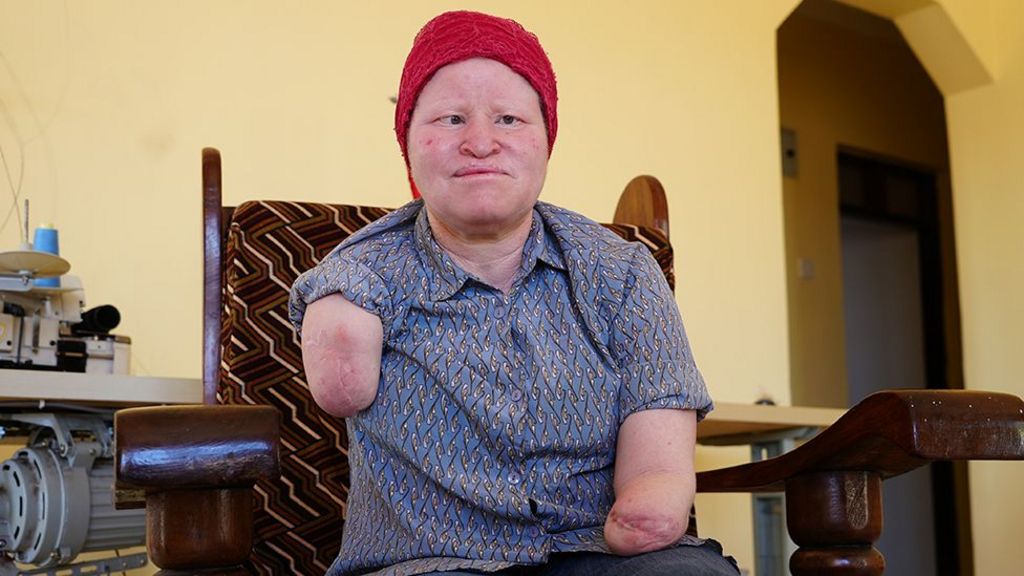
Attacks on people like me happen every time my country has an election
For 42-year-old Mariam Staford, election season in Tanzania is not a time of hope but of terror. While many Tanzanians engage in the festive rallies and campaign songs, Mariam and others with albinism face a grim reality: heightened risks of violence driven by deeply rooted superstitions. Albinism, a rare genetic condition affecting approximately 30,000 Tanzanians, reduces melanin production, resulting in lighter skin, hair, and eye color. Tragically, this condition has made them targets of brutal attacks fueled by the false belief that their body parts bring wealth, luck, or political success. Mariam’s story is a harrowing testament to this violence. In 2008, during a local election period, armed men attacked her in her home, severing both her arms. She survived, but her unborn child did not. The trauma of that night still haunts her. ‘Even now, I sometimes dream of that night,’ she says. ‘When I wake up, I touch my arms and remember they are not there.’ Mariam’s experience is not isolated. Since 2008, there have been 211 documented attacks on people with albinism in Tanzania, including 79 killings and 100 mutilations. These attacks often spike during election seasons, as political aspirants seek supernatural advantages. Despite government efforts to curb the violence, including awareness campaigns and stricter laws, the problem persists. In June this year, another attack was reported in Simuyu, though the victim escaped unharmed. President Samia Suluhu Hassan has condemned these ‘harmful traditional beliefs,’ but rural areas remain vulnerable. Activists and survivors like Mariam argue that more needs to be done to protect the albinism community. While progress has been made in some areas, the murder of two-year-old Asimwe Novath last year serves as a grim reminder of the ongoing threat. As Tanzania prepares for its upcoming elections, Mariam and others with albinism live in fear, choosing to stay home rather than participate in the democratic process.