分类: society

  • Vital role of family virtues in governance

    Vital role of family virtues in governance

    President Xi Jinping’s personal narrative of a hand-stitched mattress, meticulously patched by his mother, serves as a powerful symbol of frugality and familial devotion that continues to inform China’s governance philosophy. This humble bedding artifact, preserved since his youth in rural Shaanxi, represents more than material practicality—it embodies the intergenerational transmission of core values that shape leadership character.

    The philosophical connection between household governance and national stability finds deep roots in Chinese tradition, exemplified by Xi’s reference to Tang Dynasty poetry depicting maternal devotion through needlework. This historical continuum underscores what scholars identify as China’s unique social structure where kinship forms the foundational layer of national governance. Professor Wang Fang of Shanghai Academy of Social Sciences notes that family education operates as a moral instruction process where values become institutionalized through conduct and intergenerational transmission.

    This principle manifests concretely in initiatives like the National Model Families recognition program, which has honored approximately 1,600 families over the past decade. The 2016 designation of family values as both moral strength and intergenerational legacy coincided with legislative action through the Family Education Promotion Law, creating policy frameworks for virtue cultivation.

    The historical precedent of Liuchi Alley in Anhui province demonstrates practical application. For three centuries, this Qing Dynasty corridor has memorialized how neighboring families resolved boundary disputes through mutual concession—each retreating their walls by one meter. President Xi’s October 2024 visit emphasized translating this historical model of humility into contemporary conflict resolution mechanisms, now promoted nationwide as the “Liuchi Mediation Method.”

    Academic perspectives from Shandong University’s Professor Yang Chaoming conceptualize family-national governance as an organic whole: harmonious families produce virtuous citizens, reducing public governance costs while sound national policies reciprocally support household stability through social services.

    The anti-corruption dimension reveals particular significance. President Xi frequently references the 1963 incident involving Jiao Yulu, who disciplined his son for exploiting official privilege and established the “Ten Don’ts” integrity code. This contrasts sharply with corruption cases where familial collusion enables systemic abuse. Peking University’s Professor Zhou Liangshu identifies eroded family values as a primary cause of disciplinary violations, while robust family culture serves as a critical “firewall” against corruption.

    The institutionalization of this philosophy reached its apex in October 2022 when strengthening family ties, values and traditions was incorporated into the 20th National Congress report—elevating family governance from private matter to national strategy.

  • Cross-Strait New Year vibes: Shared traditions, shared celebrations

    Cross-Strait New Year vibes: Shared traditions, shared celebrations

    In a vibrant display of cultural unity, residents from both sides of the Taiwan Strait recently converged in Fuzhou for a special Chinese New Year bazaar, demonstrating how traditional celebrations continue to bridge geographical and political divides. The event showcased the deep-rooted connections maintained through shared customs and festive practices that transcend boundaries.

    The gathering featured heartfelt exchanges of family stories and joyful celebratory moments, creating an atmosphere of warmth and mutual understanding. Participants engaged in various traditional activities that highlighted the common cultural heritage enjoyed across the Strait, emphasizing that the spirit of reunion remains powerful enough to overcome any physical distance.

    This cross-strait cultural exchange occurs alongside numerous other Spring Festival celebrations throughout China, including Beijing’s Dongcheng district decorations, the debut of 30 panda cubs born in 2025, and illuminated lantern festivals in Datong. These simultaneous celebrations demonstrate the widespread cultural significance of the Lunar New Year period throughout Chinese communities worldwide.

    The event in Fuzhou represents ongoing people-to-people connections that continue to flourish despite political complexities, serving as a reminder of the enduring cultural bonds that unite communities across the Strait through shared traditions and celebrations.

  • Mosque gunman wanted online fame. A muted court hearing shows how New Zealand has tried to curb that

    Mosque gunman wanted online fame. A muted court hearing shows how New Zealand has tried to curb that

    WELLINGTON, New Zealand — New Zealand’s judicial system conducted a deliberately subdued hearing this week for the nation’s most notorious criminal, Brenton Tarrant, who sought to retract his guilty pleas for the 2019 Christchurch mosque massacres that claimed 51 Muslim worshippers’ lives.

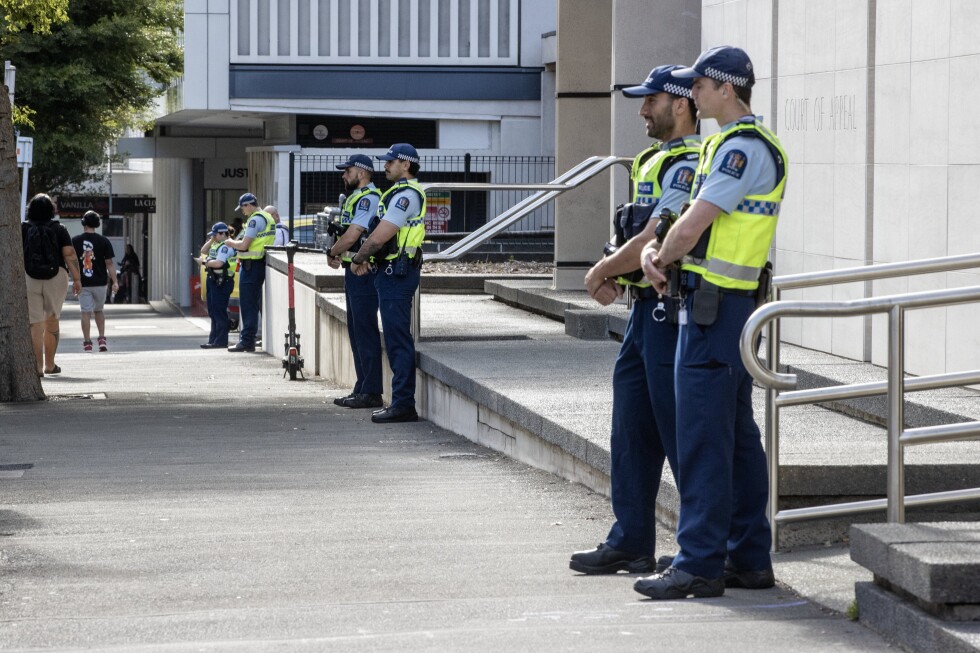
    The Australian white supremacist’s appeal proceedings unfolded with remarkable restraint at the Court of Appeal in Wellington. Only nine journalists, nine lawyers, and essential court staff were present in the near-empty courtroom, with the public gallery deliberately kept vacant. This calculated minimalism reflects New Zealand’s systematic approach to denying Tarrant the platform and notoriety he previously sought through his racially motivated violence.

    Tarrant, 35, currently serving life imprisonment without parole, claimed through video conference from Auckland Prison that his 2020 guilty pleas to charges of terrorism, murder, and attempted murder were “irrational” admissions made during a “nervous breakdown” induced by his solitary confinement conditions.

    Crown lawyers Barnaby Hawes and Madeleine Laracy presented compelling counterarguments, emphasizing that multiple mental health experts had previously determined Tarrant fit to enter pleas. They characterized the defendant as “an unreliable witness” whose narrative should be “treated with caution.” The prosecution highlighted the overwhelming evidence against Tarrant, including his own livestreamed recording of the attacks, which made a guilty verdict inevitable regardless of trial proceedings.

    Notably absent from the weeklong hearing was any substantive discussion of Tarrant’s white supremacist ideology or the detailed motivations behind his attacks. This omission reflects New Zealand’s broader strategy of suppressing the dissemination of his hateful manifesto and violent imagery, which remain legally prohibited throughout the country.

    The judicial approach stands in stark contrast to other high-profile trials of racist murderers, such as Norway’s extensive coverage of Anders Breivik, whom Tarrant cited as an inspiration. New Zealand’s justice system has implemented measures to minimize public exposure to the shooter, with even news organizations practicing restrained reporting by limiting mentions of his name.

    Crown lawyers emphasized that continuing legal proceedings cause “immense distress” to survivors and victims’ families, hindering their healing process. A three-judge panel will deliver its decision within the coming months, with 90% of appeals court judgments typically issued within three months of hearing conclusion.

    If unsuccessful in revoking his guilty pleas, Tarrant’s case will return to the appeals court for a separate hearing challenging his life sentence without parole.

  • French coin found near Culloden may have been used to pay Jacobite

    French coin found near Culloden may have been used to pay Jacobite

    A significant historical artifact has been discovered by metal detectorist Ian Deveney on lands between Inverness and the Culloden Battlefield. The find—a French 4 sols coin dating back to the 1670s—potentially served as payment for soldiers who fought in the pivotal Battle of Culloden 280 years ago.

    Deveney, a Scottish history tour guide and member of the North Detectorists group, made the discovery earlier this month while surveying areas rich in Highland heritage. “I was near the end of the day and quite tired when I received this strong signal,” Deveney recounted. “Upon digging, I uncovered what I initially believed to be a medieval hammered coin, but after careful cleaning, I realized it was French currency from the 17th century.”

    The coin’s presence in the Scottish Highlands reveals fascinating historical connections. France provided financial support to the Jacobite cause during the 1745 uprising led by Charles Edward Stuart, better known as Bonnie Prince Charlie. This backing was partly strategic, intended to divert British military resources from continental conflicts.

    Historical records confirm that Jacobite fighters, particularly the Irish Piquets, Royal Ecossais, and FitzJames’s regiments, received payment in French currency. The Battle of Culloden, fought on April 16, 1746, marked the final pitched battle on British soil and resulted in the devastating defeat of the Jacobite forces, with approximately 1,600 casualties.

    The discovery has been reported to Treasure Trove Scotland, the organization responsible for determining whether archaeological finds should be allocated to museums. This finding adds to a series of recent historical discoveries at Culloden, including musket balls uncovered last October that archaeologists believe relate to the battle’s final actions.

    Deveney’s expertise in Scottish history provided crucial context for understanding the significance of the coin, offering tangible evidence of the international dimensions of the Jacobite uprising and its connections to European power dynamics of the period.

  • Investigation brings closure for long-lost family after WW2 Nazi kidnap

    Investigation brings closure for long-lost family after WW2 Nazi kidnap

    A seven-decade family mystery has been resolved through an extraordinary international investigation that pieced together the life of a Polish teenager kidnapped by Nazi forces during World War II. Jozef Domanski was just 14 years old when forcibly removed from his family in 1941 to work on a German farm under the Nazi occupation regime.

    Despite surviving the war, Domanski never returned to his homeland, creating a permanent separation from his mother and sister. For years following the conflict, he maintained sporadic correspondence from his new life in England, where he had settled across various locations including Worcestershire, Wolverhampton, and Essex. Domanski worked diligently for decades in a textiles factory, documenting his experiences through letters that became increasingly melancholic about his distance from family and homeland.

    The communication ceased abruptly in the 1980s, leaving relatives to assume his permanent disappearance. The truth remained hidden until 2012, when Domanski’s death in Wolverhampton triggered an investigation by the City Council, which enlisted professional heir hunters from Finders International to trace potential beneficiaries after no will was discovered.

    What followed was an unprecedented decade-long genealogical investigation spanning three countries. Benjamin Ratz of GEN SPZOO in Poland led the intricate research as chief probate researcher, working closely with Domanski’s sister before her passing. The breakthrough revealed that Domanski had suffered a workplace accident that left him unable to write, explaining the sudden communication halt. Researchers also discovered that Domanski had consciously remained unmarried and childless throughout his life.

    The investigation uncovered that Domanski never attempted to return to Poland due to legitimate fears of endangering his family’s safety—concerned that his wartime experiences might lead to accusations of espionage during the Communist era. The emotional resolution came when researchers successfully delivered Domanski’s estate, valued at over £100,000, to his surviving relatives. His nephew Krzysztof Sadowski emphasized the profound emotional significance of this closure, noting that his grandmother had died heartbroken over her son’s disappearance. The family plans to place Domanski’s photograph on his parents’ graves, finally providing the connection that was lost for generations.

  • Explained: UAE updates FS1, FS2 school admission rules under new age cut-off

    Explained: UAE updates FS1, FS2 school admission rules under new age cut-off

    The UAE Ministry of Education has unveiled significant revisions to admission protocols for Foundation Stage placements in British curriculum private schools, establishing a more nuanced approach to early childhood education entry. Effective from the 2026-27 academic year, the updated framework introduces three pivotal modifications: mandatory readiness evaluations for certain age groups, a singular transitional placement opportunity, and stringent restrictions on subsequent grade transfers.

    The policy shift extends the age eligibility cutoff from August 31 to December 31, aligning placement decisions with the admission year rather than the conventional month-based system. This adjustment primarily benefits children born between September and December who previously faced challenges of joining academic cohorts alongside significantly older peers.

    Under the new provisions, institutions may conduct comprehensive readiness assessments for children born between September 1 and December 31 who haven’t reached three years of age by the academic year’s commencement. These evaluations, performed in collaboration with parents, will determine appropriate FS1 placement suitability. For those demonstrating insufficient preparedness, deferred enrollment until the subsequent academic year remains an option.

    The ministry has instituted a unique transitional measure for children born between September 1, 2022, and December 31, 2022, without prior educational system enrollment. During the 2026-27 academic year only, parents and educational institutions may collaboratively determine optimal placement between FS1 and FS2 tiers.

    A critical stipulation mandates that once students are enrolled in a specific grade, subsequent transfers to alternative grades are expressly prohibited. The policy differentiates between academic calendars, maintaining March 31 as the cutoff for institutions commencing their academic year in April, while the December 31 benchmark applies exclusively to schools with August or September start dates.

    The updated guidelines also address other curriculum structures, clarifying that five-year-old children without prior school registration should generally enroll in KG2 if they reach five years of age by December 31 of the enrollment year. Similar to the British curriculum exception, a transitional provision exists for the 2026-27 academic year permitting children born between September 1 and December 31, 2021, to enroll in either KG1 or KG2 based on assessment results.

  • In Zimbabwe, cash bouquets and scrap metal gifts rival flowers as coveted Valentine’s tokens of love

    In Zimbabwe, cash bouquets and scrap metal gifts rival flowers as coveted Valentine’s tokens of love

    HARARE, Zimbabwe — In a nation where economic pragmatism intersects with romantic expression, Zimbabweans are redefining Valentine’s Day traditions through innovative gift-giving practices that reflect both financial realities and environmental consciousness.

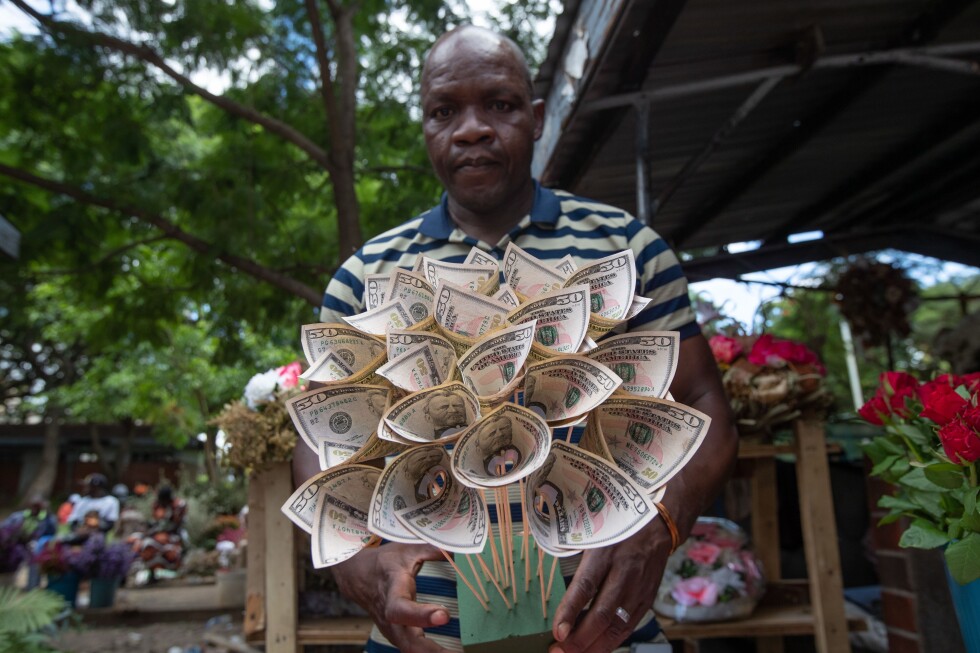
    The emerging trend of money bouquets—carefully crafted arrangements of U.S. dollar bills woven with floral elements—has transformed from social media novelty to mainstream Valentine’s phenomenon. Across traditional markets and digital platforms like TikTok, artisans are meeting growing demand for these hybrid creations that combine financial utility with romantic symbolism.

    At Harare’s established flower market, veteran florist Tongai Mufandaedza demonstrates the intricate process of assembling money bouquets. “The market has significantly improved due to these creations,” noted Mufandaedza, who has three decades of industry experience. “For Valentine’s Day, we anticipate substantially increased customer traffic as everyone seeks to make impressive gestures.”

    The pricing structure reveals interesting market dynamics: a $10 monetary bouquet sells for $25, while traditional rose arrangements command $35-40. This cost-effectiveness, coupled with practical value, drives their appeal in an economy where liquidity often outweighs luxury.

    Generation Z consumers enthusiastically embrace this trend, with 23-year-old Kimberleigh Kawadza expressing full approval: “The innovator behind this concept deserves recognition. It represents perfect appreciation for partners.”

    Interestingly, the trend spans generations, with parents reportedly purchasing money bouquets for daughters to prevent them from seeking “sugar daddies” who might exploit financial incentives.

    The U.S. dollar’s dominance in Zimbabwean transactions—stemming from 2009’s hyperinflation crisis—creates unique logistical challenges. The scarcity of crisp bills has spawned secondary businesses supplying pristine notes for bouquets, as worn currency proves unsuitable for decorative purposes.

    Parallel to monetary expressions, environmental sustainability shapes another gifting innovation: recycled metal creations. At Harare’s Simpli Simbi boutique (“simbi” meaning metal in Shona), artisans transform discarded automotive parts and scrap metal into heartfelt keepsakes.

    Founder Stephanie Charlton explained the philosophy: “We revitalize previously unloved materials into beautiful, permanent treasures. Each piece carries meaningful narratives beyond temporary chocolates or flowers.”

    This environmentally conscious approach attracts growing local clientele, signaling shifting attitudes toward sustainable consumption despite economic pressures.

    Notably, Zimbabwe lacks the restrictive policies implemented elsewhere, such as Kenya’s recent warnings of severe penalties for currency manipulation in bouquets—a contrast highlighting different regulatory approaches to similar trends across Africa.

  • The Hindu who stood up for a Muslim and became a hero

    The Hindu who stood up for a Muslim and became a hero

    In an extraordinary display of interfaith solidarity, a Hindu gym owner from Kotdwar, Uttarakhand has emerged as an unexpected national icon after defending a Muslim shopkeeper from religious harassment. Deepak Kumar, 42, intervened on January 26 when he witnessed activists from the hardline Hindu group Bajrang Dal accosting 68-year-old Vakeel Ahmed over his shop name ‘Baba School Dress and Matching Centre’.

    The confrontation escalated when approximately half a dozen vigilantes demanded Ahmed remove ‘Baba’ from his establishment’s signage—a term commonly used across religious lines in India to denote respected elders or spiritual figures. The activists claimed the reference exclusively belonged to Siddhabali Baba, a local Hindu temple deity, and insisted a Muslim merchant had no rights to its usage.

    Kumar’s spontaneous intervention, captured in a viral video, shows him challenging the group’s religious discrimination with the poignant question: ‘Are Muslims not citizens of India?’ When pressed for identification, he deliberately responded ‘Mohammad Deepak’—a symbolic fusion of Hindu and Muslim names—asserting his Indian identity transcends religious boundaries.

    The incident has triggered polarized reactions across the nation. While political figures like Congress MP Rahul Gandhi hailed Kumar as ‘a hero of India’ fighting for constitutional values, the gym owner faced vehement backlash from right-wing groups. Over 150 Bajrang Dal supporters protested outside his business, and Kumar received numerous death threats alongside abusive social media messages.

    The aftermath has taken a personal toll: Kumar’s previously thriving gym now operates at barely 10% capacity as patrons withdraw due to safety concerns, creating financial strain. His family reportedly lives in fear amid ongoing harassment. Nevertheless, support has poured in nationally, with strangers purchasing gym memberships in solidarity and social media users celebrating his courage.

    Police have registered cases from both parties—against unidentified harassers following Ahmed’s complaint, and against Kumar himself based on allegations from Hindu activists. The case continues to spark national dialogue about religious coexistence, constitutional rights, and rising communalism in contemporary India.

    Despite the consequences, Kumar remains resolute, stating: ‘If we remain silent today, tomorrow our children will also learn the same silence.’ His stance has been widely characterized in Indian media as a rare beacon of hope in increasingly polarized times.

  • UAE clarifies age cutoff for school admission, ‘one-time measure’ for some pupils

    UAE clarifies age cutoff for school admission, ‘one-time measure’ for some pupils

    The UAE Ministry of Education has issued updated guidance regarding newly implemented age cutoff regulations for school admissions, addressing widespread concerns among parents. The clarification specifically addresses children born between September 1 and December 31, 2022, who are not currently enrolled in any educational system.

    For the 2026-2027 academic year only, these children will be subject to a special transitional measure. According to the ministry’s statement released Thursday, schools and parents will be permitted to collaboratively determine whether Foundation Stage 1 (FS1) or Foundation Stage 2 (FS2) represents the most appropriate educational placement for each child.

    The policy update directly responds to parental anxieties about children potentially needing to skip entire grade levels. The ministry further clarified that if a child demonstrates insufficient readiness for FS2, they may instead enroll in FS1 during the subsequent academic year. However, the authority emphasized a firm stipulation: once a student is formally enrolled in any grade level, subsequent transfers to alternative grades are prohibited.

    This development follows the ministry’s initial announcement in December 2025, which adjusted the kindergarten and Grade 1 admission age cutoff from August 31 to a new date. The updated regulation applies universally to all educational institutions commencing their academic years in August or September. Schools operating on an April start cycle will continue to utilize March 31 as their cutoff reference. Importantly, the policy exclusively governs new student admissions, ensuring current enrollees remain unaffected by the changes.

  • ‘Everyone knows somebody affected’ – small Canadian town united in grief after mass shooting

    ‘Everyone knows somebody affected’ – small Canadian town united in grief after mass shooting

    The tranquil community of Tumbler Ridge, British Columbia, confronts unimaginable grief following a devastating school shooting that resulted in nine fatalities, including six children. This tight-knit mining town of approximately 2,400 residents, nestled in the foothills of the Rocky Mountains, has seen its sense of security irrevocably shattered by Tuesday’s tragedy.

    Authorities have identified the victims, among them 12-year-old Zoey Benoit, remembered by family as remarkably resilient, and classmate Kylie Smith, described as her family’s radiant light with aspirations of attending art school. The suspected perpetrator, 18-year-old Jesse Van Rootselaar, died from a self-inflicted gunshot wound at Tumbler Ridge Secondary School. Shockingly, police confirmed Van Rootselaar’s mother and step-brother were among those killed at a separate residential location prior to the school attack.

    The sequence of events began Tuesday at approximately 13:30 local time when police responded to active shooter reports at the secondary school. Approximately 160 students were present during the lockdown. Darian Quist, a 17-year-old student, recounted barricading himself with fifteen classmates in their mechanics classroom using metal tables after receiving emergency alerts on their phones. They remained sheltered for over two hours before Royal Canadian Mounted Police and SWAT teams safely evacuated them.

    Community pastor Tracy Krauss reflected on the town’s transformed perception of safety, noting that residents previously dismissed security concerns as unnecessary in their peaceful community. The tragedy has permeated every aspect of town life, with Krauss emphasizing that virtually every resident has been personally affected, stating simply: ‘Everybody knows somebody.’

    Memorials featuring flowers, teddy bears, and handwritten notes have expanded outside the school as the community processes one of Canada’s deadliest mass shootings. Prime Minister Mark Carney has expressed national solidarity and is scheduled to visit the grieving community Friday.

    Investigators continue examining the circumstances surrounding the attack, revealing that police had previously responded to multiple mental health calls involving Van Rootselaar and had temporarily seized firearms from the suspect’s household, though these were later returned following a successful petition. Authorities confirmed the suspect’s firearms license had expired in 2024 but haven’t disclosed how he obtained the weapons used in the shooting.

    Local federal Conservative parliament member Bob Zimmer acknowledged the community’s need for mourning while recognizing that difficult conversations about mental health support systems and firearm regulations await in the aftermath. Despite the darkness currently enveloping Tumbler Ridge, Zimmer emphasized the community’s desire to ultimately be defined by its natural beauty as a UNESCO-recognized geopark and its compassionate residents rather than this week’s tragedy.