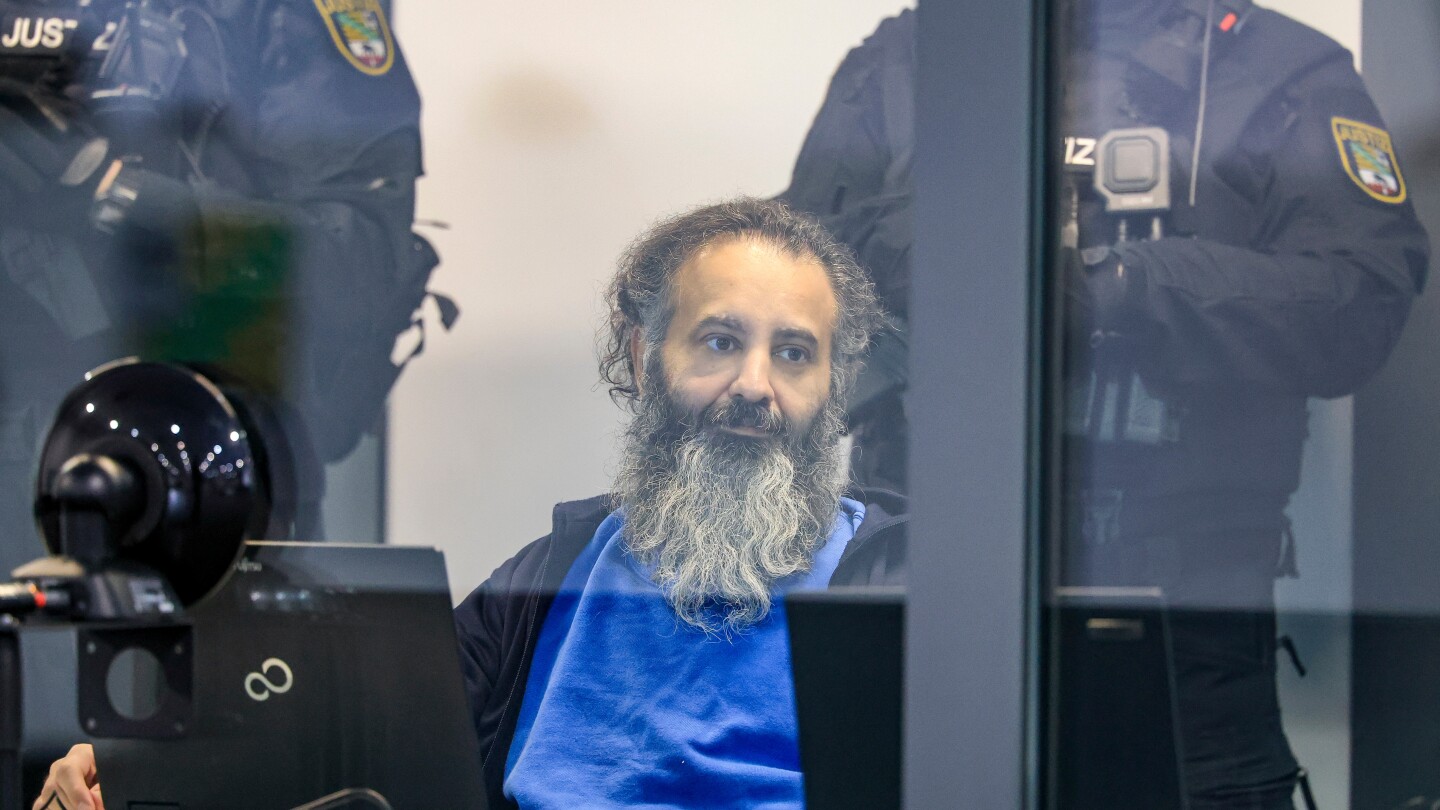
A 51-year-old Saudi doctor, Taleb al-Abdulmohsen, stood trial on Monday in Magdeburg, Germany, facing charges of murder and attempted murder following a devastating car-ramming attack on a Christmas market last December. The attack, which lasted just over a minute, claimed the lives of five women and a boy, leaving many others injured. The defendant, transported to a specially constructed courtroom by helicopter, was seated behind bulletproof glass as proceedings began. Prosecutors allege that al-Abdulmohsen acted out of personal frustration, deliberately targeting as many people as possible to gain attention. The trial, expected to continue until March, could result in a life sentence if he is convicted. Investigators revealed that the attack was carried out using a rented BMW X3, reaching speeds of up to 48 kph (30 mph). They noted that the suspect was not under the influence of alcohol and appeared to have acted alone, motivated by dissatisfaction with a legal dispute and failed criminal complaints. Al-Abdulmohsen, who arrived in Germany in 2006 and held permanent residency, described himself as an ex-Muslim critical of Islam and expressed far-right sympathies on social media. Despite previous threats, he had no history of violent acts. The incident has reignited debates on migration in Germany, particularly in the lead-up to the national election in February.
分类: society
-
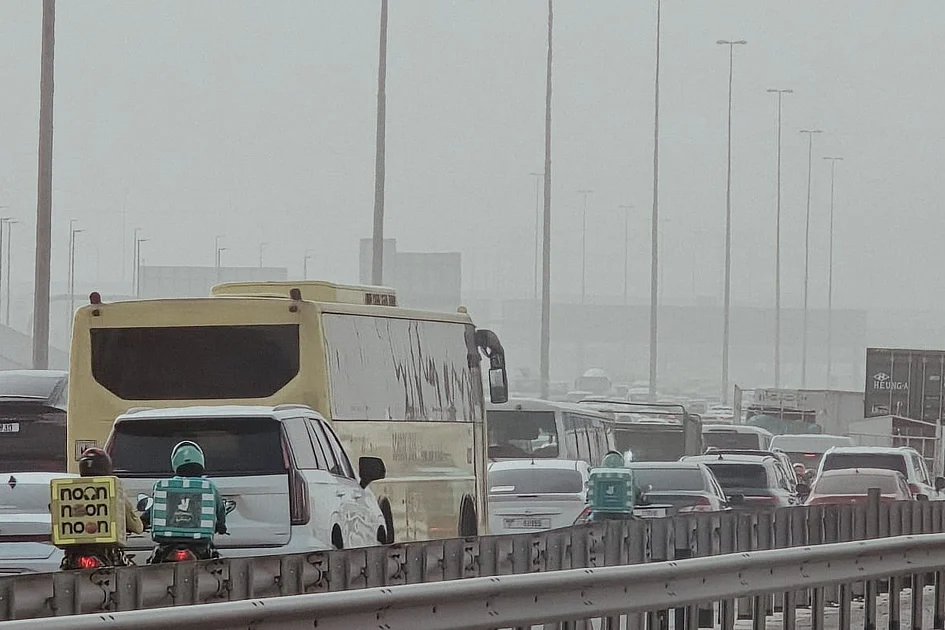
Some UAE schools suspend outdoor activities during unstable weather, poor air quality
In response to deteriorating air quality and unstable weather conditions, several schools in the UAE have temporarily suspended outdoor activities. Authorities have issued advisories urging caution, prompting educational institutions to prioritize student safety by shifting activities indoors. This precautionary measure has become a standard practice in the region’s school safety culture. The National Centre of Meteorology (NCM) recently forecasted dusty and windy conditions, leading to reduced visibility and heightened air pollution levels. Schools have been proactive in communicating these changes to parents, ensuring transparency and adherence to public health guidelines. For instance, some schools in Dubai notified parents via email on November 5, detailing the suspension of outdoor breaks, lunches, and co-curricular activities. The decision was based on the Emirati Air Quality Index (EAQI), which indicated unhealthy air quality levels. Schools have also implemented creative indoor alternatives to maintain student engagement and physical activity. Simon Jodrell, Principal of Jebel Ali School, emphasized that student safety is paramount, with decisions guided by the NCM and Dubai Municipality. Similarly, Rahul Nair of LEAMS Education highlighted the importance of air-conditioned indoor spaces and tailored activities like yoga, robotics, and art to keep students active. These measures reflect a broader commitment to safeguarding student health while ensuring continuity in education and extracurricular engagement.
-
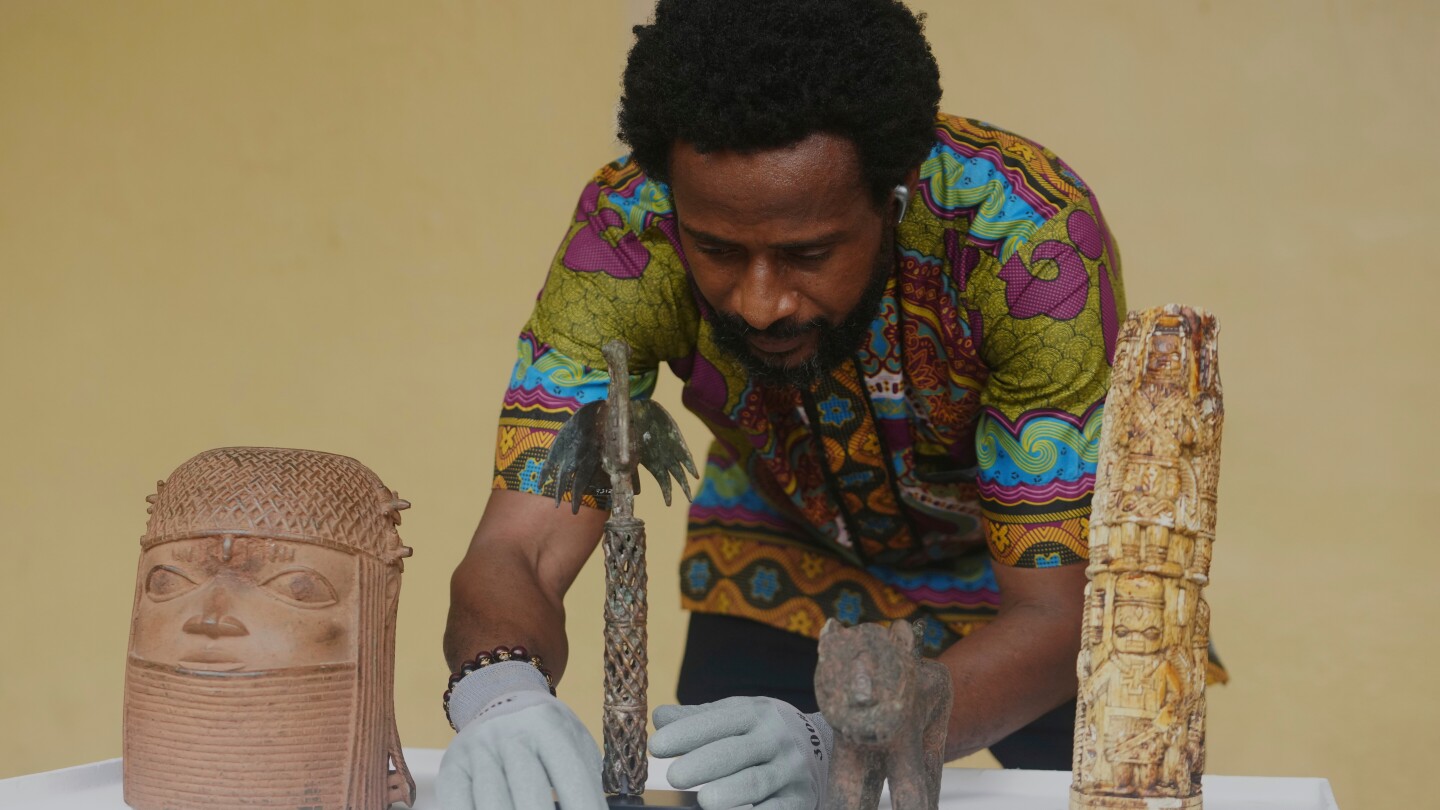
Protesters disrupt the soft opening of a new museum in Nigeria that was to house returned artifacts
In a dramatic turn of events, the soft launch of the Museum of West African Arts (MOWAA) in Benin City, Nigeria, was disrupted by protesters on Sunday evening. The demonstrators, voicing their allegiance to the Oba of Benin, the city’s traditional ruler, claimed the museum’s establishment violated Benin City’s cultural heritage. Videos circulating online captured the scene as more than a dozen young individuals stormed the museum grounds, chanting slogans in support of the Oba. Guests, including foreign visitors, were swiftly escorted away, though no injuries were reported. The museum, a multi-million-dollar project, was set to officially open on Tuesday and intended to house the renowned Benin Bronzes—artifacts looted by British soldiers in the late 19th century and scattered globally. While some of these artifacts have been repatriated to Nigeria in recent years, disputes with the Oba led to the shelving of plans to display them at the museum. Following the protest, the museum suspended further activities and advised visitors to postpone their plans until the situation is resolved. The museum’s ownership lies with the MOWAA Trust, a non-profit established in 2020, which receives funding from the Nigerian state government, British and German museums, and other grants. The Nigerian federal government has expressed deep concern over the situation, while the museum’s management has yet to comment on whether the scheduled opening will proceed.
-
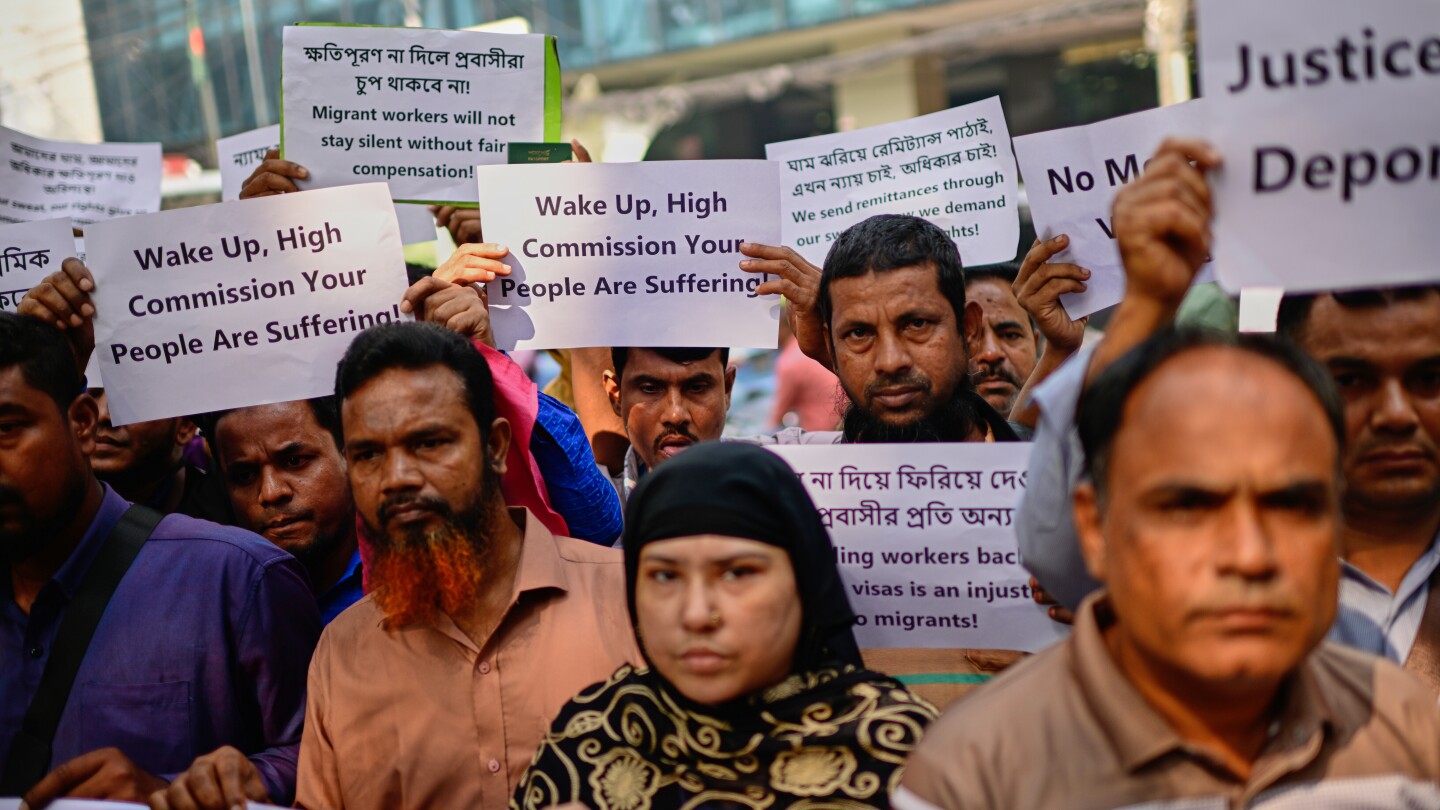
Bangladeshi workers protest over unpaid wages and mistreatment claims
In a significant demonstration of discontent, approximately 100 Bangladeshi workers employed by Malaysian companies staged a protest in Dhaka, Bangladesh, on Monday. Organized by the Migrant Welfare Network, a group advocating for migrant workers’ rights in both Malaysia and Bangladesh, the rally took place outside the Ministry of Expatriates’ Welfare and Overseas Employment. The workers demanded unpaid wages, fair compensation, and an end to alleged mistreatment by their Malaysian employers.
The protest highlighted the plight of 431 Bangladeshi workers who claim to have been exploited by two Malaysian companies, Mediceram and Kawaguchi Manufacturing. Mediceram, a manufacturer of medical, industrial, and domestic gloves, and Kawaguchi, a supplier of plastic components to major Japanese firms like Sony and Panasonic, are accused of withholding wages and subjecting workers to poor conditions. The Migrant Welfare Network has filed formal complaints against both companies, urging Bangladeshi and Malaysian authorities, as well as international buyers, to intervene.
Malaysia, one of Southeast Asia’s wealthiest nations, heavily relies on migrant labor from countries like Bangladesh, Myanmar, and Nepal for labor-intensive jobs in manufacturing, plantations, and construction. However, these workers often face systemic abuse, low wages, and harsh working conditions, which local workers typically avoid. The issue has strained diplomatic relations between Bangladesh and Malaysia, with workers’ rights groups calling for stricter oversight of recruitment agencies and middlemen who dominate the industry.
Former employees shared harrowing accounts of their experiences. Omar Faruk, who worked at Kawaguchi, revealed that the company paid partial salaries before withholding wages entirely, leading to financial distress. Similarly, Harun Or Rasid Liton, a former Mediceram employee, accused the company of ignoring a Malaysian Labor Court order to pay compensation. The workers’ struggles underscore the urgent need for systemic reforms to protect migrant workers’ rights and ensure fair treatment.
-
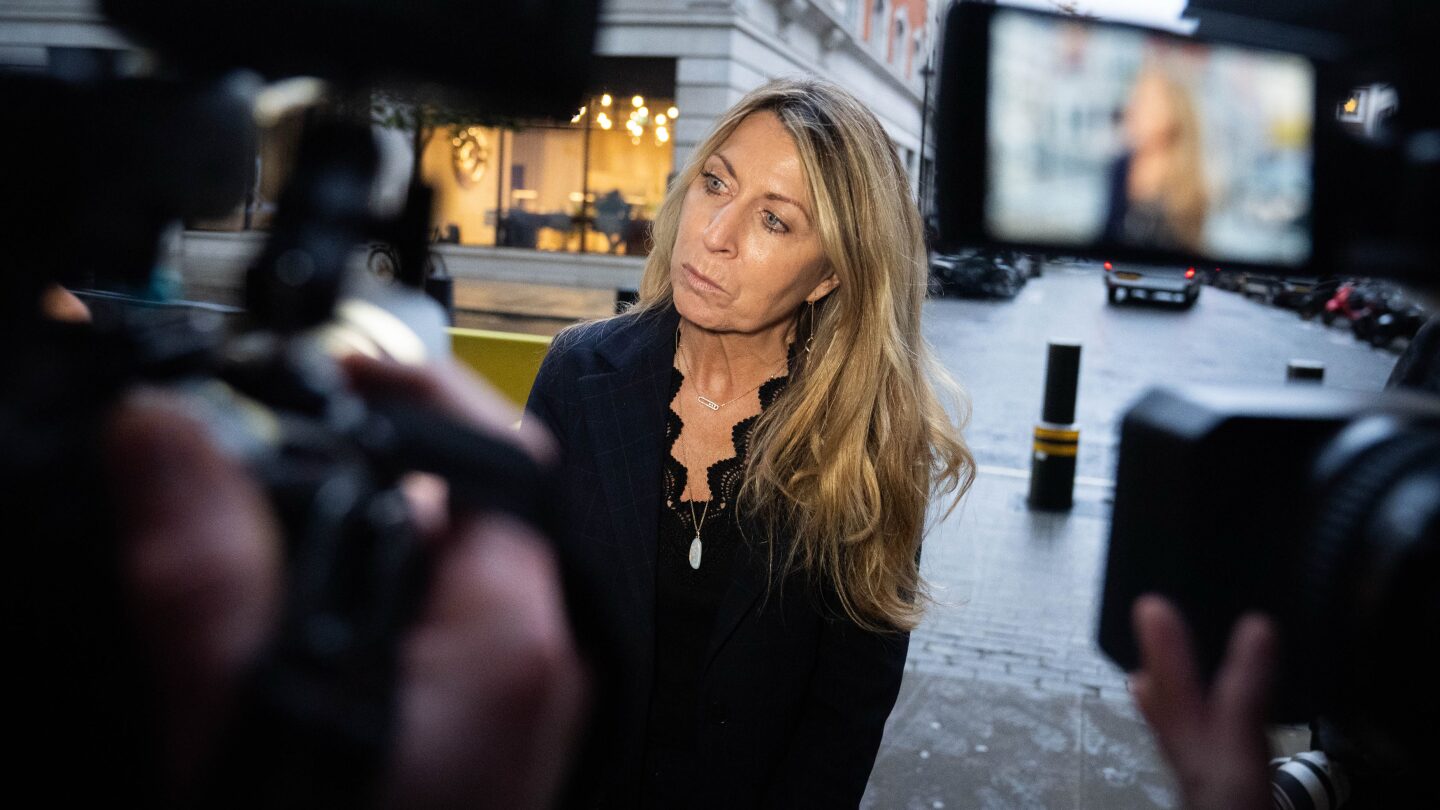
BBC faces leadership crisis after news bosses quit over Trump speech edit and bias claims
The British Broadcasting Corporation (BBC) is embroiled in a leadership crisis and facing intense political scrutiny following the resignations of its Director-General, Tim Davie, and Head of News, Deborah Turness. The controversy stems from allegations of biased editing of a speech by former U.S. President Donald Trump, which has sparked widespread criticism and accusations of undermining journalistic integrity.
-
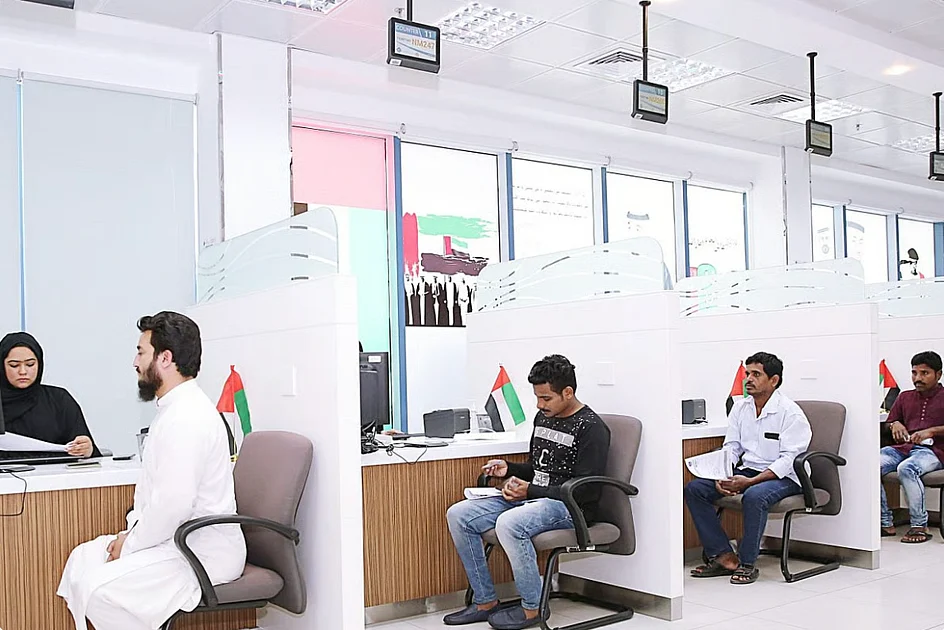
UAE freelancers back stricter reviews of self-employment visas, seek clarity on new rules
Freelancers in the UAE have expressed support for the government’s decision to implement stricter reviews of self-employment visas, viewing the move as a positive step toward enhancing the sector’s credibility. However, many are calling for clearer guidelines on the application process to ensure transparency and efficiency. Ahmed Salim, a Dubai-based media professional, emphasized the importance of greater oversight, stating that it ensures only genuine freelancers benefit from the system. He acknowledged that while stricter checks are beneficial, applicants need more clarity on the requirements to avoid confusion. Earlier this week, Lieutenant General Mohammed Ahmed Al Marri, Director General of Dubai’s General Directorate of Residency and Foreigners Affairs (GDRFA), confirmed that freelance visas, also known as Green Residency, remain available. He explained that the review and auditing procedures have been strengthened to protect rights, prevent misuse, and regulate the rapidly expanding market. Visa consultants have noted that the tighter checks are a natural part of refining the system. Ishaan A., a Dubai-based visa consultant, highlighted that the increased verification measures signal a maturing system, ensuring consistency and fairness. Some freelancers have acknowledged that the process has become more detailed and, at times, slower, but they see this as a necessary trade-off to improve compliance and credibility. Rachel, a freelance writer, shared her experience of facing confusion over documentation requirements, emphasizing the need for a clear, updated checklist. Officials have reiterated that the added checks are not meant to restrict opportunities but to strengthen the system and ensure permits are used properly. The freelance visa allows residents to work independently without a sponsor but does not grant the right to hire staff or sponsor others. Rachel concluded that while freelancers understand the authorities’ intentions, clear communication and predictable timelines are essential for planning work with confidence.
-
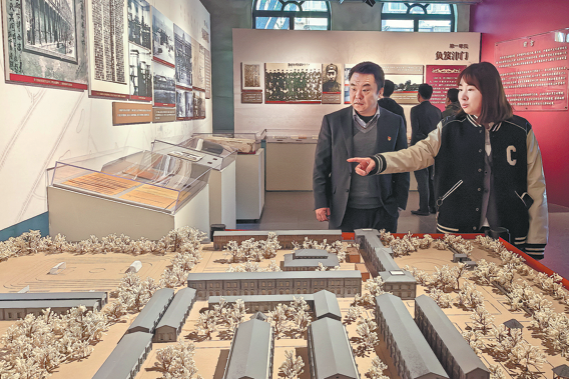
Revolutionary’s legacy lives on in Tianjin
Tianjin recently commemorated the 136th anniversary of the birth of Li Dazhao, a pivotal figure in China’s communist movement and one of the founders of the Communist Party of China. Hundreds gathered on October 29 to honor his legacy, particularly his formative years in Tianjin, which played a crucial role in shaping his revolutionary ideals. Li studied at the Beiyang Institute of Law and Politics, a hub of intellectual and political activity in the early 20th century, where he was exposed to advanced ideas in politics, economics, and law. The institute, established in 1906, was a melting pot of Chinese and Western thought, fostering an environment that nurtured Li’s revolutionary spirit. During his time there, Li actively promoted democracy and civil rights through his writings, inspiring many to join the revolution. The Hebei district of Tianjin has restored the Beiyang Institute and established a free public exhibition dedicated to Li Dazhao and his connection to the city. The exhibition features historical artifacts, photographs, and recreated scenes from Li’s student life, offering visitors a glimpse into his revolutionary journey. Li Hongta, Li Dazhao’s grandson, expressed his admiration for the exhibition, emphasizing its role in inspiring younger generations. The restoration of the institute is seen as a tribute to revolutionary history and a means of preserving the Red spirit. Tianjin continues to honor Li’s legacy through various initiatives, including Red song music story sessions and lectures by the Tianjin Li Dazhao Research Society. The Beiyang Institute, now a Red education base, has welcomed over 500 groups and nearly 20,000 visitors since its reopening last year. The site stands as a testament to Li Dazhao’s enduring influence and Tianjin’s role in China’s revolutionary history.
-
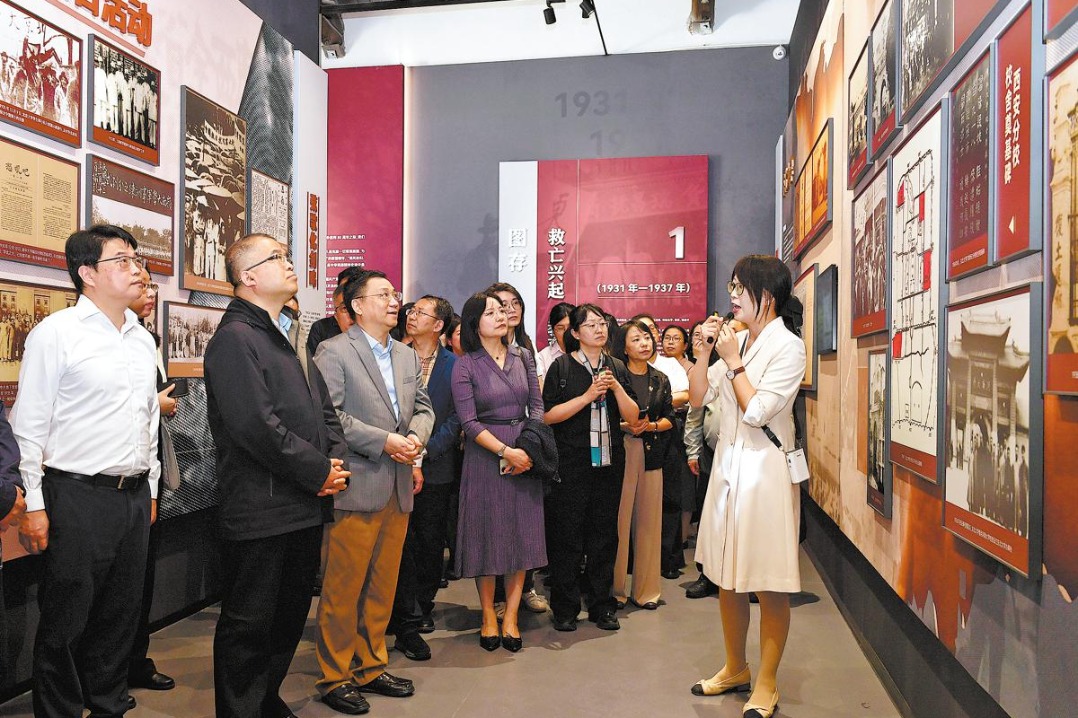
Colleges’ wartime resilience exhibited
A comprehensive exhibition commemorating the relocation of Chinese universities during the War of Resistance Against Japanese Aggression (1931-45) was inaugurated at Sanming University in Fujian province. The event, organized in collaboration with over 40 universities nationwide, marks the 80th anniversary of the victory in the Chinese People’s War of Resistance Against Japanese Aggression and the World Anti-Fascist War. The exhibition vividly portrays the challenging journey of more than 150 universities that were compelled to move to safer regions, including the southwestern, northwestern, central-southern, and eastern mountainous areas, to preserve the essence of education during the war. Tang Tao, an expert from East China Normal University, emphasized the significance of this relocation in China’s educational history and the importance of educating students about this pivotal period. The exhibition also sheds light on the wartime efforts of over 20 universities established by the Communist Party of China, filling a crucial gap in historical records. It narrates the story of a military and political academy in Yan’an, Shaanxi province, which trained over 100,000 cadres amidst relentless warfare. Additionally, the exhibition explores the wartime relocation and postwar development of higher education institutions in Fujian and Taiwan, highlighting the shared destiny and blood ties between compatriots in Taiwan and the mainland. Chen Lieping, Party chief of Sanming University, stated that the exhibition hall serves as a lasting repository of wartime memory and an immersive platform for ideological and political education, ensuring the flame of civilization and the power of education are passed down through generations.
-
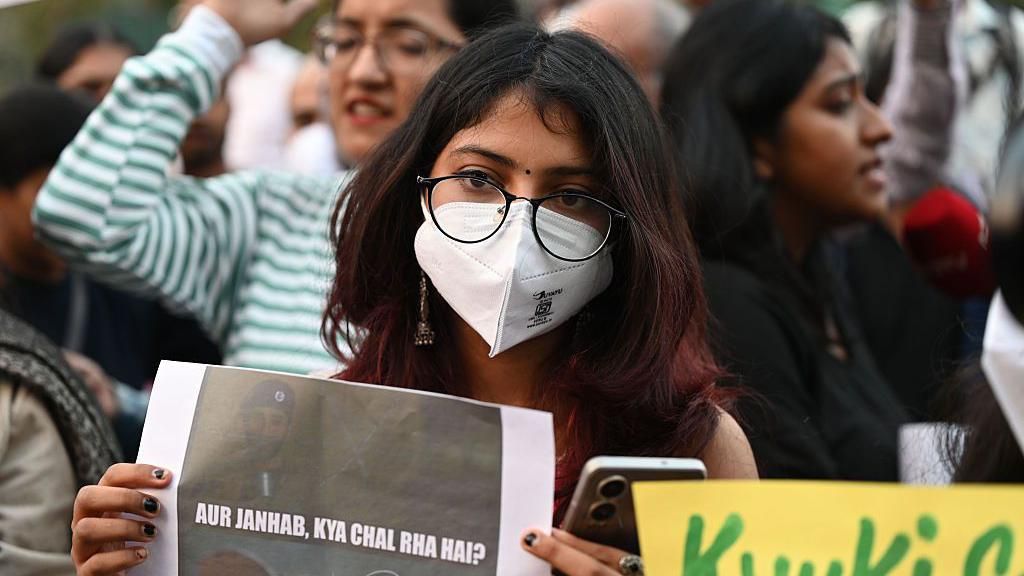
Hundreds turn out for anti-pollution protest in Delhi
Hundreds of Delhi residents took to the streets on Sunday to protest the worsening air quality in India’s capital and its surrounding areas. The demonstration, which saw participants of all ages, including children, was marked by banners and slogans urging the government to declare a health emergency and implement effective measures to curb pollution. The protest, held near the iconic India Gate, resulted in the brief detention of around 80 individuals by the police, who cited the lack of permission for the gathering. This was the first major protest on air pollution in Delhi in recent times, highlighting the severity of the issue. Air quality in Delhi has been consistently poor, with the Air Quality Index (AQI) hovering between 300 and 400 over the past three weeks, nearly 20-30 times the acceptable limit set by the World Health Organization. The situation is exacerbated in winter due to crop stubble burning in neighboring states and low wind speeds that trap pollutants close to the ground. Protesters, including environmental activists, opposition leaders, and university students, criticized the government’s inadequate response, particularly the delayed implementation of the third level of the Graded Response Action Plan (GRAP), which would impose stricter measures to combat pollution. Delhi’s environment minister, Manjinder Singh Sirsa, defended the government’s efforts, citing measures such as the installation of anti-smog guns, dust mitigation through water sprinklers, and the increase in electric vehicles in the public bus fleet. However, protesters remain unconvinced, calling for more serious and immediate action to address the crisis.
-
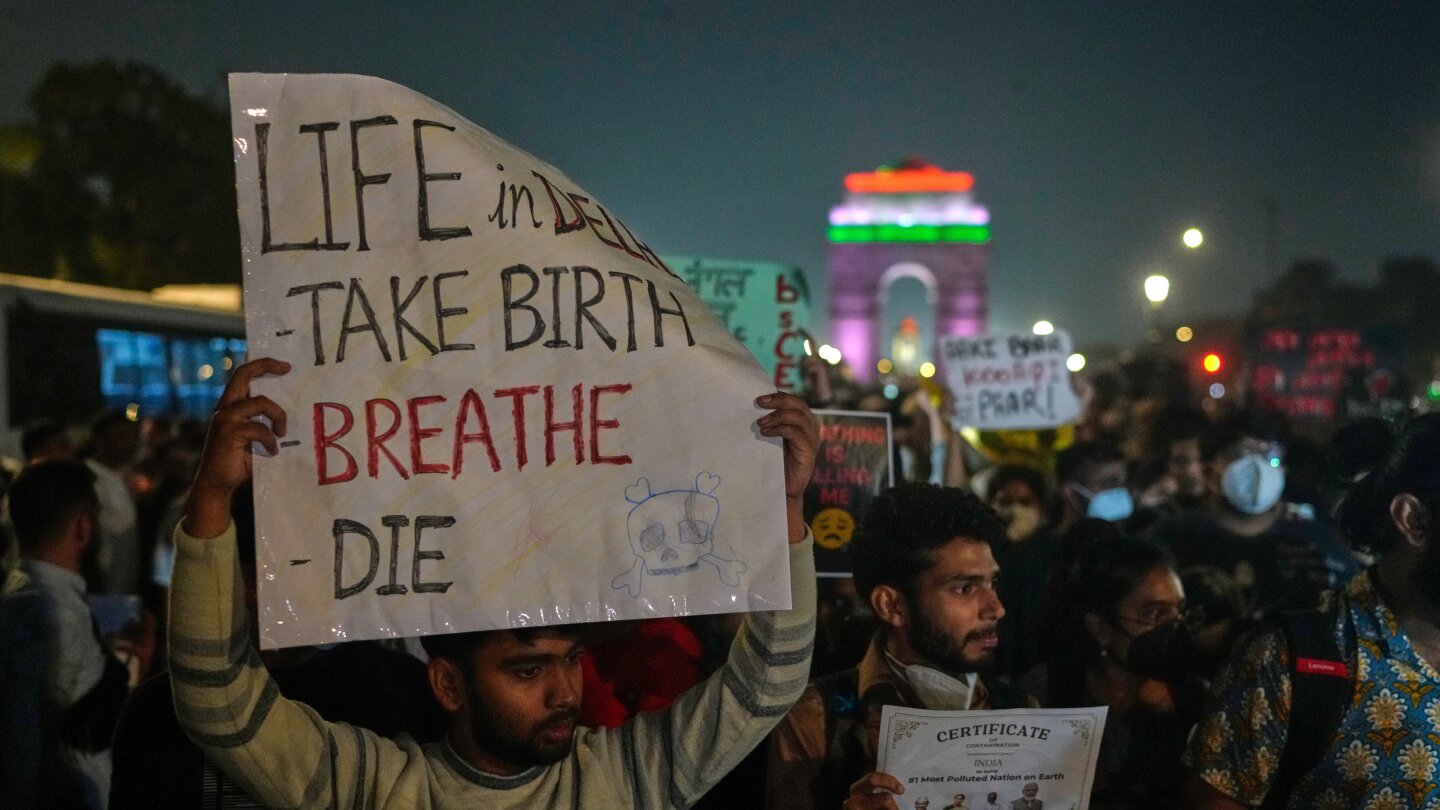
Air pollution levels surge in India’s capital, sparking rare protests
New Delhi, India’s capital, was shrouded in a dense layer of smog on Monday, with air pollution levels reaching hazardous heights and exacerbating an ongoing public health crisis. The air quality index (AQI) soared to 344, a level classified as ‘severe’ by the World Health Organization (WHO), posing significant risks to residents’ health. The acrid smell of pollution permeated the city, prompting widespread concern and frustration among its inhabitants. On Sunday evening, hundreds of protesters, including parents and environmental activists, gathered at India Gate in a rare demonstration, demanding immediate government action. Many participants wore masks and carried placards, with one reading, ‘I miss breathing.’ Meghna, a protester who only provided her first name, expressed her distress, stating, ‘I am here just as a citizen who cares and who is worried about the state of situation that we are in with respect to the lack of clean air to breathe.’ However, police intervened, confiscating banners and placards and dispersing the crowd, citing a lack of permission for the protest. The worsening air quality has led to a surge in health complaints, including headaches and persistent coughs, fueling public anger toward politicians accused of inaction and blame-shifting. New Delhi, home to over 30 million people, consistently ranks among the world’s most polluted cities, with India hosting six of the top 10 globally. The city’s air quality deteriorates further during winter due to crop residue burning in neighboring states, combined with vehicle and industrial emissions. Cool, dry, and windless conditions trap toxic particles, sometimes pushing pollution levels to 20 times the WHO’s safe limit. While authorities have implemented temporary measures such as construction bans, diesel generator restrictions, and cloud-seeding experiments, critics argue that only long-term emission reduction strategies can provide lasting relief.