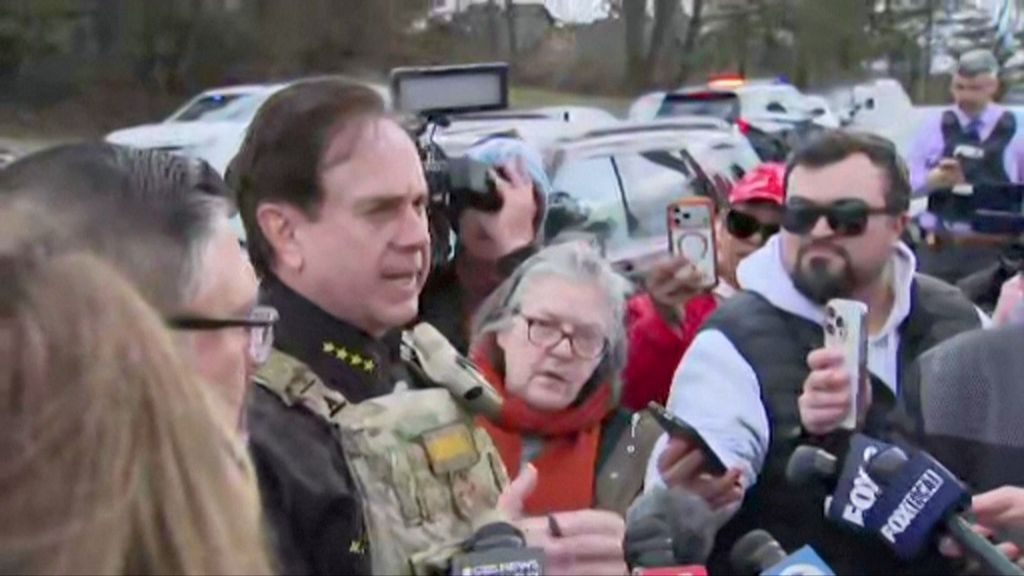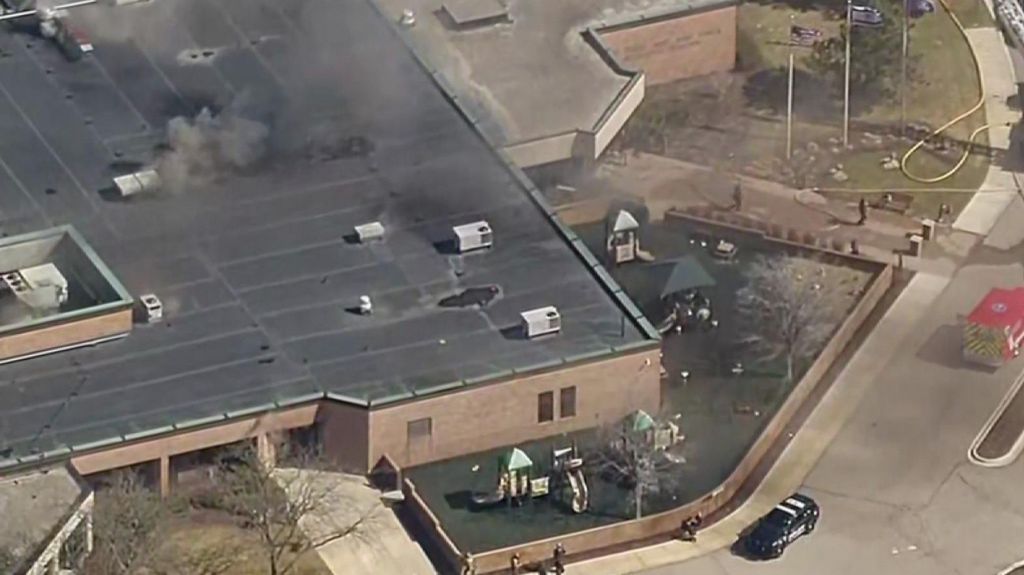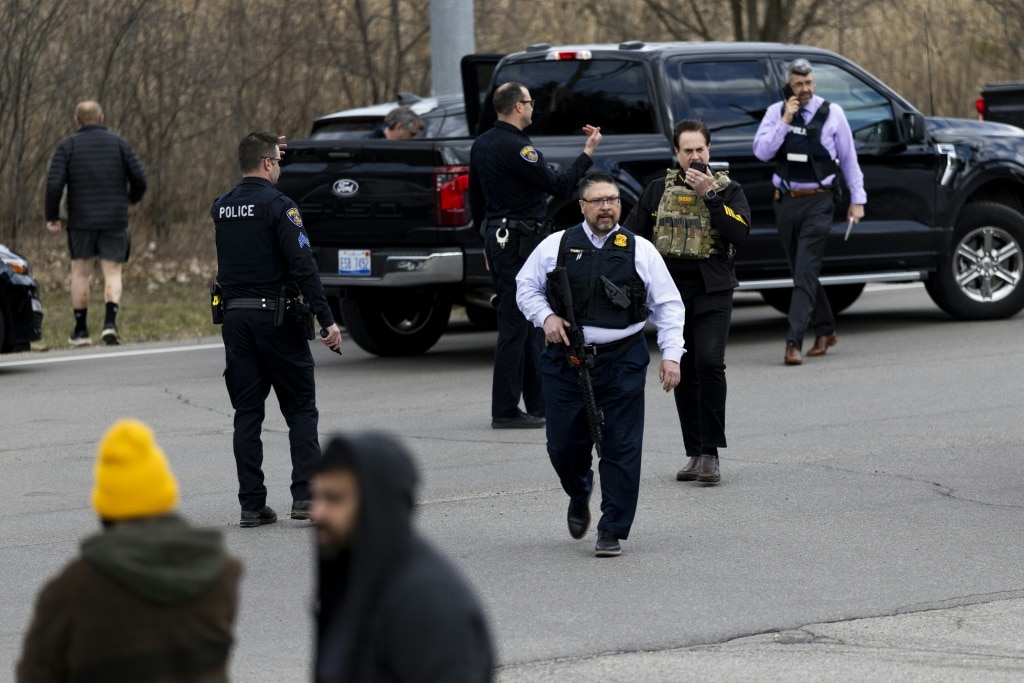
A violent attack targeting Temple Israel synagogue in West Bloomfield, Michigan, was neutralized by security personnel on Thursday after an assailant drove a pickup truck into the building, triggering a significant fire. According to Oakland County Sheriff Michael Bouchard, the unidentified individual breached the structure by driving down a hallway before being engaged by armed security guards.
Sheriff Bouchard reported that the suspect died at the scene, though investigators have not yet determined the exact cause of death. The security team did discharge firearms during the confrontation. One security member sustained injuries from the vehicle impact and received hospital treatment.
The incident prompted a massive emergency response, with fire crews battling flames visible from the damaged synagogue. Law enforcement deployed bomb-sniffing dogs to examine the vehicle for potential explosives as a precautionary measure, with Sheriff Bouchard noting the complexity of the investigation due to fire damage.
The attack occurred amidst heightened security alerts across Jewish institutions nationwide following recent Middle East tensions. Sheriff Bouchard revealed that law enforcement had anticipated potential threats for the past two weeks, stating there was ‘no lack of preparation’ for such scenarios.
Michigan Governor Gretchen Whitmer condemned the ‘heartbreaking’ attack, emphasizing that ‘Antisemitism and violence have no place in Michigan.’ The White House confirmed President Donald Trump had been briefed on the situation, while Israeli Foreign Minister Gideon Saar expressed shock and denounced rising antisemitism.
Local Jewish organizations implemented precautionary lockdowns, with the Jewish Federation of Detroit urging community members to avoid the area while investigations continue. Law enforcement agencies have pledged increased security presence at all Jewish facilities until the situation is fully resolved.