分类: society

  • At least 2 killed in shooting at Brown University in US Rhode Island: media

    At least 2 killed in shooting at Brown University in US Rhode Island: media

    A devastating shooting incident unfolded on the campus of Brown University in Providence, Rhode Island, on Saturday afternoon, resulting in multiple casualties and triggering a massive law enforcement response. According to official reports, the violence claimed at least two lives and left several others injured, sending shockwaves through the prestigious Ivy League institution.

    The Providence Police Department issued an urgent alert via social media platform X, confirming ‘multiple shot in the area of Brown University’ and declaring the situation an active investigation. Authorities immediately implemented emergency protocols, instructing students and faculty to shelter in place or avoid the area entirely until further notice.

    At approximately 4:20 PM local time, university students received emergency text notifications warning of an active shooter on campus. The alert provided specific safety instructions, directing recipients to lock all doors, silence electronic devices, and remain concealed. The message included the standard emergency protocol guidelines: ‘Run, hide, or fight as a last resort’ for personal protection.

    Law enforcement officials indicated the violence erupted near an academic and research complex on the university grounds, prompting immediate deployment of police units to secure the area. The incident attracted attention at the highest levels of government, with reports confirming that former President Donald Trump had been briefed on the developing situation. Federal involvement was confirmed through the presence of FBI agents assisting local authorities with the investigation.

    The shooting at one of America’s most prestigious educational institutions has raised renewed concerns about campus safety and gun violence, occurring during the final weeks of the academic semester. University officials have yet to release detailed information about the victims or the circumstances surrounding the attack as the investigation remains ongoing.

  • Morocco aims to boost legal cannabis farming and tap a global boom

    Morocco aims to boost legal cannabis farming and tap a global boom

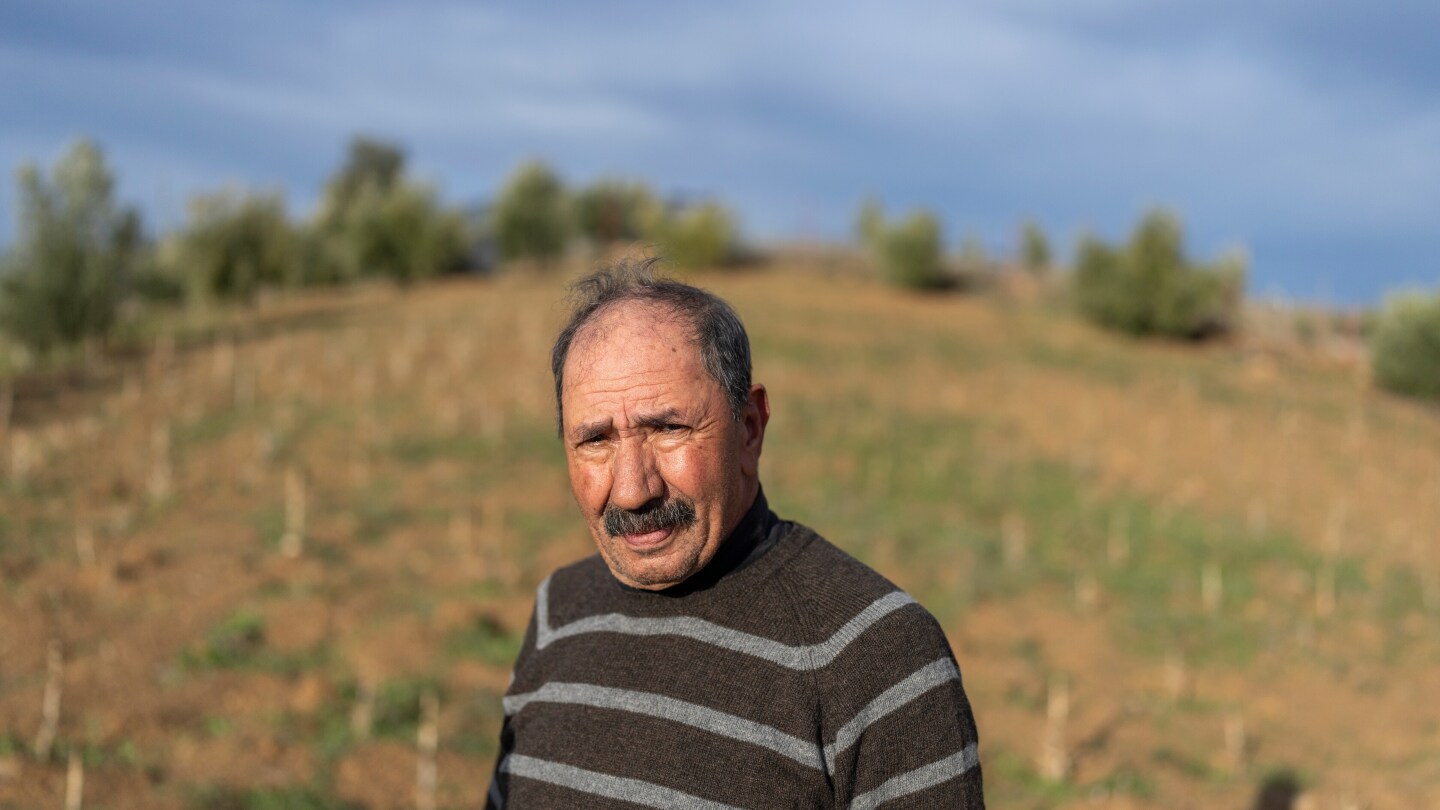
    BAB BERRED, Morocco — For generations, farmers in Morocco’s rugged Rif Mountains have cultivated cannabis under constant threat of prosecution. Now, a groundbreaking legalization initiative is transforming this clandestine agricultural tradition into a regulated industry, offering veteran growers unprecedented legal protection and economic stability.

    Mohamed Makhlouf, a 70-year-old farmer who began cultivating at age 14, exemplifies this dramatic transition. Where once the aroma of his crops signaled danger, today his government-approved plants grow openly under police observation without consequence. “Legalization is freedom,” Makhlouf reflects. “If you want your work to be clean, you work with the companies and within the law.”

    This shift represents Morocco’s ambitious effort to integrate its massive cannabis production—long recognized as the world’s largest supplier of hashish resin—into the formal economy. The 2021 legislation made Morocco the first major illegal cannabis producer and first Muslim-majority nation to legalize certain cultivation forms, specifically for medicinal and industrial applications.

    The regulatory framework established since 2022 governs every production aspect, from seed selection to distribution. The national cannabis agency has licensed over 3,371 growers across the Rif region, recording nearly 4,200 tons of legal production. These farmers now supply cooperatives like Biocannat near Bab Berred, which transforms raw plants into CBD oil, skincare products, chocolates, and industrial hemp textiles—all containing less than 1% THC to comply with medicinal standards.

    Beyond agricultural benefits, legalization has spawned an entire ecosystem of packaging, transportation, and irrigation jobs. “All of it made possible through legalization,” notes Aziz Makhlouf, director of a cooperative with deep family roots in cannabis farming.

    However, challenges persist in this unprecedented transition. The legal market remains insufficient to absorb the hundreds of thousands dependent on illicit trade, with government data showing legal cultivation on 14,300 acres compared to 67,000 acres still used illegally. Recent protests in Taounate highlighted payment delays to farmers working through official channels, revealing tensions in implementation.

    As described by the Global Institute Against Transnational Organized Crime, Morocco currently experiences “coexistence of both markets rather than a decisive transition.” The nation now navigates parallel cannabis economies—one regulated, one outlawed—attempting to bring a centuries-old trade into the light without abandoning those who sustained it through decades of marginalization.

  • Police release CCTV footage of Brown University shooting suspect

    Police release CCTV footage of Brown University shooting suspect

    Authorities in Providence, Rhode Island, have escalated their investigation into a deadly campus shooting by releasing closed-circuit television (CCTV) footage of the primary suspect. The incident, which unfolded on the grounds of the prestigious Brown University, resulted in the tragic deaths of two individuals identified as students.

    The Providence Police Department is urging members of the public to come forward with any information that could lead to the identification and apprehension of the individual captured in the newly released surveillance video. The footage, a critical piece of evidence, depicts the suspect in the vicinity of the university around the time the attack occurred.

    This release forms a central part of a broader law enforcement strategy that includes forensic analysis and witness interviews. The shooting has sent shockwaves through the Ivy League academic community, prompting campus-wide alerts and a temporary bolstering of security presence. University officials have concurrently activated counseling and support services for students and faculty affected by the violent event, emphasizing a commitment to community safety and well-being during this investigation.

  • Manhunt continues after two killed in US university shooting

    Manhunt continues after two killed in US university shooting

    PROVIDENCE, R.I. – A massive manhunt is underway following a deadly shooting at Brown University’s campus that resulted in two student fatalities and nine individuals injured, sending shockwaves through the prestigious Ivy League institution.

    The violence erupted approximately at 4:00 PM local time on Saturday within the Barus and Holley engineering building, where final examinations were being conducted. According to eyewitness accounts from an economics professor, the assailant entered a classroom during a review session, uttered unspecified words, and commenced firing indiscriminately. Panicked students scrambled for cover in the stadium-style seating as the attack unfolded.

    Rhode Island Hospital officials confirmed that most wounded victims remain in critical but stable condition, with the medical facility implementing lockdown protocols as the perpetrator remains at large. University President Christina Paxson characterized the incident as ‘deeply devastating’ for the academic community.

    Law enforcement authorities have released limited suspect information, describing the individual as a male dressed entirely in black, estimated to be in his thirties. Although surveillance footage captures the suspect exiting the building, the recording reveals neither facial features nor visible weaponry.

    Providence Deputy Police Chief Tim O’Hara emphasized that every available resource is being deployed to apprehend the suspect, though earlier reports of custody proved erroneous after police cleared an uninvolved individual following questioning.

    The seven-story engineering complex, housing 117 laboratories and multiple instructional spaces, was evacuated and secured by authorities who discovered neither the suspect nor firearms during their sweep.

    Local authorities maintain an active shelter-in-place order for the greater university area, with restaurants locking doors to protect occupants and law enforcement systematically escorting individuals from non-residential buildings. Aerial footage depicts extensive police presence throughout the campus vicinity.

    The university has canceled all scheduled examinations, while political figures including former President Trump and Rhode Island Governor Dan McKee have expressed condolences and called for prayers for the victims.

    This tragic event marks the 389th mass shooting in the United States this year according to Gun Violence Archive statistics, reigniting discussions about campus security and gun violence prevention measures at educational institutions nationwide.

  • He was an Uber driver in the US. Now he’s scared of jihadists after deportation to Somalia

    He was an Uber driver in the US. Now he’s scared of jihadists after deportation to Somalia

    Mahad Mohamud, a 36-year-old Somali immigrant known online as ‘Garyaqaan’ (The Judge), is navigating a difficult readjustment to life in Mogadishu after being deported from Minneapolis just as winter settled across Minnesota. The TikTok personality with nearly half-million followers finds himself back in Somalia’s heat and chaos after U.S. Immigration and Customs Enforcement (ICE) agents apprehended him earlier this year.

    Mohamud’s case represents complex intersections of social media influence, immigration policy, and personal security concerns. His popular TikTok account, part of Somalia’s lucrative ‘roasting’ subculture where he defended his clan’s interests, brought both fame and danger. While his followers celebrated his content, Islamist militant group al-Shabab issued death threats against him for his pro-government stance—threats that formed part of his asylum claim.

    The deportation process began when rival TikTokers allegedly leaked his address to immigration authorities. ICE detained Mohamud based on two allegations: illegal entry into the United States and involvement in the kidnapping of French officials in Mogadishu. Though the FBI cleared him of the kidnapping charges after questioning, his asylum case was ultimately denied, leading to six months of detention and eventual deportation.

    Mohamud’s journey to America began over a decade ago with stops in South Africa, where he survived xenophobic violence, and Brazil before crossing the Mexican border without documentation. After being arrested at the border, he was released with a work permit pending his asylum case resolution. In Minneapolis, he built a new life working as an Uber driver while growing his TikTok presence, which provided steady income through viewer gifts during live streams.

    His deportation involved multiple transfers between detention facilities before finally being placed in a restraining jacket for the multi-leg flight to Somalia via Costa Rica, Senegal, and Kenya. Though reunited with his three children after a decade apart, Mohamud fears for his safety due to ongoing al-Shabab threats and maintains heightened security precautions.

    His case occurs amid heightened immigration tensions. President Trump recently announced plans to end temporary protection status that prevents deportations while home countries remain unsafe, specifically mentioning Somali immigrants. This policy shift has created anxiety within Minneapolis’s large Somali community (approximately 80,000 residents), where videos show ICE agents conducting door-to-door operations in areas like Little Mogadishu.

    The BBC documented several young Somali men now living in hiding, missing work and meals while fearing detection. One anonymous deportee described returning to Somalia with nothing after spending $20,000 to reach the U.S., now contemplating migration again despite the risks. With no official deportation figures available, these individual stories highlight the human impact of changing immigration policies.

  • UAE Lottery: Three players bag Dh100,000 each; check out winning numbers

    UAE Lottery: Three players bag Dh100,000 each; check out winning numbers

    The UAE Lottery has concluded its 28th Lucky Day draw, marking the continuation of its newly implemented weekly Saturday schedule. Three fortunate participants each secured Dh100,000 prizes through the Lucky Chance segment of the popular lottery program.

    The winning numbers for the December 13th draw were officially released as 13, 23, 21, 16, 8, and 5, with the Lucky Month number designated as 5. The three grand prize winners in the Lucky Chance category were identified by their unique identification codes: DE8150622, CC5326319, and BB2657706.

    This draw represents a significant transition in the UAE Lottery’s operational framework. The organization recently implemented substantial modifications to its prize structure and scheduling format during its first anniversary celebration. The updated system now features a consolidated weekly draw every Saturday with revised prize allocations, including a Dh30 million grand prize and Dh5 million secondary prize.

    The November 29th draw historically concluded the original format after 26 consecutive draws, distributing over Dh147 million in total prizes throughout its initial cycle. The previous system produced more than 100,000 winners and created five millionaires who each claimed Dh1 million prizes during the program’s inaugural year.

    Lottery officials confirmed that 180 participants have already successfully claimed prizes through the Lucky Chance identification system to date. The transition to weekly draws aims to create more frequent winning opportunities for participants while maintaining the lottery’s commitment to substantial prize distributions.

  • First it was K-pop, now it’s K-food. Here’s how to bring Korean cooking into your kitchen

    First it was K-pop, now it’s K-food. Here’s how to bring Korean cooking into your kitchen

    In a London apartment filled with the pungent aroma of fermentation, Korean-American chef Judy Joo guides a group of food writers through the ancient art of kimchi-making. The scene represents more than just a cooking class—it symbolizes Korean cuisine’s remarkable journey into the British mainstream.

    Participants don plastic gloves to massage vibrant red paste into cabbage wedges, learning techniques passed down through generations like culinary heirlooms. The session, connected to Ocado’s new Korean food aisle, reflects a broader cultural shift occurring across the United Kingdom.

    Korean food’s arrival in Britain has been both gradual and deliberate. Unlike other Asian cuisines that initially faced cultural confusion—often mistaken for variations of Chinese food—Korean gastronomy has carved its own distinct identity. The transformation began accelerating after South Korea’s 2009 “Global Hansik” campaign, which invested government resources in international restaurant promotion and chef training.

    The current Korean culinary wave rides alongside the broader Hallyu cultural movement. Netflix’s popular competition show “Culinary Class Wars” returns for its second season after dominating global non-English charts, while food-centered dramas showcase innovative fusion dishes to international audiences.

    Supermarket metrics confirm the trend: Waitrose reports a 60% year-on-year increase in “Korean BBQ” searches and a 70% sales surge for gochujang paste. Kimchi ranks among the retailer’s fastest-growing international products.

    Nutritionist Emer Lowry explains the scientific appeal: “Fermented foods like kimchi have entered mainstream consciousness not just for their complex flavors, but for demonstrated benefits including improved digestion and healthier gut microbiomes.”

    Social media analytics reveal deepening engagement. According to food giant CJ’s Bibigo division, UK TikTok posts mentioning Korean food have surged from under 10,000 in 2023 to over 17,000 in 2025, indicating organic, curiosity-driven interest.

    In North London’s Cálong restaurant, Chef Joo Won represents the next evolution: adapting traditional Korean techniques to British ingredients. His culinary philosophy embraces thoughtful adaptation rather than rigid authenticity. “If an ingredient doesn’t suit Korean seasoning,” he notes, “there’s no need to force gochujang onto it.”

    Beyond restaurants, grassroots movements flourish. Yoonsun Chang’s LoKoLi supper clubs offer intimate experiences centered on jeong (Korean hospitality) and inyeon (meaningful connections formed at the table). Her guests increasingly seek the domestic aspects of Korean culture—table settings, everyday dishes, and their stories—rather than just popular music and dramas.

    The cultural impact becomes evident in unexpected places. Chang observes that pubs and restaurants now use authentic kimchi instead of generic pickles in their “kimchi burgers,” indicating genuine integration rather than superficial appropriation.

    For British YouTubers Armand and Max, exposure to Korean food through the “Korean Englishman” channel fundamentally changed their eating habits. “The flavor profiles were completely different from anything we’d experienced,” Max recalls. “Fermented cabbage, kimchi—we’d never had anything like it.”

    Back in Judy Joo’s kitchen, as cabbages transform into future fermented delicacies, participants leave with more than just jars of kimchi—they carry pieces of a cultural tradition that has found a new home in British culinary landscape. While Korean food hasn’t replaced traditional British takeaways, it has undoubtedly secured its place in the nation’s diverse gastronomic identity.

  • I’m Muslim but I mark Shabbat’: How an Indian man is keeping a Jewish legacy alive

    I’m Muslim but I mark Shabbat’: How an Indian man is keeping a Jewish legacy alive

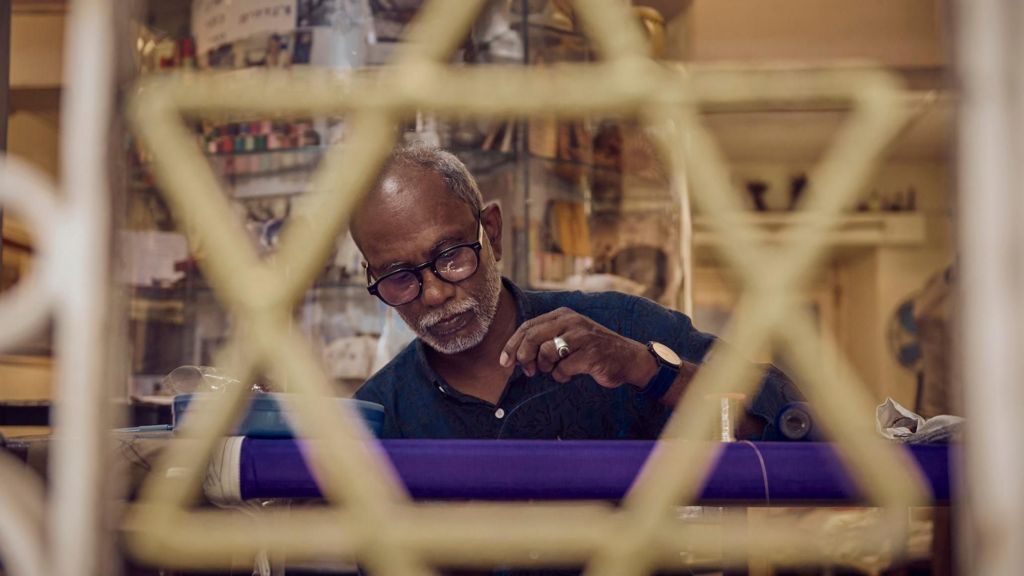
    In the heart of Kochi’s historic Jew Town, where cobbled lanes echo with centuries of multicultural heritage, Thaha Ibrahim maintains an extraordinary cultural legacy. The 55-year-old Muslim embroidery artisan now operates what remains as the final Jewish embroidery shop in this southern Indian city—once known as the Queen of the Arabian Sea for its significance as a spice trade hub.

    His establishment still bears the sign ‘Sarah Cohen’s Home,’ honoring the Jewish woman who became his mentor and surrogate mother. Their unconventional friendship defied religious and economic boundaries, spanning nearly four decades until Sarah’s death in 2019 at age 96. Thaha first began assisting in the shop in 2000, eventually taking full ownership according to Sarah’s final wishes.

    The shop’s origins trace back to the early 1980s when Thaha, then a teenage school dropout selling postcards to tourists, encountered the Cohens by chance. Initially met with skepticism by Sarah, their relationship transformed when Thaha demonstrated natural talent for embroidery—a skill likely inherited from his tailor father. Under Sarah’s guidance, he mastered creating traditional Jewish items including kippahs (skullcaps), challah covers, and menorahs.

    Jew Town itself tells a story of vanishing heritage. Once home to 2,500 Jews in the 18th century, the community has dwindled to a single remaining Jewish resident today. Jewish settlement in Kerala dates back 2,000 years during King Solomon’s reign, with later waves of Sephardic Jews arriving in 1492 fleeing Spanish persecution. These communities collectively became known as Cochin Jews, living under the protection of local rulers in what was historically a multicultural trading center.

    The exodus accelerated after Israel’s establishment in 1948, with most families seeking better economic opportunities or marriage prospects abroad. Scholar Anna Zacharias notes that religious persecution was never a factor in multicultural Kochi, where Jews maintained their identity while integrating through speaking Malayalam and participating in local culture.

    Thaha honors his promise to preserve Sarah’s legacy with profound respect for Jewish traditions. He closes the shop on Shabbat, lights the traditional Friday evening lamp despite being a practicing Muslim, and regularly visits Sarah’s grave at the Jewish cemetery. ‘To me, it’s not about religion but about humanity,’ he reflects—a testament to intercultural bonds that endure beyond religious divisions.

  • Memorial ceremony remembers victims of Nanjing Massacre

    Memorial ceremony remembers victims of Nanjing Massacre

    The city of Nanjing observed a profound moment of remembrance on December 13, 2025, as citizens from diverse backgrounds convened at the Memorial Hall of the Victims in the Nanjing Massacre. This solemn gathering marked the 88th anniversary of the tragic historical event that occurred following the capture of Nanjing by Japanese military forces on December 13, 1937.

    Under the evening sky, participants held a moving ‘Candlelight Memorial’ ceremony, creating a sea of flickering lights in honor of the approximately 300,000 victims. The visual tribute served as both an expression of collective grief and a powerful testament to the enduring call for peace and reconciliation.

    The memorial ceremony represented more than historical remembrance—it stood as an educational imperative for future generations about the consequences of conflict and the essential value of humanitarian principles. Attendees included survivors’ descendants, students, local officials, and international visitors, all united in their commitment to ensuring that such tragedies are neither forgotten nor repeated.

    This annual observance has evolved into a significant cultural and historical tradition, emphasizing the importance of learning from past atrocities while fostering dialogue and understanding between nations. The ceremony’s peaceful nature underscores Nanjing’s transformation from a site of suffering to a symbol of resilience and hope for peaceful coexistence in the modern era.

  • Look: UAE kids become storytellers, exhibit Emirati culture at RAK event

    Look: UAE kids become storytellers, exhibit Emirati culture at RAK event

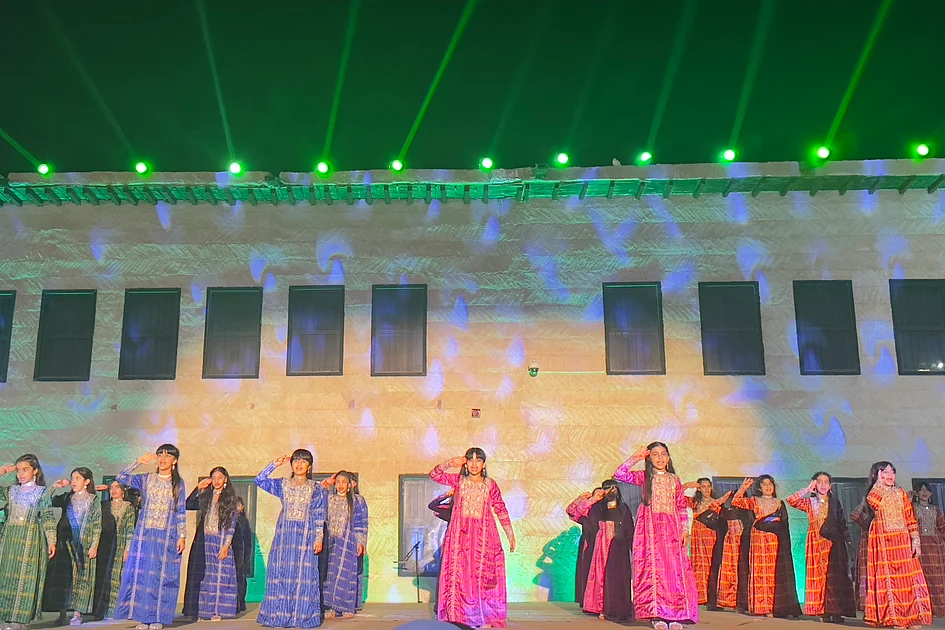
    Ras Al Khaimah has transformed cultural preservation into an intergenerational dialogue through its innovative Heritage Days event, running from December 11-15. The fourth edition, themed ‘Heritage Through the Eyes of Our Children,’ positions school students as primary narrators of Emirati traditions rather than passive observers.

    The program features a national heritage operetta competition where fourteen schools initially participated, with six finalists presenting meticulously crafted performances. Each operetta involved minimum 40 students and adhered to strict 25-minute timeframes while being evaluated on traditional attire authenticity, heritage content accuracy, directorial quality, and student participation levels. A distinguished panel of educational experts, theater specialists, authors, and media professionals assessed the presentations.

    Beyond theatrical performances, the event offers immersive cultural experiences across multiple domains. Traditional crafts demonstrations, folk medicine exhibitions, local cuisine sampling, and children’s art displays create a comprehensive tapestry of Emirati heritage. Muheina Ali Obaid Al Suraidi of Al Mattaf Association demonstrated traditional herbal preparations, explaining therapeutic applications of plants like Harmal (used in fumigation rituals against fever and negative energy), Al Yedah (fever reduction), and Al Halbat (treating inflammation and digestive issues).

    The artistic dimension features heritage-inspired paintings by Ministry of Education-recognized students, works by artist Hamid Liwad, and sculptures by Mohammed Abdulrahman Al Rabee—a Person of Determination acknowledged among Ras Al Khaimah’s most promising creative talents. Educator Najat Saleh Al Teneiji additionally contributed to the multidisciplinary exhibition.

    Amal Ibrahim Al Nuaimi, Director of the Corporate Communications Office at the Department of Antiquities and Museums, emphasized the paradigm shift: ‘Children are not only the custodians of our heritage; they are also its storytellers. This year’s event gives the public a chance to see heritage through their perspective, highlighting creativity, learning, and cultural pride.’

    The event operates daily from 4 PM to 10 PM, offering residents and visitors an innovative approach to cultural preservation that balances authenticity with contemporary interpretation, ensuring traditions remain dynamically relevant through youthful engagement.