分类: society

  • Four toddlers stabbed to death at Ugandan nursery school

    Four toddlers stabbed to death at Ugandan nursery school

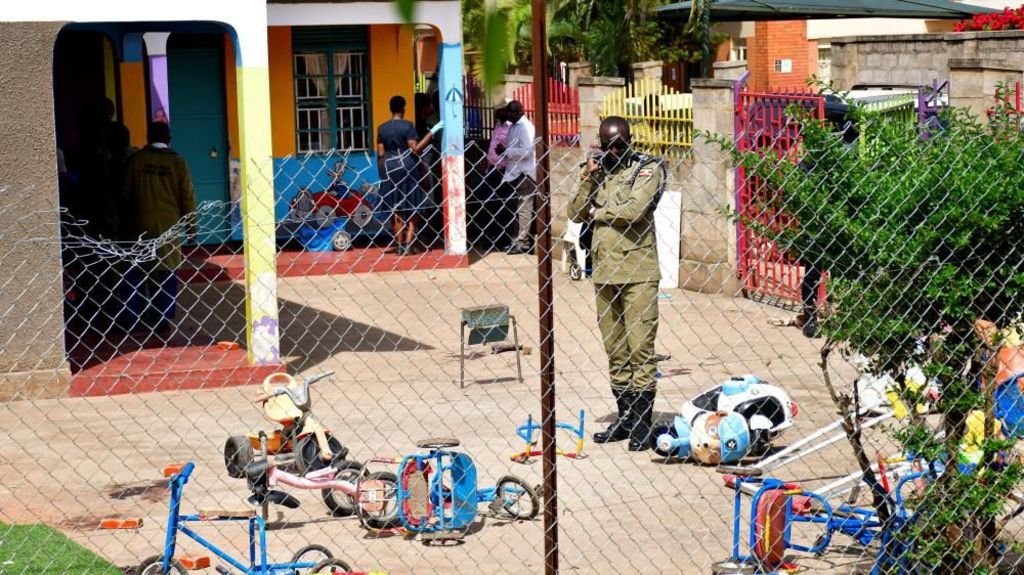
    A horrific morning attack at a Kampala early childhood education center has left East Africa reeling, after a suspected assailant stabbed four young children to death in what Ugandan police have described as an unspeakably brutal act.

    The victims, three boys and one girl between two and three years old, died at the scene immediately following the assault, according to national police spokesperson Racheal Kawala. Investigators confirmed the attacker used multiple bladed weapons to carry out the violence at the Ggaba Early Childhood Development Program School, located in Kampala’s upscale Ggaba suburb.

    Police have taken a 39-year-old male suspect into custody for questioning, following a chaotic scene where enraged parents who had rushed to the school after hearing news of the attack attempted to lynch the suspect before law enforcement intervened. As of Tuesday (local time), investigations are still ongoing to uncover the attacker’s motive, full background, and any additional details connected to the crime.

    Kawala shared that the suspect had recently visited the nursery school to inquire about enrolling a child, and was instructed to return on Thursday. He completed the admission payment before turning on the young children, launching the fatal attack before 11 a.m. local time (8 a.m. GMT). First responders were alerted via an emergency distress call and arrived at the campus within minutes.

    In total, 14 children were present at the school at the time of the attack. The remaining 10 unharmed children have all been safely returned to their families. Forensic investigators remain on site processing evidence, while the campus remains cordoned off by law enforcement. By sunset, a heavy, somber mood hung over the area, where distraught parents, anxious community members, and shaken school staff had gathered throughout the day.

    Uganda’s Inspector General of Police Abas Byakagaba visited the attack site shortly after the incident, and issued a public statement urging citizens to remain calm as the investigation progresses. He added that official updates on the case will be released to the public as more information is confirmed.

    The shocking, senseless killing of young children at a learning facility has sent immediate shockwaves across Uganda, sparking urgent new conversations and widespread public concern over the safety of students and young learners across the East African nation.

  • Machete-wielding man attacks Ugandan nursery school, killing 4 children

    Machete-wielding man attacks Ugandan nursery school, killing 4 children

    On a quiet Thursday in Uganda’s capital Kampala, a brutal act of violence shattered a local early childhood education center, leaving four young children dead and the entire community reeling from shock and grief, police officials have confirmed.

    According to local newspaper the Daily Monitor, the attacker gained entry to the Gaba Early Childhood Development Program by hiding his true identity and posing as a parent of one of the school’s students. Upon first entering the facility, he made his way to the administrative offices and held a short, unremarkable conversation with the facility’s lead administrator. What happened next would turn a routine school day into a tragedy: after stepping back outside the building, he locked the school’s main gate and turned his weapon on the defenseless children inside.

    In an official statement, police confirmed that the assailant “brutally stabbed and killed four juveniles” in the frenzied attack. Local broadcaster NTV obtained and aired surveillance footage from the area, which captured heartbreaking scenes of grieving parents weeping openly near the school gates after learning the fates of their children.

    As word of the attack spread through the neighborhood, a large, angry crowd quickly gathered outside the facility, with many in the crowd intent on inflicting vigilante violence on the suspect. To prevent further bloodshed and secure the crime scene, police were forced to fire warning shots into the air to break up the crowd and take the suspect into custody safely.

    Police spokesperson Kituuma Rusoke confirmed to the Associated Press in an interview that the attacker is now in police custody, and added that investigators have not yet established a clear motive for the senseless violence. For residents of Kampala, a city of approximately 3 million people, this unthinkable attack on young children is a highly unusual event, leaving many struggling to process how such violence could occur at a place meant to nurture and protect young learners.

  • New Brazil law allows separated couples joint custody over pets

    New Brazil law allows separated couples joint custody over pets

    As family structures and social attitudes toward companion animals shift across the globe, Brazil has become the latest country to update its legal framework to reflect the central role pets play in modern family life. Under landmark new legislation passed by the Brazilian Congress, courts across the nation will now have the authority to formalize shared custody arrangements for pets when separating couples cannot reach a private agreement on caregiving responsibilities.

    Lawmakers behind the reform emphasized that the new rule directly responds to evolving social norms over recent decades, noting that a growing share of households—particularly those with fewer or no children—view their pets as full members of the family rather than disposable property. Legislative records accompanying the bill explain that when a couple splits without a prearranged agreement for their pet, a judge will outline a clear shared custody schedule and order both parties to split the animal’s ongoing care expenses equitably.

    The legislation includes key eligibility guardrails to protect animal welfare: shared custody will only be approved if the pet has spent most of its life with the couple, and will be automatically denied if one party has a criminal record or a documented history of domestic violence that puts the animal at risk. This regulatory change comes amid a rising tide of pet custody disputes in Brazilian courts, a trend lawmakers say made the legal update necessary.

    Brazil’s pet population underscores the widespread impact of this reform: data from Instituto Pet Brasil shows the nation of 213 million people is home to roughly 160 million companion animals, meaning the new law will touch millions of households across the country.

    Brazil’s reform joins a growing global movement to reclassify the legal status of pets. Currently, the United Kingdom still legally treats dogs as inanimate property, on par with cars, houses, and other personal belongings—so pet custody cases there only result in a ruling on single ownership. France led legal reform in the region back in 2014, when it updated its laws to reclassify pets as “living and feeling beings” rather than moveable goods, opening the door for shared custody rulings in divorce proceedings. Australia has yet to pass any formal national legislation guiding courts on pet living arrangements after a relationship split. Most recently, Spain saw a high-profile shared custody ruling in 2021, when a Madrid judge granted joint custody to a separated couple fighting over their dog, Panda, ruling both parties were equally responsible co-caretakers for the animal.

  • A rare school in Kenya is empowering teenage mothers with education and child care

    A rare school in Kenya is empowering teenage mothers with education and child care

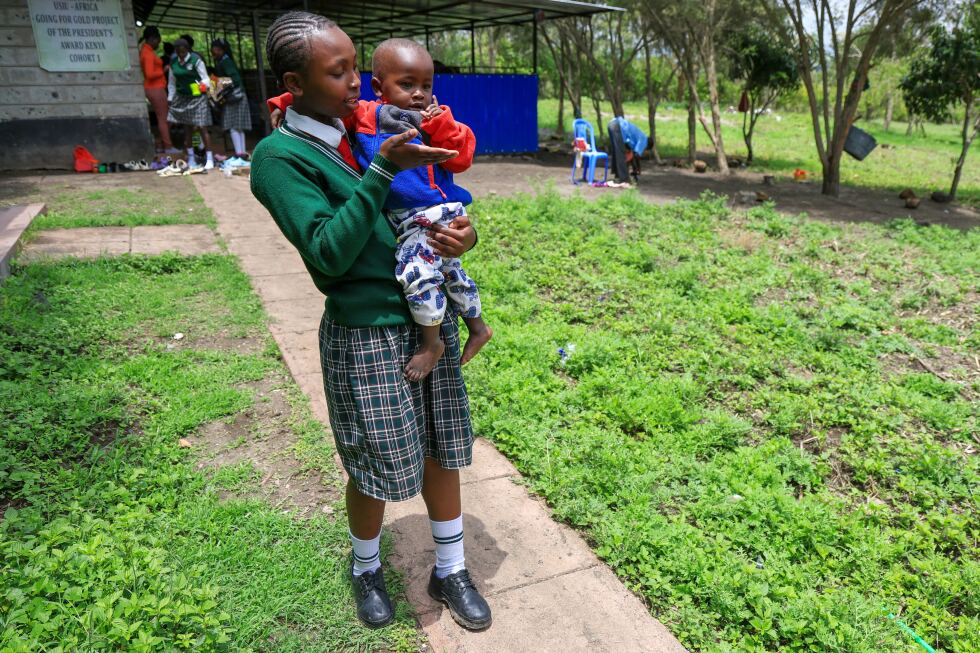
    Nestled in Kenya’s Kajiado County, just south of the capital Nairobi, Greenland Girls Secondary School stands out as a revolutionary lifeline for young women who have been forced out of mainstream education by teenage pregnancy. Unlike any other institution in the country, this unique boarding school caters exclusively to adolescent mothers, providing them with free secondary education and on-site childcare for their children — opening a door to opportunity that would otherwise remain locked for most.

    For 19-year-old Valarie Wairimu, a top-performing student at the school who dreams of becoming a doctor, the daily routine revolves around balancing coursework and caring for her infant son, Kayden. When break time hits at Greenland, Wairimu does not head to the courtyard or dorms to relax like her peers at other schools. Instead, she grabs a quick snack, hurries to the school’s on-site nursery, where nannies have been caring for Kayden while she attended class, and feeds her son before her next lecture. Wairimu’s path to Greenland was not easy: raised by a single father with a younger brother to support, she could not afford to care for her newborn after becoming pregnant. It was her grandmother who connected her to the school’s national referral network, which works with teachers and community leaders across Kenya to reach young mothers in need, even in far-flung regions like the western part of the country where Wairimu’s family lives.

    Founded in 2015 and operated by the nonprofit organization Shining Hope for Communities, Greenland currently serves 310 students and cares for more than 80 of their children, ranging from newborn infants to walking toddlers. Nearly all students attend via full or partial grants, removing the financial barrier that pushes millions of young Kenyan women out of schooling each year. Most students come from low-income backgrounds across the country, and many were pushed into pregnancy through sexual assault or forced child marriage — abuses that remain widespread in parts of rural Kenya. In many cases, students face rejection from their own families and local communities, which often stigmatize teenage mothers and bar them from returning to school. According to school manager Paul Mukilya, outreach teams frequently have to negotiate with community elders to secure permission for pregnant girls and young mothers to enroll at Greenland. Once students arrive, the institution provides far more than just classroom education: it offers free psychological counseling, mentorship, and practical parenting training to help young women rebuild their confidence and care for their children. While students attend classes, trained staff handle childcare, and caregivers work with mothers who once saw their children as an overwhelming burden to develop positive parenting skills.

    Kenyan law criminalizes sexual activity with minors under 18, but a gap in the legislation means only male perpetrators can face criminal charges, leaving young pregnant girls with no legal recourse and often bearing the social blame for their situation. Greenland supports students through court processes and liaises with local authorities to intervene in cases of unlawful underage forced marriage, standing as a legal advocate for vulnerable young women.

    The need for this model of education could not be more urgent in Kenya, a nation with one of the fastest-growing youth populations on the African continent. Official 2024 Kenyan national statistics recorded more than 125,000 live births to adolescent mothers under the age of 19. Decades of research have repeatedly documented the link between teenage pregnancy and school dropout: a 2015 study from the Population Council, a global health and development think tank, found that two-thirds of teenage mothers in Kenya left school because of their pregnancy. As recently as 2022, research organization IDinsight confirmed that unintended pregnancy remains the second-leading cause of girls dropping out of secondary school, surpassed only by an inability to pay school fees.

    Development experts praise Greenland as a replicable model for closing Kenya’s gender equity gap in education. “Every girl who gets pregnant and drops out during their school time must be allowed reentry,” explained Dr. Githinji Gitahi, chief executive of Amref Health Africa, a leading African development organization. “Special schools are important in supplementing the general scalable policy framework. We should focus on these schools that are helping to close the equity gap.”

    Thanks to overwhelming demand from young mothers across the country, Greenland is preparing to expand: a second campus is set to open in Kilifi County along Kenya’s coast, where rates of teenage pregnancy and school dropout are particularly high. To date, the school has already helped hundreds of young women graduate secondary school, and many have gone on to build successful professional careers in fields ranging from government to medicine.

    For students like 20-year-old Mary Wanjiku, who hopes to become a lawyer after graduation, what makes Greenland most transformative is the stigma-free learning environment it provides. “People used to judge me because I got pregnant,” Wanjiku said, whose son is now 18 months old. “The moment I came here, I was received with love.”

  • Australia to crack down on gambling ads after years of criticism

    Australia to crack down on gambling ads after years of criticism

    Australia, which holds the unenviable title of the world’s highest per capita gambling losses, has finally introduced long-awaited regulations on gambling advertising after years of mounting public pressure for change. While the new package of measures imposes stricter limits on where and when gambling promotions can run, and who is allowed to feature in them, it stops short of the full industry-wide ban that had secured cross-party political support and backing from dozens of community and public health organizations across the country.

    The proposed restrictions faced fierce opposition ahead of their announcement from powerful domestic gambling agencies, major media outlets, and national sports organizations, all of which warned that a full ban would trigger a catastrophic collapse in their annual revenue streams. The push for comprehensive reform dates back more than 1,000 days, when a federal parliamentary inquiry into gambling harm recommended Australia follow the lead of nations including Italy, Belgium and Spain, which have implemented full or near-total bans on gambling advertising.

    Speaking at the National Press Club on Thursday, Prime Minister Anthony Albanese defended his government’s approach, framing the partial restrictions as a measured compromise that strikes the right balance for the nation. “Letting adults have a punt if they want to, but making sure our children don’t see betting ads everywhere they look,” Albanese said of the policy’s core goal.

    The full slate of reforms is set to take effect from January 1 next year, and includes a series of targeted restrictions across broadcast, digital and physical platforms: TV gambling advertisements will be capped at three spots per hour between 6 a.m. and 8:30 p.m., with a complete ban on promotions during all live sports broadcasts in that same window; radio gambling ads will be prohibited during school drop-off and pick-up hours to reduce child exposure; celebrities and professional athletes will be banned from appearing in any gambling marketing; online platform gambling ads will only be allowed for logged-in users over 18 who have explicitly opted in to seeing promotions; all gambling advertising will be outlawed in live sports venues, and from the uniforms of players and game officials.

    Beyond advertising restrictions, the government also announced a wider crackdown on unregulated illegal offshore gambling sites, and will ban additional forms of online gambling including online Keno and digital platforms designed to mimic physical poker machines.

    Almost immediately after the reforms were unveiled, the policy drew backlash from both the gambling industry and reform advocates, leaving neither side satisfied with the final outcome. For industry groups, the new rules go too far, with leaders warning of widespread economic harm.

    Kai Cantwell, chief executive of Responsible Wagering Australia, the national peak body for domestic betting agencies, called the new measures “draconian” and claimed they set a “dangerous precedent” for regulation of other consumer industries. “Today it’s gambling advertising, tomorrow it’s alcohol, then it’s sugary drinks, fast food, critical minerals and who knows what else comes next,” Cantwell said in an official statement. He added that the government had caught the sector off guard, noting the industry supports 30,000 Australian jobs and provides major funding for domestic sports, horse racing and broadcast industries.

    A spokesperson for Sportsbet, one of Australia’s largest betting operators, said the company was concerned that the “overly blunt” restrictions could have unintended consequences that ultimately increase harm, including pushing more Australian gamblers to use unregulated illegal offshore betting platforms that are not subject to the same rules. The spokesperson added that Sportsbet had already recognized shifting community attitudes toward gambling advertising and taken proactive steps to limit harmful promotion on its own.

    On the other side of the debate, public health and gambling reform advocates say the reforms do not go nearly far enough to protect vulnerable communities and children from exposure to gambling marketing. Reverend Tim Costello, a leading voice for the Alliance for Gambling Reform, which has pushed for a full ban across broadcast and digital platforms as well as the creation of a dedicated national industry regulator, drew a comparison to tobacco regulation to criticize the partial cap on ads. “Imagine three cigarette ads per hour,” Costello said. “Australian children deserve to grow up in a country that puts their wellbeing before corporate profits.”

    Julian Rait, vice-president of the Australian Medical Association, echoed that criticism in a statement, arguing that “partial bans do not work.” “Anything less than a comprehensive ban will continue to expose Australians – especially children – to relentless gambling promotion,” Rait said.

  • Gu Ailing: Women are able to empathize, listen, and unify in a uniquely feminine way

    Gu Ailing: Women are able to empathize, listen, and unify in a uniquely feminine way

    Hong Kong’s fourth annual Women Power Forum convened this Wednesday in the city’s Sheung Wan district, bringing together a cohort of trailblazing women leaders from diverse fields to discuss gender equity, collective progress and the evolving role of women in global communities. In a post-speech interview with China Daily, Olympic freestyle skiing champion and youth advocate Gu Ailing shared her reflections on the gathering, expressing deep gratitude for the rare chance to exchange insights and draw wisdom from the esteemed female leaders in attendance.

    As one of the youngest prominent voices in global sports and public advocacy, Gu emphasized that she brings a fresh, youthful perspective to conversations about women’s empowerment, and remains committed to continuous learning from peers and veteran leaders alike. She went on to spotlight a set of distinctive strengths rooted in feminine experience: the innate ability to empathize deeply with others, listen actively across differing perspectives, build meaningful connections across divides, and unify diverse groups around shared, positive goals.

    The forum, focused on elevating women’s influence in public and private spheres, provided a platform for attendees to explore how these unique feminine qualities can help address pressing social and political divides, foster more inclusive decision-making, and drive more compassionate, collaborative progress across communities.

  • A road accident in Colombia involving several vehicles kills at least 2 people and injures 19

    A road accident in Colombia involving several vehicles kills at least 2 people and injures 19

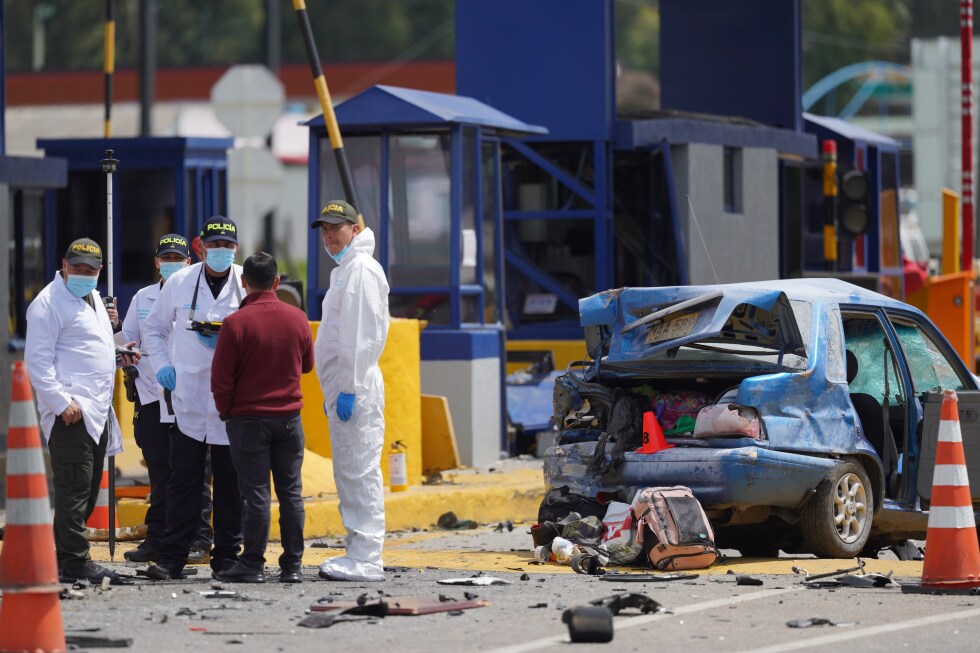
    A devastating early-morning collision at a highway toll station in central Colombia has left at least two people dead and 19 others injured, local regional authorities confirmed Wednesday. The multi-vehicle crash unfolded approximately 31 miles north of Colombia’s capital city Bogotá, on a heavily traveled artery in the Cundinamarca department, according to regional governor Emilio Rey, who shared details of the incident on social platform X.

    Rey explained that the chain reaction crash was triggered when a milk delivery truck suffered total brake failure, barreling into the line of stopped vehicles waiting to pay tolls. The out-of-control truck slammed into six passenger vehicles and one motorcycle already positioned at the booth, sparking a series of powerful explosions that engulfed multiple vehicles in intense fire. Eyewitness accounts and footage from the crash site confirm multiple blasts that left most of the involved vehicles completely destroyed by flames.

    Local media footage captured chaotic, harrowing scenes at the site: bystanders tearfully worked to extract trapped survivors from mangled wreckage, while thick black smoke billowed from burning vehicles. Hollman Osma, one witness who was at the toll booth when the crash occurred, described the sudden, shocking event to local news outlet Noticias Caracol. “I saw when the truck went through the toll booth, then there was an explosion, it overturned, and there were strong explosions and vehicles burning,” Osma said. “There was absolutely nothing that could be done.”

    In response to the disaster, emergency services mobilized a large contingent to the crash area: at least 11 ambulances, alongside teams of firefighters and law enforcement officers, were dispatched to conduct search and rescue operations and transport the injured to medical facilities. All injured victims are currently receiving care at hospitals in surrounding communities, though Governor Rey has not yet released further information on the severity of their injuries or their current prognosis. As of Wednesday afternoon, the highway remained fully closed to through traffic while investigators work to document the crash site and clear wreckage from the road.

  • Cross-border travel surge expected during Qingming Holiday

    Cross-border travel surge expected during Qingming Holiday

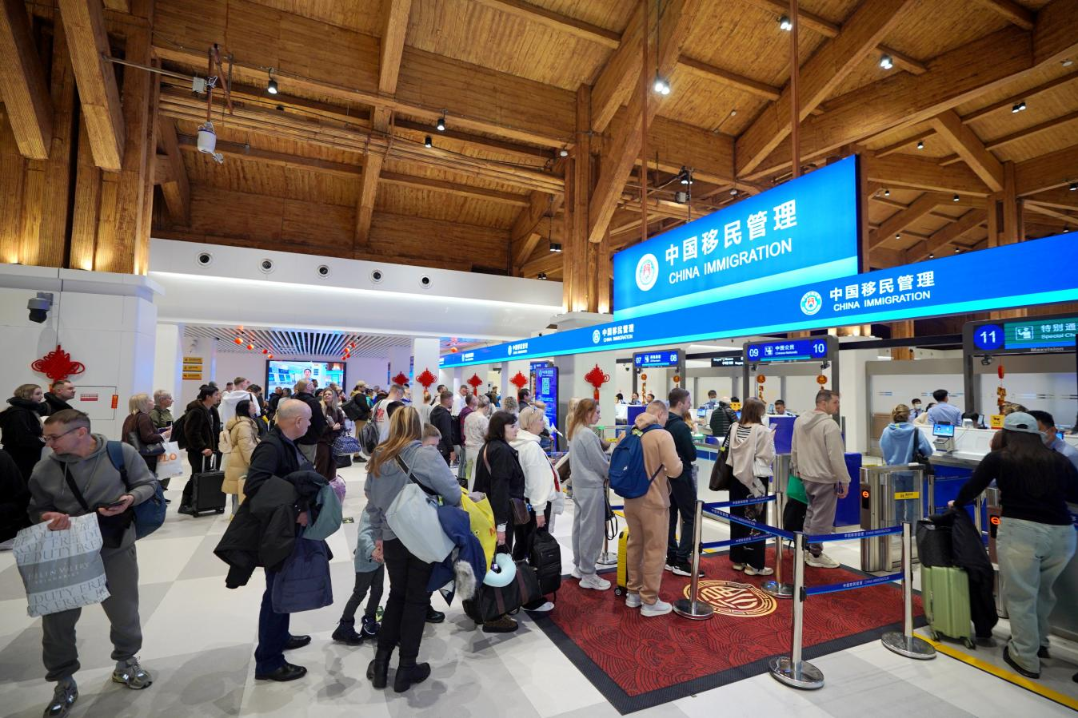
    China is set to experience a sharp uptick in cross-border travel during the upcoming Qingming Festival holiday, running from April 4 to 6, according to official projections released Wednesday by the National Immigration Administration. The agency forecasts that average daily cross-border trips will exceed 2.3 million, representing an 11.1 percent increase compared to the same holiday period in 2025.

    Beyond its deep cultural roots as a time for ancestral tomb sweeping and honoring family predecessors, the Qingming Festival has evolved into one of China’s most popular windows for spring leisure travel. This year’s anticipated travel boom has been amplified by two key complementary factors: multiple local regions have rolled out dedicated spring break arrangements for primary and secondary school students, expanding the pool of potential travelers, and the special administrative regions of Hong Kong and Macao are scheduled to observe a five-day holiday for the occasion, creating extended opportunities for cross-border movement.

    Official projections show that major international hubs across the country, including Shanghai Pudong International Airport, Beijing Capital International Airport, Chengdu Tianfu International Airport, Guangzhou Baiyun International Airport and Shenzhen Bao’an International Airport, will all see modest growth in passenger volumes compared to previous years. By contrast, land ports connecting the Chinese mainland with Hong Kong and Macao are on track to record far more robust growth, driven by two overlapping demand streams: rising numbers of Hong Kong, Macao and Taiwan residents returning to their ancestral hometowns for traditional rites, and growing inbound travel from overseas Chinese and international tourists.

    Among the busiest border crossings, Shenzhen’s key checkpoints are projected to see heavy daily traffic: Luohu is expected to handle roughly 250,000 crossings per day, followed by Futian at 230,000, Shenzhen Bay at 190,000, West Kowloon High-Speed Rail Station at 120,000, and Liantang at 110,000. In Zhuhai, which serves as the main mainland gateway to Macao, the Gongbei checkpoint alone is forecast to register 375,000 daily crossings, while the Hong Kong-Zhuhai-Macao Bridge checkpoint will see 152,000 daily trips, and both Qingmao and Hengqin checkpoints are projected to handle 113,000 daily cross-border trips each.

    The projected surge in cross-border travel comes as regional tourism and cross-border family ties continue to recover following years of restricted movement, with the combination of cultural tradition and extended holiday timelines creating ideal conditions for increased mobility across China’s borders this spring.

  • Rescuers give up hope for the humpback whale stranded in the Baltic Sea

    Rescuers give up hope for the humpback whale stranded in the Baltic Sea

    BERLIN — For nearly three weeks, a wayward humpback whale that wandered far from its natural Atlantic habitat into Germany’s Baltic Sea coast has captivated national attention, but rescue teams announced Wednesday they have ended all efforts to save the animal, concluding the exhausted mammal will not survive its current stranding.

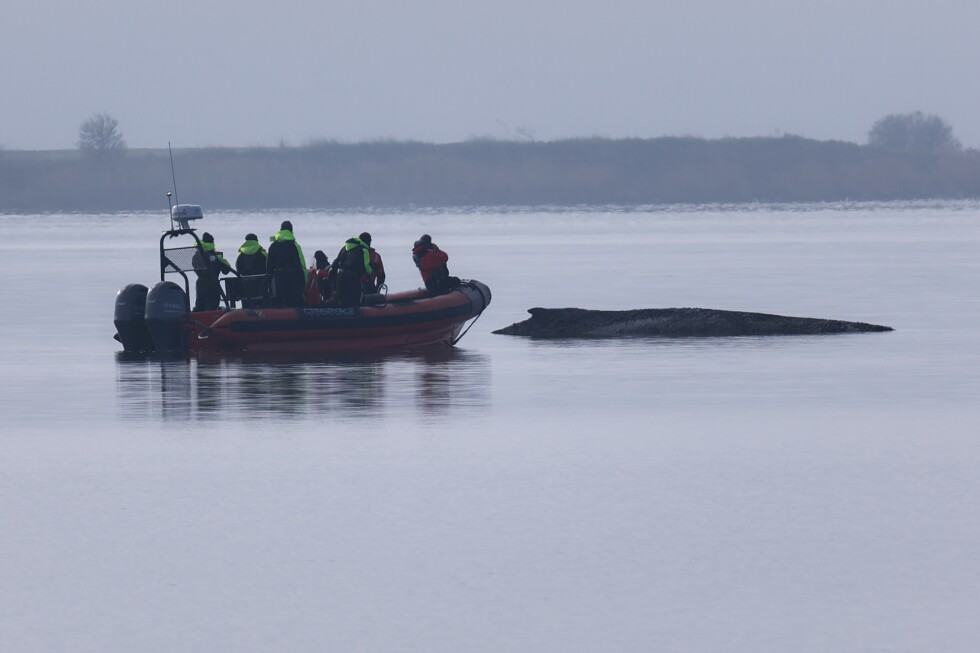
    Nicknamed ‘Timmy’ by the public and media following weeks of repeated strandings and close calls, the whale became trapped for the second time in as many days on Tuesday, when it swam into a shallow inlet off Germany’s small Baltic island of Poel. Poel sits just off the coast near the northern port of Wismar, roughly 30 miles northeast of Timmendorfer Strand, where rescuers pulled Timmy free from even shallower waters just one week earlier using a heavy excavator. That successful rescue proved temporary, however: within days, the lost whale once again found itself stuck in low, unnavigable waters.

    In the days following the first successful rescue, authorities adopted a careful, low-intervention strategy aimed at letting the already exhausted animal rest and rebuild its strength. Teams occasionally used small boats to gently nudge the whale toward deeper open water, but prioritized minimizing stress to give Timmy the best chance to swim out to the North Sea and eventually back to the Atlantic on its own.

    That strategy has now been abandoned, lead scientific coordinator Burkard Baschek told reporters at a televised press conference Wednesday. Baschek, who also serves as scientific director of the Ocean Museum Germany, said monitoring on Wednesday revealed deeply concerning signs: the whale was breathing at highly irregular intervals, drone footage showed almost no movement of sediment beneath its 12-15 meter body, and it barely responded when rescue teams approached.

    Though Timmy showed a small uptick in activity after crews pulled back to give it space, Baschek noted that the change was not enough to signal any real chance of recovery. ‘It is not activity that gives us grounds for hope,’ he said. ‘We firmly believe that the animal will die there.’

    Two prior times during the whale’s three-week odyssey along the Baltic coast, Timmy managed to gather enough strength to free himself from shallow waters. But repeated strandings have left the whale severely weakened, and falling seasonal tides have only worsened the dangerous conditions in the inlet. ‘The prospects that it will free itself are very small,’ Baschek added. ‘The approach of maximum rest and respect for nature demands at some point that we let it go.’

    Timmy’s unplanned journey through the Baltic has been front-page news across Germany, with national media running constant updates on the whale’s status that turned the lost animal into a viral national sensation. The humpback was first spotted in the region on March 3, far outside its normal range: the Baltic Sea is not a natural habitat for the species, and its shallow, cooler waters do not support the large prey humpbacks rely on for long-term survival.

    Experts still do not know exactly what led the whale so far off course. The most common theories suggest Timmy may have followed a large shoal of herring into the Baltic, or lost his bearings during his annual northward migration. Even under the best conditions, the journey back to open Atlantic waters would have been a monumental challenge: the trip from the inlet to the North Sea, and then out to the Atlantic, stretches hundreds of kilometers, a taxing swim for even a healthy humpback.

  • China braces for cross-border travel surge during Qingming holiday

    China braces for cross-border travel surge during Qingming holiday

    As China prepares for the annual three-day Qingming Festival holiday starting April 4, national immigration officials are projecting a notable uptick in cross-border passenger movement across the country’s ports of entry and exit. New data released by the National Immigration Administration this Wednesday forecasts that daily cross-border traveler volumes will climb above 2.3 million on average throughout the holiday, marking an 11.1% year-on-year increase compared to the 2025 Qingming break. The Qingming Festival, a traditional Chinese holiday centered on ancestor veneration, tomb sweeping, and spring outings, has increasingly become a popular window for international and cross-border leisure and family travel in recent years. This projected growth reflects a steady rebound in global mobility and sustained demand for cross-border trips among Chinese residents and international visitors alike. The busiest cross-border hubs are concentrated among major international airports across China’s largest economic centers, including Beijing, Shanghai, Guangzhou, Chengdu, and Shenzhen. All of these facilities are anticipating a steady rise in passenger throughput compared to ordinary non-holiday periods. Leading the pack is Shanghai Pudong International Airport, China’s busiest aviation gateway for international travel, which is expected to process an average of roughly 95,000 inbound and outbound passenger trips each day over the holiday period. Immigration authorities have announced pre-emptive adjustments to operational arrangements to accommodate the surge, including adding extra inspection lanes, optimizing passenger clearance processes, and deploying additional staff to reduce wait times and avoid congestion at major ports. The projected growth in cross-border travel aligns with broader trends of rising domestic and international mobility in China, as more travelers take advantage of long holiday weekends to plan overseas trips, reunite with family members living abroad, or welcome international visitors to China.