分类: society

  • Woman dies after being knocked down by lorry

    Woman dies after being knocked down by lorry

    A tragic road traffic incident in Letterkenny, County Donegal, has claimed the life of a middle-aged woman, leaving local communities in mourning following a collision between a pedestrian and a heavy goods vehicle on Friday.

    Authorities confirmed that Gardaí, the Republic of Ireland’s national police service, was immediately dispatched to the scene of the crash at the Station Roundabout on Port Road after emergency calls alerted officers to the accident. The female casualty, who was reported to be in her 40s, sustained life-threatening injuries in the impact and was rushed by emergency responders to Letterkenny University Hospital for urgent medical intervention. Despite the efforts of clinical teams to treat her wounds, the woman succumbed to her injuries on Sunday, two days after the collision occurred.

    In the wake of the fatal incident, investigating officers have issued a public appeal for any witnesses or road users who were in the area at the time of the collision to come forward with information. Authorities are particularly keen to review any dashcam footage that members of the public may have captured while travelling along Port Road near the Station Roundabout on Friday, as this evidence could prove critical to building a full picture of how the incident unfolded. Anyone with relevant details has been asked to contact the investigating Garda team through official channels to assist with the inquiry.

  • Airport seeking public’s help to reunite parrot with owner

    Airport seeking public’s help to reunite parrot with owner

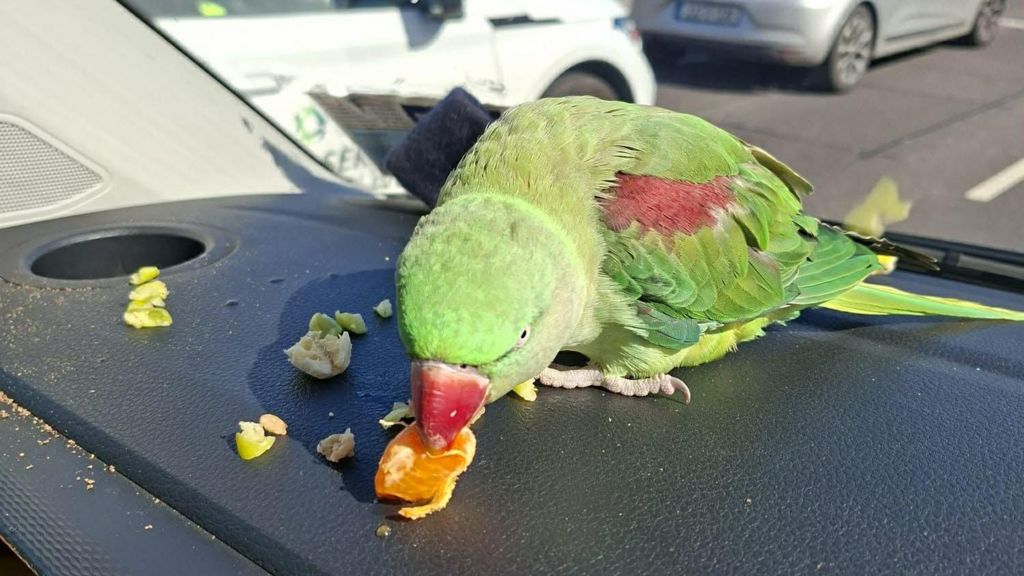
    Dublin Airport has launched a public appeal to track down the owner of a stray parrot discovered on its grounds on Easter Sunday, marking the third unexpected avian visitor the airport has handled in less than a decade.

    The bright-feathered bird was first spotted perched on a public rubbish bin near the airport’s Terminal 1, before airport police were alerted to the unusual sighting. Responding officers used gentle tactics and food to coax the parrot into their care, and the animal quickly warmed to its rescuers, even comfortably perching on the officers’ hands and shoulders, the airport authority explained in an official statement.

    After being safely secured, the parrot was transferred to a nearby airport patrol van, where it settled into the warm interior as officers finished their scheduled patrol rounds. It was then brought back to the airport police station, where staff prepared a cozy temporary enclosure using an existing dog crate and brush handle, and provided the bird with fresh fruit, clean water and engaging toys to keep it comfortable during its unexpected stay. The airport confirmed the parrot received consistent, high-quality care overnight while teams worked to trace its owner.

    So far, airport management has notified Ireland’s national police service An Garda Síochána, a local pet retailer and a nearby animal sanctuary to help connect the parrot with its rightful caretaker. Details of the stray bird have also been widely shared across the airport’s social media channels to broaden the search. While the outreach effort has already drawn dozens of public enquiries, including multiple submissions of leg ring identification numbers, none of the submitted details have matched the markings on the found parrot to date.

    Efforts to reconnect the parrot with its owner remain ongoing, and the airport says it is committed to seeing the operation through to a successful outcome. “We look forward to helping this unexpected visitor get safely home,” the statement added.

    This is far from the first time an unplanned parrot has turned up at Dublin Airport. In 2019, an African grey parrot named Hugo made headlines after she was spotted “taxiing for takeoff” on the airport’s main runway by a firefighter conducting a routine safety check. That stray parrot was ultimately successfully reunited with her owner. Most recently, in August 2025, the airport welcomed another unbooked chatty parrot that turned up on its grounds. The facility has also had lighthearted fun with parrot-related notoriety: after Irish international striker Troy Parrott scored a memorable hat-trick against Portugal, the airport’s social media team jokingly suggested changing its name to “Troy Parrott Airport”, a gag they have revived in posts following more recent Irish national team matches.

  • Savannah Guthrie returns to NBC’s Today show, as search for mother goes on

    Savannah Guthrie returns to NBC’s Today show, as search for mother goes on

    One of the most high-profile figures in American morning television, Savannah Guthrie is set to resume her anchoring role on NBC’s iconic *Today* show this Monday, more than two months after her 84-year-old mother Nancy was first reported missing under suspicious circumstances.

    Guthrie first stepped away from her on-air duties in late January, just two days after her mother disappeared from her home in the outskirts of Tucson, Arizona. She also canceled her planned participation in NBC’s broadcast of the 2026 Winter Olympics to focus on coordinating the search for Nancy. This upcoming Monday marks her first return to the *Today* studio since her 30 January departure.

    The timeline of Nancy’s disappearance leaves few clues for investigators: relatives dropped her off at her residence on the evening of 31 January, but she never arrived at a friend’s home the next morning to join a virtual church service, and she left behind all of her necessary prescription medications. In February, Savannah and her family publicly announced a $1 million reward for any information that leads to Nancy’s safe return, a gesture that has drawn widespread public attention to the case.

    Law enforcement officials have confirmed they believe Nancy was taken against her will from her home, but as of yet, no potential motive has been released to the public, and no suspects have been taken into custody. Savannah has previously opened up about the heavy weight of the case, sharing that she has grappled with the possibility that her own national fame as a leading television journalist could be connected to her mother’s abduction, a thought she described as almost unbearable to process.

    Despite the ongoing uncertainty and grief of the past two months, Guthrie has framed her return to work as a necessary step. Last month, she told *Today* that returning to the show is part of her current purpose, even as she acknowledged she was unsure how she would navigate returning to her professional role. “I can’t not come back. This is my family,” she said of her colleagues at NBC.

    Most recently, on Easter Sunday, Guthrie made a public appearance at New York’s Good Shepherd Church, where she reaffirmed her unshakable Christian faith in a closing video address to the congregation. “I still believe. And so I say with conviction, ‘Happy Easter,’” she stated, offering a message of quiet resilience amid the ongoing search that has gripped national attention.

  • Unearthing 13 dynasties and the souls of emperors

    Unearthing 13 dynasties and the souls of emperors

    For 31-year-old Beijing-based state-owned enterprise worker Zhong Jing, 2024 marked the start of a new, intentional hobby: becoming a “weekend historian,” trading routine city weekends for cross-country road trips with friends to hunt for lesser-known historical sites scattered across China’s countryside. After each excursion, Zhong documents his observations and reflections, turning casual travel into a deeply personal journey of cultural discovery that has reshaped how he engages with the past and broadened his perspective.

    It was during an October trip to Luoyang, Henan province, that this passion clicked into place for Zhong. Long celebrated as the capital of 13 ancient Chinese dynasties, Luoyang retains few visible above-ground traces of its imperial golden ages. Most of its layered history lies buried beneath the soil, so Zhong and his travel companions mapped out an itinerary connecting remote imperial tombs spread across the region’s rolling landscape.

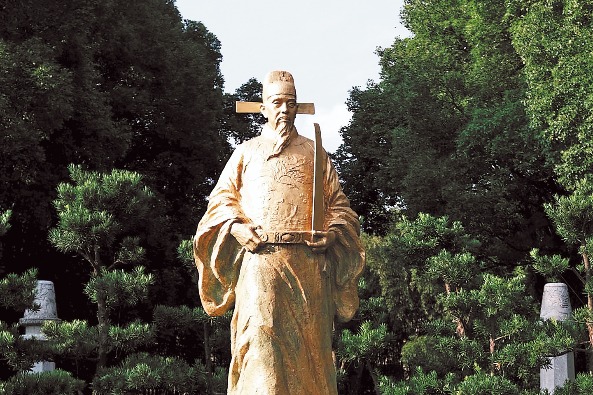
    Of all the sites he has explored on these trips, none left a more lasting mark than Changling Mausoleum, the final resting place of Emperor Xiaowen of the Northern Wei Dynasty (386–534), tucked into the slopes of Luoyang’s Mangshan Mountain. When Zhong arrived at the site, he encountered a playful, memorable moment: a group of local high school students had brought a tongue-in-cheek certificate reading “Luoyang Real Estate Annual Sales Champion Award” to present to the long-dead emperor. The joke carried quiet weight: Emperor Xiaowen relocated his dynasty’s capital to Luoyang 1,500 years ago, breathing new life into the city that endures to this day.

    The encounter sparked deep reflection for Zhong. Growing up, traditional historical education framed the Northern Wei as just one of many competing dynasties during a chaotic period of division, overshadowed by the grand unification of the Qin Dynasty (221–206 BC) and the military prowess of the Han Dynasty (206 BC–AD 220). That context left little room to appreciate the dynasty’s transformative legacy — a gap that visiting the emperor’s tomb in person filled.

    What strikes Zhong most deeply through his on-the-ground explorations is the core truth of Chinese civilization: it is a diverse, deeply unified whole, sustained by its long history of openness and cultural integration. Emperor Xiaowen, a ruler of ethnic Xianbei heritage, championed mass cultural and ethnic fusion by embracing Han traditions, a policy of openness that Zhong argues laid groundwork for the later strength and cosmopolitanism of the Tang Dynasty (618–907). This willingness to welcome new influences, he says, is what keeps civilizations vibrant; without it, cultures stagnate, trapped in closed cycles of repetition.

    Today, the slopes of Mangshan Mountain are dotted with imperial burials, and small pavilions near the tombs hang with an eclectic mix of banners: some honor the historical contributions of the figures buried below, while others carry the same kind of playful, irreverent humor that the high school students brought to Changling Mausoleum. A short distance from Emperor Xiaowen’s tomb, Zhong also visited the resting place widely believed to belong to Li Yu, the last ruler of the Southern Tang during the Five Dynasties and Ten Kingdoms period (907–960). Remembered by history as a fallen king, Li Yu is celebrated across the centuries as one of China’s most gifted poets, whose work captures universal human emotions that transcend his royal status.

    “We do not worship victors; we treasure the hearts that have given the purest voice to human feeling,” Zhong observes. More than a thousand years after Li Yu lived, his emotions still draw modern visitors to stand quietly before his tomb. While few people today know what it means to lose an entire kingdom, everyone knows the weight of regret; though most have not watched dynasties rise and fall, all have tasted life’s quiet helplessness. The poetic sighs Li Yu wrote centuries ago still echo through time, finding a home in every heart that can understand them.

    This firsthand feature was reported by China Daily’s Li Hongyang, updated on April 6, 2026.

  • Last train market keeps tradition alive

    Last train market keeps tradition alive

    Tucked away in the mountainous terrain of Southwest China’s Yunnan Province, in the rural town of Baihe, Pingbian Miao Autonomous County, a unique century-old way of life continues to unfold every Monday along the tracks of the historic Yunnan-Vietnam Railway. This is the famous ‘Train Market’ of Baiheqiao Station, a living relic of industrial and cultural history that has now earned the title of China’s ‘last train market’, drawing curious visitors and keeping generations-old trading traditions alive.

    The market’s origins stretch back to the construction of the narrow-gauge Yunnan-Vietnam Railway more than 100 years ago, a line that once connected inland China to global trade routes through Vietnam. Long before modern highways and large commercial hubs transformed regional commerce, local communities leaned on the railway as both a transportation link and a natural gathering place for trade. Every week, villagers from surrounding mountain valleys would travel to the station, where access was easiest for communities spread across the rugged landscape, to buy and sell goods.

    Today, the centuries-old line has undergone massive changes. It no longer functions as a primary transport artery for passenger travel, but the Kaiyuan-Hekou section still maintains limited freight operations, with one or two cargo trains rolling through Baiheqiao Station on an average day. The rhythm of the market has adapted perfectly to this schedule: when the train’s whistle echoes through the valley and the locomotive rumbles into view, vendors step back from their stall spaces that line both sides of the tracks, pausing their haggling and transactions. As soon as the train passes and the tracks clear, trade resumes just as quickly as it paused.

    Every week, vendors arrive before dawn, carrying handwoven baskets stacked high with homegrown produce, free-range poultry, foraged mountain delicacies, and seasonal vegetables. What once was a weekly gathering exclusively for nearby local residents has grown into a popular cultural and tourism attraction in recent years. Each Monday, tourists from across Yunnan and other provinces across China travel to the remote station to experience this one-of-a-kind market. They come not just to purchase authentic local farm products, but to walk in the footsteps of history, exploring a living industrial heritage that has adapted rather than disappeared in the face of modernization.

    As nearby communities have gradually shifted toward more developed urban centers further from the railway line, the Baiheqiao Train Market stands as a persistent anchor for tradition. Unlike many historic market sites that have been relocated or turned into sterile tourist attractions, this market retains its original character, continuing to serve both local traders and modern visitors who seek a connection to China’s rural and industrial past.

  • Website aims to fill funeral info gap

    Website aims to fill funeral info gap

    To mark the 2026 Tomb Sweeping Day, China launched its first centralized national online platform for funeral and interment services on Sunday, a development crafted to tackle longstanding public concerns over opaque pricing and fragmented information in the country’s funeral sector.

    Developed under the official guidance of China’s Ministry of Civil Affairs, the new platform — named China Funeral Network and accessible at https://www.zgbznet.com.cn — is designed to streamline end-of-life planning for grieving families by aggregating authoritative, up-to-date information across every core stage of funeral arrangements, from initial mourning services to final burial and ongoing memorial activities.

    At the heart of the platform is its “one-stop” service model, which integrates national access to official government portals for handling all post-death administrative affairs. A key interactive feature is its map-based interface, which pinpoints the exact locations of funeral homes, columbaria, and cemeteries across every region of China, alongside full details on service offerings, required application procedures, and transparent pricing breakdowns. Users can filter search results by geographic region, proximity to their location, and type of service institution to find resources that match their specific needs.

    Officials confirmed that civil affairs departments from all 31 provincial-level administrative regions across mainland China, plus the Xinjiang Production and Construction Corps, contributed to the platform’s development and national rollout.

    “The platform will help bereaved families quickly locate nearby funeral service resources and gain a clear understanding of service pricing, which effectively addresses the information asymmetry that often creates additional stress for families during an already difficult time of funeral arrangements,” explained Xu Zesheng, a senior official with the Ministry of Civil Affairs’ national funeral services task force.

    Beyond core service information, the website also hosts dedicated sections covering national and local funeral policies and regulations, updates on industry-wide developments, and public case alerts about unregulated or problematic service providers. These additional resources are designed to serve both the general public and funeral industry professionals seeking authoritative regulatory updates, cultural guidance, and professional training materials.

    Moving forward, authorities plan to expand the platform’s existing functions to further promote the adoption of environmentally friendly burial practices and encourage more civilized, cost-effective forms of memorialization that align with modern public needs.

    In a coordinated move aligned with the platform’s launch, six newly revised or formulated industry standards for funeral services also went into effect on the same day, with a focus on advancing digital transformation and raising overall service quality across the sector.

    One of the new standards outlines technical requirements for communication architecture and interface protocols for funeral internet of things (IoT) systems, establishing clear technical guidelines for digital infrastructure to support more innovative governance and service delivery in the funeral space.

    A second standard formalizes rules for secure data sharing and exchange between civil affairs regulatory bodies and service institutions including funeral homes, cemeteries, and columbaria, strengthening the sector’s overall capacity for secure data transmission and practical data application.

    A revised public satisfaction evaluation standard formalizes core principles, performance indicators, and assessment procedures for measuring funeral service quality, creating a clear framework for service providers to implement targeted improvements to their offerings.

    Additionally, a new set of standards for electronic certification across core funeral services — covering cremation, ash storage, and burial — is designed to streamline digital documentation across key end-of-life processes and build a stronger foundation for data-driven sector management.

    The Ministry of Civil Affairs noted that it will continue refining the national funeral industry standards system and strengthening regulatory oversight to support the healthy, well-regulated development of the sector for all Chinese families.

  • Tomb tributes bridge gap between centuries

    Tomb tributes bridge gap between centuries

    As the Qingming Festival, China’s traditional occasion for honoring ancestors and departed heroes, approaches in 2026, a growing trend of spontaneous tribute-paying by young people at the graves of historical figures has emerged, bridging the gap between centuries and bringing centuries-old revolutionary spirits to life for modern generations.

    Twenty-one-year-old Wu Yutong, a university student hailing from Dalian, Liaoning province, stumbled upon an unexpected connection during a recent trip to Hangzhou, Zhejiang. While checking her location in her hotel room, she discovered she was staying just hundreds of meters away from the final resting place of Qiu Jin — a pioneering 20th-century Chinese revolutionary and feminist who was executed by Qing Dynasty (1644–1911) authorities in 1907 at just 31 years old, a heroine Wu has admired since her middle school years.

    The following morning, on a clear January day, Wu set off across Gushan Hill, which sits along the scenic shoreline of Hangzhou’s iconic West Lake. Winding past crowds of casual tourists and street vendors selling local handicrafts and souvenirs, she followed a quiet path to a secluded clearing ringed with tall pine and camphor trees. There, a white marble statue of Qiu Jin, holding a sword in hand, stands in quiet tribute to her legacy.

    Wu came prepared with two carefully chosen offerings: a bouquet of chrysanthemums, selected to honor a poem Qiu wrote about the resilient flower, and a bright red silk scarf, placed to symbolize the blood Qiu shed fighting for her radical beliefs of gender equality and national liberation. “The fire in her heart never went out,” Wu shared reflecting on the moment. She spent an entire hour standing quietly before the statue, and when passing tourists mistakenly identified Qiu as other famous figures from Chinese history or folklore — such as the legendary snake spirit Bai Suzhen, or 20th-century Communist martyr Jiang Zhujun — Wu took the time to share Qiu Jin’s true story with them.

    For Wu, the visit marked the end of a long journey to connect with the heroine she had first encountered as a one-dimensional name in middle school textbooks, where Qiu was reduced to just a few lines describing her as a revolutionary patriot and martyr. It was only after Wu sought out Qiu’s own writing — including the poetry and essays Qiu published in *Chinese Women’s Journal*, the groundbreaking feminist periodical she founded in 1907 — that she came to see Qiu as a fully realized person, not just a historical footnote.

    “I no longer saw just a name but a girl trapped by her era, one who fought desperately to break free,” Wu explained. When she shared the story of her visit to the grave on Xiaohongshu (RedNote), China’s popular lifestyle and social sharing platform, the overwhelming public response took her by surprise. To date, her post has earned more than 35,000 likes, and in the comment section, she found a thriving community of other young people who share this quiet hobby of paying respects to historical heroes.

    Commenters asked for directions to the site, while one young artist even shared an original New Year portrait of Qiu Jin, painted with mountains and rivers across her robes — a visual tribute to the nation Qiu gave her life to improve. For Wu, this trend of visiting historical graves is far from the modern celebrity culture many young people engage in; it is a deeply personal practice that allows her and other young Chinese to draw strength from the past to navigate modern challenges.

    Qiu Jin has become a mirror for Wu’s own life choices: “I remind myself to stand tall like her, to be the master of my own fate,” she said. “I don’t see it as chasing celebrities, but rather drawing strength from history. When we face challenges or feel lost in our own lives, thinking about the spirit of historical figures gives us courage to move forward. In the quiet of an ancient tomb, we can find in history the direction and confidence to keep going.”

    This grassroots movement of tribute-paying ahead of the 2026 Qingming Festival highlights a growing desire among young people in China to connect with their history beyond formal education, building intimate, cross-temporal bonds with the figures who shaped modern China.

  • After harsh winter, Ukrainians find joy in releasing bats rescued from war

    After harsh winter, Ukrainians find joy in releasing bats rescued from war

    Under the dimming twilight sky over a Kyiv-edge nature park, a crowd of children pressed in closely around a team of volunteers. One by one, the volunteers gently unfolded cloth pouches, and small winged figures slipped out, darting into the cooling evening air. With each bat that took flight, more than 1,000 onlookers broke into cheers and applause — among them local families, off-duty Ukrainian soldiers, and dedicated bat lovers, a handful of whom showed up in creative goth-style outfits celebrating the species.

    The mass release on Saturday was one of dozens of similar events held across Ukraine to mark the arrival of spring. Hundreds of bats set free that evening had been pulled from war-ravaged regions in eastern Ukraine, where ongoing conflict has shattered the natural and man-made habitats the tiny mammals depend on for survival. Organized by the Ukrainian Bat Rehabilitation Center, the event is part of the charity’s years-long work to protect the nation’s bat populations, all 28 native species of which are classified as protected endangered animals in Ukraine.

    “For our organization, this work is non-negotiable. These animals are on the national red list of endangered species, and preserving their populations is a critical responsibility,” explained Anastasiia Vovk, one of the center’s volunteers.

    For the attendees who gathered on Saturday, the event offered far more than a wildlife conservation update. After a brutal winter defined by subzero temperatures, repeated Russian drone and missile strikes, and widespread, crippling power outages that upended daily life across Kyiv, the release was a rare, welcome chance to gather as a community and enjoy a casual family outing.

    Children, many decked out in custom bat-themed T-shirts and hats, watched intently as volunteers used tweezers to feed the rescued bats mealworms ahead of their release, and some young attendees even got the chance to slip on protective gloves and hold the small mammals themselves before they flew off.

    Oleksii Beliaiev, a 54-year-old Kyiv resident who attended the event with his family, summed up the mood of the crowd. “Life goes on despite the war,” he said. “The war is the main thing right now for all of us, but there has to be space for other things that matter too.” Beliaiev, who runs a small local printing business, also splits his time volunteering for Ukrainian army support projects.

    The conflict has not only displaced millions of Ukrainians — it has also forced thousands of wild animals from their natural habitats, conservationists explain. Shelling that destroys buildings and natural landforms has wiped out critical bat roosts, and repeated shockwaves from explosions disorient and stress the small mammals, often with fatal consequences.

    Alona Shulenko, who led Saturday’s release event, explained that winter disturbance poses an especially deadly risk. “In winter, bats hibernate to conserve energy through the cold months. If they are woken early by explosions or habitat destruction, they burn through their stored energy far too quickly and almost always die,” Shulenko said. “They also reproduce very slowly, with only one or two offspring per year, so populations recover extremely slowly after losses.”

    As their natural hibernation sites continue to be destroyed by the war, more and more bats have moved into Ukrainian cities, taking shelter in wall cracks, building crevices and residential balconies. But ongoing construction, repair work and further destruction of damaged urban structures has led to whole colonies being killed, Shulenko added.

    All native bat species in Ukraine are insectivores that play a critical role in managing local pest populations, and the nation sits along a key migration route for bat populations moving between eastern and western Europe. Since its founding, the Ukrainian Bat Rehabilitation Center has rescued more than 30,000 bats across the country, including 4,000 just last winter alone.

    Even amid the chaos of full-scale war, the center’s team has continued their critical work. “We are all living in wartime, and everyone has their own struggle to get through each day,” Shulenko said. “But we are doing what we know best, what we are called to do. If we stop our work, thousands of bats will die, and that is a loss we cannot afford.”

  • From digging coal to selling noodles? China’s mining workers face change

    From digging coal to selling noodles? China’s mining workers face change

    Once the beating heart of China’s industrial growth, the northern Chinese city of Datong in Shanxi Province—long known as the nation’s coal capital—stands at a crossroads of economic and energy transition. As China pivots sharply toward renewable energy, which met nearly all of the country’s growing electricity demand in 2025, former coal heartland communities are grappling with the messy, uneven process of reinventing their local economies. For one retired miner, the shift has opened a surprising new door, but for many others, uncertainty and barriers to new opportunity remain the norm.

    Yang Haiming, who hung up his mining gear at age 60 when he retired from Datong’s No. 9 Mine, rejected the idea of stepping away from work entirely. Decades ago, when Yang was an active miner, the state-owned coal enterprise built an entire worker village right alongside the No. 9 shaft: a self-contained community complete with a primary school, childcare center, sports facility, and an elevated rail line that carried extracted coal out to power cities across the country. In those peak years, the village hummed with activity; thousands of workers and their families packed its streets, especially during holiday celebrations. Today, that era feels like a distant memory.

    Most of the No. 9 Mine has been converted into Jinhuagong National Mine Park, a public museum that preserves China’s industrial mining heritage for visitors. The village’s school stands shuttered, its gates locked, and most of the low-rise apartment blocks once filled with mining families are only partially occupied—many now home to new residents drawn by cheap housing, not active mining work. Yang, who stayed in the region after retirement, has carved out a new niche serving the booming tourism trade near the Yungang Grottoes, the world-famous 6th-century Buddhist cave site that draws millions of annual visitors. He now owns and operates a local restaurant specializing in grilled lamb skewers, and in good months, he earns more than he did during his final years working in the mine.

    Yang’s successful career pivot, however, makes him an outlier among the generations of Shanxi workers who built their lives around coal. The province’s footprint in global coal production is staggering: if Shanxi were an independent nation, it would rank as the world’s largest coal producer. In 2025 alone, its roughly 800,000 active miners extracted 1.3 billion tons of coal—nearly one-third of China’s total national output. Millions more Shanxi residents hold jobs indirectly tied to the coal industry, from logistics and transportation to local service businesses. As the energy transition progresses, supporting these workers through the shift is widely recognized as a critical priority; experts warn that leaving coal communities behind risks widespread economic hardship and social instability.

    For many working and retired miners, the barrier to entering new industries like tourism is too high to overcome. Thirty-six-year-old active miner Zhou Hongfei told reporters he has considered switching to tourism work to support his wife and 8-year-old daughter, but hesitates to take the risk. “To really be able to make contact with and then switch into a new industry is very hard, and the truth is, I don’t dare,” he explained. “If you leave this industry, you don’t know if it’ll work out. Can I adapt? And what if this ends up being a burden for my family?”

    Tom Wang, a Shanxi native, environmental activist, and founder of People of Asia for Climate Solutions, notes that most long-time coal miners lack the specialized skills needed to secure stable work in new sectors. “There are many who don’t know what to do, who say they don’t have the right skill sets for anyone else. All they know is to be a coal miner, or the easiest fallback option is for them to go back to farming,” Wang said. Even miners who stay in the industry face uncertainty: many of Datong’s oldest mines are nearing the end of their operational lifespans, and workers who are reassigned often face longer commutes and lower wages at new, more distant sites. One active miner, who requested anonymity out of concern for professional repercussions, has taken a second job driving for a ride-hailing service, working five extra hours a day after his mining shift to make ends meet. He questioned whether ordinary workers will ever get to share in the benefits of Datong’s tourism boom. “This tourism industry, how do I get in there? For Datong, those who can enjoy the benefits of this tourism boom, it’s mostly the big hotels and maybe some restaurants, noodle shops, but what do you think regular people can get?” he asked.

    Shanxi’s provincial government has pursued a range of alternative economic development strategies, from investing in coal-to-hydrogen projects to promoting local specialty agricultural products. But the province’s most high-profile and successful effort to build a post-coal economy centers on expanding cultural tourism, particularly around the Yungang Grottoes. Visitor numbers to the site have surged in recent years, jumping from 3 million in 2023 to 4.5 million in 2024, after the blockbuster Chinese video game *Black Myth: Wukong* featured the grottoes and nearby regional sites, drawing legions of new tourists to the area. Local tour guide Yan Jiali said the tourism boom has sparked widespread interest in licensed guide jobs, even among older residents: “Even my mom’s friends would come ask me about taking this test,” she said. Hang Kan, director of the Yungang Research Institute and a National People’s Congress representative, has pushed to accelerate tourism development, framing the sector as a future “strategic pillar” that will boost living standards for Shanxi residents.

    Even as the transition away from coal accelerates, few analysts expect Shanxi—or China—to abandon coal entirely. Recent global events, including the ongoing Iran war, have underscored the vulnerability of global energy supply chains to disruption, and experts widely view coal as a critical safety net for China’s energy security. Analysts at the Centre for Research on Energy and Clean Air (CREA) note that the Chinese government recently walked back plans to cap national coal consumption, declining to implement a hard limit. “The confidence hasn’t grown to the point where they can entirely depend on renewable energy,” explained CREA analyst Qi Qin. In fact, China continued rapid expansion of coal-fired power generation in 2025, bringing 78 gigawatts of new capacity online—more than the total coal power India built over an entire decade. Still, Wang holds out hope that China’s push to expand high-tech industries could bring new, stable jobs to Shanxi, which powered the nation’s rise to become a global economic powerhouse. “What if DeepSeek comes over to Shanxi and says, OK, we will start a data center here? What if Baidu comes over to Shanxi?” he asked, referencing leading Chinese technology firms.

    For retired miners like Yang, who has found success in the new tourism economy, the shift comes with a touch of nostalgia. When recalling the crowded, bustling streets of the old mining village during its peak years, he noted, “It was crowded everywhere. Now the bustling scenes have gone, and so has the feeling.” That tension—between the promise of a cleaner, more sustainable future and the uncertainty of transition for working people—defines this new chapter for China’s former coal capital.

  • ‘I adore her now’: Mother learns to cope with child’s autism in a country with little help

    ‘I adore her now’: Mother learns to cope with child’s autism in a country with little help

    Two years ago, Martha Ongwane, a 33-year-old mother living in Mzuzu, northern Malawi, stood on the brink of an unthinkable act. She had poured poison into a cup, prepared to end the life of her young autistic daughter Rachael, overwhelmed by despair that had consumed her family. Today, that dark chapter feels like a distant nightmare. As Martha chops maize for the national staple nsima on her living room floor, four-year-old Rachael climbs giggling onto her lap, wrapping her arms around her mother’s face in a warm embrace – a transformation that would have been impossible just a few years ago.

    When Rachael was first diagnosed with autism, the young girl presented severe behavioral challenges: she was non-verbal, struggled to stay seated, and often bit herself or others. With no access to guidance or support, Martha slowly crumbled under the weight of caregiving, sinking into deep depression. Neighbors in her community shunned the family, blaming Martha for Rachael’s behavior and demanding she lock the child inside their home. Widespread misunderstanding of neurodevelopmental disorders left Martha completely isolated, with nowhere to turn for help.

    “I told myself it would be better if she died because that would mean she would rest and that would be the end of our problems,” Martha recalled softly, staring down at her hands. “[But] my heart didn’t let me. I changed my mind and cried so much.”

    The turning point came when the family was referred to Saint John of God, a Catholic Church-funded non-profit organization that provides community-focused mental health services and runs a school for children with special educational needs. For Martha and her husband, the organization became a lifeline: they received specialized counseling, connected with a peer support network, and Rachael began accessing tailored behavioral and educational support. One year later, the change in Rachael is staggering. When her name is called in class at the Saint John of God school, she jumps up eagerly, grabs her friend’s hand, and joins in group singing – a far cry from the non-verbal, overwhelmed toddler of two years ago.

    But Martha and Rachael’s happy ending remains a rare exception in Malawi, a lower-income east African nation facing a catastrophic shortage of autism resources and awareness. According to the World Health Organization, over 60 million people globally live on the autistic spectrum, a neurodevelopmental condition that affects how the brain processes information, communicates, and builds relationships, varying widely in presentation and intensity from person to person. While many autistic people possess unique strengths including intense focus, exceptional memory, and innovative thinking, low- and middle-income countries like Malawi rarely prioritize neurodevelopmental support, leaving most affected families to cope alone.

    Currently, Malawi’s population of more than 22 million people is served by just two developmental pediatricians and three consultant psychiatrists nationwide. There is no term for autism in Chichewa, the country’s most widely spoken language; the condition is typically lumped under translations meaning “mentally challenged” or “troublesome,” reinforcing deep-seated stigma. Widespread misconceptions, including the common belief that autism is caused by witchcraft, push many desperate families to seek unproven, sometimes harmful treatments from traditional healers instead of clinical care.

    Natasha Lusinje, a mother living outside the capital Lilongwe, 300 kilometers south of Mzuzu, represents this all-too-common reality. Her five-year-old son Shalom is non-verbal and cannot feed himself, and repeated community claims that the boy was cursed by witchcraft led Natasha to turn to a traditional healer for a cure. Granted rare access to the process, BBC Africa Eye documented the healer’s unfounded claim that autism comes in two forms: one from God that cannot be changed, and one from Satan that she can cure. She classified Shalom as the latter, charged Natasha 26,500 kwacha ($15), and put the boy through three weeks of daily herbal baths, forced herbal drinks, and skin cutting treatments. When no improvement appeared, the healer simply admitted she had failed. Natasha brought Shalom home, still clinging to the belief that a cure will come, with no access to the evidence-based support her son needs.

    Saint John of God is working to reverse these harmful narratives one community at a time. The organization hosts regular autism awareness sessions, bringing together Christian and Muslim religious leaders to unpack common misconceptions and explain that practical, evidence-based support can drastically improve outcomes for autistic people. Christopher Mhone, a program lead at Saint John of God, argues that the systemic failure to address autism is a national failure. “For a woman to come to a point where she feels like she should kill her child – as a nation we have failed her. Her burden has become so impossible to bear that she does not have the emotional and psychological capacity to cope,” he said.

    Currently, almost all autism support in Malawi is provided by non-governmental and charity groups. The national Disability Act does not even mention autism, a gap Mhone says reflects the general invisibility of the condition. “If you don’t know you have this problem, there’s no way you can begin to sort it out,” he explained. The BBC reached out to Malawi’s Health Minister Madalitso Baloyi to request comment on national autism provision, but received no response.

    At its Mzuzu facility, Saint John of God currently supports more than 600 children and young adults with disabilities a year, including people with Down syndrome, cerebral palsy, and autism. Mhone says the organization’s goal is to reframe public understanding of disability: “Disability is ability, in a different way. And if society begins to understand that, then there will be less stigmatisation, and they will be looking at the positive things that can come out of those with disabilities.”

    For Martha, the joy of having her thriving daughter comes with a quiet guilt, and a mission to help other families avoid the despair she faced. “When I look at her, I feel so guilty. Every day I think about the fact that my daughter could have been dead,” she said. “I adore her now.” She has shared her story publicly in the hope that more families will learn that support is available, and that no one has to walk the path of caring for an autistic child alone.