分类: society

  • 17.8m entries and exits made during Spring Festival holiday

    17.8m entries and exits made during Spring Festival holiday

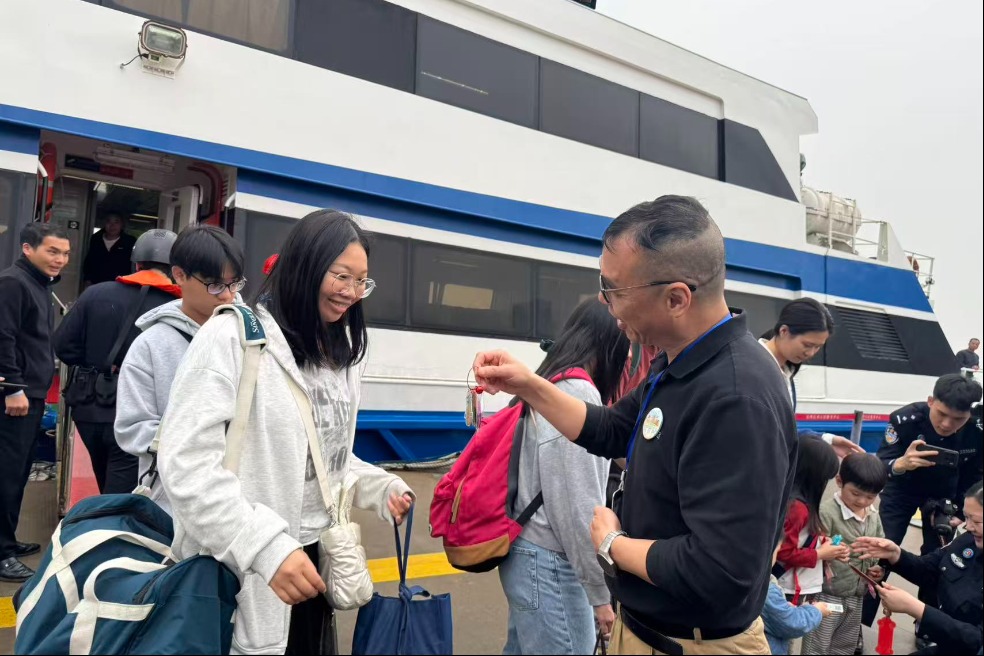
    China witnessed substantial cross-border mobility during the recent Spring Festival holiday, with official data revealing 17.8 million entries and exits recorded at the country’s border checkpoints. The daily average reached approximately 1.98 million movements, reflecting significant recovery in international travel following pandemic restrictions.

    The heightened traffic coincided with extensive celebrations across China, including Macao’s spectacular drone and fireworks display that attracted both domestic and international visitors. Multiple regions reported increased tourism activity, with destinations like Shanxi’s Zhaoyu Ancient City experiencing notable visitor surges during the holiday period.

    Transportation infrastructure, particularly the Hong Kong-Zhuhai-Macao Bridge, handled record traffic volumes as mainland-SARs tourism rebounded strongly. The increased mobility demonstrates China’s ongoing normalization of cross-border travel and cultural exchange following extended COVID-19 related restrictions.

    The data coincides with China’s comprehensive efforts to revitalize tourism and cultural activities, with sci-tech museums alone drawing over 3.5 million visits during the same period. Authorities implemented enhanced border management protocols to ensure smooth processing of the increased passenger flow while maintaining security standards.

  • Residents face early traffic, low visibility as monster fog blankets parts of UAE

    Residents face early traffic, low visibility as monster fog blankets parts of UAE

    A severe fog event descended upon the United Arab Emirates early Tuesday morning, significantly disrupting daily life and transportation across several emirates. Dense fog patches, described by residents as a ‘monster’ blanket, engulfed areas including Sharjah, Dubai, and Al Qusais, drastically reducing visibility to as low as 200 meters in some locations.

    The meteorological phenomenon triggered an immediate multi-agency response. The UAE’s National Centre of Meteorology (NCM) issued red and yellow weather alerts across most regions, warning of hazardous driving conditions persisting until 10:00 AM. Simultaneously, the Roads and Transport Authority (RTA) activated electronic signboards along major thoroughfares, broadcasting critical safety advisories urging motorists to reduce speed, maintain safe following distances, and utilize fog lights.

    Transportation networks experienced substantial disruptions with traffic congestion building hours earlier than typical patterns. Eyewitnesses reported heavy police presence on major highways including E311, where authorities implemented additional safety measures. Heavy vehicles were temporarily sidelined along Sheikh Mohammed Bin Zayed Road to prevent potential accidents in the low-visibility conditions.

    The fog’s impact extended beyond roadways, affecting school transportation systems with numerous reports of delayed bus arrivals. Residents described surreal conditions where familiar landmarks disappeared within the thick blanket of fog. Long-time Sharjah resident Umm-e-Aiman noted the unusual intensity, stating, ‘The mosque, which is less than 200 metres from my home, was no longer visible.’

    Abu Dhabi Police implemented precautionary speed restrictions, activating an 80 km/h limit on most capital roads through electronic information boards. Motorists expressed cautious approaches to commuting, with Sharjah resident Usman Malik emphasizing, ‘We can arrive 30 minutes late, but in the event of a minor accident, we may lose more than an hour.’ The comprehensive response demonstrated the UAE’s coordinated approach to managing weather-related public safety challenges.

  • Celebrity doctor Peter Attia steps down from CBS over Epstein links

    Celebrity doctor Peter Attia steps down from CBS over Epstein links

    Prominent anti-aging physician and media personality Dr. Peter Attia has resigned from his recently appointed position as a CBS News contributor following the disclosure of his email correspondence with convicted sex offender Jeffrey Epstein. The communications, released by the US Department of Justice, revealed inappropriate exchanges containing crude remarks about women’s anatomy and personal expressions of missing Epstein’s company.

    A spokesperson for Dr. Attia announced his immediate departure from the network, characterizing his contributor role as ‘newly established and had not yet meaningfully begun.’ The statement emphasized that Attia’s decision to ‘step back’ was intended to prevent becoming ‘a distraction from the important work being done at CBS.’

    The health influencer has issued multiple apologies for the tone and content of his messages while vigorously denying any involvement in Epstein’s criminal activities. In a comprehensive 1,000-word social media statement published days after the documents surfaced, Attia clarified that he had ‘never been on [Epstein’s] plane, never on his island, and never present at any sex parties.’

    According to Attia’s account, his interactions with Epstein were limited to ‘seven or eight’ visits to the financier’s New York residence between 2014 and 2019, during which he claims to have witnessed no illegal activity or encountered any underage individuals. The physician maintained that his communications with Epstein were unrelated to ‘his sexual abuse or exploitation of anyone.’

    Attia was among nineteen new contributors appointed by CBS News editor-in-chief Bari Weiss in January, following the network’s acquisition by Paramount. Weiss, a former New York Times opinion writer known for her critiques of ‘cancel culture,’ was brought in to help reshape the network’s editorial direction under new ownership by David Ellison, son of Trump ally and technology billionaire Larry Ellison.

    The revelation has sparked considerable backlash from portions of Attia’s audience, particularly concerning emails from 2016 containing inappropriate jokes about female anatomy and sexual acts. Epstein, who died in custody in 2019 while awaiting trial on sex trafficking charges, had previously been convicted in 2008 of soliciting a minor as part of a plea deal.

  • From Expo to the Olympics, Milan bets on big events to fuel its transformation to a global city

    From Expo to the Olympics, Milan bets on big events to fuel its transformation to a global city

    Milan has strategically leveraged its hosting of the Milan Cortina Winter Games to cement its status as a global metropolis, adding ‘Olympic city’ to its established identities as Italy’s fashion and financial capital. This achievement represents the culmination of two decades of transformative urban development that has reshaped the city’s skyline while stimulating unprecedented investment, tourism, and cultural vitality.

    The Olympic legacy manifests in both tangible infrastructure and intangible prestige. Unlike traditional Games that emphasize massive construction, Milan adopted a distributed model across seven existing venues spanning hundreds of kilometers. The city inherits the state-of-the-art Santgiulia arena—destined for concerts, exhibitions, and sporting events—while the Olympic Village will address critical housing needs by transforming into accommodation for 1,700 students in a city grappling with affordability challenges amid its 10 universities.

    Preliminary data from Bocconi University’s ongoing IOC-commissioned study reveals approximately €4 billion in Games-related investments, encompassing sports facilities, transportation upgrades (roads, metro access, railways, ski lifts), energy infrastructure, and administrative costs. According to Assolombarda business association, Milan specifically invested €735 million to host 90 indoor ice events and the opening ceremony at San Siro, with visitors projected to spend around €1 billion. The Olympics are forecast to boost Milan’s 2026 economic growth by 0.6 percentage points to 1.7%, accelerating industrial output throughout the region.

    This Olympic chapter continues Milan’s remarkable transformation that began in the early 2000s, shifting from a provincial industrial center to an international destination. The CityLife district emerged with iconic skyscrapers by starchitects Zaha Hadid, Daniel Libeskind, and Arata Isozaki, while Porta Nuova development introduced the 218-meter UniCredit Tower. Expo 2015 served as a pivotal catalyst, drawing 22 million visitors over six months and triggering sustained tourism growth—rising 6.5% to 9.6 million visitors in 2025.

    Beyond tourism, Expo sparked a €3 billion investment converting the former site into MIND, a science and technology hub. The city has since tripled its five-star hotel capacity, added two subway lines, and opened numerous cultural institutions including Fondazione Prada, MUDEC, and Pirelli HangarBicocca.

    However, rapid development has fueled criticism from housing activists who argue that mega-events and luxury developments prioritize wealthy interests, driving real estate prices beyond reach for many workers. They demand policies addressing 80,000 vacant residences while increasing subsidized housing options.

    The Olympic Village has accelerated regeneration of the southern Porta Romana railyard, adjacent to major former industrial sites. This 20-hectare project will deliver 100,000 square meters of housing—approximately half designated as social housing under 2019 regulations—along with extensive parks and public spaces. The area neighbors Fondazione Prada and emerging fashion hubs hosting Bottega Veneta, Moncler, and upcoming OTB headquarters.

    Sporting legacy extends beyond infrastructure, with Italy’s record 30 medals expected to reignite winter sports participation. Olympic organizers are collaborating with companies to promote daily physical activity—an initiative carried over from Paris 2024. Milan’s convention operator has committed to maintaining temporary ice facilities while studying permanent rink options, capitalizing on renewed enthusiasm for ice sports.

    As Professor Dino Ruta of Bocconi University notes, ‘Milan is increasingly creating a distinctive brand able to attract an international audience.’ The Games have provided both global visibility and concrete mechanisms for urban improvement, though balancing growth with social equity remains an ongoing challenge for Italy’s rising metropolis.

  • Year of the Horse, full speed ahead

    Year of the Horse, full speed ahead

    As China welcomed the Year of the Horse in February 2026, the nation erupted in vibrant celebrations marking the Lunar New Year. The festivities showcased a rich tapestry of cultural traditions and modern innovations across the country.

    In Macao, a spectacular drone and fireworks display illuminated the night sky, creating a mesmerizing technological spectacle that drew thousands of spectators. Meanwhile, in Shanxi province, tourists flocked to the historic Zhaoyu Ancient City to experience traditional Spring Festival celebrations amidst well-preserved architectural heritage.

    The unique horse culture of Inner Mongolia took center stage at a winter photography festival, where the region’s equestrian traditions were displayed against breathtaking snowy landscapes. This celebration held particular significance during the Year of the Horse in the Chinese zodiac, symbolizing strength, speed, and perseverance.

    Cultural institutions reported record engagement, with China’s science and technology museums attracting over 3.5 million visits during the holiday period. The surge in domestic tourism also set new records, particularly in cross-border travel between mainland China and special administrative regions, leading to unprecedented traffic on major transportation corridors.

    The celebrations extended beyond China’s borders, with Chinese tourists spreading festive vibes internationally while maintaining deep connections to their cultural roots. The panda, China’s national treasure, continued to capture public imagination as these beloved animals became integrated into daily life narratives during the holiday season.

    Despite the celebrations, authorities remained vigilant about public safety, issuing warnings about forest fire risks in Guangdong province following several incidents. The mixed pattern of traditional observance and modern adaptation characterized China’s approach to one of its most important cultural festivals, demonstrating both the preservation of heritage and embrace of innovation.

  • China’s sci-tech museums draw over 3.5m visits during Spring Festival holiday

    China’s sci-tech museums draw over 3.5m visits during Spring Festival holiday

    China’s network of science and technology museums experienced unprecedented popularity during the recent Spring Festival holiday, recording a remarkable 3.5 million visits across the nine-day celebration period. The China Science and Technology Museum (CSTM) in Beijing reported these figures on Monday, highlighting how these institutions successfully merged educational content with cultural festivities to create engaging experiences for visitors of all ages.

    The flagship Beijing facility alone attracted over 200,000 visitors with its special Year of the Horse themed exhibitions. Nationwide, regional science museums developed customized programming that blended traditional Chinese zodiac symbolism, intangible cultural heritage elements, and interactive technology demonstrations. These carefully crafted experiences allowed families to explore scientific concepts while simultaneously participating in Lunar New Year traditions.

    According to CSTM officials, the institution will continue to pioneer innovative approaches to science communication throughout 2026. This strategic direction aims to enhance public engagement with scientific concepts and support China’s broader objectives of achieving greater self-reliance in science and technology through improved science literacy among the population. The successful holiday programming demonstrates how cultural institutions can effectively combine entertainment with education to stimulate public interest in scientific fields.

  • Surge in mainland-SARs tourism drives traffic records on sea bridge

    Surge in mainland-SARs tourism drives traffic records on sea bridge

    The Hong Kong-Zhuhai-Macao Bridge, the world’s longest sea-crossing bridge, has experienced unprecedented traffic volumes during the recent Spring Festival period, recording three consecutive days of record-breaking vehicle movements. On February 24-26, 2026, the infrastructure marvel witnessed daily traffic figures reaching 27,000, 27,100, and ultimately peaking at 29,500 trips respectively.

    This remarkable surge stems from a significant increase in bidirectional tourism between mainland China and the special administrative regions of Hong Kong and Macao. Official data from Guangdong’s transportation authorities reveals that during the first seven days of the nine-day holiday period, the bridge accommodated over 161,000 vehicle crossings, representing a substantial 20% increase compared to the previous year.

    The increased traffic patterns reflect the successful implementation of cross-boundary vehicle programs initiated in 2023 and late 2025. These policies permit single-license vehicles from Hong Kong and Macao to access Guangdong province, while conversely enabling mainland vehicles to enter Hong Kong’s urban areas. During the festival, northbound vehicles from Hong Kong constituted more than half of total bridge traffic, with Saturday alone seeing over 15,300 such trips.

    For many families, this marked the first extended holiday period since the implementation of the latest travel facilitation measures. Guangzhou resident Mr. Wang, who secured his travel quota two weeks in advance, noted the enhanced flexibility for family travel that personal vehicle transportation provides.

    The bridge has simultaneously served as a major tourist attraction in its own right, with immigration authorities reporting approximately 10,000 participants in dedicated bridge tours during the holiday period. Meanwhile, the infrastructure has facilitated over 372,000 trips by residents from Hong Kong and Macao visiting family and enjoying short excursions in Guangdong.

    Transportation expert Gary Zhang Xinyu, former chairman of the Hong Kong Legislative Council’s rail transport subcommittee, described the traffic increase as “remarkably significant, even somewhat unexpected.” He emphasized that the phenomenon demonstrates both the substantial potential for cross-boundary travel and the powerful impact of policy measures on stimulating tourism demand and transforming travel patterns within the Greater Bay Area.

  • Forest fires spark safety warnings in Guangdong

    Forest fires spark safety warnings in Guangdong

    Authorities in Guangdong province have escalated fire safety measures following a concerning increase in forest fires triggered by illegal fireworks usage. The provincial emergency management department reported multiple wildfire outbreaks across Wuhua county in Meizhou on February 16, all originating from villagers discharging fireworks near forested zones. Although these particular incidents were contained without casualties, they revealed systemic vulnerabilities in current prevention frameworks.

    The provincial forest fire prevention headquarters convened an emergency video conference on Saturday, mandating comprehensive reforms to break the cycle of recurrent outbreaks. Officials have been directed to strengthen accountability mechanisms and address underlying weaknesses in fire management systems. The new strategy emphasizes intensified source control through systematic risk inspections and specialized operations targeting unlawful fire use.

    Simultaneously, the initiative expands public education campaigns across multiple channels to disseminate fire prevention legislation and safety knowledge. Local governments are enhancing emergency preparedness through refined contingency planning, regular drills, and developing integrated monitoring systems combining aerial, spatial, and ground surveillance technologies. Supervision protocols will feature immediate rectification orders with follow-up inspections to ensure implementation efficacy.

    This regulatory tightening follows tragic fireworks accidents in Jiangsu and Hubei provinces during the Spring Festival period, claiming 20 lives total. The State Council Work Safety Committee consequently issued national directives strengthening oversight throughout fireworks supply chains, particularly regarding sales and discharge activities. Multiple provinces including Liaoning have implemented stringent new regulations prohibiting hazardous practices near retail locations and establishing strict customer capacity limits.

    Several regions have introduced public reward programs encouraging citizen participation in identifying illegal activities. Zhangzhou city and Xiapu county in Fujian province are offering financial incentives for reporting violations, while Inner Mongolia has established reward tiers ranging from 3,000 to 300,000 yuan for tips leading to penalties.

  • Niche towns attract droves of visitors

    Niche towns attract droves of visitors

    A significant shift in travel patterns emerged during China’s recent Spring Festival holiday, as tourists increasingly bypassed major metropolitan centers in favor of lesser-known towns and cities offering authentic cultural experiences. The extended nine-day holiday period, spanning from February 15 to February 24, 2026, witnessed unprecedented visitor numbers to destinations celebrated for their distinctive heritage, culinary traditions, and Neo-Chinese architectural blends.

    Datong in Shanxi province exemplified this trend, experiencing a remarkable surge in popularity following the release of the video game ‘Black Myth: Wukong’ in 2024. Visitors like Beijing resident Sha Anna reported being captivated by the city’s lantern shows viewed from ancient walls and its renowned knife-cut noodles. ‘The city left us with memories of historical legacies and human touch,’ she remarked, planning a return visit for next year’s celebrations.

    Travel data from platform Tuniu revealed dramatic increases: Baoting Li and Miao Autonomous County in Hainan and Dehong Dai and Jingpo Autonomous Prefecture in Yunnan saw tourist numbers double compared to previous years. Similarly, Chaozhou in Guangdong, along with Shangrao and Jingdezhen in Jiangxi, experienced 100% year-on-year growth in visitor numbers.

    The phenomenon extended beyond domestic tourism. Qunar reported a 20% year-on-year increase in flight bookings to mainland China by international travelers holding non-Chinese passports. These visitors, primarily from South Korea, Vietnam, Singapore, Australia, and the United States, sought immersive cultural experiences rather than traditional sightseeing, with destinations like Jinggangshan in Jiangxi and Altay in Xinjiang gaining prominence alongside Shanghai and Beijing.

    Meanwhile, outbound travel also flourished during the extended holiday. Chinese tourists favored destinations with shorter flight times, favorable visa policies, and mild climates, including Bangkok, Kuala Lumpur, and Hong Kong. Italy, host of the recently concluded Milano Cortina 2026 Winter Olympics, saw a 64% increase in flight bookings from Chinese travelers during the holiday’s initial days.

    The global recognition of Spring Festival as a UNESCO Intangible Cultural Heritage in 2024 has further amplified international interest in China’s traditional celebrations, creating a robust tourism ecosystem that benefits both emerging destinations and travelers seeking authentic experiences.

  • Travel volumes set to hit new highs as holidayers return after Spring Festival

    Travel volumes set to hit new highs as holidayers return after Spring Festival

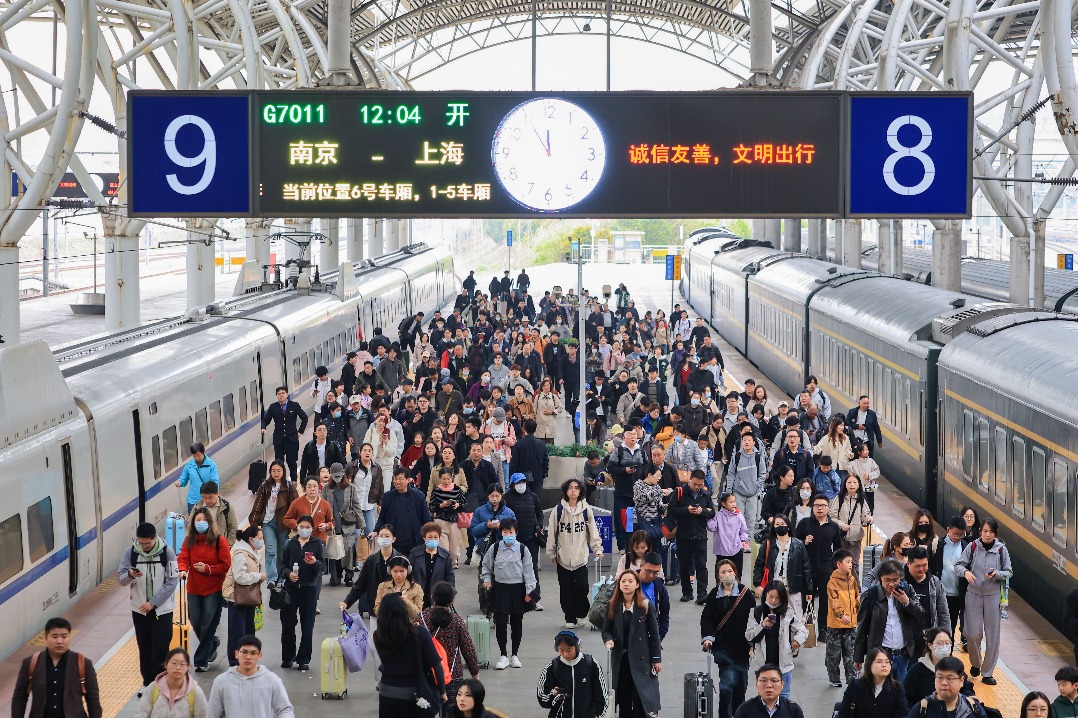
    China witnessed unprecedented travel volumes during the final phase of the Spring Festival holiday period, with transportation networks nationwide experiencing record-breaking passenger flows as millions returned from holiday celebrations. Official data from the Ministry of Transport revealed Monday’s cross-regional journeys reached approximately 362.6 million trips, maintaining exceptionally high mobility levels following Sunday’s staggering 380.35 million trips—the highest single-day volume recorded during this year’s holiday season.

    The 40-day Spring Festival travel period (chunyun), recognized as the world’s largest recurrent human migration, reached its midpoint on Saturday. Current projections indicate this year’s season will generate an unprecedented 9.5 billion cross-regional journeys, including approximately 540 million rail trips and 95 million air travel segments according to official estimates.

    Rail transportation peaked on Monday with operators handling 18.5 million passenger trips nationwide. To accommodate the massive return flow, railway authorities implemented 2,297 additional services across the network. Major transportation hubs in Jiangxi and Fujian provinces enhanced their operational capacity by deploying extra security screening channels, additional ticket service counters, and supplementary staff throughout waiting areas and passenger service zones.

    Road travel continued to dominate holiday mobility, with highway traffic exceeding 66 million vehicle trips as private car travel remained the preferred option for families. Air travel reached approximately 2.65 million passenger journeys, while waterways transported roughly 1.6 million travelers.

    In Beijing, transportation authorities extended late-night subway operations and increased bus and taxi availability to manage sustained arrival flows at major stations and airports. Despite considerable passenger volumes, travelers reported orderly movement through transportation facilities, with staff providing assistance with directions and luggage handling.

    Transportation flows are expected to remain elevated through Tuesday as normal work and school schedules resume nationwide following the conclusion of the nine-day public holiday period.